Betel Leaf for Digestion and Carminative Use
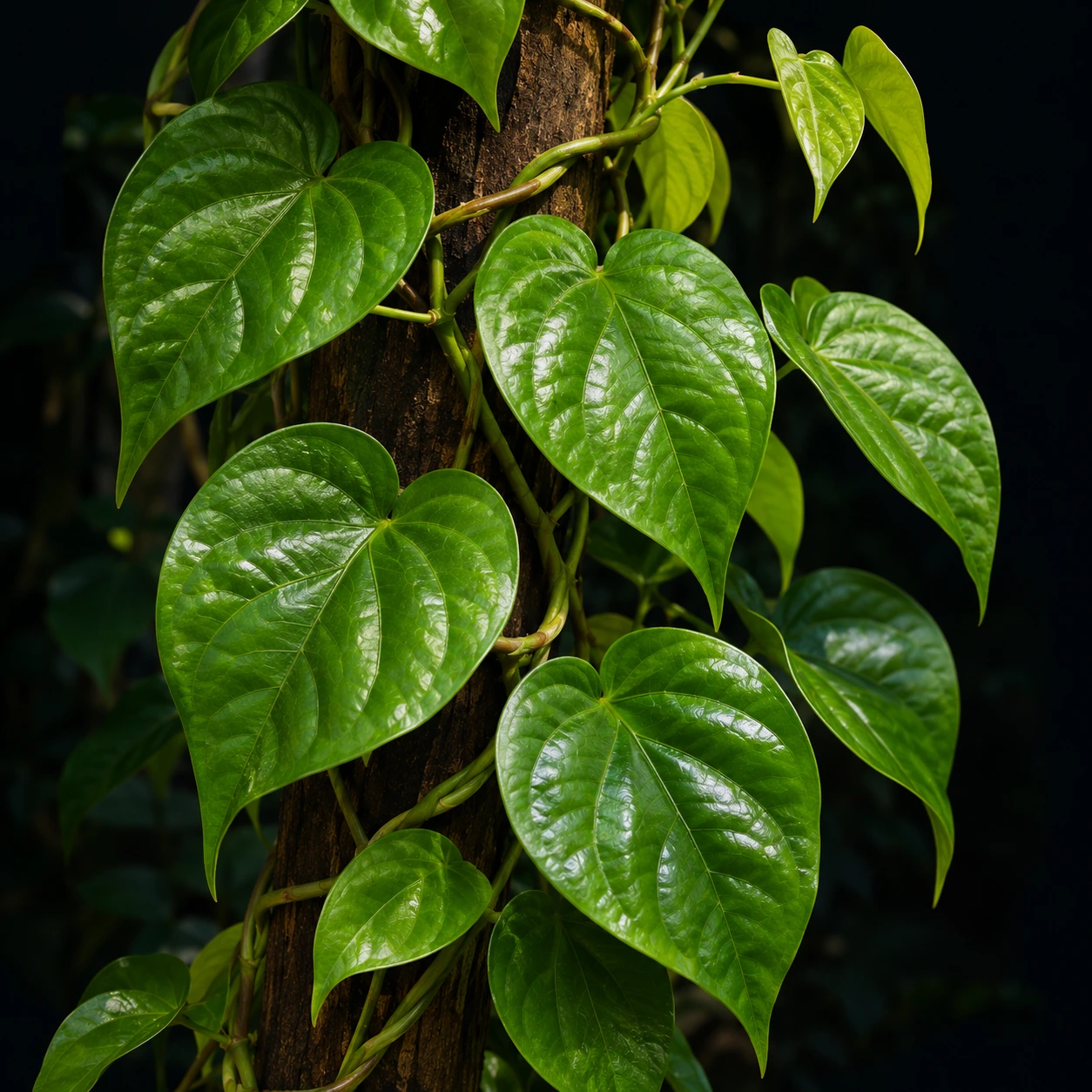
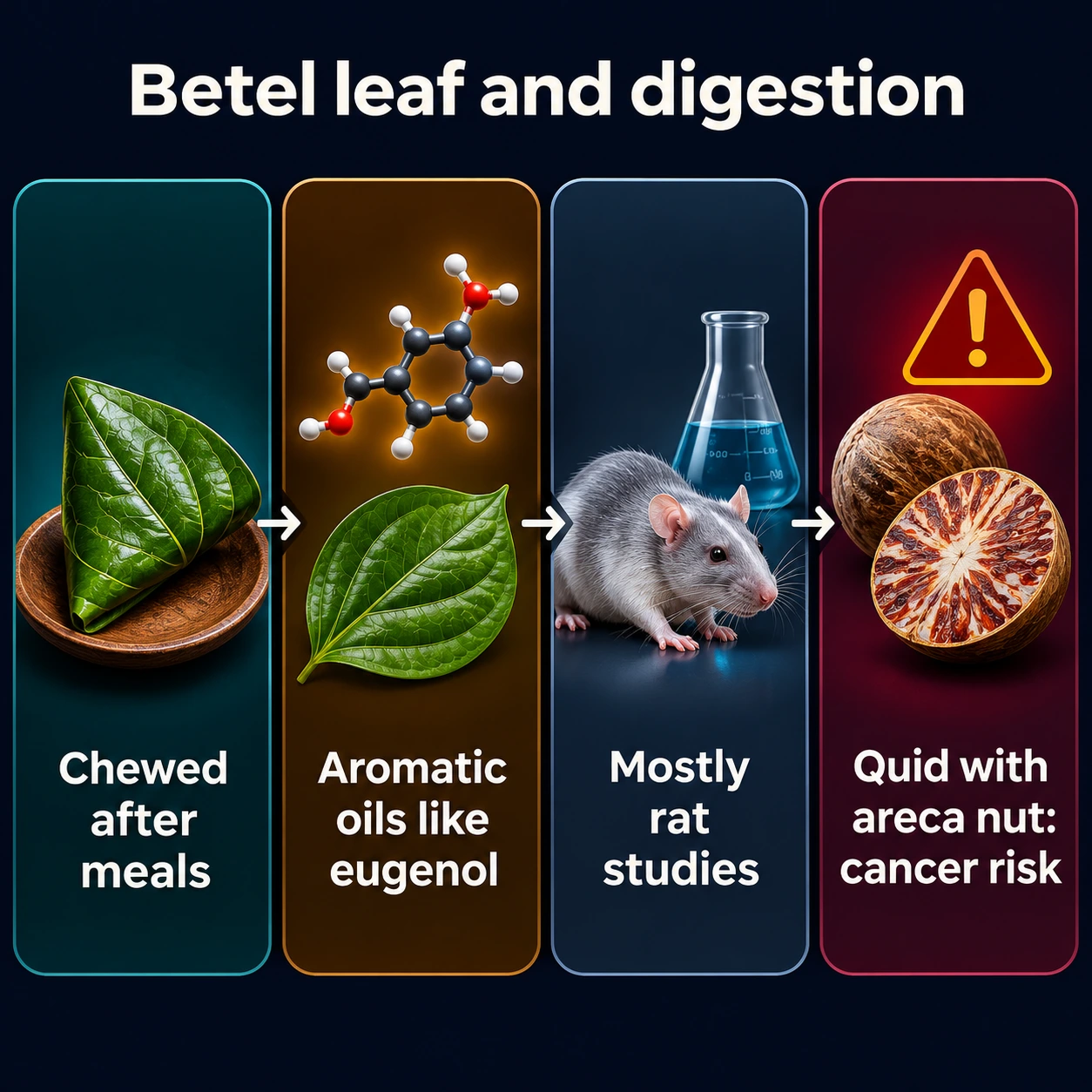
The most common everyday use of betel leaf across South and Southeast Asia is the one with the least research behind it: a leaf chewed after a meal, to settle the stomach and clear the mouth. This article takes that claim seriously enough to check it, which means separating what animal studies actually show from what tradition asserts, and being clear that most of the digestive literature on Piper betle comes from rats.
One warning first, because it governs everything else on this page. The after-meal leaf is, in practice, usually an after-meal quid — leaf plus areca nut plus slaked lime, frequently plus tobacco. That preparation is classified by International Agency for Research on Cancer (IARC) as Group 1, carcinogenic to humans, with and without the tobacco. "It helps my digestion" is the single most common reason people give for continuing to chew; the IARC classification applies whatever the reason for chewing. See Betel Leaf vs Betel Quid: Areca Nut and Cancer Risk.
Table of Contents
- What Tradition Actually Claims
- What "Carminative" Means
- Salivation and the Cephalic Phase
- Gut Motility and Transit
- Gastroprotection and Experimental Ulcers
- Helicobacter pylori
- Blood Glucose and the Stacking Risk
- Liver and Lipid Findings
- The Antibacterial Problem in the Gut
- Forms Used, and Doses Nobody Has Established
- Cautions and Interactions
- Key Research Papers
- Connections
- Featured Videos
What Tradition Actually Claims
Evidence tier: traditional use only.
It is worth writing down precisely what the traditional claim is, because it is narrower and more sensible than the versions that appear in supplement marketing.
- Ayurveda and Siddha describe tambula — the betel leaf preparation — as pungent, warming and appetite-stimulating, used to relieve a heavy feeling after eating, to clear phlegm, and to freshen the mouth. Classical texts are also notably specific about restraint, cautioning against excess and against use in certain conditions and at certain times of day. The tradition never described unlimited chewing as harmless.
- Malay, Indonesian, Thai and Vietnamese folk practice uses leaf infusions for indigestion, wind and colic, sometimes for cough, and applies warmed leaves externally over the abdomen for a child's colic.
- Chinese materia medica makes far more use of areca (bing lang) than of the leaf, chiefly as an anthelmintic and for abdominal distension.
What tradition does not claim is that betel leaf treats a diagnosed disease of the gut. Nobody in these traditions was proposing it for peptic ulcer disease, inflammatory bowel disease or reflux oesophagitis. Those are modern reinterpretations grafted onto rodent studies.
What "Carminative" Means
A carminative is a preparation said to relieve bloating and flatulence. The word carries a specific pharmacological idea that is worth unpacking, because it is a genuine mechanism rather than folklore.
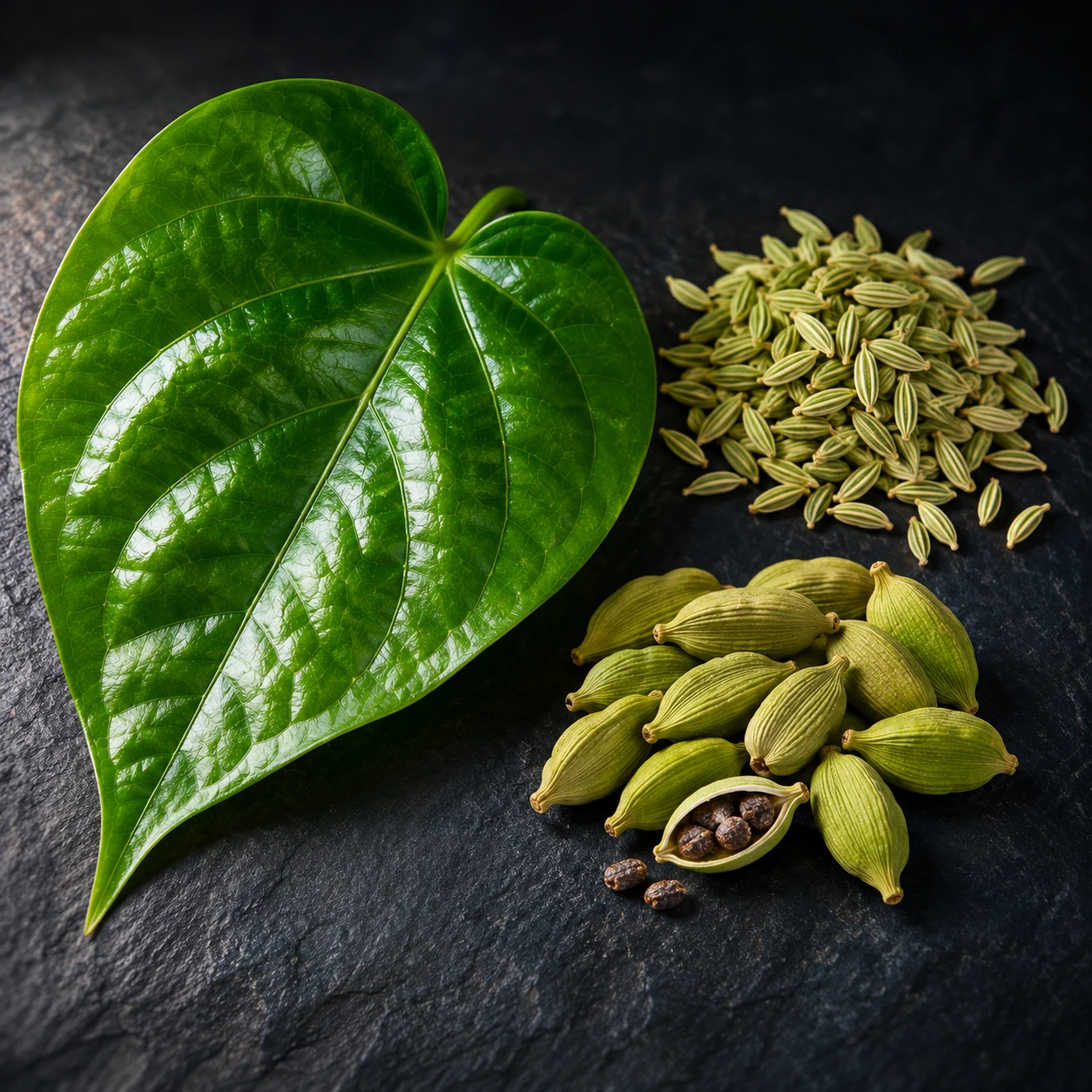
Most classical carminatives are aromatic plants rich in volatile terpenes and phenols: fennel, caraway, cardamom, peppermint, ginger, clove. Those compounds do at least three things that plausibly relieve the sensation of bloating. They relax gastrointestinal smooth muscle, partly through calcium-channel blockade — the best-documented case being peppermint oil's effect on colonic smooth muscle. They reduce the surface tension of gas bubbles trapped in gut contents, letting small bubbles coalesce and pass. And they are strongly sensory, which matters more than it sounds: much of what people call bloating is visceral hypersensitivity rather than measurable distension, and a warm pungent taste plus a menthol-like or clove-like sensation genuinely alters perception.
Piper betle fits the chemical profile of a carminative — eugenol, chavibetol, caryophyllene, cadinene — and there is smooth-muscle work on Piper species. What is missing is Piper betle–specific human data. Contrast Fennel as a Digestive Aid and Peppermint, where the human trial evidence for functional gut symptoms is considerably better. Among carminatives, the better-evidenced options are not betel. See smooth-muscle and spasmolytic work on Piper betle.
Salivation and the Cephalic Phase
Evidence tier: preliminary, with an uncontroversial physiological basis.
Chewing anything pungent triggers copious salivation, and salivation is not trivial for digestion. Saliva carries amylase and lingual lipase, buffers acid with bicarbonate, and lubricates the bolus. The cephalic phase of digestion — the vagally mediated anticipatory response to taste, smell and chewing — primes gastric acid, pepsinogen and pancreatic secretion before food arrives. A strongly flavoured leaf chewed at the end of a meal is a plausible cephalic-phase stimulus, and this is probably the most defensible part of the traditional digestive claim.
Two honest caveats. First, this is a property of chewing something aromatic, not a unique property of Piper betle; a fennel seed or a cardamom pod does the same thing. Second, in habitual quid chewers the salivary picture is not benign — chronic areca and lime exposure is associated with altered salivary flow and composition, and the copious red-stained expectoration of the quid chewer is a symptom of irritation, not a sign of good digestion. See the literature on betel chewing and salivary flow and composition.
Gut Motility and Transit
Evidence tier: preliminary (animal and isolated tissue).
Rodent and isolated-tissue studies of Piper betle extracts report effects on gastrointestinal transit and on contractility of isolated intestinal preparations. Reported directions vary — some preparations look spasmolytic, others prokinetic — which is exactly what you expect when different papers use different solvents, doses, cultivars and tissue baths. A dose-dependent biphasic effect, stimulatory at low concentration and inhibitory at high, is common with plant phenols and would explain part of the inconsistency.
This literature is genuinely interesting and genuinely preliminary. It does not currently support using betel leaf for constipation, for diarrhoea, or for gastroparesis, and the two opposing findings cannot both be turned into recommendations. See gastrointestinal motility and transit studies on Piper betle. For what actually helps disordered motility, see Gastroparesis and Irritable Bowel Syndrome.
Gastroprotection and Experimental Ulcers
Evidence tier: preliminary (animal).
The best-developed strand of the digestive literature is gastroprotection. Rodent studies have tested Piper betle leaf extracts against experimentally induced gastric injury — the standard models use ethanol, indomethacin or aspirin, or pyloric ligation — and report reduced ulcer index and reduced mucosal damage relative to untreated controls. The proposed mechanisms are the ones usually invoked for polyphenol-rich extracts: increased mucus and bicarbonate secretion, preserved mucosal glutathione and antioxidant enzyme activity, reduced lipid peroxidation, and in some reports reduced acid output.
One example with numbers: a 2014 Sri Lankan rat study gave hot-water and cold ethanol extracts of betel leaf at 200, 300 and 500 mg per kg of body weight before an ethanol injury to the stomach. Protection rose with the dose, and at the top dose both extracts protected the stomach better than the reference drug misoprostol. The hot-water extract increased the mucus layer on the stomach wall and reduced the volume of gastric juice, while the juice’s acidity and pH did not change. Those doses are far above what a person gets from chewing a leaf.
Three reasons to hold this loosely. Rodent ulcer models are a screen, not a disease — a compound that blunts ethanol-induced gastric injury in a rat has cleared a low bar. Doses used in these studies, scaled from body weight, are frequently far above anything a person would consume from chewing leaves. And human peptic ulcer disease is now understood as predominantly a consequence of Helicobacter pylori infection and nonsteroidal anti-inflammatory drug (NSAID) use, both of which have specific, highly effective treatments. Standard care treats a diagnosed ulcer by its cause; see H. pylori and Gastritis. Start from the gastroprotective and antiulcer literature.
Helicobacter pylori
Evidence tier: preliminary (in vitro).
Given the leaf's antibacterial profile, Piper betle has been tested in vitro against Helicobacter pylori, the Gram-negative spiral organism that colonises the gastric mucosa and drives most peptic ulcer disease and a substantial share of gastric cancer. In-vitro inhibition has been reported, including interest in urease inhibition — urease is the enzyme H. pylori uses to neutralise gastric acid locally and survive, so blocking it is a rational target.
The clinical distance here is large and worth stating plainly. Eradicating H. pylori in a person requires sustained bactericidal concentrations at the gastric mucosal surface, under the mucus layer, in an acidic environment, over one to two weeks — which is why standard regimens use two antibiotics plus a proton-pump inhibitor and still fail in a minority of cases. No plant extract has been shown to do this. Standard care for confirmed H. pylori infection is eradication therapy followed by a test of cure, because the downstream risk is gastric cancer. See the Piper betle and H. pylori literature and Helicobacter pylori.
Blood Glucose and the Stacking Risk
Evidence tier: preliminary (animal), but with a real practical implication.
This is the section with the most direct consequence for a reader, and it is a caution rather than a benefit.
Rodent work has repeatedly reported that aqueous and ethanolic Piper betle leaf extracts lower blood glucose, in normal animals and in chemically induced diabetic models. The best-known reports include work by Arambewela and colleagues published in the Journal of Ethnopharmacology in 2005 on the antidiabetic activity of aqueous and ethanolic Piper betle leaf extracts in rats. In normal rats, both a hot-water and a cold ethanol extract lowered blood glucose in a dose-dependent way and blunted the rise after a glucose load. The hot-water extract did not block glucose absorption from the small intestine. Long-term dosing showed no signs of liver or kidney toxicity, although spleen weight rose in the treated rats. A separate, proposed mechanism from other laboratory work is inhibition of carbohydrate-digesting enzymes such as alpha-amylase and alpha-glucosidase — which would blunt post-meal glucose rise rather than lower fasting glucose — along with antioxidant protection of pancreatic beta cells in the animal models.
The practical point is additive risk, not benefit. If a leaf extract genuinely lowers glucose, then a person taking insulin, a sulfonylurea, a glinide, or any other glucose-lowering drug is at risk of stacking two hypoglycaemic effects. Hypoglycaemia is an immediate, dangerous event. What this means for people on glucose-lowering medication:
- The rat studies show glucose lowering, so the concern with a concentrated Piper betle extract is added hypoglycaemia on top of insulin, a sulfonylurea or a glinide.
- Home glucose readings show whether levels run lower than usual after an extract is added.
- The symptoms of hypoglycaemia are shakiness, sweating, sudden hunger, confusion and palpitations; fast-acting glucose is the standard first treatment.
- Readings that run low after an extract is added point to the extract as a likely contributor.
- No study supports lowering a prescribed diabetes medication because of a herbal preparation.
There is a second, sharper point here. Observational studies in Taiwan and elsewhere have associated areca-nut chewing with a higher, not lower, risk of metabolic syndrome and type 2 diabetes. So on the metabolic question the two plants point in opposite directions in the evidence available, and the human data — which is about the nut — is the unfavourable one. See the Piper betle antidiabetic animal work, the enzyme-inhibition studies, and areca-nut chewing and metabolic syndrome in human cohorts. Then read Type 2 Diabetes.
Liver and Lipid Findings
Evidence tier: preliminary (animal).
Rodent studies report hepatoprotective effects of Piper betle extracts against chemically induced liver injury — carbon tetrachloride and paracetamol are the standard insults — measured as reduced serum transaminases and preserved hepatic antioxidant enzymes. Some report modest improvements in lipid profile in high-fat-fed animals. Both are exactly the findings that any polyphenol-rich plant extract tends to produce in these models, which is a reason for caution about their specificity: a result that almost every antioxidant extract reproduces is telling you about the model as much as about the plant.
There is no human evidence that betel leaf improves liver disease or lipid profile, and the caution runs the other way for the quid: heavy areca use has been associated in observational work with adverse metabolic and cardiovascular findings. See hepatoprotective animal studies and, for context on what actually drives fatty liver, Fatty Liver Disease.
The Antibacterial Problem in the Gut
An argument that gets skipped in nearly every write-up of a "digestive" antibacterial herb: the gut is not a place where indiscriminate antibacterial activity is obviously good. The colonic microbiota performs real work — fermenting fibre to short-chain fatty acids, synthesising vitamin K and several B vitamins, excluding pathogens, and signalling to the immune system. An extract with broad antibacterial activity, taken daily and in quantity, is not a targeted intervention; the question of what it does to commensal populations has simply not been studied for Piper betle.
Two practical consequences. First, a herbal antibacterial taken indefinitely for vague digestive symptoms is not a low-risk choice merely because it is a plant. Second, bloating and post-meal discomfort persistent enough to prompt daily treatment have specific, treatable causes that a diagnosis can identify, and guessing at them for years is the actual harm. See Functional Dyspepsia, small intestinal bacterial overgrowth (SIBO) and gastroesophageal reflux disease (GERD). Relevant background: how plant antimicrobial polyphenols affect gut microbiota composition.
Forms Used, and Doses Nobody Has Established
Descriptive only. There is no established therapeutic dose of Piper betle for any digestive indication, no pharmacopoeial monograph specifying one, and no standardised extract with agreed marker-compound content.
- Fresh leaf, chewed plain — the traditional after-meal form. Without areca nut and without slaked lime. One leaf is a food-level exposure.
- Leaf infusion — a few fresh leaves steeped in hot water, drunk warm. The mildest preparation, and the one closest to the traditional digestive use.
- Culinary use — leaves as a wrapper for grilled fillings in Vietnamese and Thai cooking (bò lá lốt, miang kham). This is food, not medicine, and it is a perfectly reasonable way to encounter the plant.
- Capsules and standardised extracts — sold online with widely varying and often unverifiable content. Some "betel" products contain areca, which the botanical name on the label reveals.
- Essential oil — concentrated. Not for internal use. This is the form in which safrole and estragole content actually matters.
Cautions and Interactions
- Leaf with areca nut and slaked lime. That combination, the betel quid, is classified by IARC as Group 1, carcinogenic to humans, with or without tobacco; this outweighs every other point on the page.
- Glucose-lowering medication — additive hypoglycaemia risk; see the glucose section.
- Anticoagulants and antiplatelet drugs, and surgery — laboratory work has reported antiplatelet activity from betel leaf constituents. Preliminary, but it raises a bleeding concern for people taking warfarin, a direct oral anticoagulant or aspirin, and around planned surgery.
- Pregnancy and breastfeeding — human safety data for extracts and essential oil are absent, the leaf contains variable safrole and estragole, and areca chewing in pregnancy is associated with adverse outcomes in observational studies. Culinary use of a whole leaf is a different order of exposure, but for supplements the honest answer is that the data do not exist.
- Reflux and gastritis — pungent phenolic irritants can aggravate an inflamed oesophagus or stomach, whatever the rodent ulcer models say; for people whose symptoms worsen with pungent foods, that direct observation outranks the animal literature.
- Children — no safety data support betel preparations for children. The traditional practice of applying a warmed leaf externally for colic is at least topical; giving a child leaf extract to swallow is not supported by anything.
- Alarm symptoms — unintentional weight loss, difficulty swallowing, persistent vomiting, black or bloody stools, vomiting blood, anaemia, or new persistent upper abdominal pain after age 50. Doctors treat these as signs that need investigation.
Key Research Papers
Most links are live PubMed topic searches rather than fixed record identifiers, so they stay current and cannot silently point at the wrong paper; two entries link checked PubMed records. Numeric results are omitted where the exact figure is not firmly established; the finding is described instead.
- Arambewela LS, Arawwawala LD, Ratnasooriya WD. Antidiabetic activities of aqueous and ethanolic extracts of Piper betle leaves in rats. Journal of Ethnopharmacology. 2005;102(2):239–245. — PubMed PMID: 16055288 — The source of the hypoglycaemia-stacking caution.
- Alpha-amylase and alpha-glucosidase inhibition by Piper betle extracts — the proposed post-meal mechanism. — Search PubMed
- Gastroprotective and antiulcer activity in rodent models — ethanol, indomethacin and pyloric-ligation screens.
- Arawwawala LD, Arambewela LS, Ratnasooriya WD. Gastroprotective effect of Piper betle Linn. leaves grown in Sri Lanka. Journal of Ayurveda and Integrative Medicine. 2014;5(1):38–42. — PubMed PMID: 24812474
- Effects on gastrointestinal transit and intestinal contractility. — Search PubMed
- Spasmolytic and smooth-muscle-relaxant activity of Piper betle — the carminative mechanism, in isolated tissue. — Search PubMed
- Piper betle against Helicobacter pylori, including urease inhibition. — Search PubMed
- Hepatoprotective activity in chemically induced liver injury models. — Search PubMed
- Antioxidant and radical-scavenging activity of the leaf and of hydroxychavicol — the chemistry invoked for most of the gastroprotective and hepatoprotective findings. — Search PubMed
- Antiplatelet activity of betel leaf constituents — the basis of the bleeding caution.
- Areca-nut chewing, metabolic syndrome and type 2 diabetes in human cohorts — the human data, and it points the unfavourable way. — Search PubMed
- Betel chewing and salivary flow and composition.
- Essential-oil composition of Piper betle by GC-MS across cultivars — why "betel leaf extract" is not a single substance. — Search PubMed
- Antimicrobial plant polyphenols and gut microbiota composition. — Search PubMed
- IARC evaluations of betel quid and areca nut — because "for digestion" is the most common stated reason for chewing.
Connections
- All Herbs
- Betel Leaf — Benefits Deep Dive — the hub, with the chemistry and evidence-tier overview.
- Betel Quid, Areca Nut and Cancer Risk — essential companion reading for anyone chewing after meals.
- Betel Leaf for Oral Health and Antibacterial Action — the same phenols, in the mouth.
- Betel Leaf (Piper betle) — the main topic page.
- Betel Nut (Areca catechu) — the other plant, and the carcinogenic one.
- Functional Dyspepsia — the diagnosis most of these traditional claims are aimed at.
- Gastritis — and why the rodent ulcer models do not translate.
- H. pylori — the real cause of most peptic ulcer disease.
- Helicobacter pylori (the organism) — microbiology and eradication.
- Gastroesophageal Reflux Disease — where a pungent irritant is a poor idea.
- Irritable Bowel Syndrome — where carminatives are actually studied.
- Small Intestinal Bacterial Overgrowth — a specific, testable cause of bloating.
- Gastroparesis — disordered motility with real treatment.
- Fatty Liver Disease — context for the hepatoprotective animal work.
- Type 2 Diabetes — background for anyone combining a herb with glucose-lowering medication.
- Fennel as a Digestive Aid — a carminative with better human evidence.
- Peppermint — the best-evidenced carminative for functional gut symptoms.
- Ginger — Benefits — nausea and gastric emptying, with real trials.
- Cardamom — another aromatic often chewed after meals, sometimes as a quid substitute.
- Clove as a Digestive Aid — eugenol's other traditional role.
Educational information only, not medical advice. Nothing here is a reason to chew betel quid or any areca-containing preparation. There is no established therapeutic dose of Piper betle for any digestive condition, and the great majority of the digestive evidence is from rats. Betel-leaf extracts may add to the effect of glucose-lowering and anticoagulant medication. No safety data exist for extracts and essential oil in pregnancy and breastfeeding. Persistent digestive symptoms, and any of the alarm symptoms listed above, are signs that doctors investigate for a cause.