⚠ Evidence warning: Clinical trials or other evidence do not support the claim that betel-leaf rinses, gargles or chewed leaves prevent plaque, gum disease or bad breath or ease toothache in people: no placebo-controlled trial of these uses was found, and the one randomized trial compared two herbal toothpastes. This page keeps it as a report of what people, websites or other media say.
Betel Leaf for Oral Health and Antibacterial Action
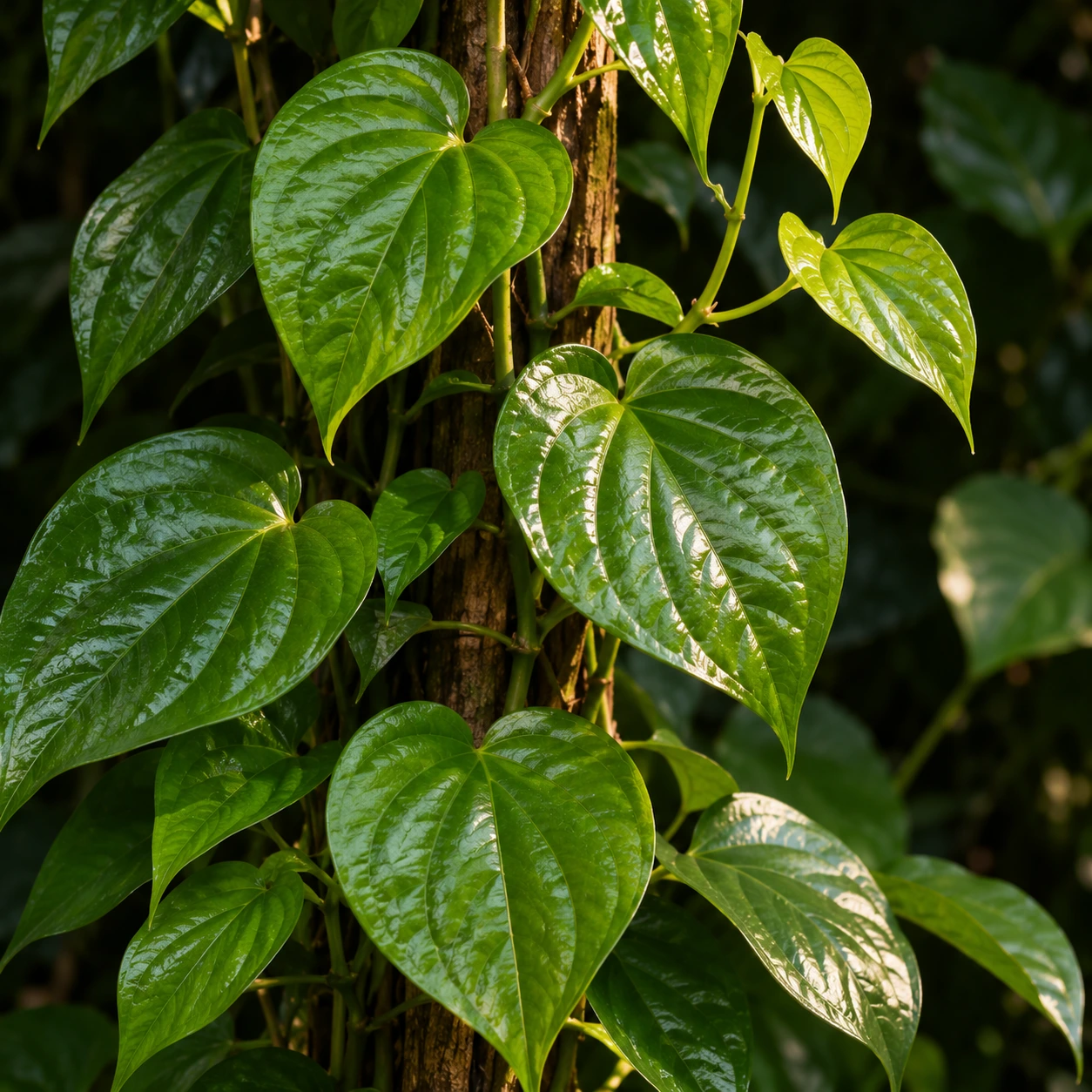
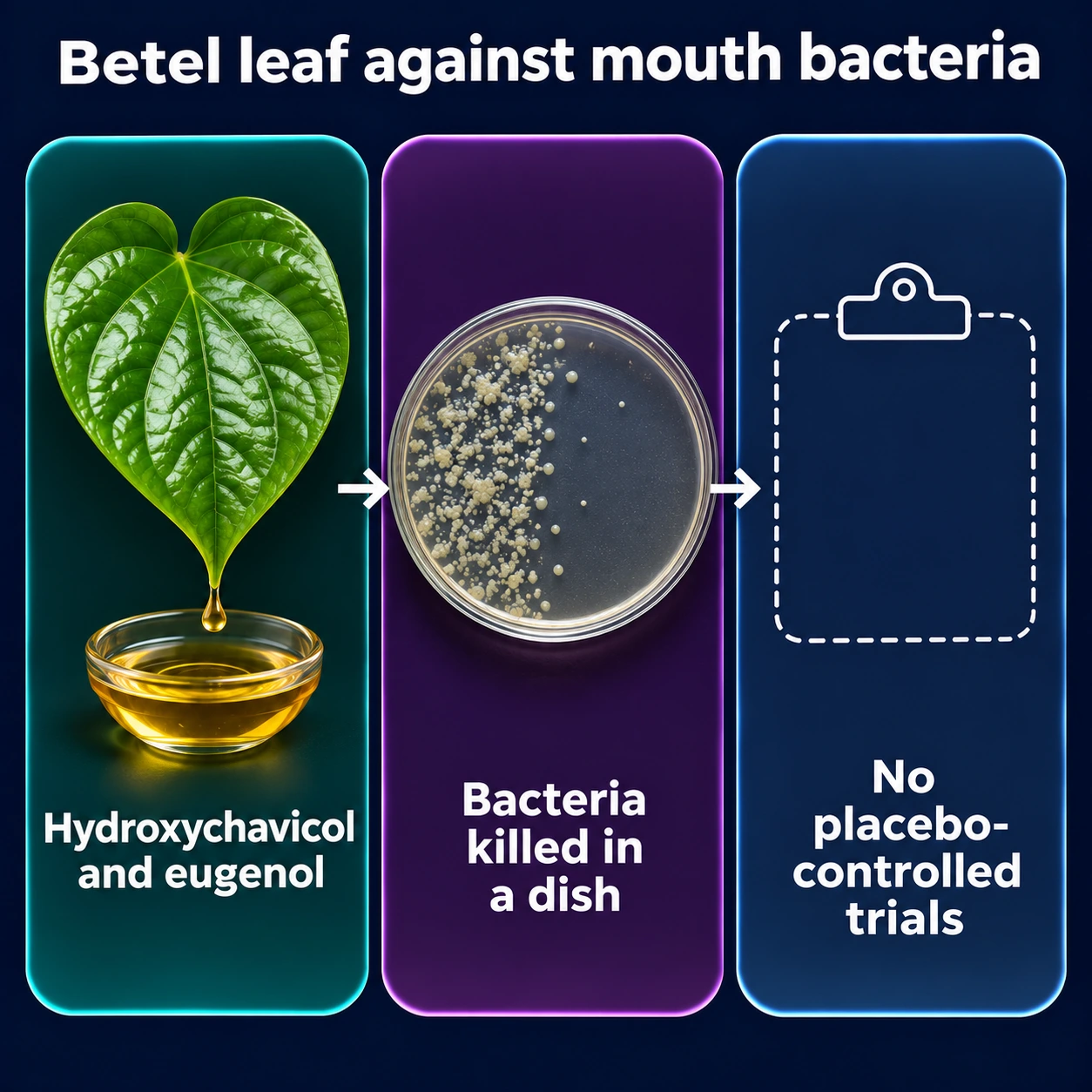
Of everything claimed for Piper betle, the antibacterial evidence is the strongest — and the setting where it is most often applied, the mouth, is also the setting where betel is most dangerous. Both statements are true, they are about different things, and this article is mostly an exercise in keeping them apart.
The Paradox in One Paragraph
Betel leaf extract kills oral bacteria in a dish. Betel quid causes oral cancer in people. The first is a laboratory finding about Piper betle leaf; the second is an established human hazard driven by Areca catechu nut, the slaked lime it is chewed with, and the tobacco frequently added. International Agency for Research on Cancer (IARC) classifies areca nut, betel quid with tobacco, and betel quid without tobacco all as Group 1 — carcinogenic to humans. The leaf is the wrapper. A leaf-only mouthrinse spat out after thirty seconds and a quid parked against the cheek for an hour, several times a day, for twenty years, are not comparable exposures — but they are constantly conflated, in both directions, by people selling something. Nothing in the antibacterial literature bears on the cancer risk of chewing paan. Read Betel Leaf vs Betel Quid: Areca Nut and Cancer Risk.
Table of Contents
- The Paradox in One Paragraph
- What Does the Antibacterial Work
- What It Inhibits in the Laboratory
- Plaque Is a Biofilm, Not Loose Bacteria
- The Small Human Trials
- Periodontal Anaerobes and Gum Inflammation
- Oral Candidiasis and Denture Stomatitis
- Halitosis and Volatile Sulfur Compounds
- Toothache, Eugenol and Numbing
- How Leaf Preparations Are Actually Used
- What This Evidence Does Not Support
- Key Research Papers
- Connections
- Featured Videos
What Does the Antibacterial Work
Evidence tier: preliminary (in vitro), with well-characterised chemistry.
Betel leaf's essential oil is a small, tidy family of phenylpropanoid phenols, and the antibacterial activity tracks them closely. Three matter.
- Hydroxychavicol, also written 4-allylpyrocatechol, is the compound most consistently identified as the leaf's principal antibacterial. It is a catechol — two hydroxyls adjacent on the ring — and that structure is the whole story. Catechols auto-oxidise, cycling to a semiquinone and quinone and shedding reactive oxygen species as they go. Inside a bacterium, that means oxidative damage to DNA and to membrane lipids at a rate the cell's defences may not match.
- Eugenol is the clove phenol, and the reason a crushed betel leaf smells faintly medicinal. It is lipophilic, partitions into the bacterial membrane, and disrupts membrane integrity and the proton gradient the cell needs to make adenosine triphosphate (ATP). Eugenol's antimicrobial and mild local-anaesthetic properties are far better characterised than betel leaf's, because dentistry has used it for more than a century; see Clove for Dental Pain and Oral Health.
- Chavibetol and chavibetol acetate are eugenol isomers characteristic of Piper betle, contributing to the same membrane-disrupting mode of action.
Mechanistic work has gone further than "phenols are antiseptic". A 2018 study published in Free Radical Biology and Medicine, done in the gut bacterium Escherichia coli (a Gram-negative organism, not an oral streptococcus), reported that hydroxychavicol generates reactive oxygen species and damages bacterial DNA, and that treated cells were inhibited from growing and dividing, rather than simply lysing the cell — a specific, plausible bactericidal route for a small phenol. See Singh 2018, PubMed PMID: 29550331.
Note the honest corollary. A compound whose antibacterial mechanism is generating reactive oxygen species and damaging DNA is not selective by nature. The same chemistry that damages a streptococcus damages a human cell if the concentration is high enough and the contact long enough, which is why genotoxicity and cytotoxicity of Piper betle extract at higher concentrations is a real strand of the literature and not an inconvenience to be skipped. "Antibacterial" and "safe in unlimited amounts" are separate questions.
What It Inhibits in the Laboratory
Evidence tier: preliminary (in vitro).
Screening studies of Piper betle leaf extracts and essential oil report inhibition of a broad range of organisms. Because extract preparation, solvent, cultivar and assay method vary enormously between papers, the useful information is the pattern rather than any single reported concentration. Broadly, the leaf performs better against Gram-positive organisms than Gram-negative ones — the usual result for lipophilic plant phenols, since the Gram-negative outer membrane is a real barrier — and it retains activity against several organisms of dental interest.
- Oral streptococci, including Streptococcus mutans, the organism most associated with dental caries. This is the single most-repeated finding in the dental branch of the literature: see the Piper betle and S. mutans literature.
- Staphylococcus aureus, including reports against methicillin-resistant isolates in vitro. See Staphylococcus aureus for what that organism does clinically, and note that in-vitro inhibition of methicillin-resistant Staphylococcus aureus (MRSA) is a very long way from treating a methicillin-resistant Staphylococcus aureus infection.
- Periodontal anaerobes, notably Porphyromonas gingivalis and Fusobacterium nucleatum, discussed in its own section below.
- Some enteric Gram-negatives, including Escherichia coli, typically at higher concentrations than the Gram-positives require. See Escherichia coli.
- Fungi, including Candida albicans and dermatophytes — covered here for the oral cavity and in the skin article for tinea.
The general survey to start from is the antibacterial screening literature on Piper betle leaf and its phenolic constituents.
Plaque Is a Biofilm, Not Loose Bacteria
Evidence tier: preliminary (in vitro), with a clear translational gap.
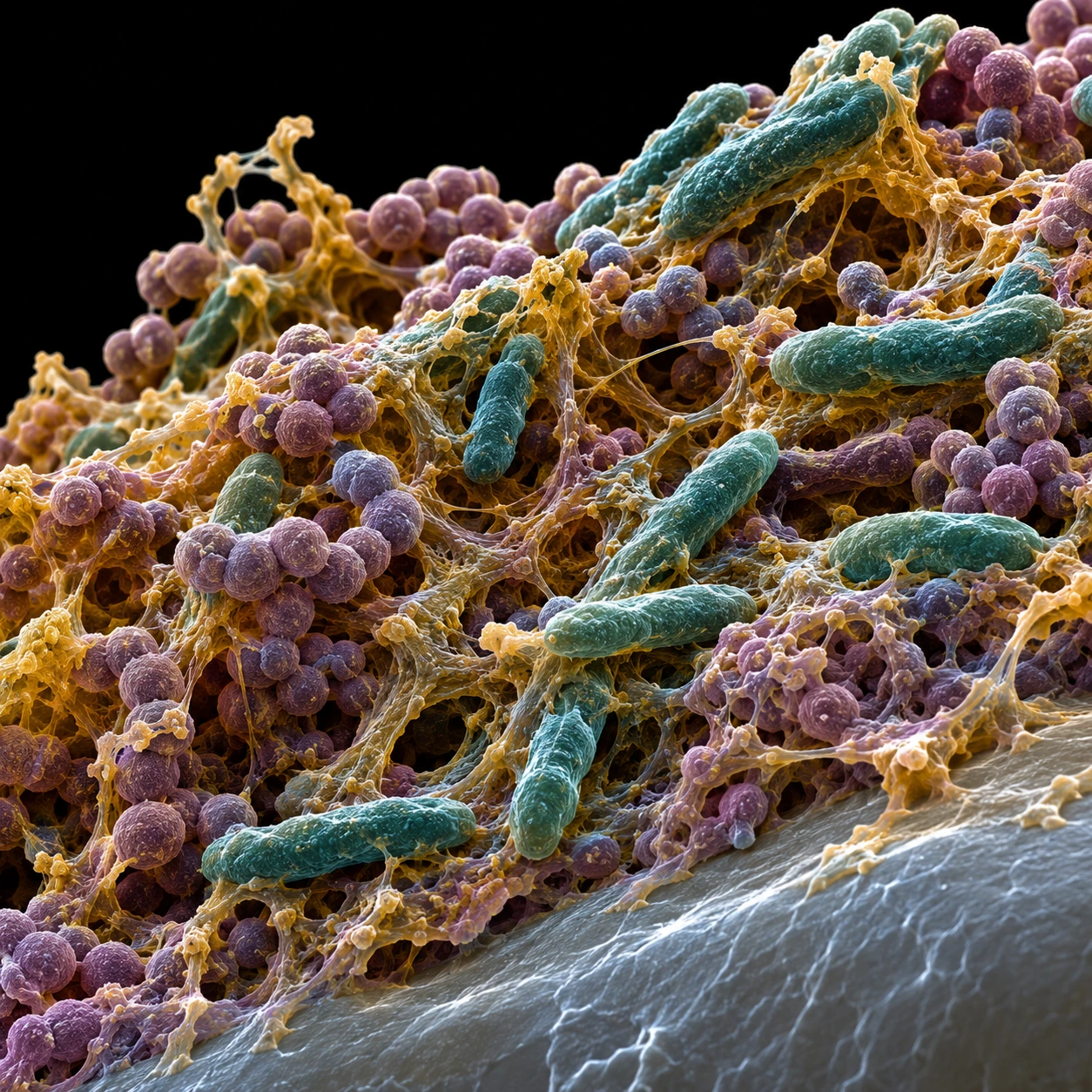
This section exists because it is the most common way antibacterial results get oversold. Dental plaque is not a suspension of bacteria; it is a structured biofilm, an extracellular polysaccharide matrix in which cells sit at a fraction of their free-living metabolic rate. Biofilm bacteria routinely tolerate concentrations of an antimicrobial tens to hundreds of times higher than the same organism tolerates in broth. A minimum inhibitory concentration measured against planktonic S. mutans therefore tells you very little about whether a rinse will disturb plaque on a molar.
There is biofilm-specific work, and it is more interesting than the broth work: studies have looked at whether Piper betle extracts inhibit S. mutans adherence and glucosyltransferase activity — the enzyme that builds the sticky glucan matrix — rather than only killing the organism. Interfering with matrix formation is a more relevant mechanism for caries than raw bactericidal potency. See work on Piper betle, biofilm formation and S. mutans.
In a 2009 laboratory study, hydroxychavicol isolated from betel leaves inhibited every mouth pathogen tested, with minimum inhibitory concentrations of 62.5 to 500 µg/ml. It prevented the formation of water-insoluble glucan (the sticky matrix of plaque), inhibited the growth of Streptococcus mutans and Actinomyces viscosus biofilms and reduced biofilms these bacteria had already formed. Dye uptake by the treated bacteria suggested that it works by breaking the barrier of the bacterial membrane (PubMed PMID: 18573934). It remains laboratory work.
The Small Human Trials
Evidence tier: one small, short randomized crossover trial, not yet replicated.
The randomized human trial of a betel-leaf product found in PubMed is a 2022 randomized crossover pilot study of 60 people with mild gingivitis. They used a betel-leaf toothpaste and a miswak (Salvadora persica) toothpaste in turn; the study lasted 20 days and included a two-week washout period between the two toothpastes. Both toothpastes significantly lowered plaque index. The betel-leaf toothpaste reduced gum-bleeding scores more (p < 0.001, against p = 0.007 for miswak). When the participants went back to their usual toothpaste, gingival and plaque index did not fall significantly. The study had no placebo group and no chlorhexidine comparison (PubMed PMID: 36135162). PubMed searches for trials of Piper betle mouthwash against a placebo rinse or against chlorhexidine returned no records.
What is missing is what would make this strong evidence: trials large enough to be convincing, longer than a few weeks, registered in advance, conducted outside the regions with a cultural stake in the plant, and reporting a hard endpoint such as caries incidence or attachment loss rather than a plaque score. Also missing is standardisation — "5% betel leaf extract" means different things depending on cultivar, extraction solvent and leaf maturity, so two trials of the same nominal concentration may be testing meaningfully different preparations.
For what the endpoints mean clinically, see Gingivitis.
Honest verdict. The trial evidence is enough to say a Piper betle preparation is a plausible oral-hygiene agent worth studying properly. It is not enough to prefer it over the interventions with decades of evidence behind them — brushing with fluoride toothpaste twice a day, cleaning between the teeth, and having calculus removed professionally.
Periodontal Anaerobes and Gum Inflammation
Evidence tier: preliminary (in vitro and animal), with one small human trial on surrogate endpoints.
Periodontitis is driven by a shift in the subgingival community towards Gram-negative anaerobes — Porphyromonas gingivalis above all, with Tannerella forsythia, Treponema denticola and Fusobacterium nucleatum — and by the host inflammatory response to them, which is what actually destroys the attachment and bone. In-vitro work reports Piper betle extracts and hydroxychavicol inhibiting several of these organisms, and separately reports anti-inflammatory effects: suppression of nitric-oxide production and of pro-inflammatory cytokine release in stimulated macrophage models. If both held up in a person, the combination would be interesting, because an agent that hits the bacteria and dampens the host response addresses both arms of the disease.
The gap is that periodontitis lives in a pocket, in a mature biofilm, under a physical barrier, and no rinse reaches the base of a deep pocket. This is the same reason chlorhexidine is an adjunct to mechanical debridement rather than a substitute for it. See Piper betle against Porphyromonas gingivalis and other periodontal pathogens and the anti-inflammatory in-vitro work, then read Periodontitis for what treatment actually consists of.
Oral Candidiasis and Denture Stomatitis
Evidence tier: preliminary (in vitro), with a small amount of clinical work on denture wearers.
The antifungal findings are more consistent than most of the antibacterial ones. Piper betle extracts inhibit Candida albicans in vitro, and there is work on non-albicans species and on fluconazole-resistant isolates, plus reports that the leaf's phenols interfere with candidal adherence and hyphal transition — the switch from a rounded yeast to an invasive filamentous form that matters for tissue invasion. There is also interest in denture stomatitis specifically, because a denture surface is an accessible, non-shedding surface where a soak or rinse can plausibly do something a mouthrinse cannot do in a periodontal pocket.
This is the corner of the oral literature where a leaf preparation is most likely to eventually show a genuine clinical use. The clinical work so far is one small study. A 2021 study made a denture-soaking solution from a betel-leaf extract (an ethyl acetate fraction carried in tiny polymer particles called micelles). In a clinical test on the dentures of 15 volunteers, soaking the dentures in it daily for 14 days reduced Candida albicans on them by 86.1 ± 9.2%, and the solution did not change the hardness or roughness of the denture base resin (PubMed PMID: 33920823). It measured yeast on the dentures, not the condition of the gums. See Piper betle against Candida albicans.
Halitosis and Volatile Sulfur Compounds
Evidence tier: traditional use, with a thin mechanistic rationale.
Chewing a betel leaf after a meal to freshen the mouth is one of the oldest and most widespread uses of the plant, and it is the use with the weakest formal evidence. The mechanism proposed is reasonable on its face: most bad breath originates from volatile sulfur compounds — hydrogen sulfide, methyl mercaptan, dimethyl sulfide — produced by anaerobic bacteria breaking down proteins on the tongue dorsum and in periodontal pockets, so an antibacterial that reduces those organisms should reduce the compounds. There is also a trivial masking effect: the leaf tastes strongly of pepper and clove.
What has not been done well is measuring it. Halitosis research uses organoleptic scoring and portable sulfide monitors, and there is very little published work applying either to Piper betle in a controlled way. No published controlled measurement of volatile sulfur compounds in people after betel leaf was found. The laboratory work is a 2002 study that isolated allylpyrocatechol from the leaf as its main active compound against the anaerobic mouth bacteria behind bad breath; in dynamic in-vitro models its potential to reduce methyl mercaptan and hydrogen sulfide came mainly from that antibacterial activity (PubMed PMID: 12413722). See also Halitosis for what does work: tongue cleaning, treating gum disease, and finding the dental or sinus cause.
The bitter irony deserves stating. Habitual quid chewing, undertaken partly to freshen the breath, produces its own unmistakable odour, stains the teeth and mucosa red-brown, and drives the gum disease that causes halitosis in the first place.
Toothache, Eugenol and Numbing
Evidence tier: traditional use for betel leaf; well-established pharmacology for eugenol itself.
Betel leaf applied to a sore tooth or gum is traditional across South and Southeast Asia, and the plausible active is eugenol. Eugenol's dental credentials are not in doubt: it is a component of zinc-oxide eugenol cements and temporary dressings, it has genuine sensory-nerve-blocking activity, and it is why a clove pressed against a tooth has a real if brief effect. Betel leaf contains eugenol, but far less concentrated than clove bud oil, so the leaf is a weak vehicle for the same idea.
Two cautions. First, undiluted eugenol-rich oils irritate and can chemically burn oral mucosa — the classic injury is a white slough on the gum next to the tooth someone has been dosing with clove oil. Second, and more important: numbing a tooth treats the sensation, not the infection. A tooth that hurts enough to need this has a cause, and the causes progress. See the eugenol dental analgesia literature.
How Leaf Preparations Are Actually Used
Descriptive, not a recommendation. There is no established dose of Piper betle for any oral indication, and no regulatory monograph setting one.
- Infusion or decoction as a gargle — fresh leaves simmered in water, cooled, used as a mouthrinse or throat gargle and spat out. No trial of this form was found; the one randomized trial tested a toothpaste.
- Commercial herbal toothpastes and rinses — Piper betle appears as one botanical among several in products sold in India and Southeast Asia. In a multi-herb formulation you cannot attribute an effect to any one ingredient, and the fluoride content, if any, is what most determines whether the toothpaste prevents caries.
- Essential oil — concentrated, and the form where the safrole and estragole content actually matters. Undiluted phenol-rich oils can chemically burn the lining of the mouth (see the toothache section above).
- Chewing the plain leaf — the traditional after-meal practice. Without areca nut and without lime, this is a different exposure from a quid. It is still repeated mechanical and chemical contact with the same patch of mucosa, and it has never been formally evaluated for long-term safety.
- Preparations the cancer research concerns — any preparation containing areca nut, and any leaf chewing that involves slaked lime. Lime is caustic; see the slaked-lime section of the risk article.
What This Evidence Does Not Support
- It does not support chewing betel quid for oral health. Quid chewing causes oral cancer and oral submucous fibrosis. No antibacterial finding offsets a Group 1 carcinogen.
- It does not support replacing fluoride toothpaste. Caries prevention by fluoride is one of the best-evidenced interventions in all of dentistry. A plaque-index reduction in a 20-day trial is not in the same category of evidence.
- It does not support treating an infection. A dental abscess, cellulitis, or spreading facial swelling is a medical emergency requiring drainage and often antibiotics. In-vitro inhibition of S. aureus has no bearing on this.
- It does not support skipping the dentist. Every condition discussed here — caries, gingivitis, periodontitis, candidiasis, halitosis — is diagnosed by examination. And in a betel-chewing population, an oral examination is doing a second job: looking for the white patches, red patches and non-healing ulcers that precede oral cancer.
- It does not establish that the leaf is harmless. Hydroxychavicol is genotoxic in cell culture at higher concentrations, the leaf contains variable safrole, and long-term human safety data for leaf extracts do not exist.
Key Research Papers
Papers cited in the text come first, each closing with its PubMed record; live PubMed topic searches follow. Where a specific figure would be needed for a claim to mean anything and that figure is not firmly established, the finding is described qualitatively instead.
- Sharma S, Khan IA, Ali I, et al. (2009). Evaluation of the antimicrobial, antioxidant, and anti-inflammatory activities of hydroxychavicol for its potential use as an oral care agent. Antimicrobial Agents and Chemotherapy 53(1):216-22. — PubMed PMID: 18573934
- Singh D, Narayanamoorthy S, Gamre S, et al. (2018). Hydroxychavicol, a key ingredient of Piper betle induces bacterial cell death by DNA damage and inhibition of cell division. Free Radical Biology and Medicine 120:62-71. Work done in Escherichia coli. — PubMed PMID: 29550331
- Ramji N, Ramji N, Iyer R, Chandrasekaran S (2002). Phenolic antibacterials from Piper betle in the prevention of halitosis. Journal of Ethnopharmacology 83(1-2):149-52. In-vitro models. — PubMed PMID: 12413722
- Okonogi S, Phumat P, Khongkhunthian S, Suttiat K, Chaijareenont P (2021). Denture-Soaking Solution Containing Piper betle Extract-Loaded Polymeric Micelles; Inhibition of Candida albicans, Clinical Study, and Effects on Denture Base Resin. Antibiotics (Basel) 10(4):440. — PubMed PMID: 33920823
- Ali MZ, Elbaz WFA, Adouri S, et al. (2022). Effect of a Novel Betel Leaf Dentifrice on Commonly Seen Oral Hygiene Parameters-A Randomized Clinical Crossover Study. Dentistry Journal (Basel) 10(9):166. — PubMed PMID: 36135162
- Secretan B, Straif K, Baan R, et al. (2009). A review of human carcinogens--Part E: tobacco, areca nut, alcohol, coal smoke, and salted fish. Lancet Oncology 10(11):1033-4. — PubMed PMID: 19891056
PubMed Topic Searches
- Antibacterial activity of Piper betle leaf extracts and their phenolic constituents — the core in-vitro screening literature. — Search PubMed
- Piper betle against Streptococcus mutans and the caries process. — Search PubMed
- Effects on biofilm formation by Streptococcus mutans. — Search PubMed
- Activity against Porphyromonas gingivalis. — Search PubMed
- Anti-inflammatory effects in macrophage and cytokine-release models. — Search PubMed
- Antifungal activity against Candida albicans, including resistant isolates. — Search PubMed
- Eugenol as a dental analgesic and sensory-nerve blocker.
- Genotoxicity and cytotoxicity of Piper betle extracts at higher concentrations. — Search PubMed
- IARC evaluations of betel quid and areca nut — the necessary counterweight to every item above.
Connections
- All Herbs
- Betel Leaf — Benefits Deep Dive — the hub, including the chemistry and evidence-tier overview.
- Betel Quid, Areca Nut and Cancer Risk — read this alongside the present page, not instead of it.
- Betel Leaf for Wound Care and Skin — the same phenols applied externally.
- Betel Leaf (Piper betle) — the main topic page.
- Betel Nut (Areca catechu) — the other plant entirely.
- Dentistry — the oral-health section.
- Gingivitis — the endpoint used in most betel-leaf mouthwash trials.
- Periodontitis — why a rinse cannot reach the base of a pocket.
- Halitosis — what actually reduces oral malodour.
- Oral Cancer — the reason an oral examination matters more than a mouthwash in this population.
- Clove for Dental Pain and Oral Health — eugenol with a much deeper evidence base.
- Clove — Antimicrobial Spectrum — a useful comparison for how phenol antimicrobials are usually assessed.
- Neem — Benefits — the other South Asian botanical used routinely for oral care.
- Oil Pulling — another traditional oral practice with a similarly thin trial base.
- Staphylococcus aureus — one of the organisms inhibited in vitro.
- Escherichia coli — a Gram-negative comparator, generally less susceptible.
Educational information only, not medical or dental advice. Nothing on this page is a reason to chew betel quid or any areca-containing product, and nothing here replaces brushing with fluoride toothpaste, cleaning between the teeth, and regular dental examination. There is no established therapeutic dose of Piper betle for any oral condition. Concentrated betel-leaf essential oil is the form in which safrole and estragole content matters, and undiluted phenol-rich oils can chemically burn the lining of the mouth. A white or red patch that persists, a mouth ulcer that has not healed in two weeks, a lump, a loose tooth with no obvious cause and reduced mouth opening are the signs dentists check for oral cancer and its precursors.