Baheda Safety: Iron, Dose and Unknowns
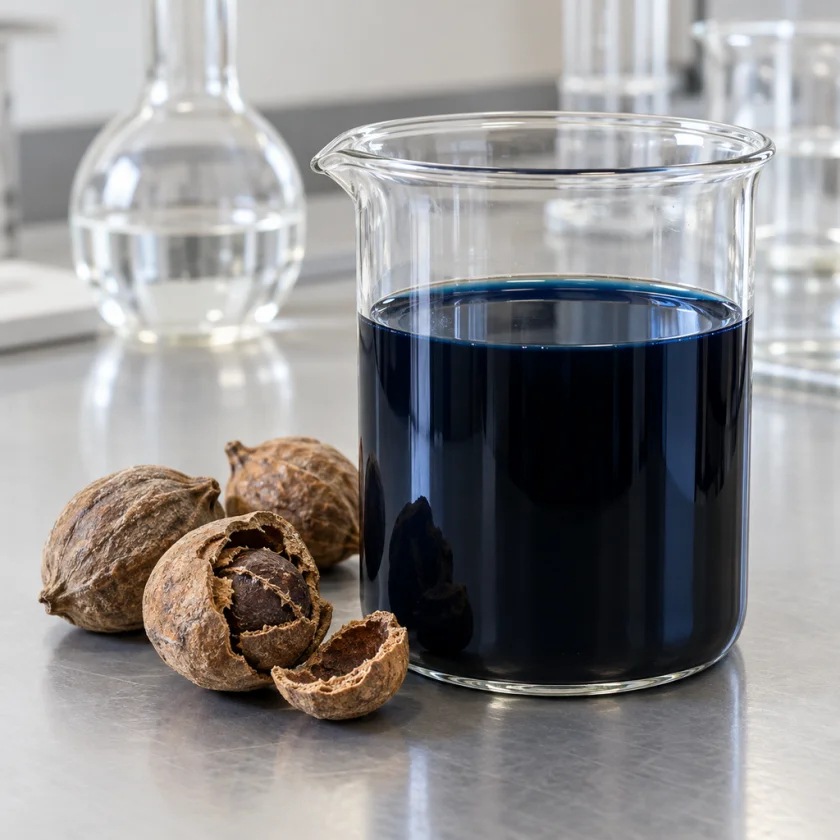
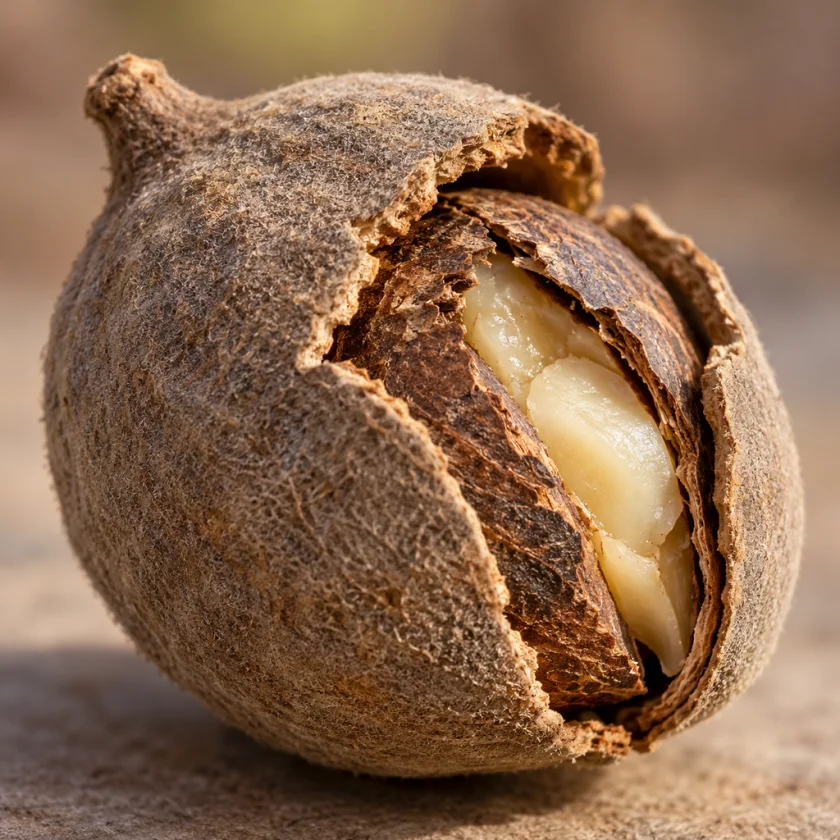
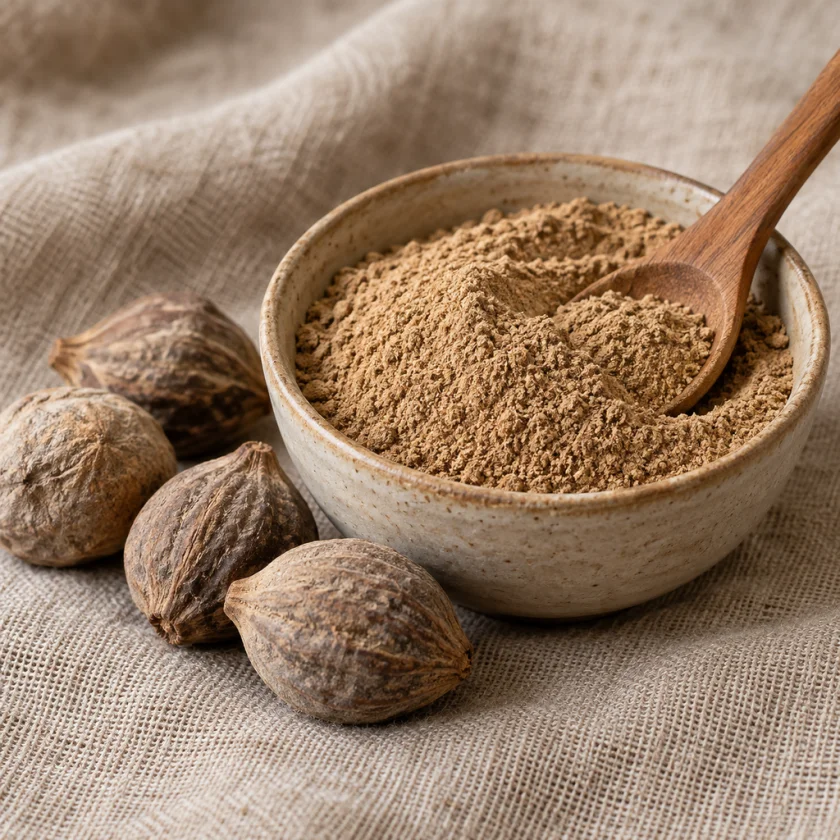
Baheda is a food-adjacent forest fruit with a long record of human use and no dramatic toxicity attached to it. This page does not manufacture hazards it does not have, and it includes a section listing the ones it has been checked for and cleared of. What it does have is one well-characterised interaction, one under-appreciated exposure pattern, and a long list of things nobody has measured.
The interaction is iron. The argument has already been made on this site from haritaki's side: amla's ascorbate promotes non-haem iron absorption while the galloyl tannins of the two Terminalia fruits block it, so a single-herb product keeps the blocker and discards the hedge. That analysis is not repeated here and it is not contradicted. It is extended, because baheda's position turns out to be worse than haritaki's in a specific way that has nothing to do with chemistry and everything to do with how the herb is actually used.
Table of Contents
- Evidence Tier for This Page
- The Iron Problem, From Baheda's Side
- The Tanning Industry Made This Point First
- Why Baheda's Best Evidence Makes the Iron Problem Worse
- The Awkward Overlap: Kidney Disease and Anaemia
- Practical: Separating Baheda From Iron
- The One Place Where Triphala Is the Safer Product
- The Two-Hour Rule for Medicines
- Glucose-Lowering Drugs
- Gastric Irritation and Astringency at Higher Doses
- The Seed Kernel Is Not the Medicine
- Pregnancy, Breastfeeding and Children
- Product Quality and Heavy Metals
- Doses and Figures This Page Refuses to Give
- Hazards Baheda Does Not Have
- Who the Research Raises Concerns For
- Key Research Papers
- Connections
- Featured Videos
Evidence Tier for This Page
- Human absorption studies — the tannin–iron interaction, established for galloyl-rich hydrolysable tannins and for isolated tannic acid in test meals. This is the best-established human pharmacology in the whole baheda topic, and it describes a harm rather than a benefit.
- Randomized clinical trial, single herb — the two hyperuricaemia trials, which reported good tolerability over 24 weeks in fewer than 200 people combined. Reassuring about common adverse effects; silent about uncommon ones.
- Preliminary (animal) — the glucose-lowering data behind the hypoglycaemia-stacking caution.
- Traditional use and pharmacognostic report — the seed-kernel warning. Old, consistent across independent sources, and never characterised.
- Absent — pregnancy and lactation data, paediatric data, formal interaction studies, human pharmacokinetics, long-term safety. Each of these is stated below as a finding, not glossed over.
- Checked and clear — several hazards a reader might reasonably import from other herbs. Named explicitly under hazards baheda does not have, because clearing a plant of something is as much part of accuracy as convicting it.
The Iron Problem, From Baheda's Side
The mechanism is the same as haritaki's, so it is stated briefly and then extended.
Baheda is dominated by hydrolysable tannins: large molecules built on a sugar core studded with gallic acid units. The galloyl group is the specific structural feature that binds non-haem iron — the plant-food form of iron — in the gut, holding it in a complex the intestine cannot take up. Brune, Rossander and Hallberg showed in the European Journal of Clinical Nutrition in 1989 that the inhibition tracks the number of galloyl groups and that condensed tannins, the cocoa and apple type, behave quite differently. In the same study, tannic acid added to a test meal cut iron absorption by 20% at 5 mg, by 67% at 25 mg and by 88% at 100 mg. Hurrell, Reddy and Cook showed the everyday version of the same effect with polyphenol-rich beverages in 1999: drinks carrying 20–50 mg of polyphenols per serving cut iron absorption from a bread meal by 50–70%, and black tea cut it by 79–94%.
Herb teas count too. In the same Hurrell study, peppermint tea cut iron absorption by 84%, pennyroyal by 73%, vervain by 59%, lime flower by 52% and camomile by 47%, and adding milk to tea or coffee made little or no difference. This bears directly on baheda, which many people take as a tea or decoction.
The extension is this: a baheda-only product is in exactly the same position as a haritaki-only product, and readers do not know that. Haritaki has a public reputation as “the strong, tannic one”. Baheda has no public reputation at all, so nothing warns a reader that a bibhitaki capsule carries the same class of molecule. Two consequences follow:
- The chemistry does not care which fruit you chose. Both are galloyl-rich Combretaceae fruits, both share chebulagic acid and its relatives, and baheda adds its own ellagitannins and gallotannins. Whether baheda's total tannin load is higher or lower than haritaki's is not something this page will claim — the reported figures are too method- and grade-dependent, as the chemistry article explains. What matters is that it is in the same structural class and the same order of magnitude.
- Choosing bibhitaki over haritaki does not avoid the problem. If someone read the haritaki iron warning and switched fruits, they switched to a fruit with the same interaction and less evidence. That is the single most useful sentence on this page.
The Tanning Industry Made This Point First
Baheda has a second line of evidence for its tannin load that owes nothing to pharmacology: the fruit is used commercially in tanning leather and in dyeing.
Tanning works by cross-linking protein — tannins bind collagen and convert hide into leather. A fruit selected by tanners is a fruit with a tannin content high enough to be worth harvesting and shipping for that purpose, judged by people with no interest in medicine. Dyeing with tannin plus an iron salt to produce black and grey shades is older still, and it is literally the tannin–iron complex that the absorption studies describe, exploited on purpose.
So the practical warning has an unusually concrete form. The reason baheda blocks iron in your gut is the same reason it has been used to fix dye to cloth and hide to leather. That is not an analogy. It is the same reaction.
Why Baheda's Best Evidence Makes the Iron Problem Worse
This is the point that genuinely distinguishes baheda from haritaki, and it comes from the pattern of use rather than the chemistry.
Haritaki's principal use is intermittent. It is taken as a bowel regulator, often as needed, often stopped when the problem resolves. Triphala is more often nightly, but again as a general tonic that people cycle on and off. Intermittent tannin exposure with meals spaced away from it is a manageable iron risk.
Baheda's one evidence-supported use is the opposite of intermittent. The two randomised trials that give this fruit its only single-herb human evidence tested a standardised aqueous extract taken twice daily for 24 weeks for hyperuricaemia. Uric acid is a chronic problem; urate-lowering treatment is open-ended by design; nobody takes it for a fortnight. So the one indication for which baheda has real trial support is also the one that implies continuous, twice-daily, months-to-years tannin exposure.
The trial numbers. Usharani and colleagues (2016) randomised 110 people with high uric acid to five groups for 24 weeks; T. bellerica 500 mg twice daily lowered average uric acid from 8.07 to 5.78, while febuxostat 40 mg once daily lowered it from 8.53 to 4.28. The authors called it a pilot study. Pingali and colleagues (2020) randomised 59 people with chronic kidney disease and high uric acid (55 finished); after 24 weeks uric acid had fallen by 19.8% on 500 mg twice daily, 33.9% on 1,000 mg twice daily and 63.7% on febuxostat. That trial compared doses against febuxostat and had no placebo group. These are the figures behind “weaker than febuxostat” further down this page.
Iron status responds to sustained changes in absorption, not to single meals. A modest percentage reduction in non-haem iron uptake, applied to every meal for six months, is exactly the shape of exposure that moves ferritin. That is why this deserves its own section rather than a line in a caution list.
What is not known, stated plainly. The published reports of those trials centre on urate and renal function. Whether six months of daily tannin exposure shifted haemoglobin, ferritin or transferrin saturation depends on whether those were reported at all — and where they were not, that is absence of data, not evidence that nothing happened. “Well tolerated” in a trial report means no notable adverse events were recorded; it does not mean iron status was tracked.
The Awkward Overlap: Kidney Disease and Anaemia
One more consequence follows, and it is uncomfortable enough to state directly.
The second and larger-dose of the two trials was conducted in people with chronic kidney disease and hyperuricaemia. Anaemia is one of the defining complications of chronic kidney disease: reduced erythropoietin production, functional iron deficiency driven by inflammation and hepcidin, absolute iron deficiency from blood loss and poor absorption, and shortened red-cell survival all contribute. Iron replacement, oral or intravenous, is a standard part of managing it.
So the population with the best trial-based reason to take baheda daily for months is also a population in which:
- Iron deficiency and anaemia are common at baseline and are actively treated.
- Oral iron is frequently prescribed — and oral iron absorption is precisely what galloyl tannins impair, which turns a general dietary caution into a direct drug interaction with the patient's own prescription.
- Phosphate binders, calcium, vitamin D analogues and other agents are also commonly prescribed, several of which are cations or are absorption-sensitive, so the two-hour spacing problem multiplies.
- Kidney function itself is the endpoint being watched — the trial measured uric acid, creatinine and kidney filtration rate every four weeks.
None of this says the trial was wrong or badly conducted — it was run under nephrology supervision with regular monitoring, which is the correct setting. It says that the tested intervention came with that monitoring, and that taking the same extract at home without it, in the population it was tested in, leaves the iron and spacing issues above unwatched. See iron deficiency and ferritin.
Practical: Separating Baheda From Iron
The interaction depends on timing. It is a luminal interaction — the tannin has to be in the gut at the same time as the iron — so separation genuinely works, in a way it would not for a systemic interaction.
- The spacing used for this kind of interaction is at least two hours from iron supplements, and a longer gap leaves less tannin in the gut. A once-daily iron dose and baheda can sit at opposite ends of the day.
- The same two-hour gap applies to iron-rich meals — the meals a person relies on nutritionally, especially on a plant-based diet where all the iron is non-haem: lentils and beans, dark leafy greens, wholegrains, seeds, dried fruit, fortified foods.
- Tea and coffee taken with it add to the effect. Both are iron-absorption inhibitors themselves: in the Hurrell study black tea cut iron absorption from a bread meal by 79–94%, so the two effects stack.
- Vitamin C with iron-rich meals works the other way — citrus, peppers, tomatoes. Ascorbate partly counteracts tannin inhibition of non-haem iron, which is the mechanism by which amla hedges the formula; in the Thankachan study, ascorbic acid added to a rice meal raised iron absorption by 270–350%. That favours timing iron with vitamin C; it does not mean vitamin C cancels baheda taken at the same meal. See vitamin C, iron absorption and anaemia.
- The same spacing applies to other mineral supplements. Tannins bind divalent cations generally, so zinc and calcium belong in the separated group too.
- A blood test shows what symptoms do not. Ferritin falls well before haemoglobin does, so a baseline and a follow-up after a few months reveal a drift that symptoms will not.
- During treatment for iron deficiency, baheda works directly against the treatment. There is no timing arrangement that makes a potent absorption inhibitor a neutral companion to iron replacement.
The One Place Where Triphala Is the Safer Product
Worth stating because two separate arguments on this site converge on the same conclusion, from opposite directions.
- The evidence argument, from the attribution article: if what persuaded you was Triphala's trial evidence, the product matching that evidence is Triphala, not single-herb bibhitaki.
- The iron argument, from this page: Triphala contains amla, whose ascorbate pushes in the opposite direction to the tannins on non-haem iron absorption. The formula carries its own partial hedge. A single-herb product does not.
So on this one axis the formula is both better evidenced and less likely to cost you iron. That is an unusual alignment and it is worth naming, with two honest qualifications: Triphala is not iron-neutral — two-thirds of it is still galloyl-rich Terminalia fruit, and the amla contribution is a partial offset rather than a cancellation; and the spacing described above applies to the formula too. The claim is comparative, not exculpatory.
The Two-Hour Rule for Medicines
Tier: predicted from tannin chemistry. No formal interaction study of baheda with any drug has been published — which is absent data, not reassurance.
The spacing usually given is about two hours between baheda and any medicine. The reason is the same protein- and cation-binding chemistry described above: tannins complex many drug molecules non-specifically in the gut, reducing how much is absorbed. Tannin-rich foods and beverages are a documented cause of reduced absorption for several drugs, so this is a real interaction class rather than a theoretical one.
It matters most for narrow-margin drugs, where a modest change in absorption changes the effect: levothyroxine and other thyroid hormone; anticonvulsants (phenytoin, carbamazepine, valproate, lamotrigine); digoxin and lithium; immunosuppressants (ciclosporin, tacrolimus, mycophenolate); anticoagulants; oral contraceptives, where reduced absorption means reduced reliability; antiretrovirals and antibiotics, where under-dosing has consequences beyond the individual; and oral iron and other mineral supplements, as above.
Chemotherapy is a separate case. No interaction study exists with any cytotoxic regimen, and the cell-culture “synergy” paper sometimes cited in support says nothing about what happens in a person receiving chemotherapy, where both reduced absorption of an oral cancer drug and unknown added effects are possible.
Glucose-Lowering Drugs
Tier: caution — plausible and unquantified.
Baheda extracts and gallic acid isolated from the fruit lower glucose in diabetic rodent models, and tannins inhibit α-amylase and α-glucosidase at the brush border — an effect that does not require absorption, which makes it one of the more plausible systemic-sounding claims. The chemistry article sets out the studies.
That is not enough to say baheda treats anything. It is enough to treat an added effect on a glucose-lowering drug as possible until shown otherwise:
- Highest concern: insulin, sulfonylureas (gliclazide, glipizide, glimepiride) and meglitinides, because these cause hypoglycaemia on their own.
- The first two to three weeks after starting are when an added effect would show up on glucose readings, including before driving.
- The absorption interference runs the other way too. A diabetes drug taken at the same time as baheda may be less well absorbed — so the net result can be erratic control rather than simply lower glucose. Two mechanisms pulling in opposite directions is harder to manage than either alone.
- No study supports lowering a prescribed diabetes dose because of baheda. Its glucose data come from rodents, and no human trial has measured its effect alongside these drugs.
Gastric Irritation and Astringency at Higher Doses
The commonest adverse effect and the most predictable. An intensely astringent, tannin-dense preparation, above whatever an individual's threshold is, produces:
- Nausea, particularly on an empty stomach — which is also how these preparations are traditionally taken, a genuine tension.
- Abdominal discomfort or cramping, often within hours.
- A dry, puckering mouth and temporary blunting of taste, from the astringency itself.
- Constipation or loose stools depending on dose and preparation. The direction is genuinely uncertain for this fruit — see the discussion of roasting in the respiratory and traditional uses article — and that uncertainty means the effect of a given dose cannot be predicted in advance.
- Reduced appetite, consistent with strong bitter and astringent taste generally.
What these symptoms mean: they are dose signals, tied to the amount of tannin taken. In gastritis, reflux, peptic ulcer disease or inflammatory bowel disease, a strongly astringent preparation adds irritation to a lining that is already inflamed. And no effect at all at the top of the traditional range is also information — it suggests the problem being treated is not one this herb addresses.
Hypersensitivity. In the Donato trial of guggulu plus Triphala in 90 adults with high cholesterol, 2 of the 46 people taking the herbs (4.3%) developed a hypersensitivity rash, against none of the 44 on placebo. Over the 3 months of treatment the formula did not lower total or LDL cholesterol more than placebo. Small numbers, but the asymmetry points the right way. Facial or throat swelling, wheeze or difficulty breathing are signs of a severe allergic reaction that hospitals treat as an emergency.
The Seed Kernel Is Not the Medicine
Tier: consistent pharmacognostic report, never characterised.
Classical and colonial-era Indian pharmacognostic sources — the compilations most modern herbals quote from — consistently report that the seed kernel of Terminalia bellirica is intoxicating or narcotic when eaten in quantity, with effects described as inebriation, nausea and stupor. The medicinal article of trade is the dried fruit pulp with the stone removed.
Being precise about the status of that claim matters, in both directions:
- It is not confirmed by controlled study. The biomedical literature contains no controlled human or animal investigation of kernel toxicity in this species, and no compound has been convincingly identified as responsible. This page will not name one, because naming a compound on inference would be a guess dressed as a fact.
- It is not a scare story either. The report is old, it is consistent across independent sources, and it is biologically unremarkable — many seed kernels contain compounds absent from the surrounding flesh, and the same is true across several familiar fruits.
The practical facts are the same however strong the evidence is, which is exactly why the uncertainty does not matter much here:
- The medicine is the fruit pulp. Baheda powder of good quality is made from de-seeded fruit.
- Whole dried fruit prepared at home still contains the stone, and the kernel sits inside it.
- The kernel is the part reported as intoxicating, and whole fruit within a child’s reach is the likeliest way a child ends up eating one out of curiosity.
- A label that says fruit, fruit pulp or pericarp names the plant part. A product that does not specify it leaves the kernel question open.
Pregnancy, Breastfeeding and Children
Pregnancy: no safety data. Three points, and the first carries the most weight.
- There are no human safety data. Not “no reported harm” — no data. No trial has assessed baheda in pregnancy for any outcome, and no surveillance system would reliably detect harm from an uncommon supplement in any case. Absence of evidence of harm is not evidence of safety, and pregnancy is where that distinction is least negotiable.
- The iron problem is at its worst here. Iron requirement rises substantially in pregnancy, iron-deficiency anaemia in pregnancy is common and consequential, and a potent inhibitor of non-haem iron absorption taken daily works directly against the goal.
- The toxicology of the plant is poorly characterised generally, including the uncharacterised kernel report, which argues for extra caution rather than less.
Breastfeeding: no data either, and iron demand stays high.
Children: no paediatric dose or safety data. There is no established paediatric dose for internal use, no paediatric safety data, and the kernel report applies to whole fruit within a child's reach. A child’s cough, constipation or fever has causes that a herb from a jar does not identify.
Product Quality and Heavy Metals
Tier: documented, repeatedly, for the product category.
Not baheda-specific, but it applies to baheda as much as to any imported traditional product. Contamination of Ayurvedic and other imported traditional herbal medicines with lead, mercury and arsenic has been documented repeatedly in published surveys of retail products, and the US National Center for Complementary and Integrative Health carries a warning to that effect in its Ayurvedic medicine overview. Two distinct sources are worth separating: accidental contamination from soil, industrial pollution near collection sites, processing equipment or packaging, which batch testing catches; and deliberate inclusion, since some traditional preparations of the rasa shastra type contain metals as intended ingredients — a different product category with a different risk profile, and a plain single-herb powder is not one of them.
What separates products: batch testing with a certificate of analysis is what catches accidental contamination; plain baheda powder or plain Triphala has a clearer composition than complex proprietary formulas; unusually cheap products and anything without a full ingredient list carry more uncertainty; and unexplained anaemia, abdominal pain or neurological symptoms in a long-term user of imported traditional medicine are recognised signs of lead exposure. Background: toxic minerals. An extra reason to care with this species: baheda is almost entirely wild-collected from forest trees, so provenance is often unknown even to the wholesaler — a quality-control problem in its own right, quite apart from potency variation.
Doses and Figures This Page Refuses to Give
Named so their absence is visible rather than looking like an oversight.
- A general therapeutic dose. There is none. Outside hyperuricaemia there is no dose-finding study for baheda in humans, no established maximum and no characterised dose–response curve. The traditional powder ranges on the main page are labelled as tradition, and this page does not convert them into a recommendation.
- A lethal or toxic dose. No such figure is available for the fruit pulp, and inventing one would be worse than useless.
- A tannin percentage, or milligrams of gallic acid per gram. Method-, grade- and origin-dependent to a degree that a single number would misinform. A certificate of analysis names the assay used for a given batch.
- The identity of the compound behind the kernel report. Unknown. Stated as unknown.
- A quantified interaction magnitude for any drug. No formal study exists. The two-hour rule is derived from tannin chemistry and from the general polyphenol–drug literature, not from a measurement on this herb.
- A safe duration of continuous use. The longest human exposure documented is 24 weeks in fewer than 200 people. Beyond that, nothing is known, and this page will not imply a limit it cannot support.
Hazards Baheda Does Not Have
A reader arriving from other herb pages on this site may reasonably wonder about several specific dangers. Each was checked, and each comes back clear or not-applicable. A checked-and-clear finding is information, and omitting it would leave a false impression by silence.
- No pyrrolizidine alkaloids. The hepatotoxic pyrrolizidine alkaloid problem attaches to particular genera in the borage, aster and legume families — comfrey, coltsfoot, butterbur, ragwort. Baheda is Combretaceae and there is no pyrrolizidine alkaloid issue reported for it. The comfrey-and-coltsfoot style of liver injury is not a baheda concern.
- No stimulant-laxative dependence pattern. The concern that attaches to senna — anthraquinone-driven purgation, dose escalation, melanosis coli with prolonged use — has no documented basis here. No anthraquinone fraction of consequence is reported from this fruit, and its own traditional character is astringent rather than purgative. Where baheda appears in a laxative context it is as part of Triphala; if you are worried about habitual laxative use, the herb to read about is senna, not this one.
- No thiaminase and no vitamin-destroying enzyme activity. The horsetail concern — enzymatic destruction of thiamine, compounded by diuresis, which is why that herb carries a duration limit — does not apply. Baheda's absorption interference is a binding effect in the gut, not enzymatic vitamin destruction.
- No hydroquinone-type active moiety and no consequent duration cap. Uva ursi's benefit and its time limit are the same molecule; baheda has no analogous compound and no established reason for a fixed course length. The absence of long-term data is a separate matter, and it is stated above rather than dressed up as a mechanism.
- No documented baheda-specific pattern of liver injury. Herbal and dietary supplements as a category are a recognised cause of drug-induced liver injury, and that general caution applies to any herb; but there is no established case pattern attached to T. bellirica specifically. The animal literature on this fruit points the other way, towards protection in a chemically induced model — which is weak evidence in its own right and is discussed in the chemistry article.
- No known photosensitising or phototoxic effect. The furanocoumarin problem of the carrot and citrus families is not a Combretaceae issue.
- No cardiovascular activity to speak of, in either direction. Worth stating explicitly because it is the likeliest false import in the genus: Terminalia arjuna, not baheda, is the Terminalia with a cardiac reputation and clinical literature, and it is bark rather than fruit. Neither its benefits nor its cautions transfer.
- The name carries no hidden safety implication. Unlike “motherwort”, where the etymology quietly encodes a uterine action and therefore a pregnancy contraindication, baheda's names describe the fruit and the trade rather than an action. One caution about naming does apply, though it is about identity rather than safety: “myrobalan” identifies nothing — it covers all three Triphala fruits and, in European horticulture, an unrelated plum. Popular sources sometimes gloss the Sanskrit vibhitaki as “the one that removes fear of disease”; that reading is repeated folk etymology and nothing on this site rests on it.
Who the Research Raises Concerns For
Not relative cautions. These are the situations where the findings on this page weigh most heavily.
- Iron-deficiency anaemia, low ferritin, or active iron replacement. The clearest case on the page: 25 mg of tannic acid cut iron absorption from a meal by 67%.
- Pregnancy and breastfeeding.
- Children, for internal use — no paediatric dose or safety data exist.
- The seed kernel, at any age and in any quantity — the part reported as intoxicating.
- As a replacement for urate-lowering therapy. Baheda was substantially weaker than febuxostat in the trials that tested it: in the kidney-disease trial uric acid fell by 19.8–33.9% on baheda against 63.7% on febuxostat. See gout.
- Chronic kidney disease without monitoring. The trial was run under nephrology supervision, with kidney function measured every four weeks, for reasons set out above.
- Alongside chemotherapy, or any narrow-margin medication — no interaction study exists for either.
- Transplant recipients and anyone on immunosuppressants.
- Active gastritis, peptic ulcer disease, reflux or an inflammatory bowel disease flare — a strongly astringent preparation adds irritation there.
- In place of asthma medication or antibiotics, or for any respiratory red flag. See the respiratory article.
- Anyone with a previous hypersensitivity reaction to baheda, Triphala or another Terminalia product.
Key Research Papers
Studies checked against their PubMed records link to that record by PMID; background literature is given as a PubMed topic search. Each entry carries its evidence tier and, where the intervention was a formula rather than baheda alone, says so.
- Brune M, Rossander L, Hallberg L. Iron absorption and phenolic compounds: importance of different phenolic structures. European Journal of Clinical Nutrition. 1989;43(8):547-57 — inhibition tracks galloyl group number, condensed tannins behave differently, and tannic acid at 5, 25 and 100 mg cut iron absorption by 20%, 67% and 88%. The mechanistic anchor of everything on this page. Human absorption study. PubMed PMID: 2598894
- Hurrell RF, Reddy M, Cook JD. Inhibition of non-haem iron absorption in man by polyphenolic-containing beverages. British Journal of Nutrition. 1999;81(4):289-95 — black tea among the strongest inhibitors tested, herb teas also potent. The everyday scale of the effect. Human absorption study. PubMed PMID: 10999016
- Thankachan P, Walczyk T, Muthayya S, Kurpad AV, Hurrell RF. Iron absorption in young Indian women: the interaction of iron status with the influence of tea and ascorbic acid. American Journal of Clinical Nutrition. 2008;87(4):881-6 — one or two cups of black tea cut iron absorption from a rice meal by 49% and 66% in iron-replete women and by 59% and 67% in women with iron-deficiency anaemia, a similar inhibition in both groups; the anaemic women absorbed about 2.5 times as much iron overall. Human absorption study. PubMed PMID: 18400710
- Usharani P, Nutalapati C, Pokuri VK, Kumar CU, Taduri G. A randomized, double-blind, placebo-, and positive-controlled clinical pilot study to evaluate the efficacy and tolerability of standardized aqueous extracts of Terminalia chebula and Terminalia bellerica in subjects with hyperuricemia. Clinical Pharmacology: Advances and Applications. 2016;8:51-9 — 110 people, 24 weeks. The source of the chronic twice-daily exposure pattern discussed above. Randomized clinical trial (pilot), single herb. PubMed PMID: 27382337
- Pingali U, Nutalapati C, Koilagundla N, Taduri G. A randomized, double-blind, positive-controlled, prospective, dose-response clinical study to evaluate the efficacy and tolerability of an aqueous extract of Terminalia bellerica in lowering uric acid and creatinine levels in chronic kidney disease subjects with hyperuricemia. BMC Complementary Medicine and Therapies. 2020;20(1):281 — 59 people, compared against febuxostat with no placebo group. The trial whose population overlaps most awkwardly with the iron caution. Randomized clinical trial, single herb. PubMed PMID: 32933504
- Anaemia of chronic kidney disease — iron deficiency, hepcidin-driven functional iron deficiency, and the role of oral and intravenous iron in management. Background for why a tannin-rich daily supplement is a poor fit in that population. Reviews and guidelines. Topic search
- Donato F, Raffetti E, Toninelli G, Festa A, Scarcella C, Castellano M; TRIGU Project Working Group. Guggulu and Triphala for the Treatment of Hypercholesterolaemia: A Placebo-Controlled, Double-Blind, Randomised Trial. Complementary Medicine Research. 2021;28(3):216-225 — negative on the primary outcomes, and the source of the hypersensitivity-rash observation (2 of 46 versus 0 of 44). Randomized clinical trial, formula — not baheda alone. PubMed PMID: 33242870
- Tannin and polyphenol interference with drug absorption in the gastrointestinal tract — the general literature behind the two-hour spacing rule, since no study has measured it for this herb. Reviews and mechanistic studies. Topic search
- Gallic acid isolated from Terminalia bellerica in streptozotocin-induced diabetic rats — insulin-secretagogue and lipid-lowering effects, the basis of the hypoglycaemia-stacking caution. Described rather than attributed, as the metadata is not verified here. Preliminary (animal). Topic search
- Toxicity and safety literature for the species, searched under both spellings — bellirica and bellerica — because a single-spelling search misses most of the field. Run it to see how little is there. Largely absent. Topic search
- Heavy metals in Ayurvedic and imported traditional herbal medicines — retail surveys and case reports of lead, mercury and arsenic exposure. Documented harm, product category. Topic search
- Herb-induced liver injury — the general supplement-associated pattern, cited because the category caution applies to any herb while no baheda-specific pattern is reported. Reviews and registries. Topic search
Connections
- All Herbs
- Baheda (Terminalia bellirica) — the main topic page, with the uric-acid trial numbers and the full cautions list.
- Baheda — Benefits Deep Dive — the hub for these four articles.
- Baheda, Triphala and the Attribution Problem — the evidence argument that converges with the iron argument here.
- Baheda: Tannins, Gallic Acid and the Research — the chemistry, including why no tannin percentage is printed.
- Baheda for Respiratory and Other Traditional Uses — where a spat-out gargle avoids most of this page.
- Haritaki — Triphala, Dosing and Safety — the original statement of the amla-ascorbate hedge, extended here from baheda's side.
- Amla / Indian Gooseberry — the ascorbate-bearing third fruit, and the reason the formula hedges.
- Agrimony — Iron Absorption, Interactions and Safety — the same tannin–iron problem on a European astringent.
- Iron and Iron Deficiency — the headline caution in full.
- Ferritin — the test that tracks iron stores over months of daily use.
- Vitamin C, Iron Absorption and Anaemia — the counterweight, and its limits.
- Uric Acid and Gout — the one indication with single-herb trial support.
- Toxic Minerals — background on the metals found in some imported products.
- Senna — the herb the stimulant-laxative concern actually belongs to.
Safety and disclaimer. This article is health information, not medical advice, and no dose figure on it is a recommendation. Baheda’s tannins block iron absorption, so it works against iron-deficiency treatment; no safety data exist for pregnancy, breastfeeding or children; and the seed kernel is reported to be intoxicating. Tannins bind iron, other minerals and many medicines in the gut, which is why a gap of at least two hours from iron-containing meals, mineral supplements and medicines is the spacing described above; the drugs where reduced absorption matters most include thyroid hormone, anticonvulsants, digoxin, lithium, immunosuppressants, anticoagulants, oral contraceptives and glucose-lowering drugs. In trials baheda lowered uric acid less than febuxostat, the chronic kidney disease trial was run with kidney function monitored every four weeks, and no study has tested it alongside chemotherapy. A rash was the reaction seen in a Triphala trial; facial or throat swelling or breathing difficulty are signs of a severe allergic reaction that hospitals treat as an emergency.