Oregano — Benefits Deep Dive
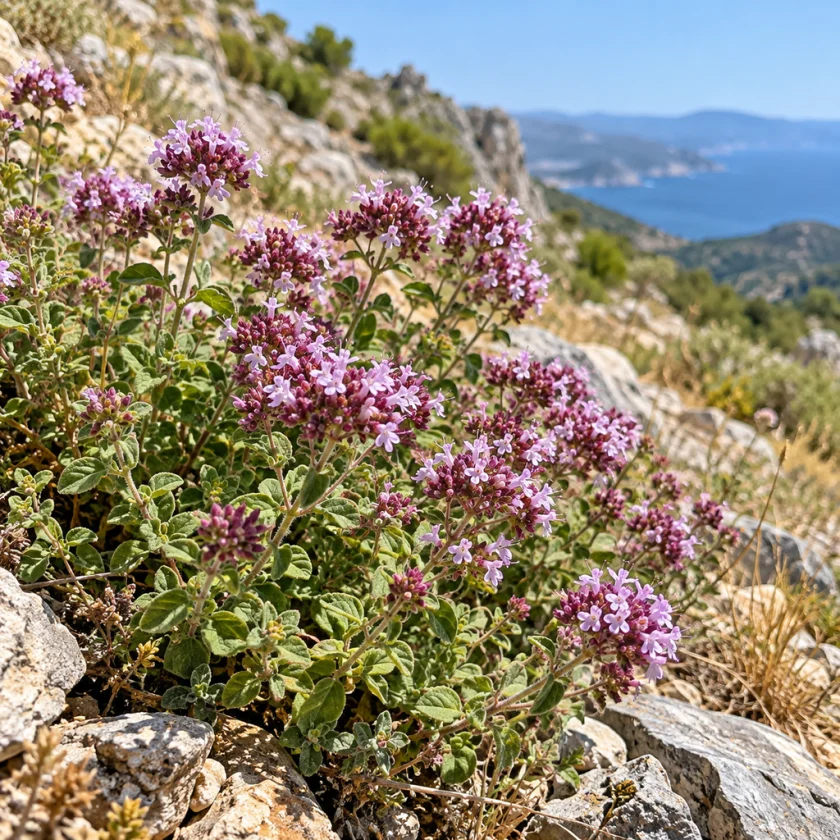
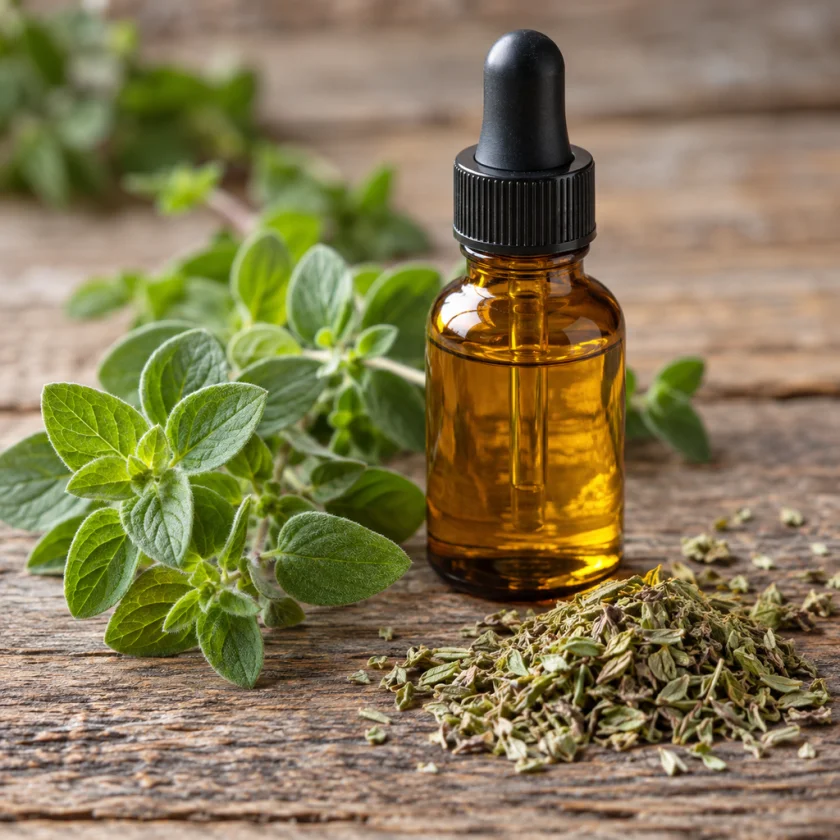
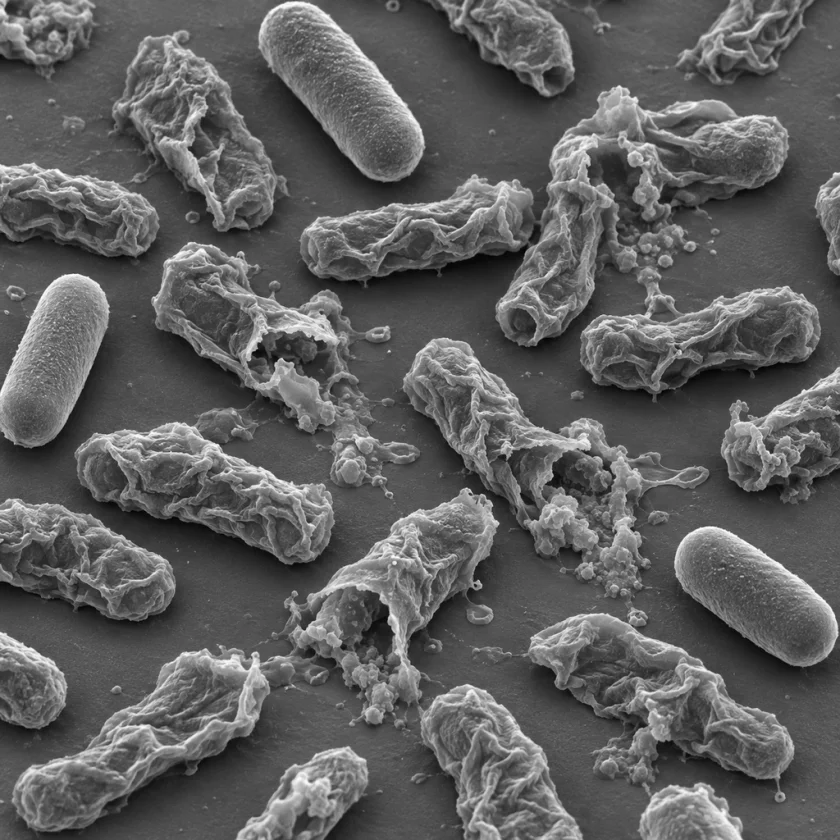
Origanum vulgare is the most antimicrobial of the culinary herbs, owing its broad-spectrum activity to two structurally related phenolic monoterpenoids — carvacrol (typically 50–80% of the essential oil) and thymol — that disrupt microbial cell membranes by integrating into the lipid bilayer, dissipating proton gradients, and leaking cytoplasmic contents. This is mechanistically distinct from antibiotic enzyme inhibition, which is the proposed reason that, in laboratory tests, methicillin-resistant Staphylococcus aureus (MRSA) was as susceptible to oregano oil as ordinary staphylococci (Nostro 2004); laboratory activity against vancomycin-resistant Enterococcus (VRE) and antibiotic-resistant Candida is also reported. Note that Origanum vulgare (true Mediterranean oregano) is botanically distinct from Mexican oregano (Lippia graveolens, in the Verbenaceae rather than Lamiaceae) despite the shared common name. Origanum vulgare also contains rosmarinic acid, a phenolic antioxidant that contributes to its anti-inflammatory action. Four benefit pages below explore the conditions where oregano produces the largest documented effect — broad-spectrum bacterial infections including MRSA, Candida and dermatophyte fungal disease, intestinal parasites and small intestinal bacterial overgrowth (SIBO), and the antioxidant and upper-respiratory applications inherited from Mediterranean folk medicine.
Deep-Dive Articles
Antibacterial Spectrum
The carvacrol and thymol membrane-disruption mechanism behind oregano's broad-spectrum activity against Gram-positive and Gram-negative pathogens, the Nostro 2004 laboratory work in which 21 methicillin-resistant and 26 methicillin-susceptible staphylococci were equally susceptible to oregano oil, carvacrol and thymol, a 2011 wound-ointment trial, an oral candidiasis pilot, and the critical distinction between "oil of oregano" supplements (for example a commercial oregano-oil product standardized to carvacrol), essential oil (typically 60–80% carvacrol), and culinary dried oregano leaf.
Read the deep dive →Antifungal
Laboratory data and a mouse study on Candida albicans oral and systemic candidiasis (Manohar 2001: in mice with a whole-body Candida infection, 80% survived 30 days of daily oregano oil, while mice given only olive oil died within 10 days), topical use for dermatophyte infections including athlete's foot (Trichophyton rubrum) and onychomycosis (nail fungus), in vitro comparative data against nystatin and fluconazole, and the carvacrol-plus-thymol ergosterol membrane disruption mechanism that explains the broad fungal coverage.
Read the deep dive →Antiparasitic & Small Intestinal Bacterial Overgrowth
The Force 2000 report on 14 adults with gut parasites and no comparison group: after 600 mg of emulsified oregano oil a day for 6 weeks, Blastocystis hominis cleared in 8, Entamoeba hartmanni in 4 and Endolimax nana in 1, and gut symptoms improved in 7 of the 11 with Blastocystis; the Chedid 2014 Johns Hopkins clinic comparison (not randomized), in which commercial multi-herb products turned the breath test negative in 17 of 37 patients (46%) vs 23 of 67 (34%) on the antibiotic rifaximin for small intestinal bacterial overgrowth, a difference that was not statistically significant (P = .24), with the abstract not listing the herbs in the products; and the traditional Mediterranean and Hispanic folk use for intestinal worms and gut dysbiosis.
Read the deep dive →Antioxidant & Respiratory
Oregano's extremely high oxygen radical absorbance capacity (ORAC) value (rivaling clove), upper-respiratory infection trials, the traditional Mediterranean use as expectorant and cough remedy, the carvacrol-driven anti-inflammatory action on bronchial mucosa, immune modulation through NF-κB and tumor necrosis factor-α pathway effects, and the rosmarinic-acid contribution to total antioxidant capacity.
Read the deep dive →Table of Contents
- Deep-Dive Articles
- Why Oregano Produces Effects Across So Many Pathogens
- Oregano in Human Studies: Wound Ointment and Carvacrol Safety
- Research Papers: Antibacterial Spectrum
- Research Papers: Antifungal
- Research Papers: Antiparasitic & Small Intestinal Bacterial Overgrowth
- Research Papers: Antioxidant & Respiratory
- External Authoritative Resources
- Connections
- Featured Videos
Why Oregano Produces Effects Across So Many Pathogens
Most antimicrobial agents target one molecular feature of one class of pathogen. Penicillins block bacterial cell-wall transpeptidation; fluconazole blocks fungal lanosterol 14-alpha-demethylase; metronidazole reduces to a DNA-damaging radical inside anaerobes. Oregano essential oil is unusual because its two principal phenolic monoterpenoids — carvacrol and thymol — act through a fundamentally different, non-enzymatic mechanism that is shared across bacteria, fungi, protozoa, and even some helminths.
- Membrane integration and disruption — carvacrol and thymol are small, lipophilic phenols. They partition into the lipid bilayer of microbial cell membranes (and into the ergosterol-rich membrane of fungi), increase membrane fluidity, dissipate the transmembrane proton gradient (the proton-motive force), and at higher concentrations cause frank leakage of K+, adenosine triphosphate (ATP), and inorganic phosphate. The microbe then dies because it cannot maintain ion homeostasis, adenosine triphosphate synthesis, or nutrient transport. This is the dominant mechanism behind the broad-spectrum antibacterial and antifungal effects.
- Resistance is mechanistically difficult — because the target is the lipid bilayer itself and not an enzyme, single-amino-acid point mutations cannot confer resistance the way they do for β-lactams, fluoroquinolones, or azoles. This is the proposed reason that, in laboratory tests, oregano oil, carvacrol and thymol worked as well against methicillin-resistant staphylococci as against ordinary ones (Nostro 2004); laboratory activity against vancomycin-resistant Enterococcus and fluconazole-resistant Candida is also reported.
- Phenolic antioxidant and anti-inflammatory signaling — in addition to the membrane action, carvacrol and the co-occurring rosmarinic acid scavenge reactive oxygen species and modulate NF-κB signaling, dampening pro-inflammatory cytokine release. This is what underlies the extremely high oxygen radical absorbance capacity value and the upper-respiratory expectorant effect documented in traditional Mediterranean medicine.
The therapeutic complication is the same lipophilic, membrane-disrupting property that makes oregano essential oil so broadly antimicrobial also makes the concentrated oil caustic to mammalian mucosa. Undiluted carvacrol applied to oral, esophageal, or gastric mucosa produces a chemical burn comparable to undiluted clove or cinnamon oil. The therapeutic safety margin therefore depends on dilution — oral oregano oil capsules contain emulsified oil in a carrier (typically olive or coconut oil) at concentrations far below the neat essential oil, and herbal practitioners describe diluting topical preparations 1:4 or more in a carrier oil before contact with mucous membranes or sensitive skin. The four deep-dive pages above cover the four most-studied applications, with the doses and dilutions used in studies and in practice.
Oregano in Human Studies: Wound Ointment and Carvacrol Safety
Wound ointment after skin surgery. In a 2011 randomized, double-blind trial, 40 people who had skin surgery (a surgical excision) put either a 3% oregano-extract ointment or plain petroleum jelly (petrolatum) on the wound. On day 12, 19% of wound cultures in the oregano group grew Staphylococcus aureus, compared with 41% in the petroleum-jelly group. One person in the oregano group developed a skin infection (cellulitis), compared with three in the petroleum-jelly group. Scar color, pigmentation and pliability scored better with oregano, and overall scar appearance was equivalent (Ragi 2011).
Carvacrol safety in healthy adults. In a 2018 phase I safety study, healthy adults took 1 or 2 mg of carvacrol (oregano oil’s main compound) per kilogram of body weight each day for one month. Several blood values shifted from their starting levels, but every blood and urine test after treatment stayed within the normal range, and the authors reported the compound was safe and tolerated at these doses (Ghorani 2021, online 2018).
Research Papers: Antibacterial Spectrum
- Nostro A, Blanco AR, Cannatelli MA, Enea V, Flamini G, Morelli I, Sudano Roccaro A, Alonzo V (2004) — Susceptibility of methicillin-resistant staphylococci to oregano essential oil, carvacrol and thymol. FEMS Microbiol Lett 230(2):191-5 — PubMed PMID: 14757239
- Ragi J, Pappert A, Rao B, Havkin-Frenkel D, Milgraum S (2011) — Oregano extract ointment for wound healing: a randomized, double-blind, petrolatum-controlled study evaluating efficacy. J Drugs Dermatol 10(10):1168-72 — PubMed PMID: 21968667
- Ghorani V, Alavinezhad A, Rajabi O, Mohammadpour AH, Boskabady MH (2021) — Safety and tolerability of carvacrol in healthy subjects: a phase I clinical study. Drug Chem Toxicol 44(2):177-189 — PubMed PMID: 30486682
- Carvacrol and thymol membrane-disruption mechanism in Gram-positive and Gram-negative bacteria — PubMed: Carvacrol/thymol membrane mechanism
- Oregano essential oil minimum inhibitory concentration against foodborne pathogens — PubMed: Oregano oil MIC food pathogens
- Pharmacology of carvacrol-standardized oregano-oil formulations — PubMed: Carvacrol-standardized oregano oil
- Oregano oil oral candidiasis pilot — PubMed: Oregano oral candidiasis
Research Papers: Antifungal
- Manohar V, Ingram C, Gray J, Talpur NA, Echard BW, Bagchi D, Preuss HG (2001) — Antifungal activities of origanum oil against Candida albicans. Mol Cell Biochem 228(1-2):111-7 — PubMed PMID: 11855736
- Carvacrol and ergosterol membrane disruption in Candida — PubMed: Carvacrol ergosterol
- Oregano essential oil vs nystatin in vitro comparative activity — PubMed: Oregano vs nystatin
- Topical oregano oil for dermatophyte infections (athlete's foot, onychomycosis) — PubMed: Oregano dermatophytes
- Oregano oil and fluconazole-resistant Candida isolates — PubMed: Oregano vs azole-resistant Candida
Research Papers: Antiparasitic & Small Intestinal Bacterial Overgrowth
- Force M, Sparks WS, Ronzio RA (2000) — Inhibition of enteric parasites by emulsified oil of oregano in vivo. Phytother Res 14(3):213-4 — PubMed PMID: 10815019
- Chedid V, Dhalla S, Clarke JO, Roland BC, Dunbar KB, Koh J, Justino E, Tomakin E, Mullin GE (2014) — Herbal therapy is equivalent to rifaximin for the treatment of small intestinal bacterial overgrowth. Glob Adv Health Med 3(3):16-24 — PubMed PMID: 24891990
- Carvacrol activity against Giardia lamblia trophozoites in vitro — PubMed: Carvacrol Giardia
- Oregano oil and methane-dominant SIBO / IMO archaea — PubMed: Oregano methane SIBO
- Traditional Mediterranean and Hispanic use of oregano for intestinal worms / dysbiosis — PubMed: Oregano ethnobotanical use
Research Papers: Antioxidant & Respiratory
- USDA ORAC database: oregano among highest ORAC of common herbs (comparable to clove) — PubMed: Oregano ORAC
- Rosmarinic acid content in Origanum vulgare and total antioxidant activity — PubMed: Rosmarinic acid oregano
- Carvacrol anti-inflammatory effects via NF-κB and TNF-α suppression — PubMed: Carvacrol NF-kB
- Oregano oil as expectorant in upper respiratory tract infection — PubMed: Oregano respiratory
- Carvacrol bronchodilatory and mucolytic activity in animal models — PubMed: Carvacrol bronchodilator
External Authoritative Resources
- U.S. National Center for Complementary and Integrative Health (NCCIH) — Herbs at a Glance — National Center for Complementary and Integrative Health
- MedlinePlus — Oregano
- Drugs.com — Oregano professional monograph
- PubMed — All research on Origanum vulgare (~2,500+ papers)
- PubMed — All research on carvacrol (~5,000+ papers)
Connections
- All Herbs
- Oregano (Main Page)
- Oregano Antibacterial Spectrum
- Oregano Antifungal
- Oregano Antiparasitic & Small Intestinal Bacterial Overgrowth
- Oregano Antioxidant & Respiratory
- Antibacterial Herbs
- Thyme (thymol source)
- Garlic
- Olive Leaf
- Berberine
- Neem
- Sage
- Small Intestinal Bacterial Overgrowth
- Staphylococcus aureus / Methicillin-Resistant Staphylococcus Aureus
- Parasites
- Gut Healing
- Acne
- History