⚠ Evidence warning: Clinical trials or other evidence do not support the claims from the Khan 2003 cassia trial that fasting glucose fell 18-29%, low-density lipoprotein 7-27% and triglycerides 23-30%. This page keeps it as a report of what people, websites or other media say.
Cinnamon — Benefits Deep Dive
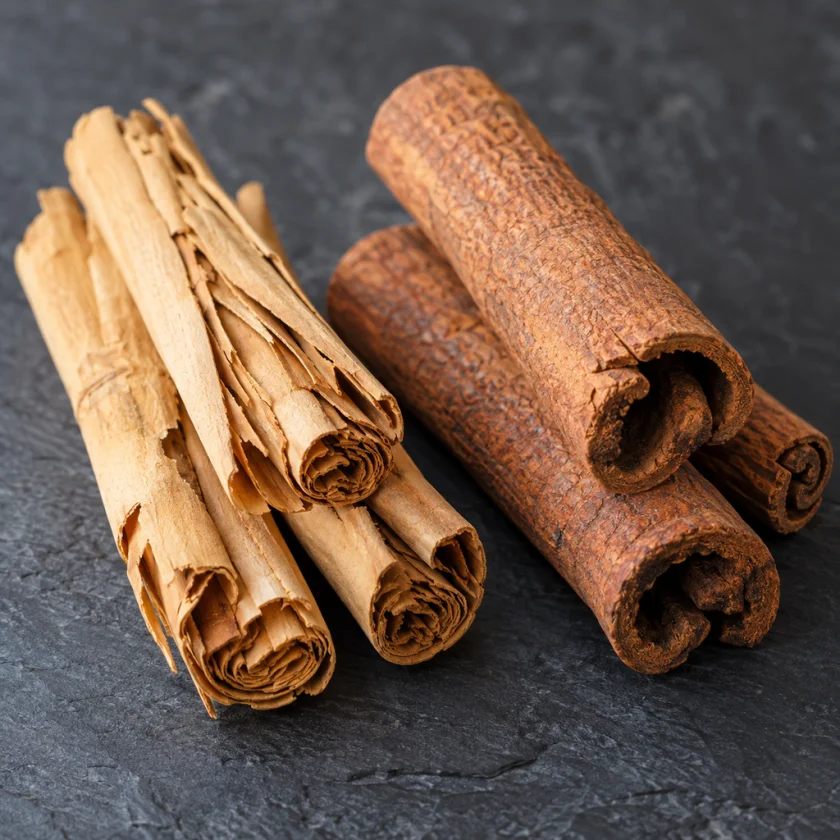
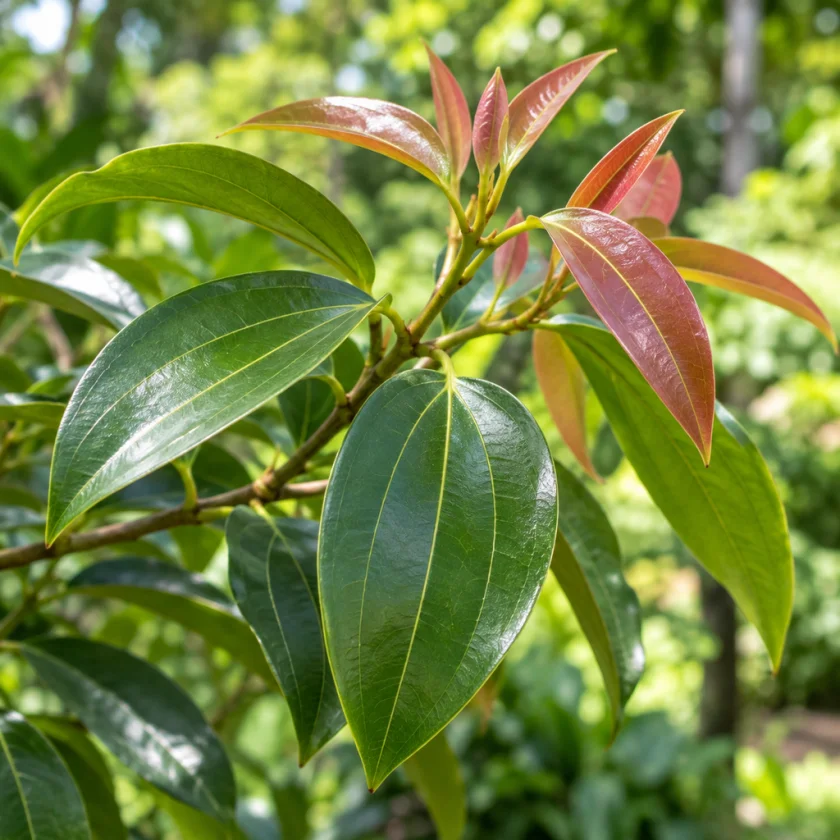
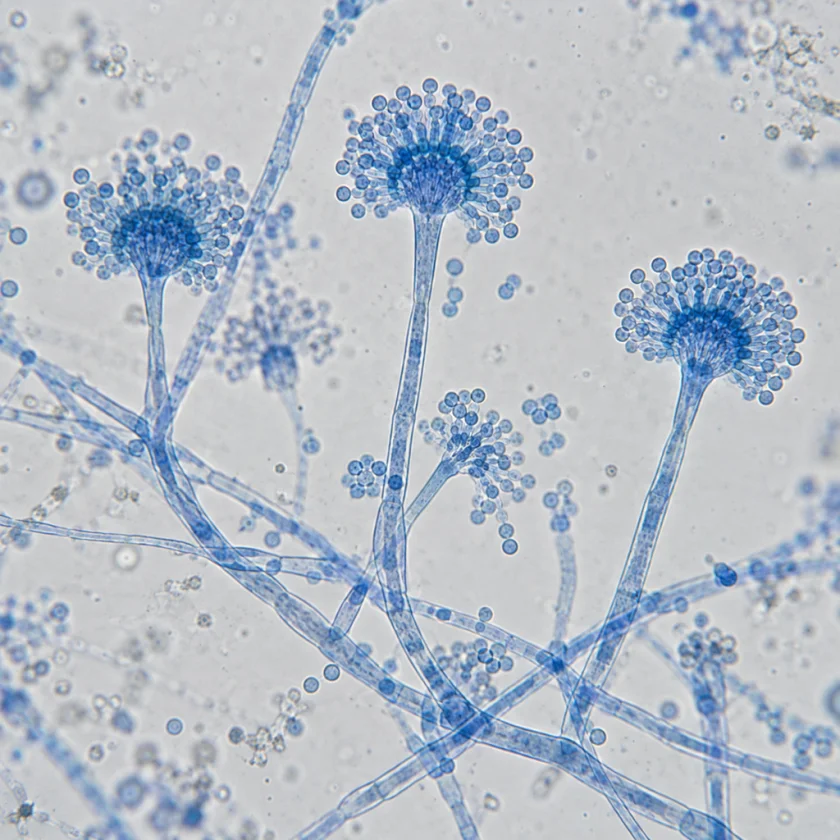
Cinnamon is two different spices sold under one English word. Cinnamomum verum (Ceylon or "true" cinnamon, native to Sri Lanka) and Cinnamomum cassia (Chinese cinnamon, the dominant supermarket variety in North America) share the headline aromatic compound cinnamaldehyde and the same general flavor, but they differ enormously in one safety-critical molecule: coumarin. Coumarin, a documented hepatotoxin at sustained intake, varies widely in cassia — a German government laboratory measured cassia sticks ranging from below the limit of detection to about 10,000 mg per kg — while Ceylon contains less than 0.05%. The four benefit pages below explore where cinnamon produces real clinical effect — glycemic control and insulin sensitization (the Allen 2013 and Moridpour 2024 meta-analyses), cardiovascular and lipid effects, broad-spectrum antimicrobial and antifungal activity — and the coumarin-content page, which covers the safety question for daily use.
CASSIA HEPATOTOXICITY WARNING
Products sold as "cinnamon" for daily blood-sugar use can be Ceylon (C. verum) or Cassia (C. cassia, C. burmannii, or C. loureiroi); the coumarin risk comes from cassia. The German Federal Institute for Risk Assessment (BfR) calculated that a 60 kg adult exceeds the tolerable daily coumarin intake (0.1 mg/kg body weight = 6 mg/day) with as little as 2 grams of cassia per day — roughly two-thirds of a teaspoon. The EU regulatory limit for coumarin in baked goods is 50 mg/kg. Coumarin causes dose-dependent hepatotoxicity in rodents and case reports of human hepatitis at sustained intake. The full Cassia vs Ceylon page covers the coumarin dose calculations for daily use.
Deep-Dive Articles
Blood Sugar Control
The single most-studied clinical use. Khan et al. 2003 Diabetes Care trial: 60 Pakistani type 2 diabetics took 1, 3, or 6 g/day cassia for 40 days — fasting glucose dropped 18–29% and low-density lipoprotein (LDL) cholesterol fell 7–27% in all dose arms. The Allen 2013 meta-analysis pooled 10 randomized controlled trials (RCTs): fasting glucose fell, but HbA1c (the 3-month blood-sugar average) did not change significantly, and results varied widely between trials. A 2024 meta-analysis of 24 trials found fasting blood sugar, insulin resistance and HbA1c fell compared with control. Mechanism: cinnamaldehyde activates insulin receptor autophosphorylation and MHCP (methylhydroxychalcone polymer) mimics insulin at the receptor level.
Read the deep dive →Cardiovascular Health
The lipid-lowering effect that rode in on the coattails of the diabetes trials — Khan 2003 showed low-density lipoprotein down 7–27% and triglycerides down 23–30% in the cassia arms; the Maierean 2017 meta-analysis (13 RCTs, 750 participants) found triglycerides fell by 23.91 mg/dL and total cholesterol by 13.92 mg/dL, while low-density lipoprotein (LDL) and HDL cholesterol did not change significantly. Cinnamaldehyde has anti-platelet aggregation activity (thromboxane A2 inhibition) and modest blood-pressure-lowering effect in hypertensive type 2 diabetic patients. The diabetes trials pooled by Allen 2013 used 120 mg to 6 g a day. Clinical doses: 1–6 g/day cassia or 1–3 g/day Ceylon.
Read the deep dive →Antimicrobial & Antifungal
Broad-spectrum in-vitro activity. Cinnamaldehyde and cinnamon essential oil inhibit Candida albicans (including fluconazole-resistant strains), methicillin-resistant Staphylococcus aureus (MRSA), Escherichia coli, Salmonella, Listeria monocytogenes, and Helicobacter pylori at micromolar concentrations. Real-world applications: oral-microbiome modulation, food preservation (already EU-approved as a flavoring agent and natural preservative), and aromatherapy. Caveats on essential-oil dilution.
Read the deep dive →Cassia vs Ceylon & Coumarin (Critical Safety Read)
Coumarin content is the main safety difference between cinnamon products. Cassia (Chinese cinnamon, the dominant supermarket variety) carries highly variable coumarin — from below detection to about 10,000 mg/kg in one German retail study. Ceylon (C. verum) contains less than 0.05% — trace amounts. The German BfR consumer warning, the EU 50 mg/kg regulatory limit for baked goods, case reports of cinnamon-challenge hepatitis, and dose calculations for habitual daily users (diabetic, oatmeal, capsule).
Read the deep dive →Table of Contents
Why Cinnamon Produces Effects
Cinnamon is not a single-compound supplement — it is a complex botanical with at least three classes of bioactive constituents that map to the clinical effects observed in randomized trials.
- Cinnamaldehyde (trans-cinnamaldehyde, the aroma molecule) — the dominant essential-oil constituent (65–80% of cinnamon essential oil by weight). It is the molecule responsible for the spice's characteristic smell and flavor, and most of the bioactivity. Cinnamaldehyde activates the TRPA1 receptor (which is why concentrated cinnamon "burns"), inhibits platelet aggregation by blocking thromboxane A2 synthesis, and — the headline glycemic effect — it activates insulin-receptor autophosphorylation and downstream PI3K/Akt signaling in skeletal muscle and adipocytes, mimicking part of the insulin signal. This is the mechanism behind the fasting-glucose reductions seen in the pooled trials and the broad-spectrum antimicrobial activity.
- MHCP (methylhydroxychalcone polymer) and proanthocyanidins (procyanidin type-A oligomers) — a separate class of water-soluble polyphenols in the bark. Anderson and colleagues at U.S. Department of Agriculture (USDA) isolated MHCP in the early 2000s and showed that it directly activates the insulin receptor kinase, mimicking insulin at sub-physiologic concentrations. MHCP and the type-A procyanidins together explain why aqueous cinnamon extracts (which contain little cinnamaldehyde because the volatile oil is mostly removed) still produce glucose-lowering effects in clinical trials. Some commercial supplements are a water-soluble cinnamon extract standardized on these polyphenols.
- Cinnamic acid and eugenol — minor essential-oil constituents that contribute to the anti-inflammatory and antimicrobial effects. Cinnamic acid is a precursor to cinnamaldehyde and also has independent anti-platelet activity. Eugenol (more abundant in clove but present in cinnamon) is a topical anesthetic and antibacterial agent.
How strong the blood-sugar evidence is: the 2003 Pakistani trial that started much of the interest in cinnamon for blood sugar is now under a 2025 Expression of Concern from the American Diabetes Association, which publishes the journal. Independent statisticians found differences between the study groups at the start that are inconsistent with proper randomization, possible mix-ups of standard deviations and standard errors, no formal test of the dose-response the study set out to measure, and unusually high adherence with no one lost to follow-up; the authors could not be reached for their data. The pooled trials give the wider picture. Allen 2013 (10 trials, 543 people with type 2 diabetes, 120 mg to 6 g a day for 4 to 18 weeks) found fasting glucose fell by 24.59 mg/dL, with no significant change in HbA1c and large differences between trials, which the authors say limits how the results apply to patient care. A 2024 meta-analysis of 24 trials (Moridpour 2024) found that fasting blood sugar, insulin resistance (HOMA-IR) and HbA1c fell compared with control, while blood insulin levels did not change significantly; its authors describe cinnamon as a possible add-on therapy in type 2 diabetes.
The therapeutic complication that runs through every cinnamon discussion is coumarin — an unrelated benzopyrone present at widely varying levels in cassia and at trace amounts (less than 0.05%) in Ceylon. A German government laboratory found cassia sticks from the retail market ranging from below the limit of detection to about 10,000 mg of coumarin per kg, and among five cassia trees sampled in Indonesia, one varied widely while two had no detectable coumarin (Woehrlin 2010). Coumarin is a documented hepatotoxin in rodents and humans, and the EU and German BfR have set tolerable-daily-intake limits that an adult can exceed with as little as 2 grams of cassia per day. That tolerable daily intake is 0.1 mg per kg of body weight: the European Food Safety Authority first set it in 2004 from animal liver data, and a 2010 review from the German Federal Institute for Risk Assessment (Abraham 2010) reached the same figure from records of patients given coumarin as a medicine, which showed that a subgroup of people is more sensitive to its liver effect than the laboratory animals tested; the cause of that sensitivity is unknown. A German telephone survey of more than 1,000 people over the Christmas season found that heavy users of cassia cinnamon may reach that limit. The fourth deep-dive page covers how the two species are told apart, the dose calculations, and Ceylon sourcing. For habitual daily users (diabetic supplementation, daily oatmeal), the species decides most of the coumarin intake.
Key Research Papers
- American Diabetes Association (2025). Expression of Concern. Alam Khan, Mahpara Safdar, Mohammad Muzaffar Ali Khan, Khan Nawaz Khattak, and Richard A. Anderson. Cinnamon Improves Glucose and Lipids of People With Type 2 Diabetes. Diabetes Care 2003;26:3215-3218. Diabetes Care 48(9):1646. — PubMed PMID: 40834253
- Allen RW, Schwartzman E, Baker WL, Coleman CI, Phung OJ (2013). Cinnamon use in type 2 diabetes: an updated systematic review and meta-analysis. Annals of Family Medicine 11(5):452–459. — Allen 2013 meta-analysis. — PubMed PMID: 24019277
- Akilen R, Tsiami A, Devendra D, Robinson N (2010). Glycated haemoglobin and blood pressure-lowering effect of cinnamon in multi-ethnic Type 2 diabetic patients in the UK. Diabetic Medicine 27(10):1159–1167. — Akilen 2010. — PubMed PMID: 20854384
- Moridpour AH, Kavyani Z, Khosravi S, Farmani E, Daneshvar M, Musazadeh V, Faghfouri AH (2024). The effect of cinnamon supplementation on glycemic control in patients with type 2 diabetes mellitus: An updated systematic review and dose-response meta-analysis of randomized controlled trials. Phytotherapy Research 38(1):117–130. — PubMed PMID: 37818728
- Maierean SM, Serban MC, Sahebkar A, Ursoniu S, Serban A, Penson P, Banach M; Lipid and Blood Pressure Meta-analysis Collaboration (LBPMC) Group (2017). The effects of cinnamon supplementation on blood lipid concentrations: A systematic review and meta-analysis. Journal of Clinical Lipidology 11(6):1393–1406. — PubMed PMID: 28887086
- Abraham K, Wöhrlin F, Lindtner O, Heinemeyer G, Lampen A (2010). Toxicology and risk assessment of coumarin: focus on human data. Molecular Nutrition & Food Research 54(2):228–239. — PubMed PMID: 20024932
- Woehrlin F, Fry H, Abraham K, Preiss-Weigert A (2010). Quantification of flavoring constituents in cinnamon: high variation of coumarin in cassia bark from the German retail market and in authentic samples from indonesia. Journal of Agricultural and Food Chemistry 58(19):10568–10575. — PubMed PMID: 20853872
External Authoritative Resources
- German Federal Institute for Risk Assessment (BfR) — High Daily Intakes of Cinnamon: Health Risk Cannot Be Ruled Out — the seminal consumer-safety warning on cassia coumarin
- U.S. National Institutes of Health (NIH) U.S. National Center for Complementary and Integrative Health (NCCIH) — Cinnamon Fact Sheet
- U.S. National Institutes of Health Office of Dietary Supplements — Fact Sheet Index
- MedlinePlus — Cinnamon (drug and supplement information)
- PubMed — All research on Cinnamon / Cinnamomum
Connections
- All Herbs
- Cinnamon (Main Page)
- Cinnamon for Blood Sugar Control
- Cinnamon for Cardiovascular Health
- Cinnamon Antimicrobial & Antifungal
- Cassia vs Ceylon & Coumarin
- Fenugreek
- Ginger
- Turmeric
- Clove
- Oregano
- Garlic
- Chromium
- Magnesium
- Diabetes
- Metabolic Syndrome
- Hypertension
- Blood Sugar Control
- Anti-Inflammatory Diet
- Inflammatory Markers
- History