Cinnamon for Blood Sugar Control
Of the dozens of botanical "blood sugar" supplements, cinnamon has the most consistent body of randomized-controlled-trial evidence behind it. The most-quoted early study, Khan et al. 2003 in Diabetes Care (60 people with type 2 diabetes in Pakistan taking 1, 3, or 6 grams of cinnamon per day for 40 days, with fasting glucose reported down 18–29% and low-density lipoprotein (LDL) cholesterol down 7–27%), has carried an Expression of Concern from the American Diabetes Association since September 2025, because independent statisticians questioned the plausibility of its data. Trials not under concern produced mixed results — some replicating, some not — but the Allen 2013 meta-analysis of 10 randomized controlled trials (RCTs) (n=543 patients) confirmed a statistically significant fasting-glucose reduction of approximately 24 mg/dL. The proposed mechanism comes from laboratory (cell) studies: cinnamaldehyde and the methylhydroxychalcone polymer (MHCP) both activate the insulin receptor and downstream PI3K/Akt signaling, mimicking part of the insulin signal in skeletal muscle and adipocytes. This page walks through the trials, the mechanism, the dosing, the species choice, and the practical limits of cinnamon as a glycemic intervention.
Table of Contents
- The Khan 2003 Trial, Its 2025 Expression of Concern, and Later Trials
- The Allen 2013 Meta-Analysis
- Mechanism: Cinnamaldehyde + MHCP Insulin Mimicry
- Insulin Receptor Autophosphorylation & PI3K/Akt Signaling
- Glycogen Synthase Activation & GLUT4 Translocation
- Aqueous Extract vs Whole-Spice vs Essential Oil
- Dosing Protocols (1, 3, 6 g/day)
- Ceylon vs Cassia for Glycemic Use
- Prediabetes and Metabolic Syndrome Applications
- What Cinnamon Is Not: Limits as a Diabetes Therapy
- Drug Interactions and Cautions
- Key Research Papers
- Connections
- Featured Videos
The Khan 2003 Trial, Its 2025 Expression of Concern, and Later Trials
For two decades the most-quoted cinnamon study was Alam Khan and colleagues' 40-day trial in Peshawar, Pakistan, published in the American Diabetes Association journal Diabetes Care in December 2003. On 1 September 2025 the American Diabetes Association issued an Expression of Concern about that paper (PubMed 40834253). Independent statisticians commissioned by the association found:
- significant differences in key measurements between the study groups at the start, which do not fit proper randomization and suggest possible selection bias
- an incomplete or unclear description of how patients were randomized, and no clear statement on whether they were blinded
- unusually low variation in the starting measurements and a possible mix-up of standard deviations and standard errors
- no formal test of the dose-response effect, although this was a main aim of the study, and no adjustment for multiple comparisons
- unusually high reported adherence and no one lost to follow-up, which is uncommon in clinical trials
The association could not reach the authors to obtain the underlying data, and it alerts readers to concerns about "the plausibility of the data reported in this study". The paper has not been retracted, but its results can no longer be treated as established.
Trials not under concern. Randomized trials by other groups give a more modest and mixed picture:
- Akilen 2010, United Kingdom — 58 people with type 2 diabetes on glucose-lowering tablets and with hemoglobin A1c (HbA1c) above 7%, given 2 g/day of cinnamon or placebo for 12 weeks (double-blind). HbA1c fell from 8.22% to 7.86% on cinnamon versus 8.55% to 8.68% on placebo; blood pressure fell from 132.6/85.2 to 129.2/80.2 mmHg. Fasting glucose fell within the cinnamon group, but not significantly compared with placebo; blood lipids did not change.
- Crawford 2009, United States — 109 people with type 2 diabetes and HbA1c above 7.0 at a military base, given 1 g/day of cinnamon capsules plus usual care, or usual care alone (no placebo capsule), for 90 days. HbA1c fell 0.83 points with cinnamon versus 0.37 points with usual care alone.
- Mang 2006, Germany — 79 people with type 2 diabetes not on insulin, given a water-based (aqueous) cinnamon extract equal to 3 g of cinnamon powder a day, or placebo, for 4 months (double-blind). Fasting glucose fell 10.3% versus 3.4% on placebo; HbA1c and blood lipids did not change.
- Vanschoonbeek 2006, the Netherlands — 25 postmenopausal women with type 2 diabetes, given 1.5 g/day of cassia cinnamon or placebo for 6 weeks. Cinnamon did not improve insulin sensitivity, glucose tolerance or blood lipids.
What the 2003 paper reported (now under the Expression of Concern). 60 adults with type 2 diabetes (30 men and 30 women, mean age 52) on oral sulfonylurea therapy were divided randomly into six groups of 10: three cinnamon groups (1 g/day, 3 g/day, 6 g/day of Pakistani cassia cinnamon in capsules) and three matching placebo groups. Cinnamon and placebo were taken for 40 days, followed by a 20-day washout. Fasting serum glucose, triglycerides, total cholesterol, low-density lipoprotein, and high-density lipoprotein (HDL) were measured at baseline, day 20, day 40, and day 60. After 40 days, the paper reported that all three cinnamon doses lowered mean fasting serum glucose (by 18–29%), triglycerides (23–30%), low-density lipoprotein cholesterol (7–27%) and total cholesterol (12–26%), with no significant change in the placebo groups and no significant change in high-density lipoprotein. It also described partial reversal of these effects during the 20-day washout.
Even before the Expression of Concern, the Khan trial was criticized for its small sample size, a single population (patients in Peshawar), patients already on sulfonylurea therapy (so the cinnamon effect is on top of pharmacologic background, not stand-alone), and use of Pakistani-sourced cassia of unspecified species (almost certainly C. cassia or C. burmannii — both high-coumarin). Its results were nonetheless dramatic enough that many follow-up trials were launched in the following years.
The Allen 2013 Meta-Analysis
By the early 2010s enough randomized controlled trials had accumulated to allow systematic review. The most-cited synthesis is Allen, Schwartzman, Baker, Coleman, and Phung 2013 in the Annals of Family Medicine: a systematic review and meta-analysis of 10 randomized controlled trials enrolling 543 patients with type 2 diabetes, using cinnamon doses of 120 mg/day to 6 g/day for 4 to 18 weeks.
Pooled effects (random-effects meta-analysis of cinnamon vs placebo/control):
- Fasting plasma glucose: −24.6 mg/dL (95% confidence interval (CI) −40.5 to −8.7), statistically significant
- Total cholesterol: −15.6 mg/dL (95% confidence interval −29.8 to −1.4)
- Low-density lipoprotein cholesterol: −9.4 mg/dL (95% confidence interval −17.2 to −1.6)
- Triglycerides: −29.6 mg/dL (95% confidence interval −48.3 to −11.0)
- High-density lipoprotein cholesterol: +1.66 mg/dL (95% confidence interval 1.09 to 2.24) — a modest favorable shift
- Hemoglobin A1c (HbA1c): no statistically significant effect (point estimate -0.16%, confidence interval crossed zero)
The hemoglobin A1c null is important and worth dwelling on. Hemoglobin A1c is the integrated 90-day glycemic exposure, the metric that determines whether a glucose-lowering intervention will translate to lower long-term complications. A fasting-glucose reduction without a hemoglobin A1c reduction may mean the cinnamon effect is real but is captured mostly in the fasting state and is offset by other variability, or that trial durations (often 4–12 weeks) were too short for the hemoglobin A1c integral to fully reflect changes, or that the magnitude is below the typical assay-noise threshold for hemoglobin A1c (~0.2%).
A 2016 narrative review of 11 randomized trials (694 adults with type 2 diabetes) by Costello and colleagues did not pool the results, because the studies differed too much. All 11 trials reported some fall in fasting glucose, the trials that measured hemoglobin A1c showed very modest decreases, and only four reached the American Diabetes Association treatment goals. On this evidence cinnamon behaves as a modest add-on, not a primary glucose-lowering therapy; it has not been shown to substitute for metformin, glucagon-like peptide-1 (GLP-1) agonists, or insulin.
Newer pooled evidence. A 2025 meta-analysis of 28 randomized trials (3,054 people with type 2 diabetes, 30 to 120 days) found that cinnamon lowered fasting glucose by about 15 mg/dL (−15.26), after-meal glucose by about 39 mg/dL (−39.22) and HbA1c by about 0.56 points compared with control. Only doses of 2 g/day or less lowered HbA1c, and the clearest effects were with cinnamon in capsules; the trials varied widely in their results (heterogeneity up to 100%). A 2023 umbrella analysis that combined 11 earlier meta-analyses in type 2 diabetes or polycystic ovary syndrome found smaller average effects: fasting glucose −10.93 mg/dL and HbA1c −0.10 percentage points — a reminder of how small the HbA1c change is.
Mechanism: Cinnamaldehyde + MHCP Insulin Mimicry
The glucose-lowering effect of cinnamon is not a single-molecule story. Two distinct bioactive classes contribute, and they extract preferentially into different solvents — which is why both whole-spice powder and aqueous extracts produce clinical effects, though with somewhat different molecular profiles.
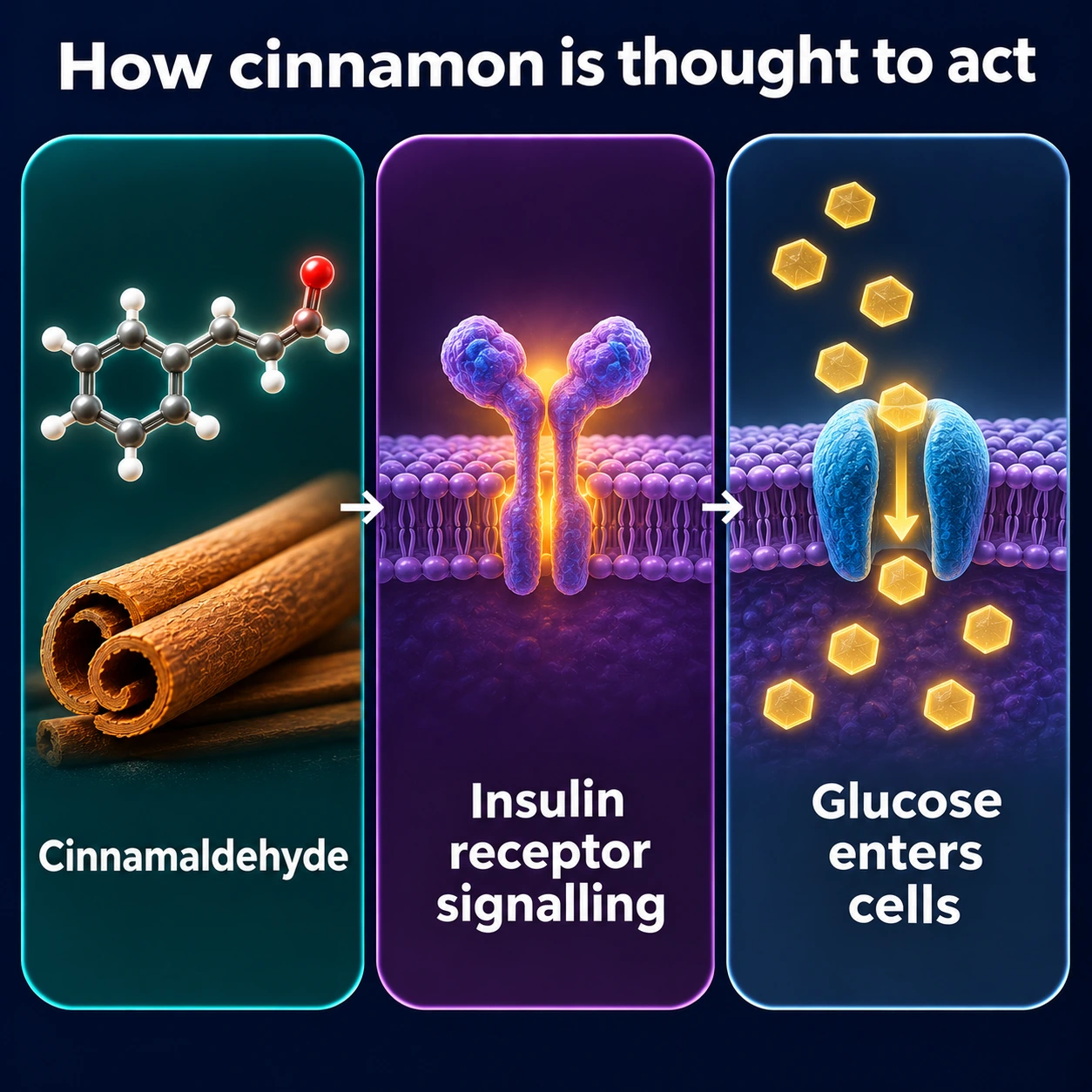
Cinnamaldehyde (trans-cinnamaldehyde) is the dominant essential-oil constituent — the molecule responsible for the aroma and flavor. It comprises 65–80% of the steam-distilled essential oil from the bark, and it directly activates the insulin receptor tyrosine kinase. In hepatocyte and adipocyte cell culture, cinnamaldehyde at micromolar concentrations produces autophosphorylation of the beta-subunit of the insulin receptor independent of insulin binding, propagates the signal through IRS-1 (insulin receptor substrate 1), and activates PI3K/Akt downstream — the same pathway insulin itself uses to drive GLUT4 translocation to the cell surface.
Methylhydroxychalcone polymer (MHCP) is a water-soluble cinnamon polyphenol described in 2001 by Jarvill-Taylor, Anderson and Graves (Iowa State University, with Anderson). In 3T3-L1 fat cells grown in the laboratory, MHCP raised glucose uptake and glycogen synthesis to a similar level as insulin, caused phosphorylation of the insulin receptor, and acted more than additively (synergistically) when combined with insulin.
A separate 2004 study by Anderson and colleagues at the U.S. Department of Agriculture (USDA) Beltsville Human Nutrition Research Center isolated water-soluble A-type doubly linked procyanidin oligomers (two trimers and a tetramer) from cinnamon; in test-tube assays they raised insulin-dependent glucose metabolism roughly 20-fold. Both findings come from cells and test tubes, not from people. These water-soluble polyphenols survive aqueous extraction even when the volatile essential oil has been removed, and commercial water-soluble (aqueous) cinnamon extracts are standardized on them and sold with the cinnamaldehyde removed.
The combined effect — cinnamaldehyde from the essential-oil fraction and MHCP/procyanidins from the aqueous fraction — explains why whole-spice cassia (both fractions present) and aqueous extracts (only the polyphenols present) both reduce fasting glucose in clinical trials. It also explains why direct ingestion of cinnamon essential oil has not been extensively studied for diabetes — the dosing required to deliver enough cinnamaldehyde to be active is close to the dose at which the essential oil causes mucosal irritation.
Insulin Receptor Autophosphorylation & PI3K/Akt Signaling
The insulin receptor is a transmembrane heterotetramer of two alpha-subunits (extracellular, insulin-binding) and two beta-subunits (intracellular, tyrosine kinase domain). Insulin binding causes a conformational change that brings the beta-subunit kinase domains into productive contact and triggers autophosphorylation of tyrosine residues in the activation loop. The phosphorylated tyrosines recruit IRS-1 (insulin receptor substrate 1), which is phosphorylated in turn, creating docking sites for PI3K (phosphoinositide 3-kinase). PI3K converts PIP2 to PIP3, which recruits and activates Akt (protein kinase B). Active Akt phosphorylates AS160, releasing the brake on GLUT4 vesicle trafficking. GLUT4 vesicles translocate to the cell membrane, the glucose transporter is presented at the cell surface, and glucose enters the cell.
Cinnamaldehyde and MHCP both appear to act on the beta-subunit of the insulin receptor directly, producing autophosphorylation in the absence of insulin binding. They are not insulin mimics in the structural sense (they do not bind the alpha-subunit binding site), but they are insulin-signal mimics in the functional sense (they propagate the same downstream signal). This is why cinnamon supplementation can produce fasting-glucose reductions in insulin-resistant patients — the cinnamon compounds bypass the defective receptor-binding step and activate the kinase directly.
The same mechanism explains a clinical observation that troubled early researchers: cinnamon supplementation has a much larger effect in patients with frank type 2 diabetes than in healthy euglycemic controls. In a healthy person with intact insulin signaling, an additional insulin-mimetic compound produces little measurable effect because endogenous insulin already drives the system to its setpoint. In a diabetic patient with impaired insulin signaling, the cinnamon-driven autophosphorylation provides meaningful additive signal. This is the same pharmacologic pattern seen with several other insulin-sensitizing agents.
Glycogen Synthase Activation & GLUT4 Translocation
Beyond insulin-receptor activation, cinnamon compounds appear to act at two downstream nodes in the glucose-metabolism pathway. Both effects have been demonstrated in cell culture and rodent models; clinical confirmation is partial.
Glycogen synthase activation: Glycogen synthase is the rate-limiting enzyme for incorporating glucose into glycogen for storage in liver and muscle. It is normally held inactive by GSK-3 (glycogen synthase kinase 3) phosphorylation. Insulin signaling activates Akt, which phosphorylates and inactivates GSK-3, releasing the brake on glycogen synthase. Cinnamaldehyde produces a similar GSK-3 inactivation pattern in hepatocytes, increasing glycogen synthesis. The net effect is that a given glucose load is more rapidly cleared from circulation into glycogen stores rather than remaining in plasma.
GLUT4 translocation: GLUT4 is the insulin-responsive glucose transporter in skeletal muscle and adipose tissue. Under basal conditions, most GLUT4 is sequestered in intracellular vesicles. Insulin signaling (via the Akt-AS160 axis described above) causes vesicle translocation to the cell membrane, presenting GLUT4 at the cell surface where it can transport glucose into the cell. Cinnamon extracts increase GLUT4 surface expression in cell-culture models of insulin resistance, with effect sizes comparable to low-dose insulin. The mechanism appears to be both the direct insulin-receptor autophosphorylation discussed above and a separate AMP-activated protein kinase-dependent pathway (AMP-activated protein kinase, the "metabolic stress" sensor that also drives GLUT4 translocation during exercise).
The dual mechanism — insulin-receptor activation plus AMP-activated protein kinase (AMPK) activation — gives cinnamon a pharmacologic profile that partly overlaps with both metformin (an AMP-activated protein kinase activator) and the thiazolidinediones (peroxisome-proliferator-activated-receptor-gamma agonists that improve insulin sensitivity). This is part of why cinnamon trials have shown additive effect on top of metformin or sulfonylurea background therapy — the mechanisms are not identical, so the effects partially stack.
Aqueous Extract vs Whole-Spice vs Essential Oil
Three forms of cinnamon are sold for blood-sugar support, and they have meaningfully different active-compound profiles:
- Whole-spice powder (capsules or culinary) — contains both the essential-oil constituents (cinnamaldehyde, eugenol, cinnamic acid) and the water-soluble polyphenols (MHCP, type-A procyanidins). Also contains the full coumarin load. The Khan 2003 trial (now under an Expression of Concern) used whole-spice cassia. This is the form most patients use when they take "cinnamon capsules" — usually 500 mg per capsule, taken 2–6 times daily.
- Aqueous (water-soluble) extract — the essential oil has been removed and only the water-soluble polyphenols remain. Coumarin is largely removed in this process (coumarin partitions with the volatile fraction). Standardized to a fixed procyanidin content. Typical dose: 250–500 mg/day of extract, equivalent to a much larger amount of whole spice (the Mang 2006 trial used an amount of extract equal to 3 g of powder a day). The advantage is reproducibility and the much lower coumarin load; the disadvantage is loss of the cinnamaldehyde contribution.
- Essential oil — the steam-distilled volatile fraction, primarily cinnamaldehyde. Highly potent (concentrated cinnamaldehyde causes mucosal burns), not typically used as an oral supplement for diabetes, and not the basis of any major clinical trial. Topical and food-flavoring use only.
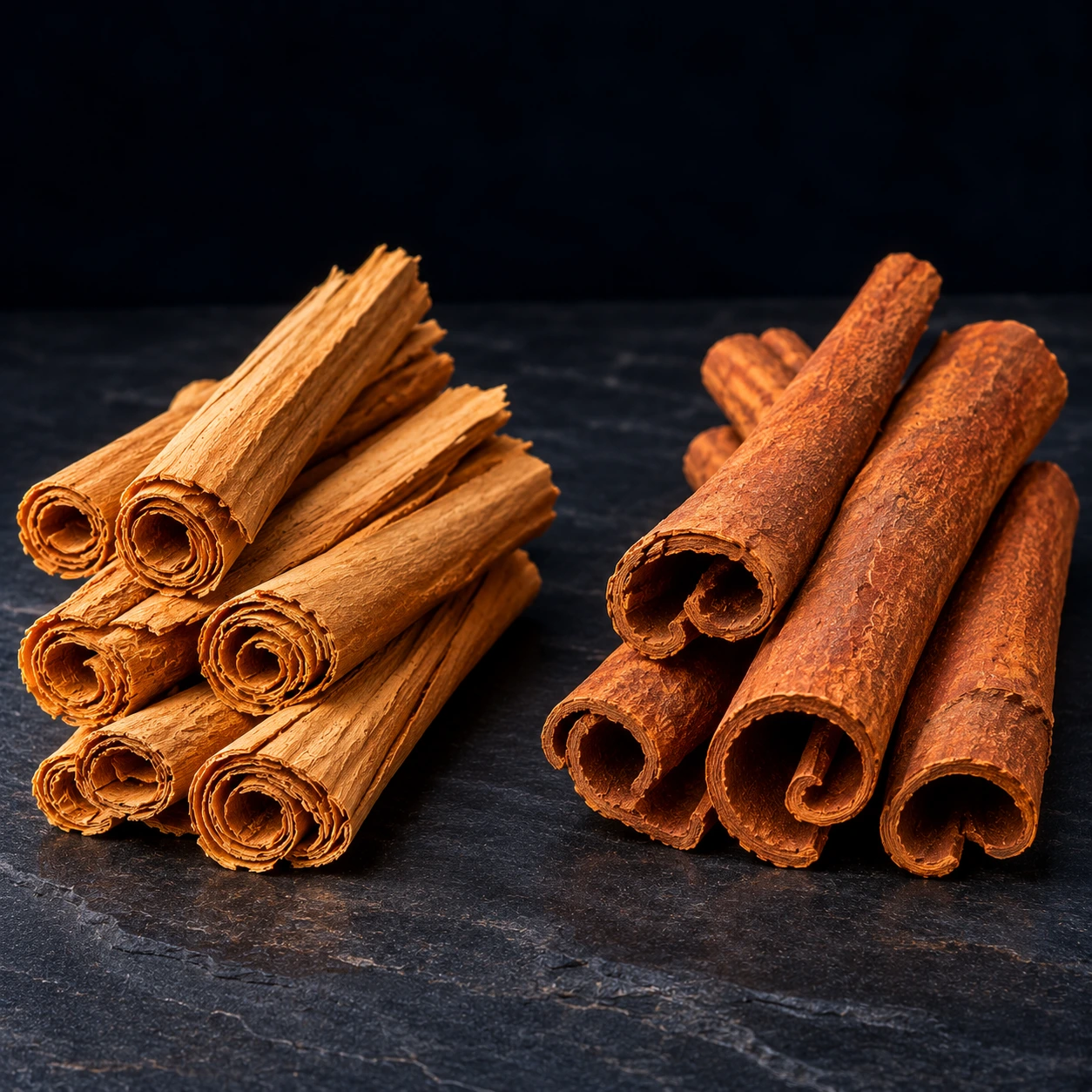
Compared side by side: whole-spice Ceylon is low in coumarin and has both active-compound classes; a standardized aqueous extract has the lowest coumarin but only the polyphenol class; whole-spice cassia from the supermarket carries the full coumarin load, with no standardization of the active compounds.
Dosing Protocols (1, 3, 6 g/day)
Clinical trial doses have spanned a wide range, but the most-replicated effective range is 1–6 g/day of whole-spice cassia, or the polyphenol equivalent in aqueous extract. There is little additional benefit above 6 g/day, and below 1 g/day the effect is often statistically nonsignificant.
Amounts described in trials and common use:
- Whole-spice Ceylon (low in coumarin): 1–3 grams per day, split into 2–3 doses with meals. One teaspoon is approximately 2.6 grams. Sprinkling 1 teaspoon on morning oatmeal or coffee plus 1 teaspoon in evening yogurt achieves the lower end of the effective range. Capsule equivalents: 500 mg capsules, 2–6 per day.
- Whole-spice cassia (high in coumarin): about 1 gram per day keeps a 60 kg adult under the German Federal Institute for Risk Assessment (BfR) tolerable daily coumarin intake. This is at the low end of the doses used in trials.
- Aqueous (water-soluble) extract: 250–500 mg/day, taken with meals. Equivalent to several grams of whole spice in polyphenol content. Coumarin content is minimal.
- Timing: taking cinnamon with meals (rather than fasting) appears to enhance the postprandial glucose effect. Some patients report best fasting-glucose effect from a bedtime dose; data are inconclusive.
Effects typically appear within 2–4 weeks of consistent use and reverse within 2–3 weeks of discontinuation. There is no documented loading dose — the steady-state effect is what counts.
Ceylon vs Cassia for Glycemic Use
The cassia-versus-Ceylon decision is covered in depth on our dedicated coumarin-safety page, but the glycemic-use summary belongs here. The clinical trials — including Khan 2003, now under an Expression of Concern — were mostly conducted with cassia, not Ceylon: of the 11 trials in the 2016 Costello review, seven used cassia, one used Ceylon and three did not name the species. So the strongest direct evidence is for cassia's glucose-lowering effect.
The mechanism, however, is driven by cinnamaldehyde and MHCP, both of which are present in both species at broadly similar concentrations (cinnamaldehyde may be slightly higher in cassia, but Ceylon contains comparable polyphenol levels). There is no mechanistic reason to expect Ceylon to be substantially less glycemically effective, but human data are thin: a 2013 systematic review of Ceylon cinnamon found that "data on humans are sparse" and that randomized trials in humans are still needed.
What changes dramatically between species is the safety margin for chronic daily use. A diabetic patient consuming 3 g/day of cassia for years approaches or exceeds the German BfR tolerable daily coumarin intake (6 mg/day for a 60 kg adult) and has measurably elevated risk of liver enzyme elevations. The same patient consuming 3 g/day of Ceylon has coumarin intake well below 1 mg/day — effectively zero risk. The glycemic benefit is approximately the same; the hepatic risk is wildly different.
For daily use over years, the difference that matters is coumarin: Ceylon (Cinnamomum verum) carries far less coumarin than cassia. Ceylon costs about 2–3× more.
Prediabetes and Metabolic Syndrome Applications
For patients with metabolic syndrome or prediabetes (fasting glucose 100–125 mg/dL, hemoglobin A1c 5.7–6.4%), cinnamon is one of several modest-effect interventions that, combined, can reverse the trajectory toward overt type 2 diabetes. The American Diabetes Association does not list cinnamon as a recommended therapy, but the absence of major adverse effects (with Ceylon at typical doses) and the consistent fasting-glucose signal make it a commonly discussed low-risk addition to the standard approaches of weight loss, exercise, low-glycemic diet, and metformin (when indicated).
An approach practitioners describe for prediabetes when a botanical is used:
- 1–2 grams of Ceylon cinnamon per day with meals (one teaspoon on morning oatmeal or in coffee)
- Combined with the standard prediabetes-reversal stack: 7% weight loss target, 150 min/week moderate exercise, Mediterranean or low-carbohydrate diet, fiber 30–40 g/day
- Optional adjuncts with their own evidence base: fenugreek seed, chromium picolinate, alpha-lipoic acid, berberine
- Hemoglobin A1c and fasting glucose checked every 3–6 months to track progress
Two randomized trials have tested cinnamon in prediabetes. In a 12-week double-blind trial, 500 mg of cinnamon three times a day kept fasting glucose stable while it rose on placebo (a between-group difference of 5 mg/dL), and lowered the 2-hour value of the glucose-tolerance test compared with baseline, with no serious side effects; the authors noted that longer and larger studies are needed to learn whether cinnamon slows progression to type 2 diabetes. In a 4-week crossover trial in 18 adults with obesity and prediabetes wearing continuous glucose monitors, 4 g/day of cinnamon spice gave lower 24-hour glucose levels and smaller glucose peaks than placebo, with no difference in digestive symptoms.
Cinnamon's lipid effects (low-density lipoprotein down, triglycerides down) are an additional bonus for metabolic-syndrome patients, who typically have atherogenic dyslipidemia as well as insulin resistance. See our cardiovascular health page for the lipid-trial detail.
What Cinnamon Is Not: Limits as a Diabetes Therapy
The accurate framing of cinnamon for type 2 diabetes is a low-cost, low-risk adjunct with modest effect — not a primary therapy and not a substitute for proven pharmacotherapy. Specifically:
- Cinnamon does not replace metformin. Metformin reduces hemoglobin A1c by 1.0–1.5% in trial settings and has demonstrated cardiovascular and mortality benefits in the UKPDS landmark trial. Cinnamon's hemoglobin A1c effect was not significant in the 2013 meta-analysis, and the 2023 umbrella analysis put it at about 0.1 percentage point. A diabetic patient who substitutes cinnamon for metformin is trading a proven therapy for an adjunct.
- Cinnamon does not replace insulin. A type 1 diabetic patient cannot use cinnamon as a substitute for exogenous insulin — the autoimmune destruction of beta cells produces absolute insulin deficiency that no insulin-sensitizer can compensate for.
- Cinnamon does not eliminate dietary glucose load. The most powerful glycemic intervention is reducing dietary carbohydrate intake. Cinnamon improves how the body handles a given glucose load; it does not change the load itself. A patient drinking sugared beverages while taking cinnamon capsules is treating a symptom while the cause continues unabated.
- Cinnamon's effect is small in non-diabetic adults. The headline effect-sizes (Khan 2003, now under an Expression of Concern, reported up to −29% fasting glucose) were in frankly diabetic patients with significantly elevated baseline. A healthy euglycemic adult taking cinnamon for "prevention" would be expected to see minimal measurable glucose change — the system is not in a state where the cinnamon mechanism produces large effect.
- Hypoglycemia risk is low but not zero. Cinnamon combined with high-dose sulfonylureas or aggressive insulin dosing can produce additive glucose-lowering effect. In people on these drugs, blood sugar can fall further than expected when cinnamon is added, particularly at the higher dose range.
Drug Interactions and Cautions
- Coumarin hepatotoxicity (cassia only). The dominant safety concern for daily users. Cassia at clinically effective doses (3–6 g/day) approaches or exceeds the German BfR tolerable daily coumarin intake and has been associated with case reports of cholestatic hepatitis. Ceylon cinnamon contains far less coumarin. See the dedicated coumarin page.
- Additive hypoglycemia with sulfonylureas, insulin, or meglitinides. Blood sugar can fall further than with the drug alone.
- Pregnancy. Limited human data; there is no good safety data on supplemental doses in pregnancy, while culinary amounts are part of ordinary diets. Swallowing cinnamon essential oil in pregnancy raises a concern because of reported uterine-stimulant effects.
- Surgery. The anti-platelet effect of cinnamaldehyde raises a small concern for additive bleeding around surgery.
- Anticoagulants. Theoretical additive anti-platelet effect with warfarin, aspirin, clopidogrel — clinical significance is unclear at culinary doses and less certain at supplemental doses.
- CYP450 interactions. Cinnamaldehyde inhibits CYP2A6 and CYP3A4 in vitro at high concentrations; clinical drug-interaction risk at supplemental doses is probably small but not zero.
- Mucosal irritation. Concentrated cinnamon (essential oil, pure powder taken without dilution — the "cinnamon challenge" social-media trend) can cause oral and esophageal burns.
- Cinnamon allergy. Cinnamaldehyde is a documented contact allergen and is in the European Standard patch-test series. Some patients develop oral allergy syndrome to cinnamon, particularly with daily high-dose use.
Key Research Papers
- Khan A, Safdar M, Ali Khan MM, Khattak KN, Anderson RA (2003). Cinnamon improves glucose and lipids of people with type 2 diabetes. Diabetes Care 26(12):3215–3218. — Khan 2003 Diabetes Care; subject of a 2025 Expression of Concern (next entry). — PubMed PMID: 14633804
- American Diabetes Association (2025). Expression of Concern. Khan A, Safdar M, Ali Khan MM, Khattak KN, Anderson RA. Cinnamon improves glucose and lipids of people with type 2 diabetes. Diabetes Care 2003;26:3215–3218. Diabetes Care 48(9):1646. — PubMed PMID: 40834253
- Allen RW, Schwartzman E, Baker WL, Coleman CI, Phung OJ (2013). Cinnamon use in type 2 diabetes: an updated systematic review and meta-analysis. Annals of Family Medicine 11(5):452–459. — Allen 2013 meta-analysis. — PubMed PMID: 24019277
- Costello RB et al. (2016). Do cinnamon supplements have a role in glycemic control in type 2 diabetes? A narrative review. Journal of the Academy of Nutrition and Dietetics 116(11):1794–1802. — Costello 2016 review. — PubMed PMID: 27618575
- Akilen R, Tsiami A, Devendra D, Robinson N (2010). Glycated haemoglobin and blood pressure-lowering effect of cinnamon in multi-ethnic Type 2 diabetic patients in the UK. Diabetic Medicine 27(10):1159–1167. — Akilen 2010 UK trial. — PubMed PMID: 20854384
- Mang B et al. (2006). Effects of a cinnamon extract on plasma glucose, HbA1c, and serum lipids in diabetes mellitus type 2. European Journal of Clinical Investigation 36(5):340–344. — Mang 2006. — PubMed PMID: 16634838
- Vanschoonbeek K, Thomassen BJ, Senden JM, Wodzig WK, van Loon LJ (2006). Cinnamon supplementation does not improve glycemic control in postmenopausal type 2 diabetes patients. Journal of Nutrition 136(4):977–980. — Vanschoonbeek 2006 (negative) — PubMed PMID: 16549460
- Anderson RA et al. (2004). Isolation and characterization of polyphenol type-A polymers from cinnamon with insulin-like biological activity. Journal of Agricultural and Food Chemistry 52(1):65–70. — Anderson 2004 MHCP isolation. — PubMed PMID: 14709014
- Jarvill-Taylor KJ, Anderson RA, Graves DJ (2001). A hydroxychalcone derived from cinnamon functions as a mimetic for insulin in 3T3-L1 adipocytes. Journal of the American College of Nutrition 20(4):327–336. — Jarvill-Taylor 2001 MHCP mechanism. — PubMed PMID: 11506060
- Imparl-Radosevich J et al. (1998). Regulation of PTP-1 and insulin receptor kinase by fractions from cinnamon: implications for cinnamon regulation of insulin signalling. Hormone Research 50(3):177–182. — Imparl-Radosevich 1998. — PubMed PMID: 9762007
- Sheng X, Zhang Y, Gong Z, Huang C, Zang YQ (2008). Improved insulin resistance and lipid metabolism by cinnamon extract through activation of peroxisome proliferator-activated receptors. PPAR Research 2008:581348. — PubMed PMID: 19096709
- Crawford P (2009). Effectiveness of cinnamon for lowering hemoglobin A1C in patients with type 2 diabetes: a randomized, controlled trial. Journal of the American Board of Family Medicine 22(5):507–512. — Crawford 2009 HbA1c trial. — PubMed PMID: 19734396
- Ranasinghe P et al. (2013). Medicinal properties of 'true' cinnamon (Cinnamomum zeylanicum): a systematic review. BMC Complementary and Alternative Medicine 13:275. — Ranasinghe Ceylon cinnamon review. — PubMed PMID: 24148965
- de Moura SL, Gomes BGR, Guilarducci MJ, Coelho OGL, Guimarães NS, Gomes JMG (2025). Effects of cinnamon supplementation on metabolic biomarkers in individuals with type 2 diabetes: a systematic review and meta-analysis. Nutrition Reviews 83(2):249–279. — PubMed PMID: 38917435
- Zarezadeh M, Musazadeh V, Foroumandi E, Keramati M, Ostadrahimi A, Mekary RA (2023). The effect of cinnamon supplementation on glycemic control in patients with type 2 diabetes or with polycystic ovary syndrome: an umbrella meta-analysis on interventional meta-analyses. Diabetology & Metabolic Syndrome 15(1):127. — PubMed PMID: 37316893
- Romeo GR, Lee J, Mulla CM, Noh Y, Holden C, Lee BC (2020). Influence of cinnamon on glycemic control in individuals with prediabetes: a randomized controlled trial. Journal of the Endocrine Society 4(11):bvaa094. — PubMed PMID: 33123653
- Zelicha H, Yang J, Henning SM, Huang J, Lee RP, Thames G, Livingston EH, Heber D, Li Z (2024). Effect of cinnamon spice on continuously monitored glycemic response in adults with prediabetes: a 4-week randomized controlled crossover trial. American Journal of Clinical Nutrition 119(3):649–657. — PubMed PMID: 38290699
PubMed Topic Searches
Connections
- All Herbs
- Cinnamon Overview
- Cinnamon Benefits Hub
- Cinnamon for Cardiovascular Health
- Cinnamon Antimicrobial & Antifungal
- Cassia vs Ceylon & Coumarin
- Type 2 Diabetes
- Metabolic Syndrome
- Blood Sugar Control
- Fenugreek
- Chromium
- Magnesium
- Fasting
- Continuous Glucose Monitor
- Inflammatory Markers
- Anti-Inflammatory Diet
- History