Soursop and Cancer: The Claim Examined
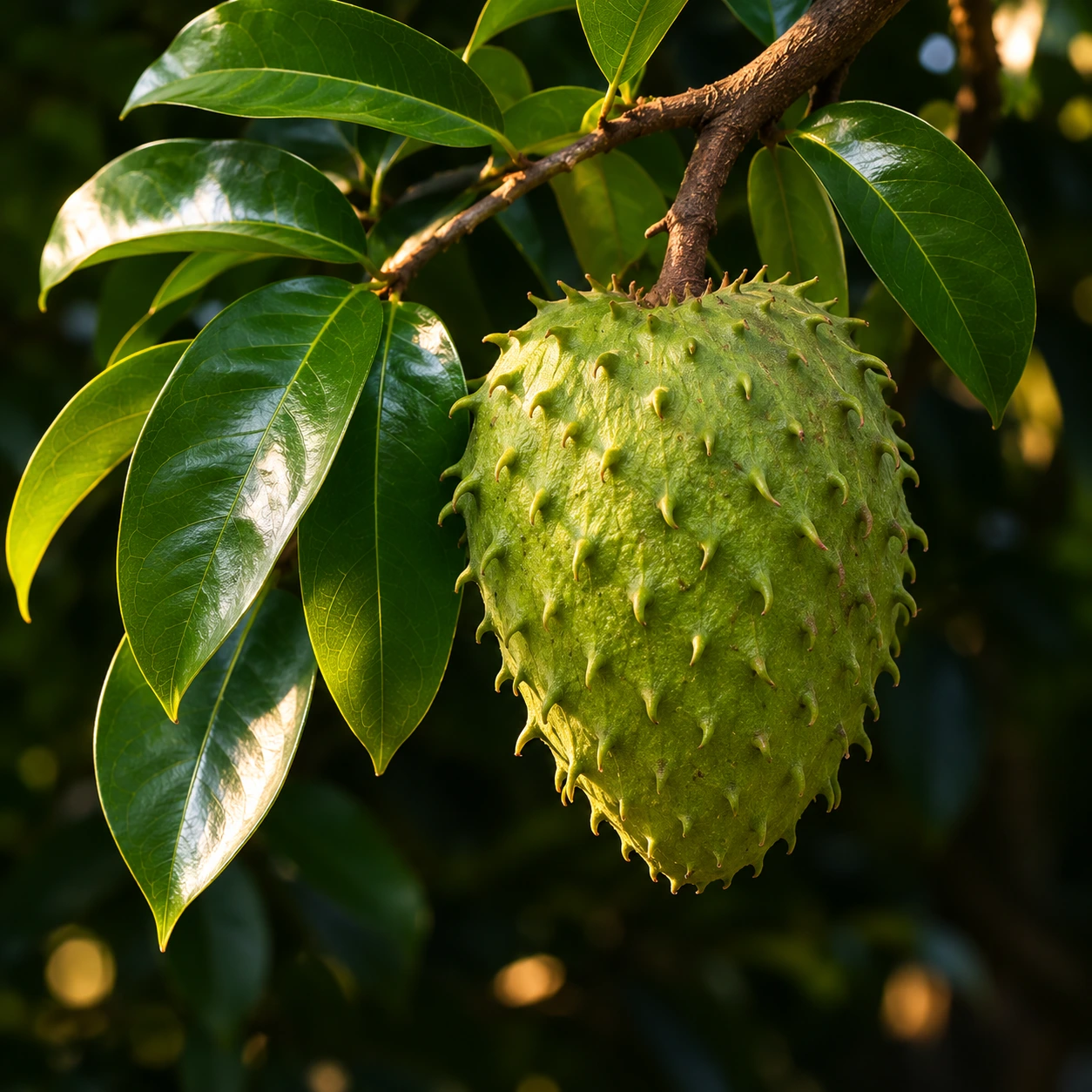
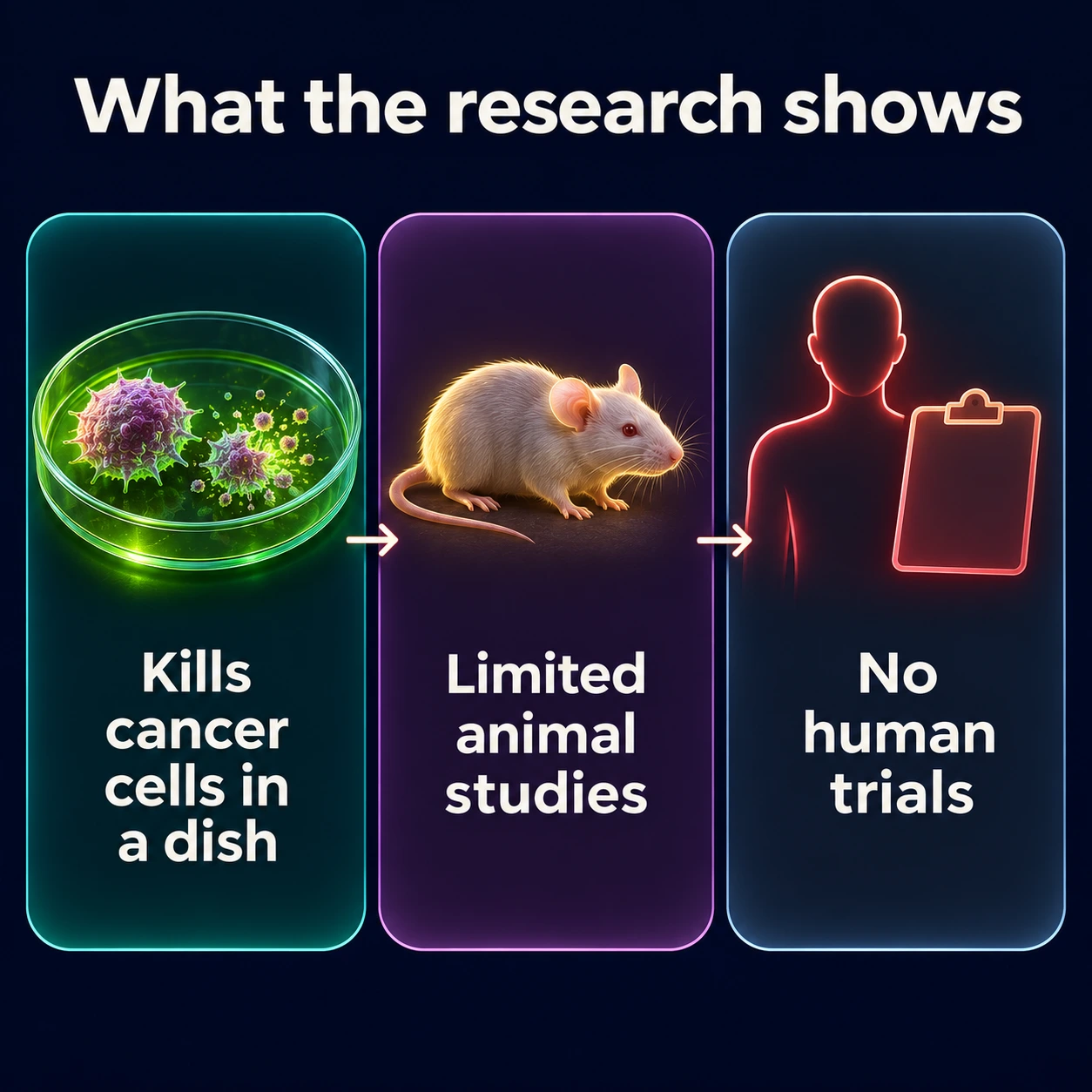
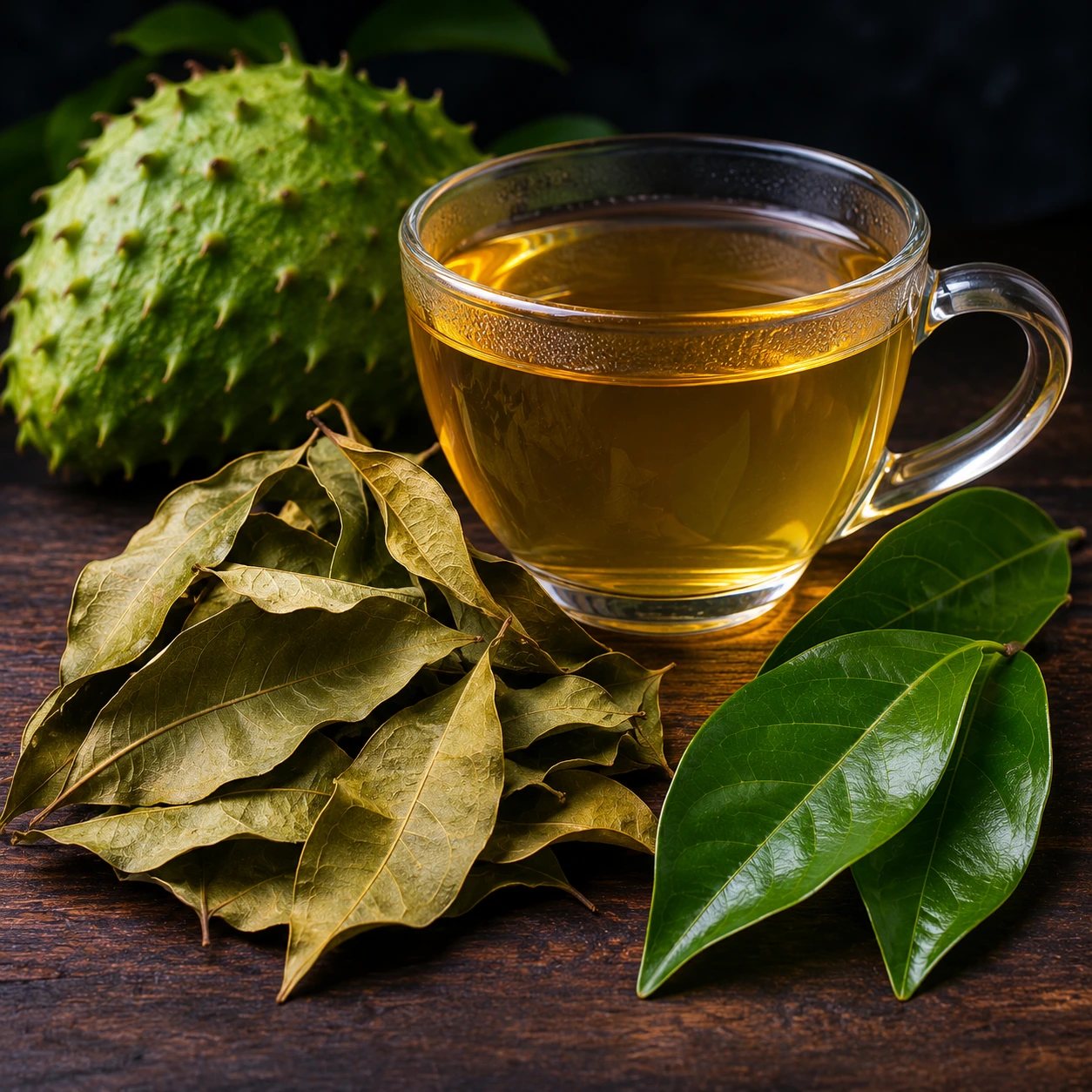
Evidence tier: NOT SUPPORTED in humans. There is no controlled human trial showing that soursop leaf, soursop fruit or any graviola preparation treats any cancer. Not a positive trial with caveats, not a small trial awaiting replication — no adequately designed human efficacy study exists.
That verdict does not require dismissing the laboratory work, and this page is not going to. The chemistry behind the claim is real and genuinely interesting: annonaceous acetogenins are among the more potent naturally occurring inhibitors of mitochondrial complex I, they kill cultured cancer cells at low concentrations, and several rodent studies report reduced tumour growth. Those findings were published in serious journals by serious researchers. If you have been reading about soursop and cancer and come away thinking there must be something to it — you are right that there is something in the test tube.
What this page does is explain, carefully, why that something has not become a treatment, and why the gap between the two is not a conspiracy but the ordinary and brutal arithmetic of drug development. It also traces the "10,000 times stronger than chemotherapy" line to the in-vitro number it was distorted from, and it says plainly what the documented harm is: not the tea itself, but people choosing it instead of treatment that works.
For people with a cancer diagnosis: this is not a hypothetical audience for this page. A 2018 survey on Réunion found that a quarter of lung-cancer patients in chemotherapy took graviola regularly, and its authors wrote that the consequences of that intake, drug interactions and side effects are unknown. The concerns are specific — acetogenins are mitochondrial poisons with plausible interactions, and chemotherapy-induced neurotoxicity is already a common dose-limiting problem. They are covered in their own section below.
Table of Contents
- The Claim as It Circulates
- What Is Genuinely Real in the Laboratory
- The In-Vitro-to-Human Gap, Properly Explained
- Where "10,000 Times Stronger" Came From
- The Animal Studies and What They Do and Do Not Show
- Why There Are No Human Trials — and What Would Be Needed
- The Selectivity Problem
- The "Suppressed Cure" Argument
- The Documented Harm Is Substitution
- Soursop During Cancer Treatment: The Specific Concerns
- What Would Change This Page
- Key Research Papers
- Connections
- Featured Videos
The Claim as It Circulates
The soursop cancer claim has a recognisable shape, repeated across supplement listings, social media posts and reprinted email chains for two decades. Typically it includes some combination of:
- that graviola is "10,000 times stronger than chemotherapy";
- that it kills cancer cells while leaving healthy cells untouched;
- that it works against a dozen or more named cancers;
- that a pharmaceutical company or research institute discovered this and buried it because a plant cannot be patented;
- that it has "no side effects" because it is natural.
It is worth noticing how much work the last two items do. The suppression story explains away the absence of trials, and the "no side effects" line pre-empts safety concerns. Together they make the claim unfalsifiable: the missing evidence becomes proof of a cover-up, and any warning becomes part of the cover-up.
Three of those five claims are false as stated. One — the "10,000 times" figure — is a real number that has been detached from its meaning. One — the selectivity claim — is a genuine in-vitro observation that does not survive translation. This page works through each of them.
What Is Genuinely Real in the Laboratory
Being fair to the science first, because the reader deserves to know that this is not pure invention.
The compounds are real and well characterised. More than 100 annonaceous acetogenins have been isolated from the leaves, bark, seeds, roots and fruit of Annona muricata. Moghadamtousi, Fadaeinasab, Nikzad and colleagues catalogued them in a widely cited 2015 review in the International Journal of Molecular Sciences. This is not fringe phytochemistry; it is a substantial and legitimate literature.
The mechanism is real. Acetogenins inhibit mitochondrial complex I, the entry point to the electron transport chain. A cell that cannot run oxidative phosphorylation cannot regenerate adenosine triphosphate (ATP) efficiently, and if it lacks the metabolic flexibility to compensate it dies by apoptosis. In cell-culture models this is exactly what happens.
The cytotoxicity is real and reproducible. Acetogenins kill cultured cancer cells of many lineages — breast, colon, lung, pancreatic, prostate, liver, leukaemia — at low micromolar and sometimes nanomolar concentrations. This has been reported by independent groups over three decades.
There is a plausible reason cancer cells might be more vulnerable. Many tumour cells have high energy demand and altered mitochondrial function, and some depend on oxidative phosphorylation in ways that make them less able to survive its loss. Targeting cancer metabolism is a legitimate and active area of oncology research, not a fringe idea. Some acetogenins have also been reported to be relatively more toxic to multidrug-resistant cell lines, which over-express efflux pumps that consume adenosine triphosphate — an elegant hypothesis, and one of the reasons the compounds attracted serious attention in the first place.
Some animal work is positive. Torres and colleagues reported in Cancer Letters in 2012 that graviola extract altered pancreatic cancer cell metabolism and reduced tumorigenicity in cell culture and in mice. Other groups have reported reduced tumour growth or chemically induced papilloma formation in rodent models. Rady and colleagues surveyed this body of work in a mechanistic review in Oxidative Medicine and Cellular Longevity in 2018.
Evidence tier for all of the above: preliminary — in vitro and animal. Nothing in the previous five paragraphs is a claim about people.
The In-Vitro-to-Human Gap, Properly Explained
"It works in cells but not in people" gets said so often that it has stopped meaning anything. Here is what it actually means, in four specific failures that apply to acetogenins particularly well.
1. Concentration
In a cell-culture dish, the compound is dissolved directly in the medium at a known concentration, bathing every cell continuously. To reproduce that in a person, the compound would have to reach the same concentration in the tumour tissue and stay there. That requires it to survive the stomach, be absorbed across the gut wall, survive first-pass metabolism in the liver, distribute into the tumour rather than into fat or muscle, and not be cleared before it accumulates. Each step subtracts, often by an order of magnitude. A compound that kills cells at 1 micromolar in a dish may never approach 1 micromolar in a tumour at any tolerable oral dose — and for acetogenins from a tea or capsule, nobody has measured what plasma or tissue concentration is actually achieved in a human, because the pharmacokinetic studies have not been done.
2. Delivery
Acetogenins are highly lipophilic. That determines where they go, and it is not primarily the tumour. Lipophilic compounds distribute into adipose tissue and into lipid-rich membranes, and they cross the blood–brain barrier readily — which is precisely the property that makes them a neurological hazard. A drug developer would regard "distributes preferentially into brain and fat, target unknown concentration at tumour" as a serious problem to solve, not a feature.
3. Selectivity in a whole organism
In a dish you compare a cancer cell line to a normal cell line, both dividing in ideal conditions. In a body, the compound meets every tissue you have. Complex I is not a cancer protein — it is in every mitochondrion in your body. The tissues that suffer first from a complex I inhibitor are the ones with the highest energy demand and the least ability to compensate: cardiac muscle, skeletal muscle, and above all neurons. The selectivity margin that looks comfortable in vitro narrows sharply once the comparison set includes your heart and your substantia nigra.
4. Dose and tolerability
Even a genuinely effective compound is only useful if the effective dose is below the toxic dose — the therapeutic window. For acetogenins the toxic effect is chronic neurodegeneration, which does not announce itself with an acute symptom you could titrate against. There is no way to escalate the dose toward efficacy while watching for the toxicity, because the toxicity is silent until it is permanent. This is a genuinely difficult development problem, not an oversight.
The historical base rate is the honest summary. Across oncology, the large majority of compounds that show anticancer activity in cell culture never reach clinical use, and most of those that enter human trials fail there. Thousands of substances kill cancer cells in a dish; the interesting question was never "does it kill cells" but "can it kill them in a person at a dose the person survives". For soursop, that question has never been asked in a trial at all.
Where "10,000 Times Stronger" Came From
This figure deserves its own section because it is not fabricated — it is real data, stripped of the sentence that gave it meaning.
In the acetogenin literature of the 1990s, researchers routinely compared the potency of newly isolated compounds against a reference cytotoxic drug, usually adriamycin (doxorubicin), in cell-culture assays. In some of those comparisons, in some cell lines, a purified acetogenin showed cytotoxic potency orders of magnitude greater than adriamycin — that is, it killed the cells at a far lower concentration. The "10,000" itself comes from one specific paper: in 1996 Rieser, McLaughlin and colleagues isolated five new acetogenins from soursop seeds, and one of them, cis-annonacin, was selectively toxic to one colon cancer cell line (HT-29), in which it was 10,000 times as potent as adriamycin. One purified seed compound, one cell line, in a dish — not leaf tea, and not a patient.
The same research group reported the literature's other headline number in 1997. Oberlies and colleagues tested 14 acetogenins against breast cancer cells that resist adriamycin, vincristine and vinblastine (MCF-7/Adr, a multidrug-resistant line); the most potent group had as much as 250 times the potency of adriamycin. That is again a cell-dish potency figure, not a result in people.
Every part of that sentence matters, and marketing dropped all of it:
- "Purified acetogenin", not tea. The comparison used isolated single compounds, not a leaf infusion containing an unquantified trace.
- "Concentration in a dish", not effect in a patient. Potency is the concentration needed for an effect in vitro. It says nothing about whether that concentration is achievable in a person, or safe if it were.
- "In some cell lines." Potency ratios vary enormously between lines. Quoting the most favourable comparison as though it were the general result is cherry-picking.
- "Against adriamycin specifically." A ratio against one 1970s-era drug in one assay is not a comparison with modern oncology, which uses combination regimens, targeted agents, immunotherapy, surgery and radiotherapy.
- Potency is not efficacy. This is the conceptual error at the centre of the whole claim. Potency means "how little is needed to have an effect". Efficacy means "does it help the patient". A compound can be a thousand times more potent than a drug in a dish and completely useless as a medicine — and this is common, not exotic.
A useful comparison: cyanide is extremely potent at killing cells, far more so than most chemotherapy drugs. Nobody markets it as a superior cancer treatment, because potency without selectivity and without a therapeutic window is not a benefit.
The Animal Studies and What They Do and Do Not Show
Rodent work occupies a middle tier that is easy to over- or under-read, so it is worth being precise about what the soursop animal literature contains.
What has been reported: reduced growth of implanted human tumour cells in immunodeficient mice given leaf extracts; reduced formation of chemically induced skin papillomas in mice; changes in tumour-cell metabolic markers in mice; and various measures of reduced proliferation. Torres and colleagues' 2012 Cancer Letters work on pancreatic cancer models is the most cited example.
What these designs establish: that an extract administered to a living animal can affect tumour growth — which is a meaningful step up from a dish, because the compound had to be absorbed, distributed and reach the tumour to do anything at all.
What they do not establish:
- They are not the same disease. A xenograft is human tumour cells implanted, usually subcutaneously, into a mouse with a disabled immune system. It lacks the native tissue environment, the immune interaction, the stroma and the metastatic biology of a real cancer. Xenograft response is a notoriously poor predictor of clinical benefit. Torres and colleagues went a step further than most: they implanted the pancreatic tumours in the pancreas itself (orthotopic implantation) and reported less tumour growth and spread. In their cell-culture work the extract caused cancer-cell death by necrosis and lowered markers of low-oxygen survival and sugar burning (HIF-1α, NF-κB, GLUT1, GLUT4, HKII and LDHA). It is still an animal model.
- Doses are frequently high relative to human intake. Extract doses in these studies are commonly expressed in hundreds of milligrams per kilogram of body weight, which does not correspond to a cup of tea and often does not correspond to any tolerable human intake.
- Extracts are not products. Studies use defined solvent extracts of specified plant material. A commercial capsule or a home-brewed tea is a different preparation with different content.
- Duration is short. Rodent tumour studies run weeks. Chronic neurotoxicity from a lipophilic complex I inhibitor is a years-long phenomenon in humans and would not be captured.
- Negative and null results are underreported in the botanical literature generally, so the published picture is likely more favourable than the underlying reality.
Evidence tier: preliminary (animal). A legitimate reason to study a compound further. It is not evidence of an effect in people.
Why There Are No Human Trials — and What Would Be Needed
The absence of trials is often presented as suspicious. It is better explained by what a real trial programme would require.
- A defined chemical entity or a standardised extract. You cannot trial "soursop leaf". You need either a purified acetogenin or an extract standardised to specified constituents at specified content, made reproducibly. Botanical variability between harvests, regions and species is large, and Annona species are freely substituted.
- Pharmacokinetic data in humans. Oral bioavailability, plasma concentration achieved, half-life, tissue distribution, clearance route. For annonacin in humans, essentially none of this is published. Without it you cannot pick a dose for a trial.
- Formal toxicology. Repeat-dose toxicity studies with a neurological endpoint, given what is known about the compound class. This is the step where a development programme for a complex I inhibitor with demonstrated nigral toxicity would face its hardest questions — and reasonably so.
- A phase I trial to find a maximum tolerated dose in humans. For a toxin whose main hazard is silent and cumulative, defining tolerability is genuinely difficult.
- Phase II and III efficacy trials against standard of care, in a defined cancer type, with survival or progression endpoints.
Soursop has not completed step one. There is a further ethical obstacle that is rarely acknowledged in the online discussion: an ethics committee reviewing a proposal to give a known dopaminergic neurotoxin chronically to patients — including patients who may be cured by existing treatment — would need an extremely strong efficacy rationale, and no rationale from cell culture is strong enough.
It is fair to add that funding structures do disfavour unpatentable natural products, and that is a real distortion in medical research worth criticising. But it is not a sufficient explanation here, because plenty of natural products with weaker commercial prospects have been trialled — often by publicly funded cancer institutes precisely because industry would not — and because it does not explain the missing pharmacokinetic and toxicology work, which is cheap by comparison.
The Selectivity Problem
The most seductive part of the claim is the promise of selectivity: kills cancer cells, leaves healthy cells alone. It deserves a direct answer rather than a dismissal, because the observation behind it is real.
In vitro, acetogenins do sometimes show differential toxicity, and there is a coherent reason: cells with high adenosine triphosphate demand and limited metabolic flexibility die faster when complex I is blocked, and many tumour cells fit that description. Multidrug-resistant lines, which burn adenosine triphosphate running efflux pumps, have been reported as particularly vulnerable. As a hypothesis, this is good science.
The problem is what the comparison set becomes in a body. Ask which of your own cells have the highest adenosine triphosphate demand and the least metabolic flexibility, and the answer is not comforting: neurons — especially dopaminergic neurons, with their vast unmyelinated axonal fields and no ability to divide and replace themselves — along with cardiac muscle and retinal cells. A compound that preferentially harms whatever is most energy-hungry does not read "tumour" off a label. It finds the substantia nigra.
This is why the cancer article and the safety article on this hub are ultimately the same article. The anticancer mechanism and the neurotoxic mechanism are one property of one molecule. Any product that could deliver the first would deliver the second, and there is no formulation trick in the supplement aisle that separates them.
There is now human evidence on the nerve side of that property. In 2022 Cleret de Langavant, Lannuzel and colleagues analysed 180 Caribbean patients with degenerative parkinsonism, including Parkinson's disease. Even low lifetime intake of fruit or juice from the soursop family (Annonaceae; more than 0.2 fruit-years) and any intake of Annonaceae herbal tea were linked to more severe disease and worse memory and thinking (odds ratio 3.76 for fruit and juice, 2.91 for herbal tea). The authors called for more restrictive public-health advice on Annonaceae products. This is an observational study: it shows a link, not proof of cause.
The "Suppressed Cure" Argument
Handled briefly, without contempt, because it is a reasonable-sounding argument that many thoughtful people find persuasive.
- Natural products are not un-patentable in practice. Purified compounds, derivatives, formulations, dosing regimens and manufacturing processes are all patentable. Many mainstream cancer drugs are plant-derived: paclitaxel from Pacific yew, vincristine and vinblastine from Madagascar periwinkle, etoposide from mayapple, camptothecin derivatives from a Chinese tree. The pharmaceutical industry has repeatedly commercialised plant compounds, and would do so again for anything that worked.
- The research is public. Soursop's anticancer literature is indexed in PubMed, freely searchable, published by academic groups on four continents, and often publicly funded. Suppressed findings do not usually accumulate hundreds of open-access citations.
- Cancer researchers get cancer. So do their families. The suppression theory requires a conspiracy that its own participants would be motivated to break.
- There is a simpler explanation for the gap. A compound that is potent in vitro, lipophilic, without human pharmacokinetic data, with documented dopaminergic neurotoxicity and a silent cumulative toxicity profile is exactly the sort of compound that stalls before trials on scientific grounds. That explanation requires no villain.
The Documented Harm Is Substitution
The harm associated with the soursop cancer claim is not, in the main, poisoning. It is delay.
Moreau and colleagues documented self-medication with Annona muricata as an anti-cancer agent on Réunion in Revue des Maladies Respiratoires in 2018. They interviewed 100 lung-cancer patients receiving chemotherapy or immunotherapy: 67 consumed graviola, 53.7% of them as an anticancer agent, and 25 took it regularly, most often as an infusion of boiled leaves (69.5%). These patients took it alongside their treatment, not instead of it, so this study documents combined use, whose consequences, drug interactions and side effects the authors described as unknown. Beyond the specific case of soursop, the broader oncology literature on patients who use alternative therapies in place of conventional treatment shows the pattern clinicians describe: initial treatment refused or delayed, then presentation months later with disease that has progressed past the point of cure.
The arithmetic is unforgiving in a way that deserves stating plainly:
- Many cancers are curable when localised and not curable once metastatic. The window is measured in weeks to months.
- Delay is not neutral. Time spent on an ineffective treatment is time the disease spends growing and spreading.
- An early-stage cancer that becomes late-stage during a period of alternative treatment cannot be un-progressed by then starting the effective treatment.
None of this is written to shame anyone. The impulse behind reaching for soursop is entirely understandable: a cancer diagnosis is terrifying, conventional treatment is genuinely harsh, the medical system can feel impersonal and rushed, and a gentle plant remedy that promises no side effects is a deeply attractive alternative. Wanting that is human, not foolish. But the cost of that particular substitution is measured in survival, which is why this page leads with the verdict rather than burying it.
There is also a milder version of the harm worth naming: money and hope. Concentrated graviola products are not cheap, and there is a real cost to spending scarce energy during illness on a regimen that cannot work.
Soursop During Cancer Treatment: The Specific Concerns
For people in cancer treatment who take or are considering soursop in any form, three concerns are specific:
- Additive neurotoxicity. Several widely used chemotherapy classes — platinum agents, taxanes, vinca alkaloids, bortezomib — cause peripheral neuropathy that is often dose-limiting and sometimes permanent. Acetogenins kill nerve cells in laboratory studies and soursop intake is linked to parkinsonism in Caribbean population studies, so they could add to that damage, and when neuropathy forces a dose reduction the treatment itself can be weakened.
- Mitochondrial interaction. Acetogenins inhibit complex I. Cancer therapy already places substantial oxidative and metabolic stress on tissues, and some agents act through mitochondrial pathways. The direction of any interaction is unpredictable, which is not reassuring — unpredictable includes "makes your treatment work less well".
- Confounded assessment. If new symptoms appear — nausea, dizziness, falls, cognitive change — working out the cause depends on knowing everything a patient is taking. An unreported supplement can send an investigation in the wrong direction, or cause an effective treatment to be stopped unnecessarily.
No justification is needed for this information. "I've been drinking soursop leaf tea, here's the packet" is a complete disclosure, and a written list works as well as a conversation. Most oncology teams are far more used to this than patients expect, and their concern is usually interactions and safety rather than disapproval; pharmacists in cancer centres often answer these questions.
What Would Change This Page
Stating the falsification conditions is a fair test of whether a page is reasoning or just concluding. This page would change if:
- Human pharmacokinetic data showed that a realistic oral dose of a soursop preparation achieves, in human tissue, concentrations anywhere near those active in vitro.
- A phase I trial established a tolerable dose of a standardised preparation with a defined neurological safety monitoring plan.
- A controlled trial with a hard endpoint — overall survival, progression-free survival, objective response — showed benefit in a defined cancer type.
- A formulation or derivative were developed that separated tumour cytotoxicity from neuronal toxicity, which would be a genuine and interesting advance.
None of these exist today. If any of them appear, the verdict on this page would change with them.
Key Research Papers
Where an entry names one paper, it ends with that paper's PubMed ID. Entries that describe a wider body of literature link to a PubMed topic search.
- Moghadamtousi SZ, Fadaeinasab M, Nikzad S, Mohan G, Ali HM, Kadir HA. Annona muricata (Annonaceae): a review of its traditional uses, isolated acetogenins and biological activities. International Journal of Molecular Sciences, 2015;16(7):15625-58. The standard phytochemical review; note that it reports no human efficacy data. PubMed PMID: 26184167
- Rady I, Bloch MB, Chamcheu RN, Banang Mbeumi S, Anwar MR, Mohamed H, Babatunde AS, Kuiate JR, Noubissi FK, El Sayed KA, Whitfield GK, Chamcheu JC. Anticancer properties of graviola (Annona muricata): a comprehensive mechanistic review. Oxidative Medicine and Cellular Longevity, 2018;2018:1826170. In vitro and animal. PubMed PMID: 30151067
- Torres MP, Rachagani S, Purohit V, Pandey P, Joshi S, Moore ED, Johansson SL, Singh PK, Ganti AK, Batra SK. Graviola: a novel promising natural-derived drug that inhibits tumorigenicity and metastasis of pancreatic cancer cells in vitro and in vivo through altering cell metabolism. Cancer Letters, 2012;323(1):29-40. The most-cited preclinical paper. Cell culture and animal. PubMed PMID: 22475682
- Rodent chemoprevention work, including studies of Annona muricata leaves on chemically induced skin papillomagenesis in mice reported in the Asian Pacific Journal of Cancer Prevention. Animal. PubMed topic search
- Rieser MJ, Gu ZM, Fang XP, Zeng L, Wood KV, McLaughlin JL. Five novel mono-tetrahydrofuran ring acetogenins from the seeds of Annona muricata. Journal of Natural Products, 1996;59(2):100-8. The source of the "10,000 times" figure: cis-annonacin against one colon cancer cell line (HT-29). In vitro. PubMed PMID: 8991944
- Oberlies NH, Chang CJ, McLaughlin JL. Structure-activity relationships of diverse Annonaceous acetogenins against multidrug resistant human mammary adenocarcinoma (MCF-7/Adr) cells. Journal of Medicinal Chemistry, 1997;40(13):2102-6. Work on acetogenins and multidrug-resistant cell lines, the origin of the selective-for-resistant-cancer-cells hypothesis. In vitro. PubMed PMID: 9207950
- The clinical-trials gap: a search for human efficacy trials of Annona muricata or graviola in cancer patients. PubMed topic search
- Moreau D, Huchot E, Gazaille V, Rossanaly-Vasram R, Andre M. [Self medication with Annona muricata L. (corossol) as an anti-cancer agent in Reunion]. Revue des Maladies Respiratoires, 2018;35(9):948-955 (in French). Documents the practice alongside chemotherapy and immunotherapy in a real patient population. PubMed PMID: 30195454
- The literature on survival outcomes among patients who use alternative medicine in place of conventional cancer treatment — the quantified version of the substitution harm. PubMed topic search
- Lannuzel A, Michel PP, Höglinger GU, Champy P, Jousset A, Medja F, Lombès A, Darios F, Gleye C, Laurens A, Hocquemiller R, Hirsch EC, Ruberg M. The mitochondrial complex I inhibitor annonacin is toxic to mesencephalic dopaminergic neurons by impairment of energy metabolism. Neuroscience, 2003;121(2):287-96 — included here because it is the same mechanism as the anticancer effect. Cell culture. PubMed PMID: 14521988
- Champy P, Melot A, Guérineau Eng V, Gleye C, Fall D, Höglinger GU, Ruberg M, Lannuzel A, Laprévote O, Laurens A, Hocquemiller R. Quantification of acetogenins in Annona muricata linked to atypical parkinsonism in Guadeloupe. Movement Disorders, 2005;20(12):1629-33 — the intake estimates, relevant to how much a consumer actually ingests. PubMed PMID: 16078200
- Cleret de Langavant L, Roze E, Petit A, Tressières B, Gharbi-Meliani A, Chaumont H, Michel PP, Bachoud-Lévi AC, Remy P, Edragas R, Lannuzel A. Annonaceae consumption worsens disease severity and cognitive deficits in degenerative parkinsonism. Movement Disorders, 2022;37(12):2355-2366. 180 Caribbean patients; observational. PubMed PMID: 36210778
- The general literature on why in-vitro cytotoxicity predicts clinical anticancer activity so poorly, and on xenograft models as predictors of clinical benefit. PubMed topic search
PubMed Topic Searches
- PubMed: Annona muricata anticancer research
- PubMed: Acetogenins and apoptosis mechanisms
- PubMed: Graviola and breast cancer cells
- PubMed: Graviola and colorectal cancer cells
- PubMed: Herb–drug interactions in oncology
- PubMed: Chemotherapy-induced peripheral neuropathy
- PubMed: Supplement disclosure by cancer patients
- PubMed: Targeting cancer mitochondrial metabolism
Connections
- All Herbs
- Soursop Leaf Benefits Hub
- Soursop Safety: Annonacin, Neurotoxicity and Dose Limits
- Soursop Leaf for Blood Sugar and Blood Pressure
- Soursop Leaf for Sleep and Digestive Comfort
- Soursop Leaf (Annona muricata)
- Cancer
- Oncology
- Pancreatic Cancer
- Breast Cancer
- Colorectal Cancer
- Lung Cancer
- Prostate Cancer
- Peripheral Neuropathy
- Progressive Supranuclear Palsy
- Toxins
Safety and disclaimer. This page is health information, not medical advice. Soursop is not a cancer treatment. There is no controlled human trial showing that soursop leaf, fruit or any graviola preparation treats any cancer, and substituting it for oncological treatment is dangerous — treatable cancers become untreatable during the delay. Acetogenins have plausible interactions with cancer therapy and add neurotoxicity to regimens that already cause neuropathy. Soursop leaf also carries a documented neurological hazard in its own right; see the safety article. Eating the fruit occasionally is a normal dietary choice; that is a different question from taking concentrated preparations as a treatment.