Pumpkin Seed Benefits: What the Evidence Actually Shows
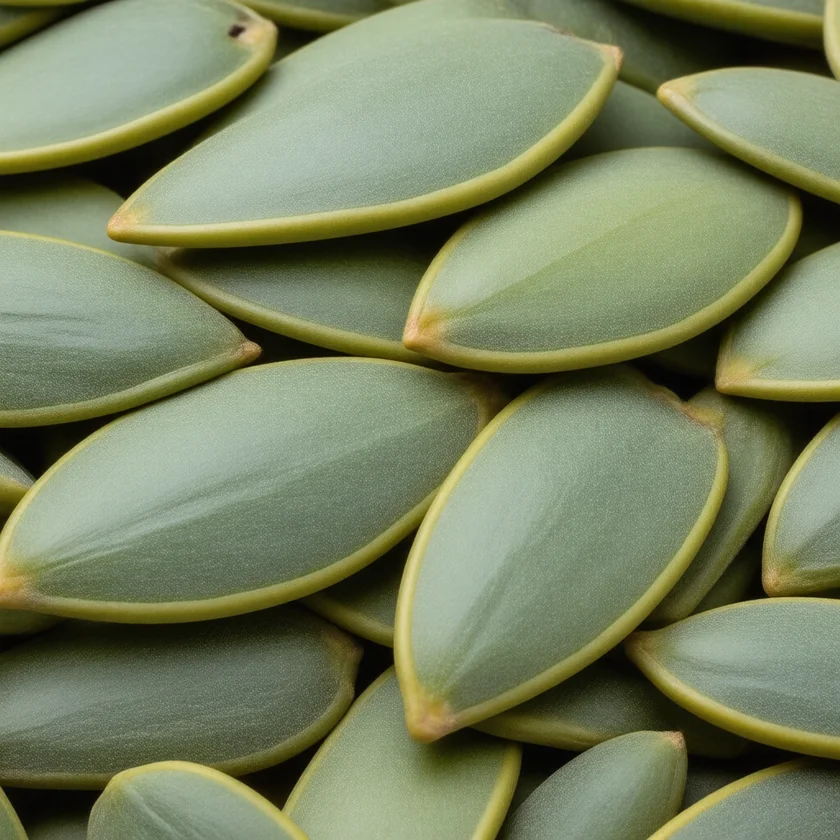
Pumpkin seeds carry more claims per gram than almost any snack — prostate, sleep, heart, blood sugar, immunity, "the most magnesium of any food" — and an unusual number of them have actually been put to a test. The tests are smaller than the claims. The one fact that needs no trial is composition: a cupped handful of dried kernels, about 28 g, delivers roughly 166 mg of magnesium and 2.2 mg of zinc, which makes it the densest ordinary food source of a mineral half the population under-eats. On the prostate, the largest trial in the field — 1,431 men for a year — found whole seed beat placebo on urinary symptoms while a concentrated extract did not. On sleep, the tryptophan story is mostly wrong and the magnesium story is modestly right. On the heart, two small trials of the oil in postmenopausal women lowered blood pressure by a few points, and one crossover trial found seeds in a meal cut the blood-sugar rise by about a third. The four deep dives below give each of those findings with its size, design, dose and limits, report the null results as null, and end with the two safety notes that matter: a rare but genuine allergy, and phytate, the seed's own brake on the minerals it is famous for.
Deep-Dive Articles
Pumpkin Seeds, Magnesium, Zinc and Mineral Density
What a 28 g handful actually delivers by USDA figures, why 48% of Americans are short on magnesium and what the cohort and trial data say that costs them, how zinc absorption saturates at about 6 mg a day, and the phytate catch — the human isotope studies showing phytate can cut magnesium absorption from 32% to 13%, and the soaking, sprouting and pairing that claw some of it back.
Read the deep dive →Pumpkin Seeds, Prostate Health and the Bladder
From Styrian folk medicine to Commission E and the EMA, then the trials one by one: the 1,431-man GRANU study (whole seed 58.5% responders versus 47.3% on placebo; the extract no better than placebo), the 12-month Korean oil trial (symptoms and flow improved, prostate size and PSA unchanged), the uncontrolled overactive-bladder studies read for what they are, the rat studies kept as rat studies, and the urinary symptoms that are never a matter for seeds.
Read the deep dive →Pumpkin Seeds, Tryptophan, Sleep and Mood
The 161 mg of tryptophan in a handful and why a protein food usually lowers brain tryptophan, measured in people eating ordinary breakfasts. The one controlled trial that made pumpkin-family seed work for insomnia — de-oiled seed protein taken with sugar — and its unreplicated status; the 1 g threshold in tryptophan supplement trials that a food cannot reach; and the magnesium route, with the trials in older adults that shorten time to sleep by a quarter of an hour.
Read the deep dive →Pumpkin Seeds, Heart Health, Blood Sugar and the Oil
The fat profile — linoleic and oleic, almost no omega-3 — and what the linoleic-acid and nut cohorts say. Phytosterols (a lot, but hardly any β-sitosterol), squalene and 35 mg of gamma-tocopherol per 100 g. The two postmenopausal oil trials, the 65 g meal trial that cut the glucose rise by 35%, what roasting does to the oil, why rancid seeds undo the point, the allergy case reports, and the good news on oxalate.
Read the deep dive →Table of Contents
- Deep-Dive Articles
- What Is Actually In Pumpkin Seeds
- Key Research Papers: Magnesium, Zinc and Phytate
- Key Research Papers: Prostate and Bladder
- Key Research Papers: Tryptophan, Sleep and Mood
- Key Research Papers: Heart, Blood Pressure and Blood Sugar
- Key Research Papers: Composition, Roasting and Allergy
- External Authoritative Resources
- Connections
- Featured Videos
What Is Actually In Pumpkin Seeds
Every figure below is from USDA FoodData Central's entry for seeds, pumpkin and squash seed kernels, dried (FDC ID 170556), per 100 g of hulled green kernel; the bracketed figure is the 28 g handful — three level tablespoons — that the deep dives use as their serving. The site's own nutrient profile page lists the full table.
- 559 kcal (157) — a calorie-dense food; the portion, not the fat, is what to watch.
- 30.2 g protein (8.5 g) — among the highest of any seed or nut, with lysine as the limiting amino acid.
- 49.1 g fat (13.7 g): 21.0 g polyunsaturated, almost all of it linoleic acid (20.7 g) with only 0.12 g of omega-3 alpha-linolenic; 16.2 g monounsaturated; 8.7 g saturated.
- 10.7 g carbohydrate, of which 6.0 g fibre and 1.4 g sugars (3.0 g and 1.7 g).
- Magnesium 592 mg (166 mg) — the headline. Zinc 7.81 mg (2.2 mg). Iron 8.82 mg (2.5 mg, non-haem). Phosphorus 1,233 mg (345 mg). Potassium 809 mg (227 mg). Manganese 4.54 mg (1.3 mg). Copper 1.34 mg (0.38 mg). Selenium 9.4 µg (2.6 µg). Calcium only 46 mg (13 mg). Sodium 7 mg before salting.
- Tryptophan 576 mg (161 mg) — a high proportion of the protein, and the source of the sleep claims examined in the third deep dive.
- Gamma-tocopherol 35.1 mg (9.8 mg) against only 2.18 mg of alpha-tocopherol (0.6 mg) — so a label calls the seed a poor vitamin E food while it is one of the richest gamma-tocopherol foods known. Vitamin K 7.3 µg, folate 58 µg, lutein and zeaxanthin 74 µg.
- Phytosterols: about 265 mg per 100 g total, but only 13–25 mg of it β-sitosterol (Phillips 2005; Ryan 2007). Squalene: 89 mg per 100 g, the most of any common seed (Ryan 2007). Phytate: present in substantial amounts, as in all oilseeds, and not given a figure here because no source we could verify to the milligram reports one.
Three things follow. First, this is a magnesium and zinc food before it is anything else; the minerals are the benefit with no asterisk except phytate, and phytate is manageable. Second, it is not an omega-3 food, whatever the front of the bag says; its fat is linoleic and oleic, a profile that comes out well in the cohorts but is not flaxseed's. Third, the compounds the supplement industry advertises — phytosterols, squalene, "vitamin E" — are real but either present in the wrong form or far below any tested dose. The evidence that matters is in the human trials of the seed and the oil themselves, which is what the four deep dives are about.
Key Research Papers: Magnesium, Zinc and Phytate
- Rosanoff A, Weaver CM, Rude RK (2012). Suboptimal magnesium status in the United States: are the health consequences underestimated? Nutrition Reviews. — PubMed PMID: 22364157
- Bohn T, Davidsson L, Walczyk T, Hurrell RF (2004). Phytic acid added to white-wheat bread inhibits fractional apparent magnesium absorption in humans. The American Journal of Clinical Nutrition. — PubMed PMID: 14985216
- Hambidge KM, Miller LV, Westcott JE, Sheng X, Krebs NF (2010). Zinc bioavailability and homeostasis. The American Journal of Clinical Nutrition. — PubMed PMID: 20200254
- Lönnerdal B (2000). Dietary factors influencing zinc absorption. The Journal of Nutrition. — PubMed PMID: 10801947
- Schlemmer U, Frølich W, Prieto RM, Grases F (2009). Phytate in foods and significance for humans: food sources, intake, processing, bioavailability, protective role and analysis. Molecular Nutrition & Food Research. — PubMed PMID: 19774556
- Gupta RK, Gangoliya SS, Singh NK (2015). Reduction of phytic acid and enhancement of bioavailable micronutrients in food grains. Journal of Food Science and Technology. — PubMed PMID: 25694676
- Dong JY, Xun P, He K, Qin LQ (2011). Magnesium intake and risk of type 2 diabetes: meta-analysis of prospective cohort studies. Diabetes Care. — PubMed PMID: 21868780
- Fang X, Wang K, Han D, et al. (2016). Dietary magnesium intake and the risk of cardiovascular disease, type 2 diabetes, and all-cause mortality: a dose-response meta-analysis of prospective cohort studies. BMC Medicine. — PubMed PMID: 27927203
Key Research Papers: Prostate and Bladder
- Vahlensieck W, Theurer C, Pfitzer E, Patz B, Banik N, Engelmann U (2015). Effects of pumpkin seed in men with lower urinary tract symptoms due to benign prostatic hyperplasia in the one-year, randomized, placebo-controlled GRANU study. Urologia Internationalis. — PubMed PMID: 25196580
- Hong H, Kim CS, Maeng S (2009). Effects of pumpkin seed oil and saw palmetto oil in Korean men with symptomatic benign prostatic hyperplasia. Nutrition Research and Practice. — PubMed PMID: 20098586
- Carbin BE, Larsson B, Lindahl O (1990). Treatment of benign prostatic hyperplasia with phytosterols. British Journal of Urology. — PubMed PMID: 1702340
- Leibbrand M, Siefer S, Schön C, et al. (2019). Effects of an Oil-Free Hydroethanolic Pumpkin Seed Extract on Symptom Frequency and Severity in Men with Benign Prostatic Hyperplasia: A Pilot Study in Humans. Journal of Medicinal Food. — PubMed PMID: 31017505 (single-arm, no placebo)
- Nishimura M, Ohkawara T, Sato H, Takeda H, Nishihira J (2014). Pumpkin Seed Oil Extracted From Cucurbita maxima Improves Urinary Disorder in Human Overactive Bladder. Journal of Traditional and Complementary Medicine. — PubMed PMID: 24872936 (uncontrolled)
- Damiano R, Cai T, Fornara P, Franzese CA, Leonardi R, Mirone V (2016). The role of Cucurbita pepo in the management of patients affected by lower urinary tract symptoms due to benign prostatic hyperplasia: A narrative review. Archivio Italiano di Urologia, Andrologia. — PubMed PMID: 27377091
- Gossell-Williams M, Davis A, O'Connor N (2006). Inhibition of testosterone-induced hyperplasia of the prostate of sprague-dawley rats by pumpkin seed oil. Journal of Medicinal Food. — PubMed PMID: 16822218 (animal study)
Key Research Papers: Tryptophan, Sleep and Mood
- Hudson C, Hudson SP, Hecht T, MacKenzie J (2005). Protein source tryptophan versus pharmaceutical grade tryptophan as an efficacious treatment for chronic insomnia. Nutritional Neuroscience. — PubMed PMID: 16053244
- Hudson C, Hudson S, MacKenzie J (2007). Protein-source tryptophan as an efficacious treatment for social anxiety disorder: a pilot study. Canadian Journal of Physiology and Pharmacology. — PubMed PMID: 18066139 (seven participants)
- Wurtman RJ, Wurtman JJ, Regan MM, McDermott JM, Tsay RH, Breu JJ (2003). Effects of normal meals rich in carbohydrates or proteins on plasma tryptophan and tyrosine ratios. The American Journal of Clinical Nutrition. — PubMed PMID: 12499331
- Sutanto CN, Loh WW, Kim JE (2022). The impact of tryptophan supplementation on sleep quality: a systematic review, meta-analysis, and meta-regression. Nutrition Reviews. — PubMed PMID: 33942088
- Abbasi B, Kimiagar M, Sadeghniiat K, Shirazi MM, Hedayati M, Rashidkhani B (2012). The effect of magnesium supplementation on primary insomnia in elderly: A double-blind placebo-controlled clinical trial. Journal of Research in Medical Sciences. — PubMed PMID: 23853635
- Mah J, Pitre T (2021). Oral magnesium supplementation for insomnia in older adults: a Systematic Review & Meta-Analysis. BMC Complementary Medicine and Therapies. — PubMed PMID: 33865376
- Zhang Y, Chen C, Lu L, et al. (2022). Association of magnesium intake with sleep duration and sleep quality: findings from the CARDIA study. Sleep. — PubMed PMID: 34883514
- Swardfager W, Herrmann N, Mazereeuw G, Goldberger K, Harimoto T, Lanctôt KL (2013). Zinc in depression: a meta-analysis. Biological Psychiatry. — PubMed PMID: 23806573
Key Research Papers: Heart, Blood Pressure and Blood Sugar
- Gossell-Williams M, Hyde C, Hunter T, et al. (2011). Improvement in HDL cholesterol in postmenopausal women supplemented with pumpkin seed oil: pilot study. Climacteric. — PubMed PMID: 21545273
- Wong A, Viola D, Bergen D, Caulfield E, Mehrabani J, Figueroa A (2019). The effects of pumpkin seed oil supplementation on arterial hemodynamics, stiffness and cardiac autonomic function in postmenopausal women. Complementary Therapies in Clinical Practice. — PubMed PMID: 31445363
- Cândido FG, de Oliveira FCE, Lima MFC, et al. (2018). Addition of pooled pumpkin seed to mixed meals reduced postprandial glycemia: a randomized placebo-controlled clinical trial. Nutrition Research. — PubMed PMID: 30055778
- Zhang X, Li Y, Del Gobbo LC, et al. (2016). Effects of Magnesium Supplementation on Blood Pressure: A Meta-Analysis of Randomized Double-Blind Placebo-Controlled Trials. Hypertension. — PubMed PMID: 27402922
- Farvid MS, Ding M, Pan A, et al. (2014). Dietary linoleic acid and risk of coronary heart disease: a systematic review and meta-analysis of prospective cohort studies. Circulation. — PubMed PMID: 25161045
- Aune D, Keum N, Giovannucci E, et al. (2016). Nut consumption and risk of cardiovascular disease, total cancer, all-cause and cause-specific mortality: a systematic review and dose-response meta-analysis of prospective studies. BMC Medicine. — PubMed PMID: 27916000
- Ras RT, Geleijnse JM, Trautwein EA (2014). LDL-cholesterol-lowering effect of plant sterols and stanols across different dose ranges: a meta-analysis of randomised controlled studies. British Journal of Nutrition. — PubMed PMID: 24780090
Key Research Papers: Composition, Roasting and Allergy
- Phillips KM, Ruggio DM, Ashraf-Khorassani M (2005). Phytosterol composition of nuts and seeds commonly consumed in the United States. Journal of Agricultural and Food Chemistry. — PubMed PMID: 16302759
- Ryan E, Galvin K, O'Connor TP, Maguire AR, O'Brien NM (2007). Phytosterol, squalene, tocopherol content and fatty acid profile of selected seeds, grains, and legumes. Plant Foods for Human Nutrition. — PubMed PMID: 17594521
- Glew RH, Glew RS, Chuang LT, et al. (2006). Amino acid, mineral and fatty acid content of pumpkin seeds (Cucurbita spp) and Cyperus esculentus nuts in the Republic of Niger. Plant Foods for Human Nutrition. — PubMed PMID: 16770692
- Polyzos N, Fernandes Â, Calhelha RC, et al. (2024). Biochemical Composition of Pumpkin Seeds and Seed By-Products. Plants. — PubMed PMID: 39273879
- Raczyk M, Siger A, Radziejewska-Kubzdela E, Ratusz K, Rudzińska M (2017). Roasting pumpkin seeds and changes in the composition and oxidative stability of cold-pressed oils. Acta Scientiarum Polonorum Technologia Alimentaria. — PubMed PMID: 29055977
- Patel A, Bahna SL (2016). Hypersensitivities to sesame and other common edible seeds. Allergy. — PubMed PMID: 27332789
- Chatain C, Pin I, Pralong P, Jacquier JP, Leccia MT (2017). Medicinal bioactivites and allergenic properties of pumpkin seeds: review upon a pediatric food anaphylaxis case report. European Annals of Allergy and Clinical Immunology. — PubMed PMID: 29249131
External Authoritative Resources
- USDA FoodData Central — search "pumpkin and squash seed kernels, dried" (FDC ID 170556) for every composition figure used on these pages
- NIH Office of Dietary Supplements — Magnesium fact sheet, with the recommended intakes quoted above
- NIH Office of Dietary Supplements — Zinc fact sheet
- European Medicines Agency — Cucurbitae semen (pumpkin seed) herbal monograph and assessment report
- NIDDK — Prostate enlargement (benign prostatic hyperplasia): symptoms, diagnosis and treatment
- PubMed: pumpkin seed clinical trials
Connections
- All Food
- Pumpkin Seeds
- Pumpkin Seeds: Nutrient Profile
- Pumpkin Seeds, Magnesium, Zinc and Mineral Density
- Pumpkin Seeds, Prostate Health and the Bladder
- Pumpkin Seeds, Tryptophan, Sleep and Mood
- Pumpkin Seeds, Heart Health, Blood Sugar and the Oil
- Pumpkin
- Sunflower Seeds
- Flaxseed
- Magnesium
- Zinc
- Tryptophan
- Benign Prostatic Hyperplasia
- Overactive Bladder
- Insomnia
- Hypertension
- Type 2 Diabetes