White Rice - Beneficial Foods
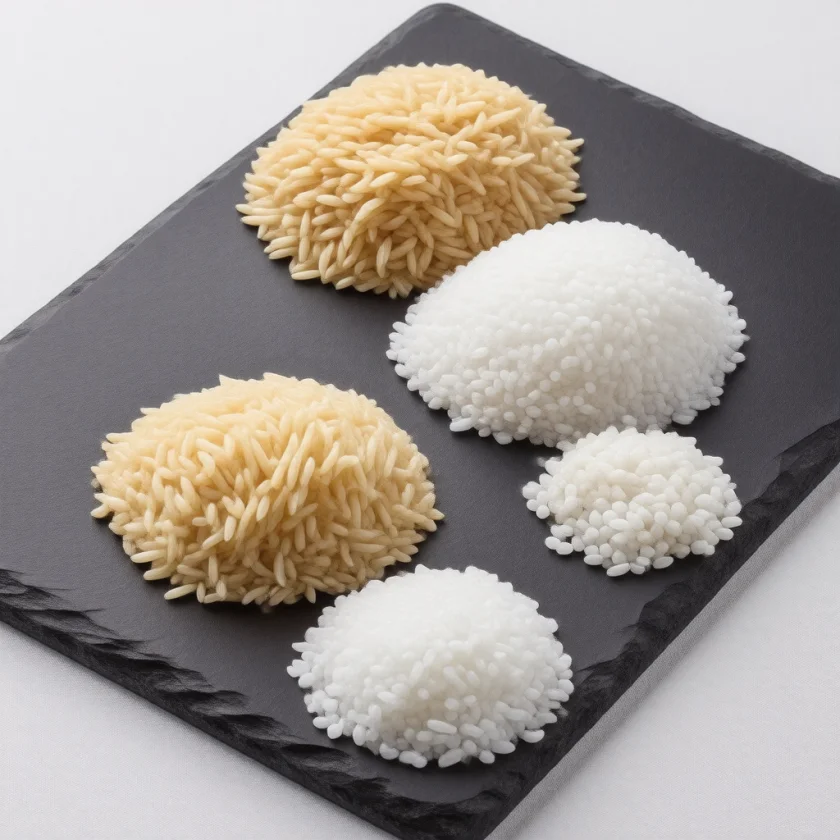
White rice feeds more than half the human population and supplies roughly a fifth of all the calories people consume. It is also the grain modern nutrition writing treats most harshly — usually by comparing it to brown rice, listing what milling removed, and stopping there. This page starts elsewhere. White rice is a traditional staple, not a processed novelty: hand-pounded polished rice was the prestige grain of Chinese, Japanese, Persian and Mughal kitchens long before industrial mills existed, and the reasons people chose it — it keeps for years, cooks fast, sits well on a sick stomach, and almost nobody is allergic to it — are still good reasons.
Scope note. This page describes plain, unenriched white rice. In the United States and many other countries most bagged white rice is legally enriched, with thiamin, niacin, folic acid and iron added back after milling. Enrichment changes four line items and nothing else; it does not restore fiber, magnesium, potassium, manganese or vitamin E. This page is also not about rice drinks, rice syrup or seasoned rice mixes.
Table of Contents
- Introduction and History
- From Paddy to Polished Grain
- Nutritional Profile
- Varieties and Grain Types
- Why It Is Gentle on the Gut
- A Low-Allergen Staple
- Antinutrients Milling Removes
- Glycaemic Considerations
- Cooling, Reheating and Resistant Starch
- Arsenic and How to Reduce It
- How to Buy and Store It
- How to Cook It
- How Much to Eat
- Groups With Particular Risks
- Connections
- Key Research Papers
- Featured Videos
Introduction and History
Rice is the seed of two domesticated grasses. Asian rice, Oryza sativa, is almost the whole world crop; African rice, Oryza glaberrima, was domesticated separately in the inland delta of the Niger River roughly three thousand years ago and is still grown in West Africa. White rice is not a different plant or variety — it is the same grain as brown rice with the bran layers and germ rubbed away.
Oryza sativa descends from the wild perennial Oryza rufipogon, and domestication began in the middle and lower Yangtze valley of China. Sites such as Shangshan, Kuahuqiao and Tianluoshan preserve rice phytoliths, husk fragments and — crucially — a rising proportion of non-shattering spikelet bases, the signature of a plant selected to hold its seed for a harvester. That transition spans roughly ten thousand to six thousand years ago. Genomic surveys trace the domestication alleles of both major subspecies to a single origin, with later introgression into local wild populations producing the two great cultivar groups: japonica, the short round sticky rices of China, Korea and Japan, and indica, the long slender rices of South and Southeast Asia.
Rice then travelled everywhere it could be flooded — the Ganges plain and Southeast Asia in the third and second millennia BC, Korea and Japan in the first millennium BC, Persia by Achaemenid times. Arab agricultural expansion carried it into Egypt, Sicily, the Po valley and Al-Andalus, which is why Spain has paella and Italy has risotto. It crossed the Atlantic with the Columbian exchange, and the rice economy of the Carolina and Georgia Lowcountry was built on West African rice-growing knowledge carried by enslaved people from the Rice Coast.
Polishing is old; industrial polishing is new
People have removed rice bran for as long as they have eaten rice. A wooden pestle and a stone mortar strip a good deal of it off, and the whiter the result the more prestigious the grain. Polished rice was court food in Tang China and Heian Japan and the base of Mughal pilafs. Calling white rice a modern industrial invention is simply wrong.
What was new, from roughly the 1870s, was the engine-driven mill, which made highly polished rice cheap and uniform and stripped far more bran than hand pounding ever had. Within a generation beriberi — thiamin deficiency causing peripheral neuropathy, heart failure and sudden infant death — became epidemic among populations eating almost nothing but polished rice. Christiaan Eijkman, in Batavia in the 1890s, produced the polyneuritis in chickens fed polished rice and reversed it with the discarded bran; Gerrit Grijns read it correctly as a missing essential nutrient; Casimir Funk coined "vitamine" in 1912; Jansen and Donath crystallized thiamin from rice bran in 1926.
The usual lesson drawn is "white rice causes beriberi." The accurate one is narrower and more useful: a diet that is almost entirely one refined staple causes deficiency disease. Beriberi appeared where rice was 80 to 90 percent of calories with almost no meat, eggs, legumes, offal or greens alongside it. Rice on a plate with other food does not produce beriberi and never did. See Vitamin B1.
World production now runs to roughly 500 million tonnes of milled rice a year, about 90 percent of it grown and eaten in Asia. In the highest-consuming countries an adult may eat 150 to 200 kilograms a year; in Western diets rice is an occasional side dish. That enormous range in habitual intake is the most important thing to hold in mind when reading research about rice, because studies at one end of it say very little about the other.
From Paddy to Polished Grain
A rice grain has four parts. The hull is a tough silica-rich case nobody eats. Under it lie the bran layers — pericarp, seed coat and aleurone — holding most of the grain's fat, minerals, B vitamins, fiber and phenolics. At one end sits the germ, rich in oil and vitamin E. The remaining 90 percent of the weight is endosperm: starch granules in a protein matrix.
Dehulling, by pounding or rubber-roller shellers, cracks off the husk and yields brown rice — the whole grain. Milling then abrades the bran and germ away; removing 8 to 10 percent of the grain's weight yields ordinary white rice. Mills call this the "degree of milling," and it is a dial rather than a switch, so lightly milled rices keep part of the bran. Parboiling, where used, happens before milling: the paddy is soaked, steamed and dried in the husk, which gelatinizes the starch and drives some water-soluble B vitamins and minerals inward before the bran is stripped.
What milling takes away
Raw long-grain brown rice versus raw long-grain unenriched white rice, per 100 g (USDA SR Legacy, foods 169703 and 169756):
- Fiber — 3.6 g falls to 1.3 g.
- Thiamin (B1) — 0.54 mg falls to 0.07 mg. This is the beriberi nutrient.
- Niacin (B3) — 6.5 mg falls to 1.6 mg.
- Magnesium — 116 mg falls to 25 mg.
- Phosphorus 311 mg to 115 mg; potassium 250 mg to 115 mg.
- Manganese 2.9 mg to 1.1 mg; zinc 2.1 mg to 1.1 mg; iron 1.3 mg to 0.8 mg.
- Fat, vitamin E and gamma-oryzanol — almost entirely gone with the germ and bran oil.
If you want those nutrients from your grain, brown rice, barley and oats deliver them and white rice does not. That is a fair criticism and there is no point softening it.
What milling also takes away
- Most of the phytic acid, which binds iron, zinc, calcium and magnesium in the gut — including the minerals in everything else on the plate.
- Most of the inorganic arsenic, which concentrates in the bran. Brown rice from a given paddy typically carries appreciably more than the white rice milled from the same crop.
- The bran lipase and lipoxygenase, the enzymes that attack germ oil and turn brown rice rancid within months. White rice cannot go rancid; nothing is left to oxidize.
- Most of the fermentable residue — exactly why white rice sits well in an inflamed or irritable gut.
Shelf life is the honest historical answer to why anyone polishes rice at all. Without refrigeration brown rice keeps a few months before the germ oil sours; plain white rice keeps for years, and sealed against oxygen for decades. That single property let rice underwrite standing armies, sea voyages and famine reserves. Polished rice also cooks in half the time, which matters where fuel is gathered by hand, and it is easier to digest for the very young, the very old and the sick. These are not marketing reasons; they are why the world's largest food crop is eaten the way it is.
Nutritional Profile
Figures are for plain, unenriched, long-grain white rice as reported in U.S. Department of Agriculture (USDA) reference data. Enriched rice shows higher thiamin, niacin, folate and iron; nothing else changes.
Per 100 g raw (dry)
- Energy 365 kcal · water 11.6 g
- Protein 7.1 g · fat 0.7 g
- Carbohydrate 80.0 g · fiber 1.3 g · sugars 0.1 g
- Calcium 28 mg · iron 0.8 mg · magnesium 25 mg
- Phosphorus 115 mg · potassium 115 mg · sodium 5 mg
- Zinc 1.1 mg · copper 0.22 mg · manganese 1.1 mg · selenium 15 mcg
- Thiamin 0.07 mg · riboflavin 0.05 mg · niacin 1.6 mg
- Pantothenic acid 1.0 mg · vitamin B6 0.16 mg · folate 8 mcg
Per 100 g cooked
Rice takes up roughly two and a half times its dry weight in water, so cooked figures are close to the raw figures divided by 2.8:
- Energy 130 kcal · water 68.4 g
- Protein 2.7 g · fat 0.3 g · carbohydrate 28.2 g · fiber 0.4 g
- Calcium 10 mg · iron 0.2 mg · magnesium 12 mg
- Phosphorus 43 mg · potassium 35 mg · sodium 1 mg
- Zinc 0.5 mg · manganese 0.47 mg · selenium 7.5 mcg
- Thiamin 0.02 mg · niacin 0.4 mg · vitamin B6 0.09 mg
Read plainly, white rice is a clean concentrated starch, very low in fat and sodium, with a modest but useful mineral tail: one 100 g dry serving supplies roughly a quarter of an adult's daily selenium and about half the daily manganese, plus useful copper and pantothenic acid.
The protein is better than its reputation
Seven grams per 100 g dry is not much, but rice protein is unusually well digested — true ileal digestibility measurements sit in the high eighties to mid nineties, above most plant proteins. Its amino acid pattern is comparatively strong in methionine and cysteine and weak in lysine, the exact mirror of legumes: lentils, beans and chickpeas are lysine-rich and methionine-poor. Rice and beans, rice and dal, rice and chickpeas — the pairing appears independently on every continent that grows rice because it works. Add eggs, fish, meat or whole-milk dairy and the question disappears.
What is genuinely low
Fiber, magnesium and potassium. There is no spinning 0.4 g of fiber and 35 mg of potassium per cooked 100 g. The response is not to abandon rice but to plan the plate around it: spinach, green beans, lentils, beans and fruit carry the fiber and potassium, and magnesium comes from greens, legumes, nuts and seeds. A staple's job is calories and tolerability; it does not also have to be the micronutrient source.
Varieties and Grain Types
"White rice" covers grains that behave so differently in the pot and in the bloodstream that treating them as one food is the commonest mistake in writing about rice. The variable that matters most is amylose content — the share of starch made of long straight tightly-packing chains rather than branched, easily gelatinized amylopectin. High amylose means separate fluffy grains, firmer texture and a flatter glucose curve; low amylose means soft sticky rice and a faster one.
Long-grain. Basmati from northern India and Pakistan is high in amylose, aged one to two years before sale, and scented by 2-acetyl-1-pyrroline; it cooks to long separate grains and sits at the low end of published glycaemic values for rice. US long-grain and Carolina Gold are similarly high in amylose. Jasmine is the important exception — long-grained but low in amylose, so it cooks soft and behaves glycaemically much more like a short grain. Length alone does not tell you what you are buying.
Medium- and short-grain. Calrose, Spanish bomba, Italian arborio and carnaroli sit in the middle, with enough surface amylopectin to make a risotto creamy or hold a paella together. Japonica short grains — Koshihikari, the rices sold as sushi rice — are lower in amylose, round and cohesive enough for chopsticks or nigiri, and are the highest-glycaemic of the ordinary white rices.
Glutinous rice. Sweet or sticky rice (mochigome, khao niao) contains essentially no amylose — its starch is nearly pure amylopectin — and gives the highest glucose response of any rice. Despite the name it contains no gluten; "glutinous" here means glue-like.
Parboiled (converted) rice deserves more attention than it gets. Steaming the paddy in the husk before milling gelatinizes and then retrogrades the starch, hardens the grain, and pushes some thiamin, niacin and minerals inward before the bran comes off. The result retains more B vitamins, resists overcooking, stays separate, and produces a lower glucose response. For anyone who wants white rice but is watching glycaemic load, this is the easiest single swap available.
Other forms. Rice flour, rice noodles, rice paper, congee and rice vinegar are the same grain in different states, but the finer the grind and the more completely the starch is gelatinized, the faster it digests. And rice syrup is sugar — rice starch broken down enzymatically into glucose and maltose. It belongs in the sugar category, not the whole-food category, and it is among the more concentrated dietary sources of arsenic.
Why It Is Gentle on the Gut
The property that makes white rice nutritionally thin is the same one that makes it clinically valuable: there is almost nothing in it for the gut to struggle with. Four hundred milligrams of fiber per cooked 100 g, 0.3 g of fat, no gluten, no lactose, and a starch human amylase handles easily.
Low residue. A low-residue food leaves little undigested bulk to reach the colon. Unhelpful if you are constipated; extremely helpful when recovering from gastroenteritis or food poisoning, during an inflammatory bowel disease flare, after abdominal surgery, during pelvic radiotherapy, in the recovery window after diverticulitis, and in gastroparesis, where low fat and low fiber are both required for the stomach to empty at all. In each of those settings white rice, congee and rice water are among the first foods reintroduced — not because they are nutritious but because they are tolerated, and calories that stay down beat calories that do not.
Low FODMAP. Rice is one of very few grains low in FODMAPs — the short-chain fermentable carbohydrates that drive gas, distension and pain in irritable bowel syndrome. Wheat, rye, barley and most legumes are high in them; rice is not, at any normal serving size. That makes white rice the default staple of a low-FODMAP diet and one of the safest starches for people managing irritable bowel syndrome (IBS) or small intestinal bacterial overgrowth (SIBO), where fermentable substrate is precisely the problem.
No gluten, at all. Rice's main storage protein is glutelin, with prolamin only a smaller fraction, and rice proteins carry none of the gliadin epitopes that trigger the autoimmune response in celiac disease. Rice is structurally gluten-free and anchors gluten-free cooking worldwide. The only caveat is cross-contamination: bulk bins and shared mills can introduce wheat, which is why sealed bags, and certified gluten-free product for the most sensitive, are used by people with celiac disease.
Congee and oral rehydration. Rice simmered in eight to ten times its volume of water becomes congee — jook, okayu, kanji, arroz caldo — the convalescent food of most of Asia. This is not folklore dressed up as nutrition. Rice-based oral rehydration solutions, in which rice powder replaces some or all of the glucose, were tested in controlled trials during cholera and acute-diarrhoea outbreaks, and a meta-analysis of thirteen trials found reduced stool output compared with standard glucose ORS. The mechanism is elegant: amylase liberates glucose from the starch gradually inside the gut, so sodium-glucose cotransport keeps working while osmolality stays low, avoiding the osmotic pull a sugary drink creates. Cooking congee in bone broth instead of water makes it carry more than starch.
It does not fight the rest of the meal. Because white rice is nearly phytate-free it does not interfere with absorption of iron, zinc or calcium from the food eaten with it. A bran-heavy grain does. For someone eating beef liver or dark greens to correct an iron deficiency, white rice interferes with that iron less than a high-bran grain does.
A Low-Allergen Staple
Rice is among the least allergenic foods people eat in quantity. It contains no gluten, no lactose, no casein, no tree nuts, no peanuts, no egg, no shellfish, no mustard, no sesame — and it is a grass seed rather than a legume, which puts it outside the most common cross-reactive clusters entirely.
That is why rice is the near-universal starting point for elimination and few-food diets. When a clinician needs a base food that will almost certainly not be the culprit — investigating chronic urticaria, eosinophilic oesophagitis, unexplained gut symptoms or a suspected multiple-food reaction — rice is where they start, usually with one meat, one cooked vegetable and one fruit. Rice hydrolysates have been used as the protein base of hypoallergenic infant formulas for the same reason.
Three further advantages follow from being boring. Rice is cheap, so an elimination diet does not become an economic problem; it keeps for years, so it can be stocked; and it is culturally universal, so nobody has to learn an unfamiliar way of eating to follow the protocol. "Least allergenic" is not "non-allergenic," though — rice allergy is real, and Groups With Particular Risks describes what it looks like.
Antinutrients Milling Removes
Every seed protects its mineral reserve with compounds that interfere with digestion and absorption. In rice these sit overwhelmingly in the bran and germ, which is why white rice is one of the lowest-antinutrient staple foods available.
Phytic acid (inositol hexaphosphate) is the seed's phosphorus store, concentrated in the aleurone layer. In the gut it chelates iron, zinc, calcium and magnesium into insoluble complexes humans cannot absorb, because we produce essentially no intestinal phytase. Brown rice carries roughly 0.8 to 1.0 g per 100 g; milled white rice roughly 0.1 to 0.2 g — an 80 to 90 percent reduction.
The practical consequence is that white rice is mineral-transparent. It brings few minerals of its own, but it does not block the minerals in the meat, fish, eggs, dairy, greens or supplements eaten with it. A high-phytate grain does both: more minerals supplied, less of the whole meal's mineral content absorbed. If your plate is already rich in iron and zinc from animal foods, low phytate is straightforwardly an advantage; if your grain is your main mineral source, it is not. None of this makes phytate a poison — it is also an antioxidant and inhibits kidney-stone formation, and soaking, sprouting and fermentation all reduce it in whole grains. The honest framing is a trade-off, not a villain.
Lectins and protease inhibitors. Rice bran contains trypsin inhibitors, a lectin fraction and some saponins. Milling removes most of them and thorough cooking destroys most of the remainder — one reason white rice sits well in people who react badly to legumes and bran-rich grains. The most consequential thing concentrated in rice bran is not an antinutrient at all but a toxic metalloid, and it gets its own section below.
Glycaemic Considerations
This is the legitimate concern about white rice, and it deserves precision rather than either dismissal or alarm.
Published glycaemic index values for white rice span roughly 43 to 96 — a range wider than the gap between most foods people argue about. The 2021 international tables give a weighted mean near 73 for white rice and near 68 for brown, which surprises people: the average white-versus-brown difference is small compared with the variation within white rice. A high-amylose parboiled basmati and a bowl of sticky rice are not the same food glycaemically. What moves the number:
- Amylose content — by far the largest factor. More amylose, lower response.
- Degree of gelatinization — rice cooked to mush digests faster than rice cooked to separate grains.
- Grain integrity — whole grains beat broken grains beat flour.
- Parboiling and cooling — both lower it.
- The rest of the meal — fat, protein, acid and vegetables all slow gastric emptying and blunt the curve substantially.
What the epidemiology actually says
Two studies frame the debate. A 2012 BMJ meta-analysis by Hu and colleagues pooled four articles covering seven prospective cohort analyses (352,384 participants) and reported that each additional daily serving of white rice was associated with roughly 11 percent higher risk of type 2 diabetes, with the association clearly stronger in Chinese and Japanese cohorts eating three to four servings a day than in Western cohorts eating one or two a week. The PURE study, published in Diabetes Care in 2020, then followed 132,373 people across 21 countries for an average of 9.5 years. Comparing 450 g or more of cooked white rice a day with under 150 g, it found the highest risk in South Asia (hazard ratio 1.61), followed by the other regions pooled together — Southeast Asia, the Middle East, South America, North America, Europe and Africa (hazard ratio 1.41) — and no significant association in China (hazard ratio 1.04). The strength of the signal differs by region.
The reasonable reading is that risk tracks with rice constituting the overwhelming bulk of a diet short on protein, fat and vegetables — the same pattern that made beriberi possible a century earlier — rather than with rice being present on a mixed plate. That is a statement about dietary architecture, not about a grain.
Practical levers
- High-amylose long-grain, aged basmati, or parboiled rice gives a flatter glucose curve than soft, sticky or short-grain rice.
- Cooking time. Rice cooked to separate grains digests more slowly than rice cooked to porridge.
- Portion size. One loosely cupped hand of cooked rice is about one serving; a mounded bowl is about three.
- What it is eaten with. Butter, ghee, olive oil, eggs, fish, meat and a generous pile of non-starchy vegetables all flatten the response, as does acid — rice vinegar, lemon, a pickled vegetable alongside.
- Cooking, chilling and reheating — see the next section.
- For people with diabetes, prediabetes or insulin resistance, individual response is the deciding number. Individual variation to identical rice meals is large, and a glucose reading two hours after a usual portion of a usual rice tells more than any published index. See also Type 2 Diabetes.
Cooling, Reheating and Resistant Starch
Freshly cooked rice has had its starch granules swollen and burst by heat and water, which is what makes it digestible. Let it cool and the freed amylose chains re-associate into tight crystalline structures pancreatic amylase can no longer open. This is retrogradation, and the product is type 3 resistant starch. Freshly cooked white rice contains well under 1 percent; after 24 hours at refrigerator temperature the figure typically rises severalfold, and reheating does not fully reverse it, because the crystalline regions are more heat-stable than the original granules were.
Two things follow. Resistant starch is not absorbed as glucose in the small intestine, so the glycaemic response falls: a 2015 trial by Sonia, Witjaksono and Ridwan cooled cooked white rice, reheated it and fed it to healthy adults, measuring a significantly lower postprandial glucose response than from the same rice served freshly cooked. And what escapes digestion reaches the colon, where resident bacteria ferment it into short-chain fatty acids, principally butyrate — the preferred fuel of the cells lining the colon. In effect, cooling turns a fraction of your starch into fiber.
To do it: cook a batch as usual; cool it fast, spread in a shallow layer so it leaves the danger zone within an hour, then cover and refrigerate (a food-safety requirement, not a refinement); keep it 24 to 48 hours at 4 °C; reheat once, thoroughly, until steaming — or eat it cold in a rice salad. Day-old rice is also the only rice that makes good fried rice, and freezing cooked rice in portions works too and is safer than the refrigerator for longer storage.
One claim to be sceptical of. A widely circulated story holds that adding coconut oil to the cooking water and then chilling the rice removes 50 to 60 percent of its calories. That figure comes from an undergraduate project presented at a conference and has never been replicated in a peer-reviewed trial. The underlying chemistry — lipid–amylose complexation adding to retrogradation — is real, and the resistant-starch increases measured in proper studies are meaningful, but they are nothing like halving the calories. Fat in rice makes it taste better and slows digestion; the calorie-halving figure remains an unverified number.
Arsenic and How to Reduce It
Rice accumulates roughly ten times more arsenic than other cereal grains. This is the one genuinely serious safety issue with the crop, and it is worth understanding rather than worrying about, because the mitigations are simple and effective.
Why rice specifically. Paddy fields are deliberately flooded. Flooded soil goes anaerobic, and under anaerobic conditions soil arsenic is chemically reduced to arsenite, its most mobile and most toxic inorganic form. Rice, uniquely among cereals, is a silicon accumulator, and the same root transporters that bring silicon in — Lsi1 and Lsi2 — take up arsenite with high efficiency because the two molecules look alike to the transporter. The plant is not doing anything wrong; it is being efficiently fooled.
Where it ends up. In the bran. Arsenic concentrates in the outer layers of the grain, which means white rice is consistently lower in inorganic arsenic than brown rice milled from the same crop, often by a factor approaching two. This is one of the few clear, evidence-backed nutritional arguments in white rice's favour, and it is rarely mentioned in brown-versus-white comparisons.
Origin matters more than variety. Meharg and colleagues surveyed polished rice worldwide in 2009 and found geographical differences far larger than variety differences. Lower: basmati from India and Pakistan, rice grown in California, much Egyptian rice and Thai jasmine. Higher: rice grown in the south-central United States (Arkansas, Louisiana, Texas, Missouri), much of it on land that carried arsenical pesticides during the cotton era, and rice from some arsenic-affected regions of Bangladesh and China. The country or state of origin on the bag is therefore the single most useful thing you can read on it.
Regulatory limits. The European Union sets a maximum of 0.20 mg/kg inorganic arsenic for polished white rice and a stricter 0.10 mg/kg for rice destined for food for infants and young children; Codex uses 0.20 mg/kg as well. The US FDA has set an action level of 100 parts per billion inorganic arsenic in infant rice cereal. These limits exist because the exposure is chronic and cumulative and inorganic arsenic is a recognized human carcinogen — see Arsenic for the toxicology.
What reduces it
- Rinsing the dry rice in several changes of water until it runs nearly clear. Modest benefit, and it improves texture anyway.
- Cooking in excess water and draining. Six to ten parts water to one part rice, boiled and poured off like pasta, removes a large share of the inorganic arsenic — reported reductions land in the 40 to 60 percent range. The cost is that water-soluble B vitamins go down the sink too, including any enrichment.
- The parboiled-absorption method. The water is brought to a boil first, the rice added and boiled five minutes, that water drained and discarded, then fresh water added at about two parts to one and the rice finished by absorption. Menon and colleagues (2021) reported that this method removed 54 percent of the inorganic arsenic from brown rice and 73 percent from white rice, and that losses of the other nutrients they measured were similar to or less than the losses reported in the literature for rice cooked in excess water.
- Rotating grains. Barley, oats, buckwheat, millet, sweet potatoes and potatoes do not accumulate arsenic the way flooded rice does. Variety is the most reliable protection there is.
- Small children. Their intake per kilogram of body weight is the highest of any group. A rice-based drink as a young child's main beverage, or a single rice cereal for weaning, raises that exposure; varied grains, low-arsenic origins and the drain method lower it.
- Rice syrup is a sugar and also among the more concentrated dietary sources of arsenic (see Varieties above).
How to Buy and Store It
- The ingredient list. For plain rice it says rice, and possibly the four enrichment nutrients. Anything else — flavourings, oils, powders, bouillon — means a seasoned mix, a different and much saltier product.
- Check the origin. For arsenic this is the most informative line on the bag, and it is often in small type on the back.
- Match the grain to the dish. Aged basmati for pilaf and the lowest glycaemic response; jasmine for Southeast Asian food; japonica for Japanese and Korean; arborio or carnaroli for risotto; bomba for paella; parboiled for a forgiving, lower-GI everyday rice. Aged basmati is worth the premium — one to two years of storage lowers moisture, firms the grain and gives the long separate result basmati is bought for.
- Sealed bags rather than bulk bins lower the cross-contamination risk for people with celiac disease or a serious allergy; certified gluten-free product lowers it further.
- Note the wash instruction. Some imported rice is still coated with glucose or talc for appearance; bags saying "wash before cooking" usually mean it. Wash it.
- Buy broken grains knowingly. Broken rice is cheaper, cooks faster and is traditional in many dishes — just be aware it digests faster too.
Storing dry rice is white rice's superpower. With the oil-bearing bran and germ gone there is nothing left to go rancid. In an airtight container in a cool dark dry cupboard, plain white rice keeps two years or more with no meaningful loss of quality, and sealed against oxygen it keeps for decades. Brown rice wants three to six months at room temperature, or the freezer. Rice weevils and Indian meal moths usually arrive already in the bag as eggs; airtight containers, or a few days in the freezer after purchase, deal with them, and a bay leaf in the bin does not.
Storing cooked rice is the part that actually matters. Bacillus cereus spores survive boiling. Left at room temperature they germinate, and the growing cells produce cereulide, a heat-stable emetic toxin. Reheating kills the bacteria but does not destroy the toxin, which is why so-called fried rice syndrome — violent vomiting one to five hours after a meal — is a classic food-poisoning presentation, with cooked rice and cooked pasta its usual vehicles.
- Cool cooked rice within one hour, spread in a shallow layer to speed it up.
- Refrigerate promptly and eat within 24 to 48 hours.
- Reheat once only, right through, until steaming.
- Never leave a covered pot of rice on the stove overnight, and never let a rice dish sit lukewarm through a long buffet.
- Freeze portions to keep cooked rice longer; frozen cooked rice reheats very well.
How to Cook It
Rinse, and sometimes soak. Rinse in two to four changes of cool water until it runs nearly clear. This removes surface starch, field dust, any coating and some arsenic, and it is the difference between fluffy and gluey for long-grain rice. Soak basmati 20 to 30 minutes before cooking — it hydrates the grain evenly, shortens the cook and lets the grains elongate rather than break. Skip rinsing only for risotto and paella, where you want that surface starch.
The absorption method is the everyday default. By volume: long-grain 1 part rice to 1.5 parts water; medium-grain 1 to 1.25; short-grain 1 to 1.2. Salt the water. Bring to a boil uncovered, cover, drop to the lowest heat and leave it alone 10 to 12 minutes. Then take it off the heat and let it rest, still covered, 10 minutes before fluffing with a fork. The rest is what separates good rice from wet rice, and it is the step most people skip.
The excess-water method — six to ten parts water to one part rice, a hard boil for 10 to 12 minutes, drained in a sieve like pasta and seasoned afterwards. Slightly less flavourful, harder to overcook, and the arsenic-reducing choice. The parboiled-absorption method removed the most arsenic of the four absorption methods Menon and colleagues tested, with nutrient losses similar to or less than those reported for excess-water cooking: boil the water first, add the rinsed rice, boil hard five minutes, drain that water away completely, then add fresh water at roughly two parts to one and finish covered on low heat until absorbed.
Fat and flavour. Rice is a carrier. Butter, ghee, olive oil, coconut oil, or the fat rendered from whatever you are serving it with, all improve both the taste and the glycaemic behaviour of the finished dish. For a pilaf, toast the drained grains in fat for a minute or two before the liquid goes in — it coats the starch and keeps the grains separate. Cook in bone broth instead of water for a savoury, more nutrient-dense result. Aromatics that belong in the pot: a bay leaf, a bruised cardamom pod, a cinnamon stick, a few saffron threads, a smashed garlic clove, a strip of lemon peel. Finish with lemon juice, rice vinegar, chopped herbs, or the pan juices from the main dish.
- Congee — 1 part rice to 8 or 10 parts water or broth, simmered one to two hours until it collapses into a savoury porridge.
- Fried rice — needs day-old chilled rice; fresh rice steams and clumps. Conveniently, the chilling also builds the resistant starch.
- Rice pudding — short-grain rice slowly cooked in whole milk with a vanilla pod and a little honey. Use whole milk; the fat is what makes it work.
- Rice salad — cooked and chilled rice with olive oil, vinegar or lemon, herbs and roasted vegetables. Maximum resistant starch, no reheating, and it solves lunch.
Rice drowned in a sweet sauce, or served as the only substantial thing on the plate, does not make a balanced meal. Rice's job is to be the floor the meal stands on.
How Much to Eat
A practical serving of cooked white rice is 125 to 170 grams — a loosely cupped handful, roughly the size of a clenched fist — from 45 to 60 grams of dry rice, delivering around 165 to 220 kcal. Two such servings a day is entirely ordinary. In rice-centred cuisines 300 to 500 grams of cooked rice a day is normal and has been for millennia.
The number matters far less than the context. Ask two questions instead.
- What else is on the plate? If rice is one of four or five components — a protein, a fat, and two vegetables or a vegetable and a legume — then one to two cupped handfuls a day is unremarkable and needs no managing. If rice is 60 to 70 percent of the day's calories with very little alongside it, that is the pattern the diabetes cohorts and, a century earlier, the beriberi outbreaks were measuring. The problem in both cases was monotony, not the grain.
- Who is eating it? Growing children, manual workers, endurance athletes, people recovering from illness or surgery, people who are underweight, and people on a medically necessary low-residue or low-FODMAP diet may all reasonably eat considerably more. For someone sedentary with insulin resistance, smaller portions and parboiled or high-amylose rice give a lower glucose load.
Rotating grains across the week spreads arsenic exposure and broadens the micronutrient base at once. And keep the perspective straight: nobody needs rice. It is an excellent, cheap, storable, well-tolerated staple, which is a genuinely valuable thing to be, and it does not have to be more than that.
Groups With Particular Risks
Infants and young children. Small bodies eating rice-based food get the highest arsenic exposure per kilogram of body weight of any group, over a long window. Varied grains, low-arsenic origins, the drain or parboiled-absorption cooking methods, and not relying on a rice-only weaning cereal all lower that exposure; a rice-based drink as a young child's main beverage raises it, and several national food agencies advise against rice drinks for children under five specifically on these grounds.
Rice allergy
- Immunoglobulin E-mediated food allergy to rice seed storage proteins is documented, more often reported in East Asian populations, and can be severe — including anaphylaxis. It presents like any immediate food allergy: hives, swelling, wheeze, vomiting within minutes to an hour.
- Food protein-induced enterocolitis syndrome (FPIES) in infants. Rice is one of the more frequent solid-food triggers, and it looks nothing like classic allergy: profuse repetitive vomiting, pallor and lethargy one to four hours after eating, sometimes with diarrhoea and shock, and no rash at all. It is frequently mistaken for sepsis or gastroenteritis. The telling detail is the timing — repeated vomiting and floppiness hours after rice cereal — and an infant in shock after such an episode is a medical emergency.
- Occupational allergy — inhaled rice flour dust causes rhinitis and asthma in bakers, millers and food workers. Some people with grass-pollen allergy also react to rice through cross-reactive profilins, usually mildly.
Diabetes, prediabetes, insulin resistance and polycystic ovary syndrome (PCOS). White rice is not forbidden; the levers in the glycaemic section apply — portion size, parboiled or high-amylose long-grain rice, cook-chill-reheat, and eating it with fat, protein and vegetables. Individual responses to identical rice meals differ far more than published indexes suggest, so a person's own post-meal glucose reading tells more. For anyone on insulin or a sulfonylurea, the carbohydrate load of "a bowl of rice" varies substantially between varieties and cooking methods.
Anyone already short of fiber, magnesium or potassium. White rice will not help with any of the three, and if it displaces vegetables, fruit and legumes rather than accompanying them it makes all three worse. This is the commonest real-world problem with white rice, and it is entirely a plate-composition problem.
Chronic kidney disease — where white rice is an advantage. On a potassium- and phosphorus-restricted renal diet, the low mineral content that counts against white rice everywhere else becomes the point. Thirty-five milligrams of potassium and 43 mg of phosphorus per cooked 100 g make it one of the more useful energy sources available, and it is a standard component of renal diets for exactly that reason. The potassium and phosphorus limits on a renal diet are set person by person, from blood tests and the stage of kidney disease.
Cooked-rice food poisoning. The Bacillus cereus risk described above is the most likely way white rice will actually harm a healthy person. Fast cooling, refrigeration, a single thorough reheat, and never leaving it standing warm are the protections.
Interactions worth knowing
White rice is a bulk food with very few drug interactions, and it is more honest to name the four that genuinely apply than to invent a list:
- Alpha-glucosidase inhibitors (acarbose, miglitol) act directly on exactly this kind of starch and are dosed with the first mouthful of a starchy meal. Rice-heavy meals are the setting these drugs were designed for, and also where their gas and bloating side effects are most noticeable.
- Insulin and sulfonylureas — mealtime insulin is commonly dosed to the carbohydrate served, and variety, cooking and cooling all shift the carbohydrate in a portion of rice. Sulfonylureas are not dosed meal by meal: the glipizide label gives a starting dose of 5 mg before breakfast, states that all sulfonylurea drugs are capable of producing severe low blood sugar (hypoglycaemia), and notes that low blood sugar is more likely when calorie intake is too low.
- Mineral supplements taken with meals — unlike bran-rich grains, low-phytate white rice does not meaningfully chelate iron, zinc or calcium. That is a point in its favour when you are treating a deficiency, not a caution.
- Enriched rice cooked by the drain method — if you rely on enriched rice for thiamin, folic acid or iron, boiling it in excess water and pouring the water away removes most of that. Those nutrients also come from food: pork, eggs, beef liver, lentils and leafy greens.
The historical warning worth keeping. Thiamin deficiency has not gone away. It appears in alcohol use disorder, after bariatric surgery, in hyperemesis gravidarum, in prolonged intravenous feeding without vitamins, in refeeding after starvation — and in any diet dominated by a single refined staple. When polished rice is most of what someone eats, thiamin is the nutrient most at risk; pork, eggs, legumes, liver and greens supply it, the rice does not. See Vitamin B1.
None of this argues against white rice itself. The cultures that built themselves on it always ate it the same way: as the base of a mixed plate, cooked well, portioned sensibly, and never alone.
Connections
- All Food
- Barley — the fiber and magnesium white rice lacks, and no arsenic accumulation.
- Oats — the other classic non-flooded grain to rotate with rice.
- Resistant Starches — the mechanism behind cook-chill-reheat.
- Lentils — the lysine-rich partner that completes rice protein.
- Beans — the same complementary pairing on another continent.
- Sweet Potatoes — an arsenic-free starch to alternate with rice.
- Bone Broth — cook rice or congee in broth instead of water.
- Celiac Disease — why rice, whose storage proteins contain no gluten, anchors gluten-free eating.
- Irritable Bowel Syndrome — white rice as one of the few reliably low-FODMAP grains.
- Arsenic — the toxicology behind the cooking-water advice here.
- Vitamin B1 (Thiamin) — the nutrient milling removes, and the beriberi story.
Key Research Papers
Citations are plain text. Each links to a PubMed search built from the paper's title, so you can confirm the record yourself rather than trusting a transcribed identifier.
- Molina J, Sikora M, Garud N, et al. Molecular evidence for a single evolutionary origin of domesticated rice. Proceedings of the National Academy of Sciences, 2011. — Search PubMed
- Huang X, Kurata N, Wei X, et al. A map of rice genome variation reveals the origin of cultivated rice. Nature, 2012. — PubMed PMID: 23034647
- Fitzgerald MA, McCouch SR, Hall RD. Not just a grain of rice: the quest for quality. Trends in Plant Science, 2009. — PubMed PMID: 19230745
- Atkinson FS, Brand-Miller JC, Foster-Powell K, et al. International tables of glycemic index and glycemic load values 2021: a systematic review. The American Journal of Clinical Nutrition, 2021. — PubMed PMID: 34258626
- Kaur B, Ranawana V, Henry J. The glycemic index of rice and rice products: a review, and table of GI values. Critical Reviews in Food Science and Nutrition, 2016. — PubMed PMID: 25590950
- Sonia S, Witjaksono F, Ridwan R. Effect of cooling of cooked white rice on resistant starch content and glycemic response. Asia Pacific Journal of Clinical Nutrition, 2015. — PubMed PMID: 26693746
- Hu EA, Pan A, Malik V, Sun Q. White rice consumption and risk of type 2 diabetes: meta-analysis and systematic review. BMJ, 2012. — PubMed PMID: 22422870
- Bhavadharini B, Mohan V, Dehghan M, et al. White rice intake and incident diabetes: a study of 132,373 participants in 21 countries. Diabetes Care, 2020. — PubMed PMID: 32873587
- Meharg AA, Williams PN, Adomako E, et al. Geographical variation in total and inorganic arsenic content of polished (white) rice. Environmental Science & Technology, 2009. — PubMed PMID: 19350943
- Menon M, Dong W, Chen X, et al. Improved rice cooking approach to maximise arsenic removal while preserving nutrient elements. Science of the Total Environment, 2021. — PubMed PMID: 33153748
Further Reading
- Ma JF, Yamaji N, Mitani N, et al. Transporters of arsenite in rice and their role in arsenic accumulation in rice grain. Proceedings of the National Academy of Sciences, 2008. — Search PubMed
- Gore SM, Fontaine O, Pierce NF. Impact of rice based oral rehydration solution on stool output and duration of diarrhoea: meta-analysis of 13 clinical trials. BMJ, 1992. — PubMed PMID: 1531430
- Trcka J, Schäd SG, Scheurer S, et al. Rice-induced anaphylaxis: IgE-mediated allergy against a 56-kDa glycoprotein. International Archives of Allergy and Immunology, 2012. — PubMed PMID: 22205234
- Ehling-Schulz M, Fricker M, Scherer S. Bacillus cereus, the causative agent of an emetic type of food-borne illness. Molecular Nutrition & Food Research, 2004. — Search PubMed