Quinoa: Nutrient Profile
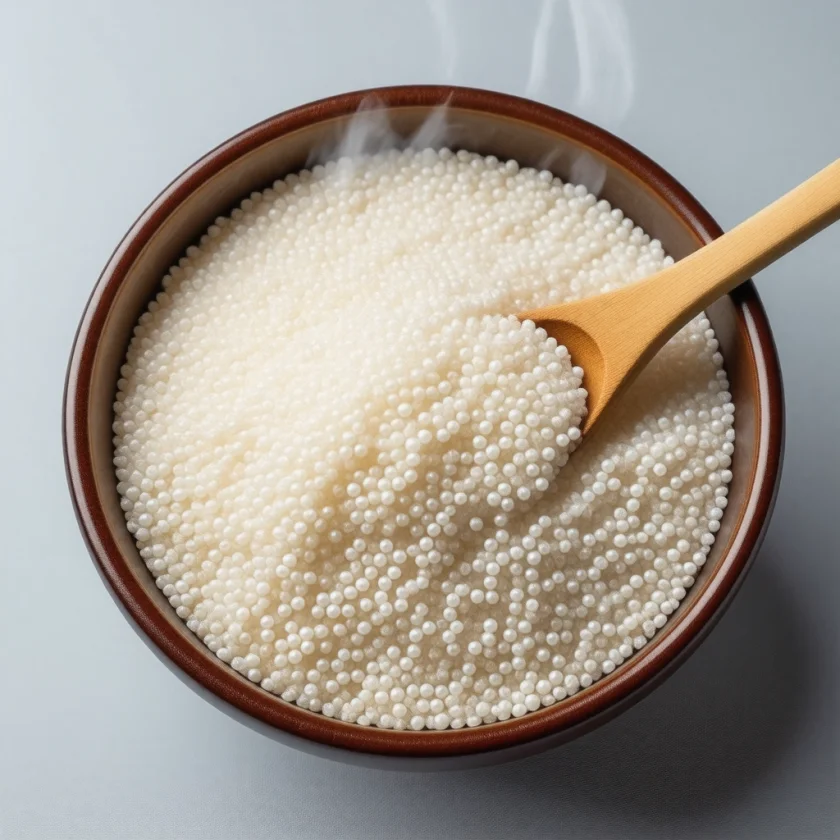
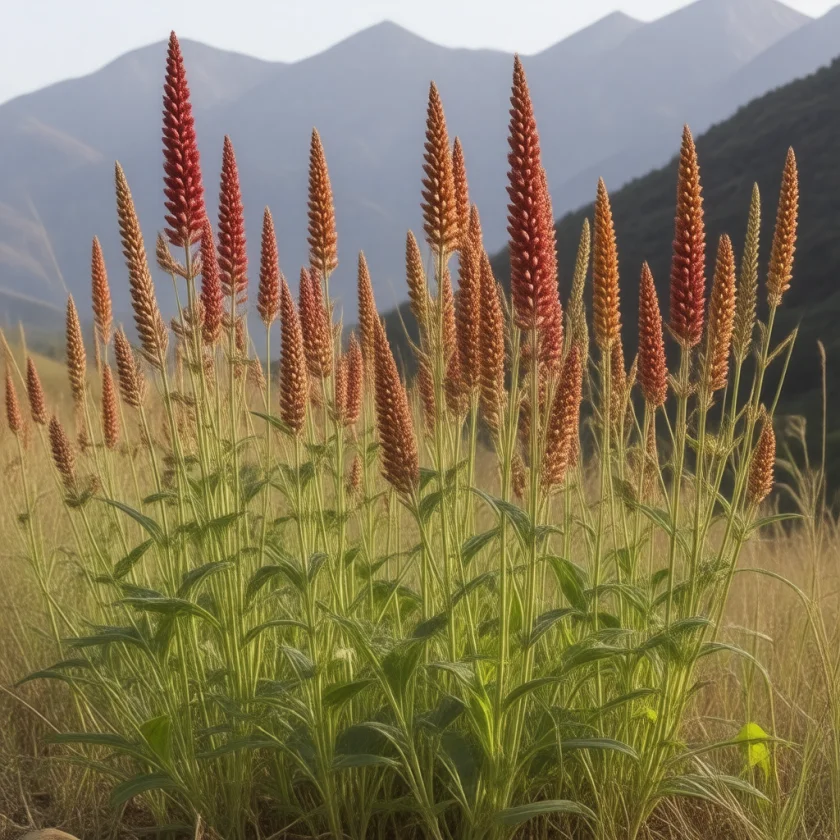
What is Quinoa richest in? Below are the vitamins, minerals and amino acids that 100 g of Quinoa delivers in the highest amounts. Each one links to that nutrient’s own page listing the best foods to get it from.
| Quinoa: Richest Nutrients (per 100 g) | ||||
|---|---|---|---|---|
| Rank | Nutrient | Per 100 g | %DV / 100g | Purpose |
| Vitamins | ||||
| 1 | Vitamin B9 (Folate) | 42 mcg DFE | 🟡 10% | Cell division; pregnancy |
| Minerals | ||||
| 1 | Manganese | 0.6 mg | 🟡 27% | Bone & metabolism |
| 2 | Copper | 0.2 mg | 🟡 21% | Iron use; connective tissue |
| 3 | Magnesium | 64 mg | 🟡 15% | Muscle, nerves & energy |
| 4 | Phosphorus | 152 mg | 🟡 12% | Bones & cellular energy |
| Amino Acids — ranked by amount (no Daily Value) | ||||
| 1 | Glutamic acid | 0.6 g | 🟢 | Brain signaling (glutamate) |
| 2 | Aspartic acid | 0.4 g | 🟢 | Cellular energy & detox |
| 3 | Arginine | 0.3 g | 🟢 | Blood flow (nitric oxide) |
| 4 | Leucine | 0.3 g | 🟡 | Builds muscle (branched-chain amino acid, BCAA) |
| 5 | Proline | 0.2 g | 🟡 | Collagen & joints |
| 6 | Lysine | 0.2 g | 🟡 | Collagen & immunity |
| 7 | Glycine | 0.2 g | 🟡 | Collagen, calm & sleep |
| 8 | Valine | 0.2 g | 🟡 | Muscle & energy (branched-chain amino acid) |
| 9 | Phenylalanine | 0.2 g | 🟡 | Dopamine & focus |
| 10 | Alanine | 0.2 g | 🟡 | Energy (glucose cycle) |
| 11 | Serine | 0.2 g | 🟡 | Cell membranes & brain |
| 12 | Isoleucine | 0.2 g | 🟡 | Muscle & energy (branched-chain amino acid) |
| 13 | Threonine | 0.1 g | 🟡 | Collagen & gut lining |
| 14 | Histidine | 0.1 g | 🟡 | Histamine & blood |
Values are per 100 g of the U.S. Department of Agriculture (USDA) FoodData Central record FDC 168917, “Quinoa, cooked” (SR Legacy). %DV is the amount per 100 g divided by the adult Daily Value in 21 CFR 101.9.
Cooked Versus Dry Quinoa
The table uses cooked quinoa. Cooking adds water, so per 100 g the figures for dry quinoa are much higher. USDA gives, per 100 g:
- Cooked quinoa (FDC 168917, the record used above): 120 kcal, 4.4 g protein, 2.8 g fiber, 71.6 g water
- Uncooked quinoa (FDC 168874): 368 kcal, 14.12 g protein, 7.0 g fiber, 13.28 g water
A package label for dry quinoa is therefore not directly comparable with the cooked values in the table.
Quinoa and Celiac Disease
Quinoa is often included in a gluten-free diet, although laboratory work had suggested that quinoa proteins (prolamins) could trigger immune responses in some people with celiac disease. In a study of 19 people with treated celiac disease who added 50 g of quinoa a day to their gluten-free diet for 6 weeks, quinoa was well tolerated and did not worsen the condition. In the 10 people whose gut lining was examined before and after, the ratio of villus height to crypt depth (a measure of gut-lining health) moved from slightly below normal (2.8:1) to normal (3:1). The authors note that the long-term effects of eating quinoa are not yet known.
What Trials of Eating Quinoa Found
A 2021 pooled analysis (meta-analysis) of 5 randomised trials with 206 people found that eating quinoa seed lowered body weight (−1.26 kg), waist size (−1.15 cm), triglycerides (−7.20 mg/dL), total cholesterol (−6.86 mg/dL) and LDL cholesterol (−3.08 mg/dL); other markers did not change.
A later meta-analysis of 7 trials with 258 adults, who ate 15–50 g of quinoa a day for 28 to 180 days, found an effect on fasting blood sugar but no significant effect on body weight or body mass index (BMI) compared with placebo. Both analyses rest on small numbers of people, and the second authors call for further studies to confirm the results.
Key Research Papers
- Zevallos VF, Herencia LI, Chang F, Donnelly S, Ellis HJ, Ciclitira PJ. “Gastrointestinal effects of eating quinoa (Chenopodium quinoa Willd.) in celiac patients.” Am J Gastroenterol. 2014;109(2):270–278. — PubMed PMID: 24445568
- Karimian J, Abedi S, Shirinbakhshmasoleh M, Moodi F, Moodi V, Ghavami A. “The effects of quinoa seed supplementation on cardiovascular risk factors: A systematic review and meta-analysis of controlled clinical trials.” Phytother Res. 2021;35(4):1688–1696. — PubMed PMID: 33037704
- Atefi M, Heidari Z, Shojaei M, Askari G, Kesharwani P, Bagherniya M, Sahebkar A. “Does Quinoa (Chenopodium quinoa) Consumption Improve Blood Glucose, Body Weight and Body Mass Index? A Systematic Review and Dose-Response Meta-Analysis of Clinical Trials.” Curr Med Chem. 2024;31(4):502–513. — PubMed PMID: 36847233