Peaches: Carotenoids and Vitamin C
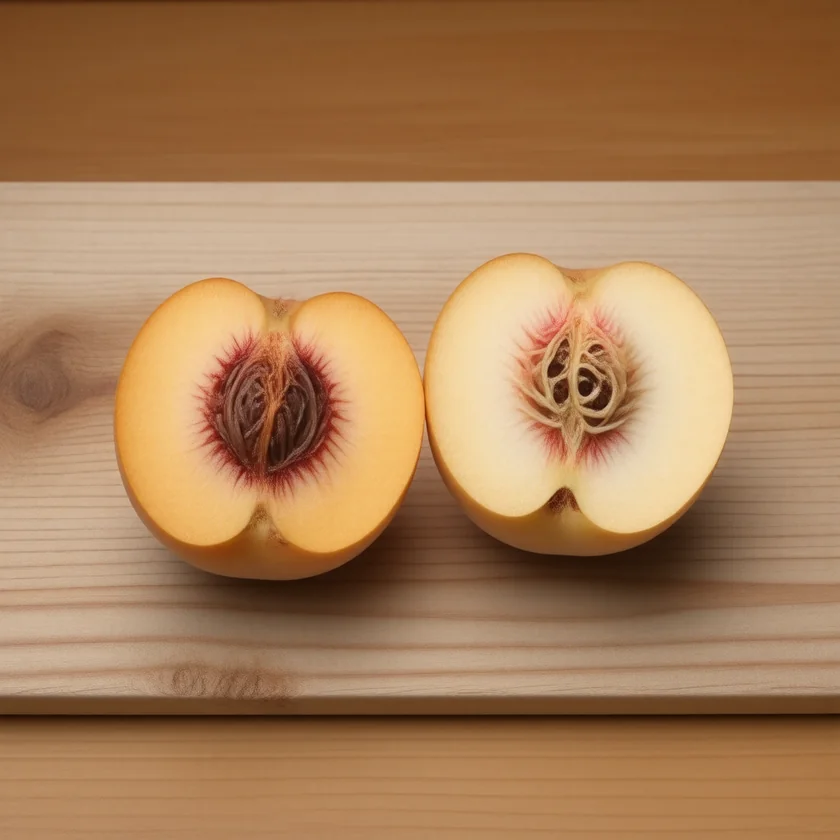
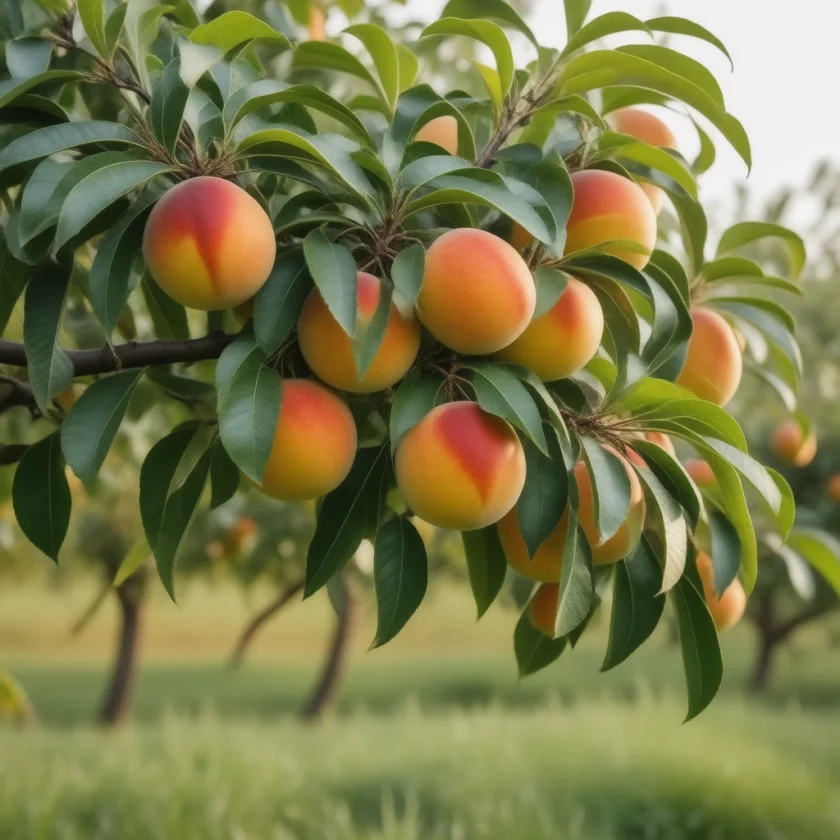
A ripe yellow peach is orange on the inside for a reason, and the reason is nutritionally useful. Those pigments are carotenoids — principally beta-carotene, with zeaxanthin and some beta-cryptoxanthin — and the body can convert beta-carotene and beta-cryptoxanthin into vitamin A. Alongside them sits a modest but real dose of vitamin C, roughly a tenth of a day's target in a medium peach. Neither number makes the peach a superfood, and this page will not pretend otherwise: a sweet potato has far more provitamin A, an orange has far more vitamin C. What the peach offers is a genuinely different form of these nutrients, in a food people actually eat in quantity, in a season when they eat a lot of it. This page explains what is in there, what happens to it in your body, how much survives peeling, canning, and a week in the fridge, and what affects how much of it the body takes up.
Table of Contents
- What Is Actually in a Peach
- The Carotenoid Profile: Which Pigments, and Where
- Beta-Cryptoxanthin: The Underrated One
- How the Body Turns Carotenoids Into Vitamin A
- Vitamin C: A Modest but Honest Contribution
- Skin and Eyes: What These Nutrients Actually Do
- Yellow vs White Flesh: A Real Nutritional Difference
- What Storage, Peeling, Canning, and Drying Cost You
- What Affects How Much the Body Gets
- How Much, How Often, and Who Benefits Most
- The Honest Limits of the Evidence
- Key Research Papers
- Connections
- Featured Videos
What Is Actually in a Peach
Start with the honest scale of things. A medium fresh peach of about 150 grams supplies roughly 9–10 mg of vitamin C, which is about a tenth of the daily target for an adult, and a quantity of provitamin-A carotenoids that varies enormously with variety and ripeness but is best described as small to moderate. Nobody is meeting their vitamin A requirement from peaches.
So why bother writing a page about it? Three reasons, and they are the ones that make a modest food matter.
- Nutrient targets are met by accumulation, not by heroes. Most people who fall short of vitamin C or vitamin A do not fall short because they lack one dramatic source; they fall short because their whole day is thin on fruit and vegetables. A peach at 10% of vitamin C, twice, alongside everything else, is how the number gets made.
- The form matters. Peaches deliver beta-cryptoxanthin, a carotenoid that is much less common in the diet than beta-carotene and appears to be absorbed unusually well. Foods that supply it — peaches, persimmons, tangerines, papaya, red peppers — are a fairly short list.
- The measurements are real and public. Peach composition has been carefully quantified. A widely cited 2002 analysis measured antioxidant capacity, phenolics, carotenoids and vitamin C across California nectarine, peach and plum cultivars; a 2009 study did the same across peach and nectarine breeding progenies; a 2022 study profiled the carotenoids of yellow-flesh peach specifically. We are not guessing.
The most useful practical fact on this whole page, though, is about location: much of the peach's antioxidant and pigment value sits in and just beneath the skin. Peeling a peach throws a meaningful share of it away.
The Carotenoid Profile: Which Pigments, and Where
"Carotenoids" is a family, not a single compound, and the members do different jobs. In yellow-fleshed peaches the important ones are:
- Beta-carotene — the classic provitamin A carotenoid, the one in carrots and sweet potato. Two molecules of vitamin A can in principle be produced from one of beta-carotene, which is why it is the most efficient dietary precursor by weight.
- Beta-cryptoxanthin — a provitamin A carotenoid too, but yielding one vitamin A molecule rather than two. It is a hallmark of orange-fleshed fruits and is discussed in its own section below. In a 2022 survey of 132 yellow-flesh peach cultivars it ranked fourth of the five carotenoids measured: β-carotene > zeaxanthin > α-carotene > β-cryptoxanthin > lutein.
- Lutein and zeaxanthin — zeaxanthin is the second most plentiful carotenoid in yellow peach flesh in that 2022 survey, and lutein the least; neither is convertible to vitamin A. USDA FoodData Central lists 162 µg beta-carotene, 91 µg lutein + zeaxanthin and 67 µg beta-cryptoxanthin per 100 g of raw yellow peach. Their interest is different: these two are the pigments that concentrate in the macula of the retina.
- Violaxanthin, neoxanthin and their esters — a supporting cast of xanthophylls. Much of the carotenoid content of peach flesh is present as fatty-acid esters rather than free pigment, which is normal for ripe fruit and does not prevent absorption.
Distribution across the fruit is uneven in a way worth knowing. The skin is richer than the flesh in most of the protective compounds, including anthocyanins in the red blush and a higher concentration of phenolics; the flesh carries the bulk of the carotenoids in a yellow peach, since that is what makes it yellow. Neither is dispensable, so a whole, unpeeled peach carries both.
Ripeness matters too. Carotenoid content generally increases as the fruit ripens — the deepening of the yellow-orange colour is literally the pigment accumulating — while vitamin C tends to be highest around commercial maturity and then declines. A rock-hard peach picked green is short on both counts.
Beta-Cryptoxanthin: The Underrated One
If there is one nutrient that makes the peach genuinely interesting rather than merely acceptable, it is beta-cryptoxanthin.
Most dietary carotenoid intake in Western diets is beta-carotene, from carrots, leafy greens, and squash. Beta-cryptoxanthin comes from a narrower set of foods — orange-fleshed fruits especially — and consequently many people eat very little of it. Reviews of its absorption, metabolism and functions note that it appears to be taken up relatively efficiently from food, and that it serves as a real source of vitamin A rather than a nutritional curiosity. A separate review looking specifically at beta-cryptoxanthin as a source of vitamin A reached the same practical conclusion: it contributes meaningfully to vitamin A status in populations that eat the fruits containing it.
A study comparing what people ate with what was in their blood puts a number on "absorbed unusually well". Pooling diet questionnaires and food records from its own and other studies of Western diets, it found that eating comparable amounts of beta-cryptoxanthin-rich and beta-carotene-rich foods resulted in 725% greater beta-cryptoxanthin concentrations in the blood (and 53% greater alpha-carotene). The authors read this as a greater apparent bioavailability and conclude that beta-cryptoxanthin-rich foods might be better sources of vitamin A than expected.
Two things follow. First, the conversion arithmetic is different from beta-carotene's — because the molecule is only "half" a provitamin A structure, it yields one retinol molecule rather than two, and dietary databases account for this with different retinol-activity-equivalent factors. Second, and more usefully: if your diet is heavy on green vegetables and light on orange fruit, peaches, apricots, persimmons, and tangerines are filling a gap rather than duplicating something you already have.
A word of caution against overselling. Beta-cryptoxanthin has been studied in relation to bone and joint health and to lung outcomes, and some of that observational work is intriguing. A 2021 meta-analysis of seven observational studies covering 100,496 people found that a high beta-cryptoxanthin intake was associated with a reduced risk of osteoporosis (odds ratio 0.79, 95% CI 0.70-0.90) and of hip fracture (odds ratio 0.71, 95% CI 0.54-0.94); its authors write that further longitudinal studies are needed to validate causality. But observational associations between a nutrient and an outcome routinely fail to survive as causal claims — the beta-carotene supplement trials of the 1990s are the standing warning — and it would be dishonest to tell you that eating peaches protects your bones. What is solidly established is the vitamin A contribution. The rest is a research area, not a health claim.
How the Body Turns Carotenoids Into Vitamin A
The conversion happens mostly in the cells lining your small intestine. An enzyme cleaves the carotenoid molecule to produce retinal, which is then reduced to retinol — vitamin A proper — packaged into chylomicrons with dietary fat, and shipped out through the lymphatic system to the liver for storage.
Four practical consequences fall straight out of that mechanism:
- Fat is required. Carotenoids are fat-soluble and travel with dietary fat. A peach eaten entirely alone in a fat-free context gives up less of its carotenoid than the same peach eaten with nuts, cheese, whole yogurt, or a meal containing olive oil.
- Conversion is regulated, so provitamin A carotenoids are essentially non-toxic. Unlike preformed vitamin A from liver or high-dose supplements, which can accumulate to harmful levels, the body throttles carotenoid conversion according to need. You cannot poison yourself with peaches. Very high intakes of carotenoid-rich foods can turn the palms and soles faintly orange — carotenodermia — which is harmless and reverses.
- Conversion efficiency varies between people, a lot. Common genetic variation in the cleaving enzyme means some people are markedly poorer converters than others. If you rely entirely on plant sources for vitamin A, this is a real source of individual variation, and it argues for a varied set of sources rather than one.
- The food matrix matters. Carotenoids locked inside intact plant cell walls are less available than those released by chewing, cutting, or gentle cooking. A ripe peach is soft and easy to break down, which works in its favour compared with a raw carrot.
Vitamin C: A Modest but Honest Contribution
Vitamin C in a peach is a supporting player, and the supporting role is worth describing accurately because vitamin C is one of the nutrients most often oversold.
What vitamin C demonstrably does: it is an essential cofactor for the enzymes that hydroxylate proline and lysine during collagen synthesis — which is why severe deficiency produces scurvy, with its bleeding gums and poor wound healing. It is a water-soluble antioxidant in plasma and tissues. It supports several arms of immune function, accumulating in white blood cells at high concentrations and contributing to barrier integrity, phagocytosis, and the resolution of inflammation. And — a practical point that matters more than most people realise — it markedly improves the absorption of non-heme iron from plant foods eaten at the same meal.
What it does not do: prevent the common cold in the general population. The trial literature on that is large and consistently unimpressive for prevention, with a small effect on duration at best. A peach is not a cold remedy.
At roughly 9–10 mg per medium fruit, peaches sit in the same broad company as apples, pears, and bananas — useful, unspectacular. Peach and nectarine cultivars do differ measurably in vitamin C, as breeding-progeny analyses have shown, and nectarines and some white varieties can run a little higher or lower than the yellow standard. But the cultivar differences in vitamin C are small: the 2002 California analysis measured 4-13 mg per 100 g in yellow-flesh peaches and 6-9 mg in white-flesh peaches.
Skin and Eyes: What These Nutrients Actually Do
Skin. The link between vitamin C and skin is not marketing; it is biochemistry. Collagen is the structural protein of the dermis, and its synthesis genuinely requires vitamin C as an enzyme cofactor. Reviews of vitamin C in skin health describe its roles in collagen formation, in antioxidant defence within both the dermis and epidermis, and in wound healing. Vitamin A, arriving here as carotenoids, is separately required for normal differentiation and turnover of skin cells — the reason retinoids are a mainstay of dermatology.
The honest version of the claim: adequate intake of these nutrients is necessary for normal skin, and deficiency visibly damages it. Going from adequate to abundant does not produce a visible improvement, and eating peaches will not change how your skin looks. Anyone promising otherwise is selling something.
Eyes. Two separate stories are often blurred together. The first is vitamin A and vision: retinal, derived from vitamin A, is the light-absorbing component of rhodopsin, the pigment your rod cells use in dim light. Vitamin A deficiency causes night blindness and, in severe cases worldwide, irreversible blindness. This is real, dramatic, and directly relevant to provitamin A carotenoids. The second is lutein and zeaxanthin and the macula: these two xanthophylls concentrate in the central retina, absorb blue light, and are studied in relation to age-related macular degeneration. Peaches contain them only in small amounts — spinach, kale, and egg yolk are the serious sources — so a peach contributes to that story faintly at best.
The calibrated expectation: peaches make a small, real contribution to eye and skin nutrition as part of a varied diet, and no contribution at all as a treatment.
Yellow vs White Flesh: A Real Nutritional Difference
This is the one shopping decision on this page that changes the nutrition rather than just the flavour.
White-fleshed peaches are white because they do not accumulate carotenoids in the flesh. The genetics are now understood: flesh colour in peach is controlled largely by a carotenoid cleavage dioxygenase gene (CCD4), and work published in 2013 identified the gene controlling yellow versus white flesh. In white-fleshed varieties the enzyme is active and degrades the carotenoids as they form; in yellow-fleshed varieties it is disabled, and the pigment accumulates. It is a difference in destruction, not in production.
What that means at the fruit bowl:
- Yellow peaches carry the provitamin A. Gil and colleagues' 2002 analysis of California cultivars at the ripe (ready-to-eat) stage, five of each type, measured total carotenoids of 71-210 µg per 100 g in yellow-flesh peaches against 7-20 µg per 100 g in white-flesh peaches. Among yellow-flesh cultivars, the 2022 survey found that zeaxanthin, beta-carotene and total carotenoids increased significantly as the flesh colour deepened from yellow to golden to orange.
- White peaches are not nutritionally empty. They keep the vitamin C (6-9 mg per 100 g in the 2002 analysis, against 4-13 mg in yellow-flesh peaches), the potassium, the fibre, the water, and the skin phenolics, and they are typically lower in acid, which is why they taste purely sweet and floral. They are simply low in flesh carotenoids.
- Red blush is a separate axis. The red on the skin is anthocyanin and is a varietal trait, not a ripeness signal and not related to flesh colour. Analyses of anthocyanin and nutrient contents across peach cultivars show how much these traits vary independently of one another.
- Nectarines follow the same rule. Yellow-fleshed nectarines carry carotenoids; white-fleshed nectarines do not. Fuzz has nothing to do with it.
The variation between cultivars, incidentally, is much larger than most people expect. Surveys of peach and plum germplasm have found several-fold differences in phytochemical and antioxidant content between varieties, so any single published number for "a peach" is a midpoint of a wide range.
What Storage, Peeling, Canning, and Drying Cost You
Peeling is the biggest avoidable loss. The skin holds a disproportionate share of the phenolics and all of the anthocyanin, and a whole, unpeeled peach keeps them.
Refrigeration before ripeness is the other big one, and it costs you eating quality rather than nutrients. Peaches held cold while still unripe develop chilling injury — the dry, mealy, "woolly" texture everyone has met. Research on cold-stored peach fruit traced mealiness to a failure of normal cell-wall pectin disassembly during ripening: the fruit softens without becoming juicy, because the pectin that should be solubilised stays put. In that study, partially tree-ripened ripe peaches were stored for 1-4 weeks at 5 °C and then ripened for 3 days at 20 °C; with longer cold storage, the incidence and severity of mealiness increased progressively, showing as less free juice and browning inside the flesh. Ripening on the counter, refrigerating only once ripe and eating within a few days keeps that cold period short.
Vitamin C declines steadily with time, warmth, cutting, and light, because ascorbate oxidises readily. A peach eaten fresh at peak ripeness has more than the same peach a week later, and cut fruit left uncovered loses faster.
Canning is a mixed bag, and the packing liquid matters more than the heat. Canned peaches are peeled, so the skin compounds are gone, and the heat treatment lowers vitamin C. Carotenoids, by contrast, hold up well — they are relatively heat-stable, and the gentle processing can even improve their availability by breaking down cell structure. Potassium and fibre largely survive. Fruit canned in juice or water avoids the added sugar of syrup-packed fruit; the syrup is the actual nutritional problem, not the can.
Drying removes the water and therefore concentrates everything left, including the sugar and the calories. Dried peaches keep carotenoids reasonably well but lose vitamin C heavily. Many are preserved with sulfites, which protect the colour and can trigger symptoms in people with asthma or sulfite sensitivity.
Freezing is the underrated option. Ripe slices frozen at peak hold their carotenoids well and are a good way to rescue a glut.
What Affects How Much the Body Gets
Several cheap, everyday factors change how much the body gets from a peach:
- A little fat helps. Peach slices with almonds, walnuts, whole-milk yogurt, or a piece of cheese, or peaches in a salad dressed with olive oil, supply it. Carotenoid uptake genuinely depends on it.
- The skin carries much of the value. Repeated here because eating it is the highest-yield habit on the page.
- Ripeness matters. Peaches ripen at room temperature, out of direct sun, stem end down; a loosely closed paper bag traps ethylene and speeds it along. Peaches soften and grow juicier off the tree but do not get much sweeter, because the sugar is set at picking.
- Whole fruit and juice differ. Juicing strips the fibre and, when the juice is strained, much of the skin. Whole fruit and fruit juice behave very differently in the body — a distinction that shows up clearly in large cohort studies of fruit intake and type 2 diabetes risk. In three US cohorts of health professionals, in which 12,198 participants developed type 2 diabetes, every three servings a week of fruit juice was associated with a higher risk (hazard ratio 1.08, 1.05 to 1.11), while peaches, plums and apricots showed no clear link (0.97, 0.92 to 1.02) and blueberries the lowest risk (0.74, 0.66 to 0.83).
- Vitamin C helps plant iron. Peach slices alongside lentils, beans, or oats improve non-heme iron absorption from that meal. It is a small effect per meal and a useful one repeated.
- Gentle heat is not the enemy. Grilled or roasted peaches lose some vitamin C but keep their carotenoids, and softening the flesh may help release them.
How Much, How Often, and Who Benefits Most
There is no special peach dose, and inventing one would be nonsense. A 2017 dose-response meta-analysis of fruit and vegetable intake (Aune 2017) found that risk of cardiovascular disease, cancer and all-cause mortality falls as intake rises. In one such meta-analysis (Aune and colleagues, 2017, 95 studies), reductions in risk were observed up to 800 g of fruit and vegetables a day for all outcomes except cancer, where they were observed up to 600 g a day; the authors estimated that 7.8 million premature deaths worldwide in 2013 may be attributable to an intake below 800 g a day, if the observed associations are causal. Peaches count toward that total like any other whole fruit.
No study gives a peach-specific amount. A medium peach is about 60 calories and roughly 89% water, so even several are a light load.
The people who get the most out of them:
- People whose diets are light on orange fruit and vegetables — the beta-cryptoxanthin is filling a genuine gap.
- People who struggle to eat vegetables but will eat fruit. A ripe peach requires no persuasion, no preparation, and no cooking. That is a real advantage over kale.
- Children, for the same reason; for small children a whole pit is a choking hazard.
- Anyone eating mostly plant sources of iron, who gets a small absorption boost from the vitamin C.
- People watching blood sugar can generally include whole fresh peaches without difficulty; the total sugar is small and comes packaged with fibre and water. Syrup-packed canned peaches and peach juice are a different proposition.
The research raises a concern for people with a diagnosed peach allergy, and people with irritable bowel syndrome (IBS) or fructose malabsorption who find stone fruit triggers symptoms — both covered on the companion pages.
The Honest Limits of the Evidence
Here is the state of the evidence, stated plainly.
There are almost no human trials of peaches. The peach-specific research literature is overwhelmingly compositional — what is in the fruit, how it varies by cultivar, how it changes with ripening and storage. That work is good and it is what this page is built on. Randomised controlled trials in which people eat peaches and something is measured are few and small. Anyone citing a dramatic peach health finding is almost certainly citing a cell-culture study or an animal study.
Conclusions from other fruits do not transfer automatically. It is tempting to reason that because blueberries or citrus have shown effects in trials, peaches must too. They may; the point is that nobody has shown it. The correct level of confidence for "peaches are good for you" is the confidence we have that whole fruit generally is good for you — which is high, and which comes from large prospective cohorts and their meta-analyses, not from peach trials.
Carotenoid supplements are not carotenoid foods. Isolated high-dose beta-carotene supplements were tested in large trials in smokers and asbestos-exposed workers and increased lung cancer incidence — one of the sharpest cautionary tales in nutrition. Nothing about that finding argues against eating carotenoid-rich fruit; it argues against extracting a single compound and taking it at pharmacological doses.
What survives all that scepticism is worth having: peaches are a pleasant, hydrating, low-calorie whole fruit that supplies vitamin C, a distinctive provitamin A carotenoid, potassium, fibre, and a varied set of skin polyphenols, and that people are happy to eat by the bagful in summer. That is a good enough reason.
Key Research Papers
- Gil MI, Tomás-Barberán FA, Hess-Pierce B, Kader AA. Antioxidant capacities, phenolic compounds, carotenoids, and vitamin C contents of nectarine, peach, and plum cultivars from California. Journal of Agricultural and Food Chemistry. 2002;50(17):4976–4982. — doi:10.1021/jf020136b
- Zhao B, Sun M, Li J, et al. Carotenoid profiling of yellow-flesh peach fruit. Foods. 2022;11(12):1669. — Levels of five carotenoids in 132 yellow-flesh peach cultivars. — doi:10.3390/foods11121669 (PubMed PMID: 35741867)
- Adami M, De Franceschi P, Brandi F, et al. Identifying a carotenoid cleavage dioxygenase (ccd4) gene controlling yellow/white fruit flesh color of peach. Plant Molecular Biology Reporter. 2013;31(5):1166–1175. — The genetic basis of the yellow-versus-white flesh difference. — doi:10.1007/s11105-013-0628-6
- Burri BJ. Beta-cryptoxanthin as a source of vitamin A. Journal of the Science of Food and Agriculture. 2015;95(9):1786–1794. — doi:10.1002/jsfa.6942
- Burri BJ, La Frano MR, Zhu C. Absorption, metabolism, and functions of β-cryptoxanthin. Nutrition Reviews. 2016;74(2):69–82. — doi:10.1093/nutrit/nuv064
- Burri BJ, Chang JS, Neidlinger TR. β-Cryptoxanthin- and α-carotene-rich foods have greater apparent bioavailability than β-carotene-rich foods in Western diets. British Journal of Nutrition. 2011;105(2):212–219. — doi:10.1017/S0007114510003260 (PubMed PMID: 20807466)
- Kim SJ, Anh NH, Diem NC, Park S, Cho YH, Long NP, Hwang IG, Lim J, Kwon SW. Effects of β-Cryptoxanthin on Improvement in Osteoporosis Risk: A Systematic Review and Meta-Analysis of Observational Studies. Foods. 2021;10(2):296. — doi:10.3390/foods10020296 (PubMed PMID: 33540706)
- Cantín CM, Moreno MA, Gogorcena Y. Evaluation of the antioxidant capacity, phenolic compounds, and vitamin C content of different peach and nectarine [Prunus persica (L.) Batsch] breeding progenies. Journal of Agricultural and Food Chemistry. 2009;57(11):4586–4592. — doi:10.1021/jf900385a
- Reig G, Iglesias I, Gatius F, Alegre S. Antioxidant capacity, quality, and anthocyanin and nutrient contents of several peach cultivars [Prunus persica (L.) Batsch] grown in Spain. Journal of Agricultural and Food Chemistry. 2013;61(26):6344–6357. — doi:10.1021/jf401183d
- Vizzotto M, Cisneros-Zevallos L, Byrne DH, Ramming DW, Okie WR. Large variation found in the phytochemical and antioxidant activity of peach and plum germplasm. Journal of the American Society for Horticultural Science. 2007;132(3):334–340. — doi:10.21273/JASHS.132.3.334
- Carr AC, Maggini S. Vitamin C and immune function. Nutrients. 2017;9(11):1211. — doi:10.3390/nu9111211
- Pullar JM, Carr AC, Vissers MCM. The roles of vitamin C in skin health. Nutrients. 2017;9(8):866. — doi:10.3390/nu9080866
- Brummell DA, Dal Cin V, Lurie S, Crisosto CH, Labavitch JM. Cell wall metabolism during the development of chilling injury in cold-stored peach fruit: association of mealiness with arrested disassembly of cell wall pectins. Journal of Experimental Botany. 2004;55(405):2041–2052. — How cold storage makes peaches mealy. — doi:10.1093/jxb/erh228
- Lara MV, Bonghi C, Famiani F, Vizzotto G, Walker RP, Drincovich MF. Stone fruit as biofactories of phytochemicals with potential roles in human nutrition and health. Frontiers in Plant Science. 2020;11:562252. — doi:10.3389/fpls.2020.562252
- Aune D, Giovannucci E, Boffetta P, et al. Fruit and vegetable intake and the risk of cardiovascular disease, total cancer and all-cause mortality — a systematic review and dose-response meta-analysis of prospective studies. International Journal of Epidemiology. 2017;46(3):1029–1056. — doi:10.1093/ije/dyw319
- Muraki I, Imamura F, Manson JE, et al. Fruit consumption and risk of type 2 diabetes: results from three prospective longitudinal cohort studies. BMJ. 2013;347:f5001. — Whole fruit versus juice, with peaches, plums and apricots among the fruits examined. — doi:10.1136/bmj.f5001
- PubMed: peach carotenoids and beta-cryptoxanthin content — live topic search.
- PubMed: beta-cryptoxanthin and vitamin A status in humans — live topic search.