⚠ Evidence warning: Clinical trials or other evidence do not support the statements that megadosing vitamin C once you already feel sick will not cure a cold, that vitamin C from a normal diet is maintenance rather than a cure, and that a whole orange is a sensible choice for most people, including many with well-managed diabetes. This page keeps it as a report of what people, websites or other media say.
Oranges
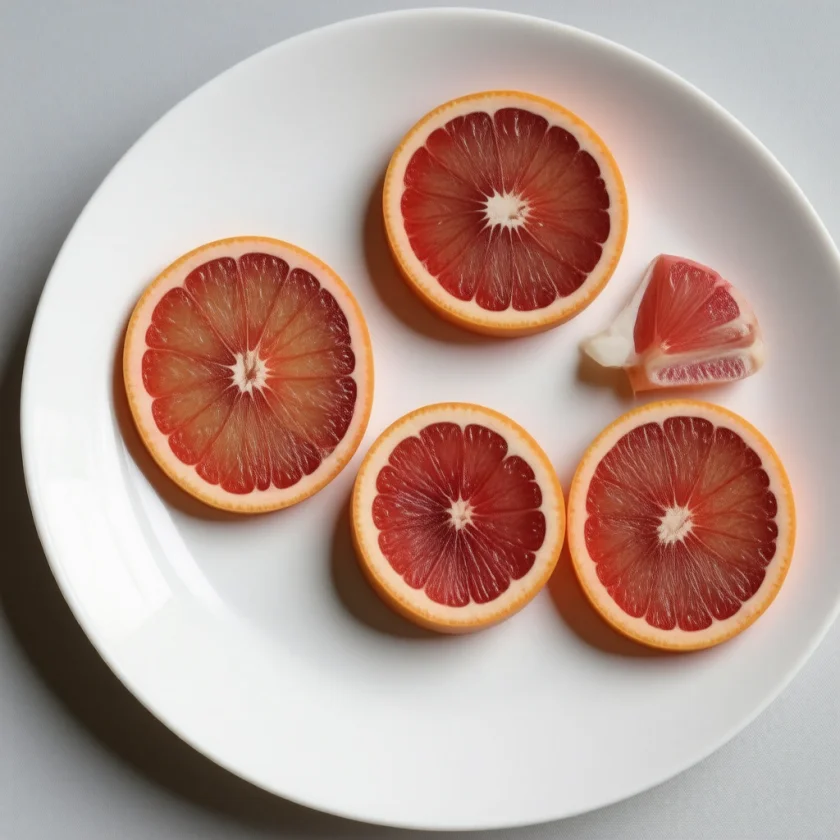
The orange (Citrus sinensis, the sweet orange) is one of the most familiar fruits on Earth, and it earned its place honestly. A single medium orange delivers most of a day's vitamin C, a useful dose of fiber, folate, and potassium, and a family of plant compounds — the citrus flavonoids — that researchers keep studying for their effects on blood vessels and the heart. This page walks through what an orange actually is, what is inside it, and what the science does and does not support. Along the way we will be honest about a few things people get wrong: that a whole orange and a glass of orange juice are not nutritionally the same fruit, that the famous "grapefruit and medication" warning is mostly a grapefruit problem and not a sweet-orange one, and that even a healthy fruit deserves a little common sense around your teeth. The goal is a clear, plain-language picture you can actually use in the produce aisle.
Table of Contents
- What an Orange Really Is
- Nutritional Profile
- Vitamin C: Immunity, Skin & Collagen
- The Citrus Flavonoids: Hesperidin & Naringenin
- Fiber and the Whole Fruit vs. Juice Question
- Heart Health & Cholesterol
- Blood Sugar & Glycemic Load
- Blood Oranges & Their Anthocyanins
- How to Select and Store Oranges
- Safety, Drug Interactions & Dental Enamel
- Key Research Papers
- Connections
- Featured Videos
What an Orange Really Is
Botanically, the orange is a hesperidium — a specialized berry with a leathery, oil-rich rind protecting juicy segments inside. Understanding its parts helps explain where the nutrition lives:
- The segments (the flesh) — the juice-filled sacs you eat, holding the vitamin C, natural sugars, and most of the water.
- The pith — the spongy white layer between rind and flesh. It tastes bitter, so many people peel it away, but it is where much of the fruit's fiber and citrus flavonoids are concentrated.
- The zest (the flavedo) — the colored outer peel, packed with fragrant essential oils. Grated zest carries intense flavor and aroma compounds with almost no sugar.
“Orange” is really a group of varieties, each with its own personality:
- Navel — the seedless, easy-peel eating orange, named for the small secondary fruit at its base that looks like a navel. It is the classic snacking and slicing orange.
- Valencia — the juicing orange, thinner-skinned and very sweet-tart, harvested later in the season. Most classic orange juice comes from Valencias.
- Cara Cara — a pink-fleshed navel with a berry-like, lower-acid flavor; its rosy color comes from lycopene, the same pigment found in tomatoes.
- Blood orange — deep crimson-fleshed varieties (Moro, Tarocco, Sanguinello) whose color comes from anthocyanins, discussed in its own section below.
Nutritional Profile
Oranges are a rare combination of low in calories yet dense in useful nutrients. A medium orange (roughly 130–140 grams) provides in the neighborhood of:
- About 62 calories and roughly 15 grams of carbohydrate.
- About 70 mg of vitamin C — close to 78% of the Daily Value, making a single orange one of the easiest whole-food ways to cover your day's vitamin C.
- About 3 grams of dietary fiber, much of it soluble fiber (including pectin) that slows digestion and feeds gut bacteria.
- Roughly 40 micrograms of folate (about 10% Daily Value, DV), a B-vitamin important for making new cells and for pregnancy.
- Around 237 mg of potassium, a mineral that helps regulate blood pressure and fluid balance.
- Small amounts of thiamine (vitamin B1), calcium, and vitamin A precursors (carotenoids).
Beyond the vitamins and minerals, oranges carry a rich set of plant compounds — chiefly the flavonoid hesperidin (concentrated in the pith and segment membranes), the related flavanone narirutin, smaller amounts of naringenin, plus carotenoids and, in blood oranges, anthocyanins. These are the compounds that give oranges nutritional interest well beyond their vitamin C. Note that this is a description in prose and lists rather than a lab table — exact numbers vary by variety, size, ripeness, and growing conditions, so these are honest ballpark figures rather than precise measurements.
Vitamin C: Immunity, Skin & Collagen
The orange's reputation was built on vitamin C (ascorbic acid), and for good reason. Humans cannot make our own vitamin C, so we must eat it, and a single orange covers most of a day's needs. Vitamin C does several jobs that matter for everyday health.
Immune support
Vitamin C is genuinely involved in immune function — it supports the barrier function of skin, accumulates in immune cells, and helps them do their work. Carr and Maggini's detailed review lays out how a deficiency impairs immunity and raises susceptibility to infection, and how adequate intake supports normal defenses. What the evidence does not support is the popular idea that megadosing vitamin C once you already feel sick will cure a cold. The honest takeaway is that keeping your vitamin C topped up as part of a normal diet supports your immune system; it is maintenance, not a cure. The same review states that vitamin C supplementation appears able both to prevent and to treat respiratory and whole-body infections: prevention calls for intakes that keep blood levels at least adequate (100–200 mg a day), while treating an infection that has already taken hold calls for much higher, gram-level doses, because infection raises the body's need for the vitamin. An orange's roughly 70 mg counts toward the everyday intake; the gram doses described for established infections are many times what one orange holds.
Skin and collagen
Vitamin C is an essential cofactor for the enzymes that build collagen, the protein that gives skin, blood vessels, gums, and connective tissue their strength. This is exactly why severe vitamin C deficiency (scurvy) causes bleeding gums and poor wound healing — collagen production breaks down. As Pullar and colleagues describe, vitamin C also acts as an antioxidant in the skin and supports its barrier. The vitamin C in ordinary fruit like oranges is the same molecule that does this work.
The Citrus Flavonoids: Hesperidin & Naringenin
If vitamin C is the orange's famous headline, the citrus flavonoids are the interesting story underneath. The signature flavonoid of the sweet orange is hesperidin, a flavanone concentrated in the white pith and the thin membranes around each segment — which is one honest reason not to over-trim your orange. A related compound, narirutin, is also present, along with smaller amounts of naringenin. (Worth noting: the bitter flavonoid naringin, and its aglycone naringenin, are far more characteristic of grapefruit and bitter orange than of the sweet orange — so the sweet orange is really a hesperidin fruit first.)
Hesperidin has drawn real research attention for the blood vessels. In a randomized crossover trial in 24 healthy, overweight men aged 50–65, Morand and colleagues found that four weeks of orange juice — or hesperidin given on its own — lowered diastolic blood pressure. A measure of small-blood-vessel function (microvascular endothelial reactivity) did not change when it was measured after an overnight fast, but it improved after a drink, at the time hesperetin (the form hesperidin takes in the blood) peaked — pointing to hesperidin as the active ingredient behind the juice's vascular effect. A later randomized trial by Salden and colleagues tested a more absorbable form of hesperidin (450 mg/day for six weeks) in 68 overweight adults and found no significant change in flow-mediated dilation, its main measure of endothelial function. Adhesion molecules and blood pressure showed only a non-significant downward trend, and a positive result in an additional exploratory analysis (people whose blood-vessel function started out higher, with baseline flow-mediated dilation of 3% or more) was not adjusted for multiple comparisons. It is best read as a null trial with a hint worth following up, not as confirmation. Testai and Calderone's review pulls this literature together, describing how citrus flavanones like hesperidin appear to support the endothelium (the inner lining of blood vessels) and may modestly influence blood pressure and inflammation.
The honest framing: this is promising, biologically plausible research, mostly from small-to-medium trials and mechanistic studies rather than from large outcome trials showing fewer heart attacks. In these trials hesperidin's effects were modest; none showed dramatic results from a hesperidin supplement.
Fiber and the Whole Fruit vs. Juice Question
This is the single most important practical point on the page, so we will be direct about it: a whole orange and a glass of orange juice are not the same food.
A whole orange comes with its fiber intact — roughly 3 grams per fruit, including soluble pectin. That fiber does real work: it slows how fast the fruit's natural sugars hit your bloodstream, it adds bulk that helps you feel full, and it feeds beneficial gut bacteria. When you eat the whole fruit, the sugar arrives wrapped in fiber and pulp, and your body handles it gently.
Juicing strips most of that away. Squeezing an orange discards much of the fiber and leaves a concentrated liquid of sugar and water. It also takes three or four oranges to make one glass of juice — so you drink the sugar of several oranges in seconds, without the chewing, the fullness, or the fiber that would normally slow you down. This is why large prospective studies treat them differently. Muraki and colleagues, following tens of thousands of people over years, found that eating whole fruit — and whole apples, blueberries, and grapes in particular — was associated with a lower risk of type 2 diabetes, while drinking fruit juice was associated with a higher risk (hazard ratio 1.08 for every three servings a week); oranges themselves showed no association either way (hazard ratio 0.99).
None of this makes orange juice a villain — 100% juice still carries vitamin C and flavonoids, and juice-based studies (below) show cardiovascular benefits. But the research above draws a clear line between them: the whole fruit comes with its fiber, a glass of juice carries the sugar of three or four oranges, and in the Muraki cohorts it was fruit juice, not whole fruit, that was linked to higher diabetes risk. Sugar-sweetened orange drinks are a different product again from 100% juice.
Heart Health & Cholesterol
Between the potassium, the fiber, the vitamin C, and the flavonoids, oranges show up repeatedly in heart-health research. Several strands are worth knowing:
- Cholesterol. Aptekmann and Cesar, in a study of 129 employees of an orange-juice factory, observed that those who had drunk about two cups (480 mL) of orange juice a day for at least a year had lower low-density lipoprotein (LDL) ("bad") cholesterol and apolipoprotein B than non-drinkers, in both normal and mildly high-cholesterol adults. Fiber intake did not differ between drinkers and non-drinkers; the authors pointed to the juice's flavonoids, mainly hesperidin.
- Blood pressure and the endothelium. The hesperidin trials above are mixed: Morand's crossover trial found lower diastolic blood pressure and better small-vessel function after a drink (though not when measured fasting), while Salden's larger randomized trial found no significant change in its primary measure. The honest summary is that the vascular signal is suggestive but unproven. Rangel-Huerta and colleagues found that both a normal- and a high-polyphenol orange juice lowered body mass index and waist size in overweight or obese adults, while only the normal-polyphenol juice lowered blood pressure (from 128/79 to 124/76 mm Hg).
- Inflammation. Buscemi and colleagues gave red (blood) orange juice to adults at increased cardiovascular risk and saw improved endothelial function and lower inflammatory markers.
Read these together and a reasonable, non-hyped conclusion emerges: oranges fit naturally into a heart-healthy pattern of eating. They are a food, not a medicine: the studies above measured markers such as cholesterol and blood pressure rather than heart attacks or strokes, and none tested fruit as a substitute for a prescribed statin or blood-pressure drug — but as part of a whole-food diet, oranges earn their reputation as a friend to the cardiovascular system. See our Cardiology section for the bigger picture.
Blood Sugar & Glycemic Load
People managing blood sugar often worry that fruit is "just sugar." For a whole orange, the data are reassuring. An orange has a relatively low glycemic index (commonly cited around the low-to-mid 40s) and, because a single fruit contains only about 12 grams of sugar buffered by fiber and water, a low glycemic load — meaning one orange has a gentle, gradual effect on blood glucose. The soluble fiber and the intact fruit structure are what blunt the sugar spike.
Orange juice is a different story, exactly as covered above: with the fiber removed and the sugar of several oranges concentrated into one glass, juice raises blood glucose faster and carries a higher glycemic load per serving. Bazzano and colleagues found that greater fruit-juice intake was associated with higher diabetes risk in women, whereas eating whole fruit was associated with lower risk. In this research the higher diabetes risk attached to the juice glass, not the fruit bowl. For most people, including many with well-managed diabetes, a whole orange is a sensible, satisfying choice.
Blood Oranges & Their Anthocyanins
Blood oranges deserve their own moment. Their dramatic crimson flesh comes from anthocyanins — the same family of purple-red pigments found in blueberries, blackberries, and red cabbage. Sweet oranges normally contain none of these; blood oranges are unusual among citrus in producing them, and they do so only when cold nights trigger the pigment. That is why the best blood oranges (Sicily's Moro, Tarocco, and Sanguinello) come from regions with warm days and chilly nights.
Anthocyanins are studied as antioxidants and for vascular health. In a large prospective study, Cassidy and colleagues found that a higher dietary intake of anthocyanins was associated with a reduced risk of heart attack in younger and middle-aged women. And in the blood-orange-juice trial mentioned earlier, Buscemi's team reported improved endothelial function and reduced inflammation. So a blood orange gives you everything a regular orange offers — vitamin C, hesperidin, fiber — plus a bonus dose of anthocyanin pigments. It is a genuinely more colorful nutritional package, and it happens to be delicious.
How to Select and Store Oranges
Choosing a good orange is mostly about weight and feel rather than color:
- Heft. A good orange feels heavy for its size — that weight is juice. A light orange is often dry or past its prime.
- Skin color alone is a poor guide. A little green on the peel does not mean an orange is unripe; peel color is influenced by temperature and can even "re-green" on a ripe fruit. Firmness and weight tell you more.
- A good orange has firm, mostly smooth skin, without soft spots, mold, or a fermented smell. Very rough, puffy skin can mean thick pith and less juice.
Storage is forgiving:
- Counter: whole oranges keep for several days to about a week at room temperature — fine for a fruit bowl you will eat from quickly.
- Refrigerator: in the crisper drawer, whole oranges stay fresh and juicy for two to three weeks, sometimes longer. Loose or in a mesh bag they keep better than sealed in plastic, which traps moisture and invites mold.
- Once cut, oranges keep, covered and refrigerated, for a couple of days. Freshly squeezed juice loses vitamin C over time and is best drunk soon after squeezing.
- Zest before peeling. Zesting is easiest before the orange is peeled and eaten — and the peel is where surface residues sit, which is why organic or well-washed fruit is often chosen for zest.
Safety, Drug Interactions & Dental Enamel
Oranges are safe and healthy for the overwhelming majority of people. A few honest points are still worth making.
The grapefruit interaction is mostly a grapefruit issue — not sweet oranges
Many people have heard the warning about grapefruit and medications, and reasonably wonder whether it applies to their morning orange. For the ordinary sweet orange, the answer is generally no. The grapefruit effect comes from compounds called furanocoumarins that block an intestinal enzyme (cytochrome P450 3A4, CYP3A4), causing certain drugs to build up to higher-than-intended levels. Bailey and colleagues catalog how this makes grapefruit risky with a long list of medications. Sweet oranges are essentially free of these furanocoumarins, so a regular navel or Valencia orange does not cause the classic grapefruit interaction.
The honest caveat is about the other oranges. Seville (bitter) oranges — the ones used for marmalade, in some ethnic juices and cooking, and in certain weight-loss supplements — do contain furanocoumarins and can behave like grapefruit. Malhotra and colleagues showed directly that Seville orange juice interacted with the blood-pressure drug felodipine much as grapefruit does. In that study of 10 volunteers, Seville orange juice raised the amount of felodipine in the blood (area under the curve) by 76%, and dilute grapefruit juice by 93%, both compared with ordinary sweet orange juice, which served as the comparison drink. Pomelos and some hybrids can act like grapefruit too. So the everyday sweet orange is not known for the grapefruit interaction, while Seville/bitter orange and pomelo can behave like grapefruit with drugs that carry a grapefruit warning.
Citric acid and your teeth
Oranges and especially orange juice are acidic (citric acid), and frequent, prolonged acid exposure can soften and erode tooth enamel over time. This is more a concern with sipping juice slowly throughout the day than with eating a whole orange at a sitting. Dentists commonly describe a few habits for this: drinking juice with a meal rather than sipping it through the day, rinsing the mouth with water afterward, and — counterintuitively — waiting about 30 minutes before brushing, since brushing immediately on acid-softened enamel can do more harm than good.
Other notes
Oranges are high in acid, so they can aggravate reflux or mouth sores in some people. True orange or citrus allergy exists but is uncommon. And oranges contribute potassium — USDA lists 181 mg per 100 grams of raw orange, about 237 mg in one 131-gram fruit — which counts toward the daily total on a medically potassium-restricted diet (for example, for some people with advanced kidney disease).
Key Research Papers
- Morand C, Dubray C, Milenkovic D, et al. Hesperidin contributes to the vascular protective effects of orange juice: a randomized crossover study in healthy volunteers. Am J Clin Nutr. 2011;93(1):73–80. — in 24 overweight men aged 50–65, orange juice and hesperidin alone both lowered diastolic blood pressure and improved small-vessel function after a drink (not when measured fasting). — doi:10.3945/ajcn.110.004945
- Salden BN, Troost FJ, de Groot E, et al. Randomized clinical trial on the efficacy of hesperidin 2S on validated cardiovascular biomarkers in healthy overweight individuals. Am J Clin Nutr. 2016;104(6):1523–1533. — a more absorbable hesperidin did not significantly improve flow-mediated dilation in the full study group; only a trend toward lower blood pressure and adhesion molecules was seen. — doi:10.3945/ajcn.116.136960
- Testai L, Calderone V. Nutraceutical value of citrus flavanones and their implications in cardiovascular disease. Nutrients. 2017;9(5):502. — review of how citrus flavanones like hesperidin appear to protect the endothelium and influence blood pressure. — doi:10.3390/nu9050502
- Rangel-Huerta OD, Aguilera CM, Martin MV, et al. Normal or high polyphenol concentration in orange juice affects antioxidant activity, blood pressure, and body weight in obese or overweight adults. J Nutr. 2015;145(8):1808–1816. — both juices lowered body mass index and waist size; only the normal-polyphenol juice lowered blood pressure. — doi:10.3945/jn.115.213660
- Carr AC, Maggini S. Vitamin C and immune function. Nutrients. 2017;9(11):1211. — comprehensive review of how vitamin C supports normal immune defenses. — doi:10.3390/nu9111211
- Pullar JM, Carr AC, Vissers MCM. The roles of vitamin C in skin health. Nutrients. 2017;9(8):866. — vitamin C is essential for collagen synthesis and acts as a skin antioxidant. — doi:10.3390/nu9080866
- Aptekmann NP, Cesar TB. Long-term orange juice consumption is associated with low LDL-cholesterol and apolipoprotein B in normal and moderately hypercholesterolemic subjects. Lipids Health Dis. 2013;12:119. — a cross-sectional study of 129 orange-juice-factory employees: regular orange juice intake tracked with lower LDL cholesterol. — doi:10.1186/1476-511X-12-119
- Buscemi S, Rosafio G, Arcoleo G, et al. Effects of red orange juice intake on endothelial function and inflammatory markers in adult subjects with increased cardiovascular risk. Am J Clin Nutr. 2012;95(5):1089–1095. — blood-orange juice improved endothelial function and lowered inflammatory markers. — doi:10.3945/ajcn.111.031088
- Cassidy A, Mukamal KJ, Liu L, et al. High anthocyanin intake is associated with a reduced risk of myocardial infarction in young and middle-aged women. Circulation. 2013;127(2):188–196. — higher intake of anthocyanins (the blood-orange pigments) tracked with fewer heart attacks. — doi:10.1161/CIRCULATIONAHA.112.122408
- Muraki I, Imamura F, Manson JE, et al. Fruit consumption and risk of type 2 diabetes: results from three prospective longitudinal cohort studies. BMJ. 2013;347:f5001. — whole fruit was linked to lower diabetes risk and fruit juice to higher risk; oranges showed no association. — doi:10.1136/bmj.f5001
- Bailey DG, Dresser G, Arnold JM. Grapefruit-medication interactions: forbidden fruit or avoidable consequences? CMAJ. 2013;185(4):309–316. — explains the furanocoumarin mechanism behind grapefruit drug interactions (which sweet oranges lack). — doi:10.1503/cmaj.120951
- Malhotra S, Bailey DG, Paine MF, Watkins PB. Seville orange juice-felodipine interaction: comparison with dilute grapefruit juice and involvement of furocoumarins. Clin Pharmacol Ther. 2001;69(1):14–23. — bitter Seville orange juice interacted with a medication much as grapefruit does, unlike sweet oranges. — doi:10.1067/mcp.2001.113185
Connections
- All Food
- Oranges Nutrients
- Oranges History
- Oranges Benefits
- Vitamin C
- Hesperidin
- Anthocyanins
- Folate (Vitamin B9)
- Potassium
- Cardiology & Heart Health
- Antioxidants
- Grapefruit — the citrus cousin whose furanocoumarins cause the drug-interaction warning sweet oranges do not.
- Chen Pi (Aged Tangerine Peel) — what East Asian medicine does with the flavonoid-rich pith and zest described above, using the mandarin cousin Citrus reticulata: peel dried, aged for years, and sold by vintage.