Peaches: Kernel Safety and Allergy
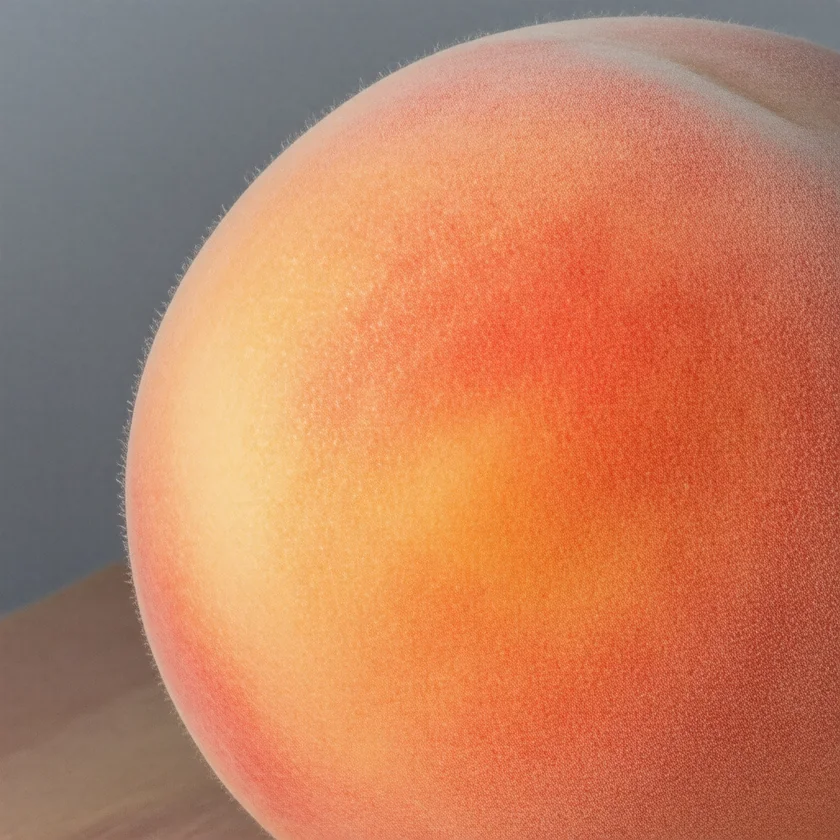
Peaches are one of the safest foods on the planet, and there are three specific things worth knowing anyway. The first is that the seed inside the stone contains amygdalin, which the body converts to hydrogen cyanide — the chemistry is real, it is the reason apricot-kernel and "laetrile" products have killed people, and it is also the reason that accidentally swallowing a whole peach pit is not a poisoning event. Those two facts sit together and this page explains why. The second is peach allergy, which is not one condition but two with very different stakes: a mild itchy mouth caused by birch-pollen cross-reactivity, and a genuinely dangerous whole-body reaction driven by a tough skin protein that is common around the Mediterranean. Confusing them is the mistake that matters. The third is pesticide residues, where the honest answer is neither "harmless, ignore it" nor the alarm you will read elsewhere.
Table of Contents
- The Stone, the Kernel, and Why the Difference Matters
- Amygdalin: The Actual Chemistry
- How Much Is Dangerous, Honestly
- Swallowing a Whole Pit: What Really Happens
- Laetrile and "Vitamin B17": A Settled Question
- Oral Allergy Syndrome: The Mild Kind
- Pru p 3: The Serious Kind
- Why Geography Changes the Diagnosis
- Living With a Peach Allergy
- Pesticide Residues, Read Fairly
- Sulfites, Choking, and the Small Print
- The Bottom Line
- Key Research Papers
- Connections
- Featured Videos
The Stone, the Kernel, and Why the Difference Matters
A peach is a drupe: fleshy fruit wrapped around a single hard stone (the endocarp), and inside that stone sits a single seed, usually called the kernel. It looks like a flattened almond, which is not a coincidence — almonds, apricots, cherries, plums and peaches are all close relatives in the genus Prunus.
Almost all the confusion about peach safety comes from collapsing these three things into one word. Kept apart, they look like this:
- The flesh is completely safe. Nothing on this page applies to it.
- The stone is an inert woody shell. It is a physical hazard — teeth, choking — not a chemical one.
- The kernel inside the stone contains amygdalin. This is the only part of the fruit with a genuine toxicological issue.
That distinction is the whole reason a parent who watches a toddler swallow a peach pit can relax about cyanide and worry about choking instead, while someone deliberately cracking stones to eat the kernels "for the nutrients" is doing something genuinely dangerous.
Amygdalin: The Actual Chemistry
Amygdalin is a cyanogenic glycoside — a molecule that carries a cyanide group attached to a sugar. On its own, sitting intact in a seed, it is not poisonous. It becomes poisonous when it is broken apart.
The breakdown happens in two ways, and both require the seed to be damaged:
- The plant's own enzyme. Intact seeds keep amygdalin and the enzyme that cleaves it (beta-glucosidase, sometimes called emulsin) in separate compartments. Crushing, chewing, or grinding the seed brings them together, and hydrogen cyanide is released. This is a defence mechanism: the seed poisons whatever chews it while passing safely through an animal that swallows it whole. The bitter almond smell people describe is this reaction happening.
- Your gut bacteria. Even if the plant enzyme is destroyed, the human colon is full of bacteria with beta-glucosidase activity. Swallowed amygdalin reaching the colon can be cleaved there, releasing cyanide into the body. This is the reason oral amygdalin is far more dangerous than intravenous amygdalin — a counterintuitive fact that turned out to matter enormously in the laetrile story below.
Hydrogen cyanide kills by binding cytochrome c oxidase in mitochondria, which stops cells using oxygen. The blood stays oxygenated while the tissues suffocate. Symptoms of significant exposure include headache, dizziness, confusion, nausea and vomiting, rapid then slowing breathing, and in serious poisoning seizures, cardiovascular collapse and death.
The European Food Safety Authority's expert panel published a full evaluation of the health risks related to cyanogenic glycosides in foods other than raw apricot kernels, which is the authoritative modern assessment of this class of compound across foods. It is worth knowing such a document exists: this is a regulated, quantified risk, not folklore.
How Much Is Dangerous, Honestly
This is where most writing on the subject either panics or waves the problem away. The accurate answer requires holding two things at once.
Amygdalin content varies enormously — between species, between varieties, and between individual seeds. A study measuring the amygdalin content of seeds, kernels and commercially available food products in the United Kingdom found that seeds from the Rosaceae family (the plant family of the stone fruits) contained relatively high amounts of amygdalin, ranging from 0.1 to 17.5 mg per gram, against 0.01 to 0.2 mg per gram in seeds from other plant families. The amygdalin content of processed food products was very low.
Because content varies that much, no responsible source gives a single "X kernels will hurt you" number, and this page will not invent one. What can be said accurately:
- Deliberately eating crushed or ground stone-fruit kernels in quantity is a real poisoning risk, and cases are documented in the medical literature. It has caused hospitalisation and death.
- Children are at markedly higher risk for the ordinary reason that dose is relative to body weight. A quantity that would make an adult unwell can be far more serious in a small child.
- Risk rises steeply with processing. Whole intact seeds swallowed without chewing release little. Crushed, ground, powdered, or made into a paste or an extract, they release a great deal more.
- Bitterness is a warning, not a guarantee. The bitter taste of cyanogenic kernels is a genuine signal, but products are sometimes processed to be palatable, which removes the warning without removing the compound.
- Ordinary cooking does not reliably solve it. Heat can destroy the plant's enzyme, but your gut bacteria still supply one.
Regulators express the limit as a dose of cyanide rather than a number of kernels. In 2016 the European Food Safety Authority's contaminants panel set an acute reference dose for cyanide of 20 μg per kilogram of body weight in its opinion on raw apricot kernels, and in its 2019 opinion it concluded that this limit applies to the short-term effects of cyanide regardless of the dietary source. Estimated average short-term exposure to cyanide from foods containing cyanogenic glycosides did not exceed that limit in any age group. At the 95th percentile it was exceeded up to about 2.5-fold in some surveys of children and adolescents, which the panel judged unlikely to cause adverse effects, given the cautious way both the exposure and the limit were estimated.
The core safety fact does not require any of the numbers: the kernels of peaches, apricots, cherries, plums and bitter almonds are the parts that carry the cyanide risk. There is no nutritional reason to eat them; nothing in them is unavailable elsewhere.
Swallowing a Whole Pit: What Really Happens
Now the reassuring half, because a great many people have panicked about this unnecessarily.
A whole peach stone that is swallowed intact is not a cyanide event. The reason is mechanical, not magical. The kernel is sealed inside a hard, lignified shell that human digestion cannot open. It is not chewed, so the plant's enzyme is never brought into contact with the amygdalin; it is not broken, so the kernel is never exposed to gut bacteria; and the whole stone passes through and out. This is exactly the outcome the tree evolved for — that is the seed's entire dispersal strategy.
What a swallowed pit can cause is mechanical trouble, and this is the real concern:
- Choking — the genuine danger, especially in young children. A peach stone is exactly the wrong size and shape for a small airway.
- Dental damage — biting hard into a stone cracks teeth. This is far and away the most common peach-stone injury.
- Obstruction — very rarely, in people with strictures or a previous bowel surgery, a large object can lodge. This is uncommon and not a general worry.
So for a worried parent the facts are these: choking is the real hazard, cutting the fruit off the stone removes it for small children, and a swallowed intact pit is not a cyanide risk. If a child has actually chewed and eaten kernels, that is different — poison control centres exist precisely for this question and give an answer based on the amount and the child's weight.
Laetrile and "Vitamin B17": A Settled Question
Amygdalin's other career is as an alternative cancer treatment, sold as laetrile or under the invented name "vitamin B17". It is not a vitamin. There is no deficiency disease, no requirement, and no biochemical role for it in humans. The name was marketing, and it worked: calling something a vitamin makes it sound both necessary and safe.
The proposed mechanism was that cancer cells contain more of the enzyme that releases cyanide from amygdalin and less of the enzyme that detoxifies it, so amygdalin would release cyanide selectively inside tumours. It was a testable idea. It was tested.
In 1982 the New England Journal of Medicine published a clinical trial of amygdalin (laetrile) in the treatment of human cancer, conducted through the National Cancer Institute after enormous public pressure to give the compound a fair test. It treated 178 patients with cancer. It did not work. No substantive benefit was seen in terms of cure, improvement, or stabilisation of cancer, or in improvement of symptoms or extension of life span. Some patients showed evidence of cyanide toxicity. The finding has not been overturned in the forty years since.
A Cochrane systematic review, the most rigorous form of evidence synthesis available, searched eight databases and two registers for randomised trials of laetrile or amygdalin for cancer, located over 200 references, and did not identify any study that met its inclusion criteria. Its conclusion rests on that absence of sound trials and on the known harm: the claims of benefit are not supported by sound clinical data, while there is a considerable risk of serious adverse effects from cyanide poisoning — especially after oral ingestion, for the gut-bacteria reason described above — so the authors judged the risk-benefit balance of laetrile or amygdalin as a cancer treatment "unambiguously negative". Cochrane reviews are deliberately conservative; when one says a treatment has no supporting evidence and a documented harm, that is about as settled as medicine gets.
The harm is not theoretical. Cyanide poisoning from apricot kernels and laetrile products appears in the medical literature going back decades — the New England Journal of Medicine was publishing on laetrile, apricot pits, and cyanide poisoning as early as 1976 — and continues to appear today, including fatal cases in children.
The site's dedicated Laetrile page covers this history in full, including how the compound became a political cause. The reason it belongs on a page about peaches is straightforward: the raw material is stone-fruit kernels, and people occasionally get the idea that eating peach or apricot kernels directly is a natural version of the same thing. It is the same thing, with an unknown dose and no medical supervision.
Oral Allergy Syndrome: The Mild Kind
Now to allergy, which is where most real peach-related medical problems actually live.
Oral allergy syndrome — also called pollen-food allergy syndrome — is by far the more common form and the less serious one. It works by mistaken identity. People allergic to birch pollen make immunoglobulin E (IgE) antibodies against the main birch allergen, Bet v 1. Peaches contain a protein, Pru p 1, that is structurally very similar. When a birch-allergic person eats a raw peach, those antibodies recognise Pru p 1 as if it were birch pollen and trigger a local reaction in the mouth.
What it feels like: itching or tingling of the lips, tongue, palate or throat, sometimes mild swelling, starting within minutes of eating raw fruit and settling within an hour. It is unpleasant and alarming the first time; it is usually confined to the mouth.
The key practical feature follows from the protein's structure. Bet v 1-like proteins are fragile — they are readily denatured by heat and broken down by digestion. That is why:
- Cooked, canned, or baked peaches are often tolerated by people who react to fresh fruit.
- Reactions rarely progress beyond the mouth, because the protein does not survive the stomach.
- Symptoms are often seasonal, worse during and just after birch pollen season when the underlying pollen allergy is most active.
- People with this pattern frequently react to several related foods — apple, cherry, plum, apricot, pear, hazelnut, carrot — because the same Bet v 1-like protein family runs through them.
Clinical work has confirmed the diagnostic value of Pru p 1 specifically in adult patients with birch pollen-associated oral allergy syndrome, meaning this is a testable, characterised pattern rather than a vague intolerance. A general clinical review of oral allergy syndrome covers the wider picture across pollens and foods.
Being honest about the exception: oral allergy syndrome is usually mild, not always. A small minority of people with pollen-food allergy do experience systemic reactions. A reaction that has gone beyond the mouth fits the pattern of the serious kind described next: systemic reactions to peach are associated with high levels of IgE to Pru p 3, a protein that cooking does not destroy.
Pru p 3: The Serious Kind
The second peach allergy is a different disease that happens to involve the same fruit, and the distinction is genuinely important.
In 1999 Pastorello and colleagues identified the major allergen of peach as a lipid transfer protein, now named Pru p 3. Lipid transfer proteins are a completely different structural family from the Bet v 1-like proteins, and their defining property is the one that matters clinically: they are tough. They resist heat and they resist digestion. A protein that survives cooking and survives the stomach can be absorbed intact and can trigger a reaction anywhere in the body, not just at the point of contact.
Consequences that follow directly from that toughness:
- Reactions can be systemic — hives, angioedema, vomiting, wheezing, and in some cases anaphylaxis — rather than confined to the mouth. An Allergy report found that systemic reactions to peach are associated with high levels of specific immunoglobulin E to Pru p 3, which is the clinical correlate of the structural story.
- Cooking does not make it safe. This is the exact opposite of the oral allergy syndrome rule, and it is why generic advice like "just eat it cooked" is dangerous if applied to the wrong patient.
- Pru p 3 is concentrated in the skin and fuzz. Peeling reduces exposure and does not eliminate it. Some people react to handling the fuzz alone.
- Cofactors matter. Reactions in lipid-transfer-protein allergy are often triggered or worsened by exercise, alcohol, or non-steroidal anti-inflammatory drugs taken around the same time as the food — so a person may tolerate peaches on most days and react badly on one, which makes the pattern confusing to live with and easy to misdiagnose.
- Cross-reactivity is broad. Lipid transfer proteins occur across many plant foods — other stone fruits, apple, walnut, hazelnut, peanut, tomato, maize, grape — so a Pru p 3-allergic person often reacts to a wide and unintuitive range.
Because Pru p 3 is such a well-defined single allergen, it has become a target for treatment: a systematic review of immunotherapy with Pru p 3 for food allergy to peach and non-specific lipid transfer protein has assessed the evidence for desensitisation approaches. It included nine studies and found that immunotherapy with Pru p 3 "appears to be effective and with a good safety profile" in peach and lipid-transfer-protein allergy, in both randomised trials and real-life studies. The authors describe it as a possible treatment option in the Mediterranean area that has not yet reached routine clinical practice, and call for larger studies. For now, an allergen-free diet and emergency treatment of reactions remain the main recognised ways of managing food allergy.
Why Geography Changes the Diagnosis
One of the more elegant findings in food allergy research is that the same food causes different diseases in different places, and the reason is what people are sensitised to first.
A large European study on apple allergy across Europe demonstrated the principle directly: allergen sensitisation profiles determine the clinical expression of plant food allergies. It studied 389 people with apple allergy in the Netherlands, Austria, Italy and Spain. In the Netherlands, Austria and Italy, apple allergy was mild — more than 90% had symptoms confined to the mouth — and was related to birch pollen allergy and to Bet v 1-like proteins. In Spain, where birch is scarce, apple allergy was severe — more than 35% had systemic reactions — and was related to peach allergy and to sensitisation to the apple's lipid transfer protein (Mal d 3).
The peach-specific version of this was established in a Spanish population, where clinically relevant peach allergy was shown to be related to Pru p 3 rather than to birch cross-reactivity. In that study, 100 people with reactions to peach were tested with double-blind, placebo-controlled food challenges, and peach allergy was confirmed in 76. Among those 76, 62% responded to Pru p 3 in testing, against 7% to the birch protein Bet v 1 and 34% to birch profilin (Bet v 2). Broader work on the prevalence and distribution of food sensitisation in European adults, in eight centres from Reykjavik to Athens, found that food sensitisation was mostly tied to sensitisation to pollen allergens: the order of the most common food sensitisations was similar in every centre and tracked the pollen-related allergens Bet v 1 and Bet v 2, while sensitisation to plant food proteins unrelated to pollen was rare and more evenly spread across centres.
Why this matters to an actual person, not just to researchers:
- Advice does not travel. "Peach allergy is mild and cooking helps" is reasonable guidance in Stockholm and potentially dangerous guidance in Barcelona.
- Component-resolved testing answers the question. Modern allergy testing can measure immunoglobulin E to Pru p 1 and Pru p 3 separately, which distinguishes the two conditions directly rather than guessing from a positive "peach" test. Because systemic reactions track high IgE to Pru p 3, this separate measurement is the one that matters for the serious kind.
- Your own history outranks the map. Geography is a probability, not a diagnosis. Northern Europeans can be lipid-transfer-protein allergic and Mediterraneans can have ordinary oral allergy syndrome.
Living With a Peach Allergy
When symptoms are confined to the mouth, come on within minutes of raw fruit, settle quickly, and never involve skin, gut, or breathing:
- The pattern most likely reflects pollen-food cross-reactivity. Many people simply avoid the raw fruit and eat it cooked or canned.
- Peeling may help somewhat, though it helps far more for the lipid-transfer-protein type.
- Treating the underlying pollen allergy sometimes reduces food symptoms, though this is variable.
- The two kinds can overlap: a small minority of people with pollen-food allergy do have systemic reactions, as described above.
These features point to the serious kind, where peeling and cooking do not remove the risk:
- Symptoms beyond the mouth: hives anywhere, swelling of the face or throat, vomiting, wheeze, difficulty breathing, dizziness or faintness.
- Reactions to cooked or canned peach.
- Reactions that only happen when combined with exercise, alcohol, or anti-inflammatory painkillers.
- Any reaction that has ever required treatment.
- Reactions to several unrelated plant foods.
Hives with swelling of the face or throat, wheeze, trouble breathing, or dizziness and faintness after eating are signs of anaphylaxis, which hospitals treat as an emergency; adrenaline (epinephrine) is the medicine used to treat it, and allergy services assess people with confirmed systemic reactions for adrenaline auto-injectors and a written action plan. Component-resolved testing for Pru p 1 and Pru p 3 is what tells the two peach allergies apart, and the difference between them is the difference between an inconvenience and an emergency.
Pesticide Residues, Read Fairly
Peaches appear regularly near the top of "highest residue" produce lists, and those lists get an enormous amount of press. Here is the case on both sides, stated without either complacency or scaremongering.
The residues are real. Peaches are a thin-skinned, fuzzy, soft-fleshed fruit grown in humid regions under heavy fungal and insect pressure. They are sprayed, and government monitoring programmes do detect multiple residues on a large share of samples. That is a measurement, not a rumour.
The dose question is where the popular lists fall down. The rankings that circulate are generally based on the frequency and number of residues detected, not on the amount relative to any toxicological reference point. A peer-reviewed analysis published in the Journal of Toxicology examined dietary exposure to pesticide residues from the very commodities alleged to contain the highest contamination levels and found that exposures for the most commonly detected pesticides on those commodities were, on the measured data, far below the levels used to set safety standards. Reasonable people can argue about safety margins, cumulative exposure, mixtures, and vulnerable groups — those are genuine open questions — but a ranking of "how many different residues were detected" is not a ranking of risk.
What actually reduces exposure:
- Washing under running water and rubbing the surface. Plain running water removes a meaningful share of surface residue. Elaborate vinegar or bicarbonate soaks add little over thorough washing and can damage the fruit.
- Peeling removes more — and also removes the fibre, the polyphenols, and the anthocyanins that make the skin worth eating, so it trades nutrients for a further cut in residue.
- Organic fruit. Organic production uses a different and generally more restricted set of pesticides; it is not a residue-free category, but residues are typically lower.
- Variety of sources. Buying from different growers and regions across a season spreads exposure rather than concentrating it.
The point that gets lost most easily: the evidence that eating fruit and vegetables is good for you is far stronger and far larger than the evidence that residues at typical dietary levels are harming people. Systematic reviews and dose-response meta-analyses of fruit and vegetable intake show substantial reductions in cardiovascular disease, cancer, and all-cause mortality. If worry about residues causes someone to eat less fruit, the worry has done more harm than the residues. Washed peaches keep the benefit of the fruit with less surface residue, and organic peaches typically carry lower residues still.
Sulfites, Choking, and the Small Print
- Sulfites in dried peaches. Most commercially dried peaches are treated with sulfur dioxide or sulfite salts to keep the colour bright orange rather than brown. Sulfites can provoke symptoms in people with asthma — wheeze, chest tightness — and in sulfite-sensitive people generally. Unsulfured dried peaches exist; they are brown and taste fine. This is a labelling issue, not a hidden danger: sulfites must be declared.
- Choking in small children. The stone, and large pieces of firm fruit, are both hazards. Cutting the fruit off the stone and slicing it small removes both.
- Fuzz irritation. Some people get itchy skin from handling peach fuzz without having a true allergy. Rinsing or rubbing the fruit before handling helps; nectarines avoid the issue entirely.
- FODMAP sensitivity. Peaches contain sorbitol and can trigger gas, bloating, or loose stools in people with irritable bowel syndrome (IBS) or fructose malabsorption. Covered in detail on the Fiber, Water, and Potassium page.
- Canned peaches in syrup are not a safety problem, but they are a large added-sugar load in a fruit-shaped package. Fruit canned in juice or water carries no added syrup.
- No meaningful drug interactions. Unlike grapefruit, peaches do not interfere with drug-metabolising enzymes in any clinically important way. The only medication-relevant issue is potassium for people on potassium-restricted diets.
The Bottom Line
Compressed to what a person actually needs to carry around:
- The flesh and the skin are food; the kernel carries the cyanide risk. The flesh is one of the safest foods there is; the seed inside the stone is the only part with a real toxicological problem.
- A swallowed intact pit is a choking and dental issue, not a poisoning. The shell keeps the amygdalin sealed away.
- Laetrile and "vitamin B17" do not treat cancer and have caused cyanide poisoning. That question was tested properly and is closed.
- An itchy mouth from raw peaches is usually pollen cross-reactivity — mild, and often solved by eating the fruit cooked.
- Anything beyond the mouth, or any reaction to cooked peach, is a different and more serious allergy, one where peeling and cooking do not remove the risk.
- Washing removes a share of surface residue. The benefit of eating the fruit is better evidenced than the harm of the residues.
Key Research Papers
- Bolarinwa IF, Orfila C, Morgan MRA. Amygdalin content of seeds, kernels and food products commercially-available in the UK. Food Chemistry. 2014;152:133–139. — Why no single "how many kernels" number is honest: content varies widely. — doi:10.1016/j.foodchem.2013.11.002
- EFSA Panel on Contaminants in the Food Chain (Schrenk D, Bignami M, Bodin L, et al.). Evaluation of the health risks related to the presence of cyanogenic glycosides in foods other than raw apricot kernels. EFSA Journal. 2019;17(4):e05662. — The authoritative modern risk assessment for cyanogenic glycosides in food. — doi:10.2903/j.efsa.2019.5662
- Moertel CG, Fleming TR, Rubin J, et al. A clinical trial of amygdalin (laetrile) in the treatment of human cancer. New England Journal of Medicine. 1982;306(4):201–206. — The definitive trial: no benefit, and evidence of cyanide toxicity in some patients. — doi:10.1056/NEJM198201283060403
- Milazzo S, Horneber M. Laetrile treatment for cancer. Cochrane Database of Systematic Reviews. 2015;CD005476. — doi:10.1002/14651858.CD005476.pub4
- Morse DL, Harrington JM, Heath CW Jr. Laetrile, apricot pits, and cyanide poisoning (letter). New England Journal of Medicine. 1976;295(22):1264. — The harm was documented early and has kept recurring. — doi:10.1056/NEJM197611252952228
- Pastorello EA, Farioli L, Pravettoni V, et al. The major allergen of peach (Prunus persica) is a lipid transfer protein. Journal of Allergy and Clinical Immunology. 1999;103(3):520–526. — The identification of Pru p 3. — doi:10.1016/S0091-6749(99)70480-X
- Fernández-Rivas M, González-Mancebo E, Rodríguez-Pérez R, et al. Clinically relevant peach allergy is related to peach lipid transfer protein, Pru p 3, in the Spanish population. Journal of Allergy and Clinical Immunology. 2003;112(4):789–795. — doi:10.1016/S0091-6749(03)02016-5
- Rossi RE, Monasterolo G, Canonica GW, Passalacqua G. Systemic reactions to peach are associated with high levels of specific IgE to Pru p 3. Allergy. 2009;64(12):1795–1796. — doi:10.1111/j.1398-9995.2009.02133.x
- Hwang E, Kim J, Nam Y, Jin HJ, Park H. Diagnostic value of the allergen Pru p 1 in adult patients with birch pollen-associated oral allergy syndrome. Allergy. 2011;66(12):1621–1622. — doi:10.1111/j.1398-9995.2011.02732.x
- Fernández-Rivas M, Bolhaar S, González-Mancebo E, et al. Apple allergy across Europe: how allergen sensitization profiles determine the clinical expression of allergies to plant foods. Journal of Allergy and Clinical Immunology. 2006;118(2):481–488. — The north-south pattern that explains why peach allergy means different things in different countries. — doi:10.1016/j.jaci.2006.05.012
- Burney PGJ, Potts J, Kummeling I, et al. The prevalence and distribution of food sensitization in European adults. Allergy. 2014;69(3):365–371. — doi:10.1111/all.12341
- Muluk NB, Cingi C. Oral allergy syndrome. American Journal of Rhinology & Allergy. 2018;32(1):27–30. — doi:10.2500/ajra.2018.32.4489
- Rossi CM, Lenti MV, Merli S, Licari A, Marseglia GL, Di Sabatino A. Immunotherapy with Pru p 3 for food allergy to peach and non-specific lipid transfer protein: a systematic review. Clinical and Molecular Allergy. 2023;21(1):3. — doi:10.1186/s12948-023-00184-5
- Winter CK, Katz JM. Dietary exposure to pesticide residues from commodities alleged to contain the highest contamination levels. Journal of Toxicology. 2011;2011:589674. — Why a count of detected residues is not a measure of risk. — doi:10.1155/2011/589674
- Aune D, Giovannucci E, Boffetta P, et al. Fruit and vegetable intake and the risk of cardiovascular disease, total cancer and all-cause mortality — a systematic review and dose-response meta-analysis of prospective studies. International Journal of Epidemiology. 2017;46(3):1029–1056. — The benefit side of the residue trade-off. — doi:10.1093/ije/dyw319
- PubMed: amygdalin, cyanide poisoning, and apricot kernels — live topic search.
- PubMed: Pru p 3 and peach lipid transfer protein allergy — live topic search.
Connections
- All Food
- Peaches (Main Page)
- Peaches — Benefits Deep Dive
- Peaches: History and Origins
- Carotenoids and Vitamin C
- Polyphenols and Flesh Color
- Fiber, Water, and Potassium
- Laetrile ("Vitamin B17")
- Apricots
- Almonds
- Cherries
- Apples
- Pesticides
- All Toxins
- Pain & Allergy
- Allergic Rhinitis
- Asthma
- Immunology
- Irritable Bowel Syndrome