Avocado
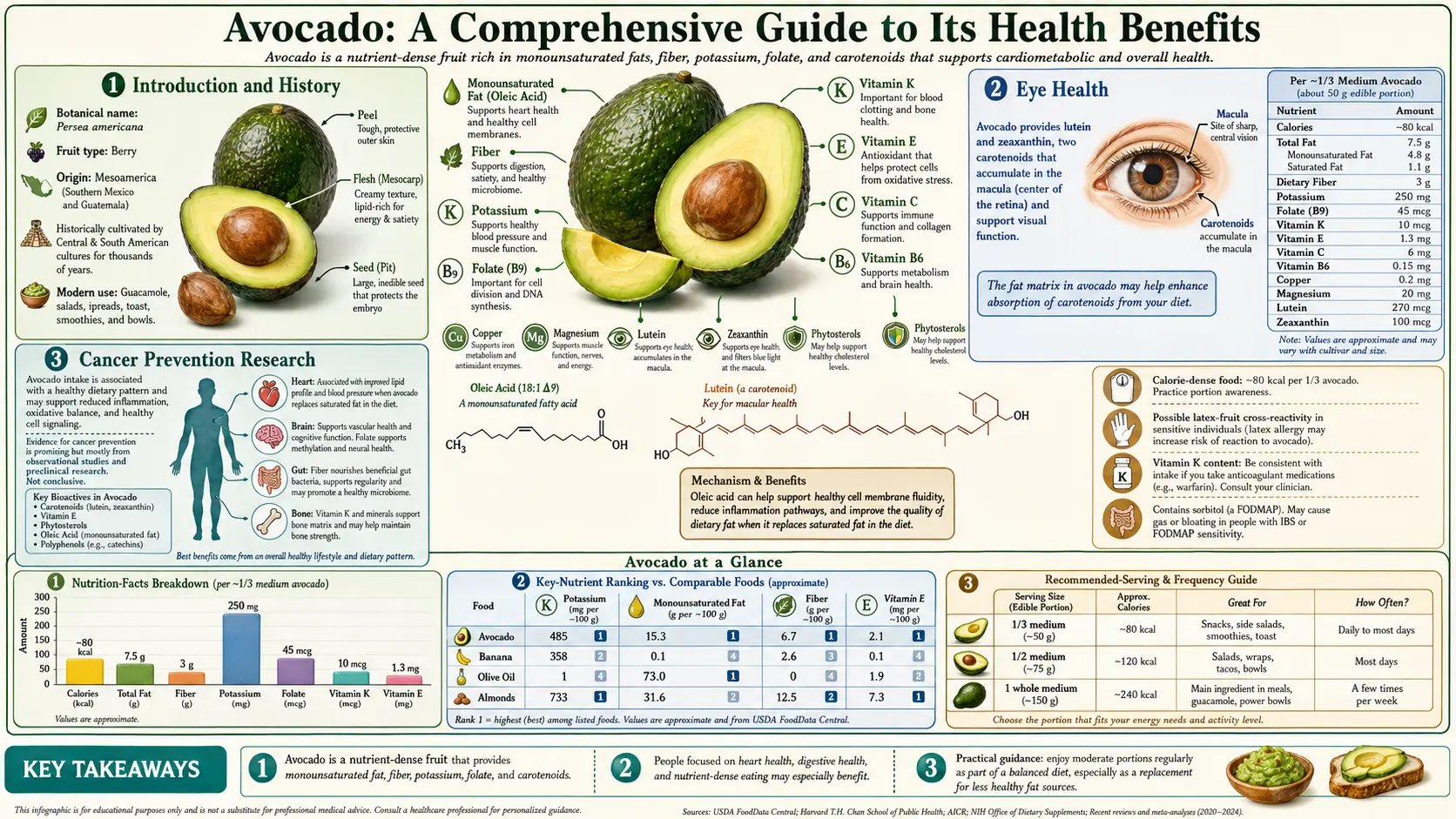
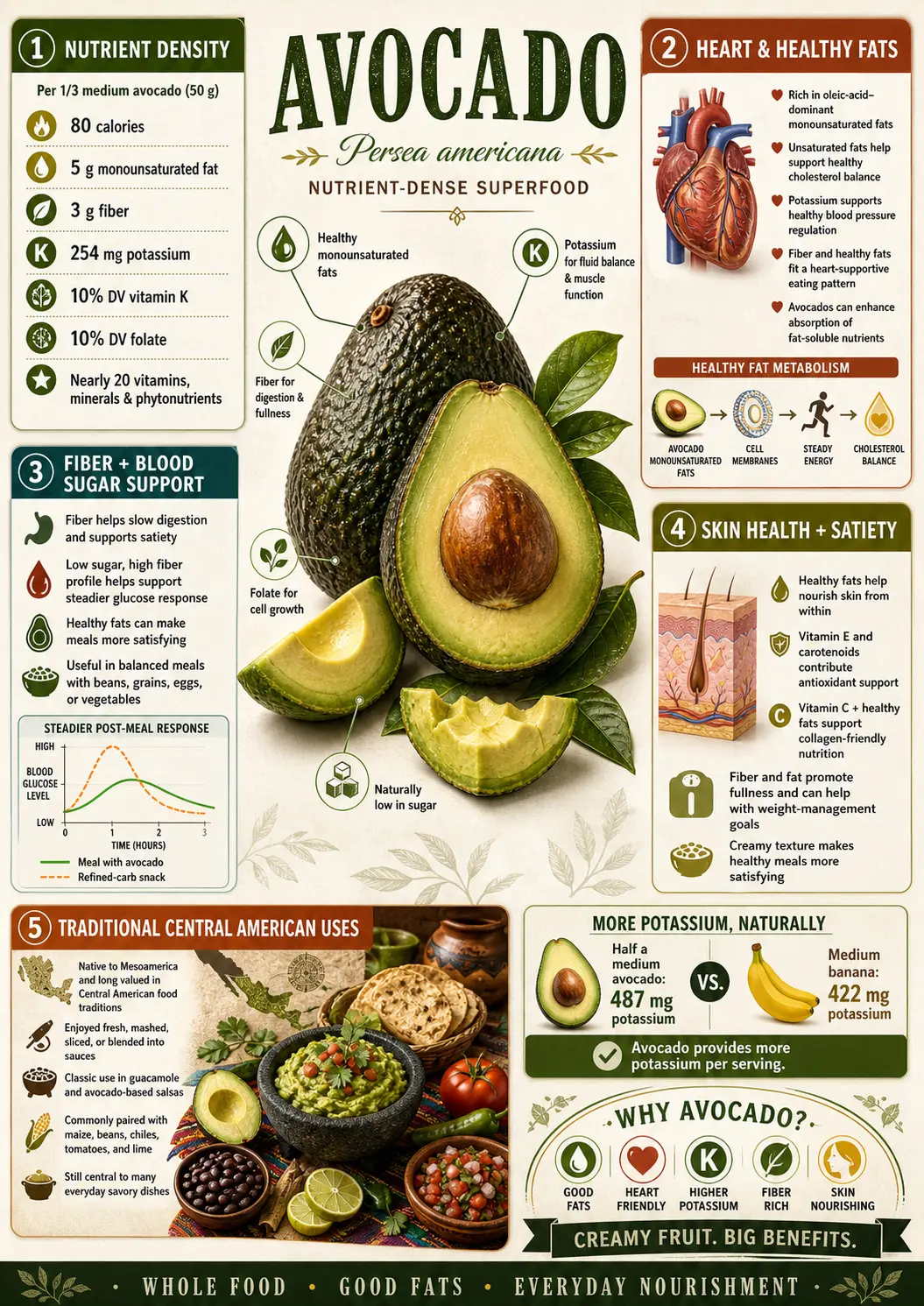
Table of Contents
- Introduction and History
- Nutritional Profile
- Heart Health
- Nutrient Absorption Enhancement
- Weight Management
- Eye Health
- Digestive Health
- Anti-Inflammatory Properties
- Skin Health
- Blood Sugar Regulation
- Cancer Research
- Bone Health
- Pregnancy Nutrition
- Avocado Oil
- Amounts Studied
- Potential Considerations
- Key Research Papers
- Connections
- Featured Videos
Introduction and History
The avocado (Persea americana) is a fruit whose edible flesh is made up mostly of water, fat and fiber rather than sugar. In the US Department of Agriculture's analysis of raw California avocado, 100 grams of flesh contains 167 kilocalories, 15.4 grams of fat and 8.6 grams of carbohydrate, of which 6.8 grams is dietary fiber. A 2013 review supported by an avocado industry board describes Hass as the most common commercial avocado cultivar in the world, and notes that about 80 percent of the edible fruit by weight is water (72 percent) and dietary fiber (6.8 percent), and that one-half of a fruit contains only about 0.2 grams of sugar.
The fruit's history — its gathering and domestication in Mesoamerica, the Aztec word behind its name, and the seedling a Southern California mail carrier, Rudolph Hass, grew in the 1920s and named after himself — is covered on the Avocado History page. This page summarizes what nutrient databases, controlled feeding trials, a large randomized trial and long-running cohort studies have reported about eating avocado, and where the evidence is thin or negative.
Nutritional Profile
The figures below come from the USDA FoodData Central SR Legacy record for raw California avocado (FDC 171706), and from the composition table in the 2013 Dreher and Davenport review, which presents the same USDA values as Hass avocado composition and adds values for one fruit without skin and seed (136 grams). Per 100 grams, the flesh contains 15.4 grams of fat: 9.80 grams monounsaturated, 1.82 grams polyunsaturated and 2.13 grams saturated. Most of the monounsaturated fat is 18:1 fatty acid (9.07 grams per 100 grams), mainly oleic acid. The review states the fat profile as 71 percent monounsaturated, 13 percent polyunsaturated and 16 percent saturated. One 136-gram fruit provides 227 kilocalories, 21.0 grams of fat, 11.8 grams of carbohydrate and 9.2 grams of fiber.
For minerals, 100 grams of California avocado contains 507 milligrams of potassium (690 milligrams per 136-gram fruit), compared with 358 milligrams per 100 grams of raw banana in the same database. It also contains 29 milligrams of magnesium (39 milligrams per fruit) and 0.68 milligrams of zinc per 100 grams.
For vitamins, per 100 grams (and per 136-gram fruit): folate 89 micrograms (121), vitamin K1 21 micrograms (28.6), vitamin E as alpha-tocopherol 1.97 milligrams (2.68), vitamin C 8.8 milligrams (12.0), vitamin B6 0.29 milligrams (0.39) and pantothenic acid 1.46 milligrams (2.0). Avocado types differ: the USDA record for raw Florida avocado lists 120 kilocalories and 10.1 grams of fat per 100 grams, against 167 kilocalories and 15.4 grams for California avocado.
The 2013 review reports that about 80 percent of avocado carbohydrate is dietary fiber, split roughly 70 percent insoluble and 30 percent soluble. In a US national survey analysis (NHANES 2001–2008, 17,567 adults of whom 347 ate avocado), avocado consumers had significantly higher intakes of dietary fiber, fruit, vegetables, vitamins E and K, magnesium and potassium, and lower intakes of added sugars, than non-consumers; that study is observational.
Among other compounds, the USDA record lists 271 micrograms of lutein plus zeaxanthin and 76 milligrams of beta-sitosterol, the main plant sterol, per 100 grams. The 2013 review cites a National Cancer Institute food analysis that measured about 19 milligrams of glutathione per half fruit, several times higher than in other fruits. How the fat in avocado affects absorption of carotenoids from the rest of a meal is covered in the nutrient absorption section below; the full nutrient breakdown is on the Avocado Nutrients page.
Heart Health
The controlled trial most often cited on avocado and cholesterol is a 2015 Pennsylvania State University feeding study published in the Journal of the American Heart Association. Forty-five adults with overweight or obesity and LDL cholesterol in the 25th to 90th percentile ate three cholesterol-lowering diets for five weeks each, in random order: a lower-fat diet (24 percent of calories from fat); a moderate-fat diet (34 percent fat) whose fat came mainly from high-oleic oils; and a moderate-fat diet matched for the same fatty acids that included one fresh Hass avocado (136 grams) a day. Compared with baseline, LDL cholesterol fell by 13.5 mg/dL on the avocado diet, 8.3 mg/dL on the oil-based moderate-fat diet and 7.4 mg/dL on the lower-fat diet, and the reduction on the avocado diet was significantly greater than on either of the others. Only the avocado diet significantly lowered LDL particle number and small, dense LDL cholesterol from baseline. The authors concluded that the effect extended beyond the fruit's fatty-acid profile.
A 2020 secondary analysis of the same trial, in The Journal of Nutrition, found that the avocado diet lowered circulating oxidized LDL by 7.0 U/L (8.8 percent) from baseline and raised plasma lutein by 19.6 nmol/L (68.7 percent), and both changes differed significantly from the two other diets. The fall in oxidized LDL correlated with the fall in the number of small, dense LDL particles.
Pooled analyses of trials are less consistent than that single study. A 2018 meta-analysis in the American Journal of Clinical Nutrition identified 18 eligible studies (481 participants). Avocado intake raised HDL cholesterol by 2.84 mg/dL across 7 studies, with significant heterogeneity, but it found no significant difference in total cholesterol, LDL cholesterol, triglycerides or body weight against control diets, and no study had reported clinical outcomes such as heart attack or stroke. A 2024 meta-analysis in the Journal of the Academy of Nutrition and Dietetics (9 randomized trials with 503 participants, plus one cohort) found a small reduction in total cholesterol (−5.08 mg/dL) and no significant overall difference in LDL, HDL or triglycerides. In participants with high cholesterol, LDL fell by 9.4 mg/dL and total cholesterol by 7.54 mg/dL, with no difference in people whose cholesterol was normal. The authors graded the certainty of the evidence as low to very low. A 2026 dose-response meta-analysis of randomized trials reported reductions in total cholesterol (−6.97 mg/dL) and LDL cholesterol (−6.16 mg/dL), with no significant effect on HDL.
The largest trial is the Habitual Diet and Avocado Trial (HAT), published in the Journal of the American Heart Association in 2022 (Lichtenstein and colleagues). It randomized 1,008 free-living adults with an elevated waist circumference to add one large avocado a day to their usual diet for six months, or to continue their usual diet. Its primary outcome, visceral fat measured by MRI, did not differ between the groups. There were no significant group differences in liver fat, high-sensitivity C-reactive protein or the components of the metabolic syndrome. Of the additional outcomes, total and LDL cholesterol showed modest but nominally significant reductions in the avocado group. The authors concluded that a daily avocado had minimal effect on cardiometabolic risk factors.
For long-term disease outcomes the evidence is observational. A 2022 analysis of the Nurses' Health Study and Health Professionals Follow-up Study (Pacheco and colleagues, Journal of the American Heart Association) followed 68,786 women and 41,701 men for 30 years and documented 14,274 cases of cardiovascular disease. After adjustment for lifestyle and other dietary factors, people who ate two or more servings of avocado a week had a 16 percent lower risk of cardiovascular disease (hazard ratio 0.84) and a 21 percent lower risk of coronary heart disease (hazard ratio 0.79) than non-consumers, with no significant association for stroke. In statistical substitution models, replacing half a serving a day of margarine, butter, egg, yogurt, cheese or processed meats with the same amount of avocado was associated with a 16 to 22 percent lower risk. Associations of this kind do not establish cause. The fatty-acid side of the evidence is covered on the Avocado Monounsaturated Fats page.
Nutrient Absorption Enhancement
Carotenoids such as beta-carotene, lycopene and lutein are fat-soluble, and dietary fat is thought to be an important factor in how much of them the body absorbs; yet, as the authors of a 2005 Ohio State University study put it, most carotenoid-rich fruits and vegetables are low in fat. The 2013 composition review describes the mechanism: carotenoids depend on dietary fat to be released from food and transferred into intestinal micelles and from there into the circulation.
That 2005 study (Unlu and colleagues, The Journal of Nutrition) ran two small crossover experiments in healthy adults (11 per study) and measured carotenoids in the blood fraction that carries newly absorbed fat over 9.5 hours. Adding 150 grams of avocado to salsa raised absorption of lycopene 4.4-fold and beta-carotene 2.6-fold compared with avocado-free salsa. Adding 150 grams of avocado to a salad raised absorption of alpha-carotene 7.2-fold, beta-carotene 15.3-fold and lutein 5.1-fold. Adding 24 grams of avocado oil instead of the fruit had a similar effect, and halving the avocado to 75 grams made no significant difference; the authors attributed the effect primarily to the fat in the avocado.
A 2014 follow-up from the same university (Kopec and colleagues) ran two randomized crossover studies of 12 healthy adults each, comparing meals with and without fresh Hass avocado (23 grams of fat). With a high-beta-carotene tomato sauce, avocado raised beta-carotene absorption 2.4-fold and the efficiency of conversion to vitamin A (measured as retinyl esters) 4.6-fold. With raw carrots, it raised beta-carotene absorption 6.6-fold, alpha-carotene 4.8-fold and conversion to vitamin A 12.6-fold. The authors noted the relevance of these findings for populations in which vitamin A deficiency is common.
These are single-meal studies in small groups, measuring blood carotenoids over hours rather than long-term nutrient status. Because avocado oil worked as well as the whole fruit in the 2005 study, the effect is attributed to fat rather than to a compound unique to avocado. The skin-related side of this research is covered on the Avocado Skin and Carotenoid Absorption page.
Weight Management
A 2013 Loma Linda University crossover trial (Wien and colleagues, Nutrition Journal) gave 26 healthy adults with overweight one of three lunches on separate days: an avocado-free control, a lunch with about half a Hass avocado included in it, or the control lunch with half an avocado added. Compared with the control, the avocado-added lunch increased self-rated satisfaction by 23 percent and reduced the desire to eat by 28 percent over five hours, and by 26 percent and 40 percent over the first three hours. The authors noted a caveat: the avocado-added meal contained an extra 112 kilocalories, which may itself have accounted for the difference.
In the NHANES 2001–2008 survey analysis, avocado consumers had significantly lower body weight, body mass index and waist circumference than non-consumers, with no significant difference in calorie intake, and their odds of metabolic syndrome were 50 percent lower. Because that analysis is cross-sectional, it shows an association, not that avocado caused the difference.
The randomized evidence on body weight is consistently neutral. In the six-month HAT trial of 1,008 adults, adding a daily avocado did not reduce visceral fat, and body weight and body mass index changed similarly in both groups, even though the avocado group was adding a food to its usual diet. A 2022 meta-analysis of 8 randomized trials (657 participants) found no significant change in body weight, body mass index, body-fat percentage or visceral fat with avocado compared with control, and noted that avocado did not promote weight gain. The 2018 and 2024 meta-analyses likewise found no adverse effect on body weight.
Research on monounsaturated fat in general is sometimes cited here. A 2007 Spanish crossover study in Diabetes Care fed 11 insulin-resistant adults three diets of equal calories for 28 days each: high in saturated fat, high in monounsaturated fat (a Mediterranean diet) or high in carbohydrate. Weight did not change on any of them, but on the high-carbohydrate diet body fat shifted toward the abdomen compared with the other two. That study did not involve avocado. Fiber and appetite are covered in more depth on the Avocado Fiber and Satiety page.
Eye Health
Avocado contains the carotenoids lutein and zeaxanthin, which are studied in relation to cataract and the pigment of the macula. The amount is modest: the USDA record lists 271 micrograms of lutein plus zeaxanthin per 100 grams of California avocado, compared with 12,198 micrograms per 100 grams of raw spinach. What avocado adds is fat: in the 2005 salad study, adding avocado raised lutein absorption from the rest of the salad 5.1-fold, and in the 2015 feeding trial one avocado a day for five weeks raised plasma lutein by 68.7 percent from baseline.
No trial of avocado and eye disease was among the studies reviewed for this page. The best-known dietary study of these carotenoids is the Carotenoids in Age-Related Eye Disease Study (CAREDS), published in Archives of Ophthalmology in 2008, which examined 1,802 women aged 50 to 79. Women with high dietary intakes of lutein and zeaxanthin had a 23 percent lower prevalence of nuclear cataract than women with low intakes (age-adjusted odds ratio 0.77), an association that weakened after full adjustment (odds ratio 0.81, confidence interval 0.65–1.01). The authors described the association as moderate and noted that other protective aspects of such diets may partly explain it. The study measured how common cataract was at one point in time, not whether it developed later, and it was not about avocado specifically.
Digestive Health
Avocado's fiber (6.8 grams per 100 grams in the USDA record, about 70 percent insoluble and 30 percent soluble according to the 2013 review) is the starting point for research on digestion and the gut microbiome.
The main trial is the 12-week PATH study at the University of Illinois (Thompson and colleagues, The Journal of Nutrition, 2021), which enrolled 163 adults aged 25 to 45 with overweight or obesity. Participants ate one meal a day of equal calories, either with avocado (175 grams for men, 140 grams for women) or without it. In these secondary outcomes, the avocado group showed greater bacterial diversity and 26 to 65 percent greater abundance of Faecalibacterium, Lachnospira and Alistipes, bacteria capable of fermenting fiber, than the control group. The avocado group also had 18 percent more fecal acetate, 70 percent more stearic acid and 98 percent more palmitic acid, while the bile acids cholic acid and chenodeoxycholic acid were 91 percent and 57 percent lower. The authors concluded that daily avocado affects digestive physiology and the composition and metabolic activity of the intestinal microbiota.
The trial measured stool bacteria and metabolites, not digestive symptoms or disease, so it does not show whether these changes affect bowel health over time.
Anti-Inflammatory Properties
Avocado contains plant sterols (per 100 grams, 76 milligrams of beta-sitosterol, 5 milligrams of campesterol and 2 milligrams of stigmasterol, according to the USDA data in the 2013 review), carotenoids, tocopherols and oleic acid, all of which have been studied for effects on inflammation. Human evidence that eating avocado lowers inflammation is limited and mixed.
A 2013 UCLA pilot study in Food and Function gave 11 healthy volunteers a 250-gram hamburger patty either alone or with 68 grams of avocado flesh, on two separate occasions. Two hours after the burger alone, blood vessels constricted significantly (peripheral arterial tonometry index 2.19 to 1.56); this did not occur when avocado was eaten with it. At three hours, levels of the protein IκBα in blood immune cells were preserved with avocado (131 percent versus 58 percent), which the authors described as consistent with reduced activation of the inflammatory NF-κB pathway; and the inflammatory marker IL-6 rose at four hours after the burger alone but did not change when avocado was added. Blood triglycerides rose after both meals but no further with avocado, despite its added fat and calories.
Longer trials have not shown a change in inflammatory markers. In the six-month HAT trial, high-sensitivity C-reactive protein did not differ between the avocado and usual-diet groups. The 2018 meta-analysis found no significant difference in C-reactive protein (2 studies) or, in single studies, in IL-6 and tumor necrosis factor alpha.
Avocado-soybean unsaponifiables (ASU) are a supplement made from fractions of avocado and soybean oils, not the fruit itself. A 2019 meta-analysis of placebo-controlled trials in International Journal of Rheumatic Diseases found that ASU reduced pain on a visual analogue scale overall (by 9.64 millimeters, with very high heterogeneity between trials) and improved pain and the Lequesne index in knee osteoarthritis, but not in hip osteoarthritis. Adverse events were similar to placebo. A 2010 review in The Physician and Sportsmedicine concluded that 300 milligrams of ASU a day appeared to be beneficial for hip or knee osteoarthritis. Neither source studied eating avocado.
Skin Health
Avocado provides vitamin E (1.97 milligrams of alpha-tocopherol per 100 grams) and monounsaturated fat, and its fat raises absorption of carotenoids eaten with it. No trial of eating avocado and skin outcomes was among the studies reviewed for this page.
Evidence on dietary fat and skin is observational. A 2010 study in the British Journal of Nutrition measured skin hydration, surface lipids and elasticity in 716 Japanese women and compared them with diet questionnaires. After adjustment for age, smoking, body mass index and lifetime sun exposure, higher intakes of total fat, saturated fat and monounsaturated fat were each associated with greater skin elasticity. Higher intake of green and yellow vegetables was associated with less wrinkling, as was higher saturated-fat intake after additional adjustment for vegetable intake. The authors called for better-measured studies.
Topical studies are small or in animals. In a 2001 randomized trial in Dermatology, 13 patients with chronic plaque psoriasis applied a vitamin B12 cream containing avocado oil to one side of the body and the vitamin D analogue calcipotriol to the other for 12 weeks. Calcipotriol worked faster over the first 8 weeks (the difference was significant only at week 8); at 12 weeks neither the psoriasis score nor ultrasound showed a significant difference, and patients and investigators rated the B12 cream as better tolerated. Because the cream combined vitamin B12 with avocado oil, the trial cannot separate their effects. In a 2013 study in rats, avocado oil applied to skin wounds, alone or in a semisolid formulation, increased wound contraction, re-epithelialization and collagen density by day 14 compared with petroleum jelly.
Blood Sugar Regulation
Avocado contains very little digestible sugar. The 2013 review reports about 0.2 grams of sugar per half fruit, and states that the glycemic index and load of avocado are expected to be about zero; this is an estimate based on composition rather than a measured value. The review also describes a seven-carbon sugar, D-mannoheptulose, and its reduced form perseitol, at about 2.0 grams per half fruit, and calls research suggesting that mannoheptulose supports blood glucose control preliminary; the work it cites is a conference abstract.
In the 2013 crossover trial of 26 adults, blood glucose and insulin were measured for three hours after lunch. The abstract reports no difference in glucose among the meals. Insulin (area under the curve over three hours) was higher after both the control lunch and the avocado-added lunch than after the lunch in which avocado was included in the meal.
Longer trials have not shown effects on glucose. In the HAT trial, insulin changed similarly in both groups, and the components of the metabolic syndrome did not differ between groups. The 2018 meta-analysis found no significant difference in blood glucose (2 studies). In the 2007 study of monounsaturated fat (not avocado) in 11 insulin-resistant adults, insulin sensitivity was lower after the high-carbohydrate diet than after the diet high in monounsaturated fat. Observational evidence includes the NHANES finding of lower odds of metabolic syndrome in avocado consumers.
Cancer Research
The 2013 review describes research on avocado and cancer as very preliminary, with all data at that time coming from laboratory studies on human cancer cell lines. None of the human trials or cohorts reviewed for this page studied cancer as an outcome.
Avocatin B is a lipid derived from avocado. In a 2015 laboratory study in Cancer Research from the University of Waterloo, a high-throughput screen identified avocatin B as toxic to acute myeloid leukemia (AML) cells. It reduced the viability of primary human AML cells without affecting normal peripheral blood stem cells, and stem-cell assays showed selectivity toward AML progenitor and stem cells over normal blood-forming stem cells. Its effect depended on mitochondria and on CPT1, the enzyme that carries fats into mitochondria: avocatin B inhibited fatty-acid oxidation and lowered NADPH, leading to oxidative-stress-dependent leukemia cell death. This is a study of a purified compound in cells, not of eating avocado.
Glutathione was measured in common US foods in a 1992 National Cancer Institute survey, which found fruits and vegetables moderate to high in glutathione; the 2013 review cites about 19 milligrams per half avocado. A 1994 case-control study in the American Journal of Epidemiology (855 people with oral or pharyngeal cancer and 975 controls) found that people in the highest quarter of total glutathione intake had half the risk (relative risk 0.5). Glutathione from vegetables and meat was not related to risk; only glutathione from fruit and from vegetables usually eaten raw was associated with lower risk, and the authors said further studies were needed to separate any effect of glutathione from that of fruit and raw vegetables themselves. That study did not examine avocado separately.
Beta-sitosterol, the main plant sterol in avocado, was tested on LNCaP human prostate cancer cells in a 1998 laboratory study in Nutrition and Cancer. Compared with cholesterol, beta-sitosterol at 16 micromolar reduced cell growth by 24 percent and increased programmed cell death fourfold, effects the authors linked to activation of the sphingomyelin cycle.
Bone Health
No trial or cohort study of eating avocado and bone outcomes was among the studies reviewed for this page. What avocado contributes is its nutrient content: per 100 grams, 21 micrograms of vitamin K1, 29 milligrams of magnesium and 507 milligrams of potassium. The research on those nutrients and bone is covered on the Vitamin K, Magnesium and Potassium pages. The avocado-soybean unsaponifiable supplement discussed in the anti-inflammatory section is an oil extract studied for osteoarthritis symptoms, not a bone-density treatment.
Pregnancy Nutrition
No avocado-specific pregnancy trial or cohort was among the studies reviewed for this page. Avocado is relevant to pregnancy nutrition through its composition: per 100 grams of California avocado, 89 micrograms of naturally occurring food folate (121 micrograms per 136-gram fruit), 507 milligrams of potassium, 0.29 milligrams of vitamin B6, 6.8 grams of fiber and 1.97 milligrams of vitamin E. Folate needs in pregnancy, and the difference between food folate and folic acid, are covered on the Folate and Pregnancy page.
Avocado Oil
Avocado oil is extracted from the fruit. In the USDA SR Legacy record for avocado oil (FDC 173573), 100 grams contains 70.6 grams of monounsaturated fat, 13.5 grams of polyunsaturated fat and 11.6 grams of saturated fat. In the 2005 carotenoid study, 24 grams of avocado oil added to a salad raised carotenoid absorption about as much as 150 grams of whole avocado. According to UC Davis researchers, virgin avocado oil is supposed to be extracted from fresh fruit by mechanical means only, while refined oil is processed with heat or chemicals to remove flaws.
Heating. Avocado oil is often described as stable at high heat, and the studies found support part of that claim: it forms fewer breakdown products than oils high in polyunsaturated fat, but it is not free of them. A 2021 study in Foods heated commercial soybean, avocado, corn and extra-virgin olive oils in laboratory-simulated shallow frying and measured aldehydes by NMR. Soybean and corn oils, which are rich in polyunsaturated fat, produced the highest aldehyde concentrations; avocado and olive oils, rich in monounsaturated fat, were much more resistant to this oxidation, but still produced aldehydes. Avocado oil also showed moderate changes in its fatty-acid make-up after heating (saturated fat up by more than 7 percent and polyunsaturated fat down by more than 3 percent, in molar terms), smaller than in soybean and corn oils but larger than in the two extra-virgin olive oils, which changed least. A 2012 study in Food Chemistry heated avocado and olive oils at 180 °C for up to 9 hours. It found the overall stability of avocado oil similar to that of olive oil. Oxidation markers (TBARS) were higher in olive oil after 3 hours and peaked in both oils at 6 hours. Avocado oil started with less vitamin E (24.5 versus 35.52 milligrams per 100 grams) and lost it sooner (at 4 versus 5 hours), but contained more total plant sterols both at the start (339.64 versus 228.27 milligrams per 100 grams) and after 9 hours (270.44 versus 210.30). A specific smoke-point temperature for avocado oil was not found in the sources reviewed for this page.
Quality and authenticity. A 2020 University of California, Davis study in Food Control (Green and Wang) tested 22 domestic and imported avocado oils against oil the researchers extracted from fresh fruit. At least 82 percent of the samples were either oxidized before their expiration date or mixed with other oils. Fifteen were oxidized before the expiration date; six contained large amounts of other oils, including sunflower, safflower and soybean; and three bottles labelled "pure" or "extra virgin" avocado oil contained close to 100 percent soybean oil. The researchers pointed out that the US Food and Drug Administration had no standard of identity for avocado oil, so there was no means of enforcing its quality or authenticity. In their summary, oil loses flavor and health benefits when it oxidizes, which happens over time and with too much light, heat or air. A 2023 follow-up on 36 store-brand oils from 19 retailers in the United States and Canada found 31 percent pure and 36 percent of the advertised quality. Lower-priced oils were more likely to be adulterated, but a high price did not guarantee purity or quality. The studies, the chemistry used to detect blends and the 2024 international standard are covered on the Fake Avocado Oil page.
Amounts Studied
The 2013 review notes that the official US label serving of avocado is one-fifth of a fruit (30 grams), while NHANES data show that the average amount eaten at one time is about half a fruit (68 grams). The trials described on this page used larger amounts: one Hass avocado (136 grams) a day in the 2015 feeding trial, one large avocado a day for six months in the HAT trial, 140 to 175 grams a day in the PATH gut-microbiome trial, and about half an avocado at a single lunch in the satiety trial. In the cohort study, the highest intake group ate two or more servings a week. In the six-month HAT trial, a daily avocado produced modest reductions in total and LDL cholesterol but no difference in visceral fat, body weight, insulin or C-reactive protein.
Composition varies by type: per 100 grams, the USDA lists 167 kilocalories and 15.4 grams of fat for California avocado and 120 kilocalories and 10.1 grams of fat for Florida avocado.
Potential Considerations
Calories. Avocado provides 167 kilocalories per 100 grams of California avocado (227 per 136-gram fruit). In randomized trials, adding avocado to the diet has not led to weight gain: body weight did not differ from control in the HAT trial or in the 2018, 2022 and 2024 meta-analyses.
Latex-fruit syndrome. Some people allergic to natural rubber latex also react to certain plant foods. A 2003 review names banana, avocado, kiwi and chestnut as the foods most often involved, and points to class I chitinases, plant defense proteins that cross-react with the major latex allergen hevein, as the cause. A 2024 systematic literature review found that the reported prevalence of latex-fruit syndrome among latex-allergic patients varied widely between studies, from 4 to 88 percent, depending on diagnostic methods, region and study size. Banana, avocado, kiwifruit and papaya were the fruits most often implicated, and 73 percent of the reported fruit-hypersensitivity symptoms were systemic rather than localized.
Warfarin. A 1991 letter in The Lancet reported warfarin antagonism by avocado. A 2015 review of warfarin-fruit interactions (23 citations, including 15 case reports) lists avocado among the fruits implicated in suspected interactions, found the scientific evidence scarce and suggested that clinicians ask about recent avocado consumption when looking into unstable INR results. Avocado contains 21 micrograms of vitamin K1 per 100 grams.
Potassium. Avocado is high in potassium (507 milligrams per 100 grams). How dietary potassium relates to kidney disease and to medicines that raise blood potassium is covered on the Potassium page. Decisions about diet alongside medical treatment belong with a clinician.
Key Research Papers
- Wang L et al. "Effect of a moderate fat diet with and without avocados on lipoprotein particle number, size and subclasses in overweight and obese adults: a randomized, controlled trial" Journal of the American Heart Association, 2015. — PubMed PMID: 25567051 (Crossover feeding trial, 45 adults: LDL cholesterol fell 13.5 mg/dL from baseline on the avocado diet, versus 8.3 mg/dL on the high-oleic-oil diet and 7.4 mg/dL on the lower-fat diet; only the avocado diet lowered LDL particle number and small, dense LDL.)
- Unlu NZ et al. "Carotenoid absorption from salad and salsa by humans is enhanced by the addition of avocado or avocado oil" The Journal of Nutrition, 2005. — PubMed PMID: 15735074 (Two crossover studies of 11 adults: avocado raised lycopene and beta-carotene absorption from salsa 4.4- and 2.6-fold, and alpha-carotene, beta-carotene and lutein absorption from salad 7.2-, 15.3- and 5.1-fold; avocado oil worked similarly.)
- Kopec RE et al. "Avocado consumption enhances human postprandial provitamin A absorption and conversion from a novel high-β-carotene tomato sauce and from carrots" The Journal of Nutrition, 2014. — PubMed PMID: 24899156 (Two crossover studies of 12 adults: avocado raised beta-carotene absorption 2.4-fold (tomato sauce) and 6.6-fold (carrots), and conversion to vitamin A 4.6-fold and 12.6-fold.)
- Wien M et al. "A randomized 3×3 crossover study to evaluate the effect of Hass avocado intake on post-ingestive satiety, glucose and insulin levels, and subsequent energy intake in overweight adults" Nutrition Journal, 2013. — PubMed PMID: 24279738 (Crossover trial, 26 adults with overweight: adding half an avocado to lunch raised satisfaction 23% and lowered desire to eat 28% over 5 hours (26% and 40% over 3 hours); the avocado meal had 112 more kilocalories.)
- Fulgoni VL et al. "Avocado consumption is associated with better diet quality and nutrient intake, and lower metabolic syndrome risk in US adults: results from the National Health and Nutrition Examination Survey (NHANES) 2001-2008" Nutrition Journal, 2013. — PubMed PMID: 23282226 (NHANES 2001–2008, 17,567 adults (347 avocado consumers), cross-sectional: consumers had lower body weight, BMI and waist circumference and 50% lower odds of metabolic syndrome.)
- Thompson SV et al. "Avocado Consumption Alters Gastrointestinal Bacteria Abundance and Microbial Metabolite Concentrations among Adults with Overweight or Obesity: A Randomized Controlled Trial" The Journal of Nutrition, 2021. — PubMed PMID: 32805028 (PATH trial, 163 adults, 12 weeks: avocado enriched Faecalibacterium, Lachnospira and Alistipes 26–65% and lowered fecal cholic and chenodeoxycholic acids 91% and 57%.)
- Li Z et al. "Hass avocado modulates postprandial vascular reactivity and postprandial inflammatory responses to a hamburger meal in healthy volunteers" Food & Function, 2013. — PubMed PMID: 23196671 (Pilot crossover, 11 healthy adults: 68 g avocado with a hamburger prevented the post-meal vasoconstriction and IL-6 rise seen with the hamburger alone and preserved IκBα.)
- Lee EA et al. "Targeting Mitochondria with Avocatin B Induces Selective Leukemia Cell Death" Cancer Research, 2015. — PubMed PMID: 26077472 (Laboratory study: avocatin B killed acute myeloid leukemia cells and progenitor cells, sparing normal blood stem cells, by inhibiting mitochondrial fatty-acid oxidation.)
- von Holtz RL et al. "beta-Sitosterol activates the sphingomyelin cycle and induces apoptosis in LNCaP human prostate cancer cells" Nutrition and Cancer, 1998. — PubMed PMID: 9824850 (Cell study: beta-sitosterol (16 µM) reduced LNCaP prostate cancer cell growth 24% and increased apoptosis fourfold versus cholesterol, via the sphingomyelin cycle.)
- Wang L et al. "A Moderate-Fat Diet with One Avocado per Day Increases Plasma Antioxidants and Decreases the Oxidation of Small, Dense LDL in Adults with Overweight and Obesity: A Randomized Controlled Trial" The Journal of Nutrition, 2020. — PubMed PMID: 31616932 (Secondary analysis of the 2015 trial: one avocado a day lowered oxidized LDL 8.8% and raised plasma lutein 68.7% from baseline.)
- DiNubile NA. "A potential role for avocado- and soybean-based nutritional supplements in the management of osteoarthritis: a review" The Physician and Sportsmedicine, 2010. — PubMed PMID: 20631466 (Review: concludes that 300 mg/day of avocado-soybean unsaponifiables appears beneficial for hip or knee osteoarthritis; a supplement, not the fruit.)
- Moeller SM et al. "Associations between age-related nuclear cataract and lutein and zeaxanthin in the diet and serum in the Carotenoids in the Age-Related Eye Disease Study, an Ancillary Study of the Women's Health Initiative" Archives of Ophthalmology, 2008. — PubMed PMID: 18332316 (CAREDS, 1,802 women aged 50–79: high dietary lutein and zeaxanthin associated with 23% lower prevalence of nuclear cataract (age-adjusted OR 0.77), attenuated after multivariable adjustment (OR 0.81, CI 0.65–1.01).)
- Pacheco LS et al. "Avocado Consumption and Risk of Cardiovascular Disease in US Adults" Journal of the American Heart Association, 2022. — PubMed PMID: 35352568 (Nurses' Health Study and Health Professionals Follow-up Study, 68,786 women and 41,701 men, 30 years: two or more servings a week associated with 16% lower CVD risk and 21% lower coronary heart disease risk; no association with stroke.)
- Lichtenstein AH et al. "Effect of Incorporating 1 Avocado Per Day Versus Habitual Diet on Visceral Adiposity: A Randomized Trial" Journal of the American Heart Association, 2022. — PubMed PMID: 35861827 (HAT trial, 1,008 adults, 6 months: one avocado a day did not reduce visceral fat; modest, nominally significant reductions in total and LDL cholesterol; no differences in body weight, liver fat, hsCRP or metabolic syndrome components.)
- de Oliveira AP et al. "Effect of semisolid formulation of persea americana mill (avocado) oil on wound healing in rats" Evidence-based Complementary and Alternative Medicine, 2013. — PubMed PMID: 23573130 (Rat study: topical avocado oil increased wound contraction, re-epithelialization and collagen density compared with petroleum jelly.)
- Mahmassani HA et al. "Avocado consumption and risk factors for heart disease: a systematic review and meta-analysis" The American Journal of Clinical Nutrition, 2018. — PubMed PMID: 29635493 (Meta-analysis, 18 studies (481 participants): avocado raised HDL cholesterol 2.84 mg/dL; no significant difference in total or LDL cholesterol, triglycerides or body weight.)
- James-Martin G et al. "Avocado Consumption and Cardiometabolic Health: A Systematic Review and Meta-Analysis" Journal of the Academy of Nutrition and Dietetics, 2024. — PubMed PMID: 36565850 (Meta-analysis, 9 trials (503 participants) plus one cohort: total cholesterol −5.08 mg/dL; no overall difference in LDL, HDL or triglycerides; LDL −9.4 mg/dL in people with high cholesterol; certainty low to very low.)
- Mostafazadeh P et al. "Exploring the effect of avocado on lipid profile modulation: a systematic review and dose-response and meta-analysis of clinical trials" Critical Reviews in Food Science and Nutrition, 2026. — PubMed PMID: 40749705 (Dose-response meta-analysis of randomized trials: total cholesterol −6.97 mg/dL and LDL cholesterol −6.16 mg/dL; no significant effect on HDL.)
- Conceição AR et al. "Can avocado intake improve weight loss in adults with excess weight? A systematic review and meta-analysis of randomized controlled trials" Nutrition Research, 2022. — PubMed PMID: 35405602 (Meta-analysis, 8 trials (657 participants): no significant change in body weight, BMI, body fat or visceral fat; avocado did not promote weight gain.)
- Simental-Mendía M et al. "Efficacy and safety of avocado-soybean unsaponifiables for the treatment of hip and knee osteoarthritis: A systematic review and meta-analysis of randomized placebo-controlled trials" International Journal of Rheumatic Diseases, 2019. — PubMed PMID: 31328413 (Meta-analysis of placebo-controlled trials of avocado-soybean unsaponifiables: reduced pain in knee but not hip osteoarthritis; adverse events similar to placebo.)
- Dreher ML, Davenport AJ. "Hass avocado composition and potential health effects" Critical Reviews in Food Science and Nutrition, 2013. — PubMed PMID: 23638933 (Composition review (supported by an avocado industry board): USDA composition table, fiber about 70% insoluble and 30% soluble, glutathione about 19 mg per half fruit, cancer evidence described as very preliminary.)
- Berasategi I et al. "Stability of avocado oil during heating: comparative study to olive oil" Food Chemistry, 2012. — PubMed PMID: 26434313 (Avocado and olive oils heated at 180 °C for up to 9 hours: overall stability of avocado oil similar to olive oil; vitamin E lower and lost sooner in avocado oil.)
- Wann AI et al. "Comparative 1H NMR-Based Chemometric Evaluations of the Time-Dependent Generation of Aldehydic Lipid Oxidation Products in Culinary Oils Exposed to Laboratory-Simulated Shallow Frying Episodes: Differential Patterns Observed for Omega-3 Fatty Acid-Containing Soybean Oils" Foods, 2021. — PubMed PMID: 34681530 (Laboratory-simulated shallow frying: soybean and corn oils produced the most aldehydes; avocado and olive oils were much more resistant but not free of them.)
- Paniagua JA et al. "Monounsaturated fat-rich diet prevents central body fat distribution and decreases postprandial adiponectin expression induced by a carbohydrate-rich diet in insulin-resistant subjects" Diabetes Care, 2007. — PubMed PMID: 17384344 (Crossover study, 11 insulin-resistant adults, three 28-day isocaloric diets: a carbohydrate-rich diet shifted fat to the abdomen compared with diets rich in monounsaturated or saturated fat; not an avocado study.)
- Nagata C et al. "Association of dietary fat, vegetables and antioxidant micronutrients with skin ageing in Japanese women" The British Journal of Nutrition, 2010. — PubMed PMID: 20085665 (716 Japanese women, cross-sectional: higher intakes of total, saturated and monounsaturated fat associated with greater skin elasticity.)
- Stücker M et al. "Vitamin B(12) cream containing avocado oil in the therapy of plaque psoriasis" Dermatology, 2001. — PubMed PMID: 11586013 (Randomized right/left comparison, 13 patients with plaque psoriasis, 12 weeks: no significant difference from calcipotriol at 12 weeks; calcipotriol faster over the first 8 weeks.)
- Jones DP et al. "Glutathione in foods listed in the National Cancer Institute's Health Habits and History Food Frequency Questionnaire" Nutrition and Cancer, 1992. — PubMed PMID: 1574445 (Glutathione measured in foods from the NCI food frequency questionnaire; fruits and vegetables moderate to high.)
- Flagg EW et al. "Dietary glutathione intake and the risk of oral and pharyngeal cancer" American Journal of Epidemiology, 1994. — PubMed PMID: 8154469 (Case-control study, 855 cases and 975 controls: highest quarter of glutathione intake associated with halved risk of oral and pharyngeal cancer; only fruit and raw-vegetable glutathione was associated.)
- Blanco C. "Latex-fruit syndrome" Current Allergy and Asthma Reports, 2003. — PubMed PMID: 12542994 (Review: latex-fruit syndrome most often involves banana, avocado, kiwi and chestnut; class I chitinases cross-reacting with hevein are the panallergens.)
- Gromek W et al. "Revisiting Latex-Fruit Syndrome after 30 Years of Research: A Comprehensive Literature Review and Description of Two Cases" Journal of Clinical Medicine, 2024. — PubMed PMID: 39064262 (Systematic literature review: reported prevalence of latex-fruit syndrome among latex-allergic patients ranged from 4% to 88%; banana, avocado, kiwifruit and papaya most often implicated.)
- Norwood DA et al. "A Comprehensive Review of Potential Warfarin-Fruit Interactions" Journal of Pharmacy Practice, 2015. — PubMed PMID: 25112306 (Review of 23 citations: avocado among fruits implicated in suspected warfarin interactions; evidence scarce.)
- Blickstein D et al. "Warfarin antagonism by avocado" Lancet, 1991. — PubMed PMID: 1672990 (Letter reporting warfarin antagonism by avocado.)
- Green HS, Wang SC. "First report on quality and purity evaluations of avocado oil sold in the US" Food Control, 2020. — doi:10.1016/j.foodcont.2020.107328 (22 avocado oils: at least 82% oxidized before their expiration date or mixed with other oils; three "pure" or "extra virgin" bottles close to 100% soybean oil.)
- Green HS, Wang SC. "Purity and quality of private labelled avocado oil" Food Control, 2023. — doi:10.1016/j.foodcont.2023.109837 (36 store-brand oils from 19 retailers: 31% pure, 36% of advertised quality; low price raised the odds of adulteration, high price guaranteed nothing.)
- US Department of Agriculture, Agricultural Research Service. FoodData Central, SR Legacy: "Avocados, raw, California" (FDC 171706), "Avocados, raw, Florida" (FDC 171707), "Oil, avocado" (FDC 173573), "Bananas, raw" (FDC 173944) and "Spinach, raw" (FDC 168462). — fdc.nal.usda.gov (FDC 171706) (Source of the per-100-gram nutrient values on this page.)
PubMed Topic Searches
The following curated PubMed topic searches lead to the peer-reviewed primary literature and systematic reviews that underpin the health claims discussed on this page. Each link opens PubMed in a new tab.
- PubMed: Avocado consumption and cardiovascular disease risk
- PubMed: Avocado and LDL cholesterol: randomized trial
- PubMed: Avocado, carotenoid absorption and meal fat
- PubMed: Avocado and weight management
- PubMed: Hass avocado bioactives and inflammation
- PubMed: Avocado and metabolic syndrome
- PubMed: Monounsaturated fatty acids and insulin sensitivity
- PubMed: Avocado dietary fiber and satiety
- PubMed: Avocado and postprandial vascular function
- PubMed: Avocado and visceral adipose tissue (Habit trial)
Browse all PubMed citations for “Avocado”
This content is provided for informational purposes only and does not constitute medical advice. Decisions about diet and medical care belong with a qualified clinician.
Connections
- All Food
- Potassium
- Magnesium
- Olive Oil
- Hypertension
- Almonds
- Walnuts
- Salmon
- Vitamin E
- Vitamin K
- Vitamin C
- Cardiovascular Disease
- Diabetes
- Insulin Resistance
- Obesity
- Kale
- Potassium-Rich Foods
- Homocysteine
- Cramp Prevention
- Fake Avocado Oil — What the UC Davis studies found in the oil pressed from this fruit