Avocado: Nutrient Profile
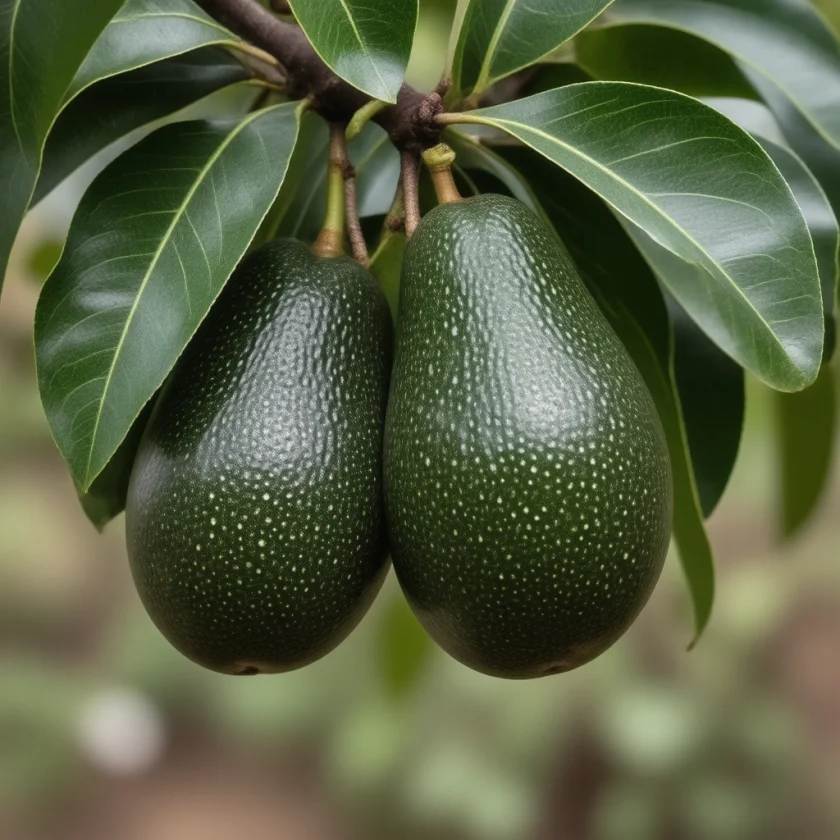
What is Avocado richest in? Below are the vitamins, minerals and amino acids that 100 g of Avocado delivers in the highest amounts. Each one links to that nutrient’s own page listing the best foods to get it from.
| Avocado: Richest Nutrients (per 100 g) | ||||
|---|---|---|---|---|
| Rank | Nutrient | Per 100 g | %DV / 100g | Purpose |
| Vitamins | ||||
| 1 | Vitamin B5 (Pantothenic Acid) | 1.4 mg | 🟡 28% | Energy metabolism |
| 2 | Vitamin B9 (Folate) | 81 mcg DFE | 🟡 20% | Cell division; pregnancy |
| 3 | Vitamin K | 21 mcg | 🟡 18% | Blood clotting & bone |
| 4 | Vitamin B6 | 0.3 mg | 🟡 15% | Brain & metabolism |
| 5 | Vitamin E | 2.1 mg | 🟡 14% | Protects cells (antioxidant) |
| 6 | Vitamin C | 10 mg | 🟡 11% | Antioxidant; builds collagen |
| 7 | Vitamin B3 (Niacin) | 1.7 mg | 🟡 11% | Energy, skin & nerves |
| 8 | Vitamin B2 (Riboflavin) | 0.1 mg | 🟡 10% | Energy & cell health |
| Minerals | ||||
| 1 | Copper | 0.2 mg | 🟡 21% | Iron use; connective tissue |
| 2 | Potassium | 485 mg | 🟡 10% | Blood pressure & fluid balance |
Values are per 100 g of the U.S. Department of Agriculture (USDA) FoodData Central record FDC 171705, “Avocados, raw, all commercial varieties” (SR Legacy). %DV is the amount per 100 g divided by the adult Daily Value in 21 CFR 101.9.
Fat and Fiber Are Avocado’s Main Nutrients
The table above lists vitamins, minerals and amino acids only. What avocado is best known for is its fat and fiber, and the same USDA record (FDC 171705) gives these per 100 g of raw avocado:
- Total fat: 14.7 g, of which 9.8 g is monounsaturated fat (9.07 g of it the 18:1 fatty acids, the group that includes oleic acid) and 2.13 g is saturated fat
- Fiber: 6.7 g
- Energy: 160 kcal
What Studies of Avocado Eaters Found
In two large US cohorts (68,786 women in the Nurses’ Health Study and 41,701 men in the Health Professionals Follow-up Study, followed for 30 years), people who ate 2 or more servings of avocado a week had a 16% lower risk of cardiovascular disease (hazard ratio 0.84) and a 21% lower risk of coronary heart disease (hazard ratio 0.79) than people who ate none. No link was seen with stroke. This was an observational study: it shows an association, not proof that avocado caused the lower risk.
In the randomised Habitual Diet and Avocado Trial (HAT), 1,008 adults with a large waist either added 1 large avocado a day to their usual diet for 6 months or kept their usual diet. The avocado did not reduce belly (visceral) fat, liver fat, a marker of inflammation (high-sensitivity C-reactive protein, hsCRP) or the parts of the metabolic syndrome compared with the usual diet. Total and LDL cholesterol fell modestly in the avocado group. Body weight did not differ between the groups.
Key Research Papers
- Pacheco LS, Li Y, Rimm EB, Manson JE, Sun Q, Rexrode K, Hu FB, Guasch-Ferré M. “Avocado Consumption and Risk of Cardiovascular Disease in US Adults.” J Am Heart Assoc. 2022;11(7):e024014. — PubMed PMID: 35352568
- Lichtenstein AH, Kris-Etherton PM, Petersen KS, Matthan NR, Barnes S, Vitolins MZ, Li Z, Sabaté J, Rajaram S, Chowdhury S, Davis KM, Galluccio J, Gilhooly CH, Legro RS, Li J, Lovato L, Perdue LH, Petty G, Rasmussen AM, Segovia-Siapco G, Sirirat R, Sun A, Reboussin DM. “Effect of Incorporating 1 Avocado Per Day Versus Habitual Diet on Visceral Adiposity: A Randomized Trial.” J Am Heart Assoc. 2022;11(14):e025657. — PubMed PMID: 35861827