Huntington's Disease: History and Discovery


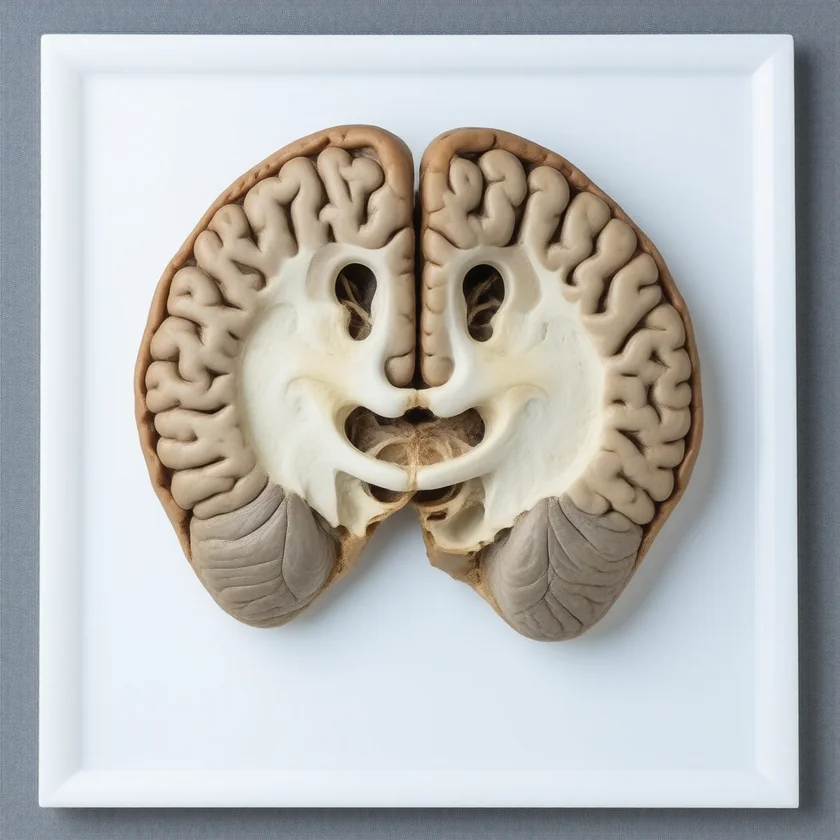
Huntington's disease is one of the rare instances in medicine where the path from first clear description to molecular cause can be traced almost step by step. A 22-year-old American country doctor, George Huntington, described the inherited disorder with extraordinary precision in an 1872 paper titled On Chorea, drawing on three generations of his own family's medical practice among the fishing families of eastern Long Island. The condition carried his name — first as “Huntington's chorea,” later as “Huntington's disease” for more than a century before its cause was found: an expanded, dominantly inherited CAG trinucleotide repeat in the huntingtin (HTT) gene on chromosome 4, pinpointed in 1993 after the gene was first mapped in 1983. This page traces how the disease was recognized, named, and ultimately explained, with each name, date, and “first” checked against the historical and scientific record.
Table of Contents
- Chorea Before 1872
- George Huntington and “On Chorea” (1872)
- From “Huntington's Chorea” to “Huntington's Disease”
- The Hereditary Pattern
- Nancy Wexler, Venezuela & Mapping the Gene (1983)
- The 1993 CAG-Repeat Discovery
- Diagnosis, Genetic Testing & Ethics
- Modern Understanding
- Key Research Papers
- Connections
- Featured Videos
Chorea Before 1872
The word chorea comes from the Greek khoreia, meaning “dance,” and physicians had used it for centuries to describe disorders of involuntary, restless, dance-like movement long before any single hereditary form was singled out. In the sixteenth century the Swiss physician Paracelsus discussed dancing manias, and in 1686 the great English clinician Thomas Sydenham described the acute childhood movement disorder that still bears his name — Sydenham's chorea (“St. Vitus' dance”). It is essential to keep these separate: Sydenham's chorea is a temporary, usually self-limiting condition that follows streptococcal infection (rheumatic fever) and is not the inherited, progressive disorder Huntington would later describe. The two share only the surface symptom of involuntary movement.
By the early nineteenth century a handful of physicians had noticed that some choreas ran relentlessly in families and did not remit. Scattered observations of an adult-onset, hereditary, fatal chorea appear in the medical literature before 1872 — among them accounts associated with Charles Oscar Waters and Charles Rollin Gorman in the United States, and the Norwegian physician Johan Christian Lund, who documented a hereditary chorea in the isolated Setesdal valley. These earlier descriptions were real and deserve credit, but they were fragmentary, scattered, and little known; none crystallized the disorder into a clear clinical entity that the wider medical world recognized.
That distinction — turning scattered observations into a sharply drawn, widely adopted clinical picture — is what makes George Huntington's contribution historically pivotal. He did not discover that chorea could be hereditary, and never claimed to; what he did was describe the inherited form so accurately and connect its features so clearly that his short paper became the reference point for everyone who came after. Honesty about this matters: Huntington is rightly the eponym, a brilliant describer building on a faint prior trail, not the lone first observer of hereditary chorea.
George Huntington and “On Chorea” (1872)
George Huntington (1850–1916) was an American physician from a medical family on the eastern end of Long Island, New York. He read his paper On Chorea before the Meigs and Mason Academy of Medicine in Middleport, Ohio, on 15 February 1872, and it was published in The Medical and Surgical Reporter of Philadelphia on 13 April 1872. He was just 22 years old and only a year out of medical school at Columbia University (College of Physicians and Surgeons), making the paper's clinical maturity all the more remarkable. Most of On Chorea actually concerns the common Sydenham's chorea of childhood; the hereditary disorder is described in a brief closing section that Huntington introduced as “a few words” words that changed the history of a disease.
Huntington's insight came directly from family experience. His grandfather Abel Huntington and his father George Lee Huntington had both practiced medicine in and around East Hampton, Long Island, and the three generations had observed the same affected families across decades — an accidental longitudinal study no single physician could have assembled alone. In a famous recollection, Huntington described riding with his father as a boy and encountering two afflicted women, mother and daughter, “both bowing, twisting, grimacing,” an image that he said first drew his attention to the malady. This deep, multi-generational familiarity is why he could describe the condition's lifelong course and its inheritance with such confidence.
In his short account Huntington fixed three features that still define the disorder. First, its hereditary nature: he noted that it passed from parent to child and that, crucially, when a child escaped the disease the line was spared — an early, intuitive grasp of dominant inheritance, decades before Mendel's laws were rediscovered. Second, a tendency to insanity and suicide and progressive mental decline, recognizing that the illness was far more than a movement disorder. Third, that it was an adult-onset condition “manifesting itself as a grave disease only in adult life.” The clinician William Osler later praised the description in words often quoted: “In the history of medicine there are few instances in which a disease has been more accurately, more graphically, or more briefly described.”
From “Huntington's Chorea” to “Huntington's Disease”
Huntington's paper might easily have stayed obscure — the work of an unknown young doctor in a regional journal — had it not been championed by influential physicians. William Osler, one of the most authoritative clinicians of the age, took a sustained interest in the disorder and wrote about it, and his admiration helped carry Huntington's description into the international medical mainstream. Within roughly a decade of the 1872 paper, the disorder began to be referred to by Huntington's name, and the eponym “Huntington's chorea” became established. As with many eponyms there was debate — some European authorities resisted attaching one young American's name to the condition — but the term endured.
The shift from “chorea” to “disease” in the name reflects a genuine change in medical understanding rather than mere fashion. Calling it a chorea emphasized the involuntary movements, but over the twentieth century clinicians increasingly recognized that the cognitive decline and psychiatric features (depression, irritability, apathy, and the heightened suicide risk Huntington himself flagged) were core to the illness, not incidental. Some patients — particularly those with juvenile onset — have little chorea at all, presenting instead with rigidity and slowness. To describe the condition by movement alone was therefore misleadingly narrow.
By the late 1960s the broader, more accurate term “Huntington's disease” had become standard usage, and it is the preferred name today. The change matters for patients and families: it signals that this is a whole-brain neurodegenerative condition affecting movement, thinking, mood, and behaviour together, not simply a “dancing” disorder. The older name “Huntington's chorea” still appears in historical writing and occasionally in lay use, but modern clinical, research, and advocacy organizations use “Huntington's disease” (often abbreviated HD).
The Hereditary Pattern
One of Huntington's most prescient observations was that the disease followed a strict family rule. He wrote that it was passed down from generation to generation, and that an individual who reached adulthood without developing it did not transmit it to their offspring. In modern terms he had described, by pure clinical observation, an autosomal dominant pattern: each child of an affected parent has a 50–50 chance of inheriting the faulty gene, and almost everyone who inherits it will eventually develop the disease if they live long enough. He recorded this in 1872, before Gregor Mendel's 1865 work on inheritance had been rediscovered (which happened around 1900) and decades before genes were understood as physical entities.
After the rediscovery of Mendelian genetics, Huntington's disease became a textbook example of dominant human inheritance. This prominence had a dark side that must be acknowledged honestly: in the United States and elsewhere, HD families were sometimes targeted by the eugenics movement, which advocated discouraging or preventing reproduction by people with hereditary conditions — the 1916 Davenport and Muncey study of Huntington's pedigrees sat squarely within that troubling, now thoroughly discredited tradition. Recounting this matters so that the same families' later, freely-given partnership with researchers is seen for the act of generosity it was.
The dominant inheritance pattern also created one of the cruelest features of the disease for twentieth-century families: because symptoms typically begin between roughly ages 30 and 50, people often had their own children before knowing whether they themselves carried the gene. A person could watch a parent decline, know they had a 50 percent risk, and yet have no way to learn their own fate until symptoms appeared — frequently after they had already started a family. This agonizing uncertainty is precisely what the search for the gene, and the genetic test that followed, would eventually address.
Nancy Wexler, Venezuela & Mapping the Gene (1983)
The modern molecular hunt for the Huntington's gene is inseparable from the work of psychologist Nancy Wexler, whose own mother died of the disease, placing Wexler personally at 50 percent risk. With her father Milton Wexler she helped build the Hereditary Disease Foundation, which organized and funded the search. Beginning in 1979, Wexler led repeated expeditions to the villages around Lake Maracaibo in Venezuela, home to the largest known concentration of Huntington's disease in the world — thousands of interrelated people descended from common ancestors. Over years of fieldwork the team assembled a family tree (pedigree) eventually exceeding 18,000 individuals and collected more than 4,000 blood and tissue samples, an unprecedented genetic resource made possible only by the trust and participation of those Venezuelan families.
Those samples went to the laboratory of geneticist James F. Gusella at Massachusetts General Hospital. Using the then-new technique of restriction fragment length polymorphism (RFLP) linkage analysis — tracking DNA markers that tended to be inherited alongside the disease — Gusella's team found, with remarkable early luck, a marker called G8 (locus D4S10) that segregated with Huntington's disease. In 1983 they published in Nature that the Huntington's gene lay on chromosome 4. This was a landmark beyond Huntington's disease itself: it was the first time a human disease gene had been mapped to a chromosome using anonymous DNA polymorphisms, and it helped launch the strategy that would underpin the Human Genome Project.
Mapping the gene to a region, however, was not the same as finding it. The 1983 result told researchers roughly where on chromosome 4 to look — near the very tip, band 4p16.3 — but the gene itself stayed hidden in a large stretch of DNA. What followed was a full decade of painstaking work by an international consortium to narrow the region and sift through candidate genes, with the Venezuelan pedigree remaining central to confirming linkage and, ultimately, validating the gene once it was found.
The 1993 CAG-Repeat Discovery
In 1993, after ten years of collaborative effort, the Huntington's Disease Collaborative Research Group — a consortium of roughly 58 scientists across six research groups — published the discovery of the gene in the journal Cell. The paper, “A novel gene containing a trinucleotide repeat that is expanded and unstable on Huntington's disease chromosomes” (Cell 1993;72(6):971–983), reported a previously unknown gene then called IT15 (“interesting transcript 15”), now named HTT, encoding a large protein the group named huntingtin. The credit belongs to the collaboration as a whole rather than to any single discoverer, reflecting the cooperative model that defined the project.
The mutation proved to be elegant and unusual: an expanded CAG trinucleotide repeat near the start of the gene. The DNA sequence C-A-G is repeated many times in a row, and CAG codes for the amino acid glutamine, so the repeat produces a stretch of glutamines in the huntingtin protein. In people without the disease, this repeat is short — generally fewer than about 35 copies. In Huntington's disease the repeat is expanded, typically to 40 or more copies, with an intermediate/reduced-penetrance zone in between. Huntington's disease thus became a defining member of a then-new category of “trinucleotide repeat” or “polyglutamine” disorders.
This discovery also explained clinical puzzles that had long mystified physicians. Because the repeat is unstable and can lengthen when passed from one generation to the next — especially through the father — it accounts for anticipation, the tendency for the disease to begin earlier and more severely in successive generations. Longer repeats correlate, on average, with earlier onset, and the very longest expansions are associated with the rare juvenile form. For the first time, an unambiguous, directly measurable genetic cause underlay the disease Huntington had described by eye 121 years earlier — a near-complete arc from bedside observation to molecular mechanism.
Diagnosis, Genetic Testing & Ethics
The 1983 linkage marker and then the 1993 gene made a predictive genetic test possible: a simple measurement of the CAG repeat length in a blood sample can tell whether a person carries the expansion, often years or decades before any symptom appears. For a dominantly inherited, adult-onset disease, this was revolutionary — and ethically fraught. At-risk people could finally resolve the lifelong uncertainty Huntington himself had noted, but in the era before effective treatment a positive result meant foreknowledge of an untreatable, fatal illness, with profound implications for careers, relationships, insurance, and the decision whether to have children.
For these reasons the Huntington's community helped pioneer careful, internationally agreed protocols for predictive testing. Testing is offered with genetic counseling before and after, informed consent, psychological support, and confirmation that the decision is the individual's own and free of coercion. As a matter of well-established ethical consensus, predictive testing is generally not performed on asymptomatic children, preserving their future right to choose (or refuse) the knowledge for themselves as adults. Huntington's disease became, in effect, a model case that shaped how predictive genetic testing for many later conditions would be handled.
For couples wishing to avoid passing the gene to their children, additional options followed, including prenatal testing and preimplantation genetic diagnosis (testing IVF embryos so that only those without the expansion are implanted). These choices are deeply personal and, like predictive testing, are approached with counseling and respect for individual values. Throughout, the guiding principle has been autonomy: the information belongs to the at-risk person, to use or decline as they see fit.
Modern Understanding
Identifying the gene gave researchers an exact, reproducible target and made Huntington's disease one of the most intensively studied neurodegenerative disorders. We now understand that the mutant huntingtin protein, with its abnormally long glutamine stretch, misfolds, forms aggregates, and disrupts many cellular processes, with the striatum (part of the basal ganglia, deep in the brain) and the cerebral cortex especially vulnerable to the slow neuron loss that produces the movement, cognitive, and psychiatric features. Crucially, the discovery enabled accurate animal and cell models carrying the human mutation, which remain the workhorses of HD research today.
That research has moved toward therapies aimed at the root cause rather than only the symptoms. The leading strategy is huntingtin-lowering — using antisense oligonucleotides, RNA interference, or gene-editing approaches to reduce production of the toxic protein. Several such candidates have reached human clinical trials. It is important to be honest about where things stand: as of the mid-2020s there is no cure and no treatment proven to halt or reverse Huntington's disease, and some high-profile trials have had disappointing or mixed results. Current approved care manages symptoms — medications for chorea, for mood and psychiatric symptoms, plus physical, occupational, and speech therapy and strong family support.
The history of Huntington's disease is, in the end, a story of observation, generosity, and persistence. A young doctor described it precisely in 1872 from his family's decades of watching afflicted neighbours; Venezuelan families who could not themselves be cured donated thousands of samples that made the genetics solvable; a foundation built by an at-risk family drove and funded the hunt; the gene was mapped in 1983 and the CAG-repeat cause found in 1993; and that knowledge now powers the search for the first truly disease-modifying treatment. For families living with HD, that unbroken line from George Huntington's “few words” to today's molecular trials is a reminder that even the hardest inherited diseases can be understood, and that understanding is the necessary first step toward changing their course.
Key Research Papers
The references below combine the landmark primary papers in the discovery of Huntington's disease genetics with curated PubMed topic-search links into the historical and clinical literature. The 1872 source (George Huntington's On Chorea, The Medical and Surgical Reporter) is named in the article as a historical primary text. Direct links to the foundational 1983 and 1993 papers are given where available; each opens in a new tab.
- The Huntington's Disease Collaborative Research Group. A novel gene containing a trinucleotide repeat that is expanded and unstable on Huntington's disease chromosomes. Cell. 1993;72(6):971–983. — doi:10.1016/0092-8674(93)90585-E
- Gusella JF, Wexler NS, Conneally PM, et al. A polymorphic DNA marker genetically linked to Huntington's disease. Nature. 1983;306(5940):234–238. — doi:10.1038/306234a0
- Huntington G. On Chorea. The Medical and Surgical Reporter (Philadelphia). 1872;26(15):317–321. (Historical primary source) — PubMed: Huntington On Chorea 1872
- Wexler NS, Lorimer J, Porter J, et al. (U.S.–Venezuela Collaborative Research Project). Venezuelan kindreds reveal that genetic and environmental factors modulate Huntington's disease age of onset. Proc Natl Acad Sci USA. 2004;101(10):3498–3503. — doi:10.1073/pnas.0308679101
- Andrew SE, Goldberg YP, Kremer B, et al. The relationship between trinucleotide (CAG) repeat length and clinical features of Huntington's disease. Nat Genet. 1993;4(4):398–403. — doi:10.1038/ng0893-398
- Bates GP, Dorsey R, Gusella JF, et al. Huntington disease. Nat Rev Dis Primers. 2015;1:15005. — doi:10.1038/nrdp.2015.5
- George Huntington and the history of the disease — biographical and historical reviews — PubMed: George Huntington hereditary chorea history
- Huntington's disease genetics — CAG repeat, HTT gene, huntingtin protein — PubMed: Huntington disease CAG repeat genetics
- Predictive genetic testing and ethics in Huntington's disease — PubMed: Huntington predictive testing ethics
- Anticipation and CAG-repeat instability in Huntington's disease — PubMed PMID: 27913616
- Huntingtin-lowering therapies — antisense oligonucleotides and RNAi in Huntington's disease — PubMed: huntingtin-lowering therapy
- The Venezuela kindreds and the mapping of the Huntington's disease gene — PubMed: Venezuela kindred Huntington gene mapping
- Sydenham's chorea versus Huntington's chorea — differential history of the choreas — PubMed: Sydenham chorea history and differential
External Authoritative Resources
Connections
- Neurology
- Huntington's Disease (main page)
- All Conditions
- Parkinson's Disease
- Amyotrophic Lateral Sclerosis
- Alzheimer's Disease