Klebsiella Pneumoniae Symptoms

- Overview
- Hospital-Acquired & Ventilator Pneumonia
- Urinary Tract Infections
- Liver Abscess
- Neonatal Sepsis
- Wound Infections
- Bloodstream Infections and Sepsis
- Deep-Dive Articles
- Connections
Overview
Klebsiella pneumoniae is a Gram-negative, encapsulated bacterium that lives harmlessly in the intestinal flora of roughly 5–35% of healthy adults. The trouble begins when it escapes its normal habitat. In hospitals, nursing homes, and intensive care units, it seizes opportunities created by invasive devices, immune suppression, and broad-spectrum antibiotics that have wiped out competing organisms. The result is a pathogen responsible for a striking share of the most serious healthcare-associated infections recorded worldwide.
What makes K. pneumoniae especially dangerous is the breadth of the clinical syndromes it can cause and the diversity of the patient populations it targets. A premature newborn in a neonatal intensive care unit, a middle-aged diabetic man in Taiwan with no recent hospital exposure, a ventilated trauma patient in a European intensive care unit (ICU), and an elderly nursing-home resident with a urinary catheter can all develop severe K. pneumoniae disease — yet the organism's behavior, the symptoms it produces, and the urgency of treatment differ substantially across these scenarios.
Compounding the clinical challenge is the rise of antibiotic-resistant strains. Extended-spectrum beta-lactamase (ESBL)-producing isolates resist most penicillins and cephalosporins. Carbapenem-resistant Enterobacteriaceae (CRE) leave clinicians with very few active drugs. Recognizing K. pneumoniae symptoms early — and understanding the particular syndrome each patient is most likely to develop — is therefore the critical first step before culture results arrive.
This hub page surveys the six major clinical presentations of K. pneumoniae infection. The deep-dive articles below cover hospital pneumonia and catheter-associated urinary tract infection (UTI), liver abscess and hypervirulent strains, and the diagnostic workup in detail.
Hospital-Acquired and Ventilator-Associated Pneumonia
K. pneumoniae is one of the leading causes of hospital-acquired pneumonia (HAP) and ventilator-associated pneumonia (VAP) in intensive care units across the world. VAP develops in patients who have been on mechanical ventilation for more than 48 hours; the ventilator tube bypasses the natural defenses of the upper airway, and bacteria colonizing the mouth and throat migrate directly into the lower respiratory tract.
Symptoms develop rapidly. Patients spike high fevers — temperatures above 38.5°C (101.3°F) are typical — along with rigors (uncontrolled shaking chills), a productive cough yielding thick, sometimes bloody or rust-colored sputum, and pleuritic chest pain (sharp pain that worsens with each breath). Oxygen saturation drops as lung tissue fills with inflammatory exudate; in mechanically ventilated patients, the ventilator's pressure requirements increase noticeably, and chest X-ray reveals new or worsening consolidation, often in the upper lobes — a classic radiographic pattern associated with K. pneumoniae that reflects the bacterium's preference for well-oxygenated tissue.
Community-acquired K. pneumoniae pneumonia — occurring outside hospitals, most often in older men with alcoholism, diabetes, or chronic lung disease — carries a historically feared presentation called Friedländer's pneumonia. This form can progress within hours to lobar consolidation, cavitation, abscess formation, and massive hemoptysis. Blood-tinged, gelatinous sputum sometimes described as "currant jelly" sputum, though not universal, is a clinical teaching point linked to this organism. Mortality without prompt treatment can exceed 50%.
Urinary Tract Infections in Catheterized Patients
Catheter-associated urinary tract infections (CAUTIs) are the most common healthcare-associated infection globally, and K. pneumoniae is consistently one of the top three causative organisms. Every day a urinary catheter remains in place, the risk of bacteriuria rises by 3–7%. The catheter provides a surface on which K. pneumoniae forms robust biofilms that resist both the flushing action of urine and many antibiotics.
Symptoms range from mild to catastrophic depending on whether the infection stays confined to the bladder or ascends to the kidneys. Lower urinary tract infection (cystitis) produces dysuria (painful or burning urination), urinary frequency and urgency, suprapubic discomfort, and cloudy or foul-smelling urine. In catheterized patients who cannot report symptoms — sedated intensive care unit patients, residents with dementia — the first clue may be unexplained fever, increased confusion, or subtle hemodynamic changes.
Upper urinary tract infection (pyelonephritis) adds flank pain, costovertebral angle tenderness on examination, nausea, vomiting, and high fever. When K. pneumoniae bacteriuria progresses to urosepsis — bacterial invasion of the bloodstream originating from the urinary tract — the patient can deteriorate within hours to septic shock, with hypotension, tachycardia, and signs of end-organ dysfunction. Urosepsis caused by ESBL-producing K. pneumoniae is increasingly common and significantly narrows antibiotic options at the bedside before culture results are available.
Liver Abscess — Especially in Asian Populations and Hypervirulent Strains
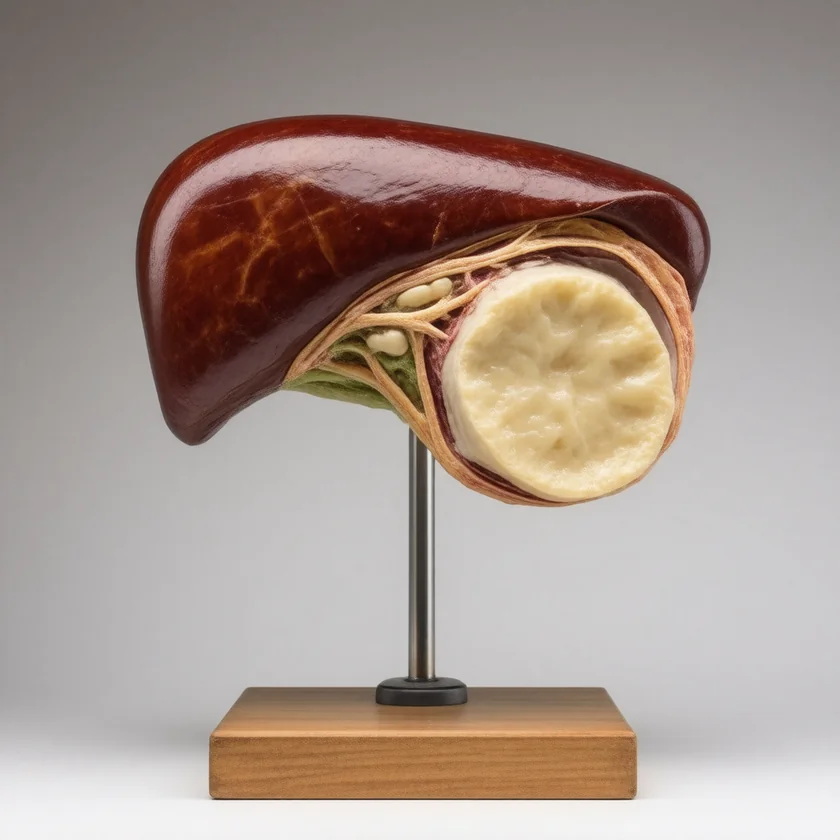
One of the most striking and unexpected manifestations of K. pneumoniae infection is primary liver abscess (KLA), a syndrome dominated by hypervirulent strains (hvKp) that emerged as a major clinical entity in Taiwan in the 1980s and has since been reported worldwide, with particularly high incidence across East and Southeast Asia.
Unlike the polymicrobial liver abscesses seen in the West — which typically result from biliary tract disease, portal bacteremia from bowel infection, or trauma — KLA is usually a monomicrobial infection caused by a single hypervirulent K. pneumoniae strain in a community-dwelling patient without prior liver disease. The most common risk factor is type 2 diabetes mellitus, present in 50–75% of patients in case series. The bacterium reaches the liver hematogenously from a gut reservoir, proliferates in hepatic tissue, and walls off into one or more pus-filled cavities.
Symptoms of KLA are often insidious at first: fever, chills, right upper quadrant or epigastric pain, and malaise developing over days to weeks. Jaundice is less common than in biliary-source abscesses. The danger is that hvKp strains carry genetic loci — notably the rmpA and rmpA2 regulators of the hypermucoviscous capsule — that enable them to spread beyond the liver with devastating efficiency. Endogenous endophthalmitis (infection inside the eye causing vision loss or blindness), meningitis, lung abscess, and septic arthritis can occur simultaneously or shortly after the liver abscess is identified. This invasive liver abscess syndrome (ILAS) has a mortality of up to 15% even in well-resourced settings and frequently leaves survivors with permanent visual impairment.
The "string test" — in which a colony lifted from culture medium stretches into a viscous string longer than 5 mm — is a bedside clue to the hypermucoviscous phenotype. Imaging typically shows a unilocular or multilocular hypodense hepatic lesion on computed tomography (CT), sometimes with internal septations or gas (suggesting mixed infection). Any patient with fever, right upper quadrant pain, and diabetes should prompt early hepatic imaging.
Neonatal Sepsis
K. pneumoniae is a leading cause of late-onset neonatal sepsis, particularly in neonatal intensive care units (NICUs). Premature infants and low-birth-weight neonates are profoundly vulnerable: their immune systems are immature, their skin and mucosal barriers are fragile, they often require invasive lines and endotracheal tubes, and they receive broad-spectrum antibiotics that deplete protective normal flora, allowing K. pneumoniae — often acquired from healthcare workers' hands or contaminated equipment — to colonize and invade.
Neonatal sepsis caused by K. pneumoniae presents with subtle, nonspecific signs that demand vigilance from nursing staff and physicians: temperature instability (fever or hypothermia), poor feeding and lethargy, irritability, apnea (breathing pauses), bradycardia (abnormally slow heart rate), and abdominal distension. Skin may appear mottled, gray, or jaundiced. In premature infants, respiratory deterioration can escalate within hours to frank respiratory failure requiring mechanical ventilation.
ESBL-producing K. pneumoniae is particularly prevalent in NICUs and has caused devastating nosocomial outbreaks that forced unit closures. When neonatal sepsis fails to respond to initial beta-lactam antibiotics within 48–72 hours, ESBL production must be considered and therapy escalated promptly. Mortality from neonatal K. pneumoniae sepsis ranges from 10% to over 40% in low-resource settings.
Wound Infections
K. pneumoniae infects surgical wounds, traumatic injuries, burns, and pressure ulcers, particularly in patients who are hospitalized, immunocompromised, or diabetic. It thrives in the warm, nutrient-rich environment of open wounds and readily forms biofilms on wound surfaces and medical devices such as surgical drains.
Local symptoms include erythema (redness), warmth, swelling, pain, and purulent discharge from the wound site. Wound cultures may grow K. pneumoniae in pure culture or as part of a polymicrobial infection alongside other Gram-negative rods or anaerobes. In immunocompromised patients — those receiving chemotherapy, corticosteroids, or biologic agents — local wound infection can extend rapidly to cellulitis, fasciitis, or osteomyelitis (bone infection) of underlying structures.
Burn wounds are particularly dangerous: the destroyed skin barrier and the immunosuppression that accompanies large burns create ideal conditions for K. pneumoniae overgrowth. Burn-wound sepsis caused by K. pneumoniae — where the organism penetrates the eschar and enters the bloodstream — carries mortality rates exceeding 30% even with aggressive treatment. ESBL-producing strains are increasingly recovered from burn units, complicating empiric antibiotic selection.
Bloodstream Infections and Sepsis
K. pneumoniae bacteremia — the presence of live bacteria in the bloodstream — is one of the most serious outcomes of any K. pneumoniae infection and can arise from any of the primary sites described above: lungs, urinary tract, liver, wounds, or an infected intravenous catheter. It is also seen after gastrointestinal procedures or in patients with hematologic malignancies whose neutrophil counts have been destroyed by chemotherapy.
The clinical syndrome of bacteremia follows a recognizable trajectory. Initially, patients develop fever above 38°C (100.4°F) or, paradoxically, subnormal temperature below 36°C (96.8°F) — both are danger signals. Heart rate rises above 90 beats per minute and respiratory rate above 20 breaths per minute as the body attempts to compensate for the infectious insult. These findings, together with a presumed or confirmed infectious source, define sepsis by clinical criteria.
Without adequate and timely antibiotic therapy, the inflammatory cascade escalates. Septic shock develops when blood pressure drops despite adequate fluid resuscitation, requiring vasopressors to maintain organ perfusion. Signs of end-organ failure appear: rising creatinine from kidney injury, elevated bilirubin from liver involvement, altered mental status, and decreasing platelet counts from disseminated intravascular coagulation (DIC). K. pneumoniae bacteremia carries a 30-day mortality of 20–40% in hospitalized patients, rising to 50% or higher when the causative strain is carbapenem-resistant.
The interval between first symptom and effective antibiotic administration is the single most modifiable determinant of outcome. Studies consistently show that each hour of delay in appropriate antibiotic therapy in septic shock increases mortality by approximately 7%. This urgency — combined with the growing prevalence of resistant strains — makes early culture collection and empiric treatment decisions critically important.
Deep-Dive Articles
Hospital Pneumonia & Urinary Tract Infection
Ventilator-associated pneumonia and catheter-associated urinary tract infections (UTIs) in healthcare settings.
Read the deep dive →Liver Abscess & Severe Infections
Hypervirulent Klebsiella and invasive liver abscess syndrome.
Read the deep dive →Diagnosis
Blood cultures, imaging, ESBL screening, and CRE identification methods.
Read the deep dive →Connections
- All Bacteria
- Klebsiella Pneumoniae Overview
- Hospital Pneumonia & Urinary Tract Infection
- Liver Abscess & Severe Infections
- Diagnosis: Blood Cultures & Imaging
- Treatments Hub
- Beta-Lactam & Aminoglycoside Treatment
- Hospital Infection Control & Prevention
- ESBL, CRE & Carbapenem Resistance
- Pneumonia
- Urinary Tract Infections
- Sepsis