Redox Cofactors and Endogenous Antioxidants
The Compounds (6)
Coenzyme Q10
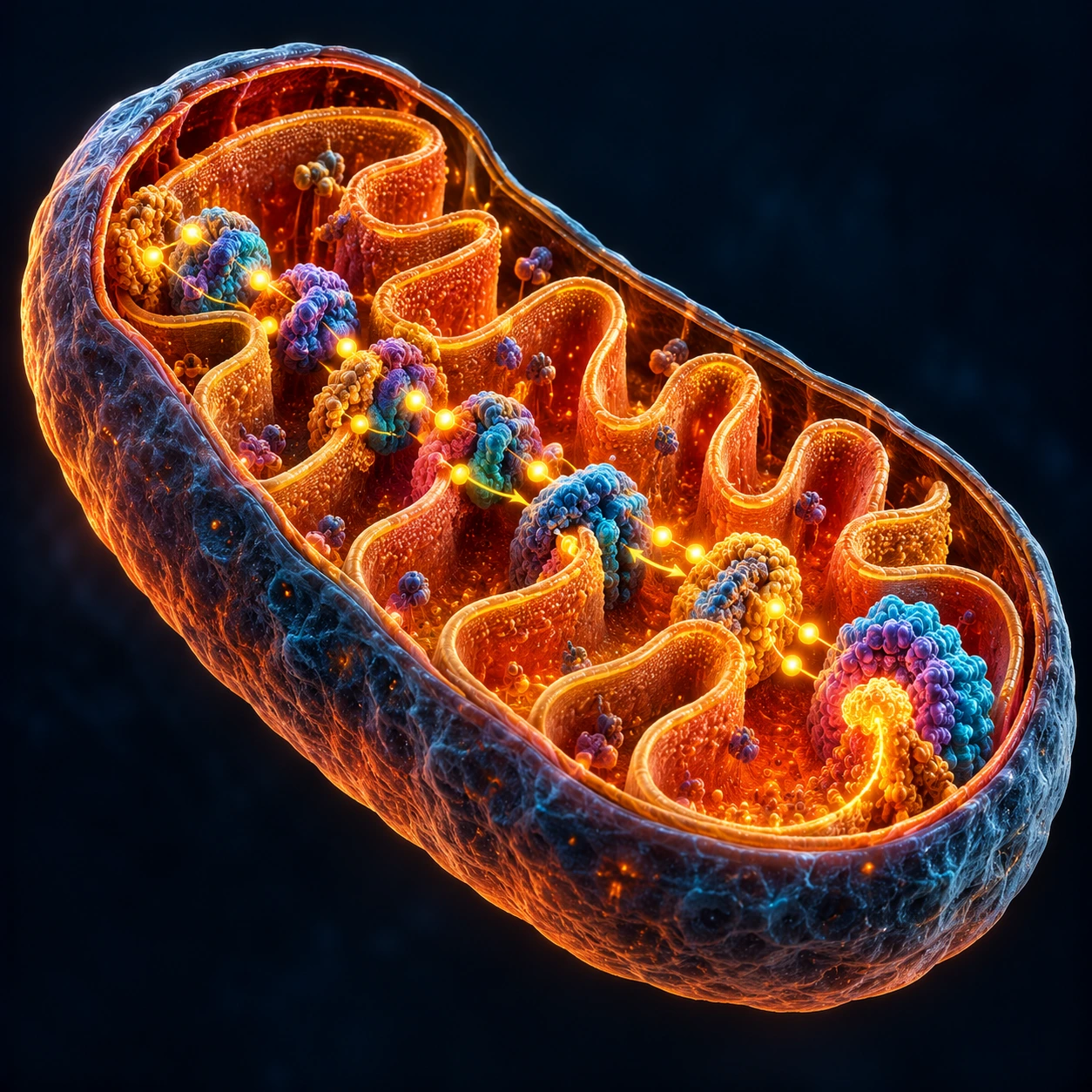
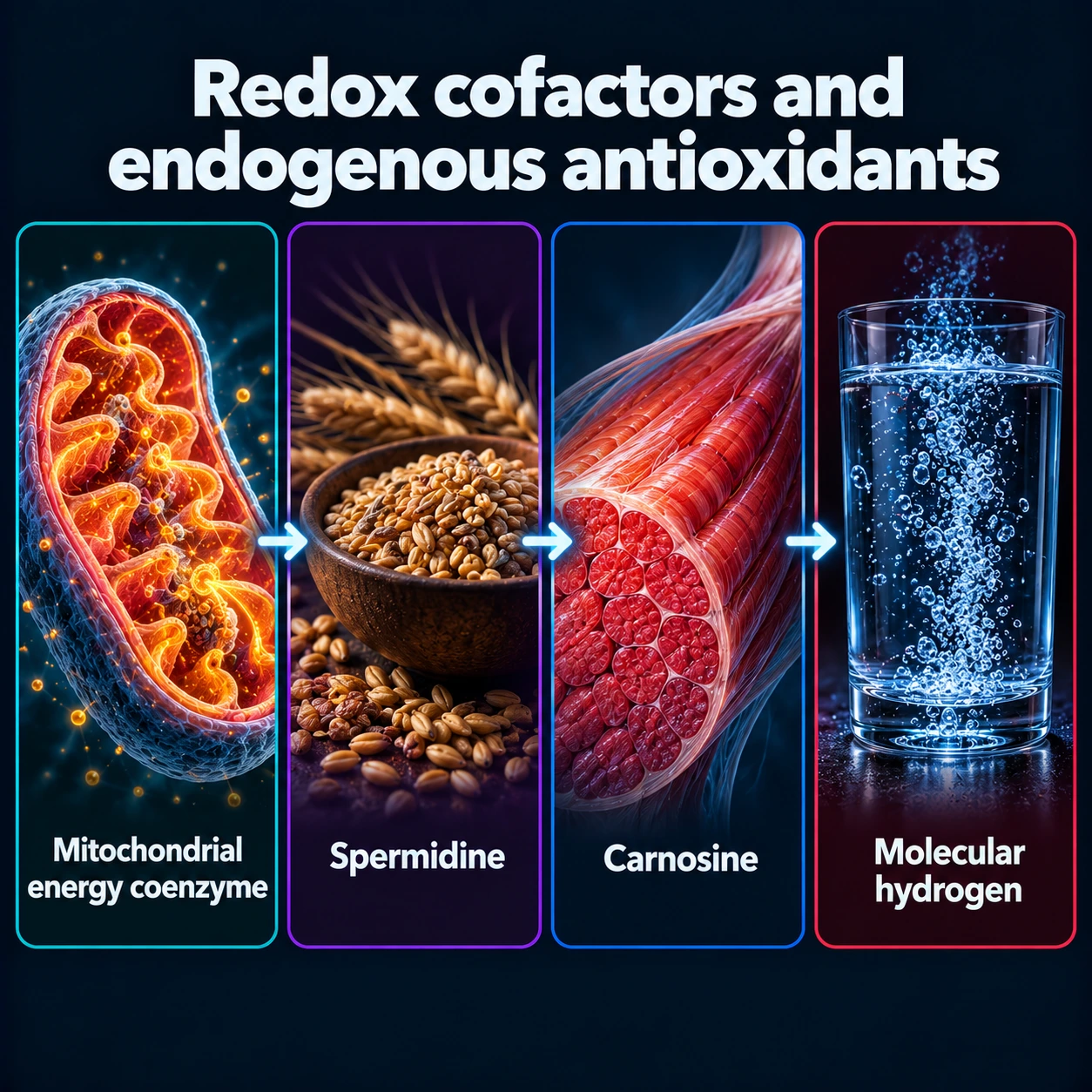
Mitochondrial energy coenzyme lowered by statins and by age, studied for heart failure, migraine and statin muscle pain; interacts with warfarin.
Read the deep dive →Nicotinamide Adenine Dinucleotide Nicotinamide Mononucleotide
A coenzyme in every cell that declines with age; nicotinamide mononucleotide (NMN), its precursor, is studied for energy metabolism and aging, with human trials still short.
Read the deep dive →Pyrroloquinoline Quinone
A durable quinone redox cofactor, studied for stimulating the growth of new mitochondria and for effects on cognition, sleep and mood.
Read the deep dive →Spermidine
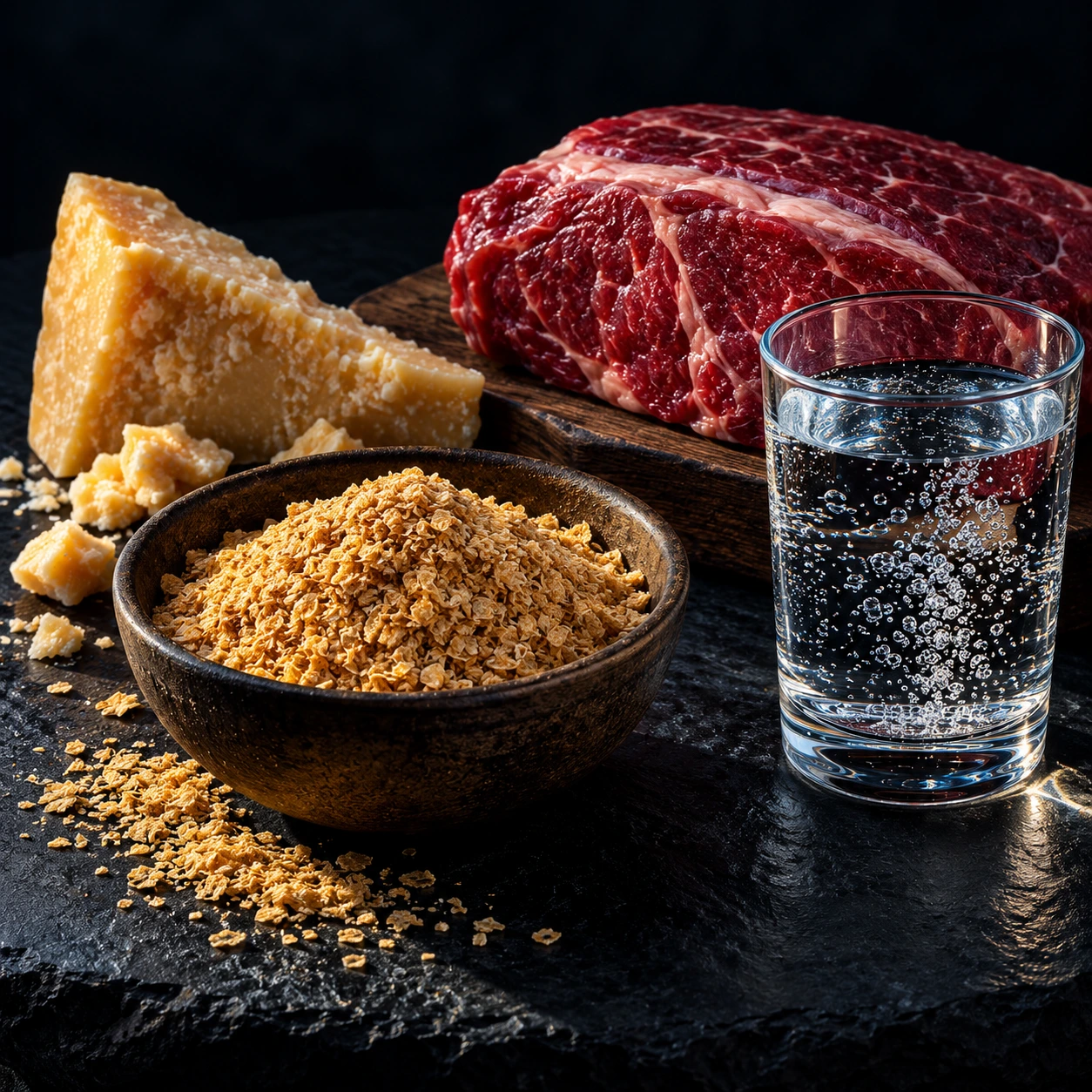
A polyamine found in wheat germ, aged cheese, natto and mushrooms, studied for autophagy and longevity, mostly in mice and population studies.
Read the deep dive →Carnosine
A dipeptide stored in muscle, heart and brain and eaten mainly in meat, studied for anti-glycation, muscle buffering and brain aging.
Read the deep dive →Molecular Hydrogen
Hydrogen gas dissolved in water or inhaled, studied in small trials for oxidative stress and exercise recovery; the evidence is still early and limited.
Read the deep dive →Prescription and over-the-counter drugs now have their own section: Pharmacology › Drugs.
Molecules the body makes or uses directly in electron transport, plus the endogenous antioxidants it synthesises itself. Because the body already makes them, the question on every page is whether supplementing raises what matters — which is not the same as raising a blood level.