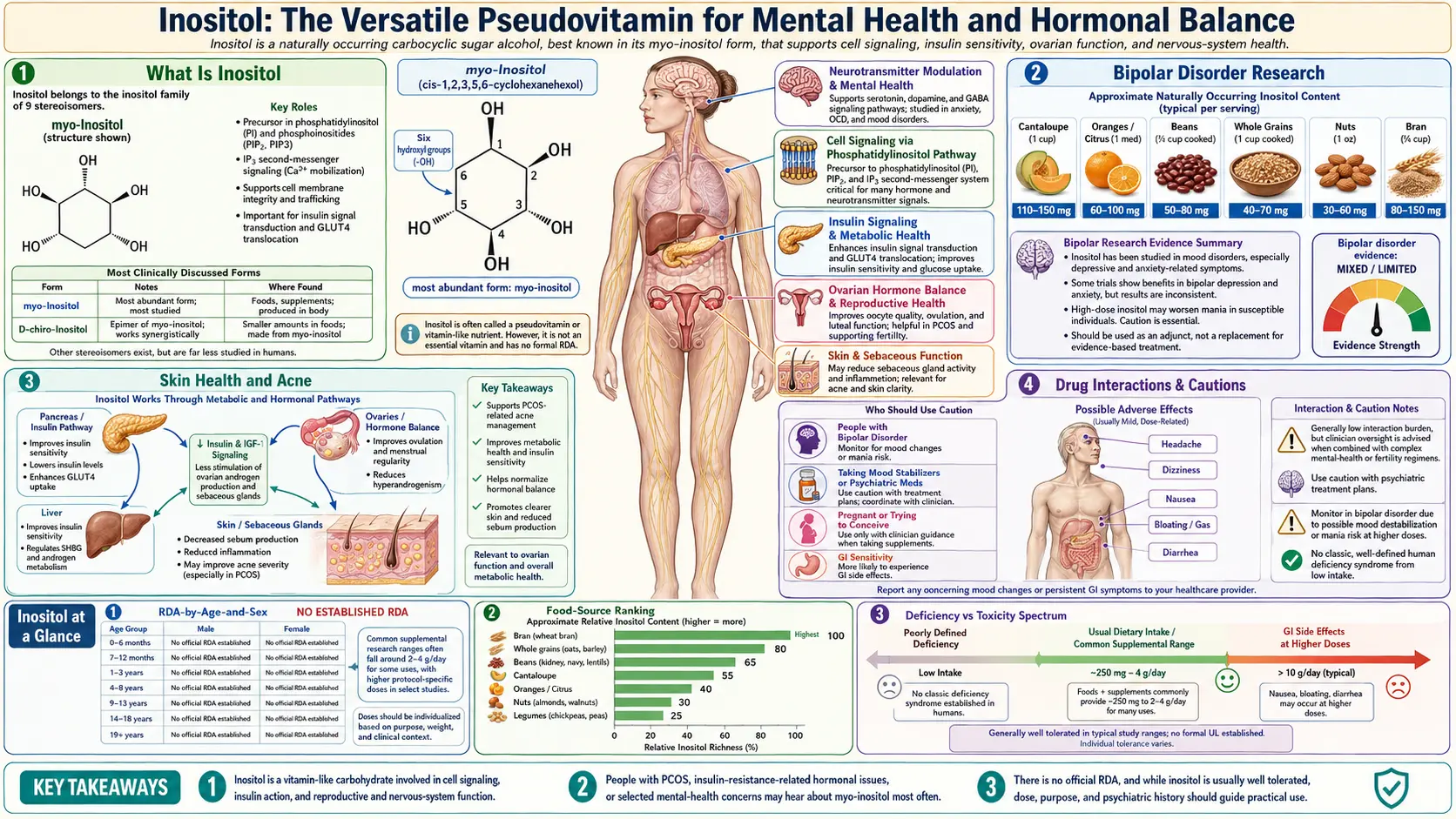
Inositol: The Versatile Pseudovitamin for Mental Health and Hormonal Balance

Inositol is a sugar alcohol that the body makes from glucose and also takes in from food. It was once grouped with the B vitamins, sometimes as vitamin B8, and lost that status when it became clear that the body makes its own. Myo-inositol, the main form, is part of the phosphoinositide signaling system that cells use to respond to insulin and to many hormones and neurotransmitters. As a supplement it has been studied in polycystic ovary syndrome (PCOS), gestational diabetes, metabolic syndrome, panic disorder, obsessive-compulsive disorder, depression and other conditions. The strength of the evidence differs widely between these uses: a 2023 Cochrane review rated the gestational-diabetes evidence low to very low certainty, the systematic review behind the 2023 International PCOS Guideline judged the PCOS evidence “limited and inconclusive,” a 2014 meta-analysis of the psychiatric trials found no statistically significant effect, and several inositol trials in PCOS and fertility have since been retracted or placed under an expression of concern. Side effects reported in the trials were mostly mild and gastrointestinal.
Research interest in inositol comes from its place in second-messenger signaling — the chemical relay that turns a hormone binding at the cell surface into a response inside the cell. Signaling by insulin, follicle-stimulating hormone (FSH), thyroid-stimulating hormone (TSH) and several serotonin receptor subtypes involves inositol-containing molecules, which is why researchers have tested it in such different conditions. For most of these uses, it has not been shown directly that extra inositol from a supplement changes these pathways in people.
Table of Contents
- What Is Inositol
- Cellular Signaling Role
- PCOS Research
- Anxiety and Panic Disorder
- OCD Research
- Depression Research
- Bipolar Disorder Research
- Sleep Quality
- Insulin Sensitivity and Blood Sugar
- Metabolic Syndrome
- Fertility (Male and Female)
- Gestational Diabetes Prevention
- Thyroid Function
- Skin Health and Acne
- Neuroprotective Properties
- The 40:1 Ratio (Myo-Inositol to D-Chiro-Inositol)
- Food Sources
- Doses Used in Trials
- Safety and Side Effects
- Drug Interactions
- Key Research Papers
- Connections
- Featured Videos
1. What Is Inositol
Inositol is a cyclohexanehexol — a six-carbon cyclic sugar alcohol with the molecular formula C6H12O6. It shares its molecular formula with glucose, but its ring structure and biological behavior are different. Inositol exists as nine stereoisomers, which differ in the spatial arrangement of the six hydroxyl groups around the ring. Two of them are the most studied as supplements: myo-inositol (MI) and D-chiro-inositol (DCI).
Myo-inositol is the most abundant form in the body. Reviews commonly cite a figure of about 2 grams per day made by each kidney from glucose-6-phosphate, through the enzyme inositol-1-phosphate synthase; no primary measurement of that figure was found in a verifiable abstract for this page. In a 1980 study that measured myo-inositol in 487 foods, diets built from the data supplied between 225 and 1,500 mg per day per 1,800 kcal (Clements 1980). In the body, an insulin-dependent epimerase enzyme converts myo-inositol to D-chiro-inositol, and the balance of the two forms differs between tissues (Larner 2002).
Inositol was first isolated from muscle tissue in 1850 by the German physician and chemist Johann Joseph Scherer. It was later counted among the B vitamins, sometimes as vitamin B8, on the strength of animal feeding studies. Once it was clear that the human body makes inositol, it lost its vitamin status, and it is now described as a vitamin-like compound or pseudovitamin. Some researchers have proposed that the body's own supply may fall short in insulin resistance and in some psychiatric and endocrine disorders; that idea, which has not been established, underlies the supplement research described below. The history is covered on the History page listed under Connections.
2. Cellular Signaling Role
Inositol's best-understood role is in intracellular signal transduction — the process by which cells translate external signals into internal biochemical responses. Myo-inositol is the structural backbone of phosphatidylinositol (PI), a phospholipid in cell membranes. Phosphatidylinositol and its phosphorylated derivatives, the phosphoinositides, are central to the phosphoinositide signaling pathway.
When a hormone or neurotransmitter binds to a G protein-coupled receptor (GPCR) on the cell surface, it can activate the enzyme phospholipase C (PLC). PLC cleaves phosphatidylinositol 4,5-bisphosphate (PIP2) into two second messengers: inositol 1,4,5-trisphosphate (IP3) and diacylglycerol (DAG). DAG stays in the membrane and activates protein kinase C (PKC), while IP3 diffuses into the cytoplasm and binds IP3 receptors on the endoplasmic reticulum, releasing calcium ions (Ca2+) from intracellular stores (Berridge 1984). The calcium signal takes part in muscle contraction, neurotransmitter release, gene expression, hormone secretion and cell division.
Inositol-containing molecules take part in signaling for serotonin (the 5-HT2A and 5-HT2C receptors work through IP3), insulin (through phosphoinositides and inositol phosphoglycans), follicle-stimulating hormone (FSH) and thyroid-stimulating hormone (TSH) (López-Gambero 2020; Nordio 2013). That breadth is the reason researchers have proposed that changes in inositol could matter for mood, endocrine, reproductive and metabolic conditions; it is a hypothesis rather than an established cause of any of them.
The inositol depletion hypothesis, set out by Berridge and colleagues in 1989 to explain how lithium works in bipolar disorder, proposes that lithium lowers the supply of free inositol in the brain and so damps overactive phosphoinositide signaling (Berridge 1989). The hypothesis led researchers to test inositol supplements in mood and anxiety disorders. It remains a hypothesis (see section 7).
3. PCOS Research
Polycystic ovary syndrome (PCOS) is a common hormonal condition in women of reproductive age, marked by irregular or absent ovulation, excess androgens (male hormones) and many small arrested follicles in the ovaries. Insulin resistance is common in it: in a study using the euglycaemic-hyperinsulinaemic clamp, insulin resistance was present in 75% of lean and 95% of overweight women with PCOS, compared with 62% of overweight women without PCOS (Stepto 2013). The usual description of the pathway is that high insulin stimulates ovarian androgen production, which disrupts follicle development and ovulation.
Myo-inositol has been studied in PCOS as an insulin sensitizer, usually at 2 to 4 grams a day with folic acid. A 2017 meta-analysis of nine randomized trials (247 women treated, 249 controls), two of whose five authors listed an affiliation with a company that markets inositol products, found significant decreases in fasting insulin and HOMA-IR (a measure of insulin resistance) with myo-inositol and a non-significant trend toward lower testosterone (Unfer 2017). Its included trials list a 2007 placebo-controlled trial that the journal retracted in 2023 because it duplicated the same group's 2003 paper (Gerli 2007). In a separate double-blind trial, 16 of 23 women on myo-inositol ovulated, against 4 of 19 on folic acid alone, and insulin and total testosterone fell (Costantino 2009).
A 2010 trial of 120 women reported that 65% of those on myo-inositol and 50% of those on metformin restored spontaneous ovulation (Raffone 2010); the journal placed that paper under an expression of concern in 2026. The systematic review prepared for the 2023 International Evidence-based PCOS Guideline (30 trials, 2,230 women) found evidence suggesting benefits for some metabolic measures and concluded that “the evidence supporting the use of inositol in the management of PCOS is limited and inconclusive” (Fitz 2024). The guideline states that inositol could be considered in PCOS, that specific types, doses or combinations cannot currently be recommended, and that for infertility it should be considered experimental therapy (Teede 2023). The 40:1 combination is discussed in section 16. The trials, the meta-analyses and the retracted papers are covered in the PCOS and Insulin Sensitivity deep-dive.
4. Anxiety and Panic Disorder
Inositol has been tested for anxiety disorders, mainly panic disorder. The 5-HT2A and 5-HT2C serotonin receptor subtypes signal through the phosphoinositide (IP3) system, and the research group that ran the early trials proposed that pharmacological doses of inositol act through this cycle. How extra inositol changes signaling in the human brain in panic disorder has not been shown directly.
In a double-blind, placebo-controlled crossover trial published in the American Journal of Psychiatry, 21 patients with panic disorder completed four weeks each of 12 grams of inositol daily and placebo; the frequency and severity of panic attacks and the severity of agoraphobia fell significantly more on inositol, and side effects were minimal (Benjamin 1995). In a crossover trial against fluvoxamine (a selective serotonin reuptake inhibitor, or SSRI), 20 patients completed one month each of inositol up to 18 g/day and fluvoxamine up to 150 mg/day; anxiety, agoraphobia and global ratings improved similarly, inositol reduced weekly panic attacks more in the first month (by a mean of 4.0 versus 2.4), and nausea and tiredness were more common on fluvoxamine (Palatnik 2001).
Both trials were small and short and came from the same research group in Beersheva, Israel; a 20-patient crossover trial is not designed to show that two treatments are equivalent, and no larger trial has been published. A 2014 meta-analysis that pooled four anxiety-disorder trials (70 patients) found no statistically significant effect of inositol on anxiety or obsessive-compulsive symptoms (Mukai 2014), and a 2022 international taskforce found no nutraceutical other than N-acetylcysteine with sufficient evidence in any anxiety-related disorder (Sarris 2022). The panic trials used 12 to 18 grams per day. The trials are covered in the Anxiety and Panic Disorder deep-dive.
5. OCD Research
SSRI antidepressants are a standard drug treatment for obsessive-compulsive disorder (OCD), and the research group behind the panic trials gave reports that inositol reverses desensitization of serotonin receptors as its reason for testing inositol in OCD (Levine 1997).
In a double-blind crossover trial, 13 patients with OCD took 18 grams of inositol daily or placebo for six weeks each, and scores on the Yale-Brown Obsessive Compulsive Scale (Y-BOCS) were significantly lower on inositol (Fux 1996). A follow-up trial by the same group added 18 g/day of inositol or placebo to ongoing SSRI treatment in 10 patients for six weeks each and found no significant difference (Fux 1999).
The OCD evidence rests on these two small trials. The 2014 meta-analysis found no statistically significant effect of inositol on obsessive-compulsive symptoms (Mukai 2014), and a 2011 review of nutraceuticals in OCD described the clinical evidence for myo-inositol as tentative and called for larger placebo-controlled trials (Camfield 2011).
6. Depression Research
The rationale for testing inositol in depression rests on the same phosphoinositide signaling model, and on reports that inositol in the cerebrospinal fluid is low in depression (Levine 1997).
In a double-blind trial, 28 depressed patients took 12 g/day of inositol or placebo for four weeks, and inositol showed a significant overall benefit on the Hamilton Depression Scale at week four (Levine 1995); the trial had no active antidepressant comparator. Later trials that added inositol to SSRI treatment found no added benefit, a 2004 Cochrane review of four short trials (141 participants) found no clear evidence of benefit (Taylor 2004), and a 2014 meta-analysis of seven depression trials (242 patients) found no statistically significant effect on depressive symptoms, with a non-significant trend in premenstrual dysphoric disorder (Mukai 2014).
Some researchers have proposed that inositol might matter more in particular subgroups of depression; this has not been tested in large trials. In a magnetic resonance spectroscopy (MRS) study, 13 unmedicated adults with major depression had lower myo-inositol in the prefrontal/anterior cingulate cortex than 13 matched controls (Coupland 2005). The trials are covered in the Bipolar Disorder and Depression deep-dive.
7. Bipolar Disorder Research
The inositol depletion hypothesis of lithium action, set out by Berridge and colleagues in 1989, proposes that lithium works in bipolar disorder partly by inhibiting the enzyme inositol monophosphatase, lowering free inositol and damping overactive phosphoinositide signaling (Berridge 1989). A 1996 review by the Belmaker group opened with “How lithium works in manic-depressive illness is unknown” (Belmaker 1996).
Magnetic resonance spectroscopy (MRS) has been used to test the hypothesis in people. In 12 depressed patients with bipolar disorder, lithium lowered right frontal myo-inositol by about 30% within 5 to 7 days, before any change in clinical state; the authors concluded that the short-term reduction “is not associated with therapeutic response and does not support the inositol depletion hypothesis as originally posited” (Moore 1999).
Inositol has been tested as an add-on to mood stabilizers in small trials. In the STEP-BD trial, 66 patients with treatment-resistant bipolar depression received open-label add-on lamotrigine, inositol or risperidone for up to 16 weeks; recovery rates were 23.8%, 17.4% and 4.6%, with no significant difference between any pair on the primary outcome, and post hoc analyses favored lamotrigine (Nierenberg 2006). In a 17-patient placebo-controlled add-on trial, “on average, inositol was not more effective than placebo as an adjunct for bipolar depression” (Eden Evins 2006). The safety concern is mania: a 1996 case-report letter raised the possibility that inositol can trigger mania (Levine 1996), and large doses of inositol reversed behavioral effects of lithium in animals and side effects of lithium in people (Benjamin 1995b). The research raises these concerns for people with bipolar disorder in particular.
8. Sleep Quality
No trial of inositol for sleep was found among the sources for this page. The link rests on brain imaging: in 40 young people with depression, myo-inositol in the anterior cingulate cortex was lower than in healthy controls, and within the depression group a later evening melatonin onset correlated with lower myo-inositol (Robillard 2017).
That study measured an association, not a treatment effect; whether taking inositol changes melatonin timing or sleep was not tested.
Proposed links run through serotonin signaling (serotonin is the precursor of melatonin) and through the reduction in anxiety reported in the small panic trials. Descriptions of inositol as mildly sedating, or as a sleep aid for anxiety-driven insomnia, come from anecdote rather than from trials.
9. Insulin Sensitivity and Blood Sugar
Both myo-inositol and D-chiro-inositol occur in inositol phosphoglycans, molecules proposed as mediators of insulin action inside cells (López-Gambero 2020). In the usual description, myo-inositol is linked mainly to glucose uptake and D-chiro-inositol to glycogen synthesis, the storage of glucose in the liver and muscles (Larner 2002).
In insulin resistance, the conversion of myo-inositol to D-chiro-inositol by the insulin-dependent epimerase is described as impaired; a review describes a defect in this conversion in insulin-sensitive tissues of a type 2 diabetic rat model (Larner 2002). A related hypothesis holds that the ovary, which stays sensitive to insulin, may instead build up D-chiro-inositol: in a 2014 study of follicular fluid, the myo-inositol to D-chiro-inositol ratio was 100:1 in 20 healthy women and 0.2:1 in 20 women with PCOS, who also had more insulin resistance (Unfer 2014).
Evidence in type 2 diabetes is limited. In a three-month pilot study without a control group, people with poorly controlled type 2 diabetes took myo-inositol 550 mg plus D-chiro-inositol 13.8 mg twice a day in addition to their glucose-lowering drugs; fasting blood glucose and HbA1c (8.6% to 7.7%) fell significantly compared with baseline, blood pressure, lipids and BMI did not change, and no participant reported side effects (Pintaudi 2016). The trials in PCOS and metabolic syndrome described on this page used 2 to 4 grams of myo-inositol a day for three to twelve months.
10. Metabolic Syndrome
Metabolic syndrome — the cluster of central obesity, raised blood pressure, high triglycerides, low HDL cholesterol and impaired fasting glucose — raises the risk of cardiovascular disease and type 2 diabetes. Because insulin resistance is central to it, researchers have tested inositol in it.
In a placebo-controlled trial of 80 postmenopausal women with metabolic syndrome, all on a diet, myo-inositol 2 grams twice daily for six months lowered diastolic blood pressure (by 11%), the HOMA index (75%) and triglycerides (20%) and raised HDL cholesterol (22%) (Giordano 2011). In the 12-month report, every measured parameter except BMI and waist circumference improved significantly more than with placebo, and at the end 8 of 40 women on myo-inositol no longer had metabolic syndrome, against 1 on placebo (Santamaria 2012).
Metabolic syndrome is usually managed with lifestyle change and, where needed, medicines for blood pressure, lipids and blood glucose. The inositol evidence comes from one research group's trial in postmenopausal women; whether inositol delays type 2 diabetes or cardiovascular disease has not been tested in the studies cited here.
11. Fertility (Male and Female)
In reproductive medicine, most inositol research is in women with PCOS, including women undergoing in vitro fertilization (IVF). Myo-inositol is described as part of FSH signaling in the ovary. A 2018 Cochrane review of 13 trials (1,472 subfertile women with PCOS, mostly myo-inositol before IVF) rated the evidence low to very low quality and concluded that it is uncertain whether myo-inositol improves live birth or clinical pregnancy rates (Showell 2018). The 2023 guideline calls inositol experimental therapy for infertility in PCOS (Teede 2023). Several IVF trials of inositol have been retracted, among them a 2009 trial that reported better oocyte quality with myo-inositol (Papaleo 2009, retracted in 2025); the others are listed in the PCOS deep-dive.
Doses and timing varied between the IVF trials. In one trial in women with PCOS undergoing IVF, a combination of myo-inositol 1.1 g with D-chiro-inositol 27.6 mg was compared with D-chiro-inositol alone (500 mg); the authors reported better oocyte and embryo quality and pregnancy rates only with the combination (Colazingari 2013). The concern about high D-chiro-inositol in the ovary is described in section 16. The Fertility and Egg Quality page covers this research in more detail.
In men, a 2024 systematic review and meta-analysis of 16 studies found that myo-inositol was associated with higher total and progressive sperm motility and higher testosterone in men with oligo-astheno-teratozoospermia, and with fewer sperm showing DNA fragmentation, a result with high heterogeneity between studies (Ghaemi 2024). The proposed mechanism is inositol's role in calcium signaling in sperm. The authors described the data as controversial before their analysis, and large trials have not been reported in the sources cited here.
12. Gestational Diabetes Prevention
Gestational diabetes mellitus (GDM) is diabetes first recognized in pregnancy, and it is linked to risks for both mother and child, including a large baby, high blood pressure in pregnancy and later type 2 diabetes. Because myo-inositol is studied as an insulin sensitizer, it has been tested for preventing it.
A 2023 Cochrane review of seven randomized trials (1,319 women; six in Italy, one in Ireland) found that myo-inositol may reduce gestational diabetes (risk ratio 0.53), hypertensive disorders of pregnancy (risk ratio 0.34) and preterm birth (risk ratio 0.35), with low to very low certainty of evidence; it found no clear difference in neonatal hypoglycaemia or caesarean section, and noted that doses, timing and study populations were inconsistent between trials (Motuhifonua 2023). In one of the larger trials, 220 obese pregnant women took myo-inositol 2 g plus folic acid 200 micrograms twice a day, or folic acid alone, from the first trimester to delivery; gestational diabetes occurred in 14.0% against 33.6% (D'Anna 2015). A separate 2023 meta-analysis on the same question was retracted by its journal (Bertrand 2023).
The Cochrane reviewers noted that the trials were too small to detect differences in outcomes such as perinatal death or serious infant illness, and asked that future trials measure harms, including adverse effects (Motuhifonua 2023). Separately, inositol is being studied for neural tube defects that folic acid does not prevent. It reduced spinal neural tube defects in curly tail mice, a genetic model of folate-resistant defects (Greene 1997, an animal study). In a pilot trial in women with a previous affected pregnancy, 33 randomized pregnancies produced one recurrence in the folic acid plus placebo group (19 pregnancies) and none in the folic acid plus inositol group (14), with no adverse pregnancy events linked to inositol; the authors called for a large trial (Greene 2016).
13. Thyroid Function
Myo-inositol is described as a second messenger for thyroid-stimulating hormone (TSH) in the thyroid gland: when TSH binds its receptor on thyroid cells, part of the downstream signal uses the phosphoinositide pathway described in section 2 (Nordio 2013). Researchers have proposed from this that the thyroid's response to TSH depends partly on inositol.
The clinical research has tested myo-inositol with selenium in Hashimoto's thyroiditis. A 2013 double-blind randomized trial in women with subclinical hypothyroidism and high thyroglobulin antibodies reported that adding myo-inositol to selenomethionine lowered TSH further than selenomethionine alone (Nordio 2013). In a 2017 study in which all 86 patients with Hashimoto's thyroiditis and TSH between 3 and 6 mIU/L received myo-inositol plus selenium, TSH, thyroid peroxidase antibodies (TPOAb) and thyroglobulin antibodies (TgAb) fell and free T3 and T4 rose after six months (Nordio 2017). Both studies share a lead author.
A 2026 meta-analysis of three studies (288 patients) found that the combination lowered TSH and TgAb more than selenium alone, with no significant differences in T3, T4 or TPOAb; the authors wrote that the small number of studies calls for caution and that large randomized trials are needed (Stanchev 2026). Whether the combination delays or reduces the need for levothyroxine has not been tested in these studies.
14. Skin Health and Acne
Hormonal acne and hirsutism (excess facial and body hair) are common features of hyperandrogenism in PCOS. High insulin is described as raising ovarian and adrenal androgen production, and androgens increase sebum production. Because inositol is studied as an insulin sensitizer, researchers have tested it for these skin features in PCOS.
In a study of 50 women with PCOS who took myo-inositol for six months, compared with their own baseline values, LH, testosterone, free testosterone, insulin and the HOMA index fell after three months, and hirsutism and acne decreased after six months (Zacchè 2009). A 2008 study of myo-inositol for hirsutism was retracted in 2025 (Minozzi 2008).
Standard drug treatments for androgen-related acne and hirsutism include combined oral contraceptives, spironolactone and isotretinoin; inositol has not been compared with them in the studies cited here. Acne has many causes, and the inositol studies concern acne linked to PCOS.
15. Neuroprotective Properties
Inositol and its derivatives are being investigated for Alzheimer's disease and age-related cognitive decline. In the brain, the balance of inositols inside and outside cells is involved in regulating neuronal and glial activity (López-Gambero 2020).
Two stereoisomers, scyllo-inositol and epi-inositol, can stabilize non-toxic forms of amyloid-beta protein, the protein that forms plaques in Alzheimer's disease (López-Gambero 2020). In a transgenic mouse model of Alzheimer's disease, oral cyclohexanehexol stereoisomers reduced amyloid-beta aggregation and improved impaired cognition, synaptic physiology, amyloid pathology and accelerated mortality, whether given before or after the disease-like changes began (McLaurin 2006, an animal study). In people, a phase 2 trial of scyllo-inositol in 353 patients with mild to moderate Alzheimer's disease found no significant difference from placebo on its primary outcomes at 78 weeks, and the two higher doses were stopped early after an imbalance of infections and deaths (Salloway 2011). In a small crossover trial of 6 g/day of inositol against glucose for one month each in 11 patients, overall cognitive scores showed a non-significant trend, while language and orientation improved significantly more on inositol (Barak 1996); the research group's own summary described no clearly significant therapeutic effect (Levine 1997).
Myo-inositol measured by magnetic resonance spectroscopy (MRS) is used as a marker of glial cells in brain-imaging research (Robillard 2017). D-pinitol, a methylated form of D-chiro-inositol found in carob, improved cognition and lowered amyloid-beta and tau in a mouse model of Alzheimer's disease at 200 mg/kg a day (Medina-Vera 2024, an animal study; one author declared employment at a nutraceutical company). Human trials of these compounds for preventing dementia have not been reported in the sources cited here.
16. The 40:1 Ratio (Myo-Inositol to D-Chiro-Inositol)
The combination of myo-inositol and D-chiro-inositol in a 40:1 ratio is described by its proponents as the “physiological plasma ratio” (Nordio 2012; Nordio 2019). No primary study establishing 40:1 as the normal plasma ratio was found in a verifiable abstract for this page. In ovarian follicular fluid, the ratio was 100:1 in 20 healthy women and 0.2:1 in 20 women with PCOS (Unfer 2014).
The concern behind the combination is that high doses of D-chiro-inositol may harm the ovary. A 2020 review describes D-chiro-inositol as an aromatase inhibitor that increases androgens, reports that its reproductive benefit is lost as the dose rises, and notes that D-chiro-inositol competes with myo-inositol for the same intestinal transporter (Roseff 2020). In mice, high doses of D-chiro-inositol alone induced a PCO-like syndrome (Bevilacqua 2021, an animal study).
The trials behind the ratio are small. In a 2012 trial, 50 overweight women with PCOS took the combination or myo-inositol alone for six months; both groups improved and no significant difference was found between them at the end, though the authors reported a faster effect with the combination at three months (Nordio 2012). In a 2019 trial by the same lead author, 56 women (8 per group) took D-chiro-inositol alone or one of six myo-inositol to D-chiro-inositol ratios for three months, and the authors reported 40:1 as the most effective for restoring ovulation (Nordio 2019). The 2023 International PCOS Guideline states that specific types, doses or combinations of inositol cannot currently be recommended (Teede 2023).
17. Food Sources
In a 1980 study that measured myo-inositol in 487 foods, the greatest amounts were in fruits, beans, grains and nuts, and fresh vegetables and fruits contained more than frozen, canned or salt-free products; diets built from these data supplied between 225 and 1,500 mg per day per 1,800 kcal (Clements 1980). The body also makes its own inositol (section 1).
Lists of rich sources commonly name citrus fruits, cantaloupe, whole-grain breads, beans and nuts such as almonds; the 1980 study's per-food values are given in its full text and are not repeated here.
Other foods often listed include oats, brown rice, corn, sesame seeds, wheat bran, lima beans, navy beans, peas, peaches, pears and berries. Whole grains and legumes also contain phytic acid (inositol hexaphosphate), a phosphorylated form of inositol. The supplement trials described on this page used gram-level doses — 2 g twice daily in many metabolic and pregnancy trials and 12 to 18 g a day in the psychiatric trials — above the dietary range measured in the 1980 study.
18. Doses Used in Trials
There is no recommended daily allowance (RDA) for inositol, because it is not classified as an essential nutrient. Doses reported in the trials: in PCOS, myo-inositol 2 g a day with folic acid 200 micrograms for 12 weeks (Genazzani 2008) or 4 g a day with folic acid 400 micrograms (Raffone 2010, under an expression of concern), and the 40:1 combination at 2 g of inositols twice a day (Nordio 2019); in metabolic syndrome, myo-inositol 2 g twice daily for six to twelve months (Giordano 2011; Santamaria 2012); in gestational diabetes prevention, 2 g plus folic acid 200 micrograms twice a day from the first trimester (D'Anna 2015), with doses and timing varying between trials (Motuhifonua 2023). The 2023 PCOS guideline states that specific types, doses or combinations cannot currently be recommended (Teede 2023).
The psychiatric trials used much higher doses: 12 g a day for four weeks in depression and panic disorder (Levine 1995; Benjamin 1995), up to 18 g a day in the fluvoxamine comparison (Palatnik 2001), and 18 g a day for six weeks in OCD (Fux 1996). The trial abstracts do not describe the form used.
The trial reports cited here do not set out a standard timing; the PCOS, metabolic and pregnancy trials gave the dose twice daily. The psychiatric trials lasted four to six weeks and the metabolic and PCOS trials three to twelve months; in the 2012 PCOS trial the combination group improved faster at three months, with no difference at six (Nordio 2012).
19. Safety and Side Effects
A 2011 review of non-clinical and clinical safety data found that only the highest dose studied, 12 g a day, caused mild gastrointestinal side effects such as nausea, flatus and diarrhea, and that their severity did not increase with dose (Carlomagno 2011). The 2014 meta-analysis of the psychiatric trials found marginally more gastrointestinal upset than placebo (p = 0.06) (Mukai 2014). The panic trial reported minimal side effects (Benjamin 1995), and the depression trial found no changes in blood counts or kidney or liver function (Levine 1997).
In the head-to-head panic trial, nausea and tiredness were more common on fluvoxamine than on inositol (Palatnik 2001); the trial abstracts do not report on sexual side effects, weight or withdrawal. The trials cited here lasted from four weeks to twelve months.
In pregnancy, the Cochrane review found the trials too small to detect differences in serious outcomes and asked that future trials include harms (Motuhifonua 2023); the 2023 PCOS guideline states that side effects and safety are not known for inositol in the infertility setting (Teede 2023); and the neural-tube pilot trial reported no adverse pregnancy events linked to inositol (Greene 2016). Data in children are limited: in small crossover trials, inositol at 200 mg/kg a day showed a trend toward worsening in 11 children with attention-deficit hyperactivity disorder and no benefit in 9 children with autism (Levine 1997). The kidneys are a main site of inositol production and breakdown, and plasma myo-inositol is raised in kidney failure (Clements 1973); no inositol supplement trials in kidney disease were found among the sources for this page.
20. Drug Interactions
Diabetes medicines. Because inositol is studied as an insulin sensitizer, an additive effect with insulin or other glucose-lowering drugs, including the risk of hypoglycemia (low blood sugar), is a theoretical concern. In the three-month type 2 diabetes pilot study, inositol was added to glucose-lowering drugs and no participant reported side effects (Pintaudi 2016); the study was small and had no control group.
Lithium. Lithium is thought to work partly by depleting brain inositol, and large doses of inositol reversed behavioral effects of lithium in animals and side effects of lithium in people (Benjamin 1995b). That raises a concern that high-dose inositol could counteract lithium. In small add-on trials in bipolar depression, inositol was given with lithium or valproate: mood-stabilizer blood levels did not change (Chengappa 2000), and average mania ratings did not differ from placebo (Eden Evins 2006). Those trials were short and were not designed to test whether inositol weakens lithium's protection against relapse.
Antidepressants, thyroid medicines and oral contraceptives. Trials that added inositol to SSRIs in OCD and depression found no added benefit (Fux 1999; see the Bipolar Disorder and Depression deep-dive), and their abstracts do not report interaction harms. The thyroid studies above report changes in TSH with myo-inositol and selenium (Nordio 2013; Nordio 2017). Interaction studies with levothyroxine or with oral contraceptives were not found among the sources for this page. Decisions about combining supplements with prescription medicines belong with a clinician.
Key Research Papers
- Unfer, V., et al. "Myo-inositol effects in women with PCOS: a meta-analysis of randomized controlled trials." Endocrine Connections, vol. 6, no. 8, 2017, pp. 647-658. — doi:10.1530/EC-17-0243
- Fitz, V., et al. "Inositol for Polycystic Ovary Syndrome: A Systematic Review and Meta-analysis to Inform the 2023 Update of the International Evidence-based PCOS Guidelines." Journal of Clinical Endocrinology and Metabolism, vol. 109, no. 6, 2024, pp. 1630-1655. — doi:10.1210/clinem/dgad762
- Benjamin, J., et al. "Double-blind, placebo-controlled, crossover trial of inositol treatment for panic disorder." American Journal of Psychiatry, vol. 152, no. 7, 1995, pp. 1084-1086. — doi:10.1176/ajp.152.7.1084
- Palatnik, A., et al. "Double-blind, controlled, crossover trial of inositol versus fluvoxamine for the treatment of panic disorder." Journal of Clinical Psychopharmacology, vol. 21, no. 3, 2001, pp. 335-339. — doi:10.1097/00004714-200106000-00014
- Fux, M., et al. "Inositol treatment of obsessive-compulsive disorder." American Journal of Psychiatry, vol. 153, no. 9, 1996, pp. 1219-1221. — doi:10.1176/ajp.153.9.1219
- Levine, J. "Controlled trials of inositol in psychiatry." European Neuropsychopharmacology, vol. 7, no. 2, 1997, pp. 147-155. — doi:10.1016/S0924-977X(97)00409-4
- Mukai, T., et al. "A meta-analysis of inositol for depression and anxiety disorders." Human Psychopharmacology: Clinical and Experimental, vol. 29, no. 1, 2014, pp. 55-63. — doi:10.1002/hup.2369
- Nordio, M., and Proietti, E. "The combined therapy with myo-inositol and D-chiro-inositol reduces the risk of metabolic disease in PCOS overweight patients compared to myo-inositol supplementation alone." European Review for Medical and Pharmacological Sciences, vol. 16, no. 5, 2012, pp. 575-581. — PubMed PMID: 22774396
- Colazingari, S., et al. "The combined therapy myo-inositol plus D-chiro-inositol, rather than D-chiro-inositol, is able to improve IVF outcomes." Archives of Gynecology and Obstetrics, vol. 288, no. 6, 2013, pp. 1405-1411. — doi:10.1007/s00404-013-2855-3
- D'Anna, R., et al. "Myo-inositol supplementation for prevention of gestational diabetes in obese pregnant women." Obstetrics and Gynecology, vol. 126, no. 2, 2015, pp. 310-315. — doi:10.1097/AOG.0000000000000958
- Celentano, C., et al. "Myo-inositol supplementation to prevent gestational diabetes mellitus." Current Diabetes Reports, vol. 16, no. 3, 2016, p. 30. — doi:10.1007/s11892-016-0726-6
- Nordio, M., and Basciani, S. "Treatment with myo-inositol and selenium ensures euthyroidism in patients with autoimmune thyroiditis." International Journal of Endocrinology, 2017, Article ID 2549491. — doi:10.1155/2017/2549491
- Nordio, M., and Pajalich, R. "Combined treatment with myo-inositol and selenium ensures euthyroidism in subclinical hypothyroidism patients with autoimmune thyroiditis." Journal of Thyroid Research, 2013, Article ID 424163. — doi:10.1155/2013/424163
- Ghaemi, M., et al. "The effect of myo-inositol on improving sperm quality and IVF outcomes: A systematic review and meta-analysis." Food Science and Nutrition, vol. 12, no. 11, 2024, pp. 8515-8524. — doi:10.1002/fsn3.4427
- Berridge, M.J., and Irvine, R.F. "Inositol trisphosphate, a novel second messenger in cellular signal transduction." Nature, vol. 312, 1984, pp. 315-321. — doi:10.1038/312315a0
- McLaurin, J., et al. "Cyclohexanehexol inhibitors of Abeta aggregation prevent and reverse Alzheimer phenotype in a mouse model." Nature Medicine, vol. 12, 2006, pp. 801-808. — doi:10.1038/nm1423
- Bizzarri, M., and Carlomagno, G. "Inositol: history of an effective therapy for Polycystic Ovary Syndrome." European Review for Medical and Pharmacological Sciences, vol. 18, no. 13, 2014, pp. 1896-1903. — PubMed PMID: 25010620
- López-Gambero, A.J., et al. "The Biomedical Uses of Inositols: A Nutraceutical Approach to Metabolic Dysfunction in Aging and Neurodegenerative Diseases." Biomedicines, vol. 8, no. 9, 2020, p. 295. — doi:10.3390/biomedicines8090295
- DiNicolantonio, J.J., and O'Keefe, J.H. "Myo-inositol for insulin resistance, metabolic syndrome, polycystic ovary syndrome and gestational diabetes." Open Heart, vol. 9, no. 1, 2022, e001989 (editorial; the authors declare affiliations with companies that sell myo-inositol or supplements). — PubMed PMID: 35236761
- Costantino, D., et al. "Metabolic and hormonal effects of myo-inositol in women with polycystic ovary syndrome: a double-blind trial." European Review for Medical and Pharmacological Sciences, vol. 13, no. 2, 2009, pp. 105-110. — PubMed PMID: 19499845
- Teede HJ, Tay CT, Laven J, Dokras A, Moran LJ, Piltonen TT, et al. (2023). Recommendations from the 2023 International Evidence-based Guideline for the Assessment and Management of Polycystic Ovary Syndrome. Human Reproduction, 38(9), 1655-1679. — PubMed PMID: 37580037
- Showell MG, Mackenzie-Proctor R, Jordan V, Hodgson R, Farquhar C. (2018). Inositol for subfertile women with polycystic ovary syndrome. Cochrane Database of Systematic Reviews, 12(12), CD012378. — PubMed PMID: 30570133
- Motuhifonua SK, Lin L, Alsweiler J, Crawford TJ, Crowther CA. (2023). Antenatal dietary supplementation with myo-inositol for preventing gestational diabetes. Cochrane Database of Systematic Reviews, 2(2), CD011507. — PubMed PMID: 36790138
- Stepto NK, Cassar S, Joham AE, Hutchison SK, Harrison CL, Goldstein RF, et al. (2013). Women with polycystic ovary syndrome have intrinsic insulin resistance on euglycaemic-hyperinsulaemic clamp. Human Reproduction, 28(3), 777-84. — PubMed PMID: 23315061
- Raffone E, Rizzo P, Benedetto V. (2010). Insulin sensitiser agents alone and in co-treatment with r-FSH for ovulation induction in PCOS women. Gynecological Endocrinology, 26(4), 275-80. — PubMed PMID: 20222840 — Expression of concern (notice: PubMed PMID: 42304764)
- Gerli S, Papaleo E, Ferrari A, Di Renzo GC. (2007). Randomized, double blind placebo-controlled trial: effects of myo-inositol on ovarian function and metabolic factors in women with PCOS. European Review for Medical and Pharmacological Sciences, 11(5), 347-54. — PubMed PMID: 18074942 — Retracted (retraction notice: PubMed PMID: 37782148)
- Papaleo E, Unfer V, Baillargeon JP, Fusi F, Occhi F, De Santis L. (2009). Myo-inositol may improve oocyte quality in intracytoplasmic sperm injection cycles. A prospective, controlled, randomized trial. Fertility and Sterility, 91(5), 1750-1754. — PubMed PMID: 18462730 — Retracted (retraction notice: PubMed PMID: 39971415)
- Minozzi M, D'Andrea G, Unfer V. (2008). Treatment of hirsutism with myo-inositol: a prospective clinical study. Reproductive BioMedicine Online, 17(4), 579-82. — PubMed PMID: 18854115 — Retracted (retraction notice: PubMed PMID: 41206152)
- Bertrand A, Gallot D, Pereira B, Delabaere A. (2023). Myoinositol supplementation for the prevention of gestational diabetes in at-risk patients. Systematic review and meta-analysis. Current Research in Pharmacology and Drug Discovery, 4, 100140. — PubMed PMID: 36573918 — Retracted (retraction notice: PubMed PMID: 37502741)
- Unfer V, Carlomagno G, Papaleo E, Vailati S, Candiani M, Baillargeon JP. (2014). Hyperinsulinemia alters myoinositol to d-chiroinositol ratio in the follicular fluid of patients with PCOS. Reproductive Sciences, 21(7), 854-858. — PubMed PMID: 24501149
- Nordio M, Basciani S, Camajani E. (2019). The 40:1 myo-inositol/D-chiro-inositol plasma ratio is able to restore ovulation in PCOS patients: comparison with other ratios. European Review for Medical and Pharmacological Sciences, 23(12), 5512-5521. — PubMed PMID: 31298405
- Roseff S, Montenegro M. (2020). Inositol treatment for PCOS should be science-based and not arbitrary. International Journal of Endocrinology, 2020, 6461254. — PubMed PMID: 32308679
- Bevilacqua A, Dragotto J, Lucarelli M, Di Emidio G, Monastra G, Tatone C. (2021). High doses of D-chiro-inositol alone induce a PCO-like syndrome and other alterations in mouse ovaries. International Journal of Molecular Sciences, 22(11). — PubMed PMID: 34073634 — Animal (mouse) study.
- Genazzani AD, Lanzoni C, Ricchieri F, Jasonni VM. (2008). Myo-inositol administration positively affects hyperinsulinemia and hormonal parameters in overweight patients with polycystic ovary syndrome. Gynecological Endocrinology, 24(3), 139-44. — PubMed PMID: 18335328
- Larner J. (2002). D-chiro-inositol--its functional role in insulin action and its deficit in insulin resistance. International Journal of Experimental Diabetes Research, 3(1), 47-60. — PubMed PMID: 11900279
- Pintaudi B, Di Vieste G, Bonomo M. (2016). The effectiveness of myo-inositol and D-chiro inositol treatment in type 2 diabetes. International Journal of Endocrinology, 2016, 9132052. — PubMed PMID: 27807448
- Giordano D, Corrado F, Santamaria A, Quattrone S, Pintaudi B, Di Benedetto A, D'Anna R. (2011). Effects of myo-inositol supplementation in postmenopausal women with metabolic syndrome: a perspective, randomized, placebo-controlled study. Menopause, 18(1), 102-4. — PubMed PMID: 20811299
- Santamaria A, Giordano D, Corrado F, Pintaudi B, Interdonato ML, Di Vieste G, et al. (2012). One-year effects of myo-inositol supplementation in postmenopausal women with metabolic syndrome. Climacteric, 15(5), 490-5. — PubMed PMID: 22192068
- Greene ND, Copp AJ. (1997). Inositol prevents folate-resistant neural tube defects in the mouse. Nature Medicine, 3(1), 60-6. — PubMed PMID: 8986742 — Animal (mouse) study.
- Greene ND, Leung KY, Gay V, Burren K, Mills K, Chitty LS, Copp AJ. (2016). Inositol for the prevention of neural tube defects: a pilot randomised controlled trial. British Journal of Nutrition, 115(6), 974-83. — PubMed PMID: 26847388
- Stanchev P, Kraeva M, Petrov PP, Penchev P. (2026). Myo-inositol plus selenium vs. selenium alone in Hashimoto's thyroiditis with subclinical hypothyroidism: a systematic review and updated meta-analysis with trial sequential analysis. Journal of Clinical Medicine, 15(9), 3179. — PubMed PMID: 42122912
- Zacchè MM, Caputo L, Filippis S, Zacchè G, Dindelli M, Ferrari A. (2009). Efficacy of myo-inositol in the treatment of cutaneous disorders in young women with polycystic ovary syndrome. Gynecological Endocrinology, 25(8), 508-13. — PubMed PMID: 19551544
- Levine J, Barak Y, Gonzalves M, Szor H, Elizur A, Kofman O, Belmaker RH. (1995). Double-blind, controlled trial of inositol treatment of depression. American Journal of Psychiatry, 152(5), 792-4. — PubMed PMID: 7726322
- Benjamin J, Agam G, Levine J, Bersudsky Y, Kofman O, Belmaker RH. (1995). Inositol treatment in psychiatry. Psychopharmacology Bulletin, 31(1), 167-175. — PubMed PMID: 7675981 — Cited in the text as Benjamin 1995b.
- Fux M, Benjamin J, Belmaker RH. (1999). Inositol versus placebo augmentation of serotonin reuptake inhibitors in the treatment of obsessive-compulsive disorder: a double-blind cross-over study. International Journal of Neuropsychopharmacology, 2(3), 193-195. — PubMed PMID: 11281989
- Camfield DA, Sarris J, Berk M. (2011). Nutraceuticals in the treatment of obsessive compulsive disorder (OCD): a review of mechanistic and clinical evidence. Progress in Neuro-Psychopharmacology and Biological Psychiatry, 35(4), 887-895. — PubMed PMID: 21352883
- Sarris J, Ravindran A, Yatham LN, et al. (2022). Clinician guidelines for the treatment of psychiatric disorders with nutraceuticals and phytoceuticals: the World Federation of Societies of Biological Psychiatry (WFSBP) and Canadian Network for Mood and Anxiety Treatments (CANMAT) Taskforce. World Journal of Biological Psychiatry, 23(6), 424-455. — PubMed PMID: 35311615
- Taylor MJ, Wilder H, Bhagwagar Z, Geddes J. (2004). Inositol for depressive disorders. Cochrane Database of Systematic Reviews, (2), CD004049. — PubMed PMID: 15106232
- Coupland NJ, Ogilvie CJ, Hegadoren KM, et al. (2005). Decreased prefrontal myo-inositol in major depressive disorder. Biological Psychiatry, 57(12), 1526-34. — PubMed PMID: 15953489
- Berridge MJ, Downes CP, Hanley MR. (1989). Neural and developmental actions of lithium: a unifying hypothesis. Cell, 59(3), 411-9. — PubMed PMID: 2553271
- Belmaker RH, Bersudsky Y, Agam G, Levine J, Kofman O. (1996). How does lithium work on manic depression? Clinical and psychological correlates of the inositol theory. Annual Review of Medicine, 47, 47-56. — PubMed PMID: 8712796
- Moore GJ, Bebchuk JM, Parrish JK, Faulk MW, Arfken CL, Strahl-Bevacqua J, Manji HK. (1999). Temporal dissociation between lithium-induced changes in frontal lobe myo-inositol and clinical response in manic-depressive illness. American Journal of Psychiatry, 156(12), 1902-1908. — PubMed PMID: 10588403
- Nierenberg AA, Ostacher MJ, Calabrese JR, et al. (2006). Treatment-resistant bipolar depression: a STEP-BD equipoise randomized effectiveness trial of antidepressant augmentation with lamotrigine, inositol, or risperidone. American Journal of Psychiatry, 163(2), 210-6. — PubMed PMID: 16449473
- Eden Evins A, Demopulos C, Yovel I, Culhane M, Ogutha J, Grandin LD, Nierenberg AA, Sachs GS. (2006). Inositol augmentation of lithium or valproate for bipolar depression. Bipolar Disorders, 8(2), 168-74. — PubMed PMID: 16542187
- Chengappa KN, Levine J, Gershon S, et al. (2000). Inositol as an add-on treatment for bipolar depression. Bipolar Disorders, 2(1), 47-55. — PubMed PMID: 11254020
- Levine J, Witztum E, Greenberg BD, Barak Y. (1996). Inositol-induced mania? American Journal of Psychiatry, 153(6), 839. — PubMed PMID: 8633705 — Letter.
- Robillard R, Lagopoulos J, Hermens DF, et al. (2017). Lower in vivo myo-inositol in the anterior cingulate cortex correlates with delayed melatonin rhythms in young persons with depression. Frontiers in Neuroscience, 11, 336. — PubMed PMID: 28676736
- Barak Y, Levine J, Glasman A, Elizur A, Belmaker RH. (1996). Inositol treatment of Alzheimer's disease: a double blind, cross-over placebo controlled trial. Progress in Neuro-Psychopharmacology and Biological Psychiatry, 20(4), 729-35. — PubMed PMID: 8843494
- Salloway S, Sperling R, Keren R, Porsteinsson AP, et al. (2011). A phase 2 randomized trial of ELND005, scyllo-inositol, in mild to moderate Alzheimer disease. Neurology, 77(13), 1253-62. — PubMed PMID: 21917766
- Medina-Vera D, López-Gambero AJ, Verheul-Campos J, et al. (2024). Therapeutic efficacy of the inositol D-pinitol as a multi-faceted disease modifier in the 5×FAD humanized mouse model of Alzheimer's amyloidosis. Nutrients, 16(23), 4186. — PubMed PMID: 39683582 — Animal (mouse) study.
- Clements RS Jr, Darnell B. (1980). Myo-inositol content of common foods: development of a high-myo-inositol diet. American Journal of Clinical Nutrition, 33(9), 1954-67. — PubMed PMID: 7416064
- Clements RS Jr, DeJesus PV Jr, Winegrad AI. (1973). Raised plasma-myoinositol levels in uraemia and experimental neuropathy. Lancet, 1(7813), 1137-41. — PubMed PMID: 4123536
- Carlomagno G, Unfer V. (2011). Inositol safety: clinical evidences. European Review for Medical and Pharmacological Sciences, 15(8), 931-6. — PubMed PMID: 21845803
Connections
- All Vitamins
- PCOS
- Anxiety
- Depression
- Metabolic Syndrome
- Insulin Resistance
- OCD
- Gestational Diabetes
- Acne
- Selenium
- Bipolar Disorder
- Diabetes
- Alzheimer's Disease
- Hashimoto's Thyroiditis
- Fasting
- Testosterone
- Preeclampsia
- Insomnia
- Covered in depth on its own page: Insulin Resistance
- Conditions on this site that reference this page: TPO and TgAb Antibodies Explained · Insulin Resistance and PCOS
- Blood Sugar Remedies — the full index of herbs, nutrients, foods and practices that act on blood glucose
Featured Videos