My Healthcare News & Research — March 5, 2026
Table of Contents
- Silver Nanoparticles Show Remarkable Effectiveness Against Meningitis-Causing Bacteria
- Featured Study: Actinobacteria-Derived Silver Nanoparticles Against Meningitis Microbes
- Breaking Through Biofilms: How Silver Nanoparticles Defeat Bacterial Defenses
- DNA-Templated Silver Nanoclusters: A Precision Approach to Meningitis Treatment
- Silver Nanoparticles and Antibiotics: A Synergistic Strategy Against Drug Resistance
- Featured Videos
- Research Papers and References
Silver Nanoparticles Show Remarkable Effectiveness Against Meningitis-Causing Bacteria
A groundbreaking study published in Scientific Reports (Nature) has demonstrated that biologically synthesized silver nanoparticles can effectively combat the three primary bacteria responsible for bacterial meningitis — Streptococcus pneumoniae, Haemophilus influenzae, and Neisseria meningitidis — with antibacterial activity nearly identical to the standard antibiotic gentamicin.
The research, led by Bakhtiar et al. (2023), used silver nanoparticles synthesized from two actinobacteria species isolated from Indian soil: Microbacterium proteolyticum LA2(R) and Streptomyces rochei LA2(O). These biogenic nanoparticles, designated RAgNPs and OAgNPs respectively, were tested against all three meningitis-causing pathogens using multiple antibacterial assays.
Key Findings
- Minimum Inhibitory Concentrations (MICs): RAgNPs showed MIC values of 109.4 μg/ml against S. pneumoniae, 120.60 μg/ml against H. influenzae, and 138.80 μg/ml against N. meningitidis. OAgNPs demonstrated even stronger activity with MICs of 105.80, 114.40, and 129.06 μg/ml respectively.
- Comparable to antibiotics: The inhibition activity of the biogenic silver nanoparticles was nearly identical to that of gentamicin, a widely used antibiotic for severe bacterial infections.
- Green synthesis advantage: Unlike chemically synthesized nanoparticles, these were produced using biological methods from actinobacteria, making them more environmentally sustainable and potentially less toxic to human cells.
- Multi-target mechanism: Silver nanoparticles kill bacteria through multiple simultaneous pathways — generating reactive oxygen species (ROS) including hydrogen peroxide, superoxide anion, and hydroxyl radicals — making it extremely difficult for bacteria to develop resistance.
This is particularly significant because bacterial meningitis remains a global health emergency, with the WHO estimating 2.5 million cases annually and a case fatality rate of 10–30% even with antibiotic treatment. The emergence of drug-resistant strains of all three primary meningitis pathogens has made the search for alternative antimicrobial agents increasingly urgent.
Featured Study: Actinobacteria-Derived Silver Nanoparticles Against Meningitis Microbes
Paper: Bano, N., Iqbal, D., Al Othaim, A., Kamal, M., Albadrani, H.M., Algehainy, N.A., Alyenbaawi, H., Alghofaili, F., Amir, M., and Roohi. "Antibacterial efficacy of synthesized silver nanoparticles of Microbacterium proteolyticum LA2(R) and Streptomyces rochei LA2(O) against biofilm forming meningitis causing microbes." Scientific Reports, 2023; 13: 4150. PMID: 36914689 | PMC10011373
Background and Motivation
Bacterial meningitis caused by Streptococcus pneumoniae, Haemophilus influenzae, and Neisseria meningitidis remains one of the most devastating infectious diseases worldwide, with mortality rates of 20–30% and severe neurological sequelae in up to 50% of survivors. The rise of multidrug-resistant (MDR) strains of these pathogens, compounded by the limited ability of many antibiotics to cross the blood-brain barrier, has created an urgent need for novel antimicrobial agents. This study explored actinobacteria — soil-dwelling bacteria renowned for producing natural antibiotics — as biological factories for synthesizing silver nanoparticles with targeted antibacterial properties.
Methodology
The researchers isolated two actinobacteria strains from soil samples in India: Microbacterium proteolyticum LA2(R) and Streptomyces rochei LA2(O). Secondary metabolites from each strain were extracted and used to biologically reduce silver nitrate (AgNO3) into silver nanoparticles at 37°C over a seven-day incubation period. The resulting nanoparticles — designated RAgNPs (from LA2(R)) and OAgNPs (from LA2(O)) — were characterized using four analytical techniques:
- UV-Vis spectroscopy: Confirmed nanoparticle formation with characteristic surface plasmon resonance absorption peaks in the 400–450 nm range.
- Transmission Electron Microscopy (TEM): Revealed spherical nanoparticles with average sizes of 27 ± 1 nm (RAgNPs) and 29 ± 2 nm (OAgNPs).
- FTIR spectroscopy: Identified the functional groups from the actinobacterial metabolites that served as capping and stabilizing agents on the nanoparticle surface.
- HPLC analysis: Characterized the secondary metabolite profiles of each actinobacteria strain.
Antibacterial testing was performed against meningitis-causing reference strains from the Microbial Type Culture Collection (MTCC), Chandigarh, India: S. pneumoniae (MTCC 655), H. influenzae (MTCC 3826), and N. meningitidis (MTCC 7981). Three assays were used: agar well diffusion (zone of inhibition), broth microdilution (MIC), and crystal violet biofilm assay.
Antibacterial Results
Both sets of nanoparticles demonstrated potent antibacterial activity, with the nanoparticle formulations significantly outperforming the crude secondary metabolites alone:
Zone of Inhibition (mm) — Agar Well Diffusion Method
The following table shows the dramatic increase in antibacterial activity when secondary metabolites are converted into silver nanoparticles, compared against the standard antibiotic gentamicin:
| Pathogen | Pure Bacteria LA2(R) / LA2(O) | Secondary Metabolites LA2(R) / LA2(O) | AgNPs LA2(R) / LA2(O) | Gentamicin (Control) |
|---|---|---|---|---|
| H. influenzae (MTCC 3826) | 9 mm / 6 mm | 16 mm / 14 mm | 32 mm / 29 mm | 34 mm |
| S. pneumoniae (MTCC 655) | 10 mm / 8 mm | 19 mm / 15 mm | 26 mm / 23 mm | 33–34 mm |
| N. meningitidis (MTCC 7981) | 11 mm / 10 mm | 17 mm / 15 mm | 31 mm / 29 mm | 34 mm / 33 mm |
The AgNPs achieved 76–94% of gentamicin's zone of inhibition, a remarkable result for a biogenic nanomaterial. RAgNPs consistently outperformed OAgNPs across all pathogens.
Minimum Inhibitory Concentration (MIC) and IC50 Values
- MIC values for RAgNPs: 109.4 μg/ml (S. pneumoniae), 120.60 μg/ml (H. influenzae), 138.80 μg/ml (N. meningitidis).
- MIC values for OAgNPs: 105.80 μg/ml (S. pneumoniae), 114.40 μg/ml (H. influenzae), 129.06 μg/ml (N. meningitidis).
The IC50 values (concentration required to inhibit 50% of bacterial growth) further confirmed the superiority of AgNPs over crude secondary metabolites:
- IC50 for RAgNPs: 54.70 μg/ml (N. meningitidis), 60.30 μg/ml (S. pneumoniae), 69.40 μg/ml (H. influenzae).
- IC50 for OAgNPs: 52.90 μg/ml (N. meningitidis), 57.20 μg/ml (S. pneumoniae), 64.53 μg/ml (H. influenzae).
- IC50 for secondary metabolites of LA2(R): 90.3, 100.3, and 109.1 μg/ml — showing that nanoparticle synthesis reduced the effective concentration by approximately 40%.
- IC50 for gentamicin (control): 37.90 μg/ml (N. meningitidis), 49.20 μg/ml (S. pneumoniae), 58.40 μg/ml (H. influenzae).
Microbacterium proteolyticum LA2(R) outperformed Streptomyces rochei LA2(O) in overall antibacterial activity, suggesting that the specific metabolite profile used for nanoparticle synthesis influences the final antibacterial potency.
Biofilm Disruption Results
Perhaps the most clinically significant finding was the nanoparticles' ability to inhibit biofilm formation, a critical factor in chronic and recurrent meningitis-related infections:
- S. pneumoniae: 73.14% biofilm inhibition
- H. influenzae: 71.89% biofilm inhibition
- N. meningitidis: 64.81% biofilm inhibition
Mechanism of Action
The researchers identified several mechanisms by which the silver nanoparticles kill meningitis bacteria:
- Reactive oxygen species (ROS) generation: The nanoparticles catalyze the production of free radicals including hydrogen peroxide (H2O2), superoxide anion (O2−), hydroxyl radical (OH•), hypochlorous acid (HOCl), and singlet oxygen (1O2), which overwhelm the bacterial antioxidant defenses.
- Cell membrane disruption: Silver nanoparticles bind to sulfur-containing proteins in the bacterial cell membrane, increasing permeability and causing leakage of intracellular contents.
- DNA and protein damage: Released silver ions (Ag+) penetrate inside the cell, binding to DNA and disrupting replication, and denaturing essential enzymes.
- Biofilm matrix degradation: The nanoparticles penetrate the extracellular polymeric substance (EPS) matrix of biofilms, delivering antimicrobial silver directly to protected bacteria.
Significance and Future Directions
The study concludes that biogenic silver nanoparticles synthesized from actinobacteria represent a promising alternative to conventional antibiotics for treating meningitis, with several advantages: comparable efficacy to gentamicin, strong anti-biofilm activity, multi-target killing mechanisms that reduce the risk of resistance development, and environmentally sustainable green synthesis. The authors recommend further in vivo studies and clinical trials to evaluate safety, pharmacokinetics, and the ability of these nanoparticles to cross the blood-brain barrier.
Full text: PMC10011373 | DOI: 10.1038/s41598-023-30215-9
Breaking Through Biofilms: How Silver Nanoparticles Defeat Bacterial Defenses
One of the most striking findings of the Bakhtiar et al. study was the ability of silver nanoparticles to disrupt bacterial biofilms — the protective slimy matrices that bacteria form to shield themselves from both the immune system and antibiotics. Biofilm formation is a major reason why meningitis infections are so difficult to treat, as bacteria embedded in biofilms can be up to 1,000 times more resistant to antibiotics than free-floating cells.
Biofilm Inhibition Results
- S. pneumoniae: 73.14% biofilm inhibition — the strongest result, particularly significant because pneumococcal biofilms are a major factor in chronic ear infections, sinusitis, and the progression to meningitis.
- H. influenzae: 71.89% biofilm inhibition — important because H. influenzae forms notoriously persistent biofilms in the upper respiratory tract that serve as a reservoir for invasive disease.
- N. meningitidis: 64.81% biofilm inhibition — significant because meningococcal biofilms in the nasopharynx are a critical step in the progression from colonization to invasive meningitis.
The nanoparticles' ability to penetrate and disrupt these biofilms represents a potential breakthrough for chronic infections where conventional antibiotics fail. The small size of the silver nanoparticles (averaging 10–50 nm) allows them to penetrate the extracellular polymeric substance (EPS) matrix of biofilms, delivering antimicrobial silver ions directly to the embedded bacteria.
A complementary study by Ma et al. published in the AIChE Journal found that polyvinylpyrrolidone-coated silver nanoparticles (AgNPs-PVP) completely eradicated S. pneumoniae at just 1.04 μg/ml and H. influenzae at 2.13 μg/ml. The researchers noted an interesting synergistic mechanism: S. pneumoniae naturally produces hydrogen peroxide, which enhances the bactericidal effect of silver nanoparticles, making the bacterium particularly vulnerable to this approach.
DNA-Templated Silver Nanoclusters: A Precision Approach to Meningitis Treatment
Building on the nanoparticle research, a recent study has taken the concept further with DNA-templated silver nanoclusters (AgNCs) — ultra-small silver structures (fewer than 30 silver atoms) stabilized by DNA sequences. This approach offers unprecedented precision in targeting meningitis-causing bacteria.
The study, published in 2025, evaluated AgNCs templated on single hairpin (HP) or fibrous hairpin structures (HP-F) against Neisseria meningitidis and Streptococcus pneumoniae. The fibrous HP-F configuration provided higher local concentrations of silver nanoclusters with stable physicochemical properties and demonstrated potent antimicrobial activity against both pathogens.
What Makes This Approach Revolutionary
- Ultra-low silver concentrations: AgNCs restricted bacterial survival at silver concentrations far below those required by conventional silver nanoparticles, dramatically reducing the risk of silver toxicity to human tissues.
- Anti-inflammatory dual action: At bactericidal concentrations, the AgNCs simultaneously reduced inflammatory responses in microglia (brain immune cells), addressing both the infection and the dangerous inflammation that causes much of the brain damage in meningitis.
- No cytotoxicity: Unlike some conventional antimicrobials, the DNA-templated AgNCs did not cause cytotoxicity to mammalian cells at effective antibacterial concentrations.
- Programmable specificity: The DNA template can be engineered to optimize the size, shape, and charge of the nanoclusters, allowing researchers to fine-tune their antibacterial properties for specific pathogens.
This dual antimicrobial-and-anti-inflammatory action is particularly valuable for meningitis, where the inflammatory response triggered by the immune system often causes more brain damage than the bacteria themselves. Current treatments require separate antibiotics and anti-inflammatory drugs (typically dexamethasone), but AgNCs could potentially address both issues simultaneously.
Silver Nanoparticles and Antibiotics: A Synergistic Strategy Against Drug Resistance
A growing body of research demonstrates that silver nanoparticles can restore the effectiveness of antibiotics against drug-resistant bacteria when used in combination. A comprehensive review published in Antibiotics (MDPI) documented that combining AgNPs with aminoglycosides reduced MICs by approximately 22-fold, effectively turning resistant bacteria sensitive again.
Mechanisms of Synergy
- Membrane disruption: Silver nanoparticles damage bacterial cell membranes, allowing antibiotics to penetrate more effectively into cells that would otherwise exclude them through reduced membrane permeability.
- Efflux pump interference: AgNPs interfere with the efflux pumps that resistant bacteria use to expel antibiotics before they can act, essentially disabling one of the most common resistance mechanisms.
- ROS generation: The reactive oxygen species produced by silver nanoparticles create additional oxidative stress on bacteria that are simultaneously challenged by antibiotics, overwhelming their defense systems.
- DNA damage: Silver ions released from nanoparticles intercalate with bacterial DNA, disrupting replication and transcription while antibiotics target other essential cellular processes.
Researchers at Frontiers in Cellular and Infection Microbiology have identified advanced delivery approaches including surface functionalization, biopolymer encapsulation, liposomal carriers, and stimuli-responsive systems that could bring silver nanoparticle therapy closer to clinical application for drug-resistant meningitis and other severe infections.
A study published in the Journal of Microbiology, Immunology and Infection tested metal nanoparticles against clinical isolates of H. influenzae and S. pneumoniae and confirmed that silver nanoparticles showed the strongest antibacterial effect among all metals tested, with MIC50 values of less than 3.125 ppm for H. influenzae.
Featured Videos
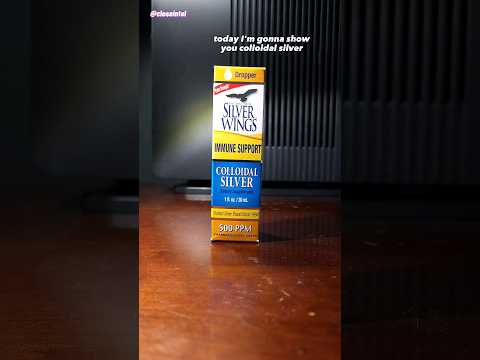
Colloidal Silver vs Germs Under Microscope — CloseIntel

Surprise Remedy for Viruses — Dr. Eric Berg

Silver Nanoparticle Risks and Benefits: Seven Things Worth Knowing — Risk Bites

Top 3 Uses of Colloidal Silver in Dogs and Cats — Veterinary Secrets

Studies Showing Colloidal Silver Is Safe and Effective Against Antibiotic Resistant Bacteria — Veterinary Secrets

Colloidal Silver Safety — What The Research Shows — Oswald Digestive Clinic
Research Papers and References
- Bakhtiar, S. et al. "Antibacterial efficacy of synthesized silver nanoparticles of Microbacterium proteolyticum LA2(R) and Streptomyces rochei LA2(O) against biofilm forming meningitis causing microbes." Scientific Reports, 2023; 13: 4150.
- Ma, Y. et al. "Silver nanoparticles as an effective antimicrobial against otitis media pathogens." AIChE Journal, 2021; 67(12): e17468.
- Bruna, T. et al. "Silver Nanoparticle-Based Therapy: Can It Be Useful to Combat Multi-Drug Resistant Bacteria?" Antibiotics, 2022; 11(9): 1205.
- Dakal, T.C. et al. "Mechanistic Basis of Antimicrobial Actions of Silver Nanoparticles." Frontiers in Microbiology, 2016; 7: 1831.
- Yin, I.X. et al. "The Antibacterial Mechanism of Silver Nanoparticles and Its Application in Dentistry." International Journal of Molecular Sciences, 2020; 21(22): 8527.
- Salleh, A. et al. "The Potential of Silver Nanoparticles for Antiviral and Antibacterial Applications: A Mechanism of Action." Nanomaterials, 2020; 10(8): 1566.
- Liao, C. et al. "Silver Nanoparticles: Bactericidal and Mechanistic Approach against Drug Resistant Pathogens." International Journal of Molecular Sciences, 2019; 20(2): 449.
- Loo, C.Y. et al. "Metal nanoparticles and nanoparticle composites are effective against Haemophilus influenzae, Streptococcus pneumoniae, and multidrug-resistant bacteria." Journal of Microbiology, Immunology and Infection, 2022; 55(4): 708–715.
- Sánchez-López, E. et al. "Silver nanoparticles and their antibacterial applications." International Journal of Molecular Sciences, 2020; 21(23): 9192.
- Gomaa, E.Z. "Silver nanoparticles as an antimicrobial agent: a case study on Staphylococcus aureus and Escherichia coli as models for Gram-positive and Gram-negative bacteria." Journal of General and Applied Microbiology, 2017; 63(1): 36–43.