Dental Fluorosis
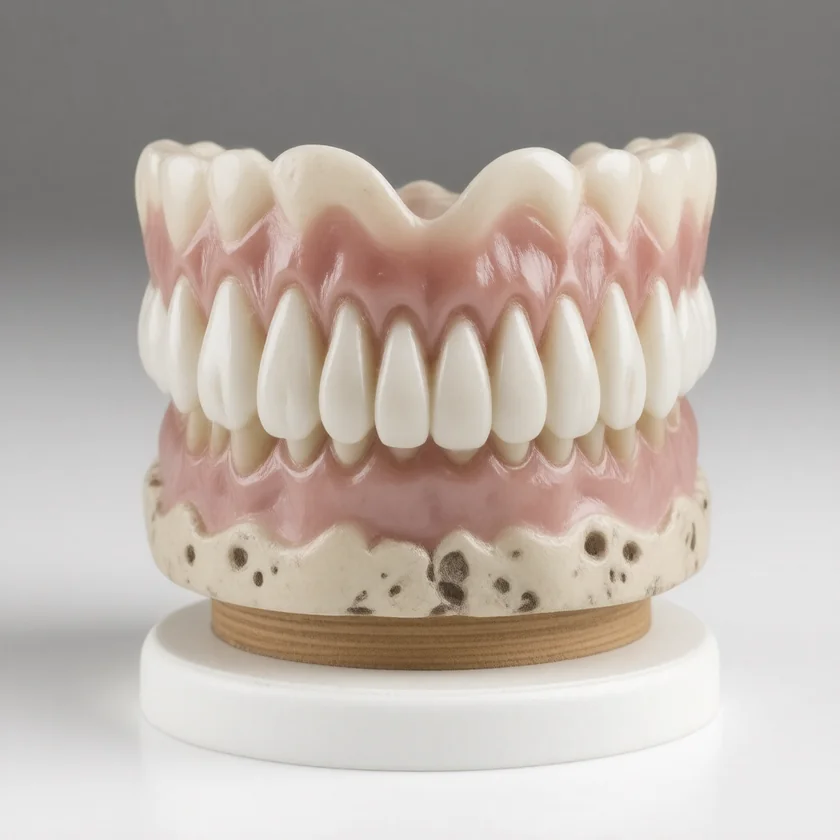
This is the fluoride injury that nobody disputes. Public health bodies, dental associations and critics of fluoridation all agree it is real, that it is caused by fluoride, and that it is dose-dependent. They disagree about one thing only: whether it is a cosmetic nuisance or the visible edge of something worth worrying about. It is also the reason the U.S. lowered its fluoridation target in 2015.
Table of Contents
- What Dental Fluorosis Is
- The Window: Why Only Children Can Get It
- The Severity Scale
- How Common It Is
- Why It Became More Common
- Cosmetic Nuisance and Biomarker: Both Readings
- Preventing It Without Losing Cavity Protection
- What Can Be Done About Existing Fluorosis
- Key Research Papers
- Connections
- Featured Videos
What Dental Fluorosis Is
Dental fluorosis is a permanent change in the enamel of teeth that were still forming when fluoride intake was high. It is not decay, not staining from the outside, and not something that develops later in life. It is a defect built into the enamel while it was being laid down.
Mechanically: enamel is produced by cells called ameloblasts, which lay down protein scaffolding and then withdraw it as mineral crystals grow in. Excess fluoride interferes with that withdrawal step, so more protein stays behind than should. The resulting enamel is more porous. Light scatters in those pores, which is why mild fluorosis looks like chalky white flecks or streaks rather than a stain. In more severe cases the porous enamel is genuinely weaker, picks up brown discolouration after eruption, and can pit or chip.
So mild fluorosis is an optical effect and severe fluorosis is a structural one. That distinction is the whole of the “is it just cosmetic” argument.
The Window: Why Only Children Can Get It
Fluorosis can only be caused while enamel is forming — roughly from birth to about age eight for the permanent teeth. Once a tooth has erupted into the mouth, no amount of fluoride will give it fluorosis.
The most consequential period for the front teeth, which are the ones people actually notice, is roughly the first three years of life. That is why the practical advice concentrates so narrowly on infants and toddlers — and why it converges with the exposure window that the neurodevelopment research focuses on. Two quite different literatures point at the same few years.
It also means an adult worrying about their own fluoride intake has nothing to fear on this particular front. Their enamel was finished decades ago.
The Severity Scale
Fluorosis is graded, most commonly on Dean’s Index. The grades matter, because “65% of adolescents have fluorosis” and “65% of adolescents have damaged teeth” are very different statements and the first is often reported as the second.
| Grade | What it looks like | Noticeable? |
|---|---|---|
| Questionable | A few white flecks; the examiner is not sure it is fluorosis. | No |
| Very mild | Small opaque white patches over less than a quarter of the tooth. | Rarely, and usually only by a dentist |
| Mild | White opacity over up to half the tooth surface. | Sometimes, in good light |
| Moderate | All surfaces affected; visible wear; brown staining common. | Yes |
| Severe | Pitting, confluent brown stain, enamel that chips; the tooth shape is altered. | Yes — and it is disfiguring |
In the United States the overwhelming majority of fluorosis is very mild or mild. Severe fluorosis is rare here and is a feature of regions with naturally high groundwater fluoride, where it appears alongside skeletal fluorosis.
How Common It Is
National survey figures, and the honest version of them:
- The 1999–2004 national survey found dental fluorosis of some degree in about 41% of adolescents aged 12–15. Most of it was very mild or mild.
- Analyses of later surveys, covering trends from 1986 to 2012, report the proportion rising substantially — to well over half of adolescents. The Neurath 2019 analysis reported 65% of those aged 12–15 in the 2011–2012 survey, up from 22% in 1986–1987 and 41% in 1999–2004. A separate analysis of the same 2011–2012 survey data reported very mild or greater fluorosis in 61.3% of adolescents aged 16–17, against 29.7% in 2001–2002 (Wiener 2018). The 1986–2012 trend analysis (Neurath 2019) carries a 2019 editorial expression of concern from its journal; the PubMed record of the notice gives no reason, and the authors’ reply in the same issue is titled “Resolving Questions About the Validity of the CDC’s Fluorosis Data” (CDC is the U.S. Centers for Disease Control and Prevention) (PMID: 31437080).
- The share classed as moderate or severe also rose. Among those aged 12–15 the same analysis gives 1.2% in 1986–1987 and 3.7% in 1999–2004, and 30.4% for 2011–2012; that last figure comes from the analysis under the expression of concern.
- The latest survey cycle in the sources for this page, 2015–2016, found fluorosis of very mild degree or greater in about 74% of adolescents aged 12–19 and 70% of adults aged 20–29 (Khan 2025).
- The 2024 Cochrane review carries forward a pooled result from older studies: at 0.7 parts per million of fluoride in water, about 12% of people had fluorosis of aesthetic concern (95% confidence interval 8% to 17%; 40 studies, 59,630 people) and about 40% had fluorosis of any level (35% to 44%; 90 studies, 180,530 people). All the review’s studies were non-randomised, and this update did not search for new fluorosis evidence.
Both directions of spin are available here and both are misleading. It is not true that fluorosis is a rare curiosity. It is also not true that a majority of American teenagers have visibly damaged teeth.
Why It Became More Common
Because total fluoride intake in early childhood rose, while water concentration was only one part of it:
- Fluoride toothpaste became universal — at 1,000–1,500 ppm, about a thousand times the concentration of fluoridated water. Small children swallow a meaningful share of what is on the brush.
- Infant formula reconstituted with fluoridated tap water delivers the highest fluoride dose per kilogram of body weight that most people ever receive, during exactly the window when the front teeth are forming.
- Processed food and drink made with fluoridated water carries that fluoride into households that are not themselves on a fluoridated supply.
- Fluoride supplements, rinses and varnishes added more on top.
The U.S. Public Health Service responded in 2015 by replacing the old 0.7–1.2 mg/L range with a single target of 0.7 mg/L — the low end — explicitly citing rising fluorosis. That is worth sitting with: the fluoridation target was lowered because a recognised effect of fluoridation had become too common. The system worked, and it also concedes the point that dose was not being controlled.
The supplements have since drawn regulatory action. On October 31, 2025 the U.S. Food and Drug Administration (FDA) announced steps to restrict unapproved ingestible fluoride prescription products, sending notices to four companies about products labeled for children under 3 or for older children at low or moderate risk of tooth decay. The agency states that it has never reviewed or approved these products for safety, effectiveness or quality, and it concluded they should not be used in children under 3 or by older children not at high risk of tooth decay. It wrote that fluoride may alter the gut microbiome, and it described a meta-analysis linking higher fluoride exposure to lower IQ as preliminary but potentially concerning data.
Cosmetic Nuisance and Biomarker: Both Readings
The official position is that very mild and mild fluorosis are cosmetic and not a health concern. On the narrow question of whether faint white flecks impair chewing or cause pain, that is correct.
Two serious qualifications:
Cosmetic is not the same as costless. A 2010 review of 35 studies of the aesthetic and psychosocial literature found that severe fluorosis was consistently reported to harm oral-health-related quality of life. For very mild to mild fluorosis, earlier studies varied on satisfaction with appearance, while later studies with better methods “clearly showed that mild fluorosis was not a concern” and sometimes linked it with better quality of life. Moderate-to-severe cases attract cosmetic dentistry that people pay for. Calling something cosmetic does not make it free.
It is a record of dose. This is the more substantive point. Fluorosis is visible, permanent evidence that a child’s systemic fluoride intake during enamel formation exceeded what the enamel could handle. It says nothing on its own about whether any other tissue was affected — enamel is unusually sensitive and that may simply be the whole story. But it does mean the exposure was systemic and above the level the enamel tolerated, which is why researchers looking at other organs use it as an exposure marker. Recent work has examined fluorosis alongside kidney and liver measures for exactly that reason. In the 2015–2016 U.S. national survey, having fluorosis was linked to lower estimated kidney filtration in adolescents (−3.72 mL/min/1.73 m², 95% confidence interval −7.10 to −0.33) and in young adults (−3.90, −6.49 to −1.31), with no significant link to liver markers. A survey taken at one point in time cannot show cause, and the authors say prospective studies are needed.
Preventing It Without Losing Cavity Protection
The key fact that makes this tractable: most of fluoride’s benefit against decay is topical. It works at the tooth surface. Fluorosis, by contrast, requires fluoride to be swallowed during enamel formation. The two can therefore be separated.
- Under 3: the CDC lists a smear the size of a grain of rice, with fluoride toothpaste starting at age 2. Brushing at this age is supervised by an adult.
- Ages 3–6: the CDC lists no more than a pea-sized amount (0.25 g) until age 6, by which time the swallowing reflex has developed enough to prevent accidental swallowing. Its 2019 report found that more than 38% of children aged 3–6 used more than that. Children at this age are still being supervised and taught to spit.
- Spitting without rinsing. Rinsing with water washes away the topical benefit.
- Formula: the 2015 U.S. Public Health Service recommendation says an infant fed only formula mixed with fluoridated water may have an increased chance of mild fluorosis, and that parents “may choose to use low-fluoride bottled water some of the time” to mix it (bottled waters labeled deionized, purified, demineralized or distilled, with no fluoride added afterward). Some parents use filtered water for the same reason. This is in the federal recommendation itself, not a fringe position. A 2011 American Dental Association panel suggested that dentists can support continued use of formula mixed with optimally fluoridated water, while being aware of the fluorosis risk.
- Fluoride mouthrinse under 6 is described as something used only on a dentist’s specific advice, because swallowing is likely at that age.
- Supplements on top of fluoridated water. A 2010 American Dental Association panel concluded that supplements belong only with children at high risk of decay whose main drinking water is deficient in fluoride. On a fluoridated supply they are the definition of excess dose.
- A water supply’s number is listed in the utility’s annual report; well water is known only by testing. The U.S. target is 0.7 mg/L, and the U.S. Environmental Protection Agency sets a secondary standard of 2.0 mg/L to prevent mild or moderate fluorosis.
Europe’s food safety agency reached its own numbers in 2025. It called dental fluorosis the most sensitive effect in children up to age 8 and set upper intakes from all sources of 1.0, 1.6 and 2.0 mg a day for infants, toddlers and children aged 4–8. It also judged the European Union’s legal limit for drinking water, 1.5 mg/L, “not sufficiently protective”.
What Can Be Done About Existing Fluorosis
Fluorosis is permanent — the enamel formed the way it formed. It does not spread and does not worsen with later exposure. Cosmetic options exist and scale with severity: external whitening (which can even out contrast in mild cases, though it does not remove the opacities), microabrasion for surface-level defects, resin infiltration, and composite bonding or veneers for moderate to severe cases. All are dental cosmetic procedures with cost and, for veneers, permanent removal of tooth structure.
A 2026 network meta-analysis compared the minimally invasive options in seven clinical studies (555 people), using color measurements out to six months. Microabrasion combined with in-office bleaching ranked first. Resin infiltration was the most effective single treatment. Microabrasion alone, a remineralizing paste and sodium hypochlorite showed modest or unstable changes. A published commentary on the paper notes that most of its studies were judged to have some concerns about bias. These comparisons cover appearance only, and veneers and bonding were not in them.
Key Research Papers
Every PMID below was resolved against PubMed.
- Beltrán-Aguilar ED, Barker L, Dye BA. Prevalence and severity of dental fluorosis in the United States, 1999-2004. NCHS Data Brief. 2010;(53):1-8. — PubMed PMID: 21211168
- Neurath C, Limeback H, Osmunson B, et al. Dental fluorosis trends in US oral health surveys: 1986 to 2012. JDR Clin Trans Res. 2019. — PubMed PMID: 30931722 — Expression of concern (JDR Clin Trans Res 2019: PubMed PMID: 31298965)
- Wiener RC, Shen C, Findley P, Tan X, Sambamoorthi U. Dental fluorosis over time: a comparison of National Health and Nutrition Examination Survey data from 2001-2002 and 2011-2012. J Dent Hyg. 2018;92(1):23-29. — PubMed PMID: 29500282
- Chankanka O, Levy SM, Warren JJ, Chalmers JM. A literature review of aesthetic perceptions of dental fluorosis and relationships with psychosocial aspects/oral health-related quality of life. Community Dent Oral Epidemiol. 2010. — PubMed PMID: 20002631
- Boehmer TJ, Lesaja S, Espinoza L, Ladva CN. Community water fluoridation levels to promote effectiveness and safety in oral health - United States, 2016-2021. MMWR Morb Mortal Wkly Rep. 2023;72(22):593-596. — PubMed PMID: 37261997
- Iheozor-Ejiofor Z, Walsh T, Lewis SR, et al. Water fluoridation for the prevention of dental caries. Cochrane Database Syst Rev. 2024. — PubMed PMID: 39362658
- Walsh T, Worthington HV, Glenny AM, et al. Fluoride toothpastes of different concentrations for preventing dental caries. Cochrane Database Syst Rev. 2019. — PubMed PMID: 30829399
- Marinho VCC, Chong LY, Worthington HV, Walsh T. Fluoride mouthrinses for preventing dental caries in children and adolescents. Cochrane Database Syst Rev. 2016. — PubMed PMID: 27472005
- Thornton-Evans G, Junger ML, Lin M, Wei L, Espinoza L, Beltran-Aguilar E. Use of toothpaste and toothbrushing patterns among children and adolescents - United States, 2013-2016. MMWR Morb Mortal Wkly Rep. 2019;68(4):87-90. — PubMed PMID: 30703075
- Khan D, Mattia A, Wang Z, Malin AJ. Urinary fluoride and dental fluorosis in relation to kidney and liver function in adolescents and young adults in the United States. Environ Health. 2025;24(1):85. — PubMed PMID: 41174754
- Susheela AK, Toteja GS. Prevention & control of fluorosis & linked disorders: Developments in the 21st Century - Reaching out to patients in the community & hospital settings for recovery. Indian J Med Res. 2018;148(5):539-547. — PubMed PMID: 30666981
- Shulman JD, Wells LM. Acute fluoride toxicity from ingesting home-use dental products in children, birth to 6 years of age. J Public Health Dent. 1997. — PubMed PMID: 9383753
- U.S. Department of Health and Human Services Federal Panel on Community Water Fluoridation. U.S. Public Health Service recommendation for fluoride concentration in drinking water for the prevention of dental caries. Public Health Rep. 2015;130(4):318-331. — PubMed PMID: 26346489
- Berg J, Gerweck C, Hujoel PP, et al. Evidence-based clinical recommendations regarding fluoride intake from reconstituted infant formula and enamel fluorosis: a report of the American Dental Association Council on Scientific Affairs. J Am Dent Assoc. 2011;142:79-87. — PubMed PMID: 21243832
- Rozier RG, Adair S, Graham F, et al. Evidence-based clinical recommendations on the prescription of dietary fluoride supplements for caries prevention: a report of the American Dental Association Council on Scientific Affairs. J Am Dent Assoc. 2010;141:1480-1489. — PubMed PMID: 21158195
- EFSA Scientific Committee; Bennekou SH, Allende A, Bearth A, et al. Updated consumer risk assessment of fluoride in food and drinking water including the contribution from other sources of oral exposure. EFSA J. 2025;23(7):e9478. — PubMed PMID: 40698337
- Chaple Gil AM, Pereda Vázquez L, Santiesteban Velázquez M, Menendez JJ. Minimally invasive treatments for dental fluorosis: a network meta-analysis of esthetic masking efficacy. J Esthet Restor Dent. 2026;38(7):1323-1337. — PubMed PMID: 41623091
- Babatunde I, Sheikholeslamian SM. Is the current evidence sufficient to establish the most effective treatment for dental fluorosis? Evid Based Dent. 2026. — PubMed PMID: 42864374
- U.S. Food and Drug Administration. FDA acts to protect children from unapproved fluoride drug products. News release, October 31, 2025. — fda.gov news release
PubMed Topic Searches
Connections
- Fluoride Chelation — natural ways people remove fluoride: boron, iodine displacement, calcium, herbs, amino acids, binders
- Fluoride Toxicity — the overview
- Brain Development and IQ — the same childhood exposure window
- Skeletal Fluorosis — what severe fluorosis travels with
- Kidneys and Liver
- Tooth Decay (Dental Caries) — the benefit side
- How Cavities Form — animation
- Hydroxyapatite vs Fluoride Toothpaste
- The Oral Microbiome
- Fluoride in Water