Baking Soda (Sodium Bicarbonate)
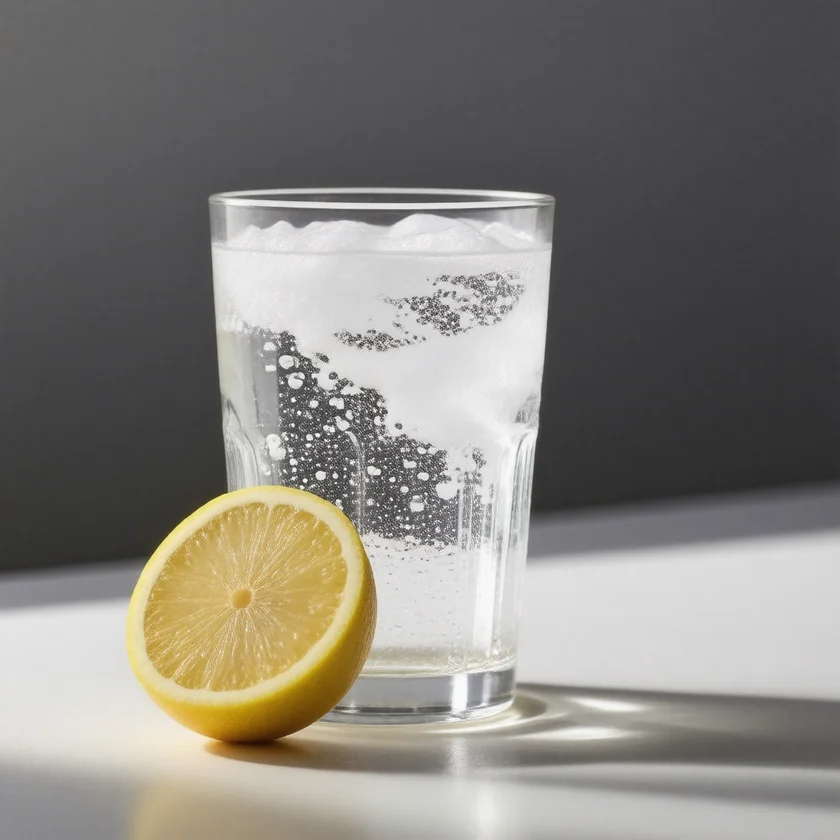
Baking soda is pure sodium bicarbonate — a cheap white salt that neutralises acid, fizzes when it meets it, and carries a surprising load of sodium: about 630 mg in half a teaspoon. The evidence supports three real medical uses: short-term relief of heartburn, prescribed treatment of low blood bicarbonate in chronic kidney disease (where the trial results are mixed), and a small performance boost in short, very hard exercise. It does not repair healthy kidneys, melt belly fat or cure cancer, and taken in large amounts it can cause dangerous alkalosis and, rarely, a ruptured stomach.
Table of Contents
- What Baking Soda Actually Is
- From Natron to the Medicine Cabinet
- How Bicarbonate Works in Your Body
- Heartburn and Indigestion
- Chronic Kidney Disease: Evidence and Limits
- Exercise: Buffering Short, Hard Efforts
- How People Use It
- Myths and Overclaims
- Safety, Interactions and Who Should Avoid It
- Key Research Papers
- Connections
- Featured Videos
What Baking Soda Actually Is
Baking soda, bicarbonate of soda and sodium bicarbonate are three names for one simple compound, NaHCO₃: a sodium atom paired with a bicarbonate group made of hydrogen, carbon and three oxygens. It is a fine white powder that dissolves easily in water and makes it mildly alkaline — a solution has a pH of about 8, on the opposite side of neutral from vinegar or lemon juice.
Two chemical habits explain nearly everything it does, in a cake or in a body:
- It neutralises acid and releases gas. When bicarbonate meets an acid, the two react to form water, a salt and carbon dioxide. In batter those CO₂ bubbles raise the cake; in your stomach they make you burp.
- Heat breaks it down. Warmed, it slowly splits into carbon dioxide, water and sodium carbonate — a harsher alkali with the soapy, bitter taste of a cake made with too much soda.
Where it comes from. In the United States it is made from soda ash (sodium carbonate) that comes mostly from trona, a natural mineral mined in Wyoming; the soda ash is reacted with carbon dioxide and water to give sodium bicarbonate. Much of the rest of the world makes its soda ash synthetically from salt and limestone, by a process developed in Belgium in the 1860s. Either way the end product is the same compound: kitchen baking soda and the purity-tested pharmacy grade (labelled USP) sold as an antacid are chemically identical.
What is actually in a spoonful
Nothing but sodium bicarbonate — no calories, and no potassium, calcium or magnesium. What matters is the sodium. By weight baking soda is about 27% sodium: USDA FoodData Central (entry 175040, “Leavening agents, baking soda”) lists 27,360 mg of sodium per 100 g and weighs half a level teaspoon at 2.3 g and a level teaspoon at 4.6 g. That works out to:
- ½ teaspoon: about 629 mg of sodium — more than a quarter of the 2,300 mg Daily Value printed on US food labels.
- 1 teaspoon: about 1,259 mg of sodium — more than half the day’s Daily Value, in a single spoon.
Keep those two numbers in mind; almost every safety question on this page comes back to them. (Source: USDA FoodData Central.)
Not the same as baking powder, washing soda or borax
- Baking powder is baking soda pre-mixed with one or more dry acids and a little starch, so it rises without a sour ingredient. Some baking powders use an aluminium-containing acid; plain baking soda contains no aluminium.
- Washing soda is sodium carbonate — far more alkaline, a laundry and cleaning chemical, and not for eating.
- Borax is sodium tetraborate, a different mineral salt with its own chemistry and its own safety record.
From Natron to the Medicine Cabinet
People used bicarbonate long before anyone could name it. In ancient Egypt, natron — a natural mix of sodium carbonate and sodium bicarbonate with some ordinary salt, gathered from the beds of desert lakes as they dried — was packed around bodies to dry them for mummification, and was used for cleaning.
Industrial chemistry turned it into an everyday product: the ammonia-soda (Solvay) process, developed in Belgium in the 1860s to make soda ash, produces sodium bicarbonate as one of its steps. American cooks of the 1800s raised quick breads and biscuits with bicarbonate plus a sour ingredient such as buttermilk or sour milk, and baking powder, which packages the acid together with the soda, arrived in the middle of that century.
Medicine adopted it as an antacid. At the beginning of the twentieth century a stomach-ulcer treatment built on milk plus absorbable alkali became widely used — and doctors soon described the harm it could do: milk-alkali syndrome, a combination of high blood calcium, kidney failure and metabolic alkalosis. The syndrome became rare once modern acid-reducing drugs replaced that regimen (see Safety).
Today sodium bicarbonate lives three lives: a kitchen leavener, an over-the-counter antacid, and a real prescription and hospital drug. The rest of this page follows each one — and the popular claims that go beyond all three.
How Bicarbonate Works in Your Body
In the stomach
Stomach acid is hydrochloric acid. Baking soda neutralises it within seconds: acid plus bicarbonate becomes salt water and carbon dioxide. That gas has to go somewhere — usually up, as a burp. Half a teaspoon that meets enough acid can release up to roughly 0.7 litres of carbon dioxide at body temperature — about three cups of gas: harmless in an ordinary stomach, dangerous in one already stretched full of food or drink (see Safety).
Whatever bicarbonate is not used up in the stomach is absorbed, so both the sodium and the alkali reach your bloodstream. That is the key difference between a single dose for heartburn and a daily habit.
In the blood
Bicarbonate is already the body’s main chemical buffer — the substance that mops up acid in your blood. A routine basic metabolic panel reports it as “CO₂”, normally about 22–29 mmol/L. Blood pH is held in a narrow band, about 7.35 to 7.45, by two organs working together: the lungs, which breathe out carbon dioxide, and the kidneys, which excrete acid and dump surplus bicarbonate into the urine. Our acid–base balance animation shows the two systems at work.
This is why a glass of baking-soda water cannot “alkalise” a healthy person’s blood in any lasting way: healthy kidneys pour the extra bicarbonate into the urine, so the urine turns alkaline while the blood stays where it was. The only way to overwhelm the system is to take so much, or to have kidneys so impaired, that bicarbonate builds up — and that is not a health effect but a poisoning called metabolic alkalosis.
Why it matters when kidneys fail
Digesting food — protein especially — leaves a steady daily load of acid that healthy kidneys excrete. As chronic kidney disease advances, the kidneys fall behind, acid accumulates and blood bicarbonate drifts down: metabolic acidosis. That acidosis is linked with faster loss of kidney function and poorer nutrition, which is why doctors prescribe bicarbonate in this situation (see the kidney section).
Where doctors use it
- Prescription tablets for metabolic acidosis in chronic kidney disease, and for renal tubular acidosis, a kidney condition in which acid is not cleared properly.
- Intravenous bicarbonate in hospital for some severe acid build-ups and some poisonings — for example overdoses of certain older antidepressants, and aspirin poisoning, where making the urine alkaline speeds the drug’s removal.
- Making urine less acidic for people who form uric-acid kidney stones — although potassium citrate is usually preferred because it adds no sodium.
Every one of these is a measured, monitored treatment for a diagnosed problem. None of them is a reason for a healthy person to drink baking soda.
Heartburn and Indigestion
Evidence tier: established chemistry and an approved over-the-counter antacid — for occasional, short-term use.
This is the oldest medical use, and it genuinely works. Dissolved baking soda neutralises acid that is already in the stomach, so relief can come within minutes. What it cannot do is stop the stomach from making more acid, so the effect is short-lived, and it does nothing to heal an irritated lining.
In the United States, sodium bicarbonate is one of the antacid ingredients the FDA permits in over-the-counter products, with a legal daily ceiling: 200 mEq of sodium a day up to age 60 and 100 mEq at 60 or older (21 CFR 331.11). In kitchen terms that is about 4,600 mg of sodium under 60 and about 2,300 mg over 60 — the second figure is an entire day’s Daily Value.
What the label actually says
- ½ level teaspoon, completely dissolved in half a glass (4 fl oz, about 120 mL) of water, no more often than every 2 hours.
- No more than six or seven half-teaspoons in 24 hours (labels differ), or three if you are over 60.
- Do not use the maximum amount for more than 2 weeks.
- Never take it until the powder is fully dissolved, and never when you are overly full from food or drink — a warning US labels print in capital letters.
- Not for young children unless a doctor directs; ask first if you are on a sodium-restricted diet or take prescription medicines.
Each half-teaspoon dose carries about 629 mg of sodium. Seven doses — the most generous label maximum under age 60 — add up to roughly 4,400 mg, nearly twice the Daily Value.
Where it stops being the right tool
Baking soda is for the occasional bout of indigestion. Heartburn that keeps coming back — twice a week or more — is the pattern of gastroesophageal reflux disease, and treating it with a daily spoonful piles up sodium and alkali while masking a problem that deserves a diagnosis. That is not a theoretical risk: in a review of California poison-centre cases, using baking soda as an antacid was the single most common reason people ended up with baking-soda toxicity (see Safety).
Bicarbonate also has a quieter modern job inside some acid-reducing medicines: a combination that pairs the drug omeprazole with sodium bicarbonate uses the bicarbonate to shield the omeprazole from stomach acid long enough for it to be absorbed.
Chronic Kidney Disease: Evidence and Limits
Evidence tier: randomized controlled trials in humans — mixed. Benefit in two trials that had no placebo, no benefit in the one double-blind, placebo-controlled trial; low certainty overall.
The “baking soda repairs your kidneys” videos grow out of real research, but the research is much narrower than the videos. Every trial below studied people who already had chronic kidney disease and already had low blood bicarbonate (metabolic acidosis), given measured doses and followed with blood tests. Guidelines at the time recommended alkali treatment once the blood’s total CO₂ fell below 22 mmol/L.
Two trials that found a benefit
- London, 2009. 134 adults with advanced kidney disease (creatinine clearance 15–30 mL/min) and blood bicarbonate of 16–20 mmol/L received oral sodium bicarbonate or standard care for two years. Kidney function (creatinine clearance) fell by 1.88 mL/min with bicarbonate against 5.93 mL/min with standard care; rapid decline struck 9% versus 45%; and 6.5% versus 33% reached end-stage kidney failure. Nutrition measures improved, and the treatment was well tolerated. The catch: there was no placebo — the comparison group simply continued standard care.
- Italy, 2019 (the UBI study). 740 adults with stage 3–5 kidney disease and an average bicarbonate of 21.5 mmol/L were followed for up to three years (about two and a half on average). With sodium bicarbonate, 6.6% saw their blood creatinine double against 17.0% on standard care; 6.9% versus 12.3% started dialysis; and 3.1% versus 6.8% died. Blood pressure, body weight and hospital admissions did not differ. Again the trial was open-label, and its conclusions apply to people without advanced heart failure.
The trial that found no benefit
BiCARB (UK, 2020) was the most rigorous of the three: double-blind and placebo-controlled. It enrolled 300 people aged 60 or over (average age 74) with an eGFR under 30 and bicarbonate under 22 mmol/L, and gave up to 3 g of sodium bicarbonate a day or a dummy pill for up to two years. Bicarbonate did not improve physical function, the main goal, and did not improve kidney function. Adverse events were more frequent on bicarbonate (457 versus 400), quality of life was lower and costs were higher, and the investigators concluded it was unlikely to be cost-effective for the UK’s health service in this group of older patients with mild acidosis.
Putting the trials together
A 2021 systematic review pooled 15 randomized trials with 2,445 participants. Compared with placebo or no treatment, sodium bicarbonate may slow the loss of kidney function and was linked with roughly half the risk of reaching kidney failure (risk ratio 0.53) — but the authors rated both findings low certainty, found the effects on death, blood pressure and swelling uncertain, and called for larger trials.
Four honest conclusions follow:
- It slows; it does not repair. Even in the positive trials, kidney function kept falling in the bicarbonate groups — just more slowly. No trial shows lost kidney function coming back.
- It is a prescription treatment for a lab result. The UBI doses averaged about 1.1 mmol per kg of body weight a day — for a 70 kg (154 lb) adult roughly 6.5 g of sodium bicarbonate carrying about 1,800 mg of sodium — adjusted to repeated blood tests. In people whose kidneys and heart struggle to clear sodium and fluid, that dose has to be watched for blood pressure, swelling and overshoot into alkalosis. It is given as measured tablets under a kidney specialist, not as spoonfuls of kitchen soda.
- Healthy kidneys gain nothing. No trial shows a benefit for people with normal kidney function and normal blood bicarbonate.
- It is not a general kidney shield. Intravenous bicarbonate has been widely used to protect the kidneys from the contrast dye given for angiograms. The PRESERVE trial randomized 5,177 high-risk patients to intravenous sodium bicarbonate or plain intravenous salt water: death, dialysis or a lasting fall in kidney function occurred in 4.4% versus 4.7% — no benefit.
The whole-food alternative
Fruit and vegetables are “base-producing”: once digested they leave alkali behind, the opposite of most animal foods and grains. A 2013 trial took 71 people with stage 4 kidney disease caused by high blood pressure and gave them, for one year, either sodium bicarbonate (1.0 mEq/kg a day) or extra fruits and vegetables dosed to cut the diet’s acid load in half. Kidney function ended the year no different between the groups. Blood CO₂ rose in both — more with bicarbonate (19.5 to 21.2 mmol/L) than with food (19.3 to 19.9) — urine markers of kidney injury fell in both, and blood potassium did not rise in either group.
That is an encouraging result for food first, with one firm caution: fruit and vegetables are rich in potassium, and many people with advanced kidney disease must limit it. In this trial the diet was prescribed and potassium was measured; a change like this belongs in a plan made with your kidney team. See Kidney Disease and Slowing CKD Progression.
Exercise: Buffering Short, Hard Efforts
Evidence tier: randomized trials and meta-analyses in humans — a small, real benefit, limited to short, very hard efforts.
In an all-out effort lasting from about half a minute to several minutes — a 400 m run, a 2,000 m row, a round of wrestling — working muscle produces acid faster than it can clear it, and that build-up is one of the things that forces you to slow down. Extra bicarbonate in the blood gives the muscle somewhere to push its acid, delaying fatigue. (Beta-alanine tackles the same problem from inside the muscle, by raising its carnosine buffer.)
The International Society of Sports Nutrition’s 2021 position stand, based on a review of the research, concluded:
- Sodium bicarbonate improves performance in muscular-endurance exercise, combat sports, and high-intensity cycling, running, swimming and rowing — mostly in efforts lasting 30 seconds to 12 minutes, in both men and women.
- The minimum effective single dose is about 0.2 g per kg of body weight and the best is about 0.3 g/kg, taken 60 to 180 minutes before exercise. Higher doses add side effects, not performance.
- Spreading 0.4–0.5 g/kg a day across meals for 3–7 days before an event also works, and may spare the stomach on competition day.
- The common side effects are bloating, nausea, vomiting and stomach pain. Smaller doses, taking it about three hours beforehand, taking it with a high-carbohydrate meal, or using enteric-coated capsules may reduce them.
- It may add to the effect of creatine or beta-alanine — and part of its effect appears to be placebo.
How big is the gain? A 2011 meta-analysis pooling 38 studies of sodium bicarbonate estimated about a 1.7% improvement in mean power in a single one-minute sprint for male athletes taking about 0.3 g/kg, with somewhat smaller estimated gains in non-athletes, in women and in longer tests. That margin can decide a race; it will not change an ordinary workout.
In kitchen terms
For a 70 kg (154 lb) adult, 0.3 g/kg is 21 g — about 4½ level teaspoons in one go, carrying roughly 5,700 mg of sodium, about two and a half times the 2,300 mg Daily Value. That is why this is a tool for trained athletes on competition day, rehearsed in training first, and not a daily drink. It does nothing useful for walking, easy jogging, general fitness or weight loss, and it is not for anyone with high blood pressure, heart or kidney disease, or a sodium-restricted diet. See also creatine, a sports supplement that works on a different energy system.
How People Use It
Baking and cooking
Baking soda is a leavener that needs a partner: an acidic ingredient such as buttermilk, yogurt, lemon juice, vinegar, molasses or natural (non-alkalised) cocoa. The acid releases the carbon dioxide that lifts the batter. Too much soda, or too little acid to use it up, leaves the soapy, bitter taste of sodium carbonate behind. Baking powder carries its own acid, which is why recipes with no sour ingredient call for powder instead.
A pinch in the pot keeps green vegetables bright and softens dried beans faster, but the same alkaline water speeds the breakdown of vitamin C and thiamine (vitamin B1) — use a pinch, not a spoonful, if you use it at all.
The fridge and the cleaning cupboard
Tier: household chemistry, not a health claim. An open box in the fridge can neutralise some of the acidic odour molecules — the sour smell of spoiled milk, for example — that reach its surface. Only the top layer does any work and there is little formal testing behind the habit, but it is cheap and harmless. As a cleaner, baking soda is a mild abrasive and a mild alkali: useful for scrubbing pans, sinks and greasy stovetops.
The famous vinegar-and-baking-soda fizz is the two ingredients neutralising each other. The bubbles look busy, but what is left behind is mostly salty water — weaker as a cleaner than either ingredient on its own.
Teeth
Tier: systematic review of randomized trials — a modest benefit. Baking soda is a soft abrasive and has been tested in toothpaste. A 2019 systematic review of 21 publications found that toothpastes containing baking soda removed more plaque than comparison toothpastes in single-brushing tests; longer trials only partly confirmed it, gum bleeding fell slightly, and a standard gum-inflammation score did not change. The included studies carried a moderate risk of bias. Plain baking soda on a brush contains no fluoride and no hydroxyapatite, the ingredients studied for protecting enamel against tooth decay (see Hydroxyapatite vs Fluoride).
Skin
Tier: approved over-the-counter labelling for symptom relief. US labels list baking soda as a skin protectant for minor itching from insect bites or poison ivy, oak and sumac: a paste of powder and water on the spot, or 1–2 cups dissolved in a warm bath for 10–30 minutes. The same labels warn that soaking too long can over-dry the skin.
Amounts at a glance
- Sodium per spoon: ½ teaspoon (2.3 g) ≈ 629 mg; 1 teaspoon (4.6 g) ≈ 1,259 mg.
- Heartburn (label): ½ teaspoon fully dissolved in 4 fl oz of water, at most every 2 hours; at most six or seven half-teaspoons a day under 60, three over 60; no more than 2 weeks at the maximum.
- Sport (trained athletes only): 0.2–0.3 g/kg — for a 70 kg adult about 3 to 4½ level teaspoons, 60–180 minutes before a hard event, rehearsed in training first.
- Kidney disease: prescription tablets at a dose set by blood tests — never kitchen spoonfuls.
- Itchy-skin bath: 1–2 cups in a warm tub.
Myths and Overclaims
Popular baking-soda videos mix a few real uses with a long tail of claims nobody has tested. Here is how the common ones hold up.
“24 health benefits”
Count only what has been tested in people and the list is short: short-term heartburn relief; prescribed treatment of acidosis in chronic kidney disease, with mixed trial results; a small boost in short, very hard exercise; and a modest plaque benefit in toothpaste. Most of the rest are household tips, or guesses presented as medicine.
“Baking soda repairs your kidneys”
Not supported. In people with chronic kidney disease and low blood bicarbonate, prescribed bicarbonate may slow further decline; the most rigorous trial, in older adults, found no benefit and more side effects; and no trial shows damaged kidneys recovering. For healthy kidneys there is no evidence of benefit at all (see the kidney section). Doing it yourself also skips the blood tests that make the prescribed version safe.
“Drink baking-soda water every morning to alkalise your body”
Not supported. Your blood pH is held between about 7.35 and 7.45 by your lungs and kidneys whatever you drink. What baking-soda water changes is your urine — and your sodium intake: one teaspoon a day adds about 1,259 mg of sodium, more than half the Daily Value, with no demonstrated benefit to show for it.
“It melts belly fat”
No evidence and no mechanism. We could find no randomized trial that has tested baking soda for weight loss or belly fat. Nothing in its chemistry burns fat, and extra sodium tends to make the body hold on to water rather than lose it. Mixing it with lemon juice or vinegar only makes it fizz because the acid is neutralising the bicarbonate; what you drink afterwards is a sodium salt solution, not a fat burner.
“Alkalising the body cures cancer”
Evidence tier: animal studies only. The kernel of truth is that solid tumours make their own surroundings acidic. In a 2009 study in mice with breast cancer, sodium bicarbonate given by mouth raised the pH around the tumours and reduced the formation of metastases (the cancer’s spread), with mixed results in other cancer models. That is a laboratory finding in mice, not a result in people. We could find no randomized trial showing that baking soda — swallowed or infused — treats or prevents cancer in humans, and a 2016 systematic review of the wider “alkaline diet” and “alkaline water” idea found no randomized trials and no studies of them as cancer treatment, concluding that promoting them to the public for cancer prevention or treatment is not justified. Bicarbonate infusions given outside a hospital add the risks of sodium overload and alkalosis to the harm of delaying real treatment.
“It cures urinary infections”
Not supported. Changing the acidity of urine does not kill the bacteria that cause the infection. In the California poison-centre review, treating a urinary infection was one of the reasons people ended up with baking-soda toxicity, and the authors warned that self-treatment can mask or delay real care. An untreated bladder infection can spread to the kidneys; see Urinary Tract Infections.
Safety, Interactions and Who Should Avoid It
Baking soda is safe in the small, occasional amounts on the label. The harms come from larger doses, daily habits and the wrong combinations, and they are documented, not hypothetical.
The sodium load
Every half-teaspoon is about 629 mg of sodium. For people with high blood pressure, heart failure, kidney disease, or liver disease with fluid build-up, that sodium can push blood pressure up and cause swelling or fluid on the lungs. See Sodium.
Metabolic alkalosis and low potassium
Take in more bicarbonate than the kidneys can clear and the blood becomes too alkaline: metabolic alkalosis, often with low potassium and high sodium. Warning signs include nausea and vomiting, muscle twitching or cramps, weakness, confusion, slow or shallow breathing and an irregular heartbeat.
A review of California Poison Control System records from 2000 to 2012 found 192 people with symptoms after misusing baking soda, aged from 2 months to 79 years. The commonest reasons were using it as an antacid (60.4%), trying to “beat” a urine drug test (11.5%) and treating a urinary infection (4.7%). More than half (55.2%) had symptoms serious enough to need a medical evaluation, and 12 were admitted to hospital with electrolyte imbalances, metabolic alkalosis or depressed breathing. The authors named people who use it as a regular antacid, people using it to try to beat drug screens, pregnant women and young children as those at highest risk.
A ruptured stomach — rare, and preventable
Bicarbonate releases a burst of carbon dioxide when it meets acid. In a stomach already stretched by a very large meal or a lot of drink, that gas has nowhere to go. A 2022 review collected 36 published cases of spontaneous stomach rupture in adults: 10 were linked to sodium bicarbonate, about half involved binge eating or another eating disorder, and across all 36 cases about four in ten people died. That is why US labels say, in capital letters, to dissolve the powder completely and never to take it when overly full. Severe stomach pain and swelling after a dose is an emergency.
Milk-alkali syndrome
Absorbable alkali taken together with a lot of calcium can drive blood calcium up, damage the kidneys and cause alkalosis — milk-alkali syndrome, first recognised in the milk-and-alkali ulcer treatment of the early twentieth century and seen today mostly with calcium carbonate. Do not combine regular baking soda with calcium supplements, calcium-based antacids or large amounts of milk. See Calcium Toxicity.
Medicine interactions
- Medicines that need stomach acid. By raising stomach pH, baking soda can reduce the absorption of medicines that need acid to dissolve, such as some antifungal and HIV medicines, and iron.
- Enteric-coated tablets, designed to dissolve beyond the stomach, can break open too early.
- Medicines cleared by the kidneys. Alkaline urine changes how fast some drugs leave the body — it speeds the removal of aspirin-type salicylates, for example.
- US labels tell anyone taking a prescription medicine to ask a doctor or pharmacist before use; a pharmacist can also say how far apart to space the doses.
Who should not use it without medical advice
- Anyone on a sodium-restricted diet: high blood pressure, heart failure, kidney disease, liver disease with fluid retention, or swollen legs.
- People with chronic kidney disease — bicarbonate only as prescribed and monitored, never as home-made “kidney water”.
- Pregnant women.
- Young children — labels exclude children under 5 or under 12, depending on the product.
- Adults over 60, whose daily label limit is about half the under-60 limit.
- Anyone with a very full stomach, or with binge eating or another eating disorder.
- People who are vomiting, who have low potassium, or who take water pills (diuretics) — all of which already push the blood toward alkalosis.
- People who take calcium supplements or calcium-based antacids regularly.
Seek care promptly for severe stomach pain or swelling after a dose, repeated vomiting, muscle twitching or weakness, confusion, or slow breathing.
Key Research Papers
- de Brito-Ashurst I, Varagunam M, Raftery MJ, Yaqoob MM (2009). Bicarbonate supplementation slows progression of CKD and improves nutritional status. Journal of the American Society of Nephrology. — PubMed PMID: 19608703
- Di Iorio BR, Bellasi A, Raphael KL, et al. (2019). Treatment of metabolic acidosis with sodium bicarbonate delays progression of chronic kidney disease: the UBI Study. Journal of Nephrology. — PubMed PMID: 31598912
- BiCARB study group (2020). Clinical and cost-effectiveness of oral sodium bicarbonate therapy for older patients with chronic kidney disease and low-grade acidosis (BiCARB): a pragmatic randomised, double-blind, placebo-controlled trial. BMC Medicine. — PubMed PMID: 32268897
- Hultin S, Hood C, Campbell KL, et al. (2021). A Systematic Review and Meta-Analysis on Effects of Bicarbonate Therapy on Kidney Outcomes. Kidney International Reports. — PubMed PMID: 33732984
- Goraya N, Simoni J, Jo CH, Wesson DE (2013). A comparison of treating metabolic acidosis in CKD stage 4 hypertensive kidney disease with fruits and vegetables or sodium bicarbonate. Clinical Journal of the American Society of Nephrology. — PubMed PMID: 23393104
- Weisbord SD, Gallagher M, Jneid H, et al. (2018). Outcomes after Angiography with Sodium Bicarbonate and Acetylcysteine. The New England Journal of Medicine. — PubMed PMID: 29130810
- Grgic J, Pedisic Z, Saunders B, et al. (2021). International Society of Sports Nutrition position stand: sodium bicarbonate and exercise performance. Journal of the International Society of Sports Nutrition. — PubMed PMID: 34503527
- Carr AJ, Hopkins WG, Gore CJ (2011). Effects of acute alkalosis and acidosis on performance: a meta-analysis. Sports Medicine. — PubMed PMID: 21923200
- Valkenburg C, Kashmour Y, Dao A, et al. (2019). The efficacy of baking soda dentifrice in controlling plaque and gingivitis: A systematic review. International Journal of Dental Hygiene. — PubMed PMID: 30734996
- Robey IF, Baggett BK, Kirkpatrick ND, et al. (2009). Bicarbonate increases tumor pH and inhibits spontaneous metastases. Cancer Research. — PubMed PMID: 19276390
- Fenton TR, Huang T (2016). Systematic review of the association between dietary acid load, alkaline water and cancer. BMJ Open. — PubMed PMID: 27297008
- Al-Abri SA, Kearney T (2014). Baking soda misuse as a home remedy: case experience of the California Poison Control System. Journal of Clinical Pharmacy and Therapeutics. — PubMed PMID: 24313600
- Han YJ, Roy S, Siau AMPL, Majid A (2022). Binge-eating and sodium bicarbonate: a potent combination for gastric rupture in adults-two case reports and a review of literature. Journal of Eating Disorders. — PubMed PMID: 36348449
- Medarov BI (2009). Milk-alkali syndrome. Mayo Clinic Proceedings. — PubMed PMID: 19252114