Fibrinogen Test — Plasma Fibrinogen and Coagulation
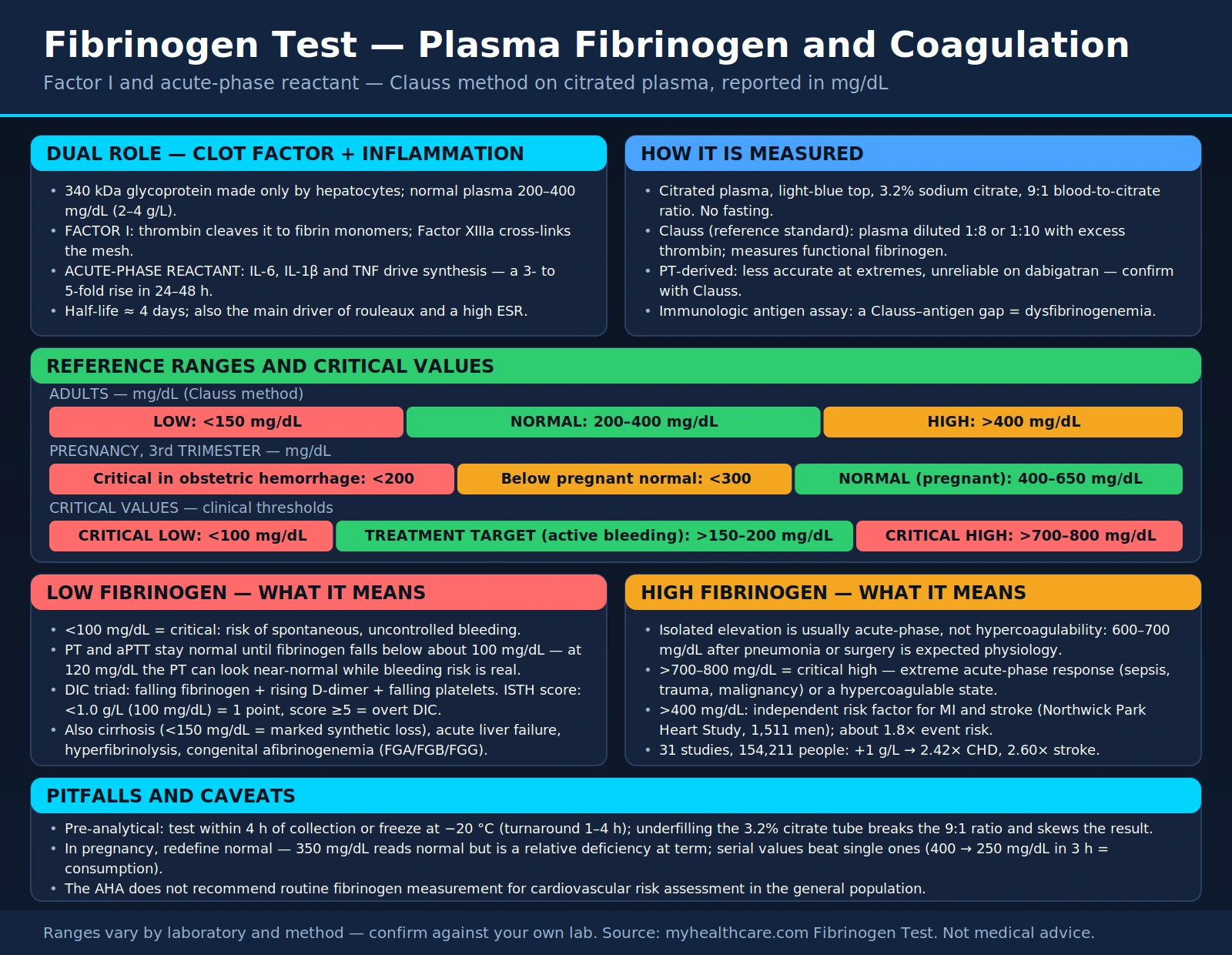
Fibrinogen is a protein produced by the liver that helps blood clots form. Thrombin cleaves it into fibrin, which polymerizes into the clot network, and it also acts as a pro-inflammatory signalling molecule in many diseases. The plasma fibrinogen test measures how much is in the blood; it is ordered for clotting problems such as excessive bleeding, it is one of the components of the disseminated intravascular coagulation (DIC) score, and in large cohort studies higher levels track with heart disease and stroke.
Table of Contents
- What Is Fibrinogen
- How the Test Is Performed
- Reference Ranges and Published Thresholds
- Fibrinogen in DIC and Hyperfibrinolysis
- Fibrinogen as an Acute-Phase Reactant
- Fibrinogen and Cardiovascular Risk
- Liver Disease and Fibrinogen
- Treatment: Fibrinogen Replacement
- Interpretation Points From the Research
- Key Research Papers
- Connections
- Featured Videos
What Is Fibrinogen
Fibrinogen is a protein produced by the liver; it helps stop bleeding by helping blood clots to form (MedlinePlus). Each molecule is built from two sets of three chains — Aα, Bβ and γ — joined by disulfide bridges, with two outer D domains connected to a central E domain (Mosesson 2005).
Fibrinogen as a coagulation factor (Factor I): Fibrin forms after thrombin cleaves fibrinopeptide A from the fibrinogen Aα chains, which starts fibrin polymerization. Double-stranded fibrils assemble, branch and associate laterally into a clot network, and factor XIII (XIIIa) then covalently cross-links pairs of γ chains (Mosesson 2005).
Fibrinogen and inflammation: Fibrinogen is also an acute-phase reactant (Toh 2016), and MedlinePlus lists infection and inflammation among the causes of abnormal results. In 16 intensive-care patients with COVID-19 acute respiratory distress syndrome, fibrinogen was markedly raised and its level was associated with interleukin-6 (Ranucci 2020). A 2012 review describes fibrinogen as a signalling molecule with a pro-inflammatory role reported in vascular wall disease, stroke, multiple sclerosis, Alzheimer's disease, rheumatoid arthritis, bacterial infection, colitis, lung and kidney fibrosis and several types of cancer (Davalos 2012).
Conditions that reduce fibrinogen: MedlinePlus lists the body using up too much fibrinogen (as in DIC), fibrinogen deficiency present from birth or acquired later, breakdown of fibrin (fibrinolysis) and heavy bleeding. Congenital fibrinogen disorders include afibrinogenemia, hypofibrinogenemia, dysfibrinogenemia and hypodysfibrinogenemia (Casini 2025).
How the Test Is Performed
A blood sample is needed, and no special preparation is required (MedlinePlus).
Clauss Method
- The International Council for Standardisation in Haematology (ICSH) 2024 recommendations describe the Clauss fibrinogen assay as the method of choice for assessing fibrinogen function, while noting situations in which its results may be misleading (Mackie 2024); a 2025 laboratory review calls it the gold standard (Undas 2025)
- High concentrations of fibrin degradation products can interfere with clot end-points and artefactually lower a Clauss fibrinogen estimate (Toh 2016)
PT-Derived Fibrinogen
- Prothrombin-time-derived fibrinogen assays are frequently used, but the ICSH states that their results are not interchangeable between methods and that fibrinogen can be overestimated in certain clinical scenarios (Mackie 2024)
- Dabigatran, a direct thrombin inhibitor: in plasma spiked with the drug, a Clauss reagent with a low thrombin concentration was affected even at levels matching trough concentrations in patients, a high-thrombin Clauss reagent only above observed peak levels, and PT-derived fibrinogen at about peak concentrations; the errors were falsely low fibrinogen results, and the authors note that laboratories need to evaluate their own reagents (Kanda 2021)
Immunologic (Antigen) Assays
- The ICSH recommends fibrinogen antigen assays in the investigation of functional fibrinogen abnormalities, and fibrinogen antigen plus genetic testing to confirm congenital fibrinogen disorders (Mackie 2024)
- Diagnosis of congenital disorders rests on fibrinogen activity and antigen levels together with the genotype; qualitative (dysfibrinogenemia) disorders can be harder to diagnose, depending on the reagents and methods used (Casini 2025)
Reference Ranges and Published Thresholds
MedlinePlus gives a normal range of 200 to 400 mg/dL (2.0 to 4.0 g/L) and notes that normal value ranges may vary slightly among laboratories, so a result is read against the reporting laboratory's own range.
Fibrinogen — Adults mg/dL (MedlinePlus)
Pregnancy: In 391 women with uncomplicated pregnancies, fibrinogen increased markedly, and the authors conclude that gestational-age-specific reference values are essential for interpreting it during pregnancy, delivery and the puerperium (Szecsi 2010). In a Danish cohort of 55 healthy pregnant women, fibrinogen rose significantly from the second to the third trimester (Hansen 2011). A 2022 review describes a two- to three-fold increase in fibrinogen in normal pregnancy (Erez 2022).
Thresholds Used in Published Scores and Guidelines
- DIC scoring: In the International Society on Thrombosis and Haemostasis (ISTH) overt-DIC score, fibrinogen below 1 g/L (100 mg/dL) scores 1 point (Toh 2016)
- Major bleeding after trauma: The 2023 European trauma guideline recommends fibrinogen concentrate or cryoprecipitate when major bleeding is accompanied by a Clauss fibrinogen of 1.5 g/L (150 mg/dL) or less, or by viscoelastic signs of a functional fibrinogen deficit (Rossaint 2023)
- Obstetric hemorrhage: A 2022 review reports that the Welsh obstetric bleeding strategy (OBSCYMRU) uses fibrinogen concentrate for active obstetric hemorrhage when fibrinogen is below 2 g/L (200 mg/dL) or FIBTEM A5 is below 11 mm (Erez 2022)
Cardiovascular risk: The Northwick Park Heart Study and the Fibrinogen Studies Collaboration reported risk rising with fibrinogen level; the collaboration found no evidence of a threshold within the range of usual fibrinogen levels studied (see Fibrinogen and Cardiovascular Risk).
Fibrinogen in DIC and Hyperfibrinolysis
MedlinePlus lists DIC and fibrinolysis among the causes of a low fibrinogen result.
Disseminated Intravascular Coagulation
DIC is a syndrome of systemic intravascular activation of coagulation that leads to widespread deposition of fibrin in the circulation (Levi 2013). Sustained thrombin generation leads to consumption of both pro- and anticoagulant factors (Toh 2016). The laboratory picture commonly described is a prolonged prothrombin time (PT) and partial thromboplastin time, a low platelet count, low fibrinogen and raised D-dimer (Erez 2022).
- ISTH overt-DIC score: PT prolongation, platelet count, fibrinogen and a fibrin-related marker such as D-dimer are combined into a score; fibrinogen below 1 g/L scores 1 point, and a cumulative score of 5 or more is the basis for overt DIC (Taylor 2001; Toh 2007; Toh 2016)
- A fibrinogen below 1 g/L has a low sensitivity (22%) and a high specificity (100%) for DIC; because fibrinogen is also an acute-phase reactant, Toh and colleagues give weight to a decreasing fibrinogen level rather than to a low absolute value (Toh 2016)
- A 2022 review describes DIC as a dynamic situation that calls for continuous reassessment of clinical and laboratory findings, including a decreasing fibrinogen concentration, until it resolves (Erez 2022)
- Levi and van der Poll describe specific and vigorous treatment of the underlying disorder as the cornerstone of DIC management (Levi 2013)
Obstetric DIC
Placental abruption, amniotic fluid embolism, HELLP syndrome, retained stillbirth and acute fatty liver of pregnancy are among the complications that underlie obstetric DIC (Erez 2022). At a Nova Scotia tertiary maternity hospital, 49 cases of DIC occurred in 151,678 deliveries between 1980 and 2009; placental abruption was the antecedent cause in 37% and postpartum hemorrhage or hypovolemia in 29% (Rattray 2012). Because normal pregnancy raises fibrinogen, a pregnancy-specific DIC score built on fibrinogen, the PT difference and the platelet count has been developed; at a cut-off of 26 points or more it had 88% sensitivity and 96% specificity (Erez 2022).
In 128 women with postpartum hemorrhage, fibrinogen was the only marker independently associated with progression to severe hemorrhage: at enrolment the risk was 2.63-fold higher for each 1 g/L fall in fibrinogen, a fibrinogen of 2 g/L or less had a positive predictive value of 100%, and a fibrinogen above 4 g/L had a negative predictive value of 79% (Charbit 2007). In a consecutive cohort of 356 women with a 1000 to 1500 mL postpartum hemorrhage, those who went on to need 8 units of blood products had a median fibrinogen of 2.1 g/L (interquartile range 1.8–3.4), against 3.9 g/L (3.2–4.5) in those who did not progress; FIBTEM A5 was an independent predictor of progression to bleeds above 2500 mL (Collins 2014). Both medians sit at or inside the general adult range of 2.0–4.0 g/L.
Congenital Fibrinogen Disorders
- Afibrinogenemia, hypofibrinogenemia, dysfibrinogenemia and hypodysfibrinogenemia are defined by fibrinogen levels, clinical features and genotype; quantitative and qualitative defects lower clottability and usually cause a bleeding tendency whose severity relates to the fibrinogen concentration (Casini 2025)
- Thrombosis: paradoxically, patients with congenital fibrinogen disorders are also at risk of thrombotic events, and the causative mutation is one of the determinants of that risk (Casini 2025)
- Pregnancy: women with congenital fibrinogen disorders are particularly at risk of adverse obstetric outcomes (Casini 2025)
Hyperfibrinolysis
Toh and colleagues note that hyperfibrinolysis is typically characterized by very low fibrinogen levels with very high concentrations of fibrin degradation products (Toh 2016). In major bleeding after trauma, the 2023 European guideline pairs early tranexamic acid, an antifibrinolytic drug, with early fibrinogen administration (Rossaint 2023).
Fibrinogen as an Acute-Phase Reactant and Inflammatory Marker
Fibrinogen is one of the acute-phase reactants, proteins whose blood level changes during inflammation (Toh 2016). MedlinePlus lists infection and inflammation among the causes of an abnormal fibrinogen result.
Interleukin-6: In 16 patients with COVID-19 acute respiratory distress syndrome admitted to intensive care, the median fibrinogen was 794 mg/dL (interquartile range 583–933), and fibrinogen levels were associated with interleukin-6 values; fibrinogen fell over the following days after thromboprophylaxis was increased (Ranucci 2020).
Conditions linked to fibrinogen in the research:
- A pro-inflammatory role for fibrinogen has been reported in vascular wall disease, stroke, spinal cord injury, brain trauma, multiple sclerosis, Alzheimer's disease, rheumatoid arthritis, bacterial infection, colitis, lung and kidney fibrosis, Duchenne muscular dystrophy and several types of cancer (Davalos 2012)
- Acute COVID-19 — hyperfibrinogenemia was part of the pro-coagulant pattern of COVID-19 acute respiratory distress syndrome (Ranucci 2020)
- Pregnancy — fibrinogen rises markedly, and gestational-age-specific reference values are used (Szecsi 2010)
- Smoking — in the Northwick Park Heart Study, lifetime duration of smoking was a determinant of plasma fibrinogen (Meade 1987)
Fibrinogen and Cardiovascular Risk
Fibrinogen has been studied both as a participant in thrombosis and as an epidemiological marker of risk for coronary heart disease and stroke.
Mechanistic Role
Fibrin(ogen) provides the scaffolding of a thrombus and has further binding functions, including roles in incorporating platelets into a developing thrombus and in binding leukocytes through the Mac-1 integrin (Mosesson 2005). A 2012 review lists vascular wall disease and stroke among the conditions in which a pro-inflammatory role for fibrinogen has been reported (Davalos 2012).
Epidemiological Evidence
- Northwick Park Heart Study (1986): Among 1,511 white men aged 40–64 at recruitment, 109 later had a first major ischemic heart disease event. A one-standard-deviation rise in fibrinogen was associated with an 84% higher risk of an ischemic heart disease episode within 5 years, compared with 43% for cholesterol; the risk with high fibrinogen was greater in younger than in older men, and much of the association between smoking and ischemic heart disease appeared to be mediated through fibrinogen (Meade 1986)
- Fibrinogen Studies Collaboration meta-analysis (JAMA 2005): Individual records on 154,211 participants in 31 prospective studies; the age- and sex-adjusted hazard ratio per 1 g/L higher usual fibrinogen was 2.42 for coronary heart disease and 2.06 for stroke, falling to about 1.8 after further adjustment for several established vascular risk factors. The association was approximately log-linear with no evidence of a threshold, and the authors state that whether elevated fibrinogen is causal requires further research (Fibrinogen Studies Collaboration 2005)
Lifestyle and Treatment Effects on Fibrinogen
- Smoking: In the Northwick Park cohort, giving up or taking up smoking was associated with a fall or rise of about 0.15 g/L in fibrinogen; after quitting, levels began to fall soon but took more than 5 years to reach those of lifelong non-smokers (Meade 1987)
- Exercise: In a randomized trial in 152 healthy female smokers, 12 weeks of exercise training improved fitness but did not change fibrinogen or the other inflammatory markers measured; baseline links between fitness and these markers were largely explained by body fat (Hammett 2006)
- Fibrates and statins: A meta-analysis of 22 head-to-head randomized trials (2,762 participants) found that fibrates lowered fibrinogen by 40.7 mg/dL more than statins (Sahebkar 2016)
- Omega-3 fatty acids: A meta-analysis of 12 trials in 847 people with type 2 diabetes found no significant effect of marine omega-3 fatty acids on fibrinogen (Hartweg 2007)
What Remains Uncertain
The Fibrinogen Studies Collaboration found moderately strong associations between usual fibrinogen and coronary heart disease, stroke and other mortality, but concluded that assessing any causal relevance of elevated fibrinogen requires additional research (Fibrinogen Studies Collaboration 2005).
Liver Disease and Fibrinogen
The liver produces fibrinogen (MedlinePlus) and most of the other blood coagulation factors, so a deranged coagulation profile is expected in patients receiving a liver transplant (Bansal 2021).
Cirrhosis and Invasive Procedures
- In a randomized trial of 60 patients with cirrhosis and significant coagulopathy (INR above 1.8 and/or platelets below 50 × 109/L) before an invasive procedure, a thromboelastography (TEG)-guided strategy led to blood products in 16.7% of patients, against 100% under standard care guided by INR and platelet count, without more bleeding complications (De Pietri 2016)
- In the same trial, post-procedure bleeding occurred in only 1 patient (standard-care group, after large-volume paracentesis), and the authors suggest that TEG thresholds should be re-evaluated (De Pietri 2016)
Liver Transplantation
In 50 patients undergoing living-donor liver transplantation, PT, aPTT, platelet count and fibrinogen were measured alongside TEG from before anesthesia through the dissection, anhepatic and reperfusion phases to 24 hours after surgery. Platelet count and fibrinogen correlated significantly with TEG in almost all phases, and the authors describe transfusion decisions as a combination of the clinical assessment of the surgical and anesthesia teams with laboratory and TEG results (Bansal 2021).
Treatment: Fibrinogen Replacement
Two concentrated sources of fibrinogen are used in bleeding patients: cryoprecipitate and fibrinogen concentrate.
Cryoprecipitate
- Produced by pooling fresh frozen donor plasma; its fibrinogen content per unit varies considerably (Nascimento 2020)
- Current guidelines suggest limiting it to hypofibrinogenemia in patients with clinical bleeding, and some professional bodies indicate it in perioperative bleeding only where fibrinogen concentrate is not available; data on its clinical efficacy are limited (Nascimento 2020)
- The 2023 European trauma guideline equates an initial fibrinogen supplementation of 3–4 g with 15–20 single-donor units of cryoprecipitate (Rossaint 2023)
Fibrinogen Concentrate
- A 2013 Cochrane review of six randomized trials (248 participants, mainly elective cardiac surgery) found fewer allogeneic transfusions with fibrinogen concentrate (risk ratio 0.47), but rated the trials as low quality with high risk of bias and the evidence as weak (Wikkelsø 2013)
- Cardiac surgery: in a randomized, placebo-controlled trial in 116 patients having complex heart surgery, fibrinogen concentrate given after protamine lowered the rate of any allogeneic blood product transfusion (odds ratio 0.40) and reduced postoperative bleeding (Ranucci 2015)
- Postpartum hemorrhage: in the FIB-PPH randomized trial (249 women with severe postpartum hemorrhage and a mean fibrinogen of 4.5 g/L at inclusion), a pre-emptive 2 g dose did not reduce transfusion (20% vs 22%) or any secondary outcome (Wikkelsø 2015)
- Trauma: in a randomized comparison cited by the 2023 European guideline, fibrinogen concentrate and cryoprecipitate both raised plasma fibrinogen effectively (Rossaint 2023)
Thresholds in Published Guidance
- Major trauma bleeding: fibrinogen concentrate or cryoprecipitate when the Clauss fibrinogen is 1.5 g/L or less (Grade 1C), with an initial supplementation of 3–4 g suggested; the guideline's best-practice targets include fibrinogen above 1.5–2.0 g/L, and it notes that plasma (FFP) is impractical for raising fibrinogen above 1.5 g/L (Rossaint 2023)
- Active obstetric hemorrhage: the Welsh OBSCYMRU strategy uses fibrinogen concentrate when fibrinogen is below 2 g/L or FIBTEM A5 is below 11 mm, as reported in a 2022 review (Erez 2022)
Adjunctive Antifibrinolytic Therapy
Tranexamic acid (TXA) is an antifibrinolytic drug. The 2023 European trauma guideline describes early TXA administration and early fibrinogen administration as both of key importance in bleeding trauma patients (Rossaint 2023).
Interpretation Points From the Research
The studies above point to several recurring themes in how fibrinogen results are read:
- Fibrinogen is read with the rest of the coagulation panel. The ISTH overt-DIC score combines it with PT, platelet count and a fibrin-related marker (Toh 2016).
- A high value often reflects inflammation. Fibrinogen is an acute-phase reactant, which is why Toh and colleagues weight a falling level over a single low value in suspected DIC (Toh 2016).
- Pregnancy changes the baseline. Fibrinogen rises markedly in pregnancy and gestational-age-specific reference values are used (Szecsi 2010); in postpartum hemorrhage, a median of 2.1 g/L was seen in women whose bleeding progressed (Collins 2014).
- The trend matters. DIC is described as dynamic, with continuous reassessment of falling fibrinogen and platelet count (Erez 2022).
- Dabigatran can lower measured fibrinogen. Both Clauss (with a low-thrombin reagent) and PT-derived fibrinogen gave falsely low results in dabigatran-spiked plasma (Kanda 2021).
- Functional and antigen results are compared in suspected dysfibrinogenemia. The ICSH recommends antigen assays for functional abnormalities and antigen plus genetic testing to confirm congenital disorders (Mackie 2024).
- Decisions about testing and treatment belong with a clinician.
Key Research Papers
Selected PubMed citations and searches for fibrinogen and coagulation:
- Meade TW et al. Haemostatic function and ischaemic heart disease: principal results of the Northwick Park Heart Study. Lancet. 1986;2(8506):533–7. — PubMed PMID: 2875280
- Fibrinogen Studies Collaboration; Danesh J et al. Plasma fibrinogen level and the risk of major cardiovascular diseases and nonvascular mortality: an individual participant meta-analysis. JAMA. 2005;294(14):1799–809. — PubMed PMID: 16219884
- Levi M, van der Poll T. Disseminated intravascular coagulation: a review for the internist. Intern Emerg Med. 2013;8(1):23–32. — PubMed PMID: 23015284
- Toh CH, Hoots WK; SSC on Disseminated Intravascular Coagulation of the ISTH. The scoring system of the Scientific and Standardisation Committee on Disseminated Intravascular Coagulation of the International Society on Thrombosis and Haemostasis: a 5-year overview. J Thromb Haemost. 2007;5(3):604–6. — PubMed PMID: 17096704
- Davalos D, Akassoglou K. Fibrinogen as a key regulator of inflammation in disease. Semin Immunopathol. 2012;34(1):43–62. — PubMed PMID: 22037947
- Ranucci M. Fibrinogen supplementation in cardiac surgery: where are we now and where are we going? J Cardiothorac Vasc Anesth. 2013;27(1):1–4. — PubMed PMID: 23182836
- Wikkelsø AJ et al. Pre-emptive treatment with fibrinogen concentrate for postpartum haemorrhage: randomized controlled trial. Br J Anaesth. 2015;114(4):623–33. — PubMed PMID: 25586727
- Casini A et al. Clinical, laboratory, and molecular aspects of congenital fibrinogen disorders. Semin Thromb Hemost. 2025;51(2):103–110. — PubMed PMID: 39151903
- De Pietri L et al. Thrombelastography-guided blood product use before invasive procedures in cirrhosis with severe coagulopathy: a randomized, controlled trial. Hepatology. 2016;63(2):566–73. — PubMed PMID: 26340411
- Ranucci M et al. The procoagulant pattern of patients with COVID-19 acute respiratory distress syndrome. J Thromb Haemost. 2020;18(7):1747–1751. — PubMed PMID: 32302448
- Collins PW et al. Fibrin-based clot formation as an early and rapid biomarker for progression of postpartum hemorrhage: a prospective study. Blood. 2014;124(11):1727–36. — PubMed PMID: 25024304
- Erez O et al. DIC in pregnancy — pathophysiology, clinical characteristics, diagnostic scores, and treatments. J Blood Med. 2022;13:21–44. — PubMed PMID: 35023983
- Charbit B et al. The decrease of fibrinogen is an early predictor of the severity of postpartum hemorrhage. J Thromb Haemost. 2007;5(2):266–73. — PubMed PMID: 17087729
- Toh CH, Alhamdi Y, Abrams ST. Current pathological and laboratory considerations in the diagnosis of disseminated intravascular coagulation. Ann Lab Med. 2016;36(6):505–12. — PubMed PMID: 27578502
- Taylor FB Jr et al. Towards definition, clinical and laboratory criteria, and a scoring system for disseminated intravascular coagulation. Thromb Haemost. 2001;86(5):1327–30. — PubMed PMID: 11816725
- Mackie I et al. International council for standardisation in haematology recommendations on fibrinogen assays, thrombin clotting time and related tests in the investigation of bleeding disorders. Int J Lab Hematol. 2024;46(1):20–32. — PubMed PMID: 37984807
- Undas A. Laboratory testing for fibrinogen disorders: from routine investigations to research studies. Semin Thromb Hemost. 2025;51(6):651–659. — PubMed PMID: 38889802
- Kanda GS et al. Pitfalls in the assessment of disseminated intravascular coagulation in patients on dabigatran. Pathology. 2021;53(5):623–627. — PubMed PMID: 33526243
- Mosesson MW. Fibrinogen and fibrin structure and functions. J Thromb Haemost. 2005;3(8):1894–904. — PubMed PMID: 16102057
- Rattray DD et al. Acute disseminated intravascular coagulation in obstetrics: a tertiary centre population review (1980 to 2009). J Obstet Gynaecol Can. 2012;34(4):341–347. — PubMed PMID: 22472333
- Szecsi PB et al. Haemostatic reference intervals in pregnancy. Thromb Haemost. 2010;103:718–27. — PubMed PMID: 20174768
- Hansen AT et al. Changes in fibrin D-dimer, fibrinogen, and protein S during pregnancy. Scand J Clin Lab Invest. 2011;71(2):173–6. — PubMed PMID: 21190511
- Meade TW, Imeson J, Stirling Y. Effects of changes in smoking and other characteristics on clotting factors and the risk of ischaemic heart disease. Lancet. 1987;2:986–8. — PubMed PMID: 2889958
- Hammett CJ et al. Effects of exercise training on 5 inflammatory markers associated with cardiovascular risk. Am Heart J. 2006;151:367.e7–367.e16. — PubMed PMID: 16442901
- Sahebkar A et al. Head-to-head comparison of statins versus fibrates in reducing plasma fibrinogen concentrations: a systematic review and meta-analysis. Pharmacol Res. 2016;103:236–52. — PubMed PMID: 26657419
- Hartweg J et al. Meta-analysis of the effects of n-3 polyunsaturated fatty acids on haematological and thrombogenic factors in type 2 diabetes. Diabetologia. 2007;50(2):250–8. — PubMed PMID: 17119918
- Bansal S et al. An observational study of hemostatic profile during different stages of liver transplant surgery using laboratory-based tests and thromboelastography. Anesth Essays Res. 2021;15(2):194–201. — PubMed PMID: 35281353
- Nascimento B et al. Cryoprecipitate transfusion in bleeding patients. CJEM. 2020;22(S2):S4–S11. — PubMed PMID: 33084562
- Rossaint R et al. The European guideline on management of major bleeding and coagulopathy following trauma: sixth edition. Crit Care. 2023;27(1):80. — PubMed PMID: 36859355
- Wikkelsø A et al. Fibrinogen concentrate in bleeding patients. Cochrane Database Syst Rev. 2013;(8):CD008864. — PubMed PMID: 23986527
- Ranucci M et al. Randomized, double-blinded, placebo-controlled trial of fibrinogen concentrate supplementation after complex cardiac surgery. J Am Heart Assoc. 2015;4(6):e002066. — PubMed PMID: 26037084
Reference range source: MedlinePlus Medical Encyclopedia, Fibrinogen blood test (review date 2/3/2025) — medlineplus.gov/ency/article/003650.htm
Fibrinogen coagulation clinical laboratory — PubMed search
Plasma fibrinogen DIC disseminated intravascular coagulation — PubMed search