Plantain: Its Psyllium Relatives, Safety and Evidence
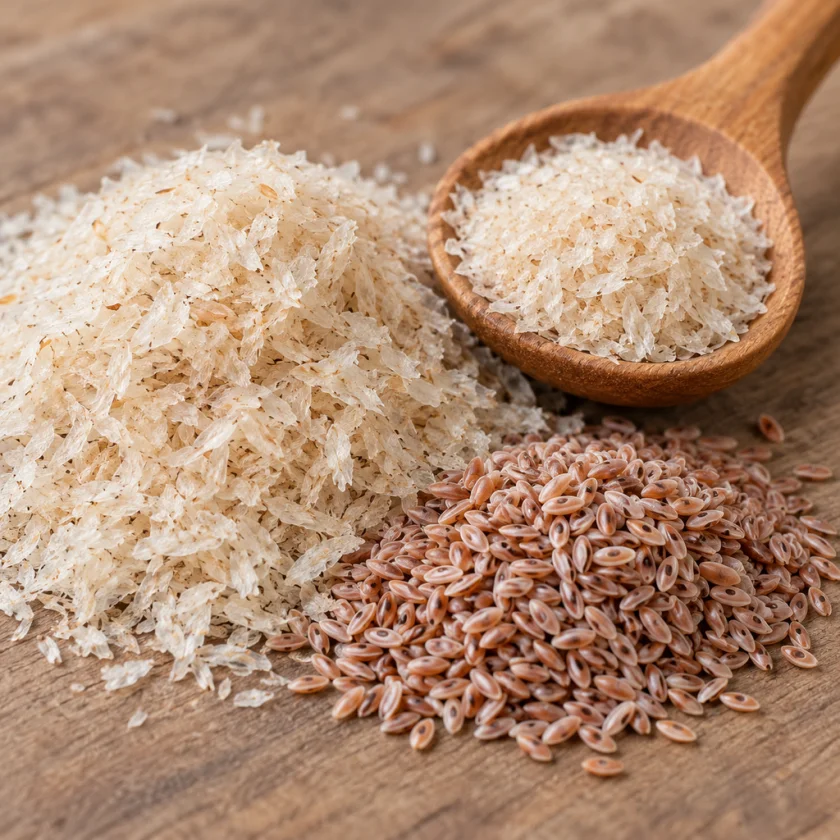
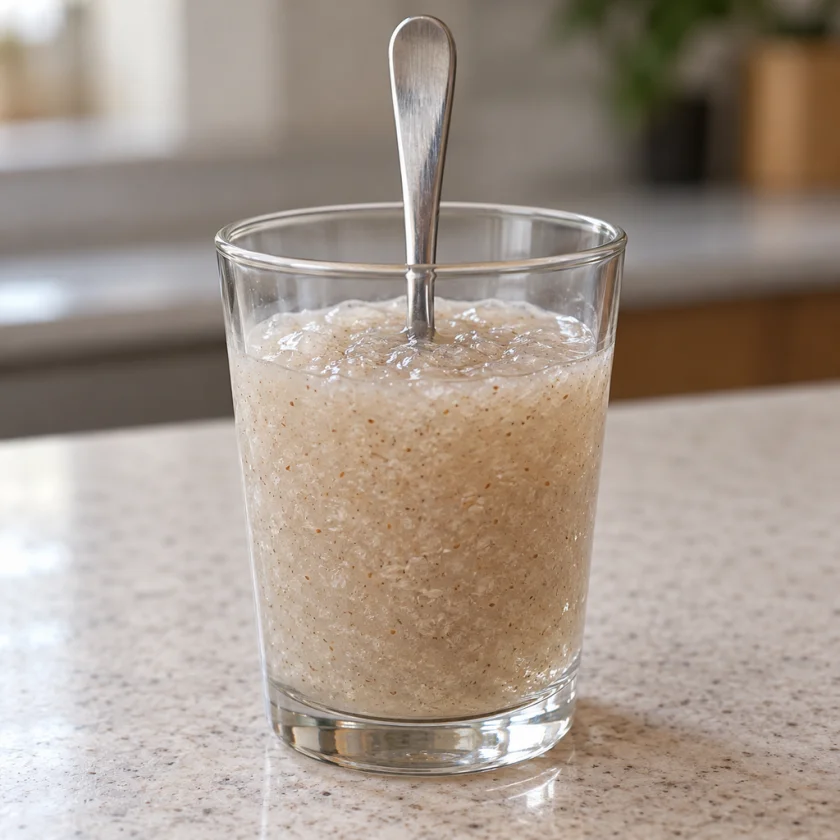
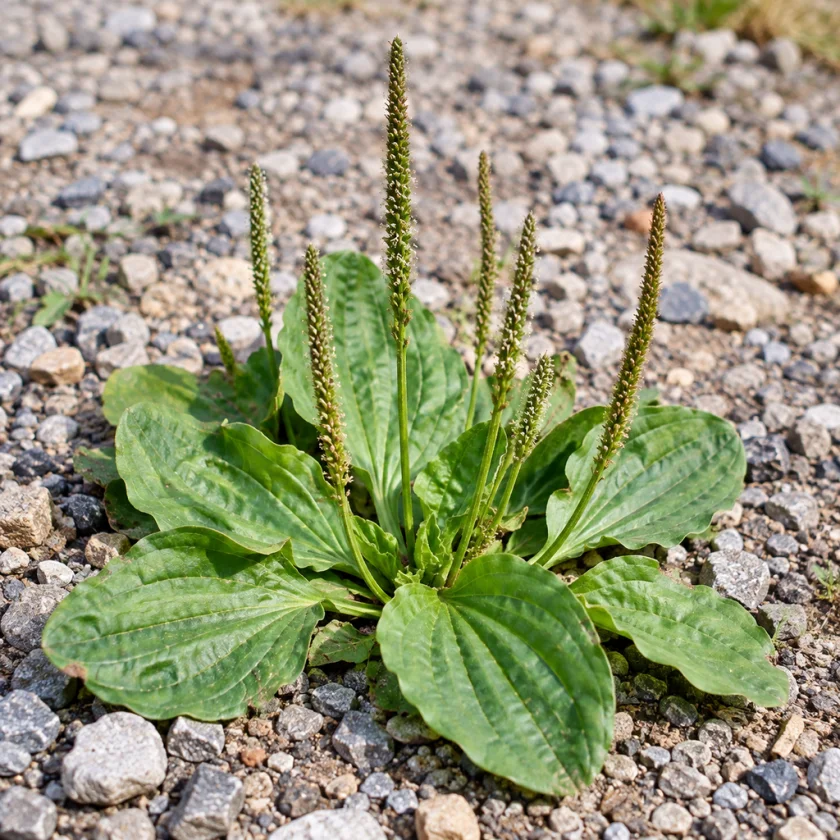
Here is the fact about plantain that is most useful and most often missed. Psyllium is a Plantago. The fibre supplement sold in every pharmacy as psyllium or ispaghula husk comes from Plantago ovata, with Plantago psyllium as a second commercial species — the same genus as the lawn weed used for stings and cough tea. And psyllium husk is one of the best-evidenced supplements in the whole of nutritional medicine, with genuine randomised controlled trials and meta-analyses for chronic constipation, irritable bowel syndrome, low-density lipoprotein (LDL) cholesterol and glycaemic control.
That contrast is instructive in two opposite directions at once, and this page insists on both. In one direction it destroys a common excuse for thin herbal evidence: nobody can argue that weedy Plantago species go untested because the genus is unfashionable, unpatentable or beneath scientific notice, when a close relative has been trialled to a standard most pharmaceuticals would recognise. The genus is demonstrably triallable. In the other direction, psyllium's evidence is psyllium's. Different species, different plant part, different mechanism, a dose thirty to a hundred times smaller. The leaf does not get to borrow the husk's credibility, and the second half of this page is where the leaf's own safety and evidence position is set out on its own terms — which turns out to be largely reassuring, with a small number of genuine cautions that are mostly about where the plant grew rather than what it contains.
Table of Contents
- The Same Genus — and What That Does and Does Not Mean
- What Psyllium Actually Is: Species, Part, Mechanism
- Psyllium's Clinical Evidence, Named
- Four Reasons None of That Transfers to the Leaf
- What the Contrast Does Prove
- How the Leaf and Seed Compare as Fibre
- Leaf Safety: The Honest Answer Is Largely Reassuring
- The Real Risk Is the Ground, Not the Plant
- Vitamin K and Anticoagulants
- Mucilage and Medicine Timing
- Allergy: Pollen, and the Psyllium Occupational Signal
- Hazards Plantain Does Not Have
- Psyllium's Own Cautions, Which Are Not the Leaf's
- Pregnancy, Breastfeeding and Children
- The Honest Ledger
- Key Research Papers
- Connections
- Featured Videos
The Same Genus — and What That Does and Does Not Mean
Botanically, the relationship is close and real. Plantago major, Plantago lanceolata, Plantago ovata and Plantago psyllium are all members of one genus in the family Plantaginaceae. They share a general chemistry: mucilaginous polysaccharides, iridoid glycosides, phenylethanoid glycosides. A herbalist noticing that psyllium swells into a gel and that plantain leaf feels slippery is noticing something true about the family.
What "same genus" does not mean is "same medicine". Consider how much variation a single genus tolerates elsewhere: Brassica contains cabbage, mustard and rapeseed; Prunus contains almonds, cherries and the cyanogenic kernels of apricots; Solanum contains the potato tuber you eat and the potato foliage, which is poisonous. Genus membership predicts family resemblance in chemistry. It predicts nothing at all about dose, mechanism, indication or evidence.
And in this particular case the differences are not subtle. They are among the largest that can separate two herbal products: a different species, a different organ of the plant, a different mode of action, and a dose ratio in the tens-to-hundreds. That is set out precisely below, because vagueness here is how the leaf ends up wearing the husk's clinical trials.
What Psyllium Actually Is: Species, Part, Mechanism
- Species. Mainly Plantago ovata — blond or Indian psyllium, also called ispaghula, cultivated at scale in Gujarat and Rajasthan in India, which supplies most of the world market. Plantago psyllium (also catalogued as P. afra), black or French psyllium, is a second commercial source.
- Part. The husk — the outer seed coat, mechanically stripped from the seed. Not the leaf. Not the root. Not the whole seed, though whole-seed preparations exist and behave differently. The husk is roughly the most concentrated natural source of gel-forming soluble fibre in commerce.
- Mechanism. Bulk-forming, gel-forming fibre acting in the lumen of the gut. Psyllium husk is highly resistant to fermentation compared with many soluble fibres, so it retains its water-holding gel all the way through the colon. That single physical property explains the whole clinical profile: it normalises stool form in both directions, it slows gastric emptying and glucose absorption, and it binds bile acids so the liver draws on circulating cholesterol to replace them.
- Dose. Trials typically use roughly 7–15 g of husk per day, often in divided doses, with adequate fluid. Compare that with the 2–4 g of dried leaf in a cup of plantain tea, of which mucilage is a minority fraction — the arithmetic is on the cough page and lands somewhere between a thirtieth and a hundredth of the psyllium dose, on assumptions deliberately generous to the leaf.
- Route and site of action. Swallowed, acting throughout the gastrointestinal tract, with the effects that matter occurring in the small intestine and colon — metres beyond the pharynx where a demulcent throat effect happens, and on the other side of the skin from a poultice.
The physics of why psyllium behaves differently from other fibres is set out clearly in McRorie and McKeown's "Understanding the physics of functional fibers in the gastrointestinal tract: an evidence-based approach to resolving enduring misconceptions about insoluble and soluble fiber", Journal of the Academy of Nutrition and Dietetics, 2017, which is the paper to read if you want to know why "fibre" is not one thing. PubMed PMID: 27863994.
Psyllium's Clinical Evidence, Named
Four indications where psyllium husk has real controlled human evidence. These are named specifically so a reader can see what an actual evidence base looks like, and so the contrast with the leaf is concrete rather than rhetorical.
Chronic constipation
Psyllium increases stool water content and stool weight and improves stool form and frequency. The mechanistic and clinical work goes back decades — Ashraf and colleagues studied the effects of psyllium therapy on stool characteristics, colon transit and anorectal function in chronic idiopathic constipation in Alimentary Pharmacology & Therapeutics, 1995. PubMed PMID: 8824651. Psyllium is a first-line bulk-forming laxative in most clinical guidance for constipation, and it is not a stimulant laxative — a distinction that matters, and that separates it sharply from senna.
A 2022 meta-analysis of 16 randomised trials with 1,251 adults with chronic constipation brought the fibre-supplement evidence together: 66% of people responded to fibre against 41% on control treatment. Psyllium and pectin had significant effects, and the benefit showed mainly at doses above 10 g a day taken for at least 4 weeks; wind (flatulence) was more common with fibre. The authors noted considerable differences between the trials. PubMed PMID: 35816465.
Irritable bowel syndrome
Bijkerk and colleagues, "Soluble or insoluble fibre in irritable bowel syndrome in primary care? Randomised placebo controlled trial", BMJ, 2009, compared psyllium against bran against placebo in primary care and found psyllium improved symptoms while bran did not. The trial gave 275 adults aged 18 to 65 with irritable bowel syndrome 10 g a day of psyllium, bran or a rice-flour placebo for 12 weeks. In the first month 57% on psyllium had adequate symptom relief against 35% on placebo. After three months symptom severity had fallen by 90 points with psyllium, 49 points with placebo (P=0.03) and 58 points with bran, which was not different from placebo. Bran beat placebo only in the third month, and that result did not hold up in the strictest analysis; early dropout was most common with bran, mainly because symptoms got worse. PubMed PMID: 19713235. This is an unusually informative trial because it makes the point that "fibre" is not a single intervention: two fibres, one placebo, opposite results. Psyllium is recommended in irritable bowel syndrome (IBS) guidance in a way that bran specifically is not.
Low-Density Lipoprotein cholesterol
Anderson and colleagues' "Cholesterol-lowering effects of psyllium intake adjunctive to diet therapy in men and women with hypercholesterolemia: meta-analysis of 8 controlled trials", American Journal of Clinical Nutrition, 2000, pooled controlled trials and found a modest but consistent reduction in low-density lipoprotein. The 8 trials (384 people on psyllium, 272 on a cellulose placebo) used 10.2 g of psyllium a day for at least 8 weeks in people with mild-to-moderate high cholesterol who were already on a low-fat diet: total cholesterol fell 4% and LDL cholesterol 7% more than on placebo, with no change in HDL cholesterol or triglycerides. PubMed PMID: 10648260. Wei and colleagues examined the time- and dose-dependence of psyllium's effect on serum lipids in mild-to-moderate hypercholesterolaemia in a meta-analysis of controlled clinical trials, European Journal of Clinical Nutrition, 2009. PubMed PMID: 18985059. The effect is real and modest — useful as an adjunct alongside diet, not a substitute for lipid-lowering treatment where that is indicated. See cholesterol management. Notably, US regulators authorised a health claim linking soluble fibre from psyllium husk to reduced coronary heart disease risk, which is a far higher regulatory bar than a traditional-use registration.
Glycaemic control
Gibb and colleagues' meta-analysis reporting that psyllium fibre improves glycaemic control proportional to loss of glycaemic control — across euglycaemic people, people at risk of type 2 diabetes and people being treated for it — in the American Journal of Clinical Nutrition, 2015, is the reference work. It gathered 35 randomised controlled trials spanning three decades and found no significant glucose lowering in people with normal blood sugar, a modest improvement in people with prediabetes, and the largest improvement in people being treated for type 2 diabetes. PubMed PMID: 26561625. The finding has a pleasing internal logic: the worse the starting control, the larger the effect, which is what a mechanism acting on postprandial glucose absorption should look like.
And one more, for the sake of completeness
Plantago ovata seed has also been studied in inflammatory bowel disease — Fernández-Bañares and colleagues ran a randomised clinical trial of Plantago ovata seeds as dietary fibre compared with mesalamine in maintaining remission in ulcerative colitis, published in the American Journal of Gastroenterology in 1999. PubMed PMID: 10022641. Note that this one used the seed, not the husk — a reminder that even within psyllium, the plant part is a variable that has to be tracked.
Psyllium's effects on the gut microbiota have also been examined directly, for instance in work on the effect of psyllium husk on intestinal microbiota in constipated patients and healthy controls, International Journal of Molecular Sciences, 2019. PubMed PMID: 30669509.
Four Reasons None of That Transfers to the Leaf
Stated as a checklist, because this is the specific error the page exists to prevent.
- Species substitution. P. ovata is not P. major and not P. lanceolata. Even closely related Plantago species differ measurably in constituents, which comparative phenolic work has demonstrated within the genus.
- Part substitution. Seed husk is not leaf. These are different tissues with different polysaccharide composition, different concentration and different physical behaviour in water. A result for a seed coat says nothing about a leaf.
- Mechanism substitution. Psyllium works by bulk and by gel viscosity in the intestinal lumen over hours. Plantain leaf's claimed actions are a topical film on skin and a demulcent film on the pharynx, over minutes. These are not the same kind of effect and they act at different sites.
- Dose substitution. Grams-to-tens-of-grams of nearly pure gel-forming fibre daily, versus a few hundred milligrams of mixed leaf mucilage in a cup of tea. Even if every other objection were waved away, the dose gap alone would disqualify the transfer.
So the following statements are all wrong, and all circulate: "plantain lowers cholesterol", "plantain tea relieves constipation the way psyllium does", "plantain is a fibre supplement", "studies show plantain improves blood sugar". Each takes a genuine result about P. ovata husk and reattaches it to a leaf. If the sentence you are reading names psyllium's indications and shows you a picture of a lawn weed, it has made this mistake.
What the Contrast Does Prove
Three things, and they are worth having.
- The genus is triallable, and cheaply. Psyllium is unpatentable, agricultural, dirt-cheap and folk-derived, and it still accumulated meta-analyses across four indications. The excuse that traditional plant remedies cannot attract or sustain proper trials is refuted by a plant in the same genus. If ribwort leaf for cough has no trial, that is a choice, not a law of nature.
- Mucilage is a legitimate mechanism when the dose is real. Psyllium's whole clinical effect is physical viscosity. That is genuine support for taking mucilage seriously as a mode of action — and simultaneously a demonstration that mucilage effects are dose-dependent physical phenomena, which is precisely why a trace of leaf mucilage cannot do what ten grams of husk does.
- It shows what an honest evidence hierarchy looks like within one genus. Excellent for husk fibre, preclinical for leaf wound healing, traditional-use registration for leaf cough. Three tiers, one genus, and no reason to pretend they are equal.
One consequence for readers is practical rather than epistemic: the fibre trials were done with psyllium husk, which is inexpensive, standardised and widely available. No trial has tested plantain leaf tea for these outcomes.
How the Leaf and Seed Compare as Fibre
Plantain seed — from P. major or P. lanceolata, not from psyllium — is mucilaginous, and traditional practice does use it. Two problems make it a curiosity rather than a practical fibre source. First, gathering a meaningful quantity from wild spikes is impractical: the seeds are tiny and the yield per plant is small, so assembling the grams needed for a fibre effect would take a great deal of work. Second, no clinical study establishes what a given weight of P. major seed does in a human gut, so any dose would be invented.
As for the leaf itself: eaten as a wild green it contributes dietary fibre in the same modest way any leafy green does, and that is worth exactly as much as any other leafy green in a diet. It is not a fibre supplement, and a salad portion is not a therapeutic dose of anything.
Leaf Safety: The Honest Answer Is Largely Reassuring
It would be easy to pad this section with hazards. Refusing to do so is as much a part of accuracy as reporting a real risk, and inventing cautions to look rigorous is its own kind of dishonesty. So here is the reassuring picture, stated plainly before the genuine cautions that follow.
- Plantain leaf is a food. Young leaves are eaten raw and cooked as a wild green across Europe, North America and Asia. That is a long, wide dietary record in ordinary people, not a controlled safety study, but it is exactly the kind of record that would have surfaced an acute toxicity.
- There is no notable toxicity signal. No characteristic organ toxicity, no syndrome named after it, no case series of poisonings, no regulatory restriction on the leaf, and no duration cap of the kind imposed on some herbs because the active compound is itself a hazard.
- Its most-studied compound has been reviewed for toxicology as well as pharmacology. Zeng, Guo and Ouyang's "A review of the pharmacology and toxicology of aucubin", Fitoterapia, 2020, covers both halves. PubMed PMID: 31790767. No dose-limiting human toxicity is established for aucubin at anything like dietary exposure.
- Topical use is about as low-risk as a plant application gets on intact or minor-broken skin, allergy aside.
- It has a European traditional-use registration, which — whatever it does not say about efficacy — does require an acceptable safety appraisal.
One framing correction, though, because it applies to nearly every herb page: statements like "plantain has no known drug interactions" mean "no interaction study has been done", not as "interaction has been excluded". Those are different claims and the first one is what is true here. There is no published clinical pharmacokinetic interaction work on plantain leaf. Absence of data is the finding.
The Real Risk Is the Ground, Not the Plant
This is the genuine hazard of plantain, and it is unusual in that it has almost nothing to do with the plant's chemistry. Plantain thrives specifically in trodden, compacted, disturbed ground — lawns, verges, playing fields, car parks, farm gateways, path edges. That is precisely the set of places most likely to be contaminated.
- Herbicide. Broadleaf plantain is a target weed of turf herbicides. A municipal verge, a golf course, a sports pitch or a tidy suburban lawn may have been sprayed with a broadleaf herbicide within the growing season, and plantain is exactly what the spray was aimed at. Yellowing, curling or distorted leaves in a stand of plantain can be a sign that it has been sprayed with a broadleaf weedkiller.
- Roadside metals and traffic pollution. Plantago major is actually used as a biomonitor of urban trace-metal pollution — researchers sample it precisely because it accumulates what is around it. Topic search. That is an elegant and slightly uncomfortable fact: the plant's usefulness as a pollution sensor means that roadside plantain carries what the traffic deposits. Legacy lead in soil near old roads does not degrade.
- Dog fouling and animal waste. Verges and park edges are dog-walking routes. Toxocara canis eggs persist in soil for a long time and are a real, if uncommon, human infection risk from contaminated soil and produce. Topic search.
- Wild-carnivore parasites in parts of Europe. Echinococcus multilocularis, spread by foxes, is a documented reason for caution about eating unwashed low-growing wild greens in endemic regions of central and eastern Europe. Rare, serious, and geographically specific. Topic search.
- Livestock ground and slurry — farm gateways and pasture edges where plantain grows abundantly can carry animal-origin pathogens.
Where the plant grew matters more than anything else on this page: the contamination is found along roads (traffic metals and old lead), on sprayed lawns (herbicide), on dog-walking routes (Toxocara eggs) and at farm gateways (germs from animal waste). Foragers traditionally pick from ground they know, wash the leaves well and cook them when unsure of the ground; washing and cooking deal with germs and eggs, but cooking does not remove herbicide or lead, so the place comes first. Note that this is a caution about a place, not about a plant — and it applies just as strongly to every other lawn forage, from dandelion to chickweed.
Vitamin K and Anticoagulants
Plantain leaf is a green leaf, and green leaves contain vitamin K1. Warfarin and related coumarin anticoagulants work by interfering with vitamin K recycling, so a large and variable intake of vitamin K can blunt or destabilise their effect. That gives a genuine, mechanism-based caution for anyone on warfarin, acenocoumarol or phenindione. (It does not apply in the same way to the direct oral anticoagulants such as apixaban, rivaroxaban, edoxaban or dabigatran, which do not work through vitamin K.) See Vitamin K for the underlying biochemistry.
Two honesty notes, and they pull in opposite directions, which is why both are here.
- Plantain leaf's vitamin K1 content is not stated here. The leaf is not reliably characterised in standard food-composition databases, values for wild greens vary with species, leaf age and season, and a confident microgram-per-100 g figure would be a guess presented as data. What can be said is that it is a dark leafy green and is likely to contain vitamin K1 in the range that implies.
- The concern belongs mainly to the food use, not the tea. Vitamin K1 is fat-soluble and poorly extracted into hot water, and a cup of tea starts from 2–4 g of dried leaf in any case. Eating regular salads of fresh plantain leaf is a plausible way to move your vitamin K intake; drinking an occasional cup of plantain tea is not. That distinction is rarely made, and it changes the picture.
Standard warfarin guidance asks for a steady vitamin K intake rather than cutting out greens, and anticoagulant clinics track any regular new herbal intake through international normalized ratio (INR) blood tests.
Mucilage and Medicine Timing
Any mucilage- or fibre-rich preparation taken at the same time as an oral medicine could in principle delay or reduce that medicine's absorption by trapping it in a gel or speeding it through. For psyllium this is a labelled, well-recognised precaution. For plantain leaf it is theoretical — extrapolated from the mechanism and from psyllium's behaviour rather than demonstrated, and the leaf's mucilage dose is a small fraction of a psyllium dose.
Spacing fibre and oral medicines about two hours apart is the standard way the psyllium label handles this, and it removes the question for plantain preparations too. The spacing matters most for medicines with a narrow therapeutic index or where under-dosing has serious consequences — thyroid hormone, lithium, digoxin, anticonvulsants, immunosuppressants, and oral contraceptives. Topic search on fibre and drug absorption.
Allergy: Pollen, and the Psyllium Occupational Signal
This is the one place where a real, documented allergy literature exists in this genus, and it deserves accurate reporting rather than a vague "some people may react".
- Plantago lanceolata pollen is an established aeroallergen. Ribwort is wind-pollinated and its pollen is a recognised contributor to seasonal hay fever, with a characterised major allergen. See allergic rhinitis. Topic search. Sensitisation to the pollen is not the same as reacting to a leaf poultice or a leaf tea, and most sensitised people tolerate the leaf. But it is a reasonable basis for caution and for trying a small amount first.
- Contact reactions to the leaf are reported occasionally — itching, rash or swelling at the application site. Rare, but the reason the standard advice is to test a small patch before covering a larger area.
- Psyllium has a genuine and better-documented allergy signal, and it is largely occupational. Immunoglobulin E-mediated sensitisation, rhinitis and asthma have been repeatedly documented in nurses, pharmacy and manufacturing workers exposed to psyllium powder, where the exposure is to airborne dust rather than to a swallowed dose. Ingestion reactions, including anaphylaxis, are reported but uncommon. Topic search. This is a real hazard of the relative, and it is included here specifically so that the psyllium comparison does not read as one-sided cheerleading — the well-evidenced relative also has the better-documented allergy risk.
Hazards Plantain Does Not Have
Readers arrive at this page from other herb pages carrying specific worries. Naming what plantain is not guilty of is as much a part of accuracy as naming what it is, and each item below is one a reader might reasonably have wondered about.
- No pyrrolizidine alkaloids. This is the most important clearance, because plantain and comfrey are both allantoin-bearing topical wound herbs and are used almost interchangeably in folk practice. Comfrey carries hepatotoxic pyrrolizidine alkaloids, which is why comfrey is not taken internally. Plantain does not carry that compound class, and this is exactly why the internal cough use is available to plantain and not to comfrey. The two herbs are not interchangeable in the direction that matters.
- No thujone. Unlike yarrow and wormwood, plantain has no thujone-type neurotoxic constituent and no associated dose ceiling.
- No hydroquinone-style duration cap. Some herbs — uva ursi being the classic — have to be limited in duration because the active moiety is the concern. Plantain's proposed actives do not create that problem, and there is no established reason to restrict it to a set number of days.
- Not a stimulant laxative. Plantain contains no anthraquinone glycosides of the senna or cascara type. Neither does psyllium. The "plantain family" is a bulk-and-gel family, not a bowel-stimulant family, so the dependence and cramping concerns attached to stimulant laxatives do not apply.
- No thiaminase. Unlike horsetail, plantain has no known thiamine-destroying enzyme and no associated duration limit.
- No cardiac glycosides and no known effect on cardiac conduction.
- No documented cytochrome P450 3A4 (CYP3A4) or P-glycoprotein inhibition of the piperine type. Nothing suggests plantain leaf boosts the blood levels of other drugs. Note per the framing above that this reflects an absence of interaction studies, not a completed screen — but there is also no signal from use.
- No hepatotoxicity case series. Nothing resembling the case literature that attaches to some traditional herbs.
- No carbohydrate or glycaemic concern whatsoever — which sounds odd until you remember how many readers arrive believing this plant is a starchy banana. It is a leaf. See the species page.
Two of those checks came back clear for interesting reasons rather than trivially: the comfrey comparison and the senna comparison are both cases where a close functional neighbour has a real hazard and plantain does not, and in the comfrey case that difference is the whole reason plantain has an internal use at all.
Psyllium's Own Cautions, Which Are Not the Leaf's
Because the fibre evidence belongs to psyllium, its actual cautions are listed here — and they are a good illustration that the better-evidenced product is not the risk-free one.
- It is taken with plenty of fluid. Psyllium taken with too little liquid can swell in the oesophagus; choking and oesophageal obstruction are the reason for the fluid instruction on every package. This is a real, labelled warning.
- It is not used when the bowel may be blocked, when there is a narrowing (stricture) of the gut, or in someone unable to swallow safely.
- It is spaced about two hours from medicines, for the absorption reason described above. This precaution is much better established for psyllium than for the leaf.
- Bloating and wind are common at the start. They usually settle, and people who begin with a small amount and build up have fewer of them; going straight to a full dose is the commonest reason people abandon it.
- Occupational and, rarely, ingestion allergy, as described above.
- It is an adjunct, not a replacement. A modest low-density lipoprotein reduction alongside diet is not a substitute for lipid-lowering treatment where that is clinically indicated, and improved postprandial glucose is not a substitute for diabetes management.
Pregnancy, Breastfeeding and Children
The honest position, stated without either alarm or false reassurance.
- Culinary amounts of plantain leaf are food, and eating a wild green in a salad during pregnancy is in the same category as eating any other leafy green — with the harvest-contamination cautions above applying with extra force, since some soil-borne organisms matter more in pregnancy.
- Concentrated medicinal preparations — strong tinctures, high-dose extracts — have no adequate safety data in pregnancy or breastfeeding. That is an absence of data, not a known risk. Food amounts are the only amounts with a long record of use in pregnancy.
- Topical use on intact skin raises no specific pregnancy concern.
- Children. Plantain is used topically on children traditionally and widely, and the leaf is food. For internal use in a child, the important caution is not the herb but the vehicle and the context: honey is not given to infants under one year because of infant botulism risk, so a honey-based plantain syrup is not used at that age, and a worrying cough in an infant is one of the signs doctors treat as needing an examination rather than a syrup.
The Honest Ledger
Ranked by strength of evidence rather than by fame, which reverses the usual order for this plant.
- Excellent human evidence, wrong species and wrong plant part: psyllium husk (P. ovata) for constipation, irritable bowel syndrome, low-density lipoprotein cholesterol and glycaemic control. Meta-analyses, an authorised health claim, guideline recognition. Belongs to psyllium.
- Best-established facts about the leaf are safety facts. Long food use, no toxicity signal, no pyrrolizidine alkaloids, no duration cap, low topical risk.
- Genuine but non-chemical hazard: where it grew. Herbicide, roadside metals, dog fouling, and in parts of Europe wild-carnivore parasites. This is the leaf's real risk and it is entirely under the harvester's control.
- Mechanism-based, plausible, unquantified: vitamin K and warfarin. Belongs mainly to eating the leaf, much less to drinking the tea. Content figure deliberately not stated.
- Theoretical: mucilage interfering with drug absorption. Extrapolated from psyllium; fixed for free by two-hour spacing.
- Documented but uncommon: allergy. Pollen sensitisation is established; leaf contact reactions are rare; psyllium's occupational asthma signal is the better-documented one in the genus.
- Absent, not negative: everything about the leaf's efficacy. No interaction studies, no dose-finding, no human trials for wound, sting or cough. Nothing has failed; nothing has been properly tested.
The plant's most reliable properties are that it is safe, free and ubiquitous. Its famous relative in the same genus is the one with the trials. Holding both of those in view at once is the whole point of this page.
Key Research Papers
Named papers end in their PubMed PMID link; topic searches are labelled as such.
- Anderson JW, Allgood LD, Lawrence A, Altringer LA, Jerdack GR, Hengehold DA, Morel JG. Cholesterol-lowering effects of psyllium intake adjunctive to diet therapy in men and women with hypercholesterolemia: meta-analysis of 8 controlled trials. American Journal of Clinical Nutrition. 2000;71(2):472-479. PubMed PMID: 10648260
- Wei ZH, Wang H, Chen XY, Wang BS, Rong ZX, Wang BS, Su BH, Chen HZ. Time- and dose-dependent effect of psyllium on serum lipids in mild-to-moderate hypercholesterolemia: a meta-analysis of controlled clinical trials. European Journal of Clinical Nutrition. 2009;63(7):821-827. PubMed PMID: 18985059
- Gibb RD, McRorie JW Jr, Russell DA, Hasselblad V, D'Alessio DA. Psyllium fiber improves glycemic control proportional to loss of glycemic control: a meta-analysis of data in euglycemic subjects, patients at risk of type 2 diabetes mellitus, and patients being treated for type 2 diabetes mellitus. American Journal of Clinical Nutrition. 2015;102(6):1604-1614. PubMed PMID: 26561625
- Bijkerk CJ, de Wit NJ, Muris JW, Whorwell PJ, Knottnerus JA, Hoes AW. Soluble or insoluble fibre in irritable bowel syndrome in primary care? Randomised placebo controlled trial. BMJ. 2009;339:b3154. PubMed PMID: 19713235
- Ashraf W, Park F, Lof J, Quigley EM. Effects of psyllium therapy on stool characteristics, colon transit and anorectal function in chronic idiopathic constipation. Alimentary Pharmacology & Therapeutics. 1995;9(6):639-647. PubMed PMID: 8824651
- Fernández-Bañares F, Hinojosa J, Sánchez-Lombraña JL, Navarro E, Martínez-Salmerón JF, García-Pugés A, et al. Randomized clinical trial of Plantago ovata seeds (dietary fiber) as compared with mesalamine in maintaining remission in ulcerative colitis. American Journal of Gastroenterology. 1999;94(2):427-433. Seed, not husk — the plant-part variable inside psyllium itself. PubMed PMID: 10022641
- McRorie JW Jr, McKeown NM. Understanding the physics of functional fibers in the gastrointestinal tract: an evidence-based approach to resolving enduring misconceptions about insoluble and soluble fiber. Journal of the Academy of Nutrition and Dietetics. 2017;117(2):251-264. Why "fibre" is not one intervention. PubMed PMID: 27863994
- Jalanka J, Major G, Murray K, Singh G, Nowak A, Kurtz C, Silos-Santiago I, Johnston JM, de Vos WM, Spiller R. The effect of psyllium husk on intestinal microbiota in constipated patients and healthy controls. International Journal of Molecular Sciences. 2019;20(2):433. PubMed PMID: 30669509
- Zeng X, Guo F, Ouyang D. A review of the pharmacology and toxicology of aucubin. Fitoterapia. 2020;140:104443. The leaf's main compound, toxicology included. PubMed PMID: 31790767
- Samuelsen AB. The traditional uses, chemical constituents and biological activities of Plantago major L. A review. Journal of Ethnopharmacology. 2000;71(1-2):1-21. The leaf's reference review, including its safety record. PubMed PMID: 10904143
- van der Schoot A, Drysdale C, Whelan K, Dimidi E. The effect of fiber supplementation on chronic constipation in adults: an updated systematic review and meta-analysis of randomized controlled trials. American Journal of Clinical Nutrition. 2022;116(4):953-969. PubMed PMID: 35816465
- Topic search: psyllium and ispaghula occupational asthma and IgE sensitisation. The relative's documented allergy signal. PubMed
- Topic search: Plantago lanceolata pollen allergen and sensitisation. PubMed
- Topic search: Plantago major as a biomonitor of heavy metals in roadside and urban soil. Why verge plants carry roadside metals. PubMed
- Topic search: Toxocara egg contamination of urban soil and public parks. The dog-fouling risk, quantified in the literature. PubMed
- Topic search: dietary fibre and drug absorption interactions. The basis for two-hour spacing. PubMed
- Topic search: vitamin K intake, leafy greens and warfarin stability. PubMed
External Resources
- NCCIH — evidence summaries for psyllium and other herbal supplements.
- US Food and Drug Administration — the authorised health claim on soluble fibre from psyllium husk and coronary heart disease risk, and the labelled fluid warning.
- European Medicines Agency — herbal monographs for Plantago species, including ispaghula husk and ribwort leaf.
- Cochrane Library — systematic reviews on fibre, laxatives and IBS treatments.
- PubMed — the search interface behind every citation above.
Connections
- All Herbs
- Plantain (Herb) — the main topic page
- Plantain Benefits Deep Dive — hub for this leg
- Not the Banana, and Which Species — the genus map in full
- Plantain for Cough — where the mucilage arithmetic lives
- Plantain for Wounds, Stings and Skin — the topical use
- Constipation — where psyllium is genuinely first-line
- Natural Constipation Relief — bulk fibre in context
- Irritable Bowel Syndrome — the trial that separated psyllium from bran
- Cholesterol Management — where a modest low-density lipoprotein effect fits
- Senna for Constipation — the stimulant laxative plantain is not
- Comfrey: Never Take It Internally — the pyrrolizidine hazard plantain lacks
- Marshmallow Root: Mucilage, Dosing and Safety — mucilage dose thinking
- Slippery Elm for Digestive and Gut Health — another demulcent taken internally
- Vitamin K — the biochemistry behind the warfarin caution
- Allergic Rhinitis — where Plantago pollen actually matters
- Haemorrhoids — where stool form and bulk fibre matter