Horehound for Cough, and Why the U.S. Food and Drug Administration (FDA) Removed It
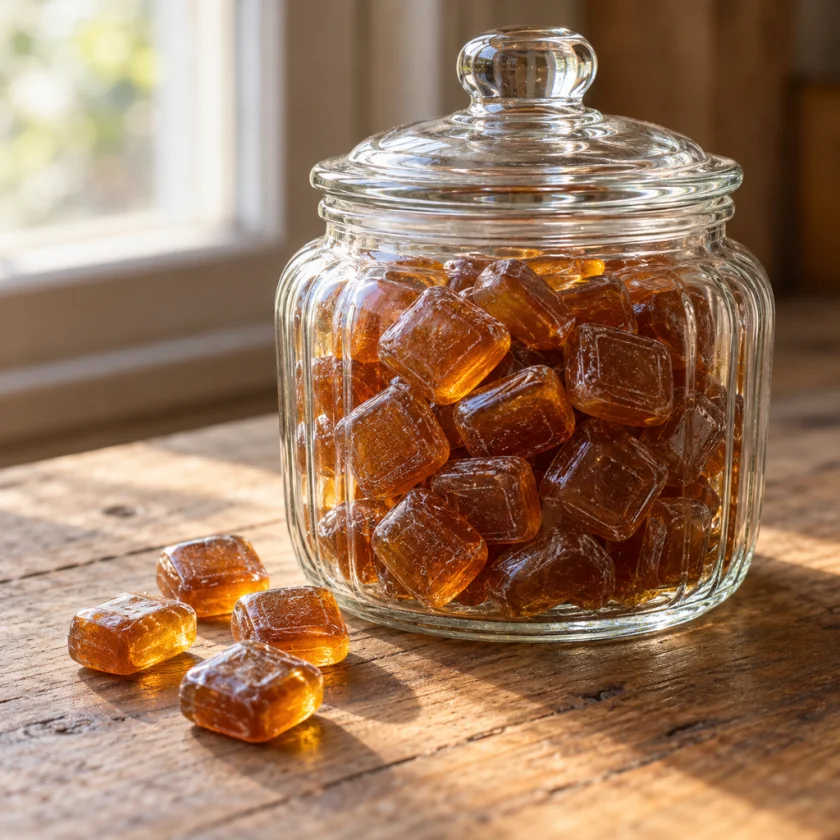
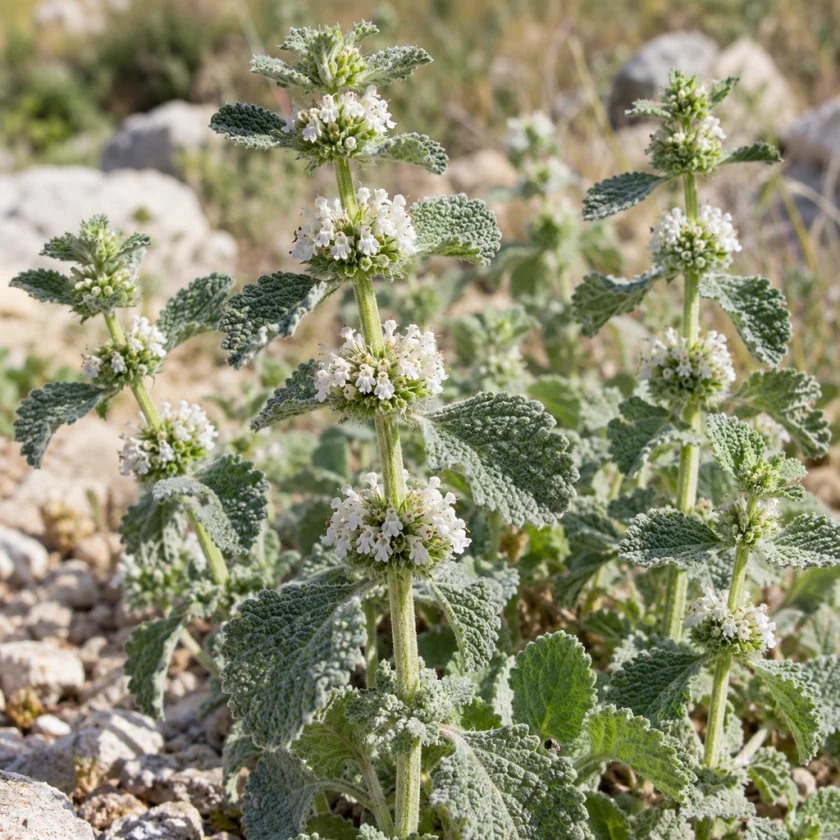
Almost every page you will read about horehound opens the same way: an old, beloved cough remedy, the amber candy in a grandparent's coat pocket, centuries of use for rattly chests. All of that is true, and white horehound — Marrubium vulgare, a woolly grey member of the mint family — genuinely is one of the few folk cough remedies that survived into the industrial confectionery aisle. But there is a second fact about horehound and cough that is far less often printed, and it is the single most useful thing a reader can know: the United States Food and Drug Administration concluded that there were inadequate data to recognise horehound as safe and effective as an over-the-counter (OTC) expectorant (a cough medicine that loosens mucus), and since February 28, 1990 it may not be marketed as an active ingredient in OTC cough medicines. That is why a bag of horehound drops today is labelled as candy or as a dietary supplement, and not as cough medicine. This page leads with that finding rather than burying it, then does the harder and more interesting job: showing why the European regulators reached what looks like the opposite conclusion, and why the two positions are in fact perfectly consistent once you understand what each one was actually asking.
Table of Contents
- The Regulatory Headline: Not Shown Effective
- How Horehound Ended Up in the Monograph Review
- Why the Candy Is Still Legal: Flavour, Not Drug
- Europe's Different Answer
- What Traditional-Use Registration Actually Requires
- The Proposed Mechanism for Cough
- What Human Evidence on Horehound Exists
- Where the Relief Probably Comes From
- White Horehound and Black Horehound Are Different Plants
- Practical Use, and When to Stop
- Evidence Tiers at a Glance
- Key Research Papers
- External Resources
- Connections
- Featured Videos
The Regulatory Headline: Not Shown Effective
Evidence tier: NOT SHOWN EFFECTIVE — a documented negative regulatory finding, not an absence of data.
In the United States, over-the-counter medicines are not each approved one product at a time. Instead the U.S. Food and Drug Administration (FDA) built monographs — category-by-category rulebooks listing which active ingredients may be sold without a prescription for which claims, at which doses. An ingredient inside its monograph is treated as generally recognised as safe and effective. An ingredient the agency reviewed and could not place inside the monograph is not simply left in limbo; it is affirmatively excluded, and marketing it as a drug for that purpose becomes illegal.
Horehound went through that review as a cough and cold ingredient, in the category of expectorants (medicines that loosen and help bring up mucus). The submitted evidence did not establish that use. The agency's conclusion is written into federal regulation at 21 CFR 310.545(a)(6)(iii), which lists horehound under “Expectorant drug products” among ingredients for which “there are inadequate data to establish general recognition of the safety and effectiveness of these ingredients for the specified uses.” Horehound was never admitted to the permitted (monograph) list of over-the-counter expectorants; it was classed as a non-monograph ingredient, and the regulation makes products containing it as an expectorant subject to regulatory action if introduced after February 28, 1990. The practical consequence arrived on shop shelves: a manufacturer can still sell horehound drops, but not as a cough medicine. They are sold as confectionery, or as a dietary supplement under a different and much weaker regulatory framework where no proof of efficacy is required at all.
Two things are worth saying plainly about this. The first is that it is a negative finding on evidence, not a safety alarm. Nobody concluded horehound candy is dangerous; the agency concluded nobody had shown it does what the label said. The second is that the finding is genuinely informative. Most traditional remedies have never been formally adjudicated at all — they simply sit in the vast grey zone of "no good trials either way." Horehound was actually looked at by a drug regulator with the power to say no, and the answer was no. Herbal writing that omits this is leaving out the only hard regulatory fact in the story.
How Horehound Ended Up in the Monograph Review
The over-the-counter review was an enormous housekeeping exercise. Thousands of ingredients were already on the market when the modern efficacy standard arrived, and the agency convened advisory panels to sort them. Each ingredient was placed in one of three buckets: recognised as safe and effective; not recognised, meaning the evidence failed; or insufficient data, meaning the sponsor had a chance to produce more. Ingredients that stayed in the failing bucket were eventually collected into a single regulation that catalogues over-the-counter ingredients found not generally recognised as safe and effective for their claimed uses. Horehound sits in that catalogue under cough and cold.
Understanding the mechanics matters because it explains the shape of the evidence gap. Nobody ran a large randomised trial of horehound lozenges and watched it fail. What happened is subtler and, for the reader, more instructive: the burden of proof was on whoever wanted to sell it as medicine, and that burden was never met. Long use was not accepted as a substitute for controlled data. That single procedural choice — tradition does not count as evidence — is the entire reason the American and European answers diverge, as the next sections show.
It is also why the finding has not been reversed. Reversing it would require somebody to fund proper clinical trials of a cheap, unpatentable roadside weed and submit the results. There is no commercial actor with an incentive to do that, so the finding is stable not because horehound was proven useless but because the question was closed and never reopened. When you read that horehound "was banned" from cough medicine, this is what actually happened, and the difference is not pedantic.
Why the Candy Is Still Legal: Flavour, Not Drug
If horehound cannot be sold as cough medicine in the US, why is horehound candy everywhere? Because food law and drug law ask different questions. As a flavouring substance in food, horehound has long been accepted for use, and confectionery is food. The bitterness is the flavour; the sugar is the food. Nothing in the drug finding touches that.
What changes is the label. A bag of horehound drops in the United States will describe itself as candy, or as a throat drop with no drug claim, or as a herbal supplement. What it will not do — legally cannot do — is say it treats or relieves a cough as an active drug ingredient. If you look closely at products that do carry a genuine drug claim on the front, the active ingredient listed is almost always something else: menthol, or in some markets dextromethorphan or guaifenesin. Horehound may still be in there, but it is riding along as flavour.
This is quietly one of the most useful pieces of shelf literacy on the whole site. Two bags side by side, both amber, both bitter, both saying "horehound," can be regulated completely differently, and the difference is printed in small type on the back. A "Drug Facts" panel means a U.S. Food and Drug Administration-recognised active ingredient is present and it is not the horehound. A "Supplement Facts" panel or a plain nutrition label means you are buying a traditional remedy on its reputation.
Europe's Different Answer
Evidence tier: TRADITIONAL USE ONLY — formally registered as such, which is not the same as demonstrated efficacy.
Now the part that confuses people. In Europe, horehound herb holds a recognised place in herbal medicine regulation. The European Medicines Agency's committee on herbal medicinal products assessed Marrubium vulgare herb and adopted a European Union herbal monograph covering it, with traditional-use indications that include use as an expectorant for cough associated with a cold, and separately for temporary loss of appetite and mild dyspeptic complaints such as bloating and flatulence. The committee adopted that monograph (reference EMA/HMPC/604271/2012) on 9 July 2013, and in 2021 it opened a periodic review of it with a call for new scientific data (1 April to 30 June 2021). Germany's earlier Commission E monographs similarly listed horehound as approved for coughs and bronchial complaints and for loss of appetite and dyspepsia.
So one regulator says not shown effective and another grants it a registered indication for cough. Read carelessly, that looks like a straight contradiction, and it is regularly presented as one — usually by whichever side the writer prefers. It is not a contradiction. The two bodies answered two different questions.
What Traditional-Use Registration Actually Requires
The European framework for herbal products has two distinct doors. One is the well-established-use door, which requires published bibliographic evidence of efficacy at a standard approaching that of a conventional medicine. The other is the traditional-use registration door, and this is the one horehound came through.
A traditional herbal medicinal product registration requires that the preparation has been in medicinal use for a long period — conventionally thirty years, of which at least fifteen within the European Union — that it is used without a doctor's supervision for a self-limiting condition, that its safety is plausible on the accumulated record, and that its pharmacological effects are plausible on the basis of long-standing use and experience. What it explicitly does not require is a clinical trial demonstrating that the product works. That is the whole design of the pathway: it exists precisely so that traditional preparations can be sold with quality and safety controls, honest labelling and pharmacovigilance, without pretending to an efficacy dossier they do not have. Products registered this way carry wording to the effect that the use is based exclusively on long-standing tradition.
Put the two findings side by side with that in hand and they line up perfectly:
- The U.S. Food and Drug Administration asked: has efficacy been demonstrated to a drug standard? Answer: no.
- The European Medicines Agency (EMA) asked: is there a long, documented tradition of this use, with plausible safety and plausible pharmacology? Answer: yes.
Both answers are correct. Neither one says horehound relieves cough better than a sugar lozenge. The European registration is a statement about tradition and quality control, not about efficacy, and anyone citing it as proof that horehound works has misread what the registration is. Equally, anyone citing the American finding as proof that horehound is worthless has overread a procedural outcome. The honest summary is: an old remedy with a real tradition, a plausible mechanism, and no controlled human evidence.
The Proposed Mechanism for Cough
Evidence tier: PRELIMINARY — animal and in-vitro work plus reasoning from bitter physiology.
There is a coherent story for why horehound might help a chesty cough, and it is worth laying out honestly because it is the reason the tradition is plausible rather than arbitrary.
The first strand is the bitter reflex. Horehound is intensely bitter, and bitter compounds on the tongue and in the gut trigger reflex secretory activity. In classical expectorant theory a bitter or saponin-containing herb taken by mouth provokes a vagally mediated increase in airway secretion, thinning sticky mucus so that a cough clears it more efficiently. This is the traditional pharmacology behind a whole family of oral expectorants, and it is the mechanism the European monograph's expectorant indication is resting on. Note carefully what tier this is: it is a mechanistic rationale of long standing, not a demonstration that horehound measurably changes sputum in humans.
The second strand is antispasmodic and anti-inflammatory activity in laboratory preparations. Horehound extracts relax spasm in isolated animal tissue, and marrubiin, the plant's signature labdane diterpene, has shown anti-inflammatory and analgesic effects in rodent models. A herb that calms smooth-muscle irritability and inflammation is a herb you can imagine calming an irritable airway. Imagining is the operative word: none of that work was done in coughing humans.
The third strand is the most mundane and probably the most real, and it gets its own section below because it has nothing to do with the plant.
What Human Evidence on Horehound Exists
Very little, and it is important to say so without dressing it up. Searching the clinical literature for controlled trials of Marrubium vulgare in cough or bronchitis returns essentially nothing that would satisfy a systematic reviewer — no adequately powered randomised, placebo-controlled trial of a horehound preparation for cough exists in the indexed literature. Readers can run the search themselves and see the gap: PubMed: Marrubium vulgare clinical trial and PubMed: Marrubium vulgare cough.
What the literature does contain in quantity is chemistry and preclinical pharmacology, which the marrubiin page covers in detail. The available human material on horehound tends to be small, open-label, or embedded in multi-herb products where the horehound contribution cannot be isolated — a recurring problem with traditional cough formulas, which are almost always combinations of several plants plus honey or sugar. When a five-herb syrup helps a cough, the study has not told you which of the seven ingredients did it, and honey alone has better trial evidence for night-time cough in children than any of the herbs beside it.
This is the single most common failure mode in herbal cough writing: a combination-product result gets quoted as if it were a horehound result. When horehound is credited with a clinical trial, the tested product has usually contained other ingredients as well.
Where the Relief Probably Comes From
Here is the part that makes the U.S. Food and Drug Administration finding easier to accept without feeling cheated: a horehound lozenge very likely does make your throat feel better, and probably not because of the horehound.
Sucking any hard sweet does several measurable things. It drives salivation and repeated swallowing, and swallowing transiently inhibits the cough reflex. It coats an irritated pharynx with a viscous sugar solution, which is the classic demulcent effect — the same principle behind honey, glycerin and syrups. And sweet taste itself appears to have a genuine antitussive action, an effect studied under the heading of the sweetness and placebo response in cough remedies, where a substantial share of the measured benefit of syrups is attributable to the vehicle rather than the drug. Ronald Eccles has written extensively on this, arguing that the sweet, viscous vehicle of a cough syrup carries much of its apparent effect; the topic is searchable at PubMed: sweet vehicle and placebo response in cough and PubMed: demulcents and cough.
Two papers make this concrete. In a 2012 laboratory experiment by Wise, Breslin and Dalton, volunteers breathed in capsaicin (the hot compound in chilli) to set off coughing. Rinsing the mouth with sugar water raised the dose needed to make them cough. Rinsing with a bitter solution (sucrose octaacetate) did not — it produced a small fall that was not statistically significant, which the authors called “an important demonstration of specificity.” On that test, the sugar in a horehound drop is the part that plausibly calms the cough reflex; the bitterness is not. In a 2006 review, “Mechanisms of the placebo effect of sweet cough syrups,” Eccles proposes that the major benefit of cough medicines for the cough of a common cold comes from the placebo effect rather than from the active drug, and develops the idea that a sweet taste may damp cough in the brainstem (at the nucleus tractus solitarius), possibly through the body's own opioids (endogenous opioids). That is a proposed mechanism, not a measured one.
Add the honey that traditionally accompanies horehound tea and syrup — honey has the best evidence of anything in this whole family for reducing night-time cough in children — and you have a fully sufficient explanation for centuries of satisfied users without needing marrubiin to do anything at all. The 2018 Cochrane review of honey for acute cough in children (6 trials, 899 children) found that honey probably reduces how often children cough more than no treatment or a placebo, and may have a similar effect to dextromethorphan, a common cough-suppressant drug. That is not a debunking. Comfort is a legitimate goal when the underlying illness is a self-limiting viral cough that will resolve on its own either way. It is simply an accurate account of what you are buying.
White Horehound and Black Horehound Are Different Plants
Every claim on this page refers to white horehound, Marrubium vulgare. There is a second plant called horehound and it is a genuinely different herb: black horehound, Ballota nigra, also in the Lamiaceae, also bitter, but distinctly foul-smelling and traditionally used for entirely different purposes — as a mild sedative and nervine, and notably as an antiemetic for nausea, motion sickness and vomiting rather than as a cough remedy.
The names are close enough that the confusion is common in older texts, in supplement marketing and in casual writing, and the two have separate regulatory histories and separate chemistry. Marrubiin is the marker of M. vulgare; Ballota nigra has its own diterpenoids and phenylpropanoids. If a source discusses "horehound" for nausea, or "horehound" as a calming herb, it is either talking about Ballota nigra or it has merged two plants. The botanical name on a label (Marrubium vulgare or Ballota nigra) identifies the plant; the common name does not. Comparative searching: PubMed: Ballota nigra.
Practical Use, and When to Stop
How horehound is traditionally taken:
- Lozenges and hard candy are the gentlest and most familiar form, and the demulcent effect above is real regardless of the herb. The obvious catch is sugar — traditional horehound drops are largely boiled sugar, which matters a great deal for a diabetic reader reaching for a "natural" remedy. This is covered on the safety page.
- Tea from dried herb, typically a modest cup, traditionally sweetened with honey. It is genuinely, memorably bitter; the honey does real work here beyond palatability.
- Syrup is the household preparation and the honey-and-sugar base is doing much of the soothing.
- Tincture is the concentrated form and the one where dose actually matters. Concentrated preparations are where the cautions on blood pressure, blood sugar and gastric irritation apply.
More importantly, some coughs are not a candy problem. A cough lasting beyond about three weeks, coughing blood, breathlessness, chest pain, high fever, unexplained weight loss or night sweats, a cough that follows choking, and a cough that worsens after first improving are signs that hospitals and clinics assess for pneumonia, asthma, an inhaled object and other treatable disease. Those features belong to bronchitis that is not resolving, asthma, chronic obstructive pulmonary disease (COPD) and other conditions where a bitter sweet is not the intervention. With any lozenge, the risk in those cases is the delay while something treatable goes unassessed.
One safety report concerns horehound taken in a mixture. A 2024 case report from doctors in Algiers describes severe acute kidney injury in a 17-year-old who had drunk a mixture of three plants — wormwood (Artemisia absinthium), white horehound (Marrubium vulgare) and centaury (Centaurium erythraea) — over a long period. A kidney biopsy showed interstitial nephritis (inflammation of the kidney tissue), and the patient also had inflammation of the gullet and stomach lining (oesophagitis and erosive gastritis) and anaemia. After ruling out other explanations, the doctors attributed the illness to the mixture. Because three plants were taken together, the report cannot say which one was responsible; the authors describe it as the first reported case of kidney injury linked to these plants, which had not been known to harm the kidneys.
Evidence Tiers at a Glance
- NOT SHOWN EFFECTIVE — horehound as an over-the-counter drug expectorant in the United States, listed in 21 CFR 310.545(a)(6)(iii) among ingredients with inadequate data to establish general recognition of safety and effectiveness. This is an explicit regulatory determination.
- TRADITIONAL USE ONLY — horehound herb as an expectorant for cough associated with a cold, per the European Union herbal monograph and the older German Commission E listing. Registered on the strength of long use, with efficacy trials not required.
- PRELIMINARY — antispasmodic, anti-inflammatory and analgesic activity of horehound extracts and marrubiin in isolated tissue and rodent models. Real findings, no human cough data.
- REASONABLY SUPPORTED, BUT NOT ABOUT HOREHOUND — the soothing effect of a sweet, viscous lozenge or syrup on an irritated throat, and honey for night-time cough in children.
Key Research Papers
Most citations below are given as PubMed topic searches so that you land on the live record set rather than on a single fixed identifier. Titles and journals are stated in prose. Entries that end in a PubMed identifier (PMID) link to that single record.
- Meyre-Silva C and Cechinel-Filho V, "A review of the chemical and pharmacological aspects of the genus Marrubium," Current Pharmaceutical Design, 2010 — the standing survey of horehound chemistry and its traditional and experimental uses, including the expectorant tradition. PubMed search
- Aćimović M and colleagues, "Marrubium vulgare L.: a phytochemical and pharmacological overview," Molecules, 2020 — the most recent broad review, and a good place to see how thin the human clinical section is relative to the preclinical one. PubMed search
- Popoola OK and colleagues, "Marrubiin," Molecules, 2013 — a compound-focused review of the labdane diterpene that carries horehound's bitterness and most of its claimed pharmacology. PubMed search
- Stulzer HK and colleagues, "Antioedematogenic effect of marrubiin obtained from Marrubium vulgare," Journal of Ethnopharmacology, 2006 — marrubiin reduced experimentally induced swelling in rodents, the anti-inflammatory strand of the cough rationale. PubMed search
- de Souza MM and colleagues, "Analgesic profile of hydroalcoholic extract obtained from Marrubium vulgare," Phytomedicine, 1998 — pain-relieving activity of horehound extract in animal models. PubMed search
- Searches for controlled clinical trials of horehound in respiratory illness return no adequately powered randomised placebo-controlled study; the absence is itself the finding and is worth verifying directly. PubMed search
- The literature on the sweet, viscous vehicle as an antitussive — the demulcent and placebo component of cough syrups and lozenges, argued at length by Ronald Eccles and others — is the most likely explanation for the subjective benefit of a horehound drop. PubMed search
- Wise PM, Breslin PA and Dalton P, "Sweet taste and menthol increase cough reflex thresholds," Pulmonary Pharmacology & Therapeutics, 2012;25(3):236-41 — a sugar mouth rinse raised the capsaicin cough threshold; a bitter rinse caused a non-significant fall. PubMed PMID: 22465565
- Eccles R, "Mechanisms of the placebo effect of sweet cough syrups," Respiratory Physiology & Neurobiology, 2006;152(3):340-8 — review proposing that a sweet taste may modulate cough in the brainstem, possibly through endogenous opioids. PubMed PMID: 16326149
- Trials of honey for acute cough in children, summarised in Cochrane reviews, are the best-evidenced element of the traditional horehound-and-honey preparation. PubMed search
- Oduwole O, Udoh EE, Oyo-Ita A and Meremikwu MM, "Honey for acute cough in children," Cochrane Database of Systematic Reviews, 2018;4(4):CD007094 — 6 randomised trials, 899 children. PubMed PMID: 29633783
- Reviews of oral expectorants and mucoactive agents give the context for the reflex-secretion theory that horehound's traditional indication depends on. PubMed search
- Ballota nigra, black horehound, has its own separate literature and its own traditional indications — useful for confirming that the two plants are not interchangeable. PubMed search
- Amri B and colleagues, "Marrubium vulgare L. leave extract: phytochemical composition, antioxidant and wound healing properties," Molecules, 2017 — characterises the flavonoid fraction that carries much of the antioxidant activity often cited loosely as respiratory benefit. PubMed search
- Reviews of European traditional herbal medicinal product registration explain the legal standard horehound's European indication was granted under, and why it is not an efficacy claim. PubMed search
- Selles A, Afir Y, Rahou Y, Debchi L, Rafa-Debbah H, Bahriz MR and Benziane A, "Acute Kidney Injury Following the Ingestion of a Medicinal Plants' Mixture: A Case Report," Case Reports in Nephrology, 2024;2024:8207758 — kidney injury after long-term intake of a wormwood, white horehound and centaury mixture. PubMed PMID: 39735399
External Resources
- U.S. Food and Drug Administration — the agency whose over-the-counter monograph review produced the finding that there are inadequate data to recognise horehound as safe and effective as an over-the-counter expectorant. Its own pages on over-the-counter drug monographs and on ingredients removed from over-the-counter products are the primary source for this determination.
- Electronic Code of Federal Regulations: 21 CFR 310.545 — the regulation text that lists horehound under “Expectorant drug products” in paragraph (a)(6)(iii), with the February 28, 1990 date in paragraph (d)(4).
- European Medicines Agency — publishes the European Union herbal monograph on Marrubium vulgare herb and the assessment report behind it, together with the framework documents describing traditional-use registration.
- PubMed — the biomedical literature index used for every citation above.
- National Center for Complementary and Integrative Health — plain-language summaries of the evidence status of herbal remedies.
Connections
- All Herbs
- Horehound (main article)
- Horehound Benefits Hub
- Horehound as a Bitter
- Marrubiin Chemistry
- Horehound Safety
- Mullein
- Marshmallow Root
- Coltsfoot
- Elecampane
- Thyme
- Licorice
- Slippery Elm
- Bronchitis
- Asthma
- Chronic Obstructive Pulmonary Disease
- Lung & Respiratory Health
Safety and disclaimer. This page is educational and is not medical advice. Horehound has not been shown to be effective as an over-the-counter cough medicine in the United States, and its European recognition rests on long-standing traditional use rather than on clinical trials — it is a comfort measure, not a treatment. The European Union monograph limits white horehound to adults and adolescents over 12 years, states that its safety in pregnancy and breastfeeding has not been established (and does not recommend it then), and lists allergy to plants of the mint family (Lamiaceae) as a reason not to use it. The cautions on this site for concentrated preparations concern people taking medicines for blood pressure, heart rhythm or blood sugar, where effects may add up; large doses can cause nausea and a purgative effect. Horehound candy is largely sugar. A cough lasting more than about three weeks, or accompanied by blood, breathlessness, chest pain, fever or weight loss, is a sign clinics assess for treatable disease; the European Medicines Agency's summary names a cough lasting longer than one week while using white horehound as the point for a qualified healthcare practitioner to assess it.