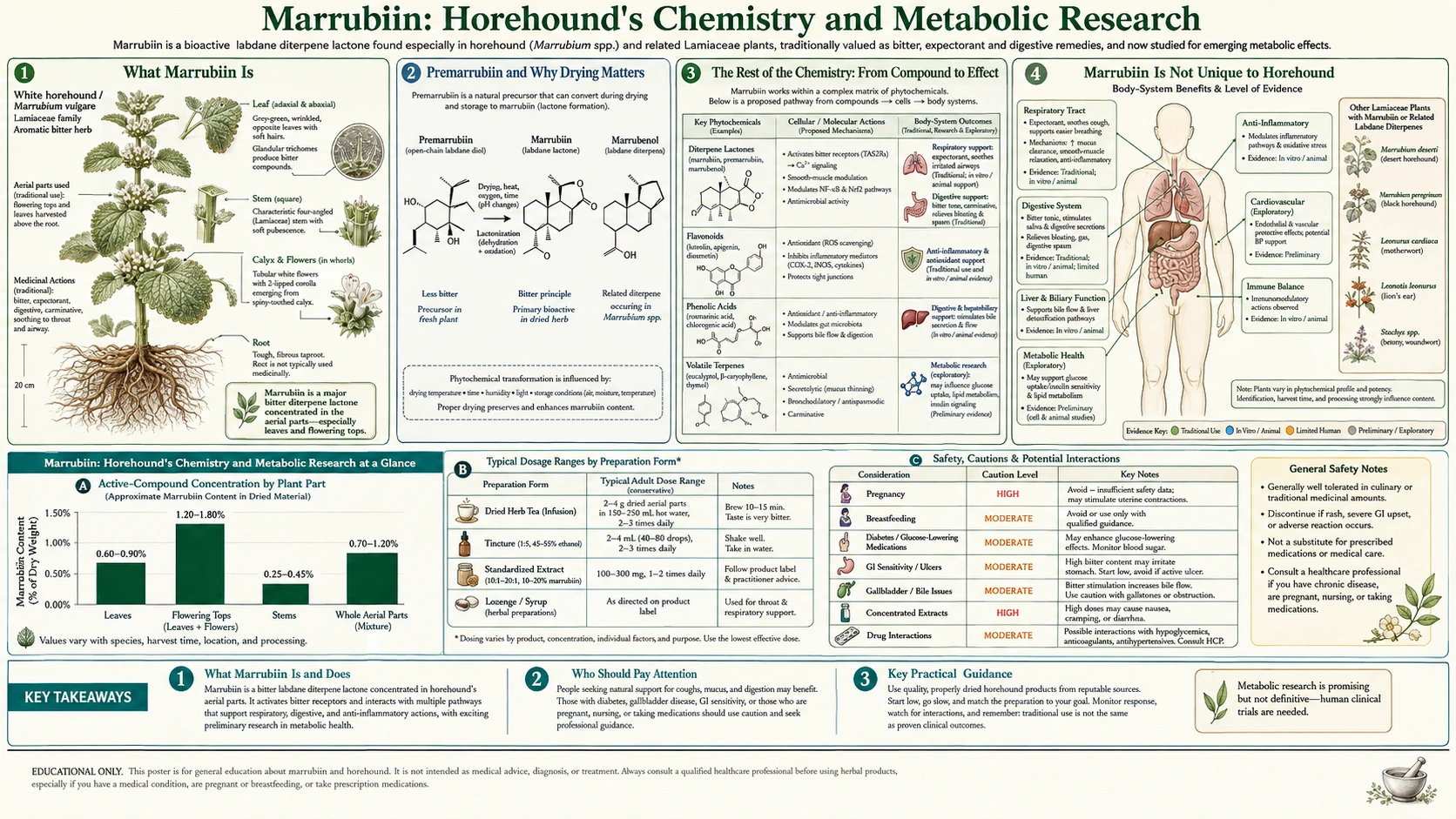
Marrubiin: Horehound's Chemistry and Metabolic Research
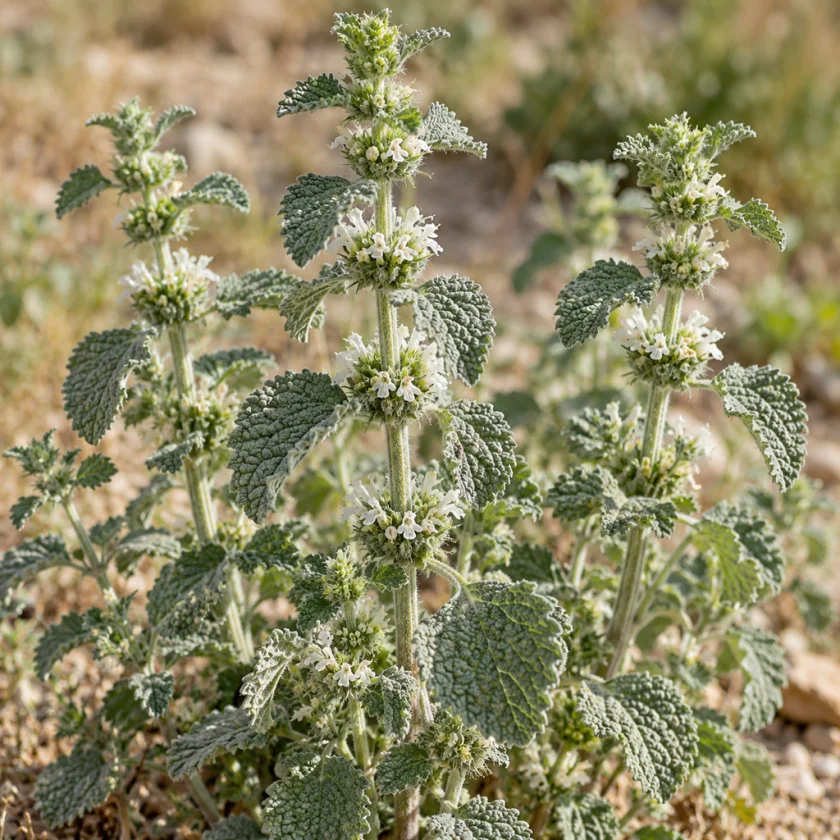

White horehound — Marrubium vulgare, and only that species; black horehound (Ballota nigra) is a different plant with different chemistry and a different traditional use — owes almost all of its modern scientific attention to one molecule. Marrubiin is a labdane-type diterpene lactone: the plant's principal bitter principle, its analytical marker, and the compound credited with most of the pharmacology researchers keep finding in the laboratory. Over the last two decades that laboratory work has ranged well beyond coughs and appetite into glucose, blood lipids, blood pressure, pain and inflammation. This page walks through what has actually been shown and, just as importantly, at what tier. The honest headline is that horehound's metabolic file is almost entirely rodent and test-tube work with essentially no adequate human trials, and a hypoglycaemic result in a diabetic rat is a lead for researchers, not a benefit for readers. That distinction is the whole point of the page.
Table of Contents
- What Marrubiin Is
- Premarrubiin and Why Drying Matters
- The Rest of the Chemistry
- Marrubiin Is Not Unique to Horehound
- Glucose: The Rodent Antidiabetic Work
- Lipids and the Metabolic Cluster
- Marrubenol and the Calcium Channel
- Pain and Inflammation
- Antioxidant, Wound and Liver Findings
- Why So Little of This Has Reached Humans
- How to Read a Rodent Result Honestly
- Evidence Tiers at a Glance
- Key Research Papers
- External Resources
- Connections
- Featured Videos
What Marrubiin Is
Marrubiin is a labdane diterpene lactone. Unpacking that: diterpenes are twenty-carbon plant terpenoids; labdanes are a particular bicyclic skeleton common in the mint family and in resinous plants; and the lactone is a cyclic ester ring, which in this compound is the furanone feature that dominates its chemistry and, in classical structure-activity thinking, much of its activity. It is a small, lipophilic, crystalline compound — nothing exotic, structurally speaking, but a well-defined single molecule rather than the vague "active principle" that older herbal texts often invoke.
Its two roles overlap. Analytically it is horehound's marker constituent: quantifying marrubiin is how a laboratory confirms that a batch of dried herb or an extract is what it claims to be, and how monographs set identity and content specifications. Pharmacologically it is the compound most reviews credit with horehound's expectorant, anti-inflammatory, analgesic and vasorelaxant reputation. Organoleptically it is the bitterness — the same molecule that a chemist measures is the one your tongue objects to, which is a neat and unusual alignment.
Because it is a defined single compound, marrubiin has been synthesised, derivatised and tested as such. That is why some of the literature reports on "marrubiin derivatives" rather than on the natural product: medicinal chemists have modified the lactone and the ring system looking for improved activity, which is a normal drug-discovery move and a sign that the molecule was taken seriously as a lead.
Premarrubiin and Why Drying Matters
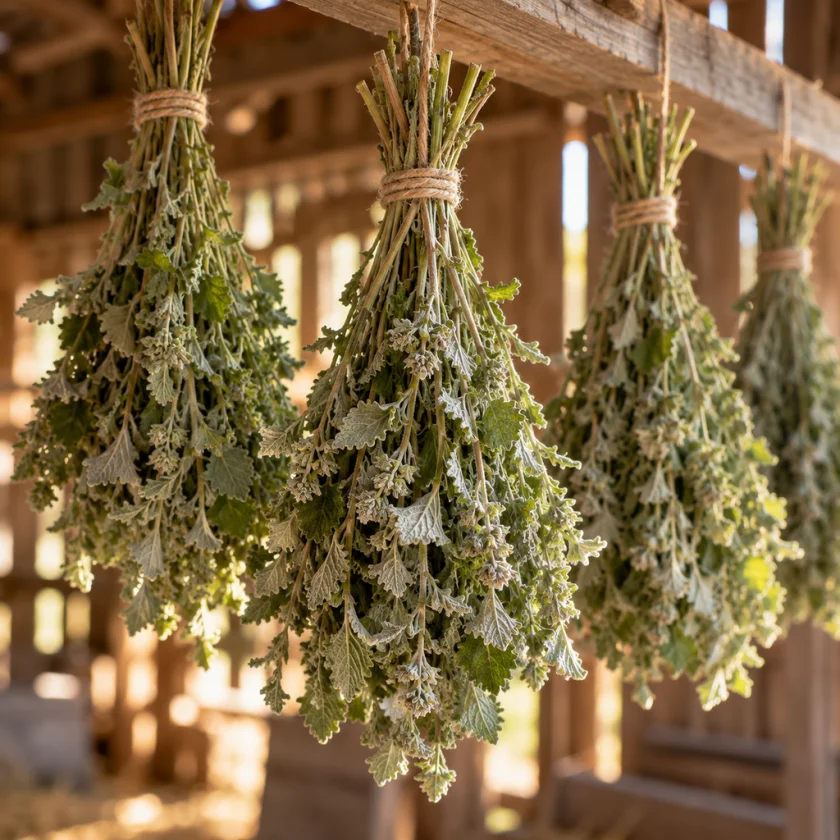
One quirk of horehound chemistry has consequences all the way down to what is in your teacup. Fresh horehound contains relatively little free marrubiin. Much of what ends up in a dried, processed herb is generated from a precursor, premarrubiin, during drying, extraction and handling — a conversion that opens or rearranges the precursor to give marrubiin proper.
Three practical consequences follow:
- Dried herb is the traditional material for a reason. Herbalists who insisted on properly dried horehound were, without knowing the chemistry, selecting for higher marrubiin content.
- Batch variability is expected, not a defect. Two horehound products with the same botanical identity can differ substantially in marrubiin content depending on how the crop was dried and how the extract was made. This is one reason product-to-product comparisons in the herbal literature are so unreliable.
- Old studies may not describe modern products. A paper reporting an effect for "horehound extract" is describing a specific preparation with a specific marrubiin load, and reproducing that effect requires reproducing the preparation. Very few studies characterise their extract well enough to allow it.
This is the single most useful piece of chemistry for interpreting the rest of the page. When a rodent study gives a dose in milligrams of extract per kilogram of body weight, you cannot translate it into cups of tea or drops of tincture, because you do not know the marrubiin content of either the study extract or your product.
The Rest of the Chemistry
Marrubiin gets the attention, but horehound is a plant, not a molecule. The other well-documented constituents:
- Marrubenol and related diterpenes — marrubenol is arguably more pharmacologically interesting than marrubiin itself, because of the calcium-channel work described below.
- Flavonoids, including derivatives of luteolin and apigenin — these carry much of the antioxidant activity measured in leaf extracts, and they are common enough across the plant kingdom that antioxidant results attributed to "horehound" are frequently just flavonoid results.
- Phenylpropanoid glycosides, notably verbascoside (also called acteoside) — a widely distributed compound with its own anti-inflammatory and antioxidant literature, found in many Lamiaceae and Scrophulariaceae plants including mullein.
- Tannins, contributing astringency, and a modest essential oil — horehound's volatile fraction is small and it is not an aromatic herb in the way thyme or peppermint are.
- Fatty acid constituents — Japanese work (Ohtera and colleagues, 2013) identified a fatty acid, 6-octadecynoic acid, from a methanol extract of M. vulgare as an agonist at the nuclear receptor peroxisome proliferator-activated receptor gamma (PPARγ), which is the target of the glitazone class of diabetes drugs. The finding came from laboratory cell tests: a reporter assay, and increased fat storage in 3T3-L1 fat cells. That is a mechanistically striking finding and it is worth noting that it locates part of horehound's metabolic activity outside the diterpenes entirely.
The last point deserves emphasis because it cuts against the tidy narrative. If some of the metabolic activity sits in a fatty acid rather than in marrubiin, then a "standardised to marrubiin" extract is not necessarily standardised to the metabolic effect. Marker compounds and active compounds are not the same thing, and horehound is a good illustration.
Marrubiin Is Not Unique to Horehound
A detail that trips up a lot of secondary writing: marrubiin occurs in other Lamiaceae, and a meaningful share of the marrubiin pharmacology literature was actually generated on a different plant. Notably, marrubiin has been isolated and studied from Leonotis leonurus, the South African plant known as wild dagga or lion's tail, where a South African group reported cardioprotective effects of marrubiin and, in separate work, that marrubiin alleviated diabetic symptoms in a rodent model.
This matters in two directions. Favourably, it means marrubiin has been studied more thoroughly than horehound-only searching would suggest. Unfavourably, it means a Leonotis marrubiin result does not transfer onto a horehound product, because the dose of marrubiin delivered by a horehound preparation is unknown and the accompanying constituents are entirely different. When a supplement page credits horehound with cardioprotection or antidiabetic action citing marrubiin studies, the marrubiin in those studies often did not come from horehound.
Glucose: The Rodent Antidiabetic Work
Evidence tier: PRELIMINARY — animal work plus one small, short human trial. This is not a diabetes benefit.
The most frequently cited metabolic finding on horehound comes from work on wild Algerian Marrubium vulgare: Boudjelal and colleagues reported in Fitoterapia a compositional analysis together with in-vivo antidiabetic activity of a horehound infusion, with lowered blood glucose and improved lipid measures in diabetic rats. Related rodent work and the broad review literature repeatedly describe antihyperglycaemic activity for M. vulgare extracts, and the PPARγ-agonist finding mentioned above offers one candidate mechanism, alongside marrubiin's reported effects on insulin secretion in the Leonotis work.
Now the discipline. A hypoglycaemic effect in a chemically induced diabetic rat is a genuine, publishable observation and a reasonable reason to keep investigating a plant. It is not evidence that horehound lowers blood sugar in a human being with type 2 diabetes, for reasons that are not pedantic:
- Rodent diabetes models are usually induced by a toxin that destroys beta cells, which is not the pathophysiology of human type 2 diabetes.
- Doses in these studies, scaled to body weight, are frequently far above any realistic human intake of a tea or tincture.
- Glucose-lowering in a hyperglycaemic animal over days tells you nothing about hemoglobin A1c (HbA1c) over months in a person on metformin.
- No adequately designed randomised controlled trial of horehound in diabetes or prediabetes exists in the indexed literature; the only randomised human trial found is small and lasted 21 days (below).
The one human trial. In Mexico, Herrera-Arellano and colleagues (2004) ran a randomised, double-blind trial in 43 outpatients whose type 2 diabetes responded poorly to their usual treatment. Everyone kept their usual treatment and also drank an infusion of dried leaves for 21 days: 21 people drank horehound and 22 drank Cecropia obtusifolia, another Mexican folk remedy. In the horehound group, plasma glucose fell by only 0.64%, cholesterol by 4.16% and triglycerides by 5.78%. In the Cecropia group, fasting glucose fell by 15.25%, cholesterol by 14.62% and triglycerides by 42.0%, and the difference between the groups in glucose and cholesterol was significant.
There is one place where this rodent work bears on safety, and it is a caution rather than a benefit: if horehound extracts can lower glucose, then a person taking insulin or a sulfonylurea has a theoretical additive-hypoglycaemia interaction (in the one human trial, horehound taken alongside usual diabetes treatment lowered plasma glucose by 0.64%). That is covered on the safety page. The general pattern: preclinical activity is a better argument for caution than for use, because a caution only requires plausibility while a benefit claim requires proof.
Lipids and the Metabolic Cluster
Evidence tier: PRELIMINARY — animal work; the one small human trial found cholesterol down 4.16% and triglycerides down 5.78%.
The same rodent studies that reported lowered glucose generally also reported improved lipid measures — lower total cholesterol and triglycerides, sometimes with improved high-density lipoprotein (HDL). Review articles on M. vulgare summarise this as hypolipidaemic activity, and it is often bundled with the antioxidant findings into a general "metabolic syndrome" framing.
That framing has limits. Improved lipids in a diabetic rodent model frequently track the improvement in glycaemic control rather than representing an independent action on lipid metabolism, and the studies are rarely designed to separate the two. More broadly, the cluster of results — glucose down, lipids down, blood pressure down, inflammation down, antioxidant capacity up — is close to the standard result pattern that a great many plant extracts produce in rodent models. That pattern is so common that it carries limited discriminating information about any individual plant. It is genuinely why researchers keep circling back to horehound; it is not evidence of a benefit in people.
Marrubenol and the Calcium Channel
Evidence tier: PRELIMINARY, but with an unusually specific and well-identified mechanism.
The most mechanistically satisfying result in the whole horehound file concerns marrubenol rather than marrubiin. El-Bardai and colleagues, working in Belgium and Morocco, characterised marrubenol as an L-type calcium channel blocker in a paper in the British Journal of Pharmacology, and reported the vasorelaxant activity of marrubenol and marrubiin in Planta Medica. The same group had earlier published pharmacological evidence of hypotensive activity of Marrubium vulgare in spontaneously hypertensive rats in Clinical and Experimental Hypertension. In a later 10-week study in the same kind of rat (El Bardai and colleagues, 2004), horehound water extract and the prescription calcium-channel blocker amlodipine “produced similar decrease” in systolic blood pressure; amlodipine reduced the weight of the left ventricle of the heart, the aorta and the mesenteric artery, while horehound had a significant anti-thickening effect in the aorta only; and horehound, but not amlodipine, improved the relaxation of the mesenteric artery to acetylcholine, a test of how well the inner lining of the blood vessels works (endothelial function). These are rat results.
L-type calcium channel blockade is the mechanism of an entire class of prescription antihypertensives — amlodipine, nifedipine, diltiazem, verapamil. Finding that a horehound diterpene does the same thing in isolated tissue is a real result with a named molecular target, which is far more than most herbal mechanisms can claim. It is also the clearest single reason to treat horehound with respect rather than as an inert candy flavour.
And it is, again, primarily a safety signal. A compound acting on the L-type calcium channels of blood-vessel muscle (the marrubenol work tested rat aorta and aortic smooth-muscle cells; heart tissue was not tested) is a compound with a plausible route to lowering blood pressure and possibly to affecting cardiac conduction and rhythm. That is exactly why the safety page raises hypotension, caution alongside antihypertensive medication, and caution in cardiac disease. The pharmacology that makes horehound interesting is the same pharmacology that makes concentrated doses worth respecting. See also hypertension.
Pain and Inflammation
Evidence tier: PRELIMINARY — rodent models and isolated tissue.
Three lines of work here, all consistent and all animal:
- Anti-oedema. Stulzer and colleagues reported in the Journal of Ethnopharmacology an antioedematogenic effect of marrubiin obtained from M. vulgare — reduced experimentally induced swelling, the classic screening assay for anti-inflammatory activity.
- Analgesia from the whole extract. de Souza and colleagues described an analgesic profile of a hydroalcoholic M. vulgare extract in Phytomedicine, with measurable pain-relieving effects in animal pain models.
- Analgesia attributable to marrubiin specifically. Meyre-Silva and colleagues followed up on the analgesic potential of marrubiin derivatives in Il Farmaco, tying the effect to the diterpene and to synthetic modifications of it.
Taken together this is a reasonably coherent preclinical anti-inflammatory and analgesic signal, and it is the strand that gives the traditional respiratory and digestive antispasmodic claims their plausibility. What it is not is a reason to take horehound for pain. Rodent nociception assays are screening tools with a notoriously poor record of predicting human analgesia, no human trial of horehound for any pain condition exists, and the effective doses in those models bear no established relationship to a traditional dose.
Antioxidant, Wound and Liver Findings
Evidence tier: PRELIMINARY; the antioxidant portion is largely in-vitro and of limited interpretive value.
Amri and colleagues characterised the phytochemical composition, antioxidant activity and wound-healing properties of a Marrubium vulgare leaf extract in Molecules, attributing much of the radical-scavenging capacity to the flavonoid fraction. Separately, rat studies have reported that horehound extract lessened liver damage caused by the drug cyclophosphamide (Ettaya and colleagues, 2016: a water extract at 500 mg of dry leaves per kilogram per day for 30 days before the drug) and by the solvent carbon tetrachloride (Elberry and colleagues, 2010: 500 mg/kg/day for 4 weeks).
A word about antioxidant assays, because they are the most over-quoted numbers in all of herbal writing. Test-tube radical-scavenging capacity measures how a compound behaves in a cuvette. It does not establish that the compound is absorbed, that it reaches a relevant tissue at a relevant concentration, or that scavenging radicals there produces a clinical benefit. Nearly every plant with flavonoids in it scores well, which is why a high antioxidant score is close to uninformative as a reason to choose one herb over another. Horehound's antioxidant literature is chemistry, not a health claim.
The liver-protection results are more interesting mechanistically but carry a large caution: they are rat findings in specific toxicity models, not evidence of liver protection in people.
A liver signal from marrubiin itself. Marrubiin contains a furan ring, which chemists treat as a “structural alert”. A 2021 laboratory and rat study (Xing and colleagues, Chemical Research in Toxicology) found that liver enzymes, chiefly CYP2C9, CYP2C19 and CYP3A4, convert marrubiin into a reactive cis-butene-1,4-dial intermediate in rat and human liver-enzyme preparations (microsomes), with its conjugates also found in rat bile; the authors describe marrubiin as having “potential hepatotoxicity”. The study reports no cases of liver injury in people.
Why So Little of This Has Reached Humans
The obvious question after all that is: with this much preclinical activity and a named molecular target, why is there only one small clinical trial (21 people on horehound for 21 days, described above)? The answer is unglamorous and mostly economic.
Horehound is a cheap, abundant, unpatentable roadside weed. A properly powered randomised controlled trial costs a great deal of money, and nobody can recoup that cost on a plant that anybody can grow. The compounds are patentable as novel derivatives — which is precisely why the medicinal-chemistry literature on marrubiin derivatives exists — but a derivative is a new drug candidate facing the full development pathway, not a horehound product. Meanwhile the American regulatory finding described on the cough page removed the commercial route that might have justified trials, and the European traditional-use pathway lets horehound be sold legally without trials. Every incentive in the system points away from generating the human evidence.
The consequence for a reader is a permanent asymmetry: horehound will probably continue to accumulate rodent papers indefinitely without ever acquiring a large clinical trial. What remains is horehound as the mild traditional remedy it is, and a preclinical file that is, read honestly, interesting chemistry and a set of reasons for caution.
How to Read a Rodent Result Honestly
A short checklist that generalises well beyond horehound:
- Which species, and which model? A toxin-induced diabetic rat is not a person with type 2 diabetes.
- What was actually given? An isolated compound, an infusion, a methanol extract and a standardised commercial product are four different interventions. If the paper does not characterise its extract, nobody can reproduce it, including you.
- What dose, scaled how? Milligrams per kilogram in a rat does not become teaspoons in a human by any simple arithmetic, and much preclinical dosing is far above achievable human intake.
- Which plant supplied the compound? For marrubiin specifically, a great deal of the work used Leonotis leonurus, not horehound.
- Is the endpoint a surrogate? Radical scavenging in a cuvette, or paw swelling in a rodent, is several steps removed from anything a patient feels.
- Does the finding argue for use, or for caution? Plausibility is enough to justify a caution. It is not enough to justify a benefit claim. Most preclinical herbal findings belong in the caution column, and horehound's glucose and calcium-channel results are textbook examples.
Evidence Tiers at a Glance
- WELL CHARACTERISED CHEMISTRY — marrubiin as a labdane diterpene lactone, its formation from premarrubiin on drying, its role as horehound's bitter principle and analytical marker, and the accompanying flavonoids, verbascoside and marrubenol.
- PRELIMINARY, MECHANISM NAMED — marrubenol as an L-type calcium channel blocker with vasorelaxant activity in isolated tissue, and hypotensive effects in hypertensive rats.
- PRELIMINARY — antihyperglycaemic and hypolipidaemic effects of horehound infusions and extracts in diabetic rodents; anti-oedema and analgesic effects of marrubiin and extracts in rodent models; protection against liver damage from cyclophosphamide and carbon tetrachloride in rats; a laboratory finding that liver enzymes turn marrubiin into a reactive intermediate; wound-healing and antioxidant activity of leaf extract.
- IN-VITRO ONLY, LOW INTERPRETIVE VALUE — radical-scavenging antioxidant capacity.
- ALMOST NO HUMAN EVIDENCE — one small 21-day randomised trial in type 2 diabetes found plasma glucose down 0.64%, cholesterol down 4.16% and triglycerides down 5.78%; there is no adequate randomised controlled trial of horehound for diabetes, blood lipids, blood pressure, pain or inflammation. Nothing on this page describes a treatment for any of those conditions.
Key Research Papers
Each citation states its title, journal and year in prose and closes with its PubMed record.
- Popoola OK, Elbagory AM, Ameer F and Hussein AA, "Marrubiin," Molecules, 2013 — the dedicated review of the compound, its occurrence, chemistry and reported pharmacology. PubMed PMID: 23899837
- Meyre-Silva C and Cechinel-Filho V, "A review of the chemical and pharmacological aspects of the genus Marrubium," Current Pharmaceutical Design, 2010 — the genus-level survey of constituents and activities. PubMed PMID: 20942795
- Aćimović M and colleagues, "Marrubium vulgare L.: a phytochemical and pharmacological overview," Molecules, 2020 — the most recent broad review, and the fastest way to see how preclinical the whole file is. PubMed PMID: 32599693
- Boudjelal A, Henchiri C, Siracusa L, Sari M and Ruberto G, "Compositional analysis and in vivo anti-diabetic activity of wild Algerian Marrubium vulgare L. infusion," Fitoterapia, 2012 — the most-cited glucose and lipid result, in diabetic rats. PubMed PMID: 22100836
- El-Bardai S, Wibo M, Hamaide MC, Lyoussi B, Quetin-Leclercq J and Morel N, "Characterisation of marrubenol, a diterpene extracted from Marrubium vulgare, as an L-type calcium channel blocker," British Journal of Pharmacology, 2003 — the named molecular mechanism. PubMed PMID: 14597602
- El Bardai S and colleagues, "The vasorelaxant activity of marrubenol and marrubiin from Marrubium vulgare," Planta Medica, 2003 — vessel relaxation in isolated tissue. PubMed PMID: 12567286
- El Bardai S, Lyoussi B, Wibo M and Morel N, "Pharmacological evidence of hypotensive activity of Marrubium vulgare and Foeniculum vulgare in spontaneously hypertensive rat," Clinical and Experimental Hypertension, 2001 — blood-pressure lowering in a rodent hypertension model. PubMed PMID: 11349824
- El Bardai S, Lyoussi B, Wibo M and Morel N, “Comparative study of the antihypertensive activity of Marrubium vulgare and of the dihydropyridine calcium antagonist amlodipine in spontaneously hypertensive rat,” Clinical and Experimental Hypertension, 2004 — the 10-week comparison with amlodipine. PubMed PMID: 15554450
- Stulzer HK and colleagues, "Antioedematogenic effect of marrubiin obtained from Marrubium vulgare," Journal of Ethnopharmacology, 2006 — the anti-inflammatory screening result. PubMed PMID: 16846706
- de Souza MM and colleagues, "Analgesic profile of hydroalcoholic extract obtained from Marrubium vulgare," Phytomedicine, 1998, together with Meyre-Silva C and colleagues on the analgesic potential of marrubiin derivatives in Il Farmaco, 2005 — the rodent analgesia strand. PubMed PMID: 23195761; PubMed PMID: 15848207
- Amri B and colleagues, "Marrubium vulgare L. leave extract: phytochemical composition, antioxidant and wound healing properties," Molecules, 2017 — the flavonoid and antioxidant characterisation. PubMed PMID: 29143793
- Ettaya A, Dhibi S, Samout N, Elfeki A and Hfaiedh N, “Hepatoprotective activity of white horehound (Marrubium vulgare) extract against cyclophosphamide toxicity in male rats,” Canadian Journal of Physiology and Pharmacology, 2016 — the rat liver-protection result. PubMed PMID: 26886858
- Elberry AA, Harraz FM, Ghareib SA, Nagy AA, Gabr SA, Suliaman MI and Abdel-Sattar E, “Antihepatotoxic effect of Marrubium vulgare and Withania somnifera extracts on carbon tetrachloride-induced hepatotoxicity in rats,” Journal of Basic and Clinical Pharmacy, 2010. PubMed PMID: 24825994
- Xing Y, Xing H, Ma Y, Liu Q and Xu S, “In vitro and in vivo studies of metabolic activation of marrubiin, a bioactive constituent from Marrubium vulgare,” Chemical Research in Toxicology, 2021 — the furan-ring liver signal. PubMed PMID: 34431289
- Mnonopi N, Levendal RA, Davies-Coleman MT and Frost CL, “The cardioprotective effects of marrubiin, a diterpenoid found in Leonotis leonurus extracts,” Journal of Ethnopharmacology, 2011, and Mnonopi N, Levendal RA, Mzilikazi N and Frost CL, “Marrubiin, a constituent of Leonotis leonurus, alleviates diabetic symptoms,” Phytomedicine, 2012 — important context, and a reminder that these are not horehound studies. PubMed PMID: 21893184; PubMed PMID: 22326550
- Ohtera A, Miyamae Y, Nakai N and colleagues, “Identification of 6-octadecynoic acid from a methanol extract of Marrubium vulgare L. as a peroxisome proliferator-activated receptor γ agonist,” Biochemical and Biophysical Research Communications, 2013 — a candidate metabolic mechanism located outside the diterpene fraction. PubMed PMID: 24025677
- Herrera-Arellano A, Aguilar-Santamaría L, García-Hernández B, Nicasio-Torres P and Tortoriello J, “Clinical trial of Cecropia obtusifolia and Marrubium vulgare leaf extracts on blood glucose and serum lipids in type 2 diabetics,” Phytomedicine, 2004 — the one randomised human trial; beyond it, searches for controlled human trials of horehound in metabolic or cardiovascular endpoints return nothing adequate. PubMed PMID: 15636168
External Resources
- PubChem — structural and property records for marrubiin, marrubenol and the flavonoids discussed here.
- PubMed — the literature index behind every citation above.
- European Medicines Agency — the European Union herbal monograph and assessment report on Marrubium vulgare herb, including quality and marker-content considerations.
- National Center for Complementary and Integrative Health — plain-language guidance on interpreting preclinical herbal research.
Connections
- All Herbs
- Horehound (main article)
- Horehound Benefits Hub
- Horehound, Cough and the U.S. Food and Drug Administration
- Horehound as a Bitter
- Horehound Safety
- Luteolin
- Apigenin
- Mullein
- Wormwood
- Dandelion
- Fennel
- Hypertension
- Type 2 Diabetes
- Prediabetes
Safety and disclaimer. This page is educational and is not medical advice. Apart from one small 21-day trial in type 2 diabetes, every metabolic, cardiovascular, analgesic and antioxidant finding described here is preclinical — rodent or in-vitro — and none of it establishes a benefit in humans. Horehound is not a treatment for diabetes, high blood pressure, high cholesterol, pain or liver disease. The same preclinical activity is the basis for the cautions on the safety page: glucose-lowering medication, antihypertensives and calcium-channel blockers, heart disease, pregnancy and breastfeeding, and allergy to mint-family plants. The safety page gives the full picture.
Featured Videos