Horehound Safety: Blood Pressure, Pregnancy and Dose
White horehound (Marrubium vulgare) is a mild herb with a long, quiet safety record in the amounts found in candy, lozenges and culinary use, and nothing on this page should be read as an alarm about a cough drop. The cautions that matter are specific, they follow logically from the plant's own pharmacology, and they cluster around concentrated preparations rather than sweets. Three of them stand out: horehound has documented hypotensive activity and acts on the same calcium channels as a class of blood-pressure drugs, which raises a concern alongside antihypertensives and in cardiac disease; it has a traditional emmenagogue reputation, which is why standard herbal safety references list it as contraindicated in pregnancy; and horehound candy is largely boiled sugar, which is a genuinely useful thing to say out loud to the diabetic reader reaching for a "natural" cough remedy. Everything below names the species behind the claim and labels its evidence tier.
Table of Contents
- The Overall Risk Picture
- Blood Pressure and the Calcium Channel
- Heart Rhythm and Cardiac Disease
- Blood Sugar and Diabetes Medication
- The Sugar in the Candy
- Pregnancy, Breastfeeding and Children
- Gastric Irritation, Nausea and the Purgative Effect
- Allergy and Contact Reactions
- Dose: What Traditional Amounts Look Like
- Interaction Checklist
- Product Identity: White Versus Black Horehound
- When to Stop and Seek Care
- Evidence Tiers at a Glance
- Key Research Papers
- External Resources
- Connections
- Featured Videos
The Overall Risk Picture
Proportion first. Horehound has been eaten as a bitter sweet for generations, is accepted for use as a food flavouring, and carries a European traditional herbal registration that required plausible safety on the accumulated record. There is no pattern of serious toxicity in the published literature, no signal of organ damage at ordinary intake, and no reason for anyone who has enjoyed horehound drops to be worried retrospectively.
What is genuinely thin is systematic safety data. Traditional-use registration accepts a long record of apparently uneventful use in place of formal toxicology and clinical monitoring, which means horehound's safety profile is built from absence of reported harm rather than from active surveillance. Absence of reported harm is weaker evidence than it feels, particularly for effects that would be hard to attribute — a slightly lower blood pressure, a slightly lower blood sugar, a mildly upset stomach. So the honest framing is: low apparent risk at food-level intake, meaningful uncertainty at concentrated doses, and a small number of specific interaction concerns that follow from real pharmacology.
One structural point about dose forms, because it organises everything below. A horehound lozenge delivers a small quantity of herb in a large quantity of sugar. A cup of horehound tea delivers more. A tincture, taken by the drop but concentrated, is where the pharmacology begins to matter, and a capsule of powdered extract is where it matters most because the dose is invisible and easy to escalate. Almost every caution on this page scales with that ladder.
Blood Pressure and the Calcium Channel
Evidence tier: PRELIMINARY with a named mechanism — strong enough to justify caution, not strong enough to claim a treatment effect.
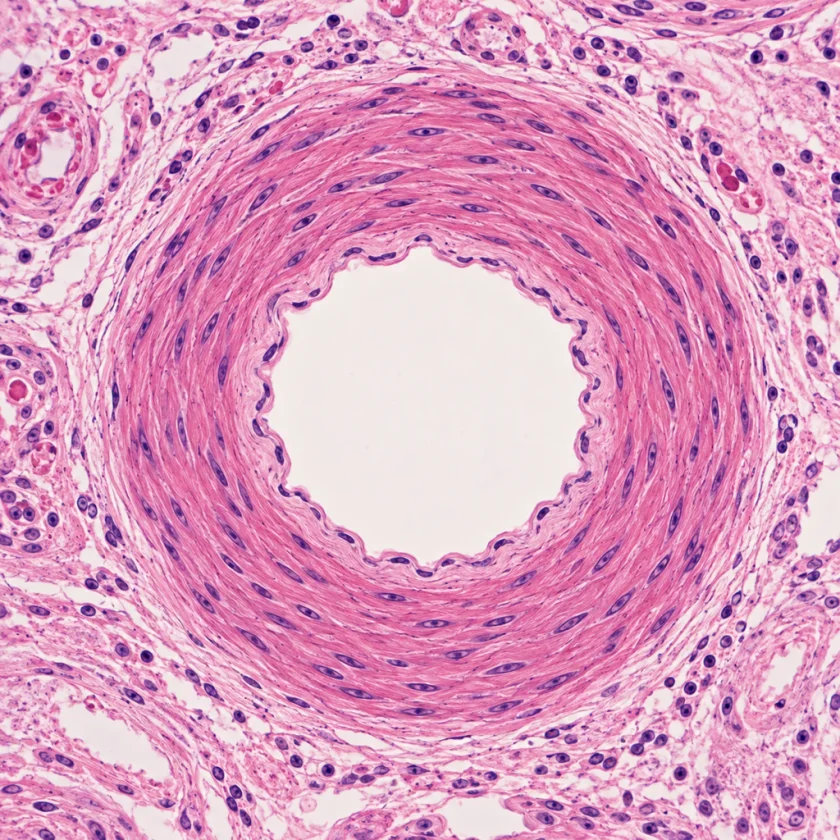
This is horehound's most substantive safety issue, and unusually for a herbal caution it rests on identified pharmacology rather than on vague reports. El Bardai and colleagues characterised marrubenol, a diterpene from M. vulgare, as an L-type calcium channel blocker in the British Journal of Pharmacology, reported the vasorelaxant activity of marrubenol and marrubiin in Planta Medica, and had earlier shown hypotensive activity of Marrubium vulgare in spontaneously hypertensive rats.
In a later 10-week study in spontaneously hypertensive rats, a water extract of white horehound lowered systolic blood pressure about as much as the blood-pressure drug amlodipine, and, unlike amlodipine, it also improved how the artery lining relaxed in response to acetylcholine (a sign of better endothelial function). This was a rat study; no human trial exists.
L-type calcium channel blockade is exactly how amlodipine, nifedipine, diltiazem and verapamil lower blood pressure. So the practical concern is straightforward pharmacodynamic addition: a herb that relaxes vessels through the same channel as your medication may push blood pressure lower than intended.
The research raises a concern for:
- Anyone on antihypertensive medication, and particularly on a calcium-channel blocker, where the mechanisms coincide directly.
- Anyone with low blood pressure or a tendency to postural dizziness. Symptomatic hypotension — lightheadedness on standing, faintness, unusual fatigue — is the thing to watch for, and it is a fall risk in older readers.
- Anyone due for surgery. Surgical teams commonly ask that concentrated herbal preparations be stopped about two weeks before an operation and that the anaesthetist be told, because blood-pressure effects can add to those of anaesthesia.
Note the direction of the argument carefully. This is not a reason to use horehound for hypertension — there is no human trial, no dose, and no standardisation to make that a sensible idea, and hypertension is a condition where guessing has real consequences. Preclinical plausibility is enough for a caution and nowhere near enough for a treatment.
Heart Rhythm and Cardiac Disease
Evidence tier: PRELIMINARY and partly theoretical — a plausible concern rather than a documented harm.
Because L-type calcium channels also govern cardiac conduction and contractility, a compound blocking them has a plausible route to affecting heart rate and rhythm. Some reference sources note reports of arrhythmia associated with larger doses of horehound, and while the underlying case material is sparse and not well documented, the concern is mechanistically coherent rather than invented. Verapamil and diltiazem — the non-dihydropyridine calcium-channel blockers — are used clinically precisely for their effects on cardiac conduction, so the analogy is not far-fetched.
A 2004 binding study adds a more concrete reason. In smooth-muscle membranes from rat intestine, marrubenol completely displaced a verapamil-type drug from its binding site on the L-type calcium channel (the phenylalkylamine site, apparent Ki about 16 micromolar), but it was only a weak inhibitor at the dihydropyridine site, where amlodipine and nifedipine bind. In other words, it behaves in this test like the verapamil group, the group used for its effects on cardiac conduction. This is laboratory work, not a study in people.
The concern is greatest for people with a known arrhythmia, heart failure, conduction disease or a pacemaker, and for people taking antiarrhythmic drugs, digoxin, beta-blockers or rate-controlling calcium-channel blockers, because marrubenol acts on the same channel as verapamil. Palpitations, a racing or irregular pulse, chest discomfort, breathlessness or faintness are warning signs that doctors assess promptly. A horehound sweet is not the concern here; a daily tincture or extract capsule in someone with cardiac disease is.
Blood Sugar and Diabetes Medication
Evidence tier: PRELIMINARY, animal only — a caution, explicitly not a benefit.
Horehound infusions and extracts lowered blood glucose in diabetic rodents, most prominently in the Algerian Marrubium vulgare work published in Fitoterapia, and a fatty-acid constituent, 6-octadecynoic acid, identified in a methanol extract of Marrubium vulgare, activated PPARγ in a 2013 cell-based (luciferase reporter) assay — PPARγ is the target of the glitazone drug class. The marrubiin page covers that literature and its limits in detail.
The safety consequence is additive hypoglycaemia. If you take insulin, a sulfonylurea such as gliclazide or glipizide, or another glucose-lowering drug, a herb with plausible hypoglycaemic activity raises the concern of additive low blood sugar (hypoglycaemia), most of all with a concentrated preparation. The signs of low blood sugar are shakiness, sweating, confusion, palpitations and sudden hunger. See type 2 diabetes.
And the mirror of that caution: the rodent data are not a reason to take horehound for diabetes. Nothing in the literature supports a dose, and substituting a herbal tea for glucose-lowering medication is a route to serious harm.
The Sugar in the Candy
Evidence tier: PLAIN FACT about the product, not a research finding — and probably the most practically useful item on this page.
Traditional horehound drops are boiled sugar candy. That is what they are: sucrose and glucose syrup, cooked to hard-crack, flavoured with horehound extract and often a little liquorice or molasses for colour. The herb is the flavouring; the sugar is the substance. A single drop is small, but a bag of them consumed over the course of a chesty week is a meaningful load of free sugars, taken in repeated small doses that keep the mouth sweet more or less continuously.
Two readers are most affected:
- The diabetic reader reaching for a "natural" cough remedy. There is a real irony here worth naming. Horehound's most-cited modern research finding is that it lowered blood sugar in rats — and the form in which almost everyone actually consumes horehound is a sweet. Whatever the herb may or may not do to glucose in a human, the candy raises it. Unsweetened tea and tincture carry no sugar; lozenges are mostly sugar and count as carbohydrate like any other sweet. Sugar-free versions exist, and their sugar-alcohol sweeteners can cause bloating and loose stools in quantity.
- Anyone worried about teeth. Continuous slow sucking of hard sweets is one of the classic patterns for dental caries and enamel erosion, more so than eating the same sugar at once with a meal. A week of hourly cough drops is a week of near-constant acid exposure.
None of this makes horehound candy a bad thing to enjoy. It makes it a sweet, and it counts as one.
Pregnancy, Breastfeeding and Children
Evidence tier: TRADITIONAL CAUTION plus absent data — the standard basis for a contraindication in herbal safety references.
Standard herbal safety references list horehound as contraindicated in pregnancy. The reason is its long-standing traditional reputation as an emmenagogue — a herb used to promote menstrual flow. Historically, herbs in that category were sometimes used with the intention of provoking bleeding, which is precisely the property that matters in a pregnancy. There is no adequate modern reproductive toxicology to overturn or confirm the traditional caution, so the contraindication rests on that reputation and on the absence of safety data.
The same logic applies to breastfeeding: no adequate safety data on transfer into milk or effects on an infant, so the same caution is applied to concentrated preparations. This caution covers teas, tinctures, syrups and extract capsules. An occasional horehound sweet is a different order of exposure and is unlikely to be a concern. Honey has more trial evidence for cough than horehound (see the next paragraph).
For children, herbal preparations generally lack paediatric dosing evidence, and horehound is no exception. Honey has better trial evidence than any herb here for night-time cough in children over one year of age. A 2018 Cochrane review of six trials in 899 children aged 12 months to 18 years found that honey probably reduces how often children cough more than no treatment or placebo (moderate-certainty evidence) and may work about as well as dextromethorphan, a common cough medicine; most children were treated for only one night. Health agencies advise against honey for infants under one year because of the risk of infant botulism. Cough and cold products in young children are an area where less intervention is generally considered better, and a persistent cough in a small child is a reason for medical assessment; a lozenge is also a choking hazard in its own right.
Gastric Irritation, Nausea and the Purgative Effect
Evidence tier: TRADITIONAL and consistently reported — the most likely adverse effect you will actually encounter.
The commonest problem with horehound is the ordinary one: too much of a strong bitter upsets the stomach. Larger doses are consistently described as causing nausea and vomiting, and horehound has a traditional reputation as a mild laxative or even a purgative at higher intake. This is not an idiosyncratic reaction; it is the predictable consequence of loading the gut with a bitter, secretion-stimulating herb.
The dose-response here does not rise indefinitely toward benefit. Traditional practice used horehound in small, deliberate amounts — a few drops of tincture, a modest cup of tea — and taking more does not deepen the effect so much as convert it into gastrointestinal upset.
Traditional texts and the herb's own mechanism raise a concern for these groups, because the mechanism runs against them:
- Active peptic ulcer or gastritis — the proposed benefit of a bitter is increased gastric acid and secretion, which works against an inflamed or ulcerated lining. See gastritis.
- Significant reflux — see gastroesophageal reflux disease (GERD).
- Gallstones or biliary obstruction — anything that provokes gallbladder contraction is a hazard when a stone can be mobilised.
- Inflammatory bowel disease in an active flare, where a purgative effect is unwelcome.
Allergy and Contact Reactions
Evidence tier: EXPECTED CLASS EFFECT — uncommon, but real.
Horehound is a member of the mint family, Lamiaceae, alongside peppermint, sage, thyme, rosemary, lavender, oregano and basil. People with a known allergy to Lamiaceae plants can react to it. Reactions to handling the fresh plant are also possible — contact dermatitis to aromatic Lamiaceae species is documented, and horehound's woolly leaves are handled directly by gardeners and home preparers.
Swelling of the lips, tongue or throat, difficulty breathing, widespread hives, or faintness are signs of a serious allergic reaction that hospitals treat as urgent. As with any herb, a first exposure is when an unknown allergy shows itself.
Dose: What Traditional Amounts Look Like
There is no established clinical dose for horehound, because there are no clinical trials establishing one. What exists is traditional practice and the amounts that European monograph-registered products carry. What the traditional record and product labels show, in place of numbers dressed up as precision:
- The product's own label states the dose. For a registered or reputable product this reflects the traditional dose range for that specific preparation strength, which no general figure on a website can substitute for.
- Bitterness varies between batches. Marrubiin forms from premarrubiin during drying, so two products of identical botanical identity can differ substantially in strength.
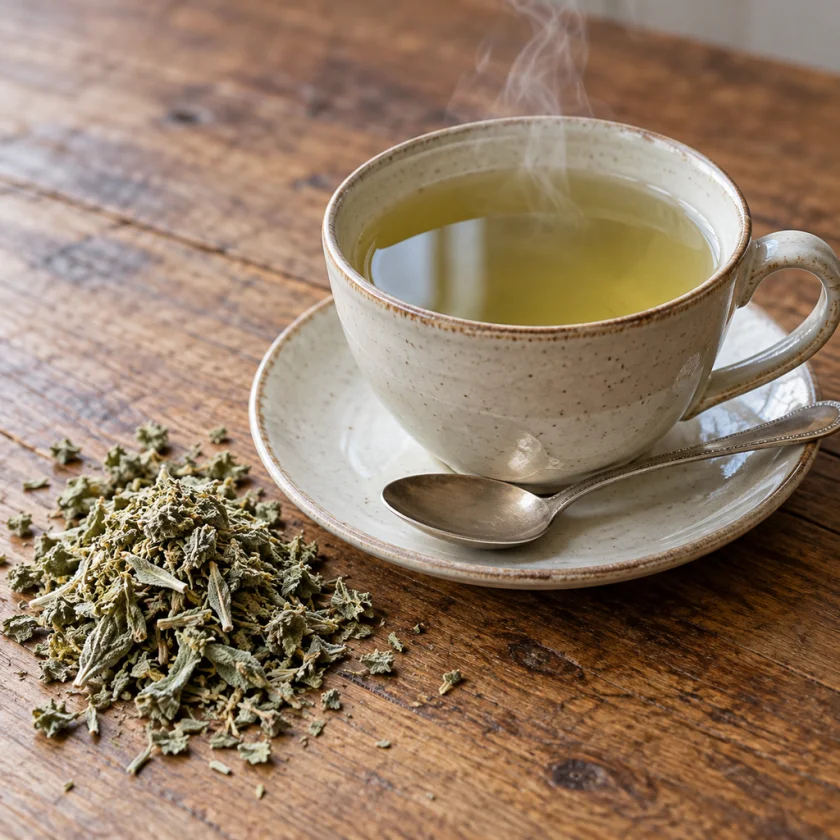
- Tea is traditionally a modest cup of infusion from dried herb, taken before meals for the digestive use or with honey for a cough — not drunk by the mugful through the day.
- Tincture is taken by the drop in a little water. This is the concentrated form; the pharmacology on this page applies to it more than to any other.
- Lozenges are the mildest herbal exposure and the largest sugar exposure.
- Courses are traditionally short. Traditional use is for a transient complaint — a cough during a cold, a stretch of poor appetite — not indefinite daily consumption. There is no long-term safety data to support open-ended use, and the European indications are explicitly framed around temporary complaints.
Interaction Checklist
Each item is a plausible pharmacodynamic interaction based on the herb's reported activity; none is a documented, quantified drug interaction, because that work has not been done.
- Antihypertensives, especially calcium-channel blockers — possible additive blood-pressure lowering.
- Antiarrhythmics, digoxin, beta-blockers, rate-controlling calcium-channel blockers — theoretical additive effects on rate and conduction.
- Insulin and oral glucose-lowering drugs — possible additive hypoglycaemia.
- Diuretics — additive blood-pressure and volume effects, and horehound has a traditional diuretic reputation of its own.
- Sedatives and alcohol — relevant mainly because tinctures are alcoholic preparations, which matters for anyone avoiding alcohol, for children, and for anyone on medication where alcohol is contraindicated.
- Any narrow-therapeutic-index medication — the general concern with an uncharacterised botanical alongside a drug that has little margin for error.
- Surgery and anaesthesia — surgical teams commonly ask that concentrated preparations be stopped about two weeks before an operation and that they be disclosed.
Product Identity: White Versus Black Horehound
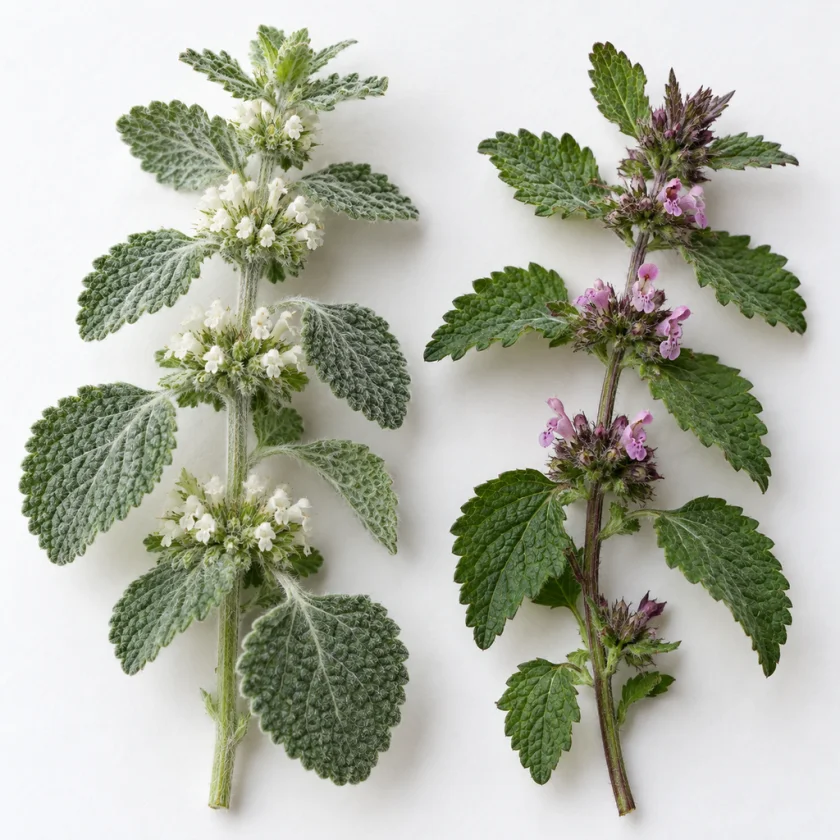
Every statement on this page refers to white horehound, Marrubium vulgare. A second plant shares the common name: black horehound, Ballota nigra, also Lamiaceae, notably unpleasant-smelling, traditionally used as a mild sedative and for nausea and vomiting rather than for cough. Its chemistry differs, its traditional indications differ, and its safety considerations differ.
The names are close enough that the confusion appears in older texts and in supplement listings, so the Latin name (binomial) on the label, not the common name, is what identifies the plant. A label that says only "horehound" without a Latin name has told you less than it appears to. If a source describes horehound as calming or antiemetic, it is either discussing Ballota nigra or it has conflated the two plants — and safety information transferred across that gap is not reliable.
When to Stop and Seek Care
These are warning signs while taking horehound, and reasons people stop it and seek medical care:
- Lightheadedness, faintness or dizziness on standing — possible symptomatic hypotension.
- Palpitations, an irregular or racing pulse, chest pain or unusual breathlessness.
- Symptoms of low blood sugar if you take glucose-lowering medication.
- Persistent nausea, vomiting, or diarrhoea.
- Any allergic reaction; swelling of the mouth or throat or difficulty breathing is an emergency.
- Discovering a pregnancy while taking it, given the traditional pregnancy contraindication.
Separately, some signs show that the underlying complaint has outgrown a home remedy. A cough lasting beyond about three weeks, coughing blood, breathlessness, chest pain, high fever, night sweats or unexplained weight loss are all signs doctors investigate — see bronchitis and lung and respiratory health. Unexplained loss of appetite or weight, difficulty swallowing, vomiting or new persistent indigestion after middle age are likewise signs doctors investigate, which a bitter tonic does not address. The greatest risk a mild herb carries is rarely the herb itself; it is the delay.
Evidence Tiers at a Glance
- PRELIMINARY, MECHANISM NAMED — hypotensive and vasorelaxant activity via marrubenol's L-type calcium channel blockade. Basis for the blood-pressure and cardiac cautions.
- PRELIMINARY, ANIMAL ONLY — glucose-lowering activity of horehound extracts. Basis for the diabetes-medication caution, not for a diabetes benefit.
- TRADITIONAL CAUTION — emmenagogue reputation underpinning the pregnancy contraindication, and the reported laxative or purgative effect at higher doses.
- CONSISTENTLY REPORTED — nausea and gastric upset with excessive intake; the most likely adverse effect in practice.
- SPARSELY DOCUMENTED — arrhythmia reports at higher doses; mechanistically plausible, thin case material.
- PLAIN PRODUCT FACT — horehound candy is largely sugar, with the dental and glycaemic implications any sweet carries.
- NO DATA — long-term use, paediatric dosing, breastfeeding transfer, and quantified drug interactions. Absence of data is not evidence of safety.
Key Research Papers
The papers below link to their PubMed records; the last entries are PubMed topic searches.
- El Bardai S, Wibo M, Hamaide MC, Lyoussi B, Quetin-Leclercq J and Morel N, "Characterisation of marrubenol, a diterpene extracted from Marrubium vulgare, as an L-type calcium channel blocker," British Journal of Pharmacology, 2003;140(7):1211-1216 — the mechanistic basis for the cardiovascular cautions. PubMed PMID: 14597602
- El Bardai S and colleagues, "The vasorelaxant activity of marrubenol and marrubiin from Marrubium vulgare," Planta Medica, 2003;69(1):75-77 — vessel relaxation in isolated tissue. PubMed PMID: 12567286
- El Bardai S, Lyoussi B, Wibo M and Morel N, "Pharmacological evidence of hypotensive activity of Marrubium vulgare and Foeniculum vulgare in spontaneously hypertensive rat," Clinical and Experimental Hypertension, 2001;23(4):329-343 — blood-pressure lowering in a rodent model. PubMed PMID: 11349824
- El Bardai S, Lyoussi B, Wibo M and Morel N, "Comparative study of the antihypertensive activity of Marrubium vulgare and of the dihydropyridine calcium antagonist amlodipine in spontaneously hypertensive rat," Clinical and Experimental Hypertension, 2004;26(6):465-474 — the 10-week rat comparison with amlodipine. PubMed PMID: 15554450
- El Bardai S, Hamaide MC, Lyoussi B, Quetin-Leclercq J, Morel N and Wibo M, "Marrubenol interacts with the phenylalkylamine binding site of the L-type calcium channel," European Journal of Pharmacology, 2004;492(2-3):269-272 — the binding study behind the heart-rhythm section. PubMed PMID: 15178374
- Boudjelal A, Henchiri C, Siracusa L, Sari M and Ruberto G, "Compositional analysis and in vivo anti-diabetic activity of wild Algerian Marrubium vulgare L. infusion," Fitoterapia, 2012;83(2):286-292 — the glucose-lowering finding behind the diabetes-medication caution. PubMed PMID: 22100836
- Ohtera A, Miyamae Y, Nakai N, Kawachi A, Kawada K, Han J, Isoda H, Neffati M, Akita T, Maejima K, Masuda S, Kambe T, Mori N, Irie K and Nagao M, "Identification of 6-octadecynoic acid from a methanol extract of Marrubium vulgare L. as a peroxisome proliferator-activated receptor γ agonist," Biochemical and Biophysical Research Communications, 2013;440(2):204-209 — the cell-based PPARγ finding. PubMed PMID: 24025677
- Aćimović M and colleagues, "Marrubium vulgare L.: a phytochemical and pharmacological overview," Molecules, 2020;25(12):2898 — includes the toxicity and safety literature, which is notably sparse. PubMed PMID: 32599693
- Meyre-Silva C and Cechinel-Filho V, "A review of the chemical and pharmacological aspects of the genus Marrubium," Current Pharmaceutical Design, 2010;16(31):3503-3518 — documents the traditional uses including the emmenagogue and purgative reputations. PubMed PMID: 20942795
- Popoola OK and colleagues, "Marrubiin," Molecules, 2013;18(8):9049-9060 — the compound review, useful for what it does and does not say about toxicology. PubMed PMID: 23899837
- Oduwole O, Udoh EE, Oyo-Ita A and Meremikwu MM, "Honey for acute cough in children," Cochrane Database of Systematic Reviews, 2018;4:CD007094 — six trials, 899 children, the evidence behind the honey sentence. PubMed PMID: 29633783
- Searches for reported adverse events, toxicity studies and case reports involving Marrubium vulgare return very little — which confirms how thin the safety file is. PubMed search
- Reviews of herbal medicine use in pregnancy and of emmenagogue-classified herbs give the standard basis for the pregnancy contraindication applied here. PubMed search
- Literature on herb-drug interactions with antihypertensive and glucose-lowering medication frames why plausible pharmacodynamic additions matter even without quantified interaction studies. PubMed search
- Trials of honey for acute cough in children, and the standing advice against honey under one year of age because of infant botulism, are the better-evidenced alternative referenced in the paediatric section. PubMed search
- Ballota nigra literature, for confirming that black horehound is a separate plant with its own profile and that safety information does not transfer between the two. PubMed search
External Resources
- European Medicines Agency — the European Union herbal monograph and assessment report on Marrubium vulgare herb, including its contraindications, warnings and pregnancy statement.
- U.S. Food and Drug Administration — the American regulator, whose finding on horehound as a cough and cold drug ingredient is covered on the cough page, and whose food-additive and dietary-supplement pages explain the frameworks horehound products are sold under.
- LiverTox — the U.S. National Institutes of Health (NIH) database of drug- and herb-induced liver injury, the right first stop for any herbal hepatotoxicity question.
- National Center for Complementary and Integrative Health — plain-language safety information on herbs and supplements.
- PubMed — the literature index behind every citation above.
Connections
- All Herbs
- Horehound (main article)
- Horehound Benefits Hub
- Horehound, Cough and the U.S. Food and Drug Administration
- Horehound as a Bitter
- Marrubiin Chemistry
- Hypertension
- Arrhythmia
- Type 2 Diabetes
- Gastritis
- Gastroesophageal Reflux Disease
- Bronchitis
- Lung & Respiratory Health
- Wormwood
- Licorice
- Peppermint
Safety and disclaimer. This page is educational and is not medical advice. Horehound appears low-risk at food and confectionery levels but has meaningful uncertainty at concentrated doses. Herbal safety references list it as contraindicated in pregnancy, and the research and traditional record raise concerns while breastfeeding, with active ulcer, gastritis, marked reflux or gallstones, with an allergy to mint-family plants, and alongside medication for blood pressure, heart rhythm or blood sugar. Surgical teams commonly ask that concentrated preparations be stopped about two weeks before surgery. Large doses cause nausea and can act as a purgative. Horehound candy is largely sugar. Nothing here supports using horehound to treat hypertension, arrhythmia, diabetes or any other diagnosed condition, and no evidence supports it as a replacement for prescribed medication.