⚠ Evidence warning: Clinical trials or other evidence do not support the claim that Reishi helps people with chronic hepatitis B, herpes or shingles and Epstein-Barr virus reactivation, or rebalances allergic and autoimmune disease. This page keeps it as a report of what people, websites or other media say.
Reishi Mushroom for Immune Modulation
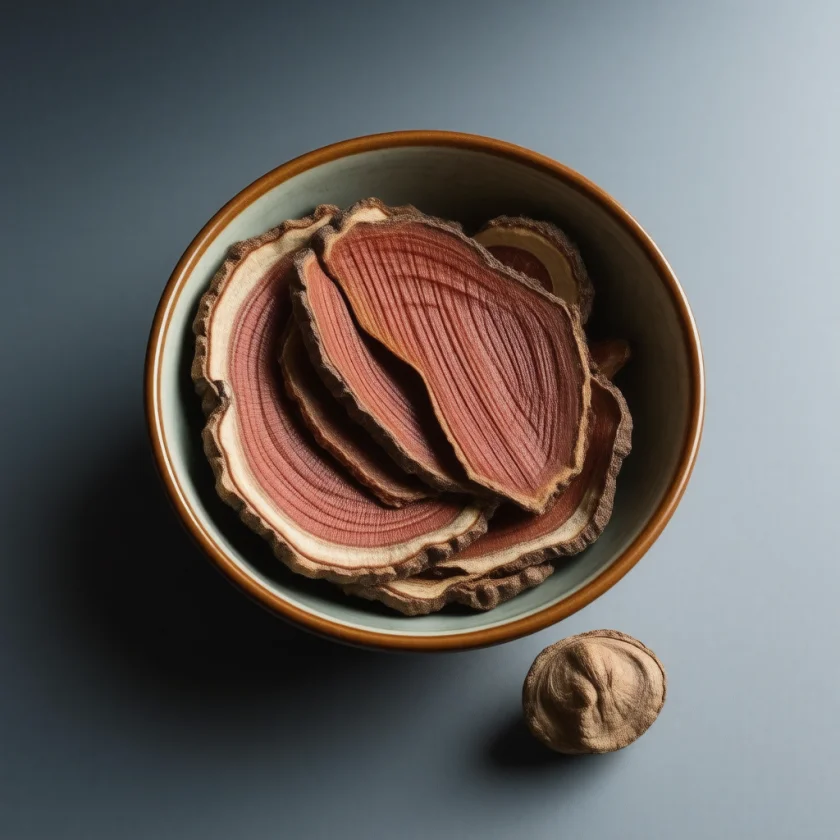
Reishi (Ganoderma lucidum) is the most extensively studied medicinal mushroom for immune modulation, with a body of mechanistic evidence built around the beta-1,3/1,6-D-glucan binding to dectin-1 (CLEC7A) on dendritic cells, macrophages, and natural killer (NK) cells. Unlike a single-target immune stimulant, Reishi acts as a true bidirectional immunomodulator: it potentiates innate immunity (natural killer-cell cytotoxicity, macrophage phagocytosis, dendritic-cell maturation) while simultaneously dampening pathological Th2 skew in allergic disease and pathological Th1 skew in autoimmunity. The mushroom polysaccharide used alongside cancer treatment in Japan, protein-bound polysaccharide K (PSK), comes from a different mushroom, turkey tail (Coriolus versicolor); in the United States Reishi is sold as a dietary supplement. This article walks through the molecular receptor pharmacology, the Th1/Th2/Th17/Treg cytokine rebalancing, the Gao 2003 natural killer-cell study in advanced cancer, the Cochrane evidence base, and the practical clinical applications.
Table of Contents
- The Two Bioactive Fractions: Polysaccharides vs Triterpenoids
- Receptor Pharmacology: Dectin-1, CR3, TLR4
- Dendritic Cell and Macrophage Activation
- Natural Killer-Cell Cytotoxicity and the Gao 2003 Study
- Th1 / Th2 / Th17 / Treg Cytokine Rebalancing
- Reishi as Adjuvant Cancer Immunotherapy
- Chronic Viral Infection and Hepatitis B
- Allergic Disease and Autoimmunity
- Dosing, Extract Form, and Standardization
- Cautions and Drug Interactions
- Key Research Papers
- Connections
- Featured Videos
The Two Bioactive Fractions: Polysaccharides vs Triterpenoids
The single most important practical fact about Reishi for immune work is that the immune activity lives in the polysaccharide fraction, not the triterpenoid fraction. The two classes have completely different chemistry, completely different extraction profiles, and almost completely different pharmacology.
- Polysaccharides (water-soluble, high molecular weight, 10–1,000 kDa) — principally beta-1,3-linked glucan backbones with beta-1,6 side branches, plus arabinoxylans and peptidoglycans. These are extracted into hot water but precipitate out of cold water or ethanol. They are not absorbed across the gut wall in intact form. They engage pattern-recognition receptors (PRRs) on the apical surface of M-cells in the Peyer's patches and on the basolateral surface of dendritic cells in the gut-associated lymphoid tissue.
- Triterpenoids (lipophilic, small molecular weight, 400–600 Da) — ganoderic acids A through Z, ganoderenic acids, lucidenic acids, ganoderols. These are extracted into ethanol or other organic solvents and produce Reishi's distinctly bitter taste. They are absorbed systemically and circulate at low micromolar concentrations. Their pharmacology is dominated by hepatoprotective, cardiovascular, sedative, and direct cytotoxic-against-cancer-cells effects — not principally immune.
A pure hot-water extract of Reishi captures the polysaccharide fraction that carries the immune activity. A pure alcohol extract captures the triterpenoids that drive most of the non-immune pharmacology. A "dual extraction" Reishi product — hot-water extraction followed by ethanol extraction with the two fractions recombined — captures both, and is the preparation most often used for broad-spectrum Reishi use. Raw or simply ground-up Reishi powder releases little: the cell-wall chitin prevents the polysaccharides from being released by digestive processes, and bioavailability is minimal.
Receptor Pharmacology: Dectin-1, CR3, TLR4
Beta-1,3/1,6-D-glucans from Ganoderma lucidum engage at least three pattern-recognition receptors expressed on innate immune cells:
- Dectin-1 (CLEC7A) — the principal receptor. A C-type lectin expressed on dendritic cells, macrophages, neutrophils, and a subset of T cells. Beta-glucan engagement of dectin-1 triggers Syk kinase activation, CARD9 / BCL10 / MALT1 signalosome assembly, and downstream NF-kB transcription of pro-inflammatory cytokines and chemokines. Dectin-1 engagement is also the major signal that drives Th17 polarization in response to fungal pathogens, which is the same pathway Reishi co-opts for its immune-modulating effect.
- Complement receptor 3 (CR3 / CD11b/CD18) — a beta-2 integrin on neutrophils and natural killer cells. Beta-glucans bind a lectin-like site on the CR3 alpha-chain and "prime" the receptor so that subsequent binding of iC3b-opsonized targets triggers cytotoxic killing. This is the proposed mechanism behind the natural killer-cell cytotoxicity potentiation seen in cancer patients.
- TLR2 / TLR4 (Toll-like receptors) — some Reishi polysaccharide fractions also engage TLR2 (alone or in heterodimer with TLR6) and TLR4 / MD-2, contributing to a MyD88-dependent NF-kB activation. The exact contribution of TLR signaling vs dectin-1 signaling varies by preparation and by which polysaccharide fraction is being studied.
The net effect of engaging these receptors with a non-self carbohydrate signature is to activate innate immunity in a way that does not require the presence of an actual pathogen. This is the same mechanism by which yeast-derived beta-glucan supplements and the licensed leukocyte-modulator imiquimod work, just through a different molecular signature.
Dendritic Cell and Macrophage Activation
Dendritic cells are the principal sensors and antigen-presenters that bridge innate and adaptive immunity. A 2002 laboratory study by Cao and Lin, done in mouse bone-marrow dendritic cells grown in dishes (not in people), found that Ganoderma lucidum polysaccharide increased the co-expression of the surface markers CD11c and I-A/I-E, raised production of the signalling protein IL-12 p40, and strengthened the cells' ability to drive lymphocyte proliferation in mixed lymphocyte culture — signs that the dendritic cells had matured. The functional consequence in that model is increased capacity to start an immune response.
Macrophages exposed to Reishi polysaccharide undergo a similar activation profile: increased phagocytosis (engulfment of pathogens or opsonized targets), increased nitric oxide production via iNOS induction, increased tumor necrosis factor-alpha and interleukin-6 (IL-6) secretion, and increased class II MHC expression. The activation profile is most consistent with the M1 ("classically activated") macrophage phenotype rather than the M2 ("alternatively activated") phenotype, although the picture is nuanced and tissue-context-dependent.
The downstream consequence of dendritic-cell and macrophage activation is enhanced T-cell priming, which is why Reishi's effect on the adaptive immune system — even though it does not directly bind T-cell receptors — is indirectly substantial. A more activated dendritic-cell compartment translates to more efficient T-cell responses against whatever antigens are being encountered.
Natural Killer-Cell Cytotoxicity and the Gao 2003 Study
Natural killer (NK) cells are the innate-lymphoid-cell counterpart to cytotoxic T cells, capable of killing virally infected and tumor-cell targets without prior antigen sensitization. Natural killer-cell activity is a clinically relevant biomarker because low natural killer function correlates with cancer incidence and with infectious complications in immunocompromised patients.
The Gao 2003 study had no placebo group and no randomization. It entered 34 patients with advanced-stage cancer, all of whom took 1800 mg of a Ganoderma lucidum polysaccharide extract three times daily before meals for 12 weeks; their immune measures were compared before and after the 12 weeks, and 30 patients could be assessed. Results:
- Mean natural killer activity rose significantly compared with baseline (34.5 ± 11.8% vs 26.6 ± 8.3%)
- Blood levels of interleukin-2 (IL-2), IL-6 and interferon-gamma rose, while IL-1 and tumour necrosis factor-alpha fell (P < 0.05)
- The mean number of CD56+ cells rose significantly; CD3+, CD4+ and CD8+ counts rose only marginally, and the CD4:CD8 ratio did not change
- The response of lymphocytes to the mitogen phytohemagglutinin rose in most patients
- The authors reported that clinical evaluations of tumour response and toxicity were still ongoing
This study is often cited because it reported a measurable innate-immunity biomarker change in people with advanced cancer taking oral Reishi extract. It had no comparison group, did not measure survival, and its small size leaves substantial uncertainty about whether the natural killer-cell change translates to clinical benefit; a 2005 study of the same extract in lung cancer did not find a significant average change (see below). The 2016 Cochrane review by Jin et al. did not find sufficient evidence to justify Reishi as a first-line cancer treatment, and stated that it could be given as an alternative adjunct to conventional treatment.
Th1 / Th2 / Th17 / Treg Cytokine Rebalancing
Once dendritic cells and macrophages have been activated by Reishi polysaccharide, the resulting CD4+ T-cell responses can polarize down four principal paths: Th1 (cellular immunity, intracellular pathogens, mediated by IFN-gamma), Th2 (humoral immunity, parasites, mediated by IL-4, IL-5, IL-13), Th17 (mucosal defense, extracellular bacteria and fungi, mediated by IL-17, IL-22), or Treg (regulatory T cells that suppress inflammation, mediated by interleukin-10 (IL-10) and TGF-beta).
Reishi's effect on this balance is bidirectional and depends on the baseline disequilibrium of the host. In immunosuppressed populations (cancer chemotherapy patients, the frail elderly), Reishi tends to rebalance toward stronger Th1 responses, which is appropriate for fighting intracellular pathogens and cancer. In Th2-skewed populations (atopic dermatitis, allergic rhinitis, asthma), Reishi appears to dampen the Th2 axis and restore Th1 balance, with case reports of allergic-disease improvement. In autoimmune populations (rheumatoid arthritis, lupus), the picture is more complex: Reishi can either help or hurt depending on the specific cytokine context, and the safety of high-dose use in active autoimmune disease is an open question.
The molecular basis for this bidirectional effect appears to be the simultaneous engagement of pro-inflammatory PRR signaling (dectin-1, TLR) and the production of regulatory cytokines (TGF-beta, interleukin-10) by the same activated macrophages and dendritic cells. The net effect at the level of the whole organism is "restoration of homeostasis" rather than monodirectional stimulation, which is the classical pharmacologic definition of an immunomodulator (as distinct from an immunostimulant or immunosuppressant).
Reishi as Adjuvant Cancer Immunotherapy
Reishi is most frequently studied as an adjunct to conventional cancer therapy. The 2016 Cochrane review by Jin et al. pooled 5 randomized trials of Ganoderma lucidum in cancer patients (a total of 373 patients), and found:
- Patients given Reishi alongside chemotherapy/radiotherapy were more likely to respond than with chemotherapy/radiotherapy alone (relative risk 1.50; 95% CI 0.90 to 2.51, P = 0.02); Reishi alone did not show the same regression rate
- Four studies showed relatively improved quality of life (measured by the Karnofsky scale score) in the Reishi groups compared with controls
- The percentages of CD3, CD4 and CD8 T cells rose by 3.91%, 3.05% and 2.02%, while leukocytes, natural killer-cell activity and the CD4/CD8 ratio were only marginally elevated
- One study recorded minimal side effects, including nausea and insomnia; no significant blood (haematological) or liver toxicity was reported
- The methodological quality of the primary studies was generally unsatisfying
- No trial had recorded long-term survival rates, so it remains uncertain whether Reishi helps prolong long-term cancer survival
- The reviewers did not find sufficient evidence to justify Reishi as a first-line treatment for cancer, and stated that it could be administered as an alternative adjunct to conventional treatment
In Japan, the closely related Coriolus versicolor (turkey tail) polysaccharide PSK has been licensed since 1977 as an adjuvant immunotherapy for gastric, colon, and lung cancers, with hundreds of randomized trials supporting its use alongside conventional therapy. PSK is closer in formulation to a pharmaceutical product than to a dietary supplement, with rigorous standardization. The PSK precedent is the best evidence base for medicinal-mushroom polysaccharides as cancer adjuvants, and Reishi sits within the same pharmacologic family.
A 2005 open-label study of the same Reishi polysaccharide extract enrolled 36 patients with advanced lung cancer, who took 5.4 g/day for 12 weeks. In the 30 who completed it, the extract did not significantly change the average response to the mitogen phytohemagglutinin, the average CD3, CD4, CD8 and CD56 counts, the average blood levels of IL-2, IL-6 and interferon-gamma, or natural killer activity; the results varied widely, and some patients showed markedly modulated immune function. The human immune results are therefore mixed, not uniformly positive.
A 2025 systematic review and meta-analysis pooled 17 randomized controlled trials with 971 participants (healthy, at-risk and chronically ill people taking 200–11,200 mg/day for 1–24 weeks). It found significant reductions in body mass index, creatinine and heart rate and a rise in the antioxidant enzyme glutathione peroxidase, but no significant effect on body fat, waist circumference, blood pressure, fasting glucose, blood fats (lipid profile), inflammatory markers or liver enzymes. The reviewers rated the quality of evidence as very low across all outcomes.
In U.S. integrative oncology, Reishi extract (typically dual-extract, 1.5–3 g/day) is used as a supportive adjunct alongside conventional cancer therapy; its drug-interaction and bleeding concerns are listed under Cautions below. The Cochrane review did not find sufficient evidence to justify it as a first-line cancer treatment.
Chronic Viral Infection and Hepatitis B
Reishi has a long history of use in traditional Chinese medicine for chronic viral hepatitis, and practitioners use it as an add-on in chronic hepatitis B.
The mechanism is presumed to be Th1 / IFN-gamma rebalancing that restores the host antiviral response, plus the direct hepatoprotective effects of the triterpenoid fraction. Standard treatment of chronic hepatitis B uses antiviral drugs (entecavir, tenofovir); practitioners who use Reishi use it alongside these drugs, not in place of them. For chronic hepatitis C, the introduction of curative direct-acting antivirals (sofosbuvir-based regimens) has rendered the integrative-medicine question largely moot — cure rates are now >95% with pharmaceutical therapy alone.
Other chronic viral conditions for which Reishi is used include reactivated herpes simplex (HSV-1, HSV-2), varicella-zoster (shingles), and Epstein-Barr virus reactivation. For shingles, the evidence is a four-patient case report (Hijikata and Yamada, 1998): a hot-water extract (36 to 72 g dry weight/day) was followed by a dramatic fall in pain in two people with postherpetic neuralgia that had not responded to standard therapy and in two others with severe pain from herpes zoster infection. The evidence base for these uses is anecdotal and case-report level. For the chronic-infection-and-immune-modulation discussion in the context of Lyme disease, see our Lyme Disease page.
Allergic Disease and Autoimmunity
The bidirectional Th1/Th2 rebalancing effect of Reishi has produced interesting case-series and pilot-trial data in allergic disease. Reishi appears to reduce eosinophil infiltration in animal models of allergic asthma, reduce mast-cell degranulation in atopic dermatitis models, and lower serum immunoglobulin E (IgE) in some patient series. The mechanism is the rebalancing of a pathologically Th2-skewed immune system toward more normal Th1/Th2 equilibrium.
For autoimmune disease, the picture is more cautious. Reishi's pro-inflammatory dectin-1 activation could theoretically aggravate active autoimmune flare, and some practitioners avoid its use entirely in flare-state autoimmune patients. In quiescent disease or in patients on adequate immunosuppression, Reishi has been used cautiously with reported subjective benefit, but the evidence base is much weaker than for cancer or chronic viral hepatitis. The theoretical concern is greatest during an active flare of rheumatoid arthritis, lupus, multiple sclerosis, or inflammatory bowel disease.
For chronic urticaria (chronic hives) and chronic rhinosinusitis, anecdotal reports of benefit exist but no robust randomized-trial evidence supports routine use.
Dosing, Extract Form, and Standardization
The Reishi supplement market is unusually heterogeneous in product quality. Doses used vary widely depending on the form:
- Raw fruiting body decoction — 6–9 g/day of dried sliced fruiting body simmered in water for 1–2 hours. This is the traditional preparation and the closest to a "whole food." Decoction is necessary because the cell-wall chitin requires extended hot-water extraction to release the polysaccharides.
- Hot-water extract powder — typically 1–3 g/day. Products are often standardized to >20% beta-glucan content. Polysaccharide-dominant preparations carry the immune-active fraction.
- Dual extract (water + ethanol) — typically 1.5–3 g/day. Captures both polysaccharides and triterpenoids. The preparation most often used for broad-spectrum Reishi use including immune modulation. Often standardized to >20% beta-glucan AND >4% triterpenoid content.
- Reishi spores or spore oil — concentrated triterpenoid source. Typically 1–2 g/day. The spore wall must be "cracked" by mechanical or enzymatic processing for the contents to be bioavailable; uncracked spores pass through the gut intact. Spore oil is the triterpenoid-rich fraction extracted from cracked spores.
Onset of detectable immune effects is typically 4–12 weeks of consistent dosing. The pharmacology is fundamentally chronic-administration rather than acute, and a "loading dose" approach adds nothing — megadosing for a few days produces no benefit beyond what consistent moderate dosing for weeks produces. Reishi is generally taken with food to minimize the rare gastrointestinal upset; some practitioners prefer evening dosing to capture the sleep-supporting effects described in our Stress and Sleep article.
Cautions and Drug Interactions
- Anticoagulant interaction — Reishi has measurable antiplatelet activity via adenosine and ganoderic acid mechanisms. Concurrent use with warfarin, direct oral anticoagulants (rivaroxaban, apixaban, dabigatran, edoxaban), or antiplatelet drugs (aspirin, clopidogrel) increases bleeding risk. The same bleeding concern applies to planned surgery; stopping at least 2 weeks beforehand is the interval usually cited.
- Immunosuppressant interaction — the immune-stimulating mechanism may theoretically counteract pharmacologic immunosuppression in transplant recipients. The concern is greatest for solid-organ and hematopoietic-cell transplant recipients, and there is no good safety data in these groups.
- CYP450 interactions — Reishi extract has been shown to induce or inhibit several CYP450 isoenzymes (cytochrome P450 enzymes CYP1A1, CYP1A2 and CYP3A4) and may affect the metabolism of drugs cleared by these pathways. The clinical significance of these interactions is uncertain; it matters most for narrow-therapeutic-index drugs, where a small change in blood level makes a large difference.
- Diabetes medications — Reishi may have mild hypoglycemic effects, which could add to the glucose-lowering effect of insulin or sulfonylureas.
- Hepatotoxicity in rare cases — a 2007 report (Wanmuang 2007) describes liver toxicity linked to Lingzhi (Reishi) powder in two patients: one in Hong Kong in 2004 and a fatal case of fulminant hepatitis in Thailand in 2005. Both had taken traditionally boiled Lingzhi without any toxic effect, developed liver injury 1–2 months after switching to the powder form, and had also taken other therapeutic agents. Unexplained liver-enzyme elevation in someone taking Reishi points to this possibility.
- Allergic reaction — rare but possible, especially in individuals with known mushroom or mold allergy. Rash, urticaria (hives) or wheezing are the signs of such a reaction.
- Pregnancy and lactation — there is no good safety data for use in pregnancy or during breastfeeding.
- Active autoimmune disease flare — theoretical risk of aggravation due to dectin-1 mediated pro-inflammatory signaling.
Key Research Papers
- Gao Y, Zhou S, Jiang W, Huang M, Dai X (2003). Effects of ganopoly (a Ganoderma lucidum polysaccharide extract) on the immune functions in advanced-stage cancer patients. Immunological Investigations, 32(3), 201–15. — PubMed PMID: 12916709
- Jin X, Ruiz Beguerie J, Sze DM, Chan GC (2016). Ganoderma lucidum (Reishi mushroom) for cancer treatment. Cochrane Database of Systematic Reviews, 4(4), CD007731. — PubMed PMID: 27045603
- Cao LZ, Lin ZB (2002). Regulation on maturation and function of dendritic cells by Ganoderma lucidum polysaccharides. Immunology Letters, 83(3), 163–9. — PubMed PMID: 12095706
- Wang SY et al. (1997). The anti-tumor effect of Ganoderma lucidum is mediated by cytokines released from activated macrophages and T lymphocytes. International Journal of Cancer. — PubMed
- Gao Y, Tang W, Dai X, Gao H, Chen G, Ye J, Chan E, Koh HL, Li X, Zhou S (2005). Effects of water-soluble Ganoderma lucidum polysaccharides on the immune functions of patients with advanced lung cancer. Journal of Medicinal Food, 8(2), 159–68. — PubMed PMID: 16117607
- Lin ZB (2005). Cellular and molecular mechanisms of immuno-modulation by Ganoderma lucidum. Journal of Pharmacological Sciences. — PubMed
- Hijikata Y, Yamada S (1998). Effect of Ganoderma lucidum on postherpetic neuralgia. American Journal of Chinese Medicine, 26(3-4), 375–81. — PubMed PMID: 9862025
- Wanmuang H, Leopairut J, Kositchaiwat C, Wananukul W, Bunyaratvej S (2007). Fatal fulminant hepatitis associated with Ganoderma lucidum (Lingzhi) mushroom powder. Journal of the Medical Association of Thailand, 90(1), 179–81. — PubMed PMID: 17621752
- Jafari A, Mardani H, Mirzaei Fashtali Z, Arghavan B (2025). The Nutritional Significance of Ganoderma lucidum on Human Health: A GRADE-Assessed Systematic Review and Meta-Analysis of Clinical Trials. Food Science & Nutrition, 13(6), e70423. — PubMed PMID: 40510787
- Wachtel-Galor S et al. (2011). Ganoderma lucidum (Lingzhi or Reishi): A medicinal mushroom. In: Herbal Medicine: Biomolecular and Clinical Aspects, 2nd ed. — PubMed
- Paterson RR (2006). Ganoderma — a therapeutic fungal biofactory. Phytochemistry. — PubMed
PubMed Topic Searches
Connections
- Reishi Mushroom Overview
- Reishi Benefits Hub
- Reishi for Stress and Sleep
- Reishi for Cardiovascular Health
- Reishi for Liver and Detoxification
- Immune Boosting
- Turkey Tail Mushroom (PSK)
- Chaga Mushroom
- Lion's Mane Mushroom
- Cordyceps
- Vitamin D3 (Immune Synergy)
- Zinc
- Vitamin C
- Hepatology (Chronic Hepatitis)
- Oncology
- History