Gymnema for Weight Loss — Chromium, Fiber, Appetite Suppression and the RCT Pilot Evidence
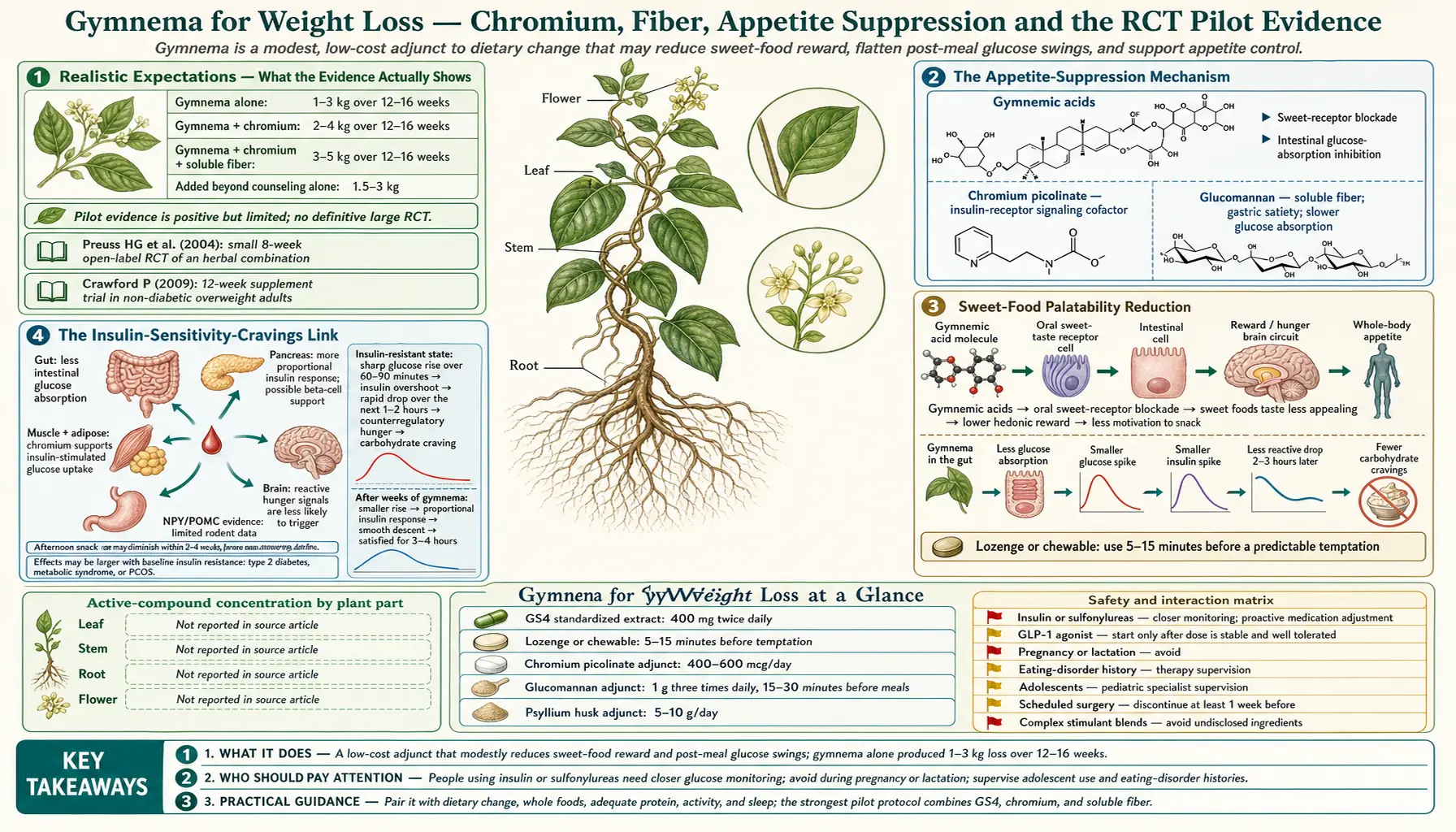
Gymnema is sold for weight loss mainly because its gymnemic acids briefly blunt the taste of sweetness. In short laboratory studies, a gymnema dose taken by mouth before sweet food reduced how much of that food people ate. Whether this adds up to weight loss is much less clear. The trials that measured body weight are small and their results are mixed; the best-known one tested gymnema only inside a three-ingredient combination; and a 2023 meta-analysis of six randomized trials did not list body weight among the outcomes gymnema significantly changed. This page sets out the sweet-taste research, each weight trial as it was designed, and the safety findings.
Table of Contents
- What the Weight Evidence Shows
- Proposed Appetite Mechanisms
- Sweet-Taste Suppression and Sweet-Food Intake
- The Proposed Blood-Sugar and Craving Link
- Chromium Combinations
- Soluble Fiber and Multi-Ingredient Blends
- Leptin, Ghrelin and Adiponectin Evidence
- The Weight Trials, Study by Study
- Gymnema Alongside Diet and Activity in the Trials
- What the Research Does Not Show
- Safety Findings
- Key Research Papers
- Connections
- Featured Videos
What the Weight Evidence Shows
The human research on gymnema and body weight falls into three groups:
- Sweet-taste and intake studies — single-session or two-week studies that measured how much sweet food people ate after an oral gymnema dose (Brala and Hagen 1983; Turner and colleagues 2020 and 2022). They measured eating and taste, not weight loss.
- Gymnema-only trials that recorded weight — small trials in people with metabolic syndrome (24 participants), impaired glucose tolerance (30 participants) or obesity (50 participants). Two reported lower body weight within the gymnema group; in the third, weight fell significantly with the comparison treatment, berberine, and the abstract lists no significant weight change with gymnema.
- Multi-ingredient products — trials in which gymnema was one ingredient among several (Preuss and colleagues 2004; Woodgate and Conquer 2003). No group in these trials received gymnema on its own, so they cannot show what gymnema itself contributed.
When the randomized trials are pooled, the picture stays uncertain. A 2023 systematic review and meta-analysis by Zamani and colleagues combined six randomized trials of gymnema in adults. Its abstract reports significant decreases in triglycerides, total cholesterol, LDL cholesterol, fasting blood sugar and diastolic blood pressure; body weight is not among the significant findings it lists, and the authors point to notable heterogeneity, low study quality and a lack of diversity among participants. Earlier reviews of weight-loss supplements were cautious as well. Pittler and Ernst (2004) found "no evidence beyond a reasonable doubt that any specific dietary supplement is effective for reducing body weight" (gymnema was not among the supplements their review identified). Astell and colleagues (2013) reviewed 14 double-blind trials of plant extracts used to suppress appetite and found mostly inconclusive evidence; a combination of Garcinia cambogia plus gymnema was one of the two exceptions they named.
No trial was found that compares gymnema with prescription weight-loss drugs.
The glucose and lipid research on gymnema is covered in the Blood Sugar deep-dive and the Cholesterol deep-dive.
Proposed Appetite Mechanisms
Gymnemic acids, compounds from the gymnema leaf, selectively suppress taste responses to sweet compounds without affecting the perception of other tastes. Two routes are proposed by which gymnema might change eating:
- Sweet-taste suppression in the mouth — the route with the most human data. When sweet food tastes less sweet and less pleasant, people in laboratory studies ate less of it soon afterwards (next section, and the Sugar Cravings deep-dive).
- Effects after the extract is swallowed — in rats made obese with a high-fat diet, a standardized ethanolic gymnema extract given by mouth for 28 days reversed the diet-induced rises in body mass index, visceral fat, serum leptin, insulin and blood lipids (Kumar and colleagues 2012). These are animal results.
A human study tested whether suppressing sweet taste changes the body's response to a meal. In 15 healthy young adults, rinsing the mouth with a gymnema solution before eating sweet foods lowered sweet-taste intensity and liking, but did not change gastric emptying, blood glucose, plasma insulin, or hunger and fullness ratings compared with rinsing with water. After the meal, participants who had used the gymnema rinse reported a higher desire for sweet taste and lower satisfaction (Kashima and colleagues 2020).
Sweet-Taste Suppression and Sweet-Food Intake
The sweet-taste effect is the most distinctive thing gymnema does, and it has been measured directly (the taste research in more depth is in the Sugar Cravings deep-dive):
- Brala and Hagen (1983) — fasted normal-weight volunteers drank a preload sweetened with sugar, with aspartame, or with no added sweetener. In half of them, sweetness perception was reduced by applying gymnema extract in the mouth. At a snack meal an hour later, those whose sweetness perception had been reduced ate fewer total and fewer sweet calories than those with normal perception; the calorie content of the preload did not affect intake.
- Turner and colleagues (2020) — a single-blind crossover study in 56 healthy young adults compared a dissolving mint containing 4 mg of gymnemic acids with a placebo mint. After the gymnema mint, the number of chocolate bars eaten within a 15-minute period fell by 0.48 bars (21.3%), and desire for more chocolate and its pleasantness were lower. Participants who reported a "sweet tooth" showed larger reductions in pleasantness and desire.
- Turner and colleagues (2022) — 58 healthy adults were randomized for 14 days to a programme of gymnema mints, a fibre and vitamin supplement and a healthy-eating guide, or the same programme with placebo mints. After the first dose the gymnema group ate fewer chocolates (2.65 against 3.15 bars), but at day 15 there was no difference (2.77 against 2.78 bars), and food-frequency questionnaires showed no differences between groups in the intake of 9 food categories at any time point. The authors reported no habituation to the mint.
- Noel and colleagues (2017) — in 51 healthy volunteers, a gymnema tea reduced perceived sweetness and liking for sweet foods, and participants then chose a higher sugar content for those foods. The authors suggested that a weakened sense of taste may lead people to seek more intense, higher-calorie stimuli.
Taken together, an oral gymnema dose reliably dulls sweetness for a short time and, in laboratory settings, reduced the amount of chocolate or sweet snack food eaten soon afterwards. Over two weeks of everyday use, the one randomized trial found no difference in reported intake of food categories, and these studies measured intake and taste rather than weight loss. The Noel study points the other way: with sweetness dulled, people chose sweeter food.
The Proposed Blood-Sugar and Craving Link
A common argument is that gymnema smooths blood sugar after meals and thereby reduces later cravings. The human evidence on each part of that chain:
- Blood sugar — gymnema has been studied mainly in diabetes (see the Blood Sugar deep-dive). In the 1990 report by Baskaran and colleagues, 22 people with type 2 diabetes took a water-soluble leaf extract (called GS4 in the papers) at 400 mg/day for 18–20 months on top of their usual oral drugs; blood glucose and glycated haemoglobin fell, drug doses could be reduced, and 5 of the 22 stopped their conventional drug. In the companion report by Shanmugasundaram and colleagues, 27 people with type 1 diabetes on insulin took the same extract; insulin requirements fell together with fasting glucose and HbA1c. Neither abstract describes randomization or blinding. A 2010 open-label study by Kumar and colleagues assigned people with type 2 diabetes to gymnema (500 mg/day for 3 months) or control groups according to their willingness to take part, and reported lower glucose and HbA1c and less excessive hunger (polyphagia); its abstract reports no weight outcome. In a randomized, placebo-controlled trial in 30 people with impaired glucose tolerance, gymnema lowered 2-hour glucose (9.1 to 7.8 mmol/L) and HbA1c (5.8% to 5.4%) and raised the Matsuda insulin-sensitivity index (Gaytán Martínez and colleagues 2021).
- Insulin sensitivity — results differ between trials. The 2021 impaired-glucose-tolerance trial reported higher insulin sensitivity; a 12-week placebo-controlled trial in metabolic syndrome reported lower body weight but no change in insulin secretion or insulin sensitivity (Zuñiga and colleagues 2017).
- Cravings — no study was found that measured whether gymnema's glucose effects reduce later cravings. In the Kashima study, a gymnema mouth rinse did not change blood glucose or insulin after a sweet meal.
The link from blood sugar to cravings to weight therefore remains a hypothesis rather than a measured effect. Insulin resistance itself is covered on the Insulin Resistance page and the Fasting Insulin page.
Chromium Combinations
The trial most often cited for gymnema and weight tested it only in combination with chromium and a second weight-loss ingredient:
- Preuss and colleagues (2004) — a randomized, double-blind, placebo-controlled trial in 60 moderately obese adults in India lasting 8 weeks. One group took (−)-hydroxycitric acid (HCA) alone; a second took HCA plus niacin-bound chromium (4 mg) and a standardized gymnema extract (400 mg); a third took placebo. Everyone followed a 2,000 kcal/day diet and supervised walking. Body weight and BMI fell by 5–6% in both active groups, with significant reductions in food intake, total and LDL cholesterol, triglycerides and serum leptin in both, and marginal or non-significant changes with placebo. The authors concluded that HCA and, "to a greater degree", the combination could serve as a weight-loss formula, but the abstract gives the same 5–6% range for both active groups, so the separate contribution of gymnema (or chromium) cannot be read from it. The tested ingredients were proprietary forms identified by trade abbreviations in the paper's title, and the paper drew a published letter of comment (Heymsfield, Aronne and Blackburn 2004) with an authors' reply.
- Chromium on its own — in a double-blind trial in 42 overweight women who reported carbohydrate cravings, 8 weeks of chromium picolinate reduced measured food intake, hunger and fat cravings compared with placebo, and body weight tended to decrease (P = 0.08) (Anton and colleagues 2008). Chromium is covered on the Chromium page.
No trial was found that tested gymnema plus chromium without other active ingredients, so there is no direct evidence on whether the two add to each other's effect.
Soluble Fiber and Multi-Ingredient Blends
No trial was found that tested gymnema together with chromium and a soluble fiber. The related evidence:
- A multi-ingredient blend containing gymnema — Woodgate and Conquer (2003) randomized 24 obese adults to 6 capsules a day of a proprietary blend of glucomannan, chitosan, fenugreek, gymnema and vitamin C, or a rice-flour placebo, for 6 weeks. The blend group lost 2.3 kg against 0.0 kg with placebo, and 2.0 kg of fat mass against a 0.2 kg gain; reported calorie intake and activity did not change in either group. The paper's disclosure states that the first author was president and owner of the company that produces the supplement. The trial was small, short and tested five ingredients at once.
- Glucomannan on its own — a 2014 systematic review by Onakpoya, Posadzki and Ernst included 9 randomized trials; a meta-analysis of 8 of them found a non-significant difference in weight loss between glucomannan and placebo (−0.22 kg; 95% CI −0.62 to 0.19). Reported adverse events were abdominal discomfort, diarrhoea and constipation.
- Dietary fiber in general — the health effects of dietary fiber are reviewed by Anderson and colleagues (2009).
Leptin, Ghrelin and Adiponectin Evidence
Leptin, secreted by fat tissue, and ghrelin, secreted by the stomach, are hormones involved in hunger and energy balance. The gymnema-specific evidence on them is thin:
- Leptin — in the Preuss trial, serum leptin fell significantly in both the HCA-only group and the combination group, so the change cannot be attributed to gymnema. In rats on a high-fat diet, gymnema extract reversed the diet-induced rise in serum leptin (Kumar and colleagues 2012); this is an animal finding.
- Ghrelin — no human study of gymnema and ghrelin was found.
- Adiponectin and other adipokines — no human gymnema trial reporting adiponectin was found. In a 3-month comparison in 50 adults with obesity, gymnema lowered gene expression of resistin, an adipokine linked to insulin resistance, while berberine had the larger effects on visfatin, apelin and omentin (Bandala and colleagues 2024).
The Weight Trials, Study by Study
The human studies on this page that measured eating or body weight are summarised in the figure below: who took part and for how long, what was given, and what was found.
Figure: human studies of gymnema and eating or body weight described on this page. Green marks a reported reduction in intake or weight; red marks a design limit that affects how the result can be read, such as a multi-ingredient product, a within-group comparison, or a manufacturer-run trial.
Details of the gymnema-only weight trials:
- Zuñiga and colleagues (2017) — randomized, double-blind, placebo-controlled; 24 adults with metabolic syndrome and no drug treatment took gymnema (300 mg capsules twice daily, 600 mg/day) or placebo for 12 weeks. In the gymnema group, body weight fell from 81.3 to 77.9 kg and BMI from 31.2 to 30.4 kg/m²; these are before-and-after figures within the group, and the components of metabolic syndrome, insulin secretion and insulin sensitivity did not change.
- Gaytán Martínez and colleagues (2021) — randomized, double-blind, placebo-controlled; 30 people with impaired glucose tolerance, 15 per group, took gymnema (300 mg twice daily) or placebo. The abstract reports significant reductions in body weight, BMI and LDL cholesterol in the gymnema group without giving the weight figures.
- Bandala and colleagues (2024) — 50 Mexican adults with obesity were randomized to gymnema or berberine for 3 months, with no placebo group. Berberine significantly decreased body weight and blood pressure; gymnema decreased fasting glucose and resistin gene expression. The authors concluded that berberine had the better effect on body composition.
- Zamani and colleagues (2023) — the meta-analysis of six randomized trials described above; body weight is not among the significant findings listed in its abstract.
Reviews on gymnema more broadly include Pothuraju and colleagues (2014), who reviewed animal and clinical studies of gymnema extracts on carbohydrate and lipid metabolism; Khan and colleagues (2019) and Tiwari and colleagues (2017), who reviewed its chemistry, pharmacology and clinical research; and Birari and Bhutani (2007), who reviewed natural-product inhibitors of pancreatic lipase as anti-obesity targets (their abstract does not name gymnema specifically). The 2009 trial by Crawford sometimes listed alongside this research tested cinnamon, not gymnema, in 109 people with type 2 diabetes.
Gymnema Alongside Diet and Activity in the Trials
In the weight and intake trials on this page, gymnema was never the only change participants made:
- In the Preuss trial, every group, including placebo, followed a 2,000 kcal/day diet and supervised walking.
- In the 2022 Turner trial, both groups received a fibre and vitamin supplement and a healthy-eating guide; only the mint differed.
- In the Woodgate and Conquer trial, gymnema was one of five ingredients in the capsules.
No trial was found that compared gymnema with diet change alone or measured what share of total weight loss gymnema accounted for. Diet approaches are covered in the Remedies section, for example the Elimination Diet page. Decisions about supplements belong with a clinician.
What the Research Does Not Show
- No large, long, independent trial of gymnema alone for weight loss — the gymnema-only trials that recorded weight enrolled 24 to 50 people, for 12 weeks to 3 months where the length is reported.
- No measure of gymnema's own share in a combination — in the multi-ingredient trials, no group took gymnema alone.
- No comparison with prescription weight-loss drugs or surgery — none was found.
- No evidence on keeping weight off — no trial was found that tested gymnema for maintaining weight after weight loss.
- No studies in eating disorders — none was found in binge eating disorder, anorexia or bulimia.
Safety Findings
- Low blood sugar with diabetes medicines — in the 1990 reports, drug doses could be reduced in people with type 2 diabetes and insulin requirements fell in people with type 1 diabetes while they took gymnema. A 2018 risk assessment by the German Federal Institute for Risk Assessment, published in the EFSA Journal, found that limited animal and human data suggested a lack of relevant adverse effects, but that human studies gave some indications that certain gymnema extracts may enhance the glucose-lowering effects of certain antidiabetic drugs, and concluded that using gymnema supplements together with authorised antidiabetic drugs "may be associated with risks". More on this is in the Blood Sugar deep-dive.
- Liver injury reports — the NIH LiverTox database (entry updated 2024) states that there have been isolated rare reports of liver injury from herbal products containing Gymnema sylvestre, but that attribution to the herb was usually weak. Shiyovich and colleagues (2010) reported a case of toxic hepatitis (drug-induced liver injury) in a patient taking gymnema for diabetes and found no earlier reports. A 2022 report by Philips and colleagues described two fatal cases of hepatitis-associated aplastic anaemia after ayurvedic herbal and homeopathic remedies; its title names gymnema used together with two homeopathic remedies, so no single product can be singled out. A 2024 laboratory study by Adachi and colleagues, prompted by a patient with acute liver injury after several slimming health foods, found that gymnema extract and niacinamide strongly reduced the viability of HepG2 liver cells in culture; the authors attributed the patient's injury mainly to CYP3A4 induction by Coleus forskohlii extract.
- Multi-ingredient products — the combinations that have been tested also contained HCA, chromium, chitosan, fenugreek or glucomannan, each with its own safety profile, and a result for one combination does not transfer to another.
- Side effects reported in trials — in the 2024 gymnema-berberine comparison, the most frequent adverse effects in both groups were gastrointestinal and eased during the first month. In the Woodgate and Conquer trial, both the blend and placebo were reported as well tolerated.
- Pregnancy and breastfeeding — there is no safety data on gymnema in pregnancy or breastfeeding in the sources cited on this page.
Decisions about supplements, especially alongside diabetes medicines, belong with a clinician.
Key Research Papers
- Preuss HG, Bagchi D, Bagchi M, Rao CVS, Dey DK, Satyanarayana S (2004). Effects of a natural extract of (-)-hydroxycitric acid (HCA-SX) and a combination of HCA-SX plus niacin-bound chromium and Gymnema sylvestre extract on weight loss. Diabetes, Obesity and Metabolism 6(3):171-80. — PubMed PMID: 15056124
- Crawford P (2009). Effectiveness of cinnamon for lowering hemoglobin A1C in patients with type 2 diabetes: a randomized, controlled trial. Journal of the American Board of Family Medicine 22(5):507-12. A cinnamon trial; it did not test gymnema. — PubMed PMID: 19734396
- Pothuraju R, Sharma RK, Chagalamarri J, Jangra S, Kumar Kavadi P (2014). A systematic review of Gymnema sylvestre in obesity and diabetes management. Journal of the Science of Food and Agriculture 94(5):834-40. — PubMed PMID: 24166097
- Khan F, Sarker MMR, Ming LC, Mohamed IN, Zhao C, Sheikh BY, Tsong HF, Rashid MA (2019). Comprehensive review on phytochemicals, pharmacological and clinical potentials of Gymnema sylvestre. Frontiers in Pharmacology 10:1223. (This entry previously gave a rat-study title in another journal that could not be found in PubMed or Crossref.) — PubMed PMID: 31736747
- Birari RB, Bhutani KK (2007). Pancreatic lipase inhibitors from natural sources: unexplored potential. Drug Discovery Today 12(19-20):879-89. — PubMed PMID: 17933690
- Pittler MH, Ernst E (2004). Dietary supplements for body-weight reduction: a systematic review. American Journal of Clinical Nutrition 79(4):529-36. Gymnema was not among the supplements identified. — PubMed PMID: 15051593
- Anton SD, Morrison CD, Cefalu WT, Martin CK, Coulon S, Geiselman P, Han H, White CL, Williamson DA (2008). Effects of chromium picolinate on food intake and satiety. Diabetes Technology and Therapeutics 10(5):405-12. — PubMed PMID: 18715218
- Onakpoya I, Posadzki P, Ernst E (2014). The efficacy of glucomannan supplementation in overweight and obesity: a systematic review and meta-analysis of randomized clinical trials. Journal of the American College of Nutrition 33(1):70-8. — PubMed PMID: 24533610
- Anderson JW, Baird P, Davis RH, Ferreri S, Knudtson M, Koraym A, Waters V, Williams CL (2009). Health benefits of dietary fiber. Nutrition Reviews 67(4):188-205. — PubMed PMID: 19335713
- Tiwari P, Ahmad K, Baig MH (2017). Gymnema sylvestre for diabetes: from traditional herb to future's therapeutic. Current Pharmaceutical Design 23(11):1667-76. (This entry previously gave a 2014 date and another journal.) — PubMed PMID: 27834124
- Kothari S, Jain AK et al. (2018). Toxicological evaluation of Gymnema sylvestre: a systemic review. Indian Journal of Pharmaceutical Sciences. Not found in PubMed or Crossref; unverified.
- Saneja A et al. (2010). Gymnema sylvestre (Gurmar): a review. Der Pharmacia Lettre. Not indexed in PubMed and not found in Crossref; unverified.
- Brala PM, Hagen RL (1983). Effects of sweetness perception and caloric value of a preload on short term intake. Physiology and Behavior 30(1):1-9. — PubMed PMID: 6836034
- Turner S, Diako C, Kruger R, Wong M, Wood W, Rutherfurd-Markwick K, Ali A (2020). Consuming Gymnema sylvestre reduces the desire for high-sugar sweet foods. Nutrients 12(4):1046. — PubMed PMID: 32290122
- Turner S, Diako C, Kruger R, Wong M, Wood W, Rutherfurd-Markwick K, Stice E, Ali A (2022). The effect of a 14-day gymnema sylvestre intervention to reduce sugar cravings in adults. Nutrients 14(24):5287. — PubMed PMID: 36558446
- Kashima N, Kimura K, Nishitani N, Yamaoka Endo M, Fukuba Y, Kashima H (2020). Suppression of oral sweet sensations during consumption of sweet food in humans: effects on gastric emptying rate, glycemic response, appetite, food satisfaction and desire for basic tastes. Nutrients 12(5):1249. — PubMed PMID: 32353974
- Noel CA, Sugrue M, Dando R (2017). Participants with pharmacologically impaired taste function seek out more intense, higher calorie stimuli. Appetite 117:74-81. — PubMed PMID: 28606563
- Baskaran K, Kizar Ahamath B, Radha Shanmugasundaram K, Shanmugasundaram ER (1990). Antidiabetic effect of a leaf extract from Gymnema sylvestre in non-insulin-dependent diabetes mellitus patients. Journal of Ethnopharmacology 30(3):295-300. — PubMed PMID: 2259217
- Shanmugasundaram ER, Rajeswari G, Baskaran K, Rajesh Kumar BR, Radha Shanmugasundaram K, Kizar Ahmath B (1990). Use of Gymnema sylvestre leaf extract in the control of blood glucose in insulin-dependent diabetes mellitus. Journal of Ethnopharmacology 30(3):281-94. — PubMed PMID: 2259216
- Kumar SN, Mani UV, Mani I (2010). An open label study on the supplementation of Gymnema sylvestre in type 2 diabetics. Journal of Dietary Supplements 7(3):273-82. — PubMed PMID: 22432517
- Zuñiga LY, González-Ortiz M, Martínez-Abundis E (2017). Effect of Gymnema sylvestre administration on metabolic syndrome, insulin sensitivity, and insulin secretion. Journal of Medicinal Food 20(8):750-4. — PubMed PMID: 28459647
- Gaytán Martínez LA, Sánchez-Ruiz LA, Zuñiga LY, González-Ortiz M, Martínez-Abundis E (2021). Effect of Gymnema sylvestre administration on glycemic control, insulin secretion, and insulin sensitivity in patients with impaired glucose tolerance. Journal of Medicinal Food 24(1):28-32. — PubMed PMID: 32460589
- Bandala C, Carro-Rodríguez J, Cárdenas-Rodríguez N, Peña-Montero I, Gómez-López M, Hernández-Roldán AP, Huerta-Cruz JC, Muñoz-González F, Ignacio-Mejía I, Domínguez B, Lara-Padilla E (2024). Comparative effects of Gymnema sylvestre and berberine on adipokines, body composition, and metabolic parameters in obese patients: a randomized study. Nutrients 16(14):2284. — PubMed PMID: 39064727
- Zamani M, Ashtary-Larky D, Nosratabadi S, Bagheri R, Wong A, Rafiei MM, Asiabar MM, Khalili P, Asbaghi O, Davoodi SH (2023). The effects of Gymnema sylvestre supplementation on lipid profile, glycemic control, blood pressure, and anthropometric indices in adults: a systematic review and meta-analysis. Phytotherapy Research 37(3):949-64. — PubMed PMID: 36580574
- Astell KJ, Mathai ML, Su XQ (2013). Plant extracts with appetite suppressing properties for body weight control: a systematic review of double blind randomized controlled clinical trials. Complementary Therapies in Medicine 21(4):407-16. — PubMed PMID: 23876572
- Woodgate DE, Conquer JA (2003). Effects of a stimulant-free dietary supplement on body weight and fat loss in obese adults: a six-week exploratory study. Current Therapeutic Research, Clinical and Experimental 64(4):248-62. — PubMed PMID: 24944372
- Heymsfield SB, Aronne LJ, Blackburn GL (2004). HCA efficiency [letter]. Diabetes, Obesity and Metabolism 6(6):458-9; author reply 460-1. — PubMed PMID: 15479223
- Kumar V, Bhandari U, Tripathi CD, Khanna G (2012). Evaluation of antiobesity and cardioprotective effect of Gymnema sylvestre extract in murine model. Indian Journal of Pharmacology 44(5):607-13. — PubMed PMID: 23112423
- German Federal Institute for Risk Assessment (BfR); Marakis G, Ziegenhagen R, Lampen A, Hirsch-Ernst KI (2018). Risk assessment of substances used in food supplements: the example of the botanical Gymnema sylvestre. EFSA Journal 16(Suppl 1):e16083. — PubMed PMID: 32626054
- LiverTox: Clinical and Research Information on Drug-Induced Liver Injury (2012–). Gymnema. National Institute of Diabetes and Digestive and Kidney Diseases; updated 2024 Oct 28. — PubMed PMID: 39666848
- Shiyovich A, Sztarkier I, Nesher L (2010). Toxic hepatitis induced by Gymnema sylvestre, a natural remedy for type 2 diabetes mellitus. American Journal of the Medical Sciences 340(6):514-7. — PubMed PMID: 20856101
- Philips CA, Theruvath AH, Ravindran R (2022). Toxic hepatitis-associated aplastic anaemia after dual homeopathic remedies and Gymnema sylvestre use. BMJ Case Reports 15(3):e247867. — PubMed PMID: 35318201
- Adachi M, Kumagai T, Hosho K, Nagata K, Fujiyoshi M, Shimada M (2024). Exploring acute liver damage: slimming health foods and CYP3A4 induction. Yonago Acta Medica 67(2):124-34. — PubMed PMID: 38803590