⚠ Evidence warning: Clinical trials or other evidence do not support the claim that gymnema lowers total cholesterol 10-15%, low-density lipoprotein 10-15% and triglycerides 15-40%, raises high-density lipoprotein 5-10%, or lets statin users lower their statin dose: no trial reporting these percentages was found, and the 2023 meta-analysis rates its six trials low quality and gives no percentages. This page keeps it as a report of what people, websites or other media say.
Gymnema for Cholesterol — Lipid Lowering in Diabetic Dyslipidemia, Insulin Sensitization & Bile-Acid Binding

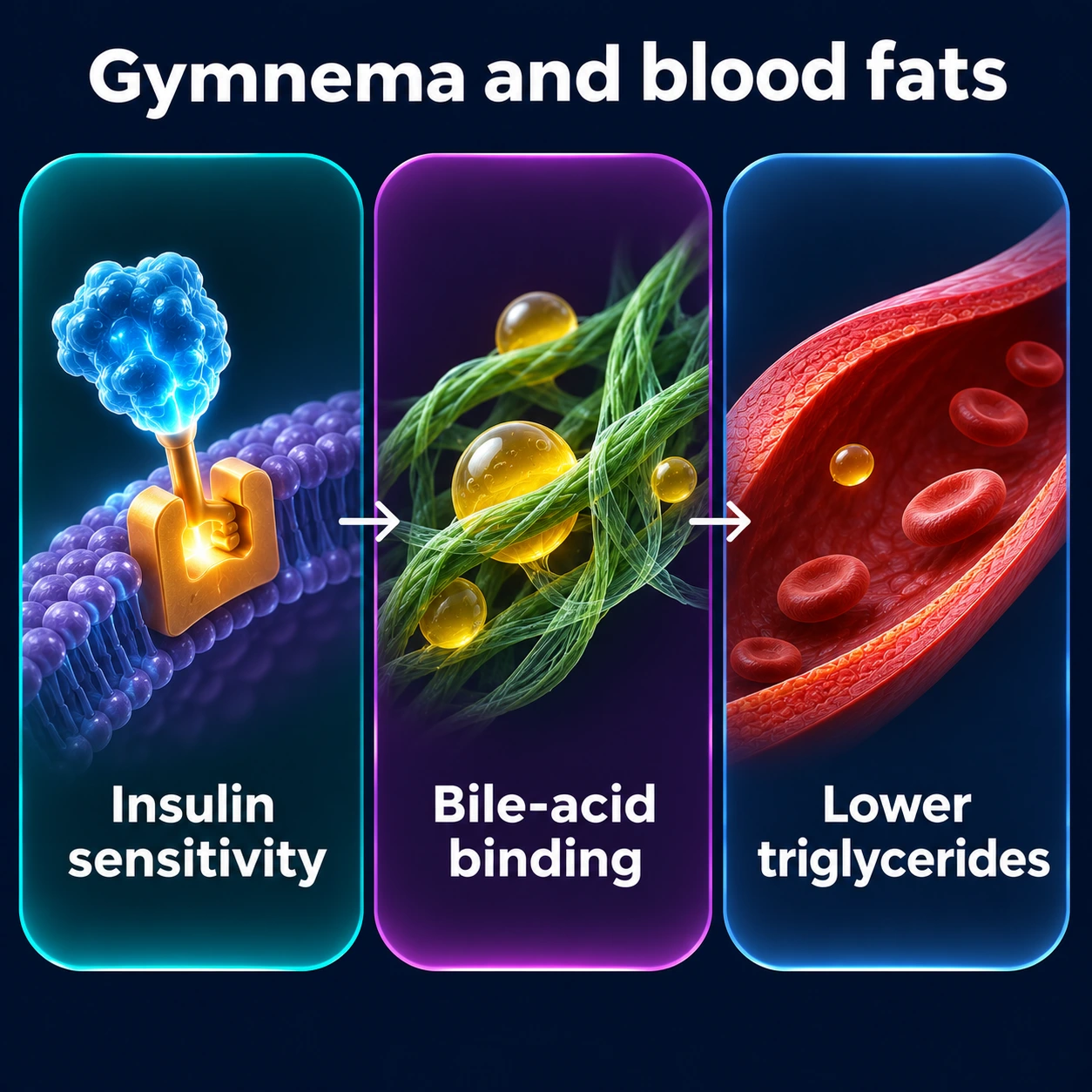
Gymnema is not a primary lipid-lowering agent. Severe hypercholesterolemia, familial hyperlipidemia and established atherosclerotic cardiovascular disease are treated with evidence-based drugs (statins, ezetimibe, proprotein convertase subtilisin/kexin type 9 (PCSK9) inhibitors, bempedoic acid). In people with diabetes, gymnema is described as producing a modest lipid improvement: total cholesterol down 10-15%, low-density lipoprotein (LDL) down by a similar magnitude, triglycerides down 15-25%, and high-density lipoprotein (HDL) up 5-10%. No trial reporting these percentages was found; a 2023 meta-analysis of six randomized trials found significant falls in triglycerides, total cholesterol and low-density lipoprotein, and its abstract gives no percentages. The mechanism is two-pronged. The dominant indirect pathway is insulin sensitization: improved insulin signaling suppresses hepatic de novo lipogenesis, which is the central driver of the elevated triglycerides characteristic of diabetic dyslipidemia and metabolic syndrome. The smaller direct pathway is bile-acid binding by saponin fractions in the gut, which interrupts the enterohepatic recycling of bile acids and forces the liver to use cholesterol to synthesize replacements. The combined effect is smaller than berberine and considerably smaller than a statin, but is clinically meaningful in patients who are using gymnema for primary diabetes management and getting cholesterol benefits as a bonus.
Table of Contents
- Diabetic Dyslipidemia — The Lipid Profile of Insulin Resistance
- Trial Evidence in Diabetic Patients
- Mechanism 1: Insulin Sensitization Reduces De Novo Lipogenesis
- Mechanism 2: Bile-Acid Binding by Saponin Fractions
- Effects on Triglycerides — The Largest Lipid Movement
- Effects on Low-Density Lipoprotein Cholesterol
- Effects on High-Density Lipoprotein Cholesterol
- Comparison to Statins and Berberine
- Cardiovascular Outcomes — What the Evidence Can and Cannot Show
- Integration into a Comprehensive Cardiovascular Protocol
- Cautions for Lipid-Lowering Use
- Key Research Papers
- Connections
- Featured Videos
Diabetic Dyslipidemia — The Lipid Profile of Insulin Resistance
The lipid abnormality characteristic of type 2 diabetes and metabolic syndrome is not the same as the lipid abnormality of classical familial hypercholesterolemia. The diabetic pattern, sometimes called "atherogenic dyslipidemia" or "lipid triad," has three components:
- Elevated triglycerides — typically 200-500 mg/dL in poorly controlled type 2 diabetes, sometimes substantially higher
- Low high-density lipoprotein cholesterol — typically below 40 mg/dL in men and below 50 mg/dL in women with diabetic dyslipidemia
- Small, dense low-density lipoprotein particles — total low-density lipoprotein cholesterol may be only modestly elevated, but the particle distribution is shifted toward smaller, denser, more atherogenic low-density lipoprotein species (low-density lipoprotein pattern B)
This triad reflects the underlying physiology of insulin resistance. In the insulin-resistant state, the liver receives the wrong metabolic signals from both insulin and substrate flux. The result is overproduction of very-low-density lipoprotein (VLDL), which carries triglycerides into the circulation, where lipoprotein lipase processes them and generates the small dense low-density lipoprotein particles. The same metabolic milieu reduces high-density lipoprotein through accelerated clearance (cholesteryl ester transfer protein (CETP)-mediated cholesteryl ester transfer from high-density lipoprotein to very-low-density lipoprotein/low-density lipoprotein in the presence of high triglycerides).
The clinical importance is that this pattern, even when total low-density lipoprotein is not dramatically elevated, contributes substantially to the elevated cardiovascular risk in type 2 diabetes. Patients with diabetic dyslipidemia have approximately 2-4× the cardiovascular event risk of non-diabetic age-matched controls.
Gymnema's lipid effects map onto this pattern with particular relevance. The largest movements are in triglycerides (down) and in the indirect markers of metabolic improvement (high-density lipoprotein up, particle size larger), which is precisely where intervention is most needed in the diabetic lipid phenotype. The total cholesterol and low-density lipoprotein movements are smaller but still meaningful.
For patients with primarily low-density lipoprotein-driven hypercholesterolemia (familial hypercholesterolemia, isolated high low-density lipoprotein), gymnema has not been studied as a treatment; statins are the drug class with outcome-trial evidence. Gymnema's lipid research is in the diabetic lipid pattern.
Trial Evidence in Diabetic Patients
The lipid effects of gymnema have been reported as secondary endpoints in essentially all of the trials of gymnema for diabetes. The pattern across trials is remarkably consistent:
- Baskaran 1990 (type 2 diabetes, 22 patients on oral diabetes drugs, 400 mg/day of a gymnema leaf extract added for 18-20 months) — blood glucose, glycosylated haemoglobin and glycosylated plasma proteins fell significantly and drug doses could be lowered; 5 of the 22 patients stopped their usual drug and kept their blood glucose steady on the extract alone. The study's abstract reports no lipid results (PubMed PMID: 2259217).
- Shanmugasundaram 1990 (type 1 diabetes, 27 patients on insulin, 400 mg/day of a water-soluble gymnema leaf extract, 6-30 months) — serum lipids returned to near normal levels on the extract, while patients on insulin alone showed no significant fall in serum lipids when followed up after 10-12 months. The authors attributed the effects to more insulin from the body's own remaining beta cells (PubMed PMID: 2259216).
- Later randomized trials — a 2023 meta-analysis of six randomized controlled trials in adults found that gymnema significantly lowered triglycerides, total cholesterol, low-density lipoprotein, fasting blood sugar and diastolic blood pressure. The authors noted "notable heterogeneity, low quality of studies, and lack of diversity among research participants" (PubMed PMID: 36580574). No trial report giving percentage changes was found.
- Before-and-after studies in type 2 diabetes — a 2021 meta-analysis of 10 studies (419 people with type 2 diabetes) compared values after gymnema with values before it, not with a placebo group. It found significant falls in fasting and after-meal blood glucose, glycated haemoglobin, triglycerides and total cholesterol (PubMed PMID: 34467577).
- Various smaller mechanistic studies — have demonstrated bile-acid binding by gymnema saponin fractions, providing biochemical support for the direct cholesterol-lowering pathway
The combined evidence, while not at the rigor level of statin randomized controlled trials (RCTs), is consistent enough to support a clinical claim: chronic gymnema use in diabetic patients produces modest but real improvements in the full lipid panel, with the largest effects on triglycerides.
What is not known. The lipid evidence rests on two small 1990 studies (22 and 27 patients) whose abstracts describe no placebo group, on six randomized trials that the 2023 meta-analysis rated low quality with notable heterogeneity, and on a combination product. A 2004 eight-week randomized, placebo-controlled trial in 60 moderately obese adults gave hydroxycitric acid alone to one group and hydroxycitric acid with niacin-bound chromium and a gymnema extract (400 mg) to another. Total cholesterol, low-density lipoprotein and triglycerides fell significantly in both groups, so the lipid changes cannot be credited to gymnema alone (PubMed PMID: 15056124).
Mechanism 1: Insulin Sensitization Reduces De Novo Lipogenesis
The dominant pathway by which gymnema reduces lipid abnormalities is indirect: by improving insulin sensitivity, gymnema reduces the central driver of the diabetic dyslipidemia phenotype.
A placebo-controlled trial that measured insulin sensitivity directly did not find this pathway in people. In a 2017 randomized, double-blind, placebo-controlled trial, 24 adults aged 30-60 with metabolic syndrome who were taking no drug treatment were assigned to gymnema (300 mg twice daily, 600 mg/day) or placebo for 12 weeks. On gymnema, body weight, body mass index and very-low-density lipoprotein (VLDL) fell, without changes in the components of metabolic syndrome, insulin secretion or insulin sensitivity (PubMed PMID: 28459647).
The mechanism in detail:
- Insulin-resistant baseline — the liver receives the wrong signals from insulin (resistance) and from chronic high carbohydrate flux. The transcription factor SREBP-1c (sterol regulatory element-binding protein 1c) is constitutively activated. SREBP-1c drives expression of the lipogenic enzymes: acetyl-CoA carboxylase (ACC), fatty acid synthase (FAS), and stearoyl-CoA desaturase 1 (SCD1). The result is sustained hepatic de novo lipogenesis — the liver synthesizes fatty acids from carbohydrate substrate at high rates.
- Very-low-density lipoprotein overproduction — the newly synthesized fatty acids are packaged with cholesterol and apolipoprotein B-100 into very-low-density lipoprotein particles and secreted into circulation. The very-low-density lipoprotein output is increased proportionally to the lipogenic flux, driving the elevated serum triglycerides.
- CETP-mediated high-density lipoprotein depletion — the high circulating triglycerides drive cholesteryl ester transfer protein to shuttle cholesteryl esters from high-density lipoprotein to very-low-density lipoprotein/low-density lipoprotein particles in exchange for triglycerides. The result is high-density lipoprotein particles depleted of cholesterol (low high-density lipoprotein cholesterol, HDL-C) and triglyceride-enriched low-density lipoprotein particles that are subsequently processed by hepatic lipase to become small, dense low-density lipoprotein.
- Gymnema intervention — chronic gymnema improves insulin sensitivity through its four-mechanism profile (see the Blood Sugar deep-dive). The flatter postprandial glucose curves reduce postprandial insulin spikes, the improved beta-cell function reduces the chronic hyperinsulinemia, and the reduced visceral adiposity over weeks improves systemic insulin signaling. The net effect is reduced SREBP-1c activation, reduced de novo lipogenesis, reduced very-low-density lipoprotein output, lower serum triglycerides, and consequent normalization of high-density lipoprotein and low-density lipoprotein particle size.
This is why the lipid improvements with gymnema take longer than the glycemic improvements: the glycemic effects can be seen within 4-6 weeks (driven by the acute mechanisms), but the lipid improvements develop over 12-24 weeks (driven by the slower chronic reversal of the lipogenic transcriptional program).
The mechanism also explains why gymnema is more effective for triglycerides than for low-density lipoprotein: triglycerides directly reflect very-low-density lipoprotein output, which directly reflects de novo lipogenesis. Low-density lipoprotein is downstream of multiple processing steps and is influenced by additional factors (low-density lipoprotein receptor expression, PCSK9 levels, dietary cholesterol intake) that gymnema does not strongly affect.
Mechanism 2: Bile-Acid Binding by Saponin Fractions
The secondary, smaller mechanism by which gymnema lowers cholesterol is direct: triterpene saponins in the gymnema leaf bind bile acids in the small intestinal lumen, interfering with their reabsorption in the terminal ileum.
The physiology: bile acids (cholic acid, chenodeoxycholic acid, and their conjugates) are synthesized in the liver from cholesterol, secreted into the bile, stored in the gallbladder, and released into the small intestine in response to meals (particularly fat-containing meals). They emulsify dietary fats to facilitate digestion. After their work in the small intestine, approximately 95% of bile acids are reabsorbed in the terminal ileum and returned to the liver via the portal circulation — the enterohepatic circulation of bile acids. The liver re-secretes them into the bile for another cycle. The net loss per cycle is only about 5%, which the liver replaces by synthesizing new bile acids from cholesterol.
When a substance interferes with bile acid reabsorption (as bile acid sequestrant drugs like cholestyramine and colesevelam do, and as saponin compounds in various plants do), the loss per cycle increases. The liver compensates by upregulating the cholesterol 7-alpha-hydroxylase (CYP7A1) enzyme, which is the rate-limiting step in bile acid synthesis from cholesterol. The increased bile acid synthesis draws on hepatic cholesterol stores, which are replenished by upregulation of low-density lipoprotein receptor expression, which increases clearance of low-density lipoprotein from circulation, which lowers serum low-density lipoprotein cholesterol.
This is the mechanism by which cholestyramine and colesevelam produce their low-density lipoprotein-lowering effects in pharmacologic use. Gymnema saponins appear to have a milder version of the same effect:
- In vitro — gymnema saponin fractions demonstrably bind cholate and taurocholate in laboratory assays
- In animal models — gymnema administration increases fecal bile acid excretion, consistent with the bile-acid-binding mechanism
- In humans — less direct evidence, but the low-density lipoprotein-lowering effects observed in clinical trials are consistent with a partial bile-acid-binding contribution
The magnitude of the bile-acid-binding contribution is smaller than the insulin-sensitization contribution. It probably accounts for perhaps 20-30% of the total lipid effect, with insulin sensitization accounting for the rest. The bile-acid-binding mechanism is also why gymnema can have lipid effects in non-diabetic patients, where the insulin-sensitization pathway has less room to work — though the magnitude is typically smaller in this population.
Effects on Triglycerides — The Largest Lipid Movement
Triglycerides are the lipid parameter that responds most reliably and most strongly to gymnema. The mechanism (insulin sensitization reducing hepatic de novo lipogenesis and very-low-density lipoprotein output) maps directly onto triglyceride physiology, and the magnitudes seen in clinical trials reflect this.
Typical responses:
- Baseline triglycerides 150-300 mg/dL (mild-moderate elevation) — no trial reporting a percentage fall for this group was found; the trials gave 400 mg/day of a leaf extract (the 1990 studies) or 600 mg/day (the 2017 metabolic-syndrome trial)
- Baseline triglycerides 300-500 mg/dL (moderate elevation, characteristic of metabolic syndrome) — reductions of 20-30% over the same period
- Baseline triglycerides >500 mg/dL (severe elevation, pancreatitis risk) — no gymnema trial at this level was found; the drug treatments used are a fibrate or high-dose prescription omega-3, with gymnema at most a complementary adjunct
- Baseline triglycerides <100 mg/dL (already normal) — minimal additional benefit
The largest absolute triglyceride reductions are seen in patients with the worst baseline metabolic disturbance — the same pattern observed with most insulin-sensitizing interventions including dietary carbohydrate restriction, metformin, and the glucagon-like peptide-1 (GLP-1) agonist class.
For patients with elevated triglycerides as their primary lipid abnormality, the practical hierarchy of intervention magnitudes (from most to least powerful):
- Carbohydrate restriction (Mediterranean, low-carb, or ketogenic diet) — can produce 30-60% triglyceride reductions in patients with hypertriglyceridemia
- Prescription omega-3 ethyl esters (icosapent ethyl, omega-3-acid ethyl esters) — 20-40% triglyceride reduction
- Fibrates (fenofibrate, gemfibrozil) — 30-50% triglyceride reduction
- Gymnema (typically with diabetes context) — 15-30% triglyceride reduction
- Niacin (high-dose, prescription) — 20-30% triglyceride reduction but with significant side-effect burden
- Berberine — 15-25% triglyceride reduction (similar magnitude to gymnema, somewhat different mechanism)
- Statins — 10-20% triglyceride reduction (modest effect on triglycerides; statins are primarily low-density lipoprotein-lowering)
The combinations are additive in most cases. No trial of gymnema together with dietary change, prescription omega-3 and metformin was found in PubMed; the estimate that each contributes a 15-25% triglyceride reduction, for a combined effect approaching 60-70%, is an extrapolation, not a trial result.
Effects on Low-Density Lipoprotein Cholesterol
The low-density lipoprotein-lowering effect of gymnema is smaller than the triglyceride effect and operates through different mechanisms. Typical movements are 10-15% low-density lipoprotein reduction over 12-24 weeks of consistent use, achieved through the combination of bile-acid-binding (the more direct low-density lipoprotein mechanism) and the indirect effects of improved insulin sensitivity on low-density lipoprotein particle size and clearance.
The clinical reality: a 10-15% low-density lipoprotein reduction is modest. A baseline low-density lipoprotein of 160 mg/dL becomes approximately 136-144 mg/dL on gymnema — still elevated but moved in the right direction. For patients whose only concern is mildly elevated low-density lipoprotein, this might be acceptable. For patients with established atherosclerotic cardiovascular disease, familial hypercholesterolemia, or low-density lipoprotein >190 mg/dL, this falls short of the guideline treatment, statin therapy targeting a 50% low-density lipoprotein reduction (or PCSK9 inhibition for the highest-risk patients).
Where gymnema's low-density lipoprotein effect becomes more interesting is in combination with other lipid-lowering interventions:
- With dietary intervention (Mediterranean diet, plant sterol/stanol intake, soluble fiber) — combined effects of 20-30% low-density lipoprotein reduction are achievable, which becomes clinically meaningful
- With berberine — berberine has a more potent low-density lipoprotein-lowering effect (15-25% from monotherapy) through PCSK9 suppression and low-density lipoprotein receptor upregulation; combined with gymnema's additive mechanisms, 25-35% low-density lipoprotein reduction is achievable
- As statin adjunct in patients with statin intolerance — gymnema combined with low-dose statin (often better tolerated than full-dose statin) can sometimes achieve target low-density lipoprotein levels with lower statin doses and fewer side effects
The use case for gymnema as a primary low-density lipoprotein-lowering agent is limited. The use case as a contributor to a multi-component lipid-management strategy in patients with metabolic syndrome or type 2 diabetes is more substantial.
Effects on High-Density Lipoprotein Cholesterol
The high-density lipoprotein effects of gymnema are positive but modest. Typical changes are 5-10% high-density lipoprotein increase over 12-24 weeks, driven primarily by the reduction in triglycerides (which reduces CETP-mediated high-density lipoprotein cholesterol depletion).
A high-density lipoprotein change from 35 mg/dL to 38 mg/dL (or from 45 to 49 mg/dL) is small in absolute terms but meaningful epidemiologically — each 1 mg/dL high-density lipoprotein increase is associated with approximately 2-3% lower cardiovascular event risk in observational data, though the recent failure of CETP inhibitor drug programs (which raise high-density lipoprotein substantially through direct CETP blockade but did not improve cardiovascular outcomes) has appropriately cooled enthusiasm for high-density lipoprotein as a direct therapeutic target.
The current understanding is that high-density lipoprotein functional capacity (cholesterol efflux capacity, anti-inflammatory effects) matters more than high-density lipoprotein cholesterol concentration. Gymnema-driven high-density lipoprotein improvements, occurring in the context of broader metabolic improvement (lower triglycerides, better glucose control, improved insulin sensitivity), are reasonably interpreted as part of a genuinely beneficial metabolic shift rather than as an isolated high-density lipoprotein-cholesterol increase that may or may not carry functional benefit.
For patients whose primary lipid abnormality is low high-density lipoprotein with otherwise acceptable low-density lipoprotein and triglycerides, the more impactful interventions are:
- Aerobic exercise (consistently 30-60 minutes/day produces 5-15% high-density lipoprotein increases)
- Weight loss (5% body weight reduction typically increases high-density lipoprotein 5-10%)
- Smoking cessation (typically produces 5-10% high-density lipoprotein increase within months)
- Moderate alcohol intake (small effect, with offsetting risks)
- Reduction of refined carbohydrate intake (improves the high-density lipoprotein/triglyceride relationship)
Gymnema can be a small additional contributor to high-density lipoprotein improvement, but its effect is smaller than the influences listed above.
Comparison to Statins and Berberine
To position gymnema appropriately in the lipid-lowering landscape:
- Statins (atorvastatin, rosuvastatin, simvastatin, pravastatin) — the most potent low-density lipoprotein-lowering class available, with high-intensity statins (atorvastatin 40-80 mg, rosuvastatin 20-40 mg) producing 50% or greater low-density lipoprotein reductions. Gymnema is not in the same league for low-density lipoprotein-lowering. Statins also have well-established cardiovascular outcome data from large randomized trials (4S, CARE, HPS, JUPITER), which gymnema does not. For patients with established atherosclerotic cardiovascular disease, statin therapy is the standard of care; gymnema is at most an adjunct.
- Berberine — the most potent herbal lipid-lowering agent, with low-density lipoprotein reductions of 15-25% through PCSK9 suppression and low-density lipoprotein receptor upregulation. Comparable triglyceride effects to gymnema. Often considered the "herbal statin" though the mechanism is different from statins (PCSK9 modulation rather than HMG-CoA reductase inhibition). See the Berberine page.
- Gymnema — smaller low-density lipoprotein effect than berberine, comparable triglyceride effect, with the added value of stronger glycemic effects and the unique sweet-taste-blockade application for sugar cravings (see the Sugar Cravings deep-dive)
- Combining berberine + gymnema — the two herbs combine well, with largely orthogonal mechanisms. The combination produces additive lipid effects (perhaps 20-30% low-density lipoprotein reduction combined, 25-40% triglyceride reduction) and is often used in patients seeking herbal-first management of metabolic syndrome before considering pharmacological intervention.
- Ezetimibe — a prescription cholesterol absorption inhibitor that produces 15-20% low-density lipoprotein reduction. Mechanism is somewhat related to the bile-acid-binding pathway of gymnema saponins (both reduce intestinal cholesterol absorption). The two can be used together but the combined effect is not strongly additive.
- PCSK9 inhibitors (evolocumab, alirocumab) — injectable biologics producing 60% low-density lipoprotein reductions in addition to statin therapy, reserved for the highest-risk patients with familial hypercholesterolemia or established cardiovascular disease who are not at goal on statins. Not in the same conversation as gymnema.
In the research, gymnema sits within metabolic-syndrome and type 2 diabetes management, contributing modestly to lipid improvement as part of broader metabolic improvement. It has not been tested as the primary lipid-lowering agent for people at substantial cardiovascular risk, for whom guidelines use drugs with outcome-trial evidence.
Cardiovascular Outcomes — What the Evidence Can and Cannot Show
The honest answer: we have no randomized controlled trials of gymnema with cardiovascular events or mortality as the primary endpoint. The lipid-lowering effects observed in shorter trials would predict cardiovascular benefit if sustained over years, but this has not been formally demonstrated.
For comparison: the cardiovascular outcome data that drives statin prescribing comes from trials enrolling tens of thousands of patients followed for 5-10 years, with hard endpoints like myocardial infarction, stroke, and cardiovascular mortality. The 4S trial (1994), the CARE trial (1996), the Heart Protection Study (2002), JUPITER (2008), and many others established that statin therapy reduces cardiovascular events by 25-35% over 5-year periods.
No comparable trial has ever been conducted with gymnema, and the economics of such trials (requiring tens of millions of dollars and large patient populations) mean it is unlikely one ever will be. The herbal supplement industry does not have the same regulatory incentives as pharmaceutical companies to pursue outcome trials.
The reasonable inferential framework: the lipid changes observed with gymnema (modest low-density lipoprotein reduction, more substantial triglyceride reduction, modest high-density lipoprotein increase) would predict a modest cardiovascular benefit if sustained over years — perhaps a 10-20% event reduction by extrapolation from the statin and fibrate trial data, though this is unconfirmed. The associated glycemic improvements (hemoglobin A1c (HbA1c) reduction of 0.5-1.0 percentage points, see the Blood Sugar deep-dive) would add an additional cardiovascular benefit through reduced microvascular and probably macrovascular complications.
For people with established atherosclerotic cardiovascular disease, gymnema has no outcome data as a primary preventive intervention. For people with metabolic syndrome or early type 2 diabetes pursuing dietary and lifestyle change, the trials tested gymnema as an add-on, and its measured effects are modest.
Integration into a Comprehensive Cardiovascular Protocol
The parts of a metabolically driven cardiovascular risk-reduction strategy as commonly described, and the gymnema doses the trials gave:
- Foundation: dietary pattern — Mediterranean-style or moderate-low-carbohydrate, with emphasis on whole foods, adequate protein, vegetables, legumes, fish, and nuts; reduced refined carbohydrate and sugar intake
- Activity — 150-300 minutes/week of moderate aerobic activity plus 2-3 sessions of resistance training
- Weight management — a body mass index (BMI) in the healthy range is the usual goal; for people with obesity, even 5-10% weight loss produces meaningful cardiovascular benefit
- Blood pressure management — the usual guideline target is <130/80 mmHg for most people with metabolic syndrome or diabetes
- Glycemic management — hemoglobin A1c target generally 6.5-7.0% for most type 2 diabetics, with individualization for older patients or those at risk of hypoglycemia
- Lipid management — statin therapy is the guideline treatment for people with established cardiovascular disease, low-density lipoprotein >190 mg/dL, diabetes age 40-75 with risk factors, or 10-year atherosclerotic cardiovascular disease (ASCVD) risk >7.5-20% per pooled cohort equations. For lower-risk people managing modestly elevated low-density lipoprotein or triglycerides through dietary and herbal means, gymnema, berberine and diet are among the options.
- Gymnema (what the trials gave) — 400 mg/day of a gymnema leaf extract alongside usual treatment, for 18-20 months in type 2 diabetes (22 patients) and in type 1 diabetes (27 patients); 600 mg/day for 12 weeks in a placebo-controlled trial of 24 adults with metabolic syndrome
- Other complementary supplements — omega-3 fatty acids (eicosapentaenoic acid (EPA) + docosahexaenoic acid (DHA) 2-4 g/day), magnesium glycinate, possibly coenzyme Q10 (CoQ10) if on statin therapy
- Smoking cessation — the single highest-impact cardiovascular intervention; supersedes all of the above for patients who smoke
For lipid monitoring, see our Lipid Panel page. For the underlying cardiovascular disease context, see our Atherosclerosis page.
Cautions for Lipid-Lowering Use
- Not a substitute for statin therapy in high-risk patients — the most consequential caution. Patients with established atherosclerotic cardiovascular disease, recent acute coronary syndrome, ischemic stroke, familial hypercholesterolemia, or low-density lipoprotein >190 mg/dL are treated with statin therapy in guidelines. Substituting gymnema for a statin in this population means accepting a much higher cardiovascular event risk and is not supported by the evidence base.
- Hypoglycemia risk in diabetics on insulin or sulfonylureas — the same caution that applies to gymnema for diabetes management (see the Blood Sugar deep-dive) applies here. Lipid-lowering use does not exempt the patient from the glycemic effects.
- Statin combination — no study in people has tested gymnema together with a statin; the one PubMed record on gymnema and statins is a rat study that compared a gymnema extract with atorvastatin (PubMed PMID: 28658801), so the safety and effect of the combination are unknown. The claim that some patients reach their lipid targets on lower statin doses with gymnema, reducing statin side-effect burden, has not been tested.
- Fibrate combination — theoretically synergistic for triglyceride lowering; no evidence of harmful interaction. Routine combination is not typical.
- Bile acid sequestrant combination — theoretically additive (both work in part through bile acid mechanisms); no specific evidence supporting routine combination
- Niacin combination — no specific concerns have been described
- Pregnancy and lactation — there is no good safety data on gymnema in pregnancy or breastfeeding. Most lipid-lowering therapy is paused during pregnancy regardless of agent.
- Liver disease — LiverTox, the drug-induced liver injury database of the National Institute of Diabetes and Digestive and Kidney Diseases, records "isolated rare reports of liver injury from herbal products containing Gymnema sylvestre, but attribution to the herb was usually weak" (PubMed PMID: 39666848). A 2022 case report described toxic hepatitis-associated aplastic anaemia (liver inflammation followed by bone-marrow failure) in two people who had used Gymnema sylvestre together with homeopathic remedies; both died (PubMed PMID: 35318201).
- Pancreatitis history — for patients with prior triglyceride-induced pancreatitis, gymnema can be a useful low-risk adjunct to primary triglyceride-lowering therapy (fibrate or prescription omega-3); not a substitute for it
Key Research Papers
- Baskaran K, Kizar Ahamath B, Radha Shanmugasundaram K, Shanmugasundaram ER (1990). Antidiabetic effect of a leaf extract from Gymnema sylvestre in non-insulin-dependent diabetes mellitus patients. Journal of Ethnopharmacology 30(3):295-300. Its abstract reports blood glucose, glycosylated haemoglobin, drug-dose and serum insulin results, and no lipid results. — PubMed PMID: 2259217
- Shanmugasundaram ER, Rajeswari G, Baskaran K, et al. (1990). Use of Gymnema sylvestre leaf extract in the control of blood glucose in insulin-dependent diabetes mellitus. Journal of Ethnopharmacology 30(3):281-94. Type 1 study in which serum lipids returned to near normal levels. — PubMed PMID: 2259216
- Bishayee A, Chatterjee M (1994). Hypolipidaemic and antiatherosclerotic effects of oral Gymnema sylvestre R. Br. leaf extract in albino rats fed on a high fat diet. Phytotherapy Research. Animal study demonstrating lipid effects independent of diabetes. — PubMed
- Preuss HG, Bagchi D, Bagchi M, et al. (2004). Effects of a natural extract of (-)-hydroxycitric acid (HCA-SX) and a combination of HCA-SX plus niacin-bound chromium and Gymnema sylvestre extract on weight loss. Diabetes, Obesity and Metabolism 6(3):171-80. Gymnema given only in combination; includes lipid endpoints. — PubMed PMID: 15056124
- Pothuraju R et al. (2014). A systematic review of Gymnema sylvestre in obesity and diabetes management. Journal of the Science of Food and Agriculture. Comprehensive review including lipid endpoints. — PubMed
- Tiwari P, Ahmad K, Baig MH (2017). Gymnema sylvestre for Diabetes: From Traditional Herb to Future's Therapeutic. Current Pharmaceutical Design 23(11):1667-1676. — PubMed PMID: 27834124
- Postic C, Girard J (2008). The role of the lipogenic pathway in the development of hepatic steatosis. Diabetes & Metabolism. Background on the SREBP-1c / de novo lipogenesis pathway that gymnema modulates. — PubMed
- Insull W Jr (2006). Clinical utility of bile acid sequestrants in the treatment of dyslipidemia: a scientific review. Southern Medical Journal. Background on the bile-acid-binding mechanism shared by gymnema saponins and bile acid sequestrant drugs. — PubMed
- Kong W et al. (2004). Berberine is a novel cholesterol-lowering drug working through a unique mechanism distinct from statins. Nature Medicine. Reference for the comparable herbal cholesterol-lowering agent. — PubMed
- Krauss RM, Siri PW (2004). Metabolic abnormalities: triglyceride and low-density lipoprotein. Endocrinology and Metabolism Clinics of North America. Background on diabetic dyslipidemia. — PubMed
- Zamani M, Ashtary-Larky D, Nosratabadi S, et al. (2023). The effects of Gymnema Sylvestre supplementation on lipid profile, glycemic control, blood pressure, and anthropometric indices in adults: A systematic review and meta-analysis. Phytotherapy Research 37(3):949-964. — PubMed PMID: 36580574
- Zuñiga LY, González-Ortiz M, Martínez-Abundis E (2017). Effect of Gymnema sylvestre Administration on Metabolic Syndrome, Insulin Sensitivity, and Insulin Secretion. Journal of Medicinal Food 20(8):750-754. — PubMed PMID: 28459647
- Devangan S, Varghese B, Johny E, Gurram S, Adela R (2021). The effect of Gymnema sylvestre supplementation on glycemic control in type 2 diabetes patients: A systematic review and meta-analysis. Phytotherapy Research 35(12):6802-6812. — PubMed PMID: 34467577
- Singh DK, Kumar N, Sachan A, et al. (2017). Hypolipidaemic Effects of Gymnema sylvestre on High Fat Diet Induced Dyslipidaemia in Wistar Rats. Journal of Clinical and Diagnostic Research 11(5):FF01-FF05. — PubMed PMID: 28658801
- Gymnema (2012–; updated 2024 Oct 28). LiverTox: Clinical and Research Information on Drug-Induced Liver Injury. Bethesda (MD): National Institute of Diabetes and Digestive and Kidney Diseases. — PubMed PMID: 39666848
- Philips CA, Theruvath AH, Ravindran R (2022). Toxic hepatitis-associated aplastic anaemia after dual homeopathic remedies and Gymnema sylvestre use. BMJ Case Reports 15(3):e247867. — PubMed PMID: 35318201
PubMed Topic Searches
Connections
- All Herbs
- Gymnema Overview
- Gymnema Benefits Hub
- Gymnema for Blood Sugar
- Gymnema for Sugar Cravings
- Gymnema for Weight Loss
- Berberine (Herbal Low-Density Lipoprotein-Lowering)
- Cinnamon
- Fenugreek
- Chromium
- Lipid Panel
- Hemoglobin A1c
- Fasting Insulin
- Insulin Resistance
- Diabetes
- Obesity
- Blood Sugar Control
- History