Coleus Forskohlii — Benefits Deep Dive
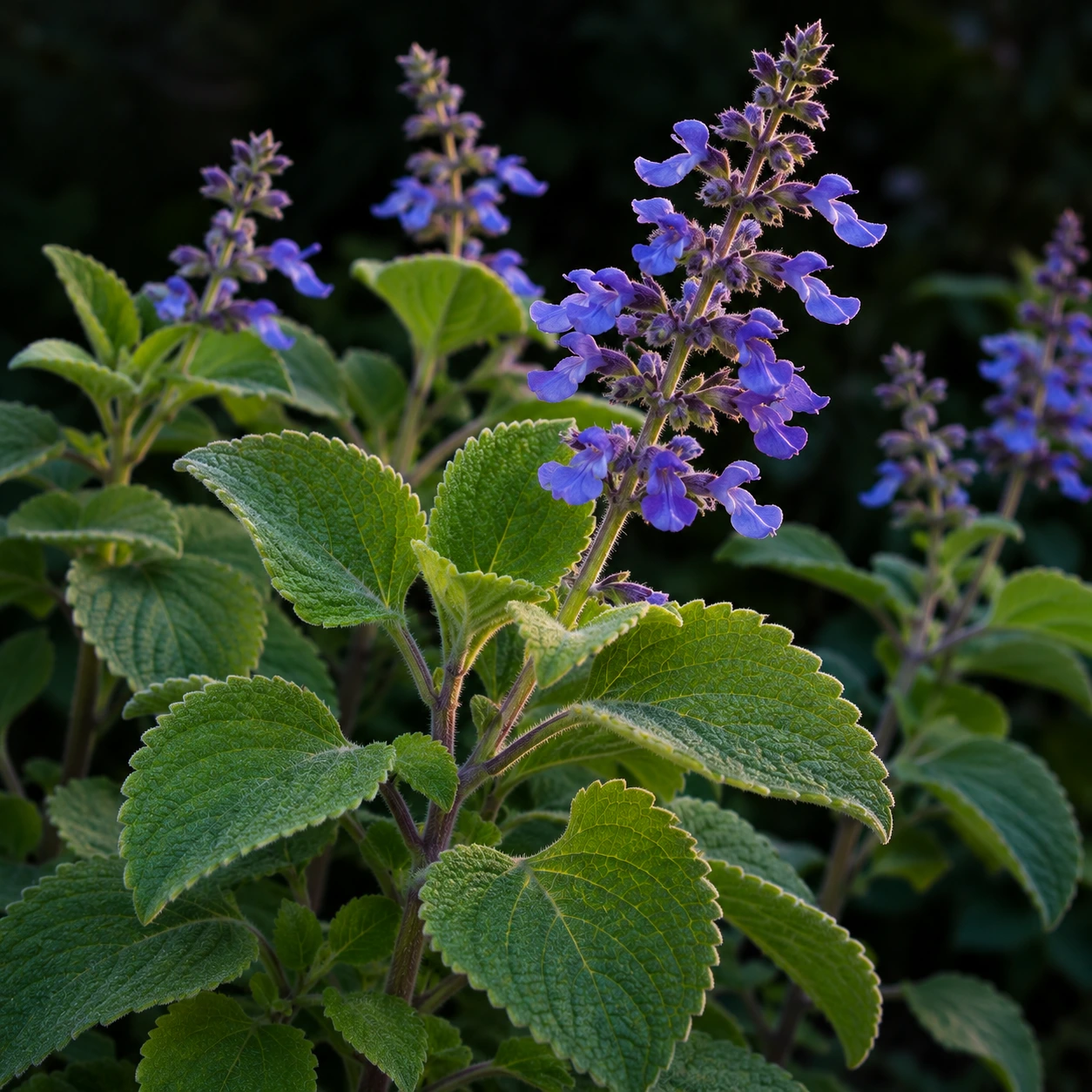
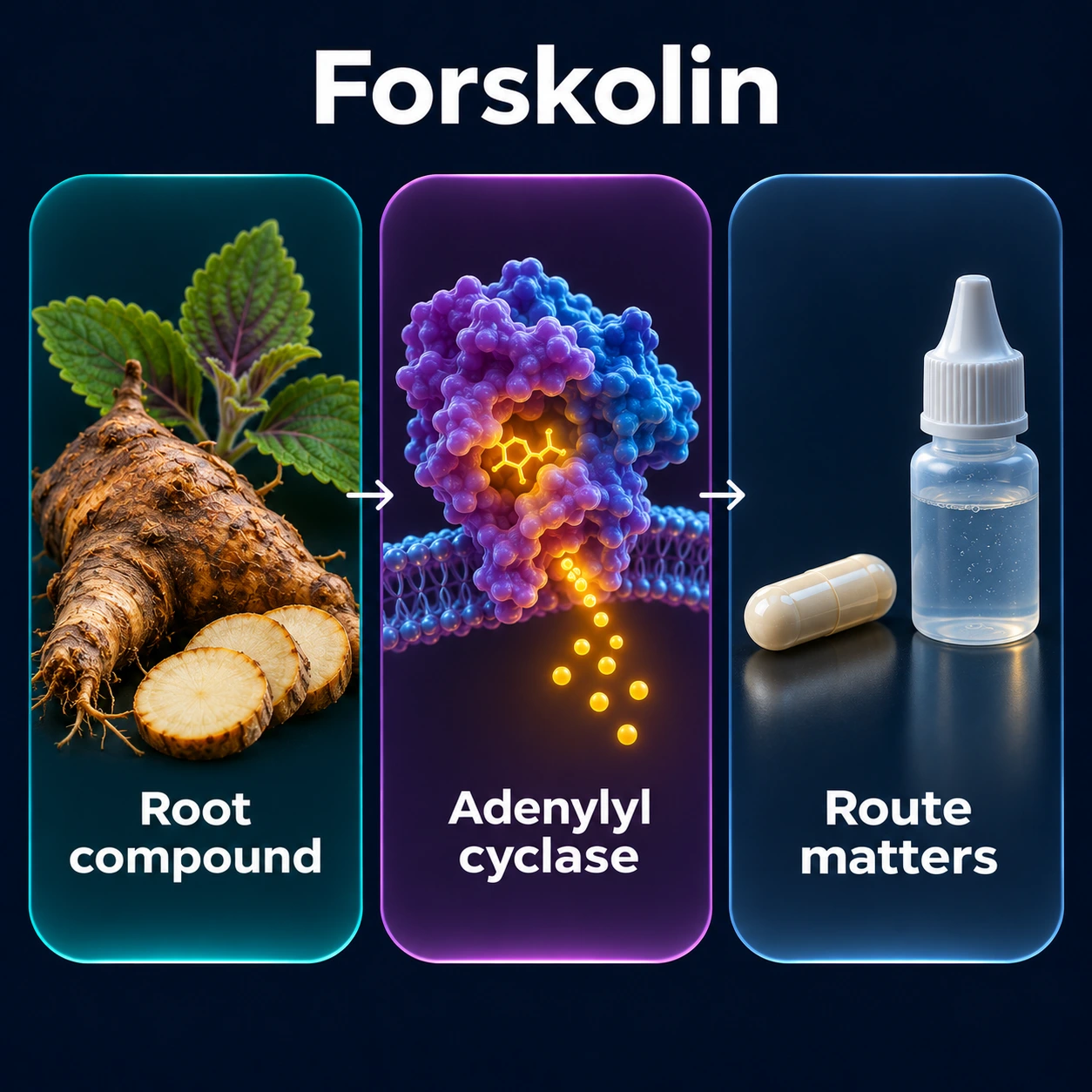
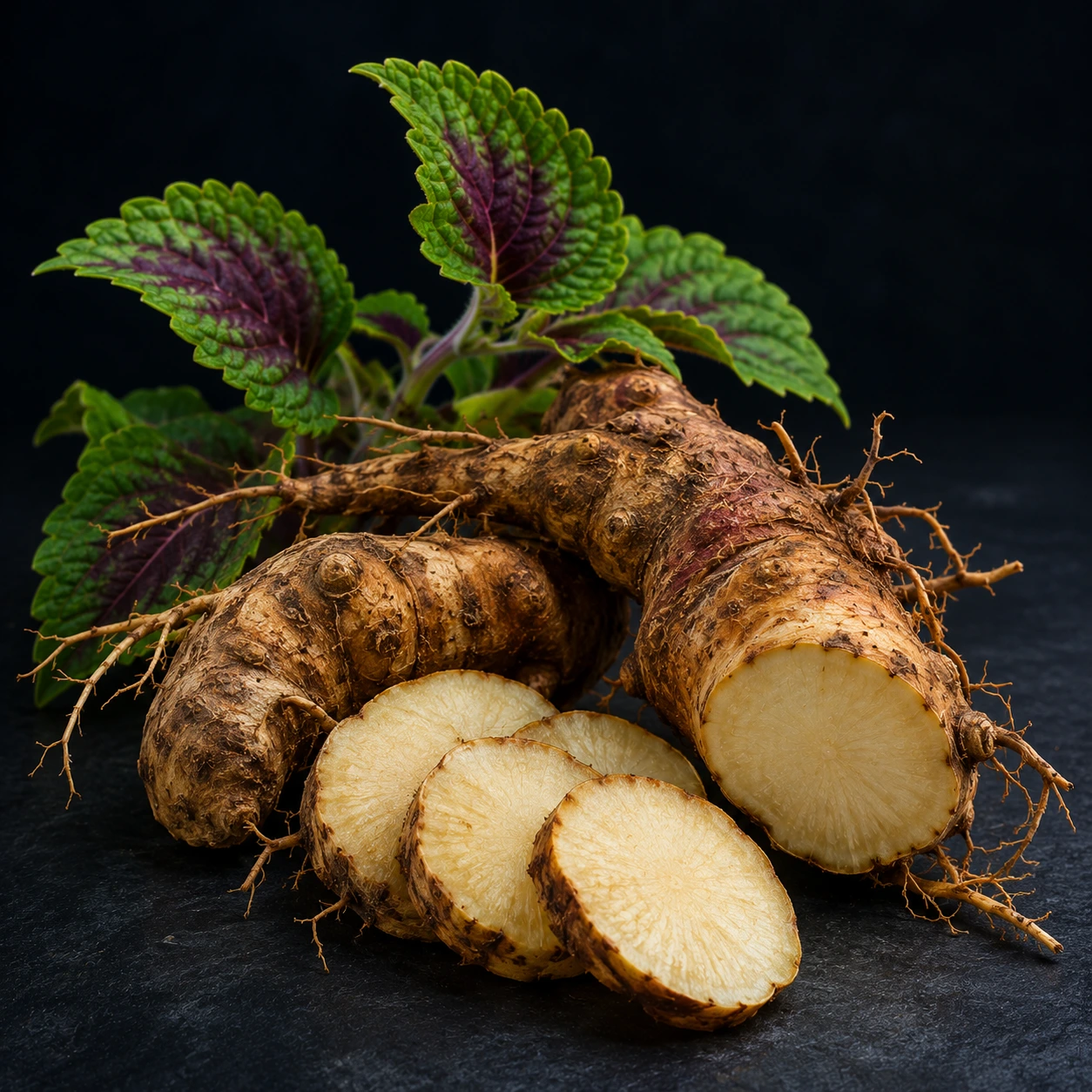
This herb sits in an unusual position, and the gap it straddles is the reason these four pages exist. Forskolin, the molecule in the root of Plectranthus barbatus — still traded everywhere as Coleus forskohlii, and known in Ayurveda as makandi — is a genuine and important pharmacological agent. It activates an enzyme called adenylyl cyclase directly, raising the universal cell signal cyclic AMP without needing a hormone or a receptor. There is a solved crystal structure showing how it does it. It is a standard positive control in cell biology laboratories on every continent, it appears in tens of thousands of published methods sections, and a chemically modified, water-soluble relative of it is an approved intravenous heart-failure drug in Japan. None of that is marketing.
And the reason most people arrive here — that a coleus capsule burns fat — is not supported. The human evidence is a handful of small, short trials that disagree with each other. The most-quoted positive study found a shift in body composition in thirty men without meaningful weight loss; a companion trial in twenty-three women found no fat loss at all; a later trial adding the extract to a calorie-reduced diet found no between-group difference in weight, although the extract group showed a greater improvement in insulin concentration and insulin resistance than the placebo group. Reviews of supplements for obesity place forskolin in the insufficient-evidence category. Evidence tier for weight loss: NOT SUPPORTED.
Those two paragraphs are not in tension — the second follows from the first. The property that makes forskolin a superb laboratory reagent is that it works in any cell, because it skips the receptor that would otherwise give a drug its address. In a culture dish that universality is a gift. Swallowed, it means the same molecule is raising cyclic AMP in your blood vessels, your platelets, your stomach lining and your thyroid at the same time as your fat cells. That is not a fat-loss mechanism; it is an unselective systemic signalling change, and it is also the origin of most of the safety cautions on these pages — lowered blood pressure, impaired platelet function, increased gastric acid, and the strong concern the research raises for people with polycystic kidney disease. The liver injury and drug-enzyme effects seen in animals are the exception: in mice, pure forskolin did not cause them, and the researchers attribute them to other compounds in the root extract.
What follows is that story in four parts: the mechanism told properly, the weight-loss claim examined without flinching, the legitimate clinical research strands reported and firmly fenced off from the marketing, and the safety profile, most of it following from the mechanism and part of it from other compounds in the root extract.
Table of Contents
- Deep-Dive Articles
- The Short Version
- What Is Supported, What Is Not
- Why the Route of Administration Decides Everything
- Key Research: Mechanism and Adenylyl Cyclase
- Key Research: Body Composition and Weight
- Key Research: Intraocular Pressure and Glaucoma
- Key Research: Airways and the Failing Heart
- Key Research: Safety, Interactions and Toxicology
- External Resources
- Connections
- Featured Videos
Deep-Dive Articles
Forskolin and Cyclic AMP: How It Actually Works
The honest, genuinely interesting core. What cyclic AMP is, how forskolin wedges itself into the seam of adenylyl cyclase and forces the enzyme shut, and why bypassing the receptor made it the world's standard positive control. Then the twist: the same universality that makes it a great reagent is exactly what makes it a poor pill — one signal arriving in nine tissues that want different things.
Read the deep dive →Forskolin for Weight Loss: The Claim Examined
The claim that built the retail category, taken apart. How a forty-year-old laboratory reagent became a television product without a single new trial; what the 2005 trials in men and women actually reported; why the 2015 diet trial is the most informative and the most ignored; and the mechanistic trap at the centre of it all — lipolysis is not fat loss. Verdict: NOT SUPPORTED.
Read the deep dive →Forskolin in Glaucoma, Asthma and Clinical Research
What real evidence looks like. Eye drops that lowered intraocular pressure in 1983, inhaled dry powder that opened asthmatic airways in 1993, intravenous infusions in cardiomyopathy, and a cystic-fibrosis organoid assay still used to guide treatment today. Every one of them used a route that is not a capsule — and that fence is stated, not implied.
Read the deep dive →Coleus Forskohlii Safety: Blood Pressure, Bleeding and Interactions
The under-reported half of this topic, and the part you can reason out rather than look up. Additive hypotension with blood-pressure drugs, antiplatelet activity that stacks with anticoagulants, the bleeding concern around surgery, increased gastric acid in ulcer and reflux disease, a warfarin interaction that runs the opposite way, and the strongest concern of all: polycystic kidney disease.
Read the deep dive →The Short Version
If you read nothing else:
- The plant. Plectranthus barbatus, mint family, native to India and tropical East Africa. The root is the part used — forskolin is essentially absent from the leaves. Ayurvedic name makandi; also garmar in Gujarati. Still sold universally as Coleus forskohlii.
- The molecule is real and important. Forskolin activates adenylyl cyclase directly, raising cyclic AMP without a receptor. That is textbook pharmacology with a crystal structure behind it, and it is why the compound is a global laboratory standard. Tier: established biochemistry.
- Weight loss: NOT SUPPORTED. A small number of short trials, disagreeing, none showing meaningful weight loss. Expected effect on the scale, on current evidence: approximately zero.
- Two clinical strands are legitimate and separate. Intraocular pressure lowering (topical drops, and oral multi-ingredient add-on studies) and bronchodilation (inhaled powder). Tier: preliminary human data, non-oral routes. Neither supports the supplement, and neither is standard care anywhere.
- Most of the safety profile follows from the mechanism. Lowers blood pressure; inhibits platelet aggregation, which matters around surgery and dental procedures; increases gastric acid secretion; theoretical concerns with nitrates, vasodilators and erectile-dysfunction drugs. Animal studies of the root extract show dose-related liver injury and cytochrome induction, which pure forskolin did not cause in mice. Because cyclic AMP drives cyst growth in polycystic kidney disease, the research raises a strong concern for people with that disease; no study on these pages tested coleus in pregnancy.
- There is no long-term human safety data. The trials ran twelve weeks. Indefinite use is unstudied.
- Products vary. The studied material was a 10% standardised root extract. Higher percentages are larger untested doses, not better products, and a label saying only "coleus" is not an adequate botanical identification.
What Is Supported, What Is Not
Every claim on these pages carries an evidence tier. Collected in one place:
- Established biochemistry — forskolin directly activates adenylyl cyclase, raising cyclic AMP receptor-independently in nearly any cell type; it is a standard laboratory positive control; 1,9-dideoxyforskolin from the same root does not activate the enzyme and serves as the matching negative control.
- Established pharmacology, non-oral routes — blood-pressure lowering and increased cardiac contractility by intravenous infusion under monitoring; a water-soluble derivative approved intravenously for acute heart failure in Japan; antiplatelet activity in human platelets; increased gastric acid secretion in isolated gastric tissue.
- Preliminary human data, topical route — forskolin eye drops lowered intraocular pressure in early studies including human volunteers; a modern 1% drop preparation was tested open-label. Not approved therapy anywhere.
- Preliminary human data, inhaled route — inhaled dry-powder forskolin produced measurable bronchodilation in small asthma studies. No inhaler was ever developed.
- Preliminary, small, multi-ingredient, geographically clustered — oral forskolin-plus-rutin combination products as an add-on in glaucoma patients already at maximum tolerated drops. No effect can be assigned to forskolin alone.
- Preliminary, in vitro and animal — lipolysis in isolated fat cells; steroidogenesis in isolated cells; anti-metastatic activity resting on the antiplatelet effect; dose-related liver injury and cytochrome induction in mice, caused by compounds in the root extract other than forskolin.
- Traditional use only — heart and respiratory complaints, digestive problems, and urinary stones as a pashanabhedi or "stone-breaker" herb. That name has most often been assigned to a different plant altogether, so even the traditional lineage is less clean than marketing implies.
- NOT SUPPORTED — weight loss and fat loss from oral supplementation; oral coleus as treatment for asthma (the one small, single-blinded oral trial did report fewer patients with attacks on forskolin than on cromoglycate; see Key Research: Airways), glaucoma, high blood pressure or heart failure; the idea that an approved intravenous or topical use demonstrates oral safety.
Why the Route of Administration Decides Everything
This idea recurs on all four pages, so it is worth stating once, plainly: a different route of administration is a different intervention. Changing how a compound enters the body changes the concentration reached at the target, the speed of arrival, how much is destroyed on the way, and which other tissues are exposed. Route is not packaging. Route is part of the drug.
Forskolin makes the point better than almost any other compound, because its strongest evidence comes from three routes that all avoid the oral problem:
- Eye drops — a tiny quantity onto the cornea; high local concentration, negligible systemic exposure.
- Inhaled dry powder — delivered onto airway smooth muscle, which is the target; fast, local, low systemic dose.
- Intravenous infusion — the whole dose into the bloodstream at a controlled rate, under continuous monitoring, and using a chemically redesigned water-soluble molecule rather than forskolin itself.
- A swallowed capsule — must survive the stomach, cross the gut wall despite being essentially water-insoluble, then pass through a liver built to dismantle exactly this class of greasy plant diterpene. No well-replicated human account of the resulting blood concentration has been published.
That last absence is the single most useful fact about this supplement category, and it is never on a label. It also means the argument runs both ways: the non-oral successes are not evidence that a capsule works, and they are not evidence that a capsule is safe.
Key Research: Mechanism and Adenylyl Cyclase
On this page, citations are given as author, title, journal and year in plain text, with the link pointing at the paper's own PubMed record (or its DOI where PubMed does not index the paper).
- Rall TW, Sutherland EW. Formation of a cyclic adenine ribonucleotide by tissue particles. Journal of Biological Chemistry, 1958. The discovery of cyclic AMP, and the origin of the second-messenger concept. PubMed PMID: 13549487
- Bhat SV, Bajwa BS, Dornauer H, de Souza NJ, Fehlhaber HW. Structures and stereochemistry of new labdane diterpenoids from Coleus forskohlii Briq. Tetrahedron Letters, 1977. The isolation and structure of the compound, then named coleonol. doi:10.1016/s0040-4039(01)93245-9
- Seamon KB, Padgett W, Daly JW. Forskolin: unique diterpene activator of adenylate cyclase in membranes and in intact cells. Proceedings of the National Academy of Sciences of the USA, 1981. The paper that made forskolin a universal laboratory reagent. PubMed PMID: 6267587
- Laurenza A, Sutkowski EM, Seamon KB. Forskolin: a specific stimulator of adenylyl cyclase or a diterpene with multiple sites of action? Trends in Pharmacological Sciences, 1989. An early, candid account of forskolin's off-target effects. PubMed PMID: 2692256
- Tesmer JJ, Sunahara RK, Gilman AG, Sprang SR. Crystal structure of the catalytic domains of adenylyl cyclase in a complex with Gs-alpha and GTP-gamma-S. Science, 1997. Forskolin resolved in its binding pocket at the interface between the enzyme's two catalytic halves. PubMed PMID: 9417641
- Dessauer CW, Watts VJ, Ostrom RS, Conti M, Dove S, Seifert R. International Union of Basic and Clinical Pharmacology: structures and small molecule modulators of mammalian adenylyl cyclases. Pharmacological Reviews, 2017. The current authoritative survey of the enzyme family. PubMed PMID: 28255005
Key Research: Body Composition and Weight
- Godard MP, Johnson BA, Richmond SR. Body composition and hormonal adaptations associated with forskolin consumption in overweight and obese men. Obesity Research, 2005. Thirty men, twelve weeks, 250 mg of 10% extract twice daily: favourable composition shift, no meaningful weight change. PubMed PMID: 16129715
- Henderson S, Magu B, Rasmussen C, et al. Effects of Coleus forskohlii supplementation on body composition and hematological profiles in mildly overweight women. Journal of the International Society of Sports Nutrition, 2005. Twenty-three women, same dose and duration: no promotion of fat loss. PubMed PMID: 18500958
- Loftus HL, Astell KJ, Mathai ML, Su XQ. Coleus forskohlii extract supplementation in conjunction with a hypocaloric diet reduces the risk factors of metabolic syndrome in overweight and obese subjects: a randomized controlled trial. Nutrients, 2015. No meaningful between-group difference in weight or fat loss when added to a calorie-reduced diet; the extract group did show a greater improvement in insulin concentration and insulin resistance than the placebo group (p = 0.001 and 0.01). PubMed PMID: 26593941
- Litosch I, Hudson TH, Mills I, Li SY, Fain JN. Forskolin as an activator of cyclic AMP accumulation and lipolysis in rat adipocytes. Molecular Pharmacology, 1982. The in-vitro lipolysis observation the entire claim rests on. PubMed PMID: 6289066
- Wolfe RR, Klein S, Carraro F, Weber JM. Role of triglyceride–fatty acid cycle in controlling fat metabolism in humans during and after exercise. American Journal of Physiology, 1990. Human measurement of the re-esterification cycle that makes lipolysis and fat loss non-equivalent. PubMed PMID: 2106269
- Ríos-Hoyo A, Gutiérrez-Salmeán G. New dietary supplements for obesity: what we currently know. Current Obesity Reports, 2016. Places forskolin among agents with plausible mechanisms and inadequate human data. PubMed PMID: 27053066
- Batsis JA, Apolzan JW, Bagley PJ, et al. A systematic review of dietary supplements and alternative therapies for weight loss. Obesity, 2021. Broad systematic assessment of the supplement evidence base. PubMed PMID: 34159755
Key Research: Intraocular Pressure and Glaucoma
- Caprioli J, Sears M. Forskolin lowers intraocular pressure in rabbits, monkeys, and man. The Lancet, 1983. The founding topical eye-drop observation — note the route. PubMed PMID: 6132271
- Caprioli J, Sears M, Bausher L, Gregory D, Mead A. Forskolin lowers intraocular pressure by reducing aqueous inflow. Investigative Ophthalmology and Visual Science, 1984. Establishes reduced production rather than improved drainage. PubMed PMID: 6538189
- Pescosolido N, Librando A. Oral administration of an association of forskolin, rutin and vitamins B1 and B2 potentiates the hypotonising effects of pharmacological treatments in primary open-angle glaucoma patients. Clinica Terapeutica, 2010. An early oral combination add-on study. PubMed PMID: 20589347
- Vetrugno M, Uva MG, Russo V, et al. Oral administration of forskolin and rutin contributes to intraocular pressure control in primary open angle glaucoma patients under maximum tolerated medical therapy. Journal of Ocular Pharmacology and Therapeutics, 2012. The most-cited oral add-on study; multi-ingredient, so no effect can be assigned to forskolin alone. PubMed PMID: 22731245
- Majeed M, Nagabhushanam K, Natarajan S, et al. Efficacy and safety of 1% forskolin eye drops in open angle glaucoma: an open-label study. Saudi Journal of Ophthalmology, 2015. A modern topical preparation, tested without blinding. PubMed PMID: 26155078
Key Research: Airways and the Failing Heart
- Lichey I, Friedrich T, Priesnitz M, et al. Effect of forskolin on methacholine-induced bronchoconstriction in extrinsic asthmatics. The Lancet, 1984. Bronchoprotection in a challenge protocol. PubMed PMID: 6146065
- Bauer K, Dietersdorfer F, Sertl K, Kaik B, Kaik G. Pharmacodynamic effects of inhaled dry powder formulations of fenoterol and colforsin in asthma. Clinical Pharmacology and Therapeutics, 1993. The clearest bronchodilator signal — by inhalation, head-to-head against a beta-2 agonist. In 16 asthma patients, a single 10 mg inhaled dose of colforsin (forskolin) raised specific airway conductance by 0.30 sec-1 × kPa-1 at its peak, against 0.49 and 0.51 for the two fenoterol forms; the authors describe "a measurable bronchodilatation". PubMed PMID: 8422745
- González-Sánchez R, Trujillo X, Trujillo-Hernández B, et al. Forskolin versus sodium cromoglycate for prevention of asthma attacks: a single-blinded clinical trial. Journal of International Medical Research, 2006. The one oral asthma trial: 40 patients with mild or moderate persistent asthma received 10 mg/day of oral forskolin capsules or sodium cromoglycate inhalations three times a day for 6 months, and fewer patients had asthma attacks on forskolin (8/20, 40%) than on cromoglycate (17/20, 85%); lung-function values were similar in the two groups. Weak design (single-blinded), weak comparator, unreplicated. PubMed PMID: 16749416
- Baumann G, Felix S, Sattelberger U, Klein G. Cardiovascular effects of forskolin in patients with idiopathic congestive cardiomyopathy: a comparative study with dobutamine and sodium nitroprusside. Journal of Cardiovascular Pharmacology, 1990. Intravenous, monitored, against two standard agents. PubMed PMID: 1696672
- Dekkers JF, Wiegerinck CL, de Jonge HR, et al. A functional CFTR assay using primary cystic fibrosis intestinal organoids. Nature Medicine, 2013. The forskolin-induced swelling assay — forskolin as a translational tool that can inform an individual patient's treatment. PubMed PMID: 23727931
Key Research: Safety, Interactions and Toxicology
- Lindner E, Dohadwalla AN, Bhattacharya BK. Positive inotropic and blood pressure lowering activity of a diterpene derivative isolated from Coleus forskohlii: forskolin. Arzneimittel-Forschung, 1978. The blood-pressure effect is in the compound's founding literature. PubMed PMID: 580393
- Siegl AM, Daly JW, Smith JB. Inhibition of aggregation and stimulation of cyclic AMP generation in intact human platelets by the diterpene forskolin. Molecular Pharmacology, 1982. The antiplatelet effect, in human platelets. PubMed PMID: 6287202
- Chew CS. Forskolin stimulation of acid and pepsinogen secretion in isolated gastric glands. American Journal of Physiology, 1983. Increased gastric acid secretion — the reason ulcer and reflux disease appear in the cautions. PubMed PMID: 6314818
- Yamaguchi T, Nagao S, Wallace DP, et al. Cyclic AMP activates B-Raf and ERK in cyst epithelial cells from autosomal-dominant polycystic kidneys. Kidney International, 2003. Why cAMP elevation is exactly the wrong thing in polycystic kidney disease. PubMed PMID: 12753285
- Torres VE, Chapman AB, Devuyst O, et al. Tolvaptan in patients with autosomal dominant polycystic kidney disease. New England Journal of Medicine, 2012. The approved drug for that disease works by lowering cAMP — the mechanism read in reverse. PubMed PMID: 23121377
- Virgona N, Taki Y, Yamada S, Umegaki K. Dietary Coleus forskohlii extract generates dose-related hepatotoxicity in mice. Journal of Applied Toxicology, 2013. An animal liver signal for a supplement with no long-term human safety data. The liver changes appeared after only 1 week of a 0.5% extract diet, persisted through the 3-week course, and were "restored towards normalization within 1 week after withdrawal of treatment". Pure forskolin, at the dose contained in the 0.5% extract, altered none of the liver measures; the authors attribute the injury to other, unidentified constituents of the extract. PubMed PMID: 22729658
- Yokotani K, Chiba T, Sato Y, Taki Y, Yamada S, Shinozuka K, Murata M, Umegaki K. Hepatic cytochrome P450 mediates interaction between warfarin and Coleus forskohlii extract in vivo and in vitro. Journal of Pharmacy and Pharmacology, 2012. In mice, the root extract weakened the anticoagulant action of warfarin by inducing the liver enzyme CYP2C — running opposite to forskolin's antiplatelet effect, so the net direction in a given person is unpredictable. In test-tube work the extract directly inhibited CYP2C, whereas pure forskolin was only slightly inhibitory. PubMed PMID: 23146043
- Yokotani K, Chiba T, Sato Y, Umegaki K. Coleus forskohlii extract attenuates the hypoglycemic effect of tolbutamide in vivo via a hepatic cytochrome P450-mediated mechanism. Shokuhin Eiseigaku Zasshi, 2014. In rats fed the root extract for two weeks, liver drug-processing enzymes (CYP2B, CYP2C and CYP3A) rose, and the extract "dose-dependently attenuated both the hypoglycemic action of tolbutamide at 6 h and the plasma concentration of tolbutamide", a diabetes drug. This is a rat finding; it has not been tested in people. PubMed PMID: 24990552
- Ammon HP, Müller AB. Forskolin: from an ayurvedic remedy to a modern agent. Planta Medica, 1985. A contemporaneous review spanning the compound's effects across tissues. PubMed PMID: 3006108
PubMed Topic Searches
- PubMed: Forskolin + adenylyl cyclase + mechanism
- PubMed: Coleus forskohlii + body composition + randomized
- PubMed: Forskolin + intraocular pressure
- PubMed: Forskolin + bronchodilation + asthma + inhaled
- PubMed: Coleus forskohlii + safety + adverse effects
- PubMed: Forskolin + platelet aggregation inhibition
- PubMed: Forskolin + pharmacokinetics + humans
- PubMed: Cyclic AMP + cyst growth + polycystic kidney disease
- PubMed: Plectranthus barbatus + phytochemistry
- PubMed: Colforsin daropate + acute heart failure
External Resources
- U.S. National Institutes of Health (NIH) Office of Dietary Supplements — US government fact sheets on supplements for weight loss, and on how supplement regulation actually works.
- National Center for Complementary and Integrative Health — appraisals of botanical evidence and safety, and guidance on telling your clinicians what you take.
- PubChem — the chemical record for forskolin: structure, properties, computed solubility.
- RCSB Protein Data Bank — solved structures, including the adenylyl cyclase catalytic core with forskolin bound.
- ClinicalTrials.gov — search "forskolin" to see what has and has not been registered as a trial.
- MedlinePlus — plain-language drug and supplement information from the US National Library of Medicine.
- US Federal Trade Commission — consumer guidance on deceptive weight-loss advertising, a documented problem in this specific product category.
- National Eye Institute — glaucoma information, including why the timing of proven pressure-lowering treatment matters.
Connections
- All Herbs
- Coleus forskohlii (Forskolin) — the main topic page: botany, naming, traditional use, active compounds, culinary use, forms, dosage and cautions.
- Forskolin and Cyclic AMP — the mechanism, told properly, and why universality is a liability.
- Forskolin for Weight Loss — the claim examined trial by trial. Verdict: NOT SUPPORTED.
- Glaucoma, Asthma and Clinical Research — the legitimate strands, and the fence around them.
- Safety, Blood Pressure and Interactions — the risks, derived from the mechanism rather than guessed.
- Weight Loss — the evidence-based hub: energy balance, satiety, adherence and maintenance.
- Why Diets Fail — the physiology of regain, and why a pill is the wrong place to look.
- Obesity — the medical picture and when evaluation is warranted.
- Metabolic Syndrome — the cluster the 2015 coleus trial actually reported on.
- Glaucoma — the disease, why pressure control is the only proven intervention, and why delay is irreversible.
- Asthma — reliever and preventer therapy, and why substitution is dangerous.
- Hypertension — additive blood-pressure lowering, and what treats high blood pressure properly.
- Heart Failure — where a water-soluble forskolin derivative is used intravenously in one country.
- Polycystic Kidney Disease — the strongest concern the research raises, and the disease that explains why.
- Peptic Ulcer Disease — increased acid plus impaired platelets is the worst combination.
- Gastroesophageal Reflux Disease — reflux, and a supplement that raises acid output.
- Hypothyroidism — the thyroid-stimulating hormone (TSH) receptor signals through cAMP, the basis of the theoretical thyroid interaction.
- Berberine — another plant compound with a real mechanism and marketing that outruns it.
- Epigallocatechin Gallate — green tea catechin sold on similar thermogenic reasoning; a useful comparison in evidence weighing.
- Green Tea — the whole-food version of that story.
- Chanca Piedra — another "stone-breaker" herb, with its own honest evidence appraisal.
- Asthma Attack Visualization — interactive bronchoconstriction and what relieves it.
- Blood Pressure Visualization — interactive look at vascular tone and its regulation.
Safety note and disclaimer. These pages are educational and are not medical advice. Coleus forskohlii is not established as effective for weight loss or for any other consumer indication, and it is not risk-free: it lowers blood pressure, it inhibits platelet aggregation and adds to anticoagulant and antiplatelet drugs, and it increases gastric acid secretion. Animal studies of the root extract show dose-related liver injury and induction of drug-metabolising enzymes, effects pure forskolin did not cause. Because cyclic AMP drives cyst growth in polycystic kidney disease, the research raises a strong concern for people with that disease, and no study on these pages tested coleus in pregnancy. Its antiplatelet effect matters around surgery and dental procedures. There is no long-term human safety data. The eye studies used prepared forskolin eye drops, not supplement material, and no study shows a coleus supplement can replace proven treatment for glaucoma, asthma, high blood pressure, heart disease or kidney disease. Interaction checks by prescribers and pharmacists cover only the products they know a person takes.