Galangal for Fertility and Metabolic Health
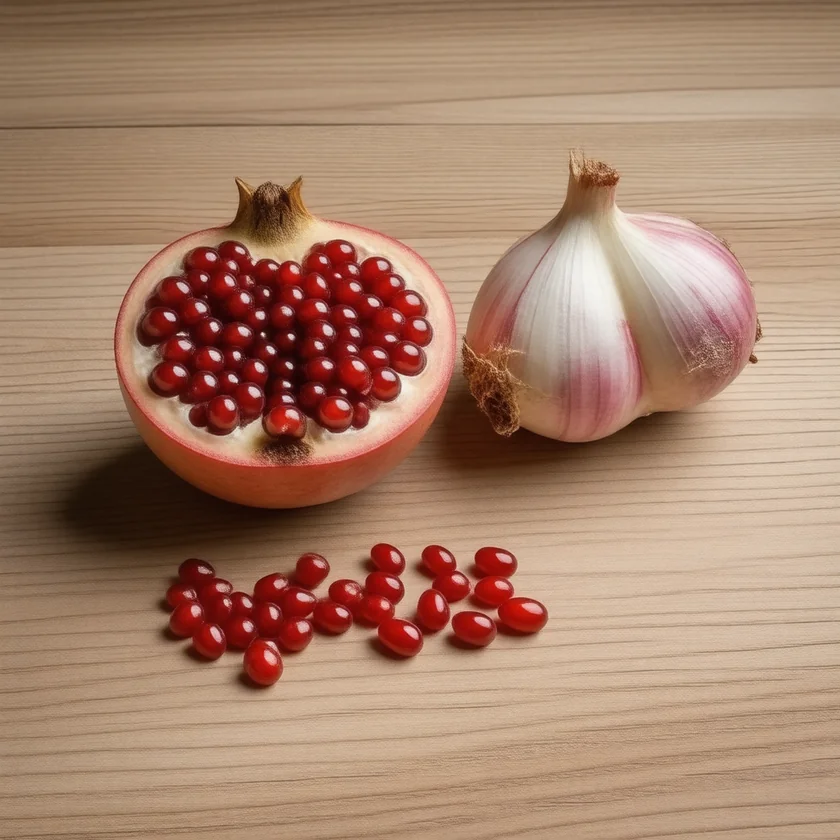
Galangal turns up in male-fertility supplements, and it is there because of one real randomised trial. That trial is worth taking seriously and worth reading carefully, because what it tested is not what the marketing implies. It tested a two-ingredient combination — pomegranate fruit extract plus dried, powdered galangal rhizome — in a small group of men whose semen quality fell below sperm-bank standards, and it reported an increase in the number of motile sperm. It cannot tell you what galangal contributed, because galangal was never given on its own.
The metabolic side of this page is thinner still. The claims that galangal lowers blood sugar, improves insulin sensitivity, or helps with weight are supported by rodent studies and enzyme assays and by nothing at all in humans. This article covers both honestly, and tries to be useful about what does have evidence for the same goals.
Table of Contents
- The Claims, and the Short Answers
- The Sperm-Motility Trial, in Detail
- Why a Combination Trial Cannot Attribute an Effect
- The Proposed Mechanism: Oxidative Stress and Sperm
- Testosterone and Libido Claims
- Blood Sugar: What the Rodent Work Shows
- Alpha-Glucosidase Inhibition
- Lipids, Adipocytes, and Weight Claims
- The Alertness Trials, and What They Do Not Cover
- What Actually Has Evidence
- Cautions
- Key Research Papers
- Connections
- Featured Videos
The Claims, and the Short Answers
- "Galangal improves sperm motility." Evidence tier: preliminary human, and specifically a combination product. One randomised, double-blind, controlled trial of pomegranate plus galangal in fewer than a hundred men reported more motile sperm. No trial has tested galangal alone. This is a lead, not a finding about galangal.
- "Galangal raises testosterone." Evidence tier: none. There is no human trial of galangal and testosterone. This claim is imported from other herbs and attached to galangal by association.
- "Galangal lowers blood sugar." Evidence tier: preliminary (animal and in vitro). Rodent diabetes models and enzyme-inhibition assays only. No human trial.
- "Galangal helps weight loss and fat metabolism." Evidence tier: preliminary (in vitro), mostly on the flavonol galangin in cultured fat cells. No human trial.
- "Galangal improves alertness." Evidence tier: randomised clinical trial — two small ones, of a single proprietary standardised extract, with industry involvement and no independent replication. This is the only claim on the whole herb with direct randomised support, and it is not a metabolic claim at all.
The Sperm-Motility Trial, in Detail
Evidence tier: preliminary human — a real randomised trial of a product that was not galangal alone.
The study is Fedder and colleagues, "An extract of pomegranate fruit and galangal rhizome increases the numbers of motile sperm: a prospective, randomised, controlled, double-blinded trial," published in PLoS One in 2014.
The tablets combined a pomegranate fruit extract (standardised for punicalagins, punicalin and ellagic acid) with freeze-dried greater galangal rhizome (standardised for 1′S-1′-acetoxychavicol acetate), taken daily for three months. Seventy men were randomised and 66 finished (34 on the tablets, 32 on placebo). The average total number of motile sperm rose by 62% (from 23.4 to 37.8 million) on the tablets, against 20% on placebo (p = 0.026). Sperm shape (morphology) did not change. The paper declares that two of its authors were commercialising the product.
What is genuinely good about it: it was prospective, randomised, controlled, and double-blinded. Those four words rule out a great deal of the bias that ruins supplement research, and most botanical fertility claims have nothing remotely this rigorous behind them. The outcome measured — the number of motile sperm in an ejaculate — is an objective laboratory measurement rather than a questionnaire, which is another point in its favour.
What limits it, and these are not small limitations:
- It is small. The trial randomised 70 adult men whose semen quality fell below sperm-bank standards, and 66 finished. Semen parameters are famously variable — the same man measured twice a month apart can differ substantially — and small studies of variable outcomes are exactly the studies that most often fail to replicate.
- It tested a combination. Pomegranate and galangal were given together. Pomegranate is itself a heavily marketed antioxidant fruit with its own fertility literature. Any effect could be pomegranate alone, galangal alone, or the two together, and the design cannot distinguish those.
- The participants were not couples being treated for infertility. The men had semen quality below the standard a sperm bank requires of donors (none had a complete absence of sperm), and the authors frame the result for subfertile men. A change in a semen parameter in these volunteers is not the same as a treatment for a couple who cannot conceive.
- The outcome is a surrogate. Motile sperm count is associated with fertility; it is not the same as pregnancies or live births, which is what people actually want. Many interventions move semen parameters without moving pregnancy rates.
- It has not been independently replicated in the years since, and a single unreplicated small trial is the weakest form of positive evidence there is.
The correct summary is: an interesting, well-designed, small study of a two-ingredient product, worth following up, and not a basis for buying galangal capsules for fertility.
Why a Combination Trial Cannot Attribute an Effect
This point deserves its own section, because it is the single most common way supplement marketing misleads people, and it is easy to state precisely.
If you give A and B together and observe an effect, you have learned something about A+B. You have learned nothing about A. To learn about A you need an arm that receives A alone. That is not a technicality; it is the whole logic of the experiment.
The practical consequence is that a bottle of galangal extract citing this trial is citing evidence for a product it does not contain. So is a bottle of pomegranate extract citing the same trial. Both are equally entitled to cite it and equally unable to claim it.
This pattern recurs constantly in supplement research: multi-ingredient formulas are tested because they are what the sponsor sells, and then the individual ingredients are marketed separately on the strength of the combined result. When you see a study cited for a single ingredient, the first question worth asking is what else was in the capsule.
The Proposed Mechanism: Oxidative Stress and Sperm
Evidence tier: preliminary. The mechanism is coherent; its application to galangal is assumed rather than demonstrated.
Sperm are unusually vulnerable to oxidative damage. Their membranes are rich in polyunsaturated fatty acids, which oxidise readily; their cytoplasm is stripped down to almost nothing during maturation, so they carry very little antioxidant machinery of their own; and their DNA is tightly packed with limited repair capacity. Reactive oxygen species — produced by leukocytes in the reproductive tract, by abnormal sperm themselves, by smoking, heat, infection and obesity — damage membranes and reduce the ability to swim.
This is real reproductive biology, and it is why antioxidant supplements have been studied in male subfertility at all. The honest state of that wider field is that antioxidant trials in male infertility have produced mixed results, systematic reviews have repeatedly called the evidence low-quality, and effects on live-birth rates remain uncertain even for the best-studied compounds.
Galangal contains antioxidant compounds — galangin, phenolics, terpenes — so the mechanistic story is easy to tell. But telling a plausible story about a mechanism is not evidence that the mechanism operates at achievable doses in a human testis, and "contains antioxidants" is a property of nearly every plant food on earth.
Testosterone and Libido Claims
Evidence tier: none for galangal.
Galangal appears in "male vitality" formulas alongside herbs with actual testosterone or libido literatures, and it acquires their reputation by proximity. There is no human trial of galangal and testosterone, no human trial of galangal and erectile function, and no human trial of galangal and libido.
Some traditional systems do attribute aphrodisiac properties to Alpinia species. That is traditional use only, it is a very common attribution across warming and pungent spices generally, and it does not survive as a modern claim.
If low testosterone is a genuine concern, it is a diagnosable condition with a blood test, a set of real causes — including obesity, sleep apnoea, opioid use, and pituitary disease — and treatments that work. A supplement is not the route to that answer. See male infertility.
Blood Sugar: What the Rodent Work Shows
Evidence tier: preliminary (animal).
Alpinia extracts have been tested in the standard rodent diabetes models — typically animals made diabetic with streptozotocin, a chemical that destroys pancreatic beta cells — and generally lower fasting blood glucose relative to untreated controls. Some studies also report improvements in lipid profiles and in markers of oxidative stress in these animals.
Three qualifications matter.
The model is not the disease. Streptozotocin diabetes is chemically induced beta-cell destruction, closer in character to type 1 diabetes than to the insulin resistance and progressive beta-cell exhaustion of type 2 diabetes. A compound that lowers glucose in that model may do nothing for insulin resistance.
The doses are large. Rodent studies commonly use extract doses per kilogram of body weight that, scaled to a human, correspond to quantities nobody would consume.
The species varies. Some of this work is on A. galanga, some on A. officinarum, some on other Alpinia species entirely, and the results are frequently pooled in review articles as though "galangal" were one plant.
No human trial of galangal for blood sugar exists. These animal results therefore say nothing about blood-sugar control in people with diabetes or prediabetes.
Alpha-Glucosidase Inhibition
Evidence tier: preliminary (in vitro).
The most-cited proposed mechanism for the blood-sugar claim is inhibition of alpha-glucosidase, the intestinal brush-border enzyme that breaks disaccharides and oligosaccharides down into absorbable glucose. Inhibit it and starch digestion slows, so glucose enters the blood more gradually and the post-meal spike is blunted.
This is a legitimate drug target — acarbose works exactly this way — and a great many plant extracts inhibit the enzyme in a test tube. Alpinia extracts are among them.
Two things stop this being useful. First, enzyme-assay potency is measured against purified enzyme at concentrations chosen by the experimenter; whether a dietary quantity reaches an inhibitory concentration along the human intestinal brush border is an entirely separate question that these assays do not address. Second, alpha-glucosidase inhibition has a characteristic and unpleasant side effect: undigested carbohydrate passes into the colon, is fermented by gut bacteria, and produces gas, bloating and diarrhoea. Acarbose is limited in practice by precisely this. Any plant extract genuinely achieving meaningful inhibition would be expected to do the same — and no such effect is reported from eating galangal, which is itself a hint about how much inhibition is actually occurring at culinary doses.
Lipids, Adipocytes, and Weight Claims
Evidence tier: preliminary (in vitro).
Weight-loss marketing for galangal generally traces back to cell-culture work on galangin in cultured pre-adipocytes — the cell line used to study fat-cell differentiation and lipid accumulation. Compounds that reduce lipid accumulation in these cells are routinely described as "anti-obesity", and the description is generous. Cultured fat cells in a dish are not adipose tissue in a person, and they are not connected to appetite, activity, sleep, or the endocrine signalling that actually governs body weight.
There is no human trial of galangal for weight, body composition, or lipids. There is also a broader point worth making: the number of botanicals that have shown promising anti-adipogenic activity in cell culture over the last thirty years is enormous, and the number that produced meaningful weight loss in a randomised human trial is close to zero. That base rate is the context for these results.
The Alertness Trials, and What They Do Not Cover
Evidence tier: randomised clinical trial, with real limitations.
For completeness, since these are the only randomised trials of galangal alone: Srivastava, Mennemeier and Pimple published "Effect of Alpinia galanga on mental alertness and sustained attention with or without caffeine: a randomized placebo-controlled study" in the Journal of the American College of Nutrition in 2017, and the same lead author published a randomised, placebo-controlled safety and efficacy trial of a proprietary standardised galangal extract in healthy adults in the same journal in 2021.
Both tested a specific proprietary standardised A. galanga extract. The 2017 study reported that sustained attention was maintained without the drop-off that follows caffeine alone, which is the finding the supplement industry took up.
The 2017 study was a crossover trial: 59 adults aged 18 to 40 who drank caffeine moderately each took placebo, the extract, caffeine, and the extract plus caffeine on separate visits. On the extract, the alertness score of an attention test rose by about 12 milliseconds from baseline at 3 hours (p = 0.042); with the extract plus caffeine, mean response time fell by 15.55 milliseconds at 3 hours. The 2021 study gave the extract, with or without caffeine, for 12 weeks; it found no significant change in the heart tracing (electrocardiogram, ECG), blood pressure or heart rate, and alertness and calmness scores rose compared with placebo.
A wider look at the ginger family points the same cautious way. A 2026 systematic review and meta-analysis pooled 18 randomised, double-blind, placebo-controlled trials in adults of products from the ginger family (Zingiberaceae), including curcumin, turmeric and ginger preparations. It found an improvement on memory tests (standardised mean difference 0.57) but no pooled effect on attention, executive function and processing speed, or overall cognition, and the authors rated the evidence very uncertain because the trials were few, varied and in some cases at risk of bias.
Read them with the usual questions in mind: they are small, they test one commercial preparation, they were conducted with industry involvement, they measure performance on cognitive tests rather than anything a person would notice across a working day, and no unaffiliated group has replicated them. They are worth knowing about and worth following. They say nothing about fertility, blood sugar, weight, or inflammation, and a product citing them for those purposes is misusing them.
They also do not transfer to generic galangal. A capsule labelled "galangal root powder 500 mg" is not the extract that was tested, at the dose that was tested, standardised to the marker it was standardised to.
What Actually Has Evidence
If you came to this page for one of these goals, here is where the evidence actually is.
For male fertility: smoking, obesity, and anabolic steroids and testosterone therapy (which suppress sperm production and are a common and reversible cause of male infertility) are recognised causes of poor semen quality; a varicocele (enlarged veins in the scrotum), infections and some medicines are other causes looked for in a male-fertility work-up. Zinc and selenium matter in men who are deficient in them, which a test can show. A semen analysis is a low-cost test and is the usual starting point of that work-up. See male infertility and infertility.
For blood sugar and insulin resistance: the interventions with the strongest evidence are dietary change, physical activity — particularly resistance training, which improves glucose disposal independently of weight — sleep, and where indicated, medication. Among botanicals, berberine and cinnamon at least have human trials to argue about. Galangal does not. See insulin resistance and metabolic syndrome.
For alertness: sleep is the intervention, and nothing sold in a bottle substitutes for it.
Cautions
- Blood sugar. Because animal data suggest a glucose-lowering effect, a concentrated galangal extract could in theory add to the effect of insulin or a sulfonylurea; no human data exist either way. The risk from galangal is theoretical; low blood sugar (hypoglycaemia) from those medicines is not.
- Anticoagulants and antiplatelet drugs. Several Zingiberaceae constituents affect platelet function in laboratory work; no study has tested galangal with these medicines in people. Stopping herbal supplements about two weeks before planned surgery is a common surgical convention, not a finding from a galangal study.
- Drug metabolism. Galangin inhibits several cytochrome P450 enzymes in vitro. No human study has tested whether this matters for medicines with a narrow therapeutic index (where a small change in blood level matters).
- Fertility treatment. Galangal extracts have not been studied alongside the hormonal protocols used in assisted conception.
- Pregnancy and breastfeeding. Galangal is widely eaten in food amounts. There is no human safety data for concentrated extracts or the essential oil in pregnancy or breastfeeding, and some Alpinia species carry traditional reputations as emmenagogues (herbs said to bring on menstruation).
- Unlabelled products. A supplement without a Latin binomial contains unidentified plant material, and the research it cites is unattached to the contents.
Key Research Papers
The first six entries are cited by their PubMed record; the live searches below them resolve to the literature as indexed today.
- Fedder MD, Jakobsen HB, Giversen I, Christensen LP, Parner ET, Fedder J. "An extract of pomegranate fruit and galangal rhizome increases the numbers of motile sperm: a prospective, randomised, controlled, double-blinded trial." PLoS One. 2014;9(9):e108532 — the trial this page is built around. PubMed PMID: 25275520
- Srivastava S, Mennemeier M, Pimple S. "Effect of Alpinia galanga on Mental Alertness and Sustained Attention With or Without Caffeine: A Randomized Placebo-Controlled Study." J Am Coll Nutr. 2017;36(8):631-639. PubMed PMID: 28910196
- Srivastava S, Mennemeier M, Chaudhary JA. "A Randomized Placebo Controlled Clinical Trial Demonstrating Safety & Efficacy of EnXtra(®) in Healthy Adults." J Am Coll Nutr. 2021;40(3):224-236 — a 12-week trial of a proprietary standardised galangal extract. PubMed PMID: 32412358
- Abubakar IB, Malami I, Yahaya Y, Sule SM. "A review on the ethnomedicinal uses, phytochemistry and pharmacology of Alpinia officinarum Hance." J Ethnopharmacol. 2018;224:45-62 — includes the metabolic pharmacology of lesser galangal. PubMed PMID: 29803568
- Rampogu S, Gajula RG, Lee KW. "A comprehensive review on chemotherapeutic potential of galangin." Biomed Pharmacother. 2021;141:111808 — the flavonol behind most of the adipocyte work. PubMed PMID: 34175820
- Victoria-Montesinos D, Zafrilla P, Ballester P, García-Muñoz AM. "Effects of Zingiberaceae-derived interventions on memory-related and other cognitive outcomes in adults: a systematic review and meta-analysis." Front Nutr. 2026;13:1834167 — 18 trials across the ginger family. PubMed PMID: 42199754
- Live search: Alpinia galanga, antidiabetic activity in streptozotocin rats — the rodent literature described above. — Search PubMed
- Live search: Alpinia species and alpha-glucosidase inhibition — the enzyme-assay basis for the blood-sugar claim.
- Live search: Galangin, adipocytes and lipid accumulation — the cell-culture work behind weight-loss marketing.
- Live search: Oxidative stress, sperm motility and DNA fragmentation — the reproductive biology behind the proposed mechanism.
- Live search: Antioxidants in male subfertility — systematic reviews and live-birth outcomes — the sobering wider context for any antioxidant fertility claim. — Search PubMed
- Live search: Pomegranate extract and sperm parameters — the other half of the combination product.
- Live search: Alpinia galanga clinical trials — the complete human record, which is short.
Safety and Disclaimer
Galangal used in cooking is widely eaten and well tolerated. Concentrated extracts are largely unstudied: there is no safety data for them in pregnancy, breastfeeding or children; animal data suggest they could add to the glucose-lowering effect of insulin or a sulfonylurea; laboratory data raise questions about bleeding with anticoagulants and antiplatelet drugs and about interactions with narrow-therapeutic-index medicines; and herbal supplements are commonly stopped about two weeks before planned surgery. This article is educational and is not medical advice; it does not diagnose or treat any condition. Poor semen quality and abnormal blood-sugar results both have known, testable causes.
Connections
- All Herbs
- Galangal Benefits Deep Dive — the hub for all four benefit articles.
- Galangal (Alpinia galanga) — botany, names, chemistry, forms, and cautions.
- Male Infertility — causes, testing, and what actually helps.
- Infertility — the couple-level picture.
- Zinc — a nutrient that matters for sperm production when you are deficient in it.
- Selenium — another trace mineral with a real role in sperm maturation.
- Insulin Resistance — where blood-sugar problems usually start.
- Type 2 Diabetes — and why a rodent model does not transfer to it.
- Metabolic Syndrome — the cluster galangal is marketed against without evidence.
- Berberine, AMP-Activated Protein Kinase and Metabolic Syndrome — a botanical with genuine human glucose trials.
- Cinnamon Benefits — another blood-sugar botanical, with mixed but real human data.
- Cardamom — Metabolic and Antioxidant Effects — the same questions in a related spice.