Calendula for Oral and Throat Health
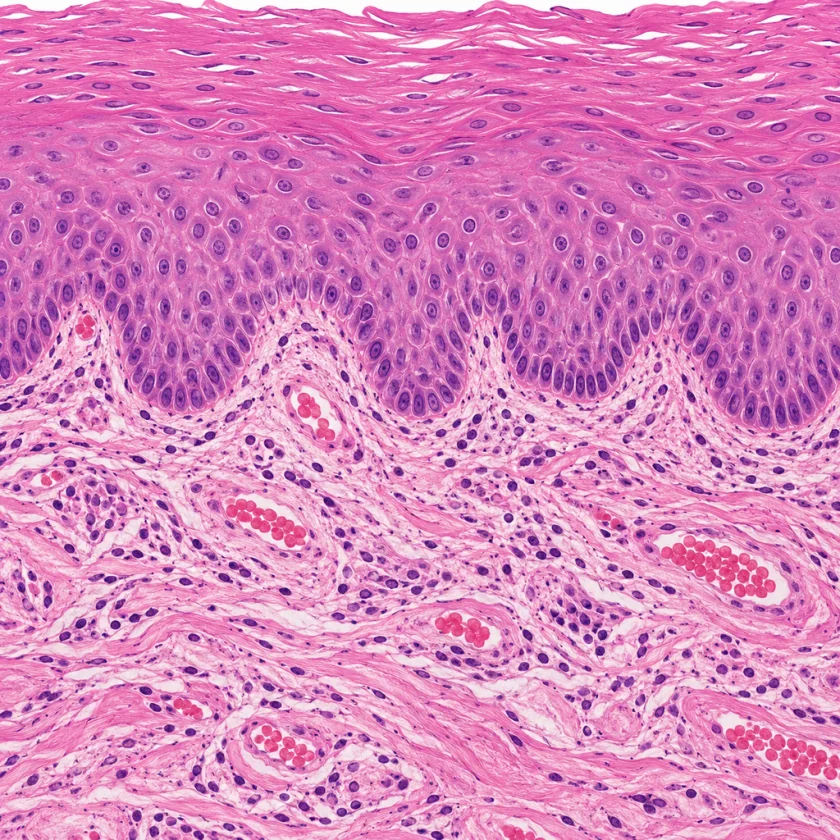
The lining of the mouth and throat is, in a sense, just more skin — a moist, easily inflamed epithelium — so it is no surprise that calendula's soothing reputation extends there. Used as a cooled infusion swished and spat, or as a gargle, calendula has a long traditional history for a sore, inflamed mouth or throat. The most interesting modern evidence is for oral mucositis, the painful mouth-and-throat inflammation caused by radiotherapy and chemotherapy, where a small randomized trial found a calendula mouthwash reduced severity. There is also encouraging early research using calendula in anti-plaque and anti-gingivitis mouthwashes, usually blended with other herbs. This page reviews that evidence honestly — promising but preliminary — and describes how a calendula mouth rinse is traditionally made and used, as a comfort measure alongside dental and medical care.
Table of Contents
- A Traditional Gargle and Mouth Rinse
- Oral Mucositis: The Strongest Oral Evidence
- Gingivitis & Dental Plaque
- Calendula in Herbal Mouthwash Blends
- Sore, Inflamed Throat & Mouth
- How Calendula May Help in the Mouth
- How a Calendula Mouth Rinse Is Made and Used
- Safety & Cautions
- Key Research Papers
- External Resources
- Connections
- Featured Videos
A Traditional Gargle and Mouth Rinse
Long before any clinical trials, calendula infusions were used across traditional European medicine as a gargle and mouthwash for sore, inflamed mouths and throats. The logic is the same as for the skin: the mouth and throat are lined by a delicate, easily irritated epithelium, and calendula is a gentle anti-inflammatory soother that can be applied directly to it.
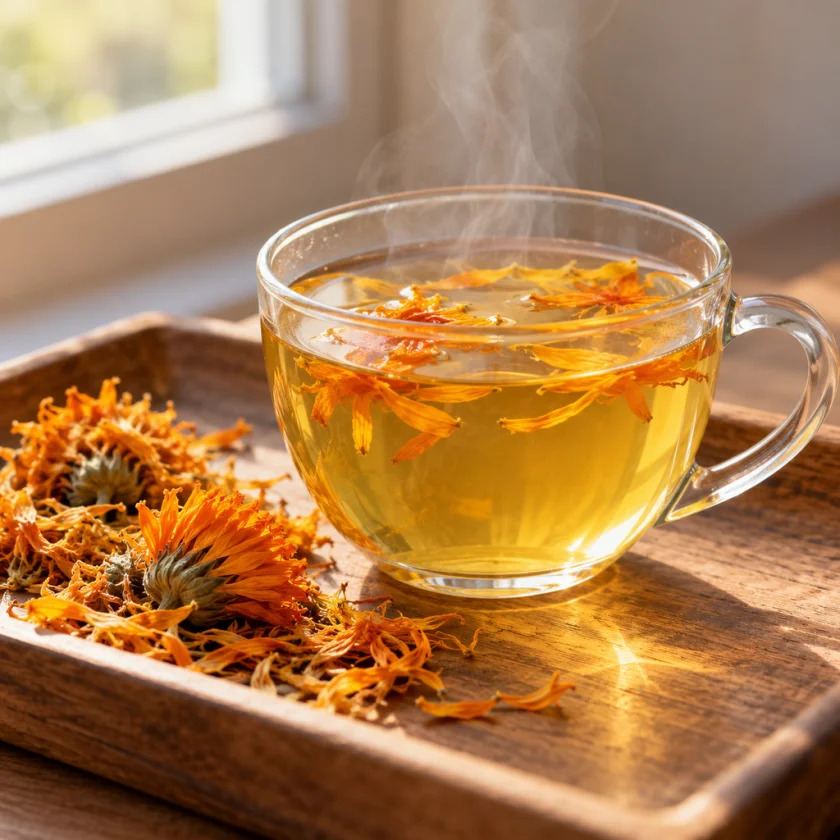
The key practical point is that oral use of calendula means rinsing and gargling, then spitting out — not drinking large amounts. A cooled calendula infusion (petals steeped in hot water like a tea, then strained and cooled) is swished around the mouth or gargled to bathe the inflamed tissue, then spat out. This delivers the soothing compounds where they are needed while avoiding meaningful internal exposure.
Oral Mucositis: The Strongest Oral Evidence
The most compelling oral evidence for calendula is for oral (oropharyngeal) mucositis — the painful inflammation and ulceration of the mouth and throat lining that is a common, debilitating side effect of head-and-neck radiotherapy and of many chemotherapy regimens. It can make eating, drinking, and even talking miserable, and severe cases interrupt cancer treatment.
In a randomized controlled study, Babaee and colleagues (2013) tested a 2% calendula mouthwash against placebo in patients with head-and-neck cancers undergoing radiotherapy. Among the 40 patients (20 per group), the calendula group had a lower severity of radiation-induced oropharyngeal mucositis than the placebo group at weeks 2, 3 and 6. The authors linked the benefit to calendula's antioxidant capacity — consistent with the flower's known flavonoid and triterpenoid content.
This is a genuinely encouraging result for a difficult problem with few easy solutions. The honest caveats: it is one small trial, and mucositis research is notoriously hard (many agents look promising in small studies and disappoint in larger ones). It fits, though, with calendula's better-established role in the related skin problem of radiation dermatitis, and a broader review of calendula's role in cancer supportive and palliative care (Cruceriu and colleagues, 2018) discusses these topical and mucosal uses. In that trial, patients used the 2% rinse during their radiotherapy course; cancer centres often follow their own mouth-care protocols during treatment. For the underlying cancer, see our head and neck cancer page.
Gingivitis & Dental Plaque
Calendula has also been studied for everyday gum health. Khairnar and colleagues (2013) evaluated a calendula mouthwash as an anti-plaque and anti-gingivitis agent. Over six months, adding a calendula rinse to routine mechanical cleaning (brushing and scaling) produced greater reductions in plaque and gingival inflammation scores than the control regimen.
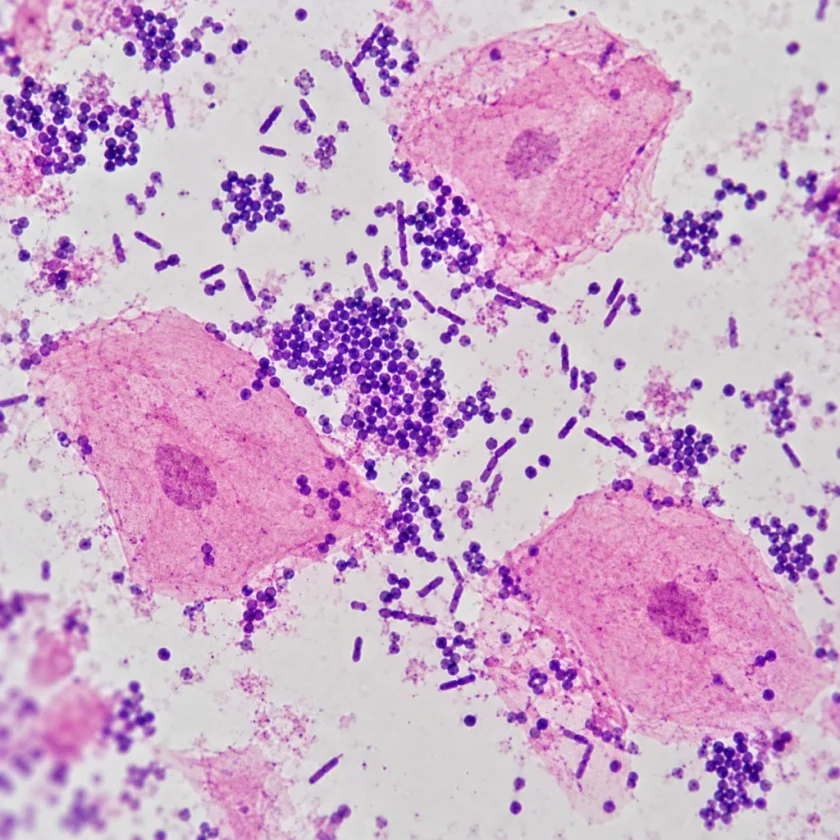
That points to a plausible supporting role for calendula in gum care — likely reflecting its anti-inflammatory action on the inflamed gum tissue (gingiva) plus mild antimicrobial activity against plaque bacteria. But the framing must stay realistic: this is an adjunct to good oral hygiene, not a replacement for it. Brushing, flossing, and professional dental care are the foundation of gum health in dental guidance. For the condition itself, see our gum disease page.
Calendula in Herbal Mouthwash Blends
In much oral research, calendula appears as one ingredient in a multi-herb mouthwash rather than on its own — which makes it harder to know how much credit calendula itself deserves.
- Melaleuca, Manuka, Calendula and green tea rinse. Lauten and colleagues (2005) studied a combination mouth rinse containing calendula alongside tea tree (Melaleuca), manuka, and green tea. It was mainly a safety and palatability study: in the 12-week placebo-controlled phase (8 rinse users vs 9 placebo users), differences in gum inflammation, plaque and two gum-disease bacteria did not reach statistical significance, no abnormal mouth lesions or blood-test changes were seen, and the authors noted that larger studies would be needed. Because it is a blend, the specific calendula contribution cannot be isolated.
- Polyherbal gingivitis mouthwash. Mahyari and colleagues (2016) tested a mouthwash combining ginger (Zingiber officinale), rosemary (Rosmarinus officinalis), and calendula in patients with gingivitis, and found improvement in gingival inflammation compared with placebo over two weeks in 60 patients, with results comparable to a chlorhexidine mouthwash.
- Herbal vs non-herbal mouthwashes. A broader literature review (Tidke and colleagues, 2022) comparing herbal and conventional mouthwashes for periodontal health placed calendula-containing products in the wider context of plant-based oral care, where several herbal rinses show benefits comparable to some conventional agents but with variable evidence quality.
The takeaway: calendula is a common component of soothing herbal mouthwashes; one blend beat placebo and matched chlorhexidine in a two-week trial, while another showed no significant difference from placebo — and blend studies cannot prove calendula alone is responsible.
Sore, Inflamed Throat & Mouth
For an ordinary sore or inflamed throat and mouth — the kind that comes with a cold, minor irritation, or a small mouth ulcer — a calendula gargle is a traditional comfort measure. Here the evidence is traditional and preliminary rather than trial-proven for the throat specifically, but the same soothing anti-inflammatory rationale applies, and gargling a warm or cool liquid is itself mildly comforting.
Think of calendula here as a gentle way to take the edge off minor discomfort, similar to how you might use it on a graze. It is not a treatment for strep throat, tonsillitis, or any bacterial infection — bacterial throat infections are treated with antibiotics. Persistent, severe, or one-sided throat pain, high fever, difficulty swallowing or breathing, or a mouth sore that will not heal are signs that clinicians treat as needing examination; trouble breathing or swallowing is treated as urgent. Small recurrent mouth ulcers are covered on our canker sores page.
How Calendula May Help in the Mouth
The plausible mechanisms in the mouth mirror those on the skin, covered in depth on the anti-inflammatory and antimicrobial page:
- Local anti-inflammatory action. Calendula's triterpenoids (faradiol esters) reduce inflammation and swelling in tissue — directly relevant to inflamed gums, an irritated throat, or a mucositis-damaged mouth lining.
- Antioxidant buffering. The flavonoid antioxidants may protect stressed mucosal tissue from oxidative damage — the mechanism the mucositis researchers highlighted.
- Mild antimicrobial activity. Laboratory antibacterial and antifungal effects may modestly reduce the microbial burden of dental plaque or a low-grade oral fungal (thrush) irritation — though, as always with calendula, this is a supporting effect, not a substitute for real treatment.
How a Calendula Mouth Rinse Is Made and Used
- The infusion. Traditionally about 1–2 teaspoons of dried calendula petals are steeped in a cup of just-boiled water for 10–15 minutes, then strained and cooled to a comfortable temperature.
- Rinse or gargle, then spit. The cooled infusion is swished around the mouth, or gargled with the head tilted back for the throat, for around 30 seconds, then spat out rather than swallowed, a few times a day.
- Or use a ready-made 2% mouthwash. The mucositis study used a 2% calendula mouthwash; commercial calendula or herbal mouthwashes are an alternative, with directions on the product label.
- Freshness. A home infusion has no preservatives, so it is usually made in small batches, kept refrigerated and used within a day.
- During cancer treatment, oncology and dental teams often have specific mouth-care protocols; in the mucositis trial, patients used the 2% rinse during their radiotherapy course.
Safety & Cautions
- Rinsed and spat out, not drunk. Oral calendula use is topical; the traditional practice is not to swallow large amounts, especially of concentrated preparations.
- Daisy-family (Asteraceae) allergy. People allergic to ragweed, chamomile, echinacea, or related plants can react to calendula, including in the mouth; swelling, itching, or worsening irritation are the signs of such a reaction.
- Not a cure for infections. Calendula rinses are comfort measures. Strep throat, tonsillitis, dental abscess, oral thrush, and other infections are treated with specific medicines.
- Pregnancy. There is no good safety data on calendula in pregnancy; traditional herbal practice cautions against concentrated internal calendula in pregnancy, and an occasional spit-out rinse involves far less internal exposure.
- Warning signs. A mouth sore lasting more than two weeks, severe or one-sided throat pain, high fever, or trouble swallowing or breathing are signs clinicians treat as needing examination; trouble breathing is treated as urgent.
Key Research Papers
All references below are real, peer-reviewed studies linked to their PubMed records. Note that several are small single trials or multi-herb blends — encouraging, but not yet definitive for calendula alone.
- Babaee N, Moslemi D, Khalilpour M, et al. Antioxidant capacity of Calendula officinalis flowers extract and prevention of radiation-induced oropharyngeal mucositis in patients with head and neck cancers. Daru. 2013. — PubMed PMID: 23497687
- Khairnar MS, Pawar B, Marawar PP, Mani A. Evaluation of Calendula officinalis as an anti-plaque and anti-gingivitis agent. J Indian Soc Periodontol. 2013. — PubMed PMID: 24554883
- Lauten JD, Boyd L, Hanson MB, et al. A clinical study: Melaleuca, Manuka, Calendula and green tea mouth rinse. Phytother Res. 2005. — PubMed PMID: 16317652
- Mahyari S, Mahyari B, Emami SA, et al. Evaluation of the efficacy of a polyherbal mouthwash containing Zingiber officinale, Rosmarinus officinalis and Calendula officinalis extracts in patients with gingivitis. Complement Ther Clin Pract. 2016. — PubMed PMID: 26850813
- Tidke S, Chhabra GK, Madhu PP, et al. The effectiveness of herbal versus non-herbal mouthwash for periodontal health: a literature review. Cureus. 2022. — PubMed PMID: 36120261
- Cruceriu D, Balacescu O, Rakosy E. Calendula officinalis: potential roles in cancer treatment and palliative care. Integr Cancer Ther. 2018. — PubMed PMID: 30289008
- Della Loggia R, Tubaro A, Sosa S, et al. The role of triterpenoids in the topical anti-inflammatory activity of Calendula officinalis flowers. Planta Med. 1994. — PubMed PMID: 7809203
- Colombo E, Sangiovanni E, D'Ambrosio M, et al. A bio-guided fractionation to assess the inhibitory activity of Calendula officinalis L. on the NF-κB driven transcription in human gastric epithelial cells. Evid Based Complement Alternat Med. 2015;2015:727342. — PubMed PMID: 26491463
- Efstratiou E, Hussain AI, Nigam PS, et al. Antimicrobial activity of Calendula officinalis petal extracts against fungi, as well as Gram-negative and Gram-positive clinical pathogens. Complement Ther Clin Pract. 2012;18(3):173-6. — PubMed PMID: 22789794
- Givol O, Kornhaber R, Visentin D, et al. A systematic review of Calendula officinalis extract for wound healing. Wound Repair Regen. 2019. — PubMed PMID: 31145533