Sweet Potato for Beta-Carotene and Vision
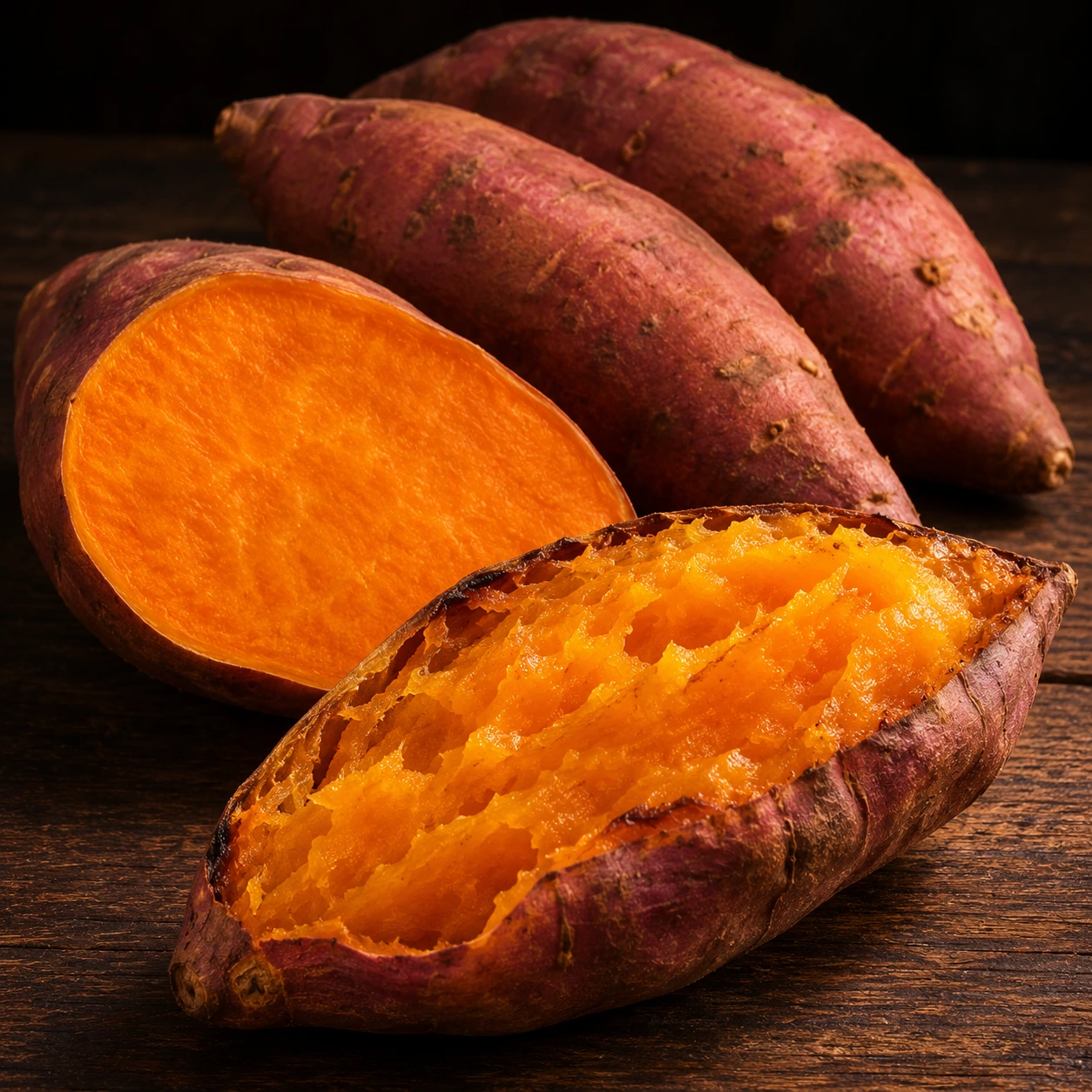
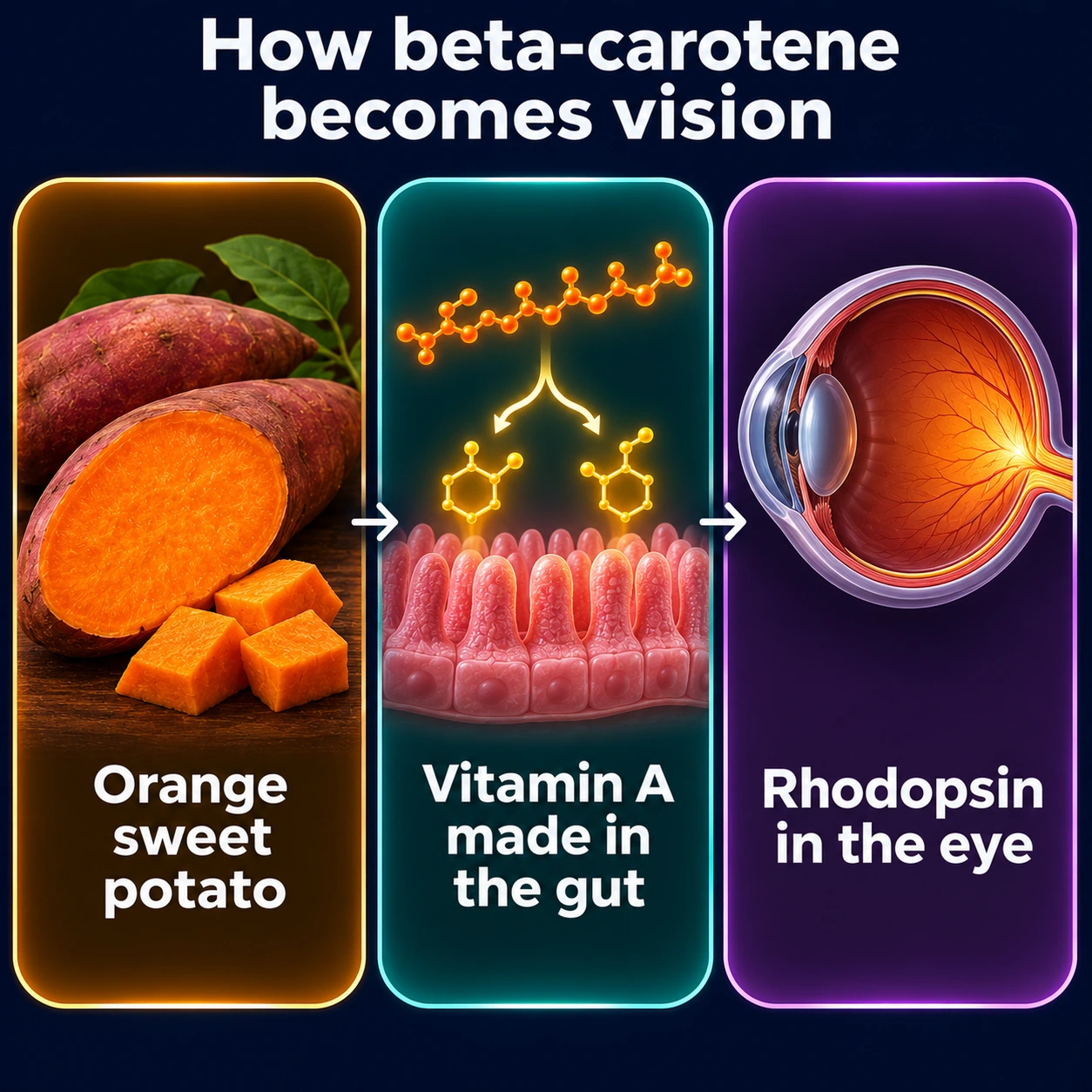
U.S. Department of Agriculture (USDA) FoodData Central lists baked orange-flesh sweet potato at 11,500 µg of beta-carotene and 961 µg retinol activity equivalents (RAE) per 100 g, and weighs a medium baked sweet potato at 114 g — enough, after BCMO1-mediated conversion to retinol, to exceed the adult Vitamin A Recommended Dietary Allowance of 700–900 µg RAE. This concentration is among the highest of any commonly eaten food: USDA lists boiled sweet potato at 9,440 µg per 100 g, against 8,330 µg for boiled carrot, 6,290 µg for boiled spinach and 1,730 µg for boiled kale. The HarvestPlus orange-sweet-potato program in Mozambique, Uganda, and Rwanda demonstrated that switching from traditional white-flesh cultivars to biofortified orange-flesh cultivars raised serum retinol in young children measurably over two-year programs — a cleaner intervention than supplementation because it embeds the nutrient delivery in everyday food consumption rather than a pill. This page walks through the molecular pathway from dietary beta-carotene to functional rhodopsin in the rod cells, the cooking and dietary-fat factors that modulate bioavailability, and the clinical evidence that orange sweet potato is a usable food intervention for both childhood blindness prevention and adult macular protection.
Table of Contents
- The Numbers: Why Orange Sweet Potato Dominates the Food Supply
- The BCMO1 Conversion Pathway
- Rhodopsin and the Visual Cycle
- Night Blindness as First Deficiency Sign
- Xerophthalmia and the Continuum of Severity
- HarvestPlus Biofortification Trials (Mozambique, Uganda)
- Cooking, Fat, and Bioavailability
- BCMO1 Polymorphisms and Individual Variability
- Sweet Potato in Adult Macular Degeneration Prevention
- Portions, Flesh Color, Cooking and Carotenemia
- Key Research Papers
- Connections
- Featured Videos
The Numbers: Why Orange Sweet Potato Dominates the Food Supply
The beta-carotene content of orange-flesh sweet potato is genuinely exceptional. USDA FoodData Central lists raw sweet potato at 8,510 µg of beta-carotene per 100 g, with measurable cultivar-to-cultivar variation (its 43 analyzed samples ranged from 4,030 to 16,000 µg), and baked sweet potato at 11,500 µg per 100 g. After cooking (which softens cell walls and improves extractability), bioavailable beta-carotene is essentially equivalent. USDA weighs a medium baked sweet potato at 114 g and a cup of baked sweet potato at 200 g.
For context, the Recommended Dietary Allowance (RDA) for Vitamin A in adults is 700–900 µg of retinol activity equivalents (RAE) per day. With the IOM-accepted plant-matrix beta-carotene to retinol conversion ratio of 12:1, USDA lists baked sweet potato at 961 µg RAE per 100 g — more than the full adult daily requirement in 100 g — in a single, inexpensive, shelf-stable food item.
How does this compare with the other carotenoid-dense foods commonly eaten?
- Orange sweet potato (boiled / baked): 9,440 / 11,500 µg beta-carotene per 100 g
- Carrot (cooked): ~8,300 µg per 100 g
- Pumpkin (cooked): ~2,100 µg per 100 g
- Cantaloupe: ~2,000 µg per 100 g
- Kale (cooked): ~1,730 µg per 100 g
- Spinach (cooked): ~6,290 µg per 100 g
- Butternut squash (cooked): ~4,000 µg per 100 g
- Red bell pepper: ~1,600 µg per 100 g
Sweet potato wins on every comparison, often by a substantial margin. Carrot comes closest, but the typical eating portion of cooked sweet potato (200–300 g) is larger than the typical portion of cooked carrot (80–120 g), so the per-meal carotenoid contribution is two to three times higher.
The BCMO1 Conversion Pathway
Beta-carotene from food is absorbed in the small intestine as part of mixed micelles formed with dietary fat. Inside the enterocyte, the enzyme BCMO1 (beta-carotene-15,15'-monooxygenase) catalyzes a central cleavage of the symmetric beta-carotene molecule at the 15,15' double bond, yielding two molecules of retinal. The retinal is then reduced to retinol (the standard Vitamin A alcohol), esterified to retinyl palmitate, packaged into chylomicrons, and exported via lymph for hepatic storage.
Two important features of BCMO1 distinguish provitamin A carotenoids from preformed retinol as a Vitamin A source:
- Feedback regulation — BCMO1 expression and activity are downregulated when Vitamin A status is replete. The enterocyte essentially "senses" that body stores are full and reduces conversion of incoming beta-carotene. This is the biochemical reason why dietary beta-carotene does not produce hypervitaminosis A even at very high intake — the conversion bottleneck is endogenously regulated. Excess beta-carotene that exceeds conversion capacity is absorbed as intact carotenoid, circulates in lipoproteins, deposits in adipose tissue and skin (visible as carotenemia, a harmless yellow skin discoloration), and is eventually metabolized or excreted.
- Variable efficiency — conversion is approximately 12:1 from typical plant matrix (12 µg beta-carotene yields 1 µg retinol), with significant variation by food matrix, dietary fat co-ingestion, individual genotype, and Vitamin A status. From leafy greens with tough cell walls, conversion may be as low as 24:1. From cooked orange sweet potato, where cooking has disrupted cell walls and the starchy matrix carries the carotenoid in a relatively bioavailable form, conversion is closer to the 12:1 reference.
For people with adequate baseline retinol status, the feedback loop limits how much sweet potato consumption translates to incremental Vitamin A. For people with deficiency, the feedback loop is open and incoming beta-carotene converts efficiently to retinol — which is precisely why biofortified sweet potato is an effective deficiency intervention but not a Vitamin A megadose substitute.
Rhodopsin and the Visual Cycle
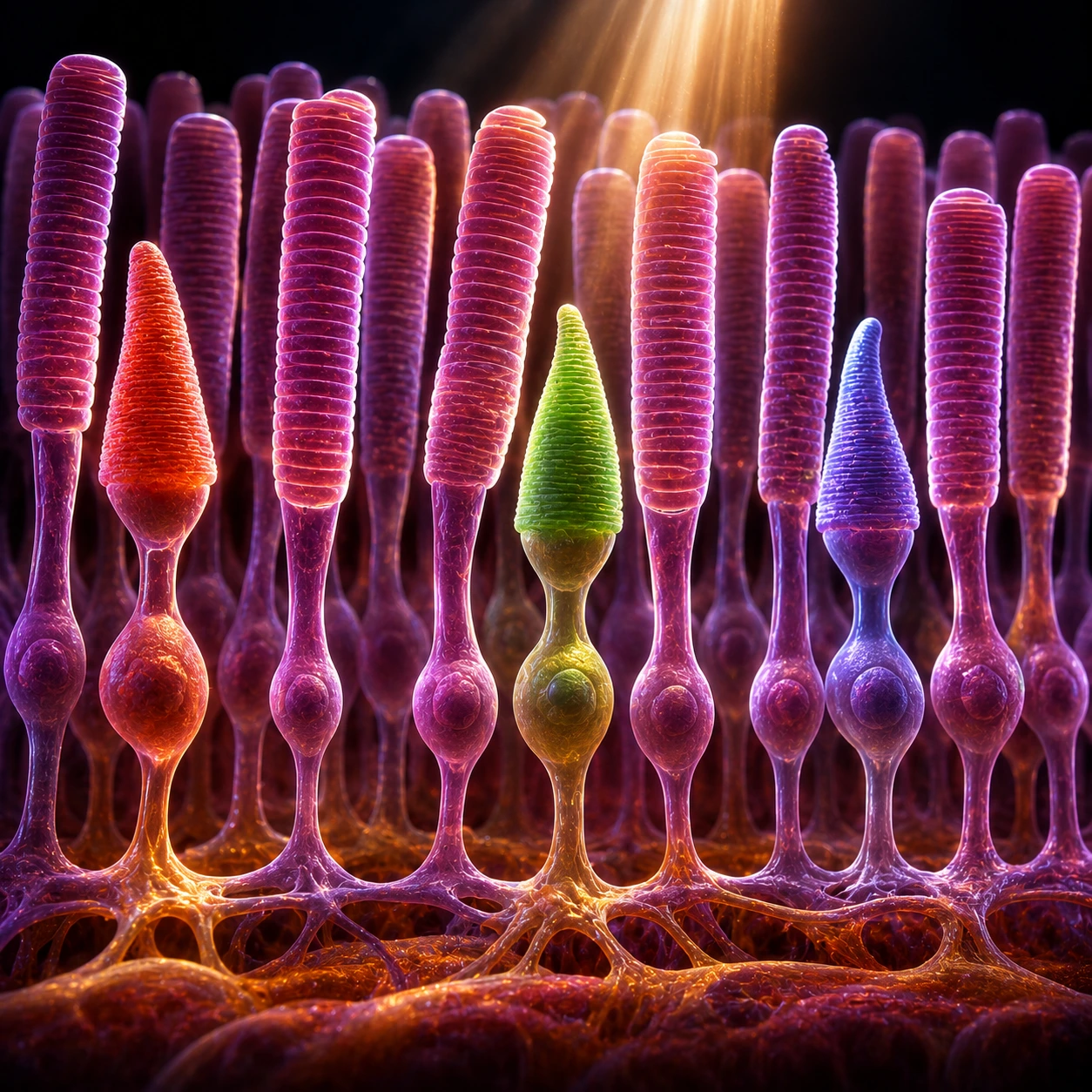
The visual contribution of Vitamin A is mediated through one specific molecule: 11-cis-retinal, the chromophore covalently bound to the opsin protein in retinal rod cells (and to the related photopigments in the cone cells). When a photon of light strikes rhodopsin in a rod outer segment, the 11-cis-retinal isomerizes to all-trans-retinal in roughly a picosecond. This isomerization produces a conformational change in the surrounding opsin protein that activates the G-protein transducin, initiating the cascade that ultimately produces an electrical signal transmitted to the brain.
After the photoresponse, the all-trans-retinal dissociates from opsin, must be transported back to the retinal pigment epithelium (RPE), enzymatically re-isomerized back to 11-cis-retinal (a multi-step pathway involving the RPE65 enzyme), and re-conjugated to opsin to restore the rhodopsin and ready it for another photon. The full cycle requires several seconds.
If Vitamin A is deficient, this regeneration cycle slows dramatically. Rod cells cannot rebuild their rhodopsin stocks between photoresponses. The clinical consequence is delayed dark adaptation — the time required for vision to recover after a flash of bright light, or to develop after entering a dim environment, lengthens from seconds to minutes. This is the molecular basis of night blindness.
The visual cycle is heavily Vitamin A-demanding. Each photoresponse consumes one molecule of 11-cis-retinal, and a single rod cell may fire millions of times per day. The continuous demand for Vitamin A turnover makes the rod cells one of the body's most Vitamin-A-sensitive tissues, which is why night blindness is the earliest and most reliable clinical sign of deficiency.
Night Blindness as First Deficiency Sign
Night blindness (medically: nyctalopia) is the first clinical manifestation of Vitamin A deficiency. The deficient person retains normal daylight vision (cone function is less Vitamin-A-demanding than rod function) but reports difficulty seeing in dim light, slow recovery after exposure to headlights, and inability to navigate at twilight. In children, it manifests as bumping into furniture in the evening, fear of the dark, and decreased outdoor play after sunset.
The cardinal feature is reversibility. Within days to weeks of adequate Vitamin A repletion — whether by supplementation, fortified food, or biofortified orange sweet potato — dark adaptation returns to normal. Functional rhodopsin levels in the retina rebuild, the visual cycle accelerates, and the patient's subjective dim-light vision recovers.
The Nepal trial led by Keith West Jr. and colleagues demonstrated that maternal night blindness during pregnancy is both common in deficient populations and reversible with low-dose Vitamin A or beta-carotene supplementation. In that Nepal trial, weekly vitamin A lowered pregnancy-related mortality by 40% and weekly beta-carotene by 49% compared with placebo — an effect attributed to the broader Vitamin-A-dependent immune and epithelial functions, not just to the visual benefit.
A larger trial in rural Bangladesh (2001–2007), which kept 125,257 married women under surveillance for pregnancy and gave weekly vitamin A, beta-carotene or placebo from early pregnancy to 12 weeks after birth, found no reduction in pregnancy-related deaths, stillbirths or infant deaths (relative risk 1.15 for vitamin A and 1.21 for beta-carotene). Vitamin A in that trial reduced, but did not eliminate, night blindness during pregnancy (7.1% versus 9.2% on placebo).
In well-nourished populations, true Vitamin-A-deficient night blindness is rare. When patients in the developed world report new-onset night blindness, the differential diagnosis includes age-related cataract (light scatter rather than rhodopsin failure), retinitis pigmentosa (rod-cell degeneration unrelated to Vitamin A), and post-bariatric malabsorption syndromes (where Vitamin A deficiency does occur and is responsive to oral or injectable retinol).
Xerophthalmia and the Continuum of Severity
If Vitamin A deficiency is not corrected, the disease progresses from night blindness to a continuum of structural eye damage collectively called xerophthalmia (dry eye, from Greek). The WHO classification system describes stages X1A through XS:
- X1A: conjunctival xerosis — the conjunctiva becomes thickened, wrinkled, and dry
- X1B: Bitot's spots — raised, foamy, silvery-white patches of keratinized squamous epithelium on the bulbar conjunctiva, usually temporal to the cornea, pathognomonic for the disease
- X2: corneal xerosis — the corneal surface loses its mirror-like reflection, becoming dry and pitted
- X3A: corneal ulceration covering less than one-third of the cornea
- X3B: corneal ulceration / keratomalacia covering more than one-third of the cornea — the cornea begins to melt
- XS: corneal scarring — the end stage, with permanent vision loss
- XF: xerophthalmic fundus — specific retinal lesions visible on fundoscopy
Stages X1A through X2 are fully reversible with prompt Vitamin A repletion. Stage X3 (corneal ulceration) is partially reversible if treated within days but commonly leaves residual scarring. Stage XS (keratomalacia with full corneal scarring) is irreversible — the person has been permanently blinded, even if subsequent Vitamin A intake is fully adequate.
The WHO estimates that approximately 250,000 to 500,000 children become permanently blind each year from Vitamin A deficiency, and that roughly half of those children die within twelve months of losing their sight. This is the "preventable childhood blindness" that orange sweet potato biofortification is designed to address.
HarvestPlus Biofortification Trials (Mozambique, Uganda)
HarvestPlus, an international agricultural research consortium, has spent the last two decades introducing biofortified orange-flesh sweet potato cultivars into deficient populations in sub-Saharan Africa where traditional cultivars are white-flesh and contain almost no beta-carotene. The biofortified cultivars have been bred (through conventional plant breeding, not transgenic methods) to retain the agronomic properties of the locally familiar white varieties — drought tolerance, disease resistance, yield, taste — while substituting orange beta-carotene-rich flesh.
The Mozambique study led by Low and colleagues (2007) is the cleanest demonstration. It was a two-year quasi-experimental study (not randomized) that followed 741 young children in rural Mozambique (mean age 13 months at the start; 498 in intervention areas, 243 in control areas), where an integrated agriculture and nutrition program introduced orange-flesh sweet potato. After two agricultural cycles:
- Mean serum retinol rose by 0.100 µmol/L in intervention children and did not rise significantly in control children
- The fraction of children with serum retinol below the deficiency threshold of 0.7 µmol/L dropped substantially
- Median vitamin A intake was 426 µg RAE in intervention children versus 56 µg RAE in control children
- In the second year, 90% of intervention households grew orange-flesh sweet potato, and intervention children were far more likely than control children to eat it on 3 or more days in the past week (55% versus 8%)
The Uganda trial led by Hotz and colleagues (2012) replicated the finding in a different population with different cultivars and confirmed the basic result — biofortified orange sweet potato is a usable food intervention that delivers measurable retinol-status improvement at population scale. In that randomized effectiveness study of two-year programs, orange sweet potato supplied 44–60% of vitamin A intake at follow-up. Compared with controls, the share with inadequate vitamin A intake fell by more than 30 percentage points among children aged 6–35 months and by more than 25 points among women, and among the 396 children with complete data the share with serum retinol below 1.05 µmol/L fell by 9.5 percentage points.
A 2015 systematic review of 20 studies from Mozambique found orange-fleshed sweet potato widely accepted by farmers and consumers, with various studies showing a positive effect on vitamin A status. The remaining challenges it listed were keeping planting vines, managing pests and disease, building markets, and storage and processing.
These trials matter because the alternative interventions (high-dose biannual oral Vitamin A supplementation, fortification of staple foods like flour or oil) all have logistical limitations. Supplementation depends on a vertical health-care delivery system that reaches every child twice a year. Fortification depends on a centralized processed-food supply chain that does not exist in subsistence agricultural settings. Biofortification embeds the nutrient delivery in the food the community already grows and eats, requiring no behavior change beyond accepting the new cultivar — which is the limiting step.
Cooking, Fat, and Bioavailability
The bioavailability of beta-carotene from sweet potato depends on several modifiable factors:
Cooking method. Raw sweet potato is rarely eaten, but if consumed, the dense starchy cell-wall matrix limits beta-carotene extractability. Cooking softens the cell walls and improves bioavailability. Comparative trials suggest:
- Boiling: good bioavailability, modest beta-carotene loss (5–10%)
- Baking / roasting: similar bioavailability, slightly higher loss to heat (10–15%)
- Steaming: highest retention, comparable bioavailability to boiling
- Frying: very good bioavailability (fat carrier), but adds significant calories and may produce some carotenoid degradation
- Microwaving: comparable to steaming for retention
Dietary fat. Beta-carotene is fat-soluble and requires mixed micelle formation in the small intestine to be absorbed. Co-ingestion of even a small amount of dietary fat (5–15 g) dramatically increases beta-carotene absorption. Sweet potato eaten with butter, olive oil, coconut oil, avocado, nut butter, or alongside a fatty entrée (fish, eggs, meat) delivers substantially more bioavailable beta-carotene than sweet potato eaten as a fat-free side dish.
Pre-existing Vitamin A status. As discussed above, BCMO1 is feedback-regulated. People with adequate baseline retinol convert incoming beta-carotene less efficiently than people with marginal or deficient status. This is appropriate physiology, not a defect — the body conserves Vitamin A homeostasis rather than allowing dietary beta-carotene to drive retinol to toxic levels.
Cell-wall disruption. Whole baked sweet potato has more intact cell walls than puree, soup, or thoroughly mashed sweet potato. Mechanical disruption (mashing, pureeing) increases beta-carotene release and absorption. This is one reason that sweet-potato soup and pureed sweet potato preparations may have higher bioavailability than whole baked tubers.
BCMO1 Polymorphisms and Individual Variability
One of the more clinically interesting findings of the last two decades is that common genetic polymorphisms in the BCMO1 gene substantially reduce beta-carotene conversion efficiency in a subset of the population. The two coding-region variants described by Leung, Lietz and colleagues at Newcastle University (2009) are:
- rs12934922 (R267S) — a missense (amino-acid-changing) variant in the BCMO1 coding region, with a variant allele frequency of 42% in that study. In the test tube, the enzyme carrying both R267S and A379V had 57% lower activity.
- rs7501331 (A379V) — a second common coding variant, with a variant allele frequency of 24%. After a large test dose of beta-carotene, women carrying the 379V variant had a 32% lower ratio of retinyl palmitate to beta-carotene in the blood's fat-carrying fraction (a sign of less conversion), and women carrying both 267S and 379V had a 69% lower ratio.
Up to 45% of healthy people have been reported to be poor converters of beta-carotene. A 2012 follow-up by the same group found that three variants just upstream of the BCMO1 gene also reduced conversion, and that how common they are varies widely between ethnic groups. For an individual with the low-converter genotype, eating an orange sweet potato delivers substantially less retinol-equivalent Vitamin A than the standard 12:1 conversion ratio would predict. Such individuals are not actually Vitamin A deficient if they consume preformed retinol from animal sources (eggs, dairy, liver, fatty fish), but if they rely heavily on plant beta-carotene as their Vitamin A source, they may have marginal status despite apparently adequate intake.
The practical implication is that "eat orange vegetables and you will get enough Vitamin A" is true for the majority but not for everyone. Individuals with low-conversion BCMO1 genotypes, individuals with chronic fat malabsorption (cystic fibrosis, advanced celiac, Crohn's disease, post-bariatric), and individuals on strict plant-only diets are the groups most likely to fall short when plant beta-carotene is their main Vitamin A source; preformed retinol from animal foods or a low-dose retinol supplement does not need BCMO1 conversion. See our Beta-Carotene vs Preformed Retinol deep-dive for the full discussion.
Sweet Potato in Adult Macular Degeneration Prevention
Adults in the developed world rarely become Vitamin A deficient and so do not develop xerophthalmia or measurable night blindness. The eye-health question for these adults is different: does sustained intake of beta-carotene-rich foods reduce the risk of age-related macular degeneration (AMD), the leading cause of vision loss in adults over 65?
The AREDS (Age-Related Eye Disease Study) and AREDS2 trials sponsored by the National Eye Institute provide the clearest data. The original AREDS formulation contained 15 mg of supplemental beta-carotene plus zinc, copper, Vitamin C, and Vitamin E, and, compared with placebo, lowered the odds of progression to advanced age-related macular degeneration (odds ratio 0.72) over an average follow-up of 6.3 years. The AREDS2 trial substituted lutein and zeaxanthin (carotenoids that deposit specifically in the macula) for beta-carotene, partly to avoid the increased lung cancer risk shown in ATBC/CARET for high-dose supplemental beta-carotene in smokers, and showed equivalent or slightly better protection. AREDS2 also noted more lung cancers in participants given beta-carotene than in those not given it (2.0% versus 0.9%), mostly in former smokers.
The lesson is nuanced. Supplemental high-dose beta-carotene as an isolated pill is no longer recommended for age-related macular degeneration, particularly in current or former smokers. But dietary beta-carotene from whole-food sources like sweet potato, carrot, kale, and spinach — consumed in the context of a varied diet with the other antioxidant carotenoids and polyphenols that whole plant foods naturally provide — is associated with reduced age-related macular degeneration risk in observational studies without the harm signal seen in isolated high-dose supplementation.
Kale, spinach, and other dark leafy greens supply the lutein/zeaxanthin component alongside the beta-carotene of sweet potato. In AREDS2, adding the omega-3 fats docosahexaenoic acid (DHA) and eicosapentaenoic acid (EPA) to the AREDS formulation did not reduce progression to advanced age-related macular degeneration (hazard ratio 0.97). Our Macular Degeneration page covers the condition in full.
Portions, Flesh Color, Cooking and Carotenemia
Portion size and frequency. USDA weighs a medium baked sweet potato at 114 g, and 100 g of baked sweet potato carries 961 µg RAE, more than the adult daily allowance. Daily consumption is not associated with any documented harm beyond carotenemia (harmless yellow skin discoloration at very high intake, which fades when intake is reduced).
Orange flesh carries the beta-carotene. White-flesh, yellow-flesh, and purple-flesh cultivars all have negligible beta-carotene compared to orange-flesh. The deeper and more saturated the orange color, the higher the beta-carotene content. Cultivars like Beauregard, Garnet, and Jewel are the standard high-beta-carotene orange types in U.S. grocery stores.
Cooking and fat. Baking, boiling, steaming and roasting all soften the cell walls. A small amount of fat eaten with it (butter, olive oil, coconut oil, tahini, nut butter, avocado slice) increases beta-carotene absorption. Sweet potato fries are often deep-fried in seed oils; oven-baked fries made with olive oil are not.
Skin on or off. Most of the beta-carotene is in the flesh, not the skin. Eating the skin contributes additional fiber and some additional micronutrients but is optional for beta-carotene purposes. Skin that is eaten is usually scrubbed first.
Carotenemia. If you eat very large amounts of orange sweet potato (or carrot, or pumpkin) daily, your palms and soles may take on a faint yellow-orange tint. This is harmless — the skin is simply depositing the excess unconverted beta-carotene. It is not jaundice (which would also color the sclerae of the eyes) and resolves over a few weeks when intake is reduced.
Diabetics. See the Glycemic Index deep-dive for the discussion of carbohydrate accounting and glycemic load — how cooking method changes sweet potato's glycemic index, and how its carbohydrate is counted in diabetic meal plans like any other starch.
Key Research Papers
- Low JW et al. — A food-based approach introducing orange-fleshed sweet potatoes increased vitamin A intake and serum retinol concentrations in young children in rural Mozambique. J Nutr. 2007;137(5):1320-7. — PubMed PMID: 17449599
- Hotz C et al. — Introduction of β-carotene-rich orange sweet potato in rural Uganda resulted in increased vitamin A intakes among children and women and improved vitamin A status among children. J Nutr. 2012;142(10):1871-80. — PubMed PMID: 22875553
- Haskell MJ — The challenge to reach nutritional adequacy for vitamin A: β-carotene bioavailability and conversion—evidence in humans. Am J Clin Nutr. 2012;96(5):1193S-203S. — PubMed PMID: 23053560
- Leung WC, Hessel S, Méplan C, Flint J, Oberhauser V, Tourniaire F, Hesketh JE, von Lintig J, Lietz G — Two common single nucleotide polymorphisms in the gene encoding beta-carotene 15,15'-monoxygenase alter beta-carotene metabolism in female volunteers. FASEB J. 2009;23(4):1041-53. — PubMed PMID: 19103647
- Lietz G, Oxley A, Leung W, Hesketh J — Single nucleotide polymorphisms upstream from the β-carotene 15,15'-monoxygenase gene influence provitamin A conversion efficiency in female volunteers. J Nutr. 2012;142(1):161S-5S. — PubMed PMID: 22113863
- Sommer A et al. — Impact of vitamin A supplementation on childhood mortality. A randomised controlled community trial. Lancet. 1986;1(8491):1169-73. — PubMed PMID: 2871418
- Imdad A et al. — Vitamin A supplementation for preventing morbidity and mortality in children from six months to five years of age (Cochrane). — PubMed PMID: 28282701
- West KP Jr et al. — Double blind, cluster randomised trial of low dose supplementation with vitamin A or beta carotene on mortality related to pregnancy in Nepal. The NNIPS-2 Study Group. BMJ. 1999;318(7183):570-5. — PubMed PMID: 10037634
- West KP Jr, Christian P, Labrique AB, Rashid M, Shamim AA, Klemm RD, Massie AB, Mehra S, Schulze KJ, Ali H, Ullah B, Wu LS, Katz J, Banu H, Akhter HH, Sommer A — Effects of vitamin A or beta carotene supplementation on pregnancy-related mortality and infant mortality in rural Bangladesh: a cluster randomized trial. JAMA. 2011;305(19):1986-95. — PubMed PMID: 21586714
- AREDS Research Group — A randomized, placebo-controlled, clinical trial of high-dose supplementation with vitamins C and E, beta carotene, and zinc for age-related macular degeneration. — PubMed PMID: 11594942
- AREDS2 Research Group — Lutein + zeaxanthin and omega-3 fatty acids for age-related macular degeneration: the Age-Related Eye Disease Study 2 (AREDS2) randomized clinical trial. — PubMed PMID: 23644932
- Burri BJ — Beta-cryptoxanthin as a source of vitamin A. J Sci Food Agric. 2015;95(9):1786-94. — PubMed PMID: 25270992
- Tang G — Bioconversion of dietary provitamin A carotenoids to vitamin A in humans. — PubMed PMID: 20200262
- van Jaarsveld PJ et al. — Beta-carotene-rich orange-fleshed sweet potato improves the vitamin A status of primary school children assessed with the modified-relative-dose-response test. Am J Clin Nutr. 2005;81(5):1080-7. — PubMed PMID: 15883432
- Jenkins M, Byker Shanks C, Houghtaling B — Orange-Fleshed Sweet Potato: Successes and Remaining Challenges of the Introduction of a Nutritionally Superior Staple Crop in Mozambique. Food Nutr Bull. 2015;36(3):327-53. — PubMed PMID: 26314732
Connections
- All Food
- Sweet Potato Benefits (Hub)
- Sweet Potatoes (Main Page)
- Sweet Potato Glycemic Index
- Purple vs Orange Cultivars
- Skin Nutrient Density
- Vitamin A
- Vitamin A Benefits Deep Dive
- Vitamin A for Vision & Eye Health
- Beta-Carotene vs Preformed Retinol
- Macular Degeneration
- Kale (Lutein, Zeaxanthin)
- Organ Meats (Preformed Retinol)
- History
- Nutrients