⚠ Evidence warning: Clinical trials or other evidence do not support the claim that purple sweet potato lowers blood pressure, improves blood-vessel function and raises antioxidant defences. This page keeps it as a report of what people, websites or other media say.
Sweet Potato: Purple vs Orange Cultivars
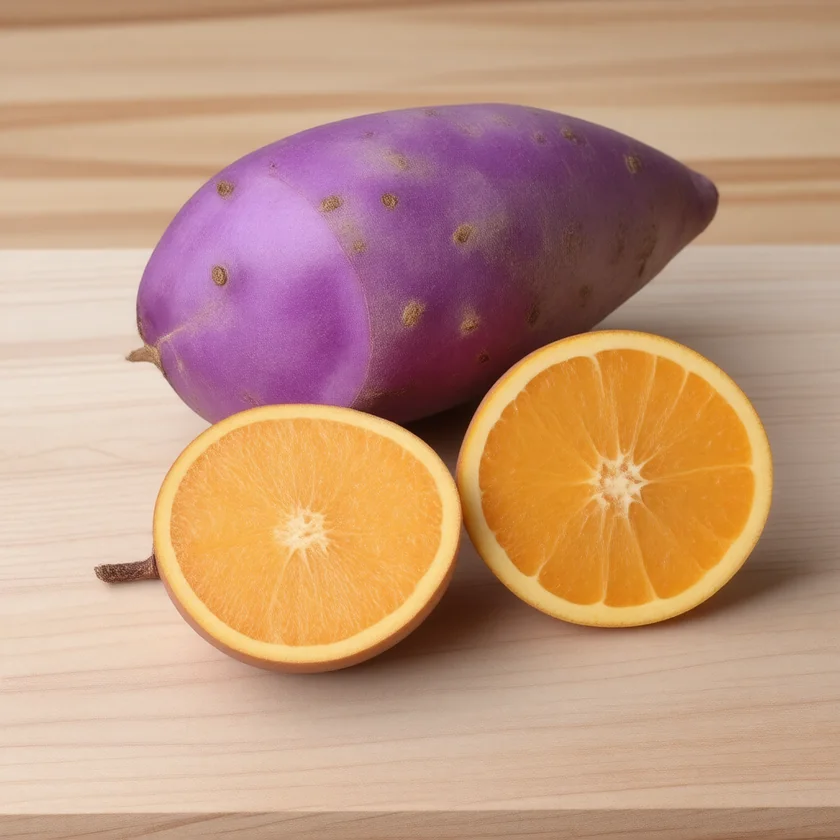
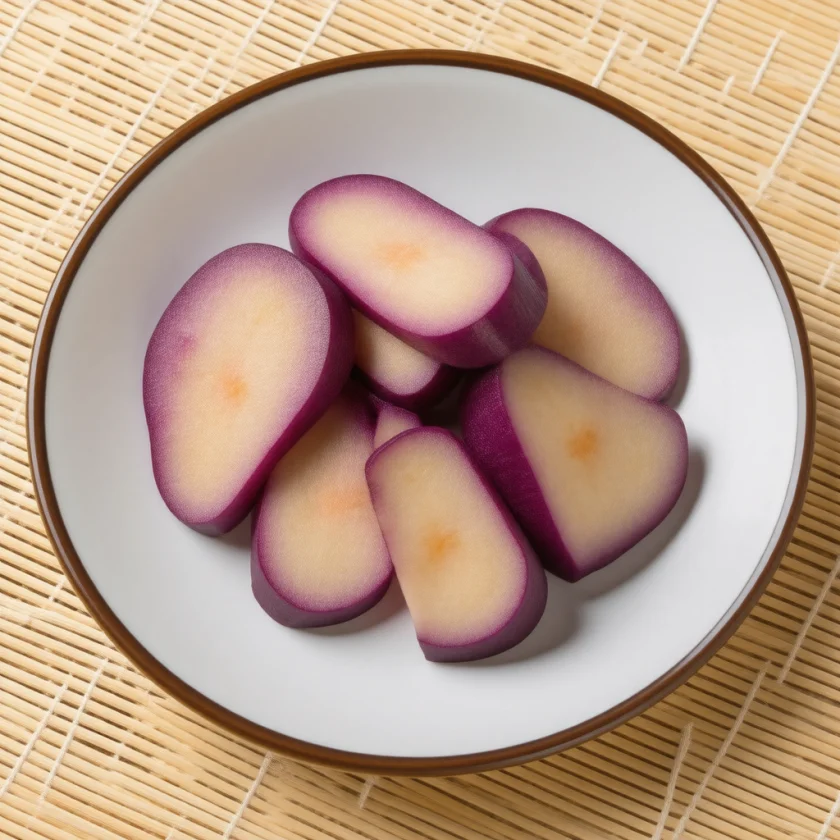
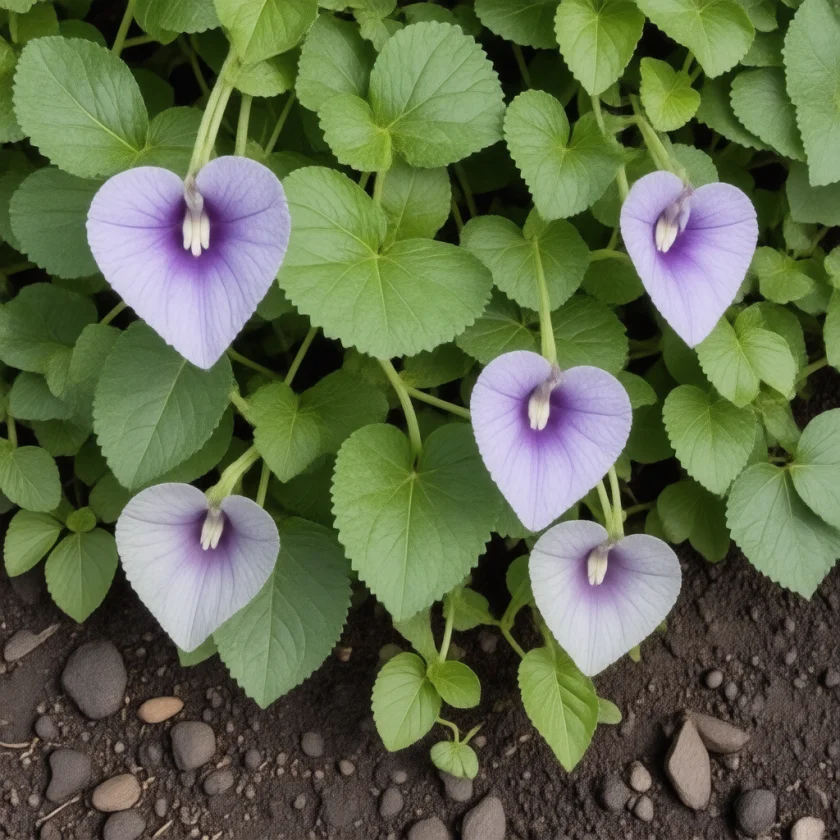
Orange and purple sweet potatoes are not interchangeable. The flesh color reflects two completely different pigment chemistries: orange flesh is colored by beta-carotene (a fat-soluble provitamin A carotenoid that converts to retinol), while purple flesh is colored by anthocyanin glycosides (water-soluble polyphenols that do not convert to Vitamin A and instead deliver direct antioxidant, vascular, and neuroprotective effects). The Okinawan longevity literature attributes part of the diet's health benefit to the very high consumption of purple-flesh sweet potato (locally called beni imo), whose anthocyanin content reaches 100–500 mg per 100 g — comparable to blueberries on a per-gram basis. Stokes Purple, Okinawan Beni Imo, and Ayamurasaki are the three cultivars most commonly available in U.S. specialty markets. This page is the practical cultivar comparison: which color does what, and why the two colors do not substitute for each other.
Table of Contents
- Two Pigment Systems, Two Different Molecules
- Orange-Flesh Cultivars (Beauregard, Garnet, Jewel)
- Purple-Flesh Cultivars (Stokes Purple, Okinawan, Ayamurasaki)
- Anthocyanin Chemistry (Peonidin and Cyanidin Glycosides)
- Oxygen Radical Absorbance Capacity and Antioxidant Capacity
- Cardiovascular and Blood Pressure Effects
- The Okinawan Longevity Connection
- Cooking and Pigment Stability
- What Each Color Supplies
- Key Research Papers
- Connections
- Featured Videos
Two Pigment Systems, Two Different Molecules
The single most important fact about sweet potato cultivars is that the flesh color reveals which molecular class of beneficial compound dominates. The two pigment systems are completely separate biosynthetic pathways, target different cellular compartments, and produce different physiologic effects.
Beta-carotene (orange flesh) — a 40-carbon tetraterpene synthesized through the plant isoprenoid pathway. Beta-carotene is fat-soluble, partitions into lipid membranes and lipoproteins, is centrally cleaved by beta-carotene 15,15'-monooxygenase 1 (BCMO1) in the enterocyte to retinal/retinol, and contributes to Vitamin A status. The remaining unconverted fraction acts as a peroxyl-radical scavenger in membrane lipid environments.
Anthocyanins (purple flesh) — flavonoid glycosides synthesized through the phenylpropanoid pathway. Anthocyanins are water-soluble (the glycoside conjugation makes them hydrophilic), do not convert to Vitamin A, are absorbed at relatively low efficiency (1–5% intact, with the remainder fermented by colonic microbiota to phenolic acid metabolites), and act as polyphenol antioxidants in the aqueous compartment.
The implication is that a person who eats only purple sweet potato as their carotenoid source will end up Vitamin A deficient (purple flesh has negligible beta-carotene), and a person who eats only orange sweet potato as their polyphenol source will miss out on the anthocyanin family of bioactives entirely. A diet built on sweet potato supplies both pigment families only when both colors are eaten.
Orange-Flesh Cultivars (Beauregard, Garnet, Jewel)
The orange-flesh cultivars are dominant in U.S. agriculture and U.S. grocery distribution. The three most commonly available:
Beauregard — the most widely grown commercial orange sweet potato in the United States. Light copper skin, deep orange flesh, moderate sweetness, soft moist texture when cooked. Beta-carotene content 8,000–10,000 µg per 100 g. Sometimes confused with "yam" in grocery store signage; true yams are botanically distinct (genus Dioscorea, family Dioscoreaceae) and rarely sold in U.S. stores.
Garnet — dark reddish-purple skin (the "garnet" name refers to the skin color, not the flesh), deep orange flesh, slightly more moisture than Beauregard, very high beta-carotene. Often the sweetest of the orange cultivars when fully cured. Beta-carotene 9,000–11,000 µg per 100 g.
Jewel — lighter copper skin, slightly drier flesh than Garnet or Beauregard, holds its shape better in roasting applications (preferred for sweet potato fries), beta-carotene 7,500–9,500 µg per 100 g.
All three are the workhorse beta-carotene delivery foods. Any of them, baked or boiled, will deliver more than the adult Recommended Dietary Allowance (RDA) for Vitamin A in a single 200 g serving. The differences between them are primarily culinary (texture, moisture, sweetness) rather than nutritional.
Two additional orange-flesh cultivars worth knowing:
- Hannah — a lighter-flesh orange variety, slightly more yellow-orange than the deep orange of Beauregard. Slightly lower beta-carotene (~6,000 µg per 100 g) but still well above the Recommended Dietary Allowance per serving.
- Covington — bred at North Carolina State University to combine high beta-carotene with the agronomic resilience needed for U.S. commercial production. Increasingly common in supermarket distribution.
Purple-Flesh Cultivars (Stokes Purple, Okinawan, Ayamurasaki)
Purple sweet potatoes are far less common in mainstream U.S. grocery distribution but are increasingly available in specialty stores, Asian markets, and farmers' markets. The three to know:
Stokes Purple — deep purple skin and intensely violet flesh, very high anthocyanin content (~400–600 mg per 100 g), drier and starchier texture than orange cultivars, distinctly nutty flavor that some palates prefer to the sweet caramel character of orange sweet potato. Trademarked variety developed and primarily distributed by a specialty-produce distributor.
Okinawan (Beni Imo, also Hawaiian Purple) — pale tan skin (looks like a regular orange sweet potato from outside) with vibrant purple flesh underneath. The classic Okinawan diet staple. Anthocyanin content 150–400 mg per 100 g, slightly drier and starchier than Stokes, mild sweet flavor. Often sold simply as "Okinawan sweet potato" or "Hawaiian purple sweet potato."
Ayamurasaki — Japanese cultivar bred specifically for high anthocyanin content (~300–500 mg per 100 g) and used commercially as a natural food coloring (purple food dye, purple ice cream). Increasingly available in Japanese specialty markets in the U.S. west coast.
Purple-flesh sweet potatoes typically have substantially less beta-carotene than orange varieties — on the order of 50–200 µg per 100 g, versus 8,000–11,000 µg per 100 g for orange flesh. You will not get meaningful Vitamin A from purple sweet potato. What you will get is 100–500 mg of bioactive anthocyanins, comparable in concentration to fresh blueberries (~150–400 mg/100 g) and substantially exceeding blackberries (~90–180 mg/100 g) or pomegranate (~30–60 mg/100 g of edible arils).
Anthocyanin Chemistry (Peonidin and Cyanidin Glycosides)
Anthocyanins are a subclass of the flavonoid family of plant polyphenols. Structurally, they consist of an anthocyanidin aglycone (the colored core) conjugated to one or more sugar molecules (glucose, galactose, arabinose). The sugar conjugation makes the molecule water-soluble and provides the structural basis for the absorption and metabolism profile.
Purple sweet potato anthocyanins are dominated by two anthocyanidin cores:
- Peonidin — the dominant anthocyanidin in Okinawan and many Japanese purple cultivars. Methylated at the 3' position of the B ring. Conjugated to glucose, often as peonidin-3-(6'-caffeoylsophoroside)-5-glucoside and related complex glycosides.
- Cyanidin — the second most abundant. Unmethylated, hydroxylated at the 3' position. Found as cyanidin-3-(6'-caffeoylsophoroside)-5-glucoside and related forms.
The acyl conjugation (the caffeic acid attachment at the 6' position of the sophorose sugar) is the distinctive feature of sweet potato anthocyanins relative to many berry anthocyanins. The acyl groups improve thermal stability (sweet potato anthocyanins survive boiling, baking, and even baking at high temperatures better than most berry anthocyanins) and pH stability (they retain their color and bioactivity across a wider pH range). This is one reason purple sweet potato is used commercially as a natural food colorant in beverages, ice cream, baked goods, and yogurt — the anthocyanin holds its color in processing where blueberry or grape anthocyanins would fade.
Absorption of intact anthocyanins from sweet potato is modest — perhaps 1–3% of the ingested dose reaches systemic circulation as intact glycosides. The remaining 97%+ is fermented in the colon by gut microbiota to a series of phenolic acid metabolites (protocatechuic acid, vanillic acid, ferulic acid, p-coumaric acid), which themselves have antioxidant and anti-inflammatory activity and are absorbed at higher efficiency.
Oxygen Radical Absorbance Capacity and Antioxidant Capacity
The Oxygen Radical Absorbance Capacity (ORAC) assay measures a food's ability to neutralize peroxyl radicals in vitro. The U.S. Department of Agriculture (USDA) discontinued the oxygen radical absorbance capacity database in 2012 (because the in vitro number does not reliably predict in vivo antioxidant activity), but the comparative values remain useful for ranking foods by polyphenol content.
Reported oxygen radical absorbance capacity values (µmol Trolox Equivalents per 100 g):
- Purple sweet potato (Stokes): ~3,300–5,000
- Purple sweet potato (Okinawan): ~1,800–3,200
- Orange sweet potato (Beauregard): ~700–1,200
- White potato (Russet, baked): ~300–500
- Blueberry (fresh): ~4,700
- Blackberry (fresh): ~5,300
- Pomegranate: ~4,500
- Concord grape: ~5,200
- Red apple: ~3,500
Purple sweet potato is in the same antioxidant-capacity range as the canonical "antioxidant superfruits" and substantially exceeds the orange variety on this measure. The orange sweet potato compensates with its Vitamin A precursor activity, which is not captured by oxygen radical absorbance capacity at all.
The caveat with oxygen radical absorbance capacity is that it does not predict bioavailability. A food with high oxygen radical absorbance capacity where the antioxidant molecules are not absorbed is not as useful as a food with moderate oxygen radical absorbance capacity where the molecules reach circulation. For purple sweet potato, the situation is mixed: intact anthocyanin absorption is low, but the colonic phenolic acid metabolites are well absorbed and do contribute to in vivo antioxidant defense. The net effect is thought to be meaningful but smaller than the dramatic in vitro oxygen radical absorbance capacity suggests.
Cardiovascular and Blood Pressure Effects
Anthocyanins have been studied for blood pressure and cardiovascular effects in many controlled trials. The consistent trial finding is better blood-vessel function, not lower blood pressure (see the 2026 review below). The proposed mechanisms include:
- Enhanced nitric oxide bioavailability (vasodilation)
- Reduced oxidation of low-density lipoprotein (LDL) particles
- Reduced systemic inflammatory markers (C-reactive protein, interleukin-6 (IL-6))
- Improved endothelial function on flow-mediated dilation testing
- Possibly inhibition of angiotensin-converting enzyme activity
A 2026 review in the American Journal of Clinical Nutrition (Avendano and colleagues) pooled 18 cohort studies and 65 randomized trials in healthy people. In the cohorts, people with the highest habitual anthocyanin intake had 26% less cardiovascular disease and 18% fewer heart attacks (myocardial infarction) than those with the lowest intake. In the trials, which gave 50 mg of anthocyanins a day or more, anthocyanins improved blood-vessel widening (flow-mediated dilation, net change +1.41%), while blood pressure, blood fats (lipids) and blood sugar (glucose) were unaffected.
Specifically for purple sweet potato, the human blood-pressure data come from a 4-week, open-label trial with no comparison group (Oki and colleagues, 2016). Twenty adults aged 18–70 with a body mass index above 25, raised blood pressure and raised liver-function markers drank two 125 ml cartons of a purple sweet potato beverage a day, each carton containing 117 mg of anthocyanin. Systolic blood pressure was significantly lower after 4 weeks than before (p=0.0125) and rose again after a 2-week break (p=0.0496), but across the treatment period the authors found only a trend toward lower systolic pressure (p=0.0590); diastolic pressure did not change. The liver enzyme alanine aminotransferase (ALT) rose significantly over time, and the authors reported no clinically relevant changes in the blood and urine safety measures. Earlier work from the same research group (Suda and colleagues, 2002) was a rat study showing that an acylated purple sweet potato anthocyanin reaches the blood intact.
The 2016 trial was small and short, and it did not compare the beverage with blood-pressure medication.
For anthocyanins more broadly, a 6-month randomized trial of blueberries (Curtis 2019, 115 people with metabolic syndrome) found that 1 cup a day improved blood-vessel widening (flow-mediated dilatation +1.45%), while blood pressure was unaffected and half a cup a day had no effect on any marker. The Cassidy studies are observational: in 93,600 women of the Nurses' Health Study II, the highest anthocyanin intake was linked with a lower risk of heart attack (2013), and in 2,375 Framingham Offspring participants higher anthocyanin intake was linked with lower inflammation scores (2015). Purple sweet potato delivers a comparable anthocyanin dose per gram with the bonus of complex carbohydrate energy and fiber that pure berry consumption does not.
The Okinawan Longevity Connection
Okinawa was for many decades the prefecture of Japan with the longest documented life expectancy, the highest proportion of centenarians, and unusually low rates of coronary heart disease, breast cancer, prostate cancer, and dementia compared to mainland Japan and the developed world. Bradley and Craig Willcox and colleagues spent decades studying this population (the Okinawa Centenarian Study) and produced a series of papers attempting to explain the longevity. Among the dietary features they identified:
- Caloric density ~40% lower than Western diet (calorie restriction without conscious restriction)
- Very high vegetable intake
- Modest fish and pork consumption, low beef
- Miso, tofu, and other soy foods
- Goya (bitter melon)
- Sweet potato as the dominant staple food — both the orange-yellow Satsuma imo and the purple beni imo; in 1949 Okinawans drew 58% of their calories from vegetables, mostly sweet potato, against 8% in mainland Japan (Willcox 2014)
- Green tea (very high consumption)
- Turmeric (in the form of Okinawan turmeric tea)
The Okinawan longevity advantage has substantially eroded over the past 30 years as the diet has Westernized — younger Okinawan adults now have life expectancies comparable to the rest of Japan, no longer leading. This natural experiment supports the inference that the traditional diet was a meaningful contributor to the longevity, since the population's genetic background has not changed but the longevity advantage has disappeared as the diet changed.
Purple sweet potato is not the sole explanation — the Okinawan diet had many other features and the population had specific genetic and lifestyle attributes — but the high anthocyanin intake from beni imo is one of the more striking dietary features and one of the easier ones to replicate outside Okinawa.
Cooking and Pigment Stability
Both pigment systems survive cooking reasonably well, but with some asymmetries.
Beta-carotene in orange flesh is relatively heat-stable. Losses of 5–15% are typical with normal cooking methods (boiling, baking, steaming). Frying produces somewhat higher losses due to the high temperature and contact with oxidized oil. Cell-wall disruption from cooking actually increases bioavailability of the remaining beta-carotene, so total effective Vitamin A delivery often goes up with cooking despite the modest pigment loss.
Anthocyanins in purple flesh are more sensitive to heat, pH, and oxidation than most plant pigments. Pure cyanidin and peonidin are quite unstable to heat. The purple sweet potato anthocyanins, however, benefit from the caffeoyl acylation discussed above, which dramatically improves their thermal stability. In a Kansas State University study of the cyanidin-rich purple variety P40 (up to 14 mg of anthocyanin per gram of dry matter), steaming, pressure cooking, microwaving and frying reduced total anthocyanins by 8–16%, while baking did not reduce them significantly; the mono-acylated anthocyanins were the most heat-resistant (Xu 2015). The cooked purple sweet potato retains its vibrant violet color through most preparations. Acidic cooking environments (lemon juice, vinegar) actually intensify the purple color (anthocyanins are more red and more colored at low pH) and improve pigment stability. Alkaline conditions (baking soda) shift the color toward blue-green and reduce stability.
In practice, both colors keep most of their pigment through ordinary cooking; for purple sweet potato specifically, slightly cooler cooking water and a slightly acidic preparation (a squeeze of lemon, a dressing of vinegar) retain the most bioactive pigment.
What Each Color Supplies
The two pigment systems deliver chemically distinct compounds that do not substitute for each other, so a household where sweet potato is a regular staple gets both only when both colors are on the table.
- Orange sweet potato (Beauregard, Garnet, Jewel): beta-carotene for Vitamin A status, skin carotenoid deposition and vision health.
- Purple sweet potato (Stokes, Okinawan, Ayamurasaki): anthocyanins, studied for cardiovascular, neurovascular and antioxidant effects.
- Other starchy foods (brown rice, lentils, white potato, whole grains): variety, so that no single food carries the whole diet.
Other anthocyanin-rich foods supply the same pigment family where purple sweet potato is hard to find: blueberries, blackberries, black currants, purple/black grapes, red cabbage, eggplant skin and black rice.
Vitamin A also comes from several foods besides orange sweet potato — carrot, kale, spinach, butternut squash and beef liver all contribute. No single food supplies everything, even an exceptionally nutrient-dense one.
Key Research Papers
- Oki T, Kano M, Watanabe O, Goto K, Boelsma E, Ishikawa F, Suda I — Effect of consuming a purple-fleshed sweet potato beverage on health-related biomarkers and safety parameters in Caucasian subjects with elevated levels of blood pressure and liver function biomarkers: a 4-week, open-label, non-comparative trial. Biosci Microbiota Food Health. 2016;35(3):129-36. — PubMed PMID: 27508114
- Suda I, Oki T, Masuda M, Nishiba Y, Furuta S, Matsugano K, Sugita K, Terahara N — Direct absorption of acylated anthocyanin in purple-fleshed sweet potato into rats. J Agric Food Chem. 2002;50(6):1672-6. — PubMed PMID: 11879056
- Willcox DC, Willcox BJ, Todoriki H, Suzuki M — The Okinawan diet: health implications of a low-calorie, nutrient-dense, antioxidant-rich dietary pattern low in glycemic load. J Am Coll Nutr. 2009;28 Suppl:500S-516S. — PubMed PMID: 20234038
- Willcox DC, Scapagnini G, Willcox BJ — Healthy aging diets other than the Mediterranean: a focus on the Okinawan diet. Mech Ageing Dev. 2014;136-137:148-62. — PubMed PMID: 24462788
- Xu J, Su X, Lim S, Griffin J, Carey E, Katz B, Tomich J, Smith JS, Wang W — Characterisation and stability of anthocyanins in purple-fleshed sweet potato P40. Food Chem. 2015;186:90-6. — PubMed PMID: 25976796
- Avendano EE, Ellingson H, Digga E, Velasco Nieves AM, Chen L, Wu M, Setty SH, Morley S, Curtis P, Nirmala N, Cassidy A — Dietary intakes of anthocyanins and cardiometabolic health: a systematic review and meta-analysis of randomized trials and prospective cohort studies in healthy participants. Am J Clin Nutr. 2026;124(2):101304. — PubMed PMID: 42547104
- Cassidy A, Rogers G, Peterson JJ, Dwyer JT, Lin H, Jacques PF — Higher dietary anthocyanin and flavonol intakes are associated with anti-inflammatory effects in a population of US adults. Am J Clin Nutr. 2015;102(1):172-81. — PubMed PMID: 26016863
- Curtis PJ et al. — Blueberries improve biomarkers of cardiometabolic function in participants with metabolic syndrome — results from a 6-month, double-blind, randomized controlled trial. — PubMed PMID: 31136659
- Kano M, Takayanagi T, Harada K, Makino K, Ishikawa F — Antioxidative activity of anthocyanins from purple sweet potato, Ipomoera batatas cultivar Ayamurasaki. Biosci Biotechnol Biochem. 2005;69(5):979-88. — PubMed PMID: 15914919
- Han KH, Sekikawa M, Shimada K, Hashimoto M, Hashimoto N, Noda T, Tanaka H, Fukushima M — Anthocyanin-rich purple potato flake extract has antioxidant capacity and improves antioxidant potential in rats. Br J Nutr. 2006;96(6):1125-33. (Note: purple-fleshed potato, a different plant from sweet potato; a rat study.) — PubMed PMID: 17181888
- Zhang ZF et al. — Purple sweet potato color attenuates oxidative stress and inflammatory response induced by D-galactose in mouse liver. — PubMed PMID: 19114082
- Cassidy A, Mukamal KJ, Liu L, Franz M, Eliassen AH, Rimm EB — High anthocyanin intake is associated with a reduced risk of myocardial infarction in young and middle-aged women. — PubMed PMID: 23319811
- Bovell-Benjamin AC — Sweet potato: a review of its past, present, and future role in human nutrition. — PubMed PMID: 17425943