Cucumber, Vitamin K, and Bone Health
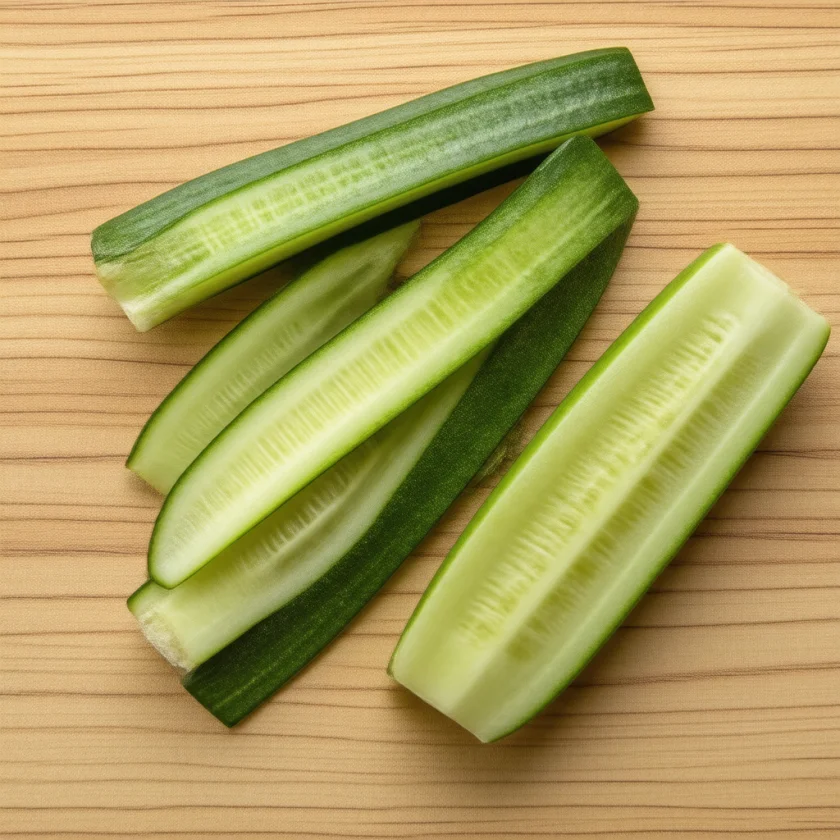
Strip away the water and cucumber has exactly one micronutrient worth counting: vitamin K. It is not a headline amount — kale and spinach carry twenty to forty times as much per gram — but a whole unpeeled cucumber lands in the region of fifty micrograms of phylloquinone, which is a real fraction of an adult's daily adequate intake, and cucumber has the practical advantage that people eat it in large, raw, uncooked quantities without being nagged. The catch is that much of it sits in the peel — USDA FoodData Central lists 16.4 micrograms per 100 grams for raw cucumber with peel and 7.2 micrograms for peeled — so whether a cucumber is peeled is the biggest single factor in what it supplies. This article covers what vitamin K actually does, how much of it survives from the plate into your bloodstream, what the randomised bone trials found (less than the observational studies promised), the artery story that has quietly become the more interesting one, and what the research found for people on warfarin — consistency, not avoidance.
Table of Contents
- What Vitamin K Actually Does
- How Much Vitamin K Is in a Cucumber
- How Much Vitamin K Sits in the Peel
- Absorption: Why Vegetable K1 Needs Fat
- The Bone Mechanism: Osteocalcin
- What the Bone Trials Actually Showed
- Matrix Gla Protein and the Artery Story
- If You Take Warfarin: Consistency, Not Avoidance
- Silicon: The Other Claim About Cucumber Skin
- An Honest Summary
- Practical: Getting the Vitamin K Out of a Cucumber
- Key Research Papers
- Connections
- Featured Videos
What Vitamin K Actually Does
Vitamin K is a fat-soluble vitamin that exists in two dietary forms. Phylloquinone (K1) is made by plants, sits in the chloroplasts of green tissue, and is by a wide margin the dominant form in the human diet. Menaquinones (K2) are made by bacteria, appear in fermented foods and in some animal foods, and account for a smaller share of intake. Cucumber supplies K1.
Its job is unusual and specific. Vitamin K is the essential cofactor for an enzyme, gamma-glutamyl carboxylase, that performs a single chemical modification: it converts particular glutamate residues in certain proteins into gamma-carboxyglutamate. That modification gives the protein a claw that grips calcium ions. Without vitamin K the modification does not happen, and the protein circulates in an undercarboxylated form — present, measurable, and functionally inert.
Roughly a dozen human proteins depend on this. The best known are the clotting factors made in the liver — factors II, VII, IX and X, plus proteins C and S — which is why vitamin K deficiency shows up first as bleeding, and why warfarin, which blocks the recycling of vitamin K, works as an anticoagulant.
The interesting part, and the subject of Sarah Booth's widely cited review of vitamin K's roles beyond coagulation, is that the same machinery operates outside the liver. Two of the extrahepatic vitamin K-dependent proteins matter here: osteocalcin, made by bone-forming cells, and matrix Gla protein, made in cartilage and the walls of blood vessels. Both need vitamin K to be carboxylated, and both are involved in where calcium ends up in the body. That is the whole basis for the bone and artery interest, and it is a genuinely sound mechanism — which makes the disappointing trial results discussed further down all the more instructive.
How Much Vitamin K Is in a Cucumber
Raw cucumber with the peel carries in the region of sixteen micrograms of phylloquinone per hundred grams. That places it in the middle of the vegetable range — well below the dark leafy greens, comfortably above most fruit, roots and alliums. Damon, Zhang, Haytowitz and Booth's analysis of phylloquinone across vegetables, work done to underpin the composition databases, shows the same broad pattern that any cook would guess: green and leafy is high, pale and non-leafy is low, and the pigment tracks the vitamin because both live in the chloroplast.
Converted into portions:
- A cup of unpeeled slices (about a hundred and twenty grams) supplies roughly twenty micrograms.
- A whole medium unpeeled cucumber (about three hundred grams) supplies roughly fifty micrograms.
- A large English cucumber eaten across a day can approach seventy.
Set that against adequate intakes of about ninety micrograms a day for adult women and a hundred and twenty for adult men in the United States figures, with European values somewhat lower. A whole unpeeled cucumber therefore covers something in the region of forty to fifty-five percent of a woman's adequate intake and around forty percent of a man's. For a vegetable that is ninety-five percent water, that is a genuinely respectable showing, and it is the one nutrient claim about cucumber that does not need any hedging.
The broader context, from Booth and Suttie's work on dietary intake and adequacy of vitamin K, is that ordinary intakes vary enormously between individuals because they are dominated by a small number of leafy-green foods eaten irregularly. A person who eats a large salad most days sits comfortably above the adequate intake; a person who does not may spend much of the week well below it. Cucumber is useful precisely because it is one of the salad foods that people eat willingly and often.
How Much Vitamin K Sits in the Peel
Phylloquinone lives in chloroplasts, chloroplasts are where the chlorophyll is, and in a cucumber the chlorophyll is almost entirely in the dark green skin. The flesh is pale for the same reason it is bland: there is very little photosynthetic tissue in it.
The composition data follow directly. Peeled raw cucumber carries roughly half the vitamin K of unpeeled cucumber per hundred grams — the drop is that steep, from a middling vegetable figure to a distinctly low one. In USDA FoodData Central, raw cucumber with peel carries 16.4 micrograms of phylloquinone per 100 grams and peeled raw cucumber 7.2 micrograms. Peeling does not remove most of the fibre — the same tables list 0.5 grams of fibre per 100 grams with peel and 0.7 grams peeled — but the carotenoids are lower without the peel (beta-carotene 45 against 31 micrograms per 100 grams; lutein and zeaxanthin 23 against 16), and peeling takes away the crunch that makes cucumber satisfying.
Three reasons are usually given for peeling cucumbers, and each has an answer:
- "The skin is waxed." Slicing cucumbers sold loose often are. The coating is a food-grade wax, and a scrub under running water removes the bulk of it. English and Persian cucumbers are usually not waxed at all — the long ones are shrink-wrapped instead, which does the same job.
- "The skin is bitter." Occasionally true, and it is a real signal rather than a nuisance — cucurbitacins concentrate under the peel and at the stem end. A bitter skin is a prompt to check the flesh: a cucumber whose flesh also tastes bitter carries cucurbitacins there too. This is covered fully in Cucurbitacins and Safety.
- "The skin is tough." A cultivar problem, not a cucumber problem. Persian, Lebanese and English types have thin, tender skins bred for eating.
A common compromise for people who dislike the texture is peeling in stripes — a peeler run down the cucumber, leaving alternating bands of skin. That keeps about half the skin and the vitamin K that comes with it, and the mouthfeel changes completely.
Absorption: Why Vegetable K1 Needs Fat
Getting vitamin K onto the plate is only half the problem. Phylloquinone in a raw vegetable is tightly bound within the chloroplast membrane, and that matrix is difficult to digest. Absorption of K1 from vegetables is considerably lower than from an oil-based supplement — the figure quoted in the nutrition literature is usually in the region of a tenth to a fifth of the dose, against far higher fractions from purified forms dissolved in fat.
Two levers improve it, and both are ordinary kitchen practice:
- Fat in the same meal. Phylloquinone is fat-soluble and is packaged into chylomicrons for absorption alongside dietary lipid. A cucumber salad dressed with olive oil, or eaten with yoghurt, avocado, tahini, nuts or oily fish, delivers substantially more absorbed vitamin K than the same cucumber eaten plain. It is one of the clearest and least-known effects of dressing a salad.
- Breaking up the tissue. Chopping, slicing thinly and chewing thoroughly all disrupt the chloroplast membranes and improve release. Cooking did not change absorption in one human study (fresh against cooked broccoli); cucumber is nearly always eaten raw, so the knife is doing that work.
The size of the fat effect has been measured. In five healthy volunteers given 1 mg of phylloquinone, blood levels after spinach eaten with butter were 7.5-fold lower, and after spinach without added fat 24.3-fold lower, than after the same dose as a pharmaceutical preparation; the authors concluded that the bioavailability of membrane-bound phylloquinone “is extremely poor and may depend on other food components, notably fat”. A second study found more phylloquinone absorbed from a 500-microgram tablet than from 495 micrograms eaten as 150 grams of raw spinach, but no difference between fresh and cooked broccoli, and none between meals with 30% and 45% of energy as fat — so some fat matters, and more fat beyond that may not add much.
Shea and Booth's review of how vitamin K status is evaluated in population studies is worth knowing about here, because it explains why this field is harder than it looks. There is no simple, universally agreed blood test for vitamin K status. Circulating phylloquinone reflects recent intake and swings with the last meal. Undercarboxylated osteocalcin is a functional marker but is influenced by other things. The proportion of undercarboxylated matrix Gla protein is informative for vascular questions. Different studies use different markers, which is one reason the literature is less tidy than the mechanism suggests it should be.
The Bone Mechanism: Osteocalcin
Osteocalcin is one of the most abundant non-collagen proteins in bone, produced by osteoblasts — the cells that build bone. When it is carboxylated, its three gamma-carboxyglutamate residues bind calcium and let the protein attach to the mineral crystal of bone. When vitamin K is short, more of the osteocalcin produced circulates undercarboxylated.
The observational epidemiology fitted this neatly. Higher circulating undercarboxylated osteocalcin has been associated with lower bone mineral density and higher fracture risk in several cohorts. Higher dietary vitamin K intake has been associated with lower fracture risk. Hao and colleagues' meta-analysis of vitamin K intake and fracture risk pooled four cohort studies and one nested case-control study (80,982 participants, 1,114 fractures): the highest vitamin K1 intakes carried a lower fracture risk than the lowest (relative risk 0.78, 95% CI 0.56-0.99, with significant differences between studies), and each extra 50 micrograms a day was associated with a relative risk of 0.97.
It is a genuinely attractive story: a specific protein, a specific chemical modification, a specific nutrient, and consistent population data. The trials are where it becomes complicated, and it is worth reading that next section carefully, because it is a good lesson in how nutrition evidence works.
What the Bone Trials Actually Showed
Two well-conducted randomised controlled trials tested whether supplementing vitamin K improves bone outcomes, and neither delivered what the observational data had promised.
Booth and colleagues randomised 452 men and women aged 60-80 to a multivitamin containing 500 micrograms a day of phylloquinone — a dose attainable in the diet — or the same multivitamin without it, on top of calcium and vitamin D, and followed bone mineral density over three years in the 401 who completed the trial. The supplement did what it was supposed to biochemically — circulating phylloquinone rose and undercarboxylated osteocalcin fell — but bone mineral density did not differ between the groups at any of the sites measured.
The ECKO trial, reported by Cheung and colleagues, randomised 440 postmenopausal women with osteopenia to a substantially larger dose — 5 mg a day of vitamin K1 — or placebo and followed them for two years, with an extension. Again, bone mineral density did not differ between groups: at the lumbar spine it fell by 1.28% on vitamin K and 1.22% on placebo over two years (p = 0.84). The authors reported fewer clinical fractures (nine versus 20, p = 0.04) and fewer cancers (three versus 12, p = 0.02) in the treated group, but these were secondary outcomes on small numbers, and the trial was not designed or powered to answer them — the honest reading is that they are hypothesis-generating, not evidence of benefit.
What this means:
- The carboxylation effect is real; the bone-density effect was not found. Supplementing vitamin K reliably changes the biochemical marker. In these trials it did not change the outcome that matters.
- Observational associations may be tracking something else. People with high vitamin K intakes are people who eat a lot of green vegetables, and they differ from low-intake people in dozens of ways — overall diet quality, physical activity, smoking, body weight, socioeconomic position. Green-vegetable eating may be a marker for a life that protects bone rather than the protective agent itself.
- Bone mineral density is not the same as fracture. It is possible for a nutrient to affect bone quality — the organisation of the mineral and matrix — without moving a density scan. This is a live argument, not a settled one, and it is the reason the field has not closed the question.
- A trial of a supplement is not a trial of a food. Cucumber does not deliver isolated phylloquinone; it delivers phylloquinone alongside potassium, fibre, water and the displacement of denser food. Those effects were not on test.
The evidence therefore supports only a modest reading: eating vitamin K-containing vegetables is part of an eating pattern associated with better bone health, and vitamin K is unambiguously required for normal osteocalcin function — but taking vitamin K to build bone density is not supported by the randomised evidence.
Matrix Gla Protein and the Artery Story
The other extrahepatic vitamin K-dependent protein has, over the last two decades, become the more scientifically interesting one.
Matrix Gla protein is made in vascular smooth muscle and cartilage, and its function is inhibitory: carboxylated matrix Gla protein binds calcium and actively prevents it from being deposited in soft tissue. The evidence for this is unusually strong, because it comes from a genetic experiment. Animals lacking the gene develop rapid, severe calcification of the arteries, and humans with Keutel syndrome, a rare inherited deficiency of the protein, show abnormal cartilage and soft-tissue calcification. Removing the protein reliably causes calcification, which is about as clear a demonstration of function as biology offers.
Because carboxylation of matrix Gla protein requires vitamin K, undercarboxylated matrix Gla protein has become a marker of interest in vascular disease. Roumeliotis and colleagues review this in chronic kidney disease, a population in which vascular calcification is common, severe and strongly linked to mortality, and in which vitamin K status is frequently poor.
Where the evidence stands, honestly:
- The mechanism is well established, including through genetic evidence.
- Higher circulating undercarboxylated matrix Gla protein is associated with more calcification and worse outcomes in several observational studies.
- Trials of vitamin K supplementation aimed at slowing vascular calcification have been conducted mainly in kidney disease and in warfarin users, and the results have been mixed rather than conclusive. This remains an open research question.
- A 2023 meta-analysis of 14 randomised trials (1,533 patients) found that vitamin K supplementation slowed the progression of coronary artery calcification scores (mean difference -17.37, p = 0.04) and lowered dephospho-uncarboxylated matrix Gla protein (dp-ucMGP), the inactive form, with no significant difference in adverse events. The authors wrote that more rigorously designed trials are required to verify the benefit.
- None of this has been tested as a food intervention, and no trial has examined cucumber or any single vegetable.
It is a mechanism worth knowing about, and a reason to take vitamin K seriously as a nutrient rather than dismissing it as "the clotting vitamin". It is not, at present, a reason to make health claims about a salad vegetable.
If You Take Warfarin: Consistency, Not Avoidance
This is the section with the most practical weight, because the advice many people are given runs against what the research found, in a way that makes their treatment harder.
Warfarin works by blocking vitamin K epoxide reductase, the enzyme that regenerates vitamin K after it has been used. With less recycled vitamin K available, the clotting factors are undercarboxylated, and the blood clots more slowly. The dose is titrated against the international normalized ratio (INR), a measure of that slowing.
Because dietary vitamin K opposes the drug, patients are frequently told to "avoid vitamin K foods" which usually means avoiding green vegetables. That advice is outdated and counterproductive for two reasons.
First, it makes control worse, not better. Leblanc and colleagues studied long-term warfarin patients and found that higher vitamin K intake was associated with better international normalized ratio control and a reduced need for international normalized ratio testing. The mechanism is intuitive once stated: a person on a very low vitamin K intake has no buffer, so any variation — one unusual salad, one week of different eating — swings the international normalized ratio sharply. A person on a steady, moderately high intake has a stable baseline against which the warfarin dose can be set, and ordinary day-to-day variation moves them very little.
Second, it costs the patient the vegetables. Warfarin patients are, by definition, people with cardiovascular or thromboembolic disease, which is exactly the group for whom a vegetable-rich diet matters most. Telling them to avoid greens trades a manageable pharmacological problem for a dietary one.
The approach modern anticoagulation clinics describe is consistency: vitamin K-containing foods, including cucumber, eaten in a roughly steady pattern week to week, with the warfarin dose set against that normal diet. Sudden large changes in either direction — a fortnight of daily kale after months of none, or a fortnight of no vegetables at all — will both move the international normalized ratio, which is why clinics check the international normalized ratio through a substantial change in diet.
Cucumber is a mild example of all this — fifty micrograms is not a dramatic dose — but the principle is the same, and it is worth knowing that a daily cucumber is not something to be frightened of. It is something to be consistent about.
Silicon: The Other Claim About Cucumber Skin
Cucumber turns up constantly on lists of "silica-rich foods" for hair, skin, nails and bone. This deserves an honest treatment rather than either endorsement or dismissal.
What is solid: silicon is present in the human body, is concentrated in connective tissue, and appears to have a role in bone and collagen formation. Jugdaohsingh and colleagues, analysing dietary silicon intake in the Framingham Offspring cohort, found a positive association between silicon intake and bone mineral density at the hip in men and in premenopausal women — an association of a size comparable to that seen for better-known bone nutrients. In that study of 2,847 participants, silicon intake correlated with bone mineral density at four hip sites in men and premenopausal women but not in postmenopausal women, and in the main analysis not at the lumbar spine in any group (a categorical analysis did find a lumbar-spine association in men). Bone mineral density differed by up to 10% between the highest (more than 40 mg a day) and lowest (less than 14 mg a day) fifths of silicon intake, against a usual intake of approximately 30 mg a day. That is a real and well-conducted observational finding, and it is cross-sectional.
What is weaker, and where the internet overreaches:
- Silicon has no established requirement. It is not classified as an essential nutrient for humans, there is no recommended intake, and no deficiency syndrome has been defined.
- The main dietary sources are not vegetables. In the Framingham analysis and in other intake studies, the dominant contributors to silicon intake in Western diets are grains and beer, with drinking water contributing in soluble form. Cucumber is not among the leading sources.
- Cucumber's silicon content is not well quantified. Silicon is absent from most standard food composition tables, including the routine entries people quote. The claim that cucumber is a rich source is largely repeated from secondary sources rather than measured.
- Bioavailability varies enormously. Silicon must be in a soluble form (orthosilicic acid) to be absorbed; much plant silicon is present as insoluble phytoliths and passes straight through. The presence of silicon in a food does not mean the silicon reaches you.
- No trial has shown that eating cucumber improves hair, skin, nails or bone. None has been done.
The fair summary: silicon is a legitimate research area with real observational support for bone, cucumber probably contributes some, and the silicon on its own makes a weak case for eating cucumber. If the silicon story turns out well, cucumber will have been a minor contributor to a diet that was already doing the work.
An Honest Summary
Assembling the whole picture:
- Cucumber is a legitimate, if middling, vitamin K food — around fifty micrograms in a whole unpeeled fruit, which is a substantial fraction of a day's adequate intake for a food that is mostly water.
- Much of it is in the peel. Peeling roughly halves it (16.4 against 7.2 micrograms per 100 grams in USDA FoodData Central). This is the biggest single factor on the page.
- Fat in the same meal materially improves how much is absorbed.
- Vitamin K is genuinely required for osteocalcin and matrix Gla protein, and undercarboxylation of both is associated with worse bone and vascular outcomes.
- Supplement trials did not improve bone mineral density. Anyone telling you vitamin K builds bone is going beyond the randomised evidence.
- The artery mechanism is strong and the clinical evidence is unfinished. A 2023 meta-analysis found slower coronary calcification with vitamin K supplements, and its authors called for more rigorous trials.
- On warfarin, the research favours consistency over avoidance. Higher, steadier vitamin K intake is associated with better international normalized ratio control.
- The silica claim is thin. Not false, not established, and not a reason to choose cucumber.
Cucumber does not need to be a superfood to be worth eating daily. It needs to be pleasant, cheap, low in energy, and to carry something real. It is all four.
Practical: Getting the Vitamin K Out of a Cucumber
- Unpeeled keeps more. A wash and scrub removes the bulk of any wax. Persian, Lebanese and English cucumbers are bred for thin skins, and peeling in stripes keeps about half the skin.
- Real fat alongside. Olive oil, full-fat yoghurt, avocado, tahini, nuts or seeds — all of them improve phylloquinone absorption and all of them make the cucumber taste better. Whole-food fats rather than fat-free dressings.
- Thin slicing and chewing. Disrupting plant tissue releases vitamin K from the chloroplast membranes it is bound into.
- A proper green alongside. Cucumber is a supporting player. A handful of spinach, rocket, parsley or dill to the same salad multiplies the vitamin K several times over at almost no cost in calories.
- Regular rather than occasional. Vitamin K has no large body store, and blood levels reflect recent intake, so a daily moderate intake keeps levels steadier than one enormous salad a week — and for people on warfarin, regularity is the whole point.
- Cucumber and yoghurt is the ideal pairing. Tzatziki, raita, cucumber-yoghurt soup — each combines the peel's vitamin K with the fat that carries it, plus potassium, and each is a dish people finish rather than a health measure they endure.
- Pickles are a different food. Brined and vinegar pickles carry a sodium load that changes the calculation entirely; the fresh fruit is the vitamin K vehicle.
Key Research Papers
- Booth SL. Roles for vitamin K beyond coagulation. Annual Review of Nutrition. 2009;29:89–110. — doi:10.1146/annurev-nutr-080508-141217
- Damon M, Zhang NZ, Haytowitz DB, Booth SL. Phylloquinone (vitamin K1) content of vegetables. Journal of Food Composition and Analysis. 2005;18(8):751–758. — doi:10.1016/j.jfca.2004.07.004
- Booth SL, Suttie JW. Dietary intake and adequacy of vitamin K. The Journal of Nutrition. 1998;128(5):785–788. — doi:10.1093/jn/128.5.785
- Gijsbers BL, Jie KS, Vermeer C. Effect of food composition on vitamin K absorption in human volunteers. British Journal of Nutrition. 1996;76(2):223–229. — doi:10.1079/bjn19960027
- Garber AK, Binkley NC, Krueger DC, Suttie JW. Comparison of phylloquinone bioavailability from food sources or a supplement in human subjects. The Journal of Nutrition. 1999;129(6):1201–1203. — doi:10.1093/jn/129.6.1201
- Shea MK, Booth SL. Concepts and controversies in evaluating vitamin K status in population-based studies. Nutrients. 2016;8(1):8. — doi:10.3390/nu8010008
- Booth SL, Dallal G, Shea MK, Gundberg C, Peterson JW, Dawson-Hughes B. Effect of vitamin K supplementation on bone loss in elderly men and women. The Journal of Clinical Endocrinology & Metabolism. 2008;93(4):1217–1223. — doi:10.1210/jc.2007-2490
- Cheung AM, Tile L, Lee Y, et al. Vitamin K supplementation in postmenopausal women with osteopenia (ECKO trial): a randomized controlled trial. PLoS Medicine. 2008;5(10):e196. — doi:10.1371/journal.pmed.0050196
- Hao G, Zhang B, Gu M, et al. Vitamin K intake and the risk of fractures: a meta-analysis. Medicine. 2017;96(17):e6725. — doi:10.1097/MD.0000000000006725
- Roumeliotis S, Dounousi E, Salmas M, Eleftheriadis T, Liakopoulos V. Vascular calcification in chronic kidney disease: the role of vitamin K-dependent matrix Gla protein. Frontiers in Medicine. 2020;7:154. — doi:10.3389/fmed.2020.00154
- Li T, Wang Y, Tu WP. Vitamin K supplementation and vascular calcification: a systematic review and meta-analysis of randomized controlled trials. Frontiers in Nutrition. 2023;10:1115069. — doi:10.3389/fnut.2023.1115069
- Leblanc C, Presse N, Lalonde G, Dumas S, Ferland G. Higher vitamin K intake is associated with better INR control and a decreased need for INR tests in long-term warfarin therapy. Thrombosis Research. 2014;134(1):210–212. — doi:10.1016/j.thromres.2014.04.024
- Jugdaohsingh R, Tucker KL, Qiao N, Cupples LA, Kiel DP, Powell JJ. Dietary silicon intake is positively associated with bone mineral density in men and premenopausal women of the Framingham Offspring cohort. Journal of Bone and Mineral Research. 2004;19(2):297–307. — doi:10.1359/JBMR.0301225
- Mukherjee PK, Nema NK, Maity N, Sarkar BK. Phytochemical and therapeutic potential of cucumber. Fitoterapia. 2013;84:227–236. — doi:10.1016/j.fitote.2012.10.003
- Aburto NJ, Hanson S, Gutierrez H, Hooper L, Elliott P, Cappuccio FP. Effect of increased potassium intake on cardiovascular risk factors and disease: systematic review and meta-analyses. BMJ. 2013;346:f1378. — doi:10.1136/bmj.f1378