⚠ Evidence warning: Clinical trials or other evidence do not support the claim that ordinary servings of common cruciferous vegetables pose minimal thyroid risk. This page keeps it as a report of what people, websites or other media say.
Cabbage
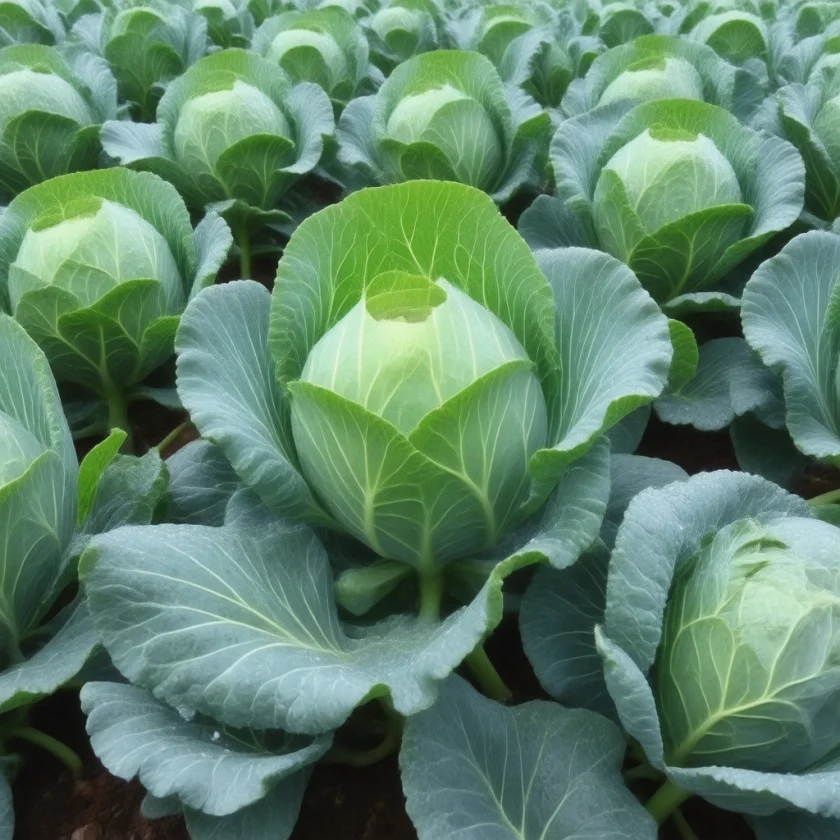
Cabbage is one of the cheapest, sturdiest, and most useful vegetables you can buy — a dense head of leaves from the same plant species as broccoli, kale, and cauliflower. It is low in calories, a good source of fiber, and rich in vitamin C and vitamin K. Like all of its cruciferous cousins, cabbage carries a family of sulfur compounds called glucosinolates that have made these vegetables some of the most heavily studied foods in cancer research. The honest summary of that research is encouraging but modest: people who eat more cruciferous vegetables tend to have somewhat lower rates of certain cancers, but this comes mostly from observational studies, not proof. Cabbage is best understood as part of a healthy, protective eating pattern — especially when eaten raw, lightly cooked, or fermented into sauerkraut and kimchi — rather than as a cure for anything.
Table of Contents
What Cabbage Is
Cabbage is a leafy vegetable in the cruciferous (or Brassica) family. Remarkably, it is the same biological species — Brassica oleracea — as broccoli, cauliflower, kale, Brussels sprouts, kohlrabi, and collard greens. Centuries of selective breeding turned one wild seaside plant into all of these different vegetables; cabbage is simply the version bred for a tight, dense head of overlapping leaves.
There are several common varieties you will see in any market:
- Green cabbage — the standard pale-green round head; the all-purpose workhorse for slaws, soups, and sautés.
- Red (purple) cabbage — deep reddish-purple from a class of plant pigments called anthocyanins; it has the highest antioxidant content of the common types.
- Savoy cabbage — crinkled, ruffled leaves that are more tender and milder; good for stuffing and wraps.
- Napa (Chinese) cabbage — an elongated, pale, frilly head with a soft, mild flavor; the traditional base for kimchi. Botanically it is a different species, Brassica rapa (the turnip species), rather than Brassica oleracea.
Two practical things make cabbage stand out from almost any other vegetable. First, it is extremely cheap — often one of the lowest-cost vegetables per pound. Second, it stores remarkably well; a whole head keeps for weeks in the refrigerator. Cabbage is eaten three main ways: raw (shredded into slaws and salads), cooked (steamed, sautéed, braised, or in soups), or fermented into traditional foods like German sauerkraut and Korean kimchi.
Nutritional Profile
Cabbage is a classic "nutrient-dense but calorie-light" food: it fills your plate and your stomach for very few calories. A typical cup of raw shredded green cabbage has only about 20–25 calories, yet it delivers useful fiber and meaningful amounts of two vitamins in particular.
- Vitamin C — cabbage is a genuinely good source. A cup of raw cabbage provides a substantial share of a day's vitamin C, the antioxidant vitamin your body uses for immune function and to build collagen. (Historically, sauerkraut's vitamin C was carried on long sea voyages to help prevent scurvy.)
- Vitamin K — cabbage is rich in vitamin K1, which your body needs for normal blood clotting and which plays a role in bone health. Red and savoy cabbage are particularly good sources.
- Fiber — the leaves are mostly water and fiber, which supports digestion and helps you feel full.
- Plant pigments — red cabbage adds anthocyanins, the same family of purple-red antioxidant pigments found in blueberries and red wine.
The most distinctive part of cabbage's chemistry, though, is the hallmark of the entire cruciferous family: glucosinolates. These are sulfur-containing compounds (they are also what gives cabbage and broccoli their slightly pungent smell when cooked). On their own they are inactive. But when you chop, shred, or chew the raw vegetable, you break open the plant cells and release an enzyme called myrosinase, which converts the glucosinolates into biologically active breakdown products — most notably isothiocyanates such as sulforaphane, along with related compounds called indoles (like indole-3-carbinol). These breakdown products — not the glucosinolates themselves — are the compounds behind most of the scientific interest in cabbage and its relatives.
Glucosinolates & the Cancer Question
Cruciferous vegetables are among the most intensively studied foods in all of cancer-prevention research, and cabbage is a core member of that group. The interest comes from two directions that point the same way.
First, population studies. Large observational studies that track what people eat have repeatedly found that those who eat more cruciferous vegetables tend to have somewhat lower rates of several cancers. Pooled analyses (meta-analyses) of this evidence have linked higher cruciferous intake with modestly lower risk of colorectal cancer (roughly an 18% lower risk in the highest-intake groups), stomach (gastric) cancer, and lung cancer. Second, laboratory work. In cell and animal experiments, the isothiocyanates from these vegetables — especially sulforaphane — show genuine anticancer activity: they help the body switch on its own detoxification enzymes that clear out potential carcinogens, they have anti-inflammatory effects, and they can slow the growth of cancer cells.
Here is the honest reality, and it matters. Almost all of this evidence is either observational epidemiology or preclinical (cell and animal) mechanism work. Both kinds of evidence have real limits:
- Observational studies can show an association but cannot prove cause and effect. People who eat lots of cabbage and broccoli also tend to exercise more, smoke less, and eat better overall — and it is genuinely hard to fully separate the vegetable from the lifestyle around it.
- The results across studies are mixed, not uniform, and the protective associations are usually modest rather than dramatic.
- Large, long-term randomized human trials — the kind that could actually prove a cancer-prevention effect — are largely lacking. The few human trials that exist are small and short.
So the accurate, careful statement is this: cabbage and other cruciferous vegetables are part of a dietary pattern associated with lower cancer risk, and there are plausible biological reasons for why that might be. That is why they remain a major focus of research. It is not evidence that cabbage prevents cancer in any guaranteed way, and it is certainly not a treatment for cancer. Anyone hoping cabbage will treat or cure a diagnosed cancer is reaching well past what the science actually shows.
Gut Health & Fermented Cabbage
Cabbage helps your digestive system in two quite different ways, and it is worth keeping them separate.
The first is simple: the fiber in plain cabbage adds bulk and supports regular, healthy digestion, the same way other vegetable fiber does.
The second is more interesting. When cabbage is fermented into sauerkraut (German-style fermented green cabbage) or kimchi (Korean-style fermented napa cabbage with seasonings), naturally present lactic-acid bacteria convert the cabbage's sugars into acids over days or weeks. This is a centuries-old way of preserving cabbage, and it transforms the food: fermented cabbage contains live beneficial bacteria (probiotics) and the compounds those bacteria produce. Fermented vegetables are a traditional "gut food" across many cultures, and modern reviews of fermented foods describe plausible benefits for the gut microbiome and digestive health, though researchers are still working out exactly how strong and how specific those effects are.
Two practical caveats are important and often missed:
- The benefit comes from the fermentation, not the cabbage by itself. The live bacteria are the point. That means a store-bought jar is only a true probiotic food if it is raw / unpasteurized and kept refrigerated. Many shelf-stable sauerkrauts and some vinegar-based "quick" versions have been heat-pasteurized, which kills the live bacteria — you still get fiber and some nutrients, but not the probiotics. Jars that still carry live bacteria are labelled "raw," "live," "unpasteurized," or "naturally fermented" and are usually sold in the refrigerated section.
- Fermented cabbage is high in salt. Salt is essential to the fermentation process, so sauerkraut and kimchi are genuinely high in sodium. For people watching blood pressure or sodium intake, a condiment-sized portion carries far less salt than a large side dish.
Other Benefits
Beyond the headline cruciferous research, cabbage contributes several everyday benefits that are well grounded in basic nutrition:
- Vitamin C for immune function and antioxidant defense. Cabbage's vitamin C supports a normal immune system and acts as an antioxidant, helping protect cells from everyday oxidative wear.
- Vitamin K for clotting and bone. Cabbage is a strong source of vitamin K1, which your body requires to make blood clot normally and which contributes to healthy bones.
- Anti-inflammatory potential. The same glucosinolate breakdown products and the anthocyanins in red cabbage have anti-inflammatory and antioxidant activity in laboratory studies, which is part of why a vegetable-rich diet is generally associated with better long-term health. This is a general, supportive benefit rather than a specific medical claim.
- Filling and low-calorie — useful for weight management. Because cabbage is mostly water and fiber, it adds volume, crunch, and satiety to a meal for almost no calories. Swapping some higher-calorie ingredients for cabbage (in stir-fries, slaws, soups, or as a wrap) is a genuinely practical way to eat more food for fewer calories.
- Cabbage leaves for breast engorgement. A long-standing home remedy is to place cool, raw cabbage leaves against the breast to ease the painful swelling (engorgement) that can occur during breastfeeding. The evidence here is real but modest: reviews find that cold cabbage leaves appear to reduce pain and feel soothing, though they do not clearly outperform other simple treatments, and engorgement tends to improve on its own with time. It is cheap, low-risk, and may bring comfort — a traditional comfort measure, not a proven cure.
How to Eat It
Cabbage is endlessly flexible, and how you prepare it actually changes what you get out of it.
- Raw. Shredded into coleslaw or salads, or used as a crunchy taco or wrap base. Raw cabbage keeps the most vitamin C and gives the myrosinase enzyme the best chance to form those beneficial isothiocyanates.
- Lightly cooked. Steaming, quick sautéing, or stir-frying preserves far more vitamin C and glucosinolate activity than prolonged boiling, which leaches water-soluble vitamins and glucosinolates out into the cooking water (and can produce that strong sulfur smell). When cabbage is boiled or braised, using the liquid in a soup keeps the nutrients that leached into it.
- Fermented. Sauerkraut and kimchi, as covered above — only raw/unpasteurized versions carry the live probiotic bacteria.
Two preparation details change what you get from cabbage:
- Chopping or shredding, then a short rest. Cutting the cabbage activates the myrosinase enzyme that converts glucosinolates into the beneficial isothiocyanates. Letting chopped cabbage rest for several minutes before cooking gives that reaction time to happen, so more of the active compounds survive into your meal.
- Red cabbage carries the most antioxidants. Its purple anthocyanin pigments make it the highest-antioxidant choice among the common varieties — and it adds great color to a slaw.
Considerations
Cabbage is safe and healthy for almost everyone, but a few honest caveats are worth knowing:
- Gas and bloating. Cabbage (like beans and its cruciferous relatives) contains a fiber called raffinose that the human gut cannot fully digest; gut bacteria ferment it, which can cause gas and bloating in some people. Cooking the cabbage, eating smaller portions, and building up your intake gradually all help.
- Goitrogens and the thyroid — in perspective. Raw cruciferous vegetables contain compounds (sometimes called goitrogens) that, in very large amounts, can theoretically interfere with the thyroid's use of iodine. In practice, this is a minor concern: normal dietary amounts of cabbage are fine for people with healthy iodine levels. Ordinary servings of common cruciferous vegetables pose minimal thyroid risk. A 2016 review of measured goitrin levels found that collards, Brussels sprouts and some Russian kale contain enough goitrin to potentially decrease iodine uptake by the thyroid, while turnip tops, commercial broccoli, broccoli rabe and common kale contain less than 10 μmol per 100-g serving and can be considered of minimal risk; the review's summary does not name cabbage. Cooking reduces these compounds further. The concern applies mainly to people who eat very large quantities of raw cruciferous vegetables (for example, daily large raw kale/cabbage smoothies) and have low iodine intake or an existing thyroid condition. The facts that matter for them: the adult iodine Recommended Dietary Allowance is 150 mcg a day, and in the 2016 review radioiodine uptake by the thyroid was inhibited by 194 μmol of goitrin but not by 77 μmol. The research does not point to cutting out cabbage.
- Blood thinners (warfarin). Because cabbage is high in vitamin K, and vitamin K affects how the blood thinner warfarin works, a warfarin dose is set for the person's usual vitamin K intake; a consistent intake from day to day keeps the drug's effect stable, while swinging between none and a lot makes it stronger or weaker. The issue is sudden change, not cabbage and leafy greens themselves. (This caution does not apply to the newer blood thinners such as apixaban or rivaroxaban.)
- Sodium in fermented versions. As noted above, sauerkraut and kimchi are high in salt. Portion size decides how much sodium they add.
Key Research Papers
- Wu QJ, Yang Y, Vogtmann E, et al. Cruciferous vegetables intake and the risk of colorectal cancer: a meta-analysis of observational studies. Annals of Oncology. 2013;24(4):1079–1087. — Pooling observational studies, the highest cruciferous intake was associated with about 18% lower colorectal-cancer risk (RR 0.82) — an association, not proof. — doi:10.1093/annonc/mds601
- Wu QJ, Yang Y, Wang J, Han LH, Xiang YB. Cruciferous vegetable consumption and gastric cancer risk: a meta-analysis of epidemiological studies. Cancer Science. 2013;104(8):1067–1073. — Higher cruciferous intake was linked to lower stomach-cancer risk (RR 0.81) across mostly case-control and cohort studies. — doi:10.1111/cas.12195
- Higdon JV, Delage B, Williams DE, Dashwood RH. Cruciferous vegetables and human cancer risk: epidemiologic evidence and mechanistic basis. Pharmacological Research. 2007;55(3):224–236. — The classic review of how glucosinolate-derived isothiocyanates may work, and why the human epidemiology is suggestive but far from conclusive. — doi:10.1016/j.phrs.2007.01.009
- Mukherjee A, Breselge S, Dimidi E, Marco ML, Cotter PD. Fermented foods and gastrointestinal health: underlying mechanisms. Nature Reviews Gastroenterology & Hepatology. 2024;21(4):248–266. — A current review of how fermented foods (the category that includes sauerkraut and kimchi) and their live microbes may benefit gut health. — doi:10.1038/s41575-023-00869-x
- Zakarija-Grkovic I, Stewart F. Treatments for breast engorgement during lactation. Cochrane Database of Systematic Reviews. 2020;9(9):CD006946. — Cold cabbage leaves are a cheap, low-risk option that appears to ease engorgement pain, though the certainty of the evidence is low. — doi:10.1002/14651858.CD006946.pub4
- Felker P, Bunch R, Leung AM. Concentrations of thiocyanate and goitrin in human plasma, their precursor concentrations in brassica vegetables, and associated potential risk for hypothyroidism. Nutrition Reviews. 2016;74(4):248–258. — Collards, Brussels sprouts and some Russian kale contained enough goitrin to potentially decrease thyroid iodine uptake; turnip tops, commercial broccoli, broccoli rabe and common kale were below 10 μmol per 100-g serving and considered of minimal risk. Cabbage is not named in the summary. — doi:10.1093/nutrit/nuv110
Connections
- All Food
- Cabbage Nutrients
- Cabbage History
- Cabbage Benefits
- Broccoli
- Broccoli History — how the same wild cabbage was bred into a flower-bud crop.
- Kale
- Kale History — the loose-leaf form that came before headed cabbage.
- Onions
- Sauerkraut — cabbage preserved by lacto-fermentation.
- Discussed in depth on these pages: Fermented Foods History and Cultures