Beets — Betalain Pigments and Antioxidants
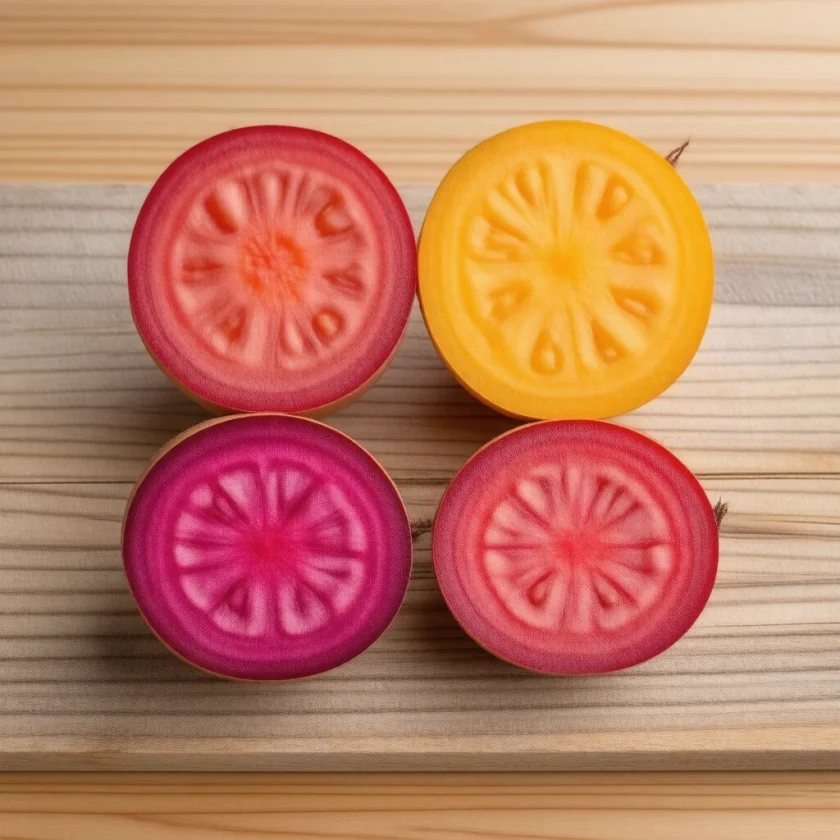
Beets are unusual among red-pigmented foods in that they contain no anthocyanins. The deep magenta-violet color comes entirely from a separate class of nitrogen-containing pigments called betalains, found in most plant families of the order Caryophyllales (beets, chard, amaranth, prickly pear, dragon fruit) and, unexpectedly, in some higher fungi. Betalains are built around the chromophore betalamic acid, which condenses with cyclo-DOPA to form red-violet betacyanins (chiefly betanin, the dominant pigment of red beets) or with amino acid imines to form yellow-orange betaxanthins. Betalains are potent direct radical scavengers with measured oxygen radical absorbance capacity (ORAC) values rivaling anthocyanins. Crucially they are also Nrf2 activators, indirect antioxidants that induce the body's endogenous antioxidant defense system, and inhibitors of the NF-kB inflammatory cascade. Their bioavailability is low: in a 2017 study betanin from beetroot juice or whole beetroot could not be detected in the blood at all, betanin from cactus pear peaked in the blood about 3 hours after a meal, and beet pigments have been found in urine 2–4 hours after drinking red beet juice. This page walks through the pigment chemistry, mechanisms of antioxidant and anti-inflammatory action, the bioavailability and beeturia, the food sources beyond red beets, and the broader implications for chronic-disease prevention.
Table of Contents
- Betalain Chemistry — Betacyanins and Betaxanthins
- Why Beets Have No Anthocyanins (And What That Means)
- Direct Radical Scavenging Activity
- Indirect Antioxidant Effect — Nrf2 Induction
- Anti-Inflammatory Mechanisms — NF-kB and Cyclooxygenase-2 Inhibition
- Inhibition of Lipid Peroxidation and Low-Density Lipoprotein Oxidation
- Bioavailability and Pharmacokinetics
- Beeturia — Red Urine in About 10-14% of People
- Sources of Betalains Beyond Red Beets
- Disease-Prevention Applications
- Cautions and Practical Considerations
- Key Research Papers
- Connections
- Featured Videos
Betalain Chemistry — Betacyanins and Betaxanthins
Betalains are nitrogen-containing alkaloid pigments built around a common chromophore called betalamic acid (a tetrahydropyridine derivative with a 1,7-diazaheptamethine chromophore). All betalains arise biosynthetically from the amino acid L-tyrosine. The committed step is the conversion of tyrosine to L-DOPA by tyrosinase, followed by oxidation to dopaquinone, cyclization to cyclo-DOPA, and ring cleavage to produce betalamic acid.
Betalamic acid then condenses with either an amino group of an amino acid (producing a yellow-orange betaxanthin) or with the amino group of cyclo-DOPA itself (producing a red-violet betacyanin). The major individual pigments are:
- Betanin (betanidin-5-O-beta-glucoside) — the dominant betacyanin in red beetroot, accounting for 75–95% of the red pigment fraction. Glucosylation stabilizes the pigment chromophore against oxidative degradation.
- Isobetanin — the C-15 epimer of betanin, present at about 5–20% of betanin levels. Pharmacologically similar.
- Betanidin — the aglycone (sugar-free) form of betanin, present in small amounts in fresh beetroot but increases with processing as the glucose moiety is hydrolyzed.
- Vulgaxanthin I and II — the dominant betaxanthins (yellow pigments) in red beets, conjugates of betalamic acid with glutamine and aspartic acid respectively. Yellow beet varieties (golden beets) contain mostly vulgaxanthins with little to no betacyanin.
- Indicaxanthin — a betaxanthin conjugate with proline, the dominant yellow pigment in prickly pear (Opuntia ficus-indica).
The total betalain content of red beetroot varies widely with cultivar, growing conditions, and storage, typically ranging from 200–500 mg per kg fresh weight in the root and 100–200 mg/kg in the leaves. Processing affects betalain content significantly: thermal processing (canning, juicing pasteurization) degrades 30–60%, while freezing and fermentation preserve most of the original pigment.
Betalains are water-soluble (unlike the lipid-soluble carotenoids), pH-sensitive (most stable between pH 3 and 7, degraded by both highly acidic and alkaline conditions), and heat-sensitive (degraded at sustained temperatures above 80°C). The classical Western dietary preparations — pickled beets (low pH preserves the pigment) and fermented kvass (the Eastern European fermented beet beverage) — happen to be excellent at preserving betalain content. Heavy long boiling destroys most of the pigment; gentle steaming or roasting at moderate temperatures preserves it.
Why Beets Have No Anthocyanins (And What That Means)
One of the genuinely interesting facts of plant pigment chemistry is that betalains and anthocyanins are mutually exclusive — no plant species produces both. Most families of the botanical order Caryophyllales (beets, chard, spinach, amaranth, cacti, dragon fruit, prickly pear) produce betalains; all other angiosperms that produce red, blue, or violet pigments make anthocyanins instead.
The two pigment classes appear to have evolved as functional substitutes for each other — both produce intense red-to-violet coloration that serves the same ecological function (advertising fruit ripeness to seed-dispersing animals, attracting pollinators, sometimes deterring herbivores via toxicity in unripe form). The mechanistic difference is profound, though: anthocyanins are flavonoid polyphenols, betalains are nitrogen-containing alkaloids. They share virtually no biosynthetic pathway elements.
Practical implications for nutrition science:
- Red beetroot is the only common Western vegetable that gets its red color from betalains rather than anthocyanins. All the other intensely red and purple vegetables and fruits in the typical diet (red cabbage, purple carrots, blackberries, blueberries, red grapes, cherries) use anthocyanins.
- People who are very interested in maximizing dietary polyphenols and assume that any deeply colored plant food is rich in flavonoids may not expect that beets are an exception. Beets contribute betalains and the nitrate system; they do not contribute meaningfully to flavonoid or anthocyanin intake.
- Most foods that are claimed to be "high in antioxidants" derive that capacity from polyphenols, primarily anthocyanins and proanthocyanidins. Beets provide a different and complementary antioxidant chemistry through betalains. Adding beets to an anthocyanin-rich diet provides additional and non-redundant antioxidant capacity.
- The oxygen radical absorbance capacity (ORAC) values of betalains are comparable to anthocyanins on a molar basis, though the precise ranking depends on the specific assay used. Red beetroot consistently ranks high in standard oxygen radical absorbance capacity tables.
Direct Radical Scavenging Activity
Betalains are potent direct radical scavengers with the chemistry of "cationized antioxidants" — a term coined by Joseph Kanner and colleagues in their landmark 2001 JAFC paper. The protonated nitrogen in the betalain chromophore stabilizes the resulting radical after electron donation, making the molecule a particularly effective hydrogen-atom donor and one-electron reductant.
The radical species against which betalains have measured scavenging activity include:
- Peroxyl radicals (ROO·) — the propagating species in lipid peroxidation chains. Betalains terminate lipid peroxidation chain reactions, the basis of their anti-LDL-oxidation and anti-membrane-damage effects.
- Hydroxyl radicals (·OH) — the most reactive oxygen species, capable of damaging any biological macromolecule. Direct scavenging is helpful but the lifetime of OH radicals is so short (nanoseconds) that proximity matters more than concentration.
- Superoxide (O2·-) — moderate scavenging activity by betalains, less efficient than for peroxyl radicals.
- Peroxynitrite (ONOO−) — the nitrogen-containing reactive species formed by reaction of NO with superoxide. Betalains are particularly effective scavengers of peroxynitrite, possibly through nitrogen-nitrogen chemistry related to their structure. Peroxynitrite is implicated in vascular endothelial dysfunction, neurodegenerative disease, and chronic inflammatory tissue damage.
- Singlet oxygen (1O2) — modest quenching activity. More relevant for plant photoprotection than for human physiology.
- HOCl (hypochlorous acid) — the neutrophil-generated oxidant. Betalains scavenge effectively.
The relative scavenging efficiency of betanin against peroxyl radicals (the most commonly assayed) is on the same order as catechins and quercetin, the two most studied flavonoid antioxidants. The structural feature responsible is the conjugated polyene system with electron-donating amino and hydroxyl substituents, which stabilizes the radical product of one-electron oxidation.
An important caveat is that pure radical-scavenging assays in vitro do not necessarily predict in vivo physiological effect. The Nrf2-activation mechanism (indirect antioxidant effect) is probably more clinically important than the direct radical scavenging, because the induced endogenous antioxidants (glutathione, catalase, superoxide dismutase, glutathione peroxidase) operate at much higher intracellular concentrations than any dietary antioxidant can achieve.
Indirect Antioxidant Effect — Nrf2 Induction
The indirect antioxidant mechanism of betalains is covered in detail in the Liver Phase 2 Support deep dive; the summary here is that betanin activates the Nrf2/Keap1 antioxidant response pathway, inducing transcription of a coordinated gene set that includes:
- Glutamate-cysteine ligase (rate-limiting enzyme in glutathione biosynthesis)
- Glutathione peroxidase and glutathione reductase
- Glutathione S-transferase
- NAD(P)H quinone dehydrogenase 1 (NQO1)
- Heme oxygenase-1 (HO-1)
- Thioredoxin reductase
- Catalase
The induced enzymes operate at much higher intracellular concentrations than any dietary antioxidant could achieve directly. A typical hepatocyte contains glutathione at 5–10 mM (millimolar) concentrations; no plausible dietary antioxidant intake produces betanin tissue concentrations above the low micromolar range. The hormetic, signal-amplifying nature of Nrf2 activation is what makes Nrf2-inducing foods (broccoli sprouts, cruciferous vegetables, turmeric, beets, green tea) more therapeutically powerful than direct-antioxidant supplements like high-dose vitamin C or vitamin E.
This is also why the older antioxidant supplementation trials in cardiovascular disease and cancer prevention (vitamin E in HOPE, beta-carotene in ATBC and CARET, the SELECT trial of vitamin E and selenium) largely failed to show benefit and in some cases showed harm. Those trials were testing the direct-antioxidant hypothesis with high-dose isolated vitamins, which can never reach the relevant intracellular concentrations. The indirect-antioxidant hypothesis — that food-form phytochemicals upregulate the body's own antioxidant defenses — has held up much better, and beets are an excellent example.
Anti-Inflammatory Mechanisms — NF-kB and Cyclooxygenase-2 Inhibition
Betalains have measurable anti-inflammatory activity through multiple mechanisms beyond antioxidant action:
- NF-kB inhibition — nuclear factor kappa B is the master inflammatory transcription factor, driving expression of tumor necrosis factor-alpha, interleukin-1 (IL-1), interleukin-6 (IL-6), cyclooxygenase-2 (COX-2), iNOS, and dozens of other pro-inflammatory genes. Betanin inhibits NF-kB activation in multiple cell systems, both through direct biochemical effects and indirectly through Nrf2-mediated suppression of NF-kB signaling crosstalk.
- Cyclooxygenase-2 inhibition — Reddy and colleagues (2005, JAFC) found in lab tests that pure betanin, like every other food pigment they tested (bixin, lycopene, chlorophyll, beta-carotene and cyanidin-3-glucoside), inhibited both the cyclooxygenase-1 and cyclooxygenase-2 enzymes. Cyclooxygenase-2 is the inducible isoform that produces inflammatory prostaglandins; its inhibition is the same mechanism targeted by nonsteroidal anti-inflammatory drugs (NSAIDs) and celecoxib.
- Lipoxygenase inhibition — betalains inhibit 5-lipoxygenase, the enzyme that produces inflammatory leukotrienes. The pathway is targeted by the asthma drug zileuton. In a 2014 lab study, Vidal and colleagues found that natural betalains and lab-made analogues reduced the activity of both lipoxygenase and cyclooxygenase; betanidin and an indoline-derived analogue were the strongest lipoxygenase inactivators (IC50 about 41 and 40 µM), and phenethylamine-betaxanthin cut cyclooxygenase activity by 32% at 125 µM.
- Suppression of cytokine release — in macrophage and PBMC models, betalain-rich extracts reduce lipopolysaccharide-stimulated tumor necrosis factor-alpha and interleukin-6 (IL-6) release.
- Reduction in C-reactive protein — observational nutritional epidemiology suggests that habitual beet consumption is associated with lower systemic C-reactive protein (CRP), though dedicated randomized controlled trials (RCTs) are limited.
The combined effect is that beets contribute meaningfully to a general anti-inflammatory dietary pattern, alongside the more established anti-inflammatory foods like fatty fish (omega-3), olive oil (oleocanthal), turmeric (curcumin), green tea (epigallocatechin gallate, EGCG), and brightly colored vegetables (carotenoids and flavonoids generally).
Inhibition of Lipid Peroxidation and Low-Density Lipoprotein Oxidation
One of the most clinically relevant antioxidant effects of betalains is the inhibition of lipid peroxidation, particularly the oxidation of low-density lipoprotein (LDL) in arterial walls. Oxidized low-density lipoprotein is a central pathogenic factor in atherosclerosis — it is the form recognized by macrophage scavenger receptors that drives foam-cell formation and atherosclerotic plaque development.
Tesoriere and colleagues (2004) showed that orally ingested betanin from cactus pear is incorporated into low-density lipoprotein particles in human subjects and confers measurable resistance to ex vivo copper-induced low-density lipoprotein oxidation. The protective effect persisted for hours after ingestion. This finding suggests that betalains can serve as a lipophilic-fraction-protecting antioxidant despite being highly water-soluble — the molecules associate with low-density lipoprotein surface and contribute to the antioxidant capacity of the particle.
The same general lipid-peroxidation-inhibiting effect operates at the cellular membrane level. Betalains in plasma associate with cell membranes and can interrupt peroxyl-radical chain propagation in membrane phospholipids, complementing the membrane-localized actions of vitamin E (alpha-tocopherol) and ubiquinol.
The clinical implications for cardiovascular disease prevention are plausible but not directly demonstrated in long-term outcome trials. The chain of evidence runs: betalain consumption reduces low-density lipoprotein oxidation susceptibility (demonstrated), reduced low-density lipoprotein oxidation slows atherosclerosis (well-established), so betalain consumption should slow atherosclerosis (plausible but not directly tested in long-term cardiovascular outcome trials).
Bioavailability and Pharmacokinetics
For decades, betalains were assumed to have low bioavailability because they are large polar molecules that would not be expected to cross the intestinal epithelium efficiently. The classical paracellular tight-junction barriers should exclude molecules above approximately 500 Da, and betanin (550 Da) is right at that threshold.
The Tesoriere 2004 AJCN paper changed the field by showing that betanin from prickly pear (cactus pear) is absorbed. Eight volunteers ate 500 g of fruit pulp providing 16 mg of betanin and 28 mg of the yellow pigment indicaxanthin. Both pigments peaked in the blood at 3 hours; betanin's half-life was about 1 hour (0.94 h) and both had disappeared from the blood by 12 hours. Over 12 hours about 76% of the indicaxanthin but only 3.7% of the betanin came out in urine. LDL particles taken at 3 and 5 hours carried betalains and resisted lab-induced (ex vivo) oxidation better than LDL taken before the meal.
Red beet pigments fare worse. Kanner and colleagues (2001) found betacyanins in the urine of 4 volunteers 2–4 hours after 300 mL of red beet juice, amounting to 0.5–0.9% of the amount drunk; Watts and colleagues (1993) measured 0–8 hour urinary recoveries of 0.06–0.54% for betanin in 100 people. In a 2017 randomised crossover study by Clifford and colleagues, 10 healthy men drank 250 mL of beetroot juice (about 194 mg betanin) or ate 300 g of whole beetroot (about 66 mg); betanin was not found in their blood at any point over 8 hours, while blood nitrate/nitrite stayed raised for 8 hours after the juice and 5 hours after the whole beetroot. The heart and blood-pressure effects of beets are therefore more likely to come from their nitrate than from the red pigment, a conclusion a 2015 review by Esatbeyoglu and colleagues also reached.
Researchers who see a role for betalains argue that this bioavailability, though low in absolute terms, may still matter, because the active concentrations of betalains in the cytoprotective signaling pathways are in the low micromolar range. Whether the small fraction that reaches the blood produces the antioxidant and Nrf2-activation effects seen in lab studies has not been shown in people.
Bioavailability is influenced by several factors:
- Food matrix — juiced beets release betalains for absorption more efficiently than whole roasted beets (where the pigments remain in intact plant cells)
- Co-ingestion with other foods — pectin from co-ingested fruits can slow absorption; fats may enhance absorption marginally despite betalain water-solubility
- Gastric pH — the pigment is most stable at slightly acidic pH, less so in highly acidic gastric contents
- Gut microbiome — some bacterial species deconjugate betanin glucoside to release more bioavailable betanidin
- Beeturia — Watts and colleagues (1993) found no sign that beeturia comes from weaker liver metabolism or kidney excretion of the pigments; they pointed instead to stomach acidity and how fast the stomach empties
Beeturia — Red Urine in About 10-14% of People
Beeturia — the excretion of intact red betanin pigment in the urine after beet ingestion — is said to occur in approximately 10–14% of the population. The urine ranges from pink to dark magenta and typically persists for 12–24 hours after ingestion. The phenomenon is harmless, but it can be alarming if mistaken for hematuria, and it has historically been associated with several incorrect medical theories.
The Mitchell 2001 review of "food idiosyncrasies" (covering both beeturia and the asparagus-urine odor variant) traces the history of beeturia investigation. Early 20th-century theories linked beeturia to iron deficiency anemia — the proposal was that impaired gastric acidity in pernicious anemia allowed intact betanin to be absorbed and excreted. Watts and colleagues (1993) summarized the literature as finding beeturia more common in iron deficiency and in malabsorption.
Watts and colleagues (1993) gave 100 healthy people 60 mg of beetroot extract and measured the red pigments in their urine over 8 hours. Recovery of betanin ranged from 0.06% to 0.54% of the dose; the spread was skewed but did not split clearly into two groups, which argues against a single on/off gene. The four people with visibly red urine were at the top of the range. In rats, the liver did not measurably break down the pigments and the kidneys cleared them readily, so the authors concluded that beeturia does not arise from weaker liver metabolism or kidney excretion. Because the pigments break down in acid, they suggested that stomach acidity and how fast the stomach empties largely decide how much pigment survives to be absorbed. No single causative gene variant has been identified.
Clinical relevance for someone who notices beeturia:
- Beeturia itself is harmless; the 1993 study links it to stomach acidity and emptying rather than to kidney or liver function, and the older literature reports it more often in iron deficiency and malabsorption
- The pigment is not toxic at any level
- Beeturic individuals may actually have higher systemic betanin exposure (and possibly more antioxidant effect) than non-beeturic individuals, though this has not been formally tested
- A new onset of red urine in someone who has not been eating beets is a different matter: a urine test (urinalysis) is what tells blood in the urine (hematuria), free hemoglobin (hemoglobinuria) and porphyria apart
Sources of Betalains Beyond Red Beets
While red beetroot is the most commonly consumed betalain source in Western diets, several other foods are also high in betalains:
- Red and rainbow chard (Beta vulgaris subsp. cicla) — same species as beets, with the betalain pigmentation expressed in the leaf stems and veins rather than the root. Comparable betalain content per gram of pigmented tissue.
- Amaranth (Amaranthus species) — ancient Mesoamerican grain whose red and purple varieties contain betacyanins. Both the leaves and the seeds carry betalain pigments. Amaranthin is the major betacyanin in Amaranthus.
- Prickly pear cactus fruit (Opuntia ficus-indica) — the red-purple variety is high in betanin; the orange-yellow variety is high in betaxanthins (indicaxanthin). Consumed widely in Mexico, parts of the Mediterranean, and the American Southwest.
- Dragon fruit (Hylocereus and Selenicereus species) — the red-flesh varieties are very high in betacyanins. The flesh of red dragon fruit is sometimes the most concentrated dietary source of betalains commercially available.
- Pokeweed berries — high in betalains but also toxic (other compounds in pokeweed are dangerous). Not safe to eat.
- Various ornamental flowers in the Caryophyllales — bougainvillea, portulaca, and others contain betalains used historically as natural dyes.
For someone looking to diversify their betalain intake beyond plain beets, a rotation through chard, amaranth, prickly pear (where available), and dragon fruit (where available) provides exposure to a slightly different pigment profile and a broader range of co-occurring nutrients.
Disease-Prevention Applications
The betalain pigments contribute to a general dietary anti-inflammatory and antioxidant pattern, with specific applications including:
- Cardiovascular disease prevention — inhibition of low-density lipoprotein oxidation, reduction in systemic inflammation, and the separate nitrate-mediated blood-pressure effect (see the blood-pressure deep dive) make beets a multi-mechanism cardiovascular-supportive food
- Cancer chemoprevention — the Lechner 2010 esophageal-cancer rodent model showed that dietary beetroot color reduced carcinogenesis from a chemical carcinogen. Human population data are observational but consistent with the broader pattern of high-vegetable-intake / lower cancer-risk
- Hepatoprotection — covered in detail in the liver deep dive
- Diabetic complications — the oxidative-stress component of diabetic micro- and macrovascular complications is theoretically addressable by Nrf2 activators including betalains. Limited direct trial data.
- Inflammatory arthritis — the cyclooxygenase-2 and NF-kB inhibition by betalains is theoretically helpful in osteoarthritis and inflammatory arthritis. Limited human trial data; a small randomized controlled trial (RCT) in osteoarthritis patients showed modest pain reduction with concentrated beetroot supplementation, but the trial was too small to be definitive.
- Skin aging and photoprotection — topical and dietary antioxidants together reduce ultraviolet-induced skin damage. Betalains have been studied in topical formulations.
- Neurodegenerative disease — oxidative stress and chronic inflammation are central to Alzheimer's disease and Parkinson's disease pathogenesis. Nrf2 activation is being studied as a therapeutic strategy. Beets are a reasonable food-form contribution to a broader neuroprotective dietary pattern (Mediterranean diet, MIND diet) but are not a single-food intervention.
Cautions and Practical Considerations
- Beeturia — covered above. Harmless; reported in about 10–14% of the population.
- Red stools — similar variation in gastrointestinal (GI) transit of intact betanin produces red-pink stools in some individuals. Benign but can be mistaken for melena or hematochezia. Recent beet consumption explains the appearance.
- Oxalate content — the root has moderate oxalate (76 mg per 100 g) and the greens are very high (610 mg per 100 g). For people with calcium-oxalate kidney stones the oxalate is the concern; calcium eaten in the same meal binds oxalate in the gut and reduces how much is absorbed. See the blood-pressure page for more on oxalate management.
- Cooking method matters — betalain pigments are heat-sensitive. Long boiling destroys most of the pigment; steaming, roasting at moderate temperatures, and raw juicing preserve it. Pickled and fermented beets retain pigment well due to the low pH stabilization.
- Storage — betalain content declines slowly during refrigerated storage of fresh beets (about 10–20% loss per week). Long-term frozen storage preserves the pigment well.
- Commercial juices and powders — vary widely in betalain content based on processing. Pasteurized juices retain about 60–80% of original pigment; cold-processed dehydrated powders retain 80–90%; high-heat-processed powders may retain less than 30%.
- Beetroot as a food coloring — E162 (beetroot red) is widely used as a natural food colorant in yogurts, candies, ice creams, and pharmaceuticals. The amounts present in colored foods are too small to produce meaningful biological effects, but the safety record is excellent.
- Histamine and tyramine — fermented beet products (kvass, lacto-fermented beets) contain modest amounts of biogenic amines. This matters for people taking monoamine oxidase (MAO) inhibitor medicines or with histamine intolerance; fresh beets and vinegar-pickled beets carry less of these amines than lacto-fermented versions.
Key Research Papers
- Kanner J, Harel S, Granit R (2001). Betalains — a new class of dietary cationized antioxidants. Journal of Agricultural and Food Chemistry 49:5178-5185. — PubMed PMID: 11714300
- Strack D, Vogt T, Schliemann W (2003). Recent advances in betalain research. Phytochemistry 62:247-269. — PubMed PMID: 12620337
- Tesoriere L, Allegra M, Butera D, Livrea MA (2004). Absorption, excretion, and distribution of dietary antioxidant betalains in LDLs: potential health effects of betalains in humans. American Journal of Clinical Nutrition 80:941-945. — PubMed PMID: 15447903
- Reddy MK, Alexander-Lindo RL, Nair MG (2005). Relative inhibition of lipid peroxidation, cyclooxygenase enzymes, and human tumor cell proliferation by natural food colors. Journal of Agricultural and Food Chemistry 53:9268-9273. — PubMed PMID: 16277432
- Clifford T et al. (2015). The potential benefits of red beetroot supplementation in health and disease. Nutrients 7:2801-2822. — PubMed PMID: 25875121
- Esatbeyoglu T et al. (2015). Betanin — a food colorant with biological activity. Molecular Nutrition & Food Research 59:36-47. — PubMed PMID: 25178819
- Mitchell SC (2001). Food idiosyncrasies: beetroot and asparagus. Drug Metabolism and Disposition 29:539-543. — PubMed PMID: 11259347
- Lechner JF et al. (2010). Drinking water with red beetroot food color antagonizes esophageal carcinogenesis in N-nitrosomethylbenzylamine-treated rats. Journal of Medicinal Food 13:733-739. — PubMed PMID: 20438319
- Vidal PJ, López-Nicolás JM, Gandía-Herrero F, García-Carmona F (2014). Inactivation of lipoxygenase and cyclooxygenase by natural betalains and semi-synthetic analogues. Food Chemistry 154:246-254. — PubMed PMID: 24518339
- Gandia-Herrero F, Escribano J, Garcia-Carmona F (2016). Biological activities of plant pigments betalains. Critical Reviews in Food Science and Nutrition 56:937-945. — PubMed PMID: 25118005
- Watts AR et al. (1993). Beeturia and the biological fate of beetroot pigments. Pharmacogenetics 3:302-311. — PubMed PMID: 8148871
- Clifford T, Constantinou CM, Keane KM, West DJ, Howatson G, Stevenson EJ (2017). The plasma bioavailability of nitrate and betanin from Beta vulgaris rubra in humans. European Journal of Nutrition 56:1245-1254. — PubMed PMID: 26873098
- Khan MI (2016). Plant betalains: safety, antioxidant activity, clinical efficacy, and bioavailability. Comprehensive Reviews in Food Science and Food Safety — PubMed PMID: 33371594