⚠ Evidence warning: Clinical trials or other evidence do not support the claims that pomegranate boosts antioxidant defenses while lowering oxidative injury markers, that a follow-up study confirmed its effect on prostate-specific antigen doubling time, that muscle biopsies confirmed urolithin A's effect on mitophagy genes, and that pomegranate extract reduces calcium oxalate kidney stone recurrence. This page keeps it as a report of what people, websites or other media say.
Pomegranate: The Ancient Jewel of Healing
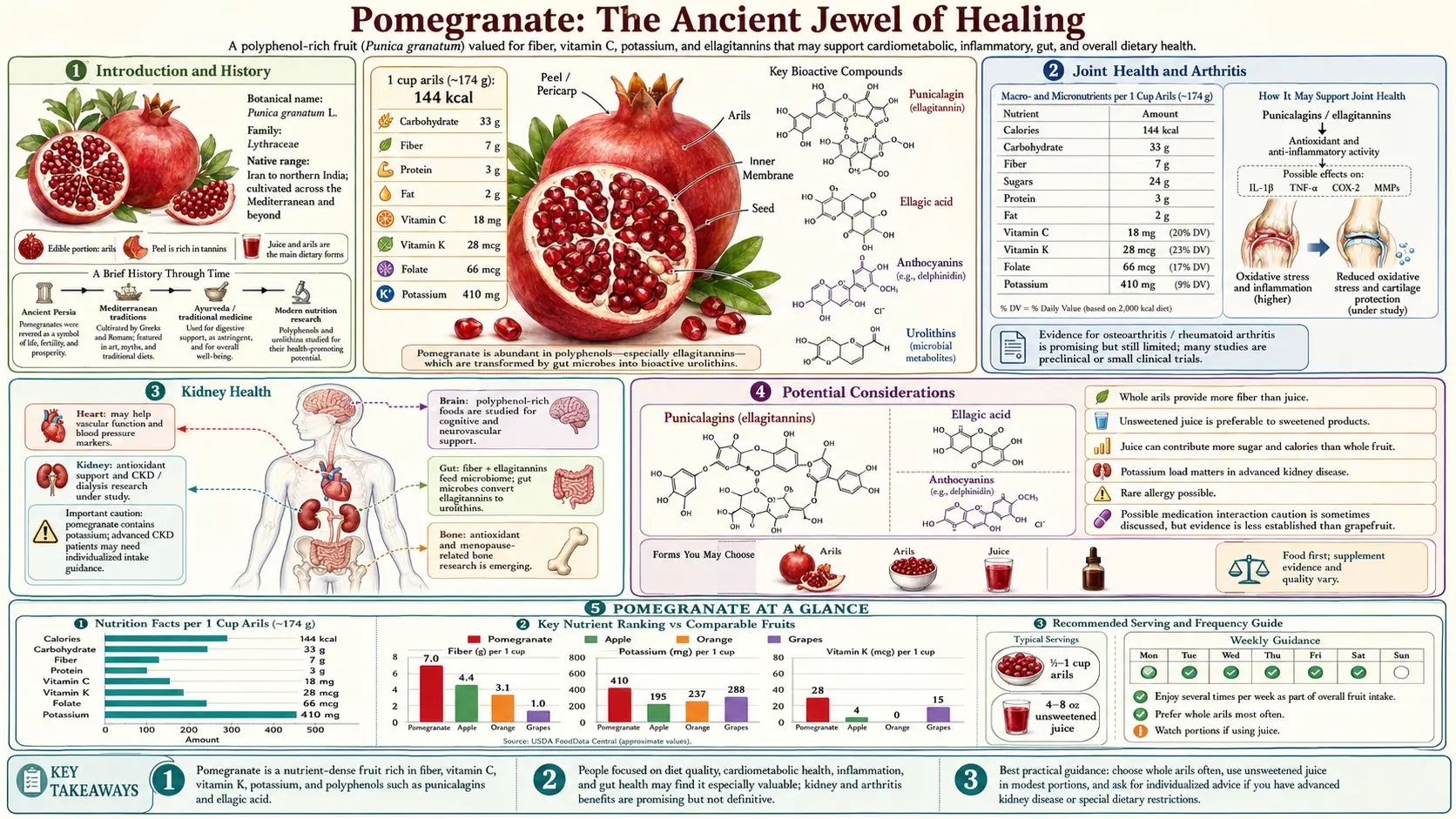
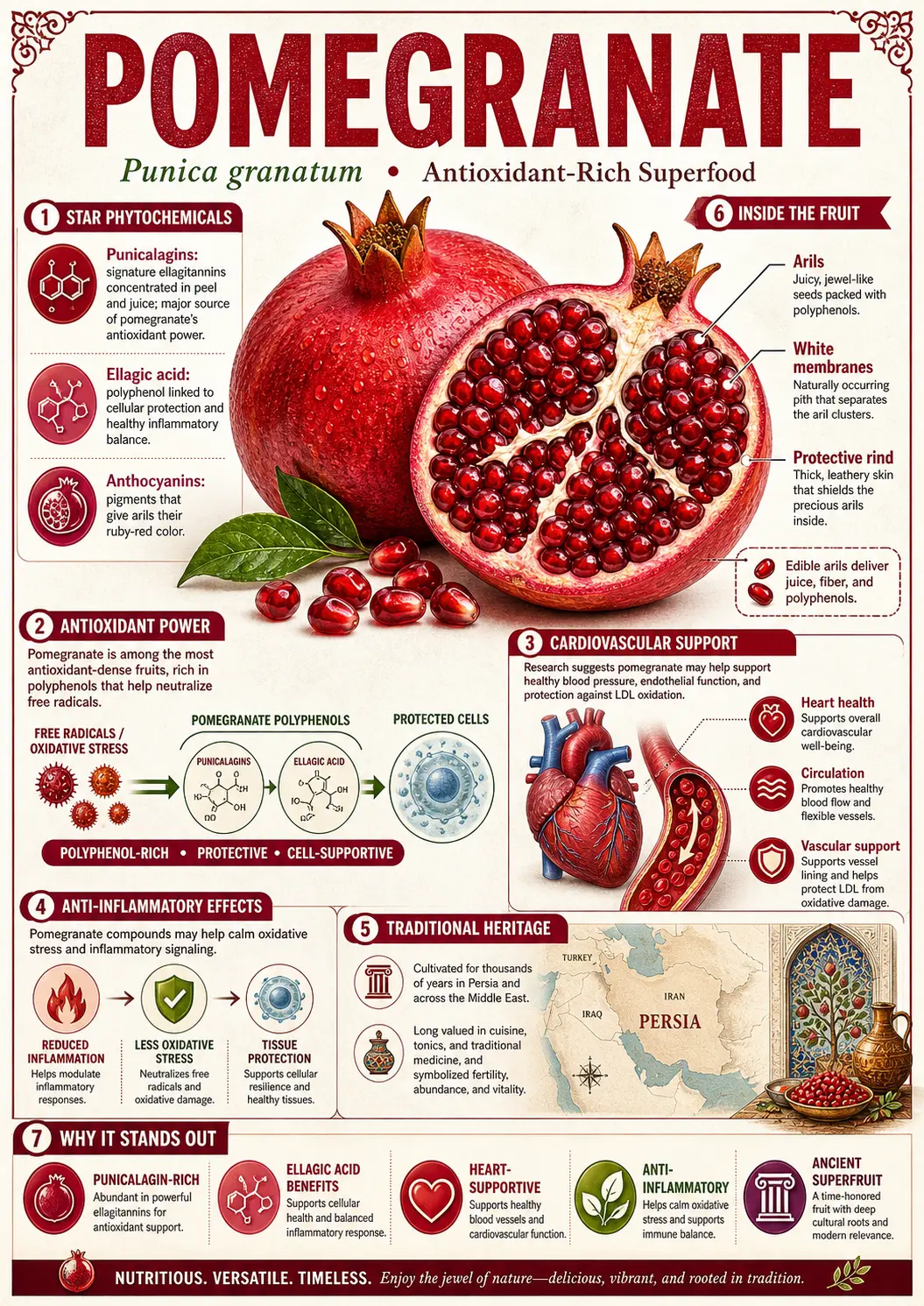
Table of Contents
- Introduction and History
- Nutritional Profile
- Antioxidant Powerhouse
- Heart Health
- Anti-Inflammatory Properties
- Cancer Prevention
- Joint Health and Arthritis
- Brain Health
- Gut Health
- Anti-Aging and Longevity
- Blood Sugar and Diabetes
- Kidney Health
- Skin Health
- Antimicrobial Properties
- Erectile Dysfunction
- Juice vs Seeds vs Extract
- Optimal Consumption
- Potential Considerations
- Key Research Papers
- Connections
- Featured Videos
Introduction and History
The pomegranate (Punica granatum) is one of the oldest cultivated fruits in human history, with archaeological evidence placing its domestication in the region spanning modern-day Iran, Afghanistan, and northern India as far back as 4000 BCE. The fruit's name derives from the Latin pomum granatum, meaning "seeded apple," a fitting description for the hundreds of jewel-like arils encased within its leathery rind. Persian gardens revered the pomegranate as a symbol of paradise, and the fruit held a central place in Zoroastrian rituals, where it represented immortality and divine abundance.
In Greek mythology, the pomegranate is inextricably linked to the story of Persephone, who ate six pomegranate seeds in the underworld and was thereby bound to spend six months each year with Hades, giving rise to the cycle of seasons. The Greeks associated the fruit with Aphrodite, the goddess of love, and it became a powerful symbol of fertility, marriage, and regeneration. Brides in ancient Athens carried pomegranates during wedding ceremonies, and the fruit adorned temple offerings throughout the Mediterranean world.
Biblical and Quranic traditions also hold the pomegranate in high esteem. In the Hebrew Bible, the pomegranate is one of the seven species of the Promised Land, and its image decorated the robes of the High Priest and the pillars of Solomon's Temple. The Quran mentions pomegranates as one of the fruits growing in the gardens of paradise. Traditional Ayurvedic medicine has used pomegranate for thousands of years to treat digestive disorders, parasitic infections, and cardiovascular complaints, while traditional Chinese medicine employs it to address chronic diarrhea and rectal bleeding.
The pomegranate traveled along ancient trade routes from Persia through the Mediterranean, reaching Egypt, Rome, and eventually Spain, from which Spanish missionaries brought it to the Americas in the sixteenth century. The city of Granada in Spain takes its name from the fruit. Throughout these millennia of human cultivation, diverse cultures independently recognized the pomegranate's extraordinary medicinal properties, a consensus that modern science has now begun to validate with remarkable precision.
Today, pomegranates are cultivated commercially across the Mediterranean basin, the Middle East, India, China, and California. The explosion of scientific research over the past two decades has elevated the pomegranate from an ancient folk remedy to one of the most intensively studied functional foods in nutritional science, with thousands of peer-reviewed publications documenting its broad-spectrum therapeutic potential.
Nutritional Profile
One cup (approximately 174 grams) of pomegranate arils delivers a remarkably diverse array of nutrients. It provides roughly 144 calories, 3 grams of protein, 7 grams of fiber, and 24 grams of sugar primarily in the form of fructose and glucose. The fiber content is noteworthy because it comes from the edible seeds within each aril, providing both soluble and insoluble fiber that supports digestive health and helps moderate the glycemic impact of the natural sugars.
The vitamin and mineral content of pomegranate arils is substantial. Using USDA figures for raw pomegranate and the current FDA Daily Values, a single cup provides approximately 20 percent of the daily value of vitamin C, an essential antioxidant and immune cofactor, along with 24 percent of the daily value of vitamin K, which is critical for blood clotting and bone metabolism. Folate appears at roughly 16 percent of the daily value, making pomegranate a meaningful dietary source of this B vitamin essential for DNA synthesis and particularly important during pregnancy. Potassium reaches approximately 9 percent of the daily value per cup, contributing to blood pressure regulation and proper muscle and nerve function.
Beyond these standard nutritional metrics, the pomegranate's true distinction lies in its unique phytochemical composition. Punicalagins are large polyphenol molecules found almost exclusively in pomegranate rind and juice, and they are responsible for more than half of the fruit's total antioxidant activity. Punicic acid, also known as trichosanoic acid, is a conjugated linolenic acid found in pomegranate seed oil that has demonstrated anti-inflammatory and anticancer properties in laboratory studies. These compounds are not found in significant quantities in any other commonly consumed fruit.
The pomegranate also contains meaningful amounts of ellagitannins, which are hydrolyzed in the gut to release ellagic acid, a compound with well-documented antimutagenic and anticancer effects. Additionally, the fruit provides anthocyanins (primarily delphinidin, cyanidin, and pelargonidin), which give the arils their characteristic red color and contribute additional antioxidant and anti-inflammatory activity. Trace minerals including manganese, phosphorus, and zinc round out the nutritional profile of this extraordinary fruit.
Antioxidant Powerhouse
Pomegranate juice has been measured to possess antioxidant activity approximately three times greater than that of red wine or green tea when assessed by standard Oxygen Radical Absorbance Capacity (ORAC) and FRAP (Ferric Reducing Antioxidant Power) assays. This extraordinary capacity stems from the synergistic interaction of multiple classes of polyphenols working in concert rather than any single compound acting alone. A 2008 study published in the Journal of Agricultural and Food Chemistry confirmed that pomegranate juice outperformed all other commonly consumed fruit juices in composite antioxidant potency.
Punicalagins are the dominant antioxidant compounds in pomegranate and are unique to the fruit. These ellagitannins have molecular weights exceeding 1,000 daltons, making them among the largest polyphenol molecules found in nature. In a 2004 study in which six healthy people drank 1 litre of pomegranate juice a day for five days, neither punicalagin nor ellagic acid was detected in their blood or urine; only breakdown products made by gut bacteria (urolithin-type compounds) appeared. In laboratory tests, the antioxidant mechanism of punicalagins involves both direct free radical scavenging and the chelation of transition metals such as iron and copper that would otherwise catalyze oxidative damage.
The ellagitannin fraction of pomegranate undergoes a fascinating biotransformation in the human gut. Colonic microbiota hydrolyze punicalagins to release ellagic acid, which is then further metabolized into a family of compounds called urolithins (primarily urolithin A and urolithin B). These microbial metabolites have their own potent antioxidant and anti-inflammatory properties, and their production varies considerably between individuals depending on gut microbiome composition. Research suggests that approximately 60 to 70 percent of the population produces urolithin A efficiently, a factor that may partly explain individual variation in response to pomegranate consumption.
Anthocyanins in pomegranate contribute both color and function. The six major anthocyanins identified in pomegranate juice include cyanidin and delphinidin glycosides, which are potent scavengers of superoxide, hydroxyl, and peroxyl radicals. These compounds also protect cellular membranes from lipid peroxidation, a chain reaction that damages cell structure and is implicated in aging and numerous chronic diseases. The combined antioxidant arsenal of pomegranate addresses oxidative stress through multiple complementary mechanisms, providing broader protection than single-compound antioxidant supplements. This dual action of boosting antioxidant defenses while lowering oxidative injury markers illustrates why the pomegranate has become a focal point in the study of dietary approaches to chronic disease prevention.
Heart Health
Cardiovascular disease remains the leading cause of death worldwide, and pomegranate has emerged as one of the most promising functional foods for heart protection. A landmark 2004 study published in Clinical Nutrition by Aviram and colleagues found that in 10 patients with carotid artery stenosis who consumed 50 mL of pomegranate juice daily for one year, carotid intima-media thickness, a direct measure of atherosclerotic plaque burden, fell by up to 30 percent. In an untreated control group that did not drink the juice, it increased by 9 percent over the same period. The study was small and not blinded; it was one of the first clinical studies to report a reversal of atherosclerosis with a dietary intervention.
Pomegranate's cardiovascular benefits are mediated in large part through its effects on low-density lipoprotein (LDL) cholesterol oxidation. Oxidized low-density lipoprotein is far more atherogenic than native low-density lipoprotein, as it triggers the formation of foam cells in arterial walls that initiate plaque development. Studies have shown that pomegranate juice consumption reduces low-density lipoprotein oxidation susceptibility by up to 40 percent. The punicalagins and anthocyanins in pomegranate accumulate in low-density lipoprotein particles and act as resident antioxidants, protecting the lipoprotein from oxidative modification as it circulates through the bloodstream.
Blood pressure reduction is another well-documented cardiovascular benefit of pomegranate. A meta-analysis of eight randomized controlled trials published in Pharmacological Research in 2017 found that pomegranate juice consumption significantly reduced both systolic blood pressure (by an average of 5 mmHg) and diastolic blood pressure (by approximately 2 mmHg). These reductions are clinically meaningful and comparable to those achieved with certain first-line antihypertensive medications. The mechanism involves enhanced nitric oxide bioavailability, as pomegranate polyphenols both stimulate endothelial nitric oxide synthase activity and protect existing nitric oxide from oxidative degradation.
Pomegranate also modulates several other cardiovascular risk factors. Research has demonstrated improvements in endothelial function, reductions in serum angiotensin-converting enzyme (ACE) activity by approximately 36 percent, and decreases in platelet aggregation. In apolipoprotein E-deficient mice, a 2000 study in the American Journal of Clinical Nutrition found that pomegranate juice reduced the size of atherosclerotic lesions by 44 percent and the number of foam cells (fat-filled immune cells in the artery wall), compared with mice given water.
The breadth of cardiovascular mechanisms affected by pomegranate is remarkable. Rather than targeting a single pathway as pharmaceutical interventions typically do, pomegranate simultaneously addresses oxidative stress, inflammation, endothelial dysfunction, lipid oxidation, and blood pressure through its complex mixture of bioactive compounds. This multi-target approach may explain why clinical outcomes with pomegranate often exceed what would be predicted from any single mechanism alone.
Anti-Inflammatory Properties
Chronic low-grade inflammation is now recognized as a common underlying driver of cardiovascular disease, diabetes, cancer, neurodegenerative conditions, and autoimmune disorders. Pomegranate's anti-inflammatory effects are among the most potent documented for any commonly consumed food, operating through multiple molecular pathways that converge on the central inflammatory signaling hub known as nuclear factor kappa B (NF-kB).
NF-kB is a transcription factor that, when activated, triggers the expression of dozens of pro-inflammatory genes including those encoding tumor necrosis factor alpha (TNF-α), interleukin-1 beta (IL-1beta), interleukin-6 (IL-6), cyclooxygenase-2 (COX-2), and inducible nitric oxide synthase (iNOS). Punicalagins from pomegranate have been shown to directly inhibit the activation of NF-kB by blocking the phosphorylation and degradation of its inhibitor protein, IkB-alpha. This upstream blockade effectively silences a broad cascade of inflammatory mediators simultaneously.
In human clinical studies, pomegranate juice consumption has been associated with significant reductions in circulating inflammatory markers. A randomized controlled trial in patients with type 2 diabetes found that 250 mL of pomegranate juice daily for 12 weeks reduced C-reactive protein (CRP) by 32 percent and interleukin-6 by 30 percent compared to placebo. Another study in obese individuals demonstrated that pomegranate extract supplementation lowered high-sensitivity C-reactive protein and improved markers of systemic inflammation within eight weeks.
The anti-inflammatory properties of pomegranate extend to the eicosanoid pathway as well. Pomegranate seed oil, rich in punicic acid, has been shown to inhibit the activity of both cyclooxygenase-2 and 5-lipoxygenase (5-LOX), the two key enzymes responsible for producing pro-inflammatory prostaglandins and leukotrienes from arachidonic acid. This dual enzyme inhibition mirrors the mechanism of certain pharmaceutical anti-inflammatory agents but without the gastrointestinal side effects associated with chronic nonsteroidal anti-inflammatory drug (NSAID) use.
The downstream consequences of pomegranate's anti-inflammatory activity are far-reaching. By attenuating chronic inflammation, pomegranate consumption may reduce the risk of inflammatory disease initiation and progression across multiple organ systems. Research in animal models of inflammatory bowel disease, rheumatoid arthritis, and neuroinflammation has consistently demonstrated that pomegranate extracts reduce tissue damage, immune cell infiltration, and pro-inflammatory cytokine production, supporting the fruit's traditional use as a whole-body healing agent.
Cancer Prevention
Pomegranate's anticancer properties have been the subject of extensive preclinical and clinical research, with the strongest evidence emerging in prostate, breast, and colon cancers. The fruit's complex polyphenol mixture appears to interfere with multiple stages of cancer development, including initiation, promotion, and progression, through anti-proliferative, pro-apoptotic, and anti-angiogenic mechanisms.
The most compelling clinical evidence involves prostate cancer. A phase II clinical trial conducted at UCLA and published in Clinical Cancer Research in 2006 followed 46 men with rising prostate-specific antigen (PSA) levels after surgery or radiation for prostate cancer. Subjects consumed 8 ounces of pomegranate juice daily, and the primary endpoint was prostate-specific antigen doubling time, a key indicator of disease progression. The mean prostate-specific antigen doubling time increased from 15 months at baseline to 54 months during pomegranate treatment, representing a statistically significant slowing of disease progression. A follow-up study extended these observations and confirmed the durability of the effect over longer treatment periods. That trial had no comparison group, and its authors called for a placebo-controlled study. The placebo-controlled trial, published in 2015 in 183 men, found that PSA doubling time lengthened in every group, including placebo (from 11.1 to 15.6 months), and that pomegranate extract did not significantly prolong it compared with placebo.
In breast cancer research, pomegranate extracts have demonstrated the ability to inhibit the growth of estrogen receptor-positive breast cancer cells by modulating estrogen metabolism. Ellagitannins from pomegranate inhibit aromatase, the enzyme responsible for estrogen synthesis in peripheral tissues, which is the same target exploited by pharmaceutical aromatase inhibitors used in breast cancer treatment. Additionally, pomegranate polyphenols have been shown to downregulate the expression of genes involved in breast cancer cell migration and invasion, suggesting anti-metastatic potential.
Research on colon cancer has revealed that pomegranate extract induces apoptosis (programmed cell death) in colon cancer cell lines through activation of caspase-3 and caspase-9, while leaving healthy colonocytes relatively unaffected. This selectivity is a particularly valuable feature, as conventional chemotherapy agents typically lack the ability to discriminate between cancerous and normal cells. The urolithin metabolites produced from pomegranate ellagitannins by gut bacteria appear to concentrate in colonic tissue, providing a localized anticancer effect precisely where colon cancers develop.
Pomegranate's anti-angiogenic properties represent another important anticancer mechanism. Tumors require the formation of new blood vessels (angiogenesis) to sustain their growth beyond a few millimeters in diameter. Pomegranate extracts have been shown to inhibit vascular endothelial growth factor (VEGF) expression and reduce endothelial cell proliferation and tube formation in laboratory models. By limiting a tumor's ability to establish its own blood supply, pomegranate may help constrain tumor growth and reduce metastatic potential across multiple cancer types.
Joint Health and Arthritis
Osteoarthritis, the most common form of joint disease, is characterized by progressive degradation of articular cartilage driven by inflammatory enzymes and mechanical stress. Pomegranate has shown significant promise in protecting joint tissues through its ability to inhibit matrix metalloproteinases (MMPs), a family of zinc-dependent enzymes that break down the collagen and proteoglycan matrix of cartilage. MMP-1, MMP-3, and MMP-13 are particularly implicated in cartilage destruction, and pomegranate extracts have been shown to reduce their expression and activity in both cell culture and animal models.
A study published in the Journal of Nutrition demonstrated that pomegranate fruit extract blocked the production of MMP-1 and MMP-13 in human osteoarthritic cartilage explants stimulated with interleukin-1 beta, a key inflammatory cytokine in joint disease. The extract also inhibited the degradation of type II collagen, the primary structural protein of articular cartilage. These findings suggest that pomegranate may help preserve cartilage integrity by simultaneously reducing inflammatory signaling and blocking the enzymes that directly degrade cartilage matrix.
In an animal model of collagen-induced arthritis (a model of rheumatoid arthritis), pomegranate extract significantly reduced joint inflammation, paw swelling, and the severity of cartilage and bone erosion. The extract decreased serum levels of inflammatory cytokines including interleukin-6 and tumor necrosis factor-alpha while also reducing the expression of RANKL, a protein that drives osteoclast formation and bone resorption in inflamed joints. These results suggest potential benefits in both osteoarthritis and inflammatory arthritis conditions.
Clinical evidence, while still limited, supports the preclinical findings. A randomized controlled trial in patients with knee osteoarthritis found that pomegranate juice consumption improved self-reported measures of physical function and stiffness compared to placebo over a six-week period. Participants also showed reductions in serum MMP-13 levels and improvements in antioxidant status markers. Larger and longer-duration clinical trials are underway to further characterize the optimal dosing and duration of pomegranate supplementation for joint health.
The combination of anti-inflammatory, antioxidant, and direct cartilage-protective effects makes pomegranate a uniquely comprehensive natural approach to joint health. Unlike conventional anti-inflammatory medications that primarily address symptoms, pomegranate's ability to inhibit cartilage-degrading enzymes suggests it may help slow the underlying disease process itself, representing a meaningful distinction in the management of degenerative joint conditions.
Brain Health
Neurodegenerative diseases including Alzheimer's and Parkinson's disease are characterized by chronic neuroinflammation, oxidative stress, and the accumulation of misfolded proteins in the brain. Pomegranate and its metabolites have demonstrated significant neuroprotective effects in multiple experimental models, positioning the fruit as a promising dietary intervention for brain health across the lifespan.
Urolithin A, the gut microbial metabolite of pomegranate ellagitannins, has emerged as a particularly important neuroprotective compound. Urolithin A can cross the blood-brain barrier and has been shown to reduce neuroinflammation by inhibiting microglial activation and suppressing the release of pro-inflammatory mediators in brain tissue. In mouse models of Alzheimer's disease, urolithin A treatment reduced the accumulation of amyloid-beta plaques and improved cognitive function in behavioral tests of spatial memory and learning.
A randomized controlled trial published in Evidence-Based Complementary and Alternative Medicine examined the effects of pomegranate juice consumption on memory in middle-aged and older adults with self-reported memory complaints. Participants who consumed 8 ounces of pomegranate juice daily for four weeks showed significant improvements in verbal memory and increased functional brain activity in memory-related regions as measured by functional magnetic resonance imaging (MRI), compared to a flavor-matched placebo group. These findings suggest that pomegranate's bioactive compounds can produce measurable cognitive benefits within a relatively short timeframe.
Pomegranate polyphenols also protect neurons against excitotoxicity, the process by which excessive glutamate signaling leads to neuronal calcium overload and cell death. This mechanism is implicated in stroke, traumatic brain injury, and neurodegenerative diseases. Studies in neonatal hypoxia-ischemia models have demonstrated that maternal pomegranate juice consumption during pregnancy provides significant neuroprotection to offspring, reducing brain tissue loss by up to 60 percent following hypoxic-ischemic injury.
The neuroprotective effects of pomegranate extend to dopaminergic neurons as well. In experimental models of Parkinson's disease induced by the neurotoxin MPTP, pomegranate extract pretreatment preserved dopamine levels in the substantia nigra and reduced motor deficits. The compound appears to protect mitochondrial function in neurons, an effect likely mediated by urolithin A's ability to promote mitophagy, the selective removal of damaged mitochondria that would otherwise generate destructive reactive oxygen species within the cell.
Gut Health
The relationship between pomegranate and the gut microbiome is one of the most fascinating areas of current research. Pomegranate's ellagitannins are poorly absorbed in the upper gastrointestinal tract and instead pass largely intact to the colon, where they serve as substrates for microbial metabolism. Specific bacterial species, including Gordonibacter urolithinfaciens and certain Clostridium species, convert these ellagitannins first to ellagic acid and then to urolithins, establishing a symbiotic relationship between the fruit and the gut ecosystem.
This microbial biotransformation is bidirectional in its benefits. The pomegranate polyphenols provide metabolic substrates that promote the growth of beneficial bacterial populations, while the bacteria produce urolithin metabolites that confer systemic health benefits to the host. Studies have shown that pomegranate consumption increases the abundance of Bifidobacterium and Lactobacillus species while reducing populations of potentially pathogenic bacteria, demonstrating a prebiotic-like effect that favorably reshapes the gut microbial community.
Research published in Anaerobe demonstrated that pomegranate extract enhanced the growth of probiotic bacteria in vitro while simultaneously inhibiting the growth of pathogenic Clostridium and Staphylococcus species. This selective antimicrobial activity suggests that pomegranate can help maintain a healthy balance within the gut ecosystem. Furthermore, the tannins in pomegranate have been shown to strengthen the intestinal mucosal barrier by promoting tight junction protein expression, potentially reducing intestinal permeability and the translocation of bacterial endotoxins into the bloodstream.
The production of urolithins by gut bacteria varies considerably between individuals, and researchers have classified people into three "metabotypes" based on their urolithin production capacity. Metabotype A individuals produce primarily urolithin A and tend to have more diverse gut microbiomes associated with better metabolic health outcomes. Metabotype B individuals produce both urolithin A and urolithin B, while metabotype 0 individuals produce minimal urolithins. Interestingly, regular pomegranate consumption may help shift individuals toward more favorable metabotypes by selectively nourishing the bacterial species responsible for urolithin production.
The implications for gastrointestinal disease are significant. Pomegranate extracts have shown protective effects in animal models of inflammatory bowel disease, reducing colonic inflammation, mucosal damage, and disease severity scores. The anti-inflammatory effects appear to involve both the parent ellagitannins acting locally in the gut and the urolithin metabolites acting systemically after absorption. This dual mechanism provides layered protection for the gastrointestinal tract and underscores the importance of gut microbial health in mediating pomegranate's broader systemic benefits.
Anti-Aging and Longevity
Perhaps the most exciting recent discovery regarding pomegranate is the role of its metabolite urolithin A in promoting mitophagy, the selective autophagy of damaged mitochondria. Mitochondrial dysfunction is considered one of the hallmarks of aging, as damaged mitochondria accumulate over time, generating excessive reactive oxygen species and triggering inflammatory signaling that accelerates cellular senescence. Urolithin A activates the mitophagy pathway, enabling cells to clear dysfunctional mitochondria and replace them with healthy new ones through mitochondrial biogenesis.
A landmark study published in Nature Medicine in 2016 demonstrated that urolithin A extended lifespan in the nematode Caenorhabditis elegans by over 45 percent, an effect mediated entirely through enhanced mitophagy. In aged mice, urolithin A supplementation improved muscle function, exercise capacity, and mitochondrial respiratory chain efficiency, effectively reversing age-related declines in muscle performance. These findings provided the first mechanistic link between pomegranate consumption and the cellular processes that govern biological aging.
The first-in-human clinical trial of urolithin A, published in Nature Metabolism in 2019, gave it to healthy, sedentary elderly people for up to four weeks and found it safe and bioavailable; at 500 and 1,000 mg a day it changed plasma acylcarnitines and the expression of mitochondrial genes in skeletal muscle. A 2022 randomized trial in JAMA Network Open (66 adults aged 65 to 90, 1,000 mg a day for four months) found no significant improvement over placebo in its primary endpoints, the 6-minute walk distance and maximal ATP production in a hand muscle; muscle endurance and several plasma biomarkers (acylcarnitines, ceramides and C-reactive protein) did improve compared with placebo. Skeletal muscle biopsies revealed increased expression of mitophagy-related genes, confirming target engagement at the molecular level in human tissue.
Beyond mitophagy, pomegranate polyphenols influence several other aging-related pathways. They activate sirtuins, a family of nicotinamide adenine dinucleotide-dependent deacetylases that regulate DNA repair, gene expression, and metabolic homeostasis. Pomegranate compounds also modulate the mechanistic target of rapamycin (mTOR) pathway, a central regulator of cell growth and autophagy. Downregulation of mechanistic target of rapamycin signaling is one of the most consistently observed features of longevity-promoting interventions across species, from caloric restriction to rapamycin treatment.
The convergence of pomegranate's effects on mitophagy, sirtuins, mechanistic target of rapamycin, and systemic inflammation positions it as one of the most comprehensive dietary approaches to healthy aging currently identified. While the fruit itself has been consumed for millennia, the molecular understanding of how its metabolites promote cellular renewal represents a frontier of geroscience research with profound implications for extending human healthspan.
Blood Sugar and Diabetes
Despite containing natural sugars, pomegranate demonstrates paradoxically beneficial effects on blood glucose regulation and insulin sensitivity. The key lies in the fruit's extraordinary polyphenol content, which modulates glucose metabolism through mechanisms that outweigh the modest glycemic impact of its sugar content. Ellagic acid, one of the principal polyphenols released from pomegranate ellagitannins, has been shown to improve insulin sensitivity by enhancing insulin receptor signaling and promoting glucose transporter (GLUT4) translocation to cell membranes.
A 2020 meta-analysis of randomized controlled trials published in Complementary Therapies in Medicine (7 trials, 350 people with type 2 diabetes) examined the effects of pomegranate supplementation on fasting blood glucose, the homeostatic model assessment of insulin resistance (HOMA-IR), hemoglobin A1c and insulin. It found no significant effects of pomegranate on these or on the other metabolic and oxidative-stress markers it studied.
Pomegranate polyphenols inhibit several carbohydrate-digesting enzymes, including alpha-amylase and alpha-glucosidase, which break down complex carbohydrates and disaccharides into absorbable monosaccharides. By slowing carbohydrate digestion, pomegranate consumption reduces the rate of glucose appearance in the bloodstream after meals, blunting postprandial glycemic spikes. This mechanism is analogous to the action of the pharmaceutical alpha-glucosidase inhibitor acarbose, which is prescribed for type 2 diabetes management.
In a 2014 study of 85 people with type 2 diabetes, a single drink of fresh pomegranate juice (1.5 mL per kilogram of body weight) lowered fasting blood glucose and insulin resistance and improved beta-cell function, measured 3 hours later; the drop was larger in people whose starting glucose was lower and smaller in elderly patients. A separate 2004 study in 22 people with type 2 diabetes and high blood lipids found that 40 g a day of concentrated pomegranate juice for 8 weeks lowered total cholesterol, low-density lipoprotein cholesterol and the low-density lipoprotein-to-HDL ratio, with no change in triglycerides or HDL.
Pomegranate's protective effects on pancreatic beta cells represent another important mechanism. Oxidative stress and inflammation are major contributors to beta cell dysfunction and death in type 2 diabetes. Pomegranate extracts have been shown to protect beta cells from glucotoxicity and lipotoxicity in cell culture models, preserving their ability to produce and secrete insulin. This beta cell-protective effect, combined with peripheral insulin sensitization and enzyme inhibition, establishes pomegranate as a multifaceted dietary tool for diabetes prevention and management.
Kidney Health
The kidneys are highly susceptible to oxidative damage due to their high metabolic rate and rich blood supply, and pomegranate's potent antioxidant properties provide meaningful protection for renal tissues. Studies in animal models of nephrotoxicity have consistently demonstrated that pomegranate extract pretreatment reduces kidney injury markers, preserves renal function, and attenuates histological damage caused by toxins including gentamicin, cisplatin, and carbon tetrachloride.
Kidney stone prevention is an area where pomegranate shows particular promise. Pomegranate juice has been found to reduce urinary calcium and oxalate concentrations while increasing urinary citrate excretion, collectively shifting the urine chemistry toward conditions less favorable for stone formation. Pomegranate extract supplementation significantly reduces stone recurrence in patients with recurrent calcium oxalate kidney stones, a clinically meaningful outcome for a condition characterized by high recurrence.
In patients with chronic kidney disease (CKD), oxidative stress and inflammation accelerate disease progression and increase cardiovascular risk. A clinical trial in hemodialysis patients showed that pomegranate juice consumption reduced markers of oxidative stress and improved lipid profiles without adversely affecting serum potassium levels, an important safety consideration given that chronic kidney disease patients are prone to hyperkalemia. The juice also reduced the incidence of infections and hospitalizations in this immunocompromised population.
Pomegranate polyphenols support urinary tract health more broadly through their antimicrobial effects against common uropathogens. Research has demonstrated that pomegranate extracts inhibit the adherence of Escherichia coli to uroepithelial cells, the critical first step in urinary tract infection pathogenesis. This anti-adhesion mechanism, similar to that attributed to cranberry, may help prevent recurrent urinary tract infections, particularly in women and elderly populations who are disproportionately affected.
Skin Health
The skin is the body's largest organ and the primary barrier against environmental insults, particularly ultraviolet (UV) radiation. Pomegranate polyphenols provide significant photoprotection through both topical and oral routes. Studies have demonstrated that pomegranate extract applied to skin cells before ultraviolet exposure reduces ultraviolet B-induced damage by suppressing NF-kB activation, decreasing MMP expression that would degrade dermal collagen, and inhibiting the production of pro-inflammatory prostaglandins. Oral pomegranate supplementation has also been shown to increase the minimal erythema dose (MED) for ultraviolet-induced skin reddening, suggesting enhanced endogenous sun protection.
Collagen preservation and production are central to maintaining skin elasticity and firmness. Pomegranate seed oil and extract have been shown to stimulate type I procollagen synthesis by dermal fibroblasts while simultaneously inhibiting the collagenase enzymes (MMP-1 and MMP-3) that break down existing collagen. This dual action of promoting collagen production while preventing its degradation makes pomegranate a comprehensive anti-aging ingredient for the skin.
Wound healing is another area where pomegranate demonstrates significant benefits. Topical application of pomegranate extract has been shown to accelerate wound closure, enhance re-epithelialization, and increase the density and organization of collagen fibers in healing tissue. The mechanism involves promotion of keratinocyte proliferation, stimulation of angiogenesis within the wound bed, and anti-inflammatory effects that reduce excessive scarring. These properties have led to the incorporation of pomegranate extracts in advanced wound dressings and dermatological formulations.
Pomegranate's benefits extend to inflammatory skin conditions as well. In vitro studies have shown that pomegranate extracts inhibit the proliferation of keratinocytes under inflammatory conditions mimicking psoriasis, while reducing the secretion of pro-inflammatory cytokines interleukin-6, IL-8, and tumor necrosis factor-alpha. The ellagic acid component of pomegranate also inhibits tyrosinase activity, the enzyme responsible for melanin production, suggesting potential applications in treating hyperpigmentation disorders and promoting a more even skin tone.
The cosmetic and dermatological industry has increasingly embraced pomegranate as a premium ingredient. Pomegranate seed oil is rich in punicic acid, a rare omega-5 fatty acid that moisturizes the skin, reduces transepidermal water loss, and provides anti-inflammatory benefits when applied topically. The combination of internal consumption and topical application provides a comprehensive approach to skin health that addresses both systemic and local factors in skin aging, damage, and disease.
Antimicrobial Properties
Pomegranate has been used traditionally as an antimicrobial agent for millennia, and modern research has confirmed broad-spectrum activity against a range of bacterial and fungal pathogens. The antimicrobial compounds are concentrated primarily in the rind and peel, which contain the highest concentrations of punicalagins, ellagic acid, and gallic acid. Methanolic extracts of pomegranate peel have demonstrated inhibitory activity against both gram-positive organisms such as Staphylococcus aureus and Listeria monocytogenes and gram-negative organisms including Escherichia coli and Pseudomonas aeruginosa.
Dental health is perhaps the most clinically relevant application of pomegranate's antimicrobial properties. Pomegranate mouthwashes and rinses have been shown to reduce dental plaque formation, gingivitis severity, and the counts of Streptococcus mutans, the primary bacterium responsible for dental caries. A randomized controlled trial comparing pomegranate mouthwash to chlorhexidine, the pharmaceutical gold standard, found that pomegranate was comparably effective in reducing plaque index and gingival bleeding, with the advantage of being a natural product free from the staining and taste-altering side effects of chlorhexidine.
Pomegranate also demonstrates significant antifungal activity, particularly against Candida species. Studies have shown that pomegranate extracts inhibit the growth and biofilm formation of Candida albicans, the most common cause of oral thrush, vaginal yeast infections, and systemic candidiasis. The mechanism involves disruption of the fungal cell membrane and inhibition of ergosterol biosynthesis, similar to the mechanism of conventional antifungal medications. In combination studies, pomegranate extract enhanced the efficacy of fluconazole against azole-resistant Candida strains, suggesting potential as an adjunctive therapy in difficult-to-treat fungal infections.
The antimicrobial properties of pomegranate have practical applications in food safety as well. Pomegranate peel extracts have been investigated as natural food preservatives, demonstrating the ability to extend shelf life and inhibit the growth of foodborne pathogens in meat, dairy, and produce products. The extracts are effective at concentrations that do not adversely affect food taste or appearance, offering a natural alternative to synthetic preservatives for the food industry.
Erectile Dysfunction
Erectile dysfunction (ED) is fundamentally a vascular condition in most cases, driven by impaired blood flow to the penile tissues due to endothelial dysfunction, reduced nitric oxide availability, and oxidative stress in the vascular endothelium. Given pomegranate's well-documented effects on all three of these pathways, researchers have investigated its potential as a natural approach to improving erectile function.
The central mechanism linking pomegranate to erectile function is its enhancement of nitric oxide (NO) bioavailability. Nitric oxide is the primary mediator of penile erection, as it relaxes the smooth muscle of the corpus cavernosum, allowing increased blood flow and engorgement. Pomegranate polyphenols increase NO production by upregulating endothelial nitric oxide synthase (eNOS) and simultaneously protect existing NO from destruction by superoxide radicals, effectively amplifying the NO signal in vascular tissues.
A pilot study published in the International Journal of Impotence Research evaluated pomegranate juice consumption in 53 men with mild to moderate erectile dysfunction. Participants consumed 8 ounces of pomegranate juice or placebo daily for four weeks in a crossover design. While the study did not reach statistical significance for its primary endpoint (the International Index of Erectile Function score), 47 percent of participants reported improved erections during the pomegranate phase compared to 32 percent during the placebo phase, and secondary measures of global assessment showed a favorable trend.
Animal studies have provided more definitive evidence. In a rabbit model of arteriogenic erectile dysfunction, long-term pomegranate juice consumption significantly improved erectile responses, increased intracavernosal blood flow, and enhanced smooth muscle relaxation. Histological analysis revealed reduced fibrosis and increased smooth muscle content in the corpus cavernosum tissue of pomegranate-treated animals, indicating structural improvements in erectile tissue beyond the acute hemodynamic effects.
The relationship between pomegranate and erectile function also involves its effects on testosterone. A study in healthy men and women found that pomegranate juice consumption for two weeks increased salivary testosterone levels by an average of 24 percent while also improving mood and reducing anxiety. Since testosterone plays a permissive role in erectile function and libido, this hormonal effect may complement the vascular mechanisms to provide comprehensive support for sexual health.
Juice vs Seeds vs Extract
The three primary forms of pomegranate consumption each deliver a distinct profile of bioactive compounds, and understanding these differences is essential for optimizing health benefits. Pomegranate juice, particularly when cold-pressed from whole fruit including the rind, contains the highest concentration of water-soluble polyphenols, especially punicalagins and anthocyanins. Commercial juices that include rind pressing during production deliver significantly more antioxidants than those made from arils alone, as the rind contains approximately 10 times the polyphenol content of the edible seed portion.
Fresh arils (the seed sacs) provide the whole food experience and deliver fiber, vitamins, and minerals that are partially lost during juicing. The crunchy seeds within the arils contain punicic acid, a conjugated linolenic acid with anti-inflammatory and anticancer properties, as well as lipid-soluble antioxidants including gamma-tocopherol (a form of vitamin E) and phytosterols. Consuming whole arils and chewing the seeds ensures intake of these lipid-soluble compounds that are absent from juice. The fiber in whole arils also slows sugar absorption, resulting in a lower glycemic response compared to juice.
Standardized pomegranate extracts, available in capsule or tablet form, offer concentrated polyphenols in measured doses without the sugar and calories of juice. Most commercial extracts are standardized to contain 40 to 90 percent punicalagins or ellagic acid, providing pharmacologically relevant doses in a convenient format. Extracts derived from the rind and whole fruit generally provide the most comprehensive polyphenol profile, while seed oil extracts concentrate the lipid-soluble punicic acid fraction.
Bioavailability varies considerably between forms. The polyphenols in juice are rapidly absorbed in the small intestine, producing peak plasma levels within one to two hours. Whole arils release their polyphenols more gradually due to the fiber matrix, resulting in lower peak levels but more sustained exposure. Extracts, depending on their formulation, may offer enhanced bioavailability through encapsulation technologies or may behave similarly to concentrated juice. Regardless of the form consumed, the colonic metabolism of ellagitannins to urolithins occurs uniformly, as this depends on gut bacterial activity rather than the delivery format.
For comprehensive health benefits, a combination approach may be optimal. Consuming fresh arils provides the full nutritional profile including fiber, vitamins, minerals, and seed oil compounds, while adding pomegranate juice or extract can boost polyphenol intake to levels associated with the clinical benefits documented in research studies. Most clinical trials showing significant health effects have used daily doses equivalent to 8 ounces of juice or 500 to 1,000 mg of standardized extract.
Optimal Consumption
The optimal daily amount of pomegranate for health benefits, based on the clinical trial literature, corresponds to approximately 8 ounces (240 mL) of pure pomegranate juice or its equivalent in other forms. This dose has been consistently used in studies demonstrating cardiovascular benefits, prostate-specific antigen doubling time extension in prostate cancer, and improvements in memory and exercise performance. In whole fruit terms, this translates to roughly one medium pomegranate per day, yielding approximately one cup of arils.
For those who prefer fresh arils, consuming one cup daily provides an excellent balance of polyphenols, fiber, vitamins, and minerals. When eating arils, chewing the seeds thoroughly maximizes the release of punicic acid and fat-soluble compounds from the seed matrix. The arils can be eaten alone, added to salads, blended into smoothies, or used as a topping for yogurt and oatmeal. Fresh pomegranates are in season from October through February in the Northern Hemisphere, but arils can be frozen for year-round consumption without significant loss of polyphenol content.
Among pomegranate juice products, those labelled 100 percent pomegranate juice contain no added sugars, fillers, or cheaper fruit juices. Cold-pressed juices that include some rind processing deliver higher polyphenol concentrations. The sugar content of pure pomegranate juice (approximately 31 grams per 8-ounce serving) is a consideration, particularly for individuals managing blood sugar. Diluting juice with water or consuming it alongside a meal containing protein and fat can help moderate the glycemic impact.
For those seeking the highest polyphenol doses without the sugar and calories, pomegranate extract supplements standardized to punicalagins or ellagic acid content are available. Typical research doses range from 500 to 1,000 mg of extract daily, usually divided into two doses. Some products disclose the specific polyphenol content per serving and carry third-party testing for purity and potency, which lets buyers compare them. Pomegranate seed oil supplements, typically providing 200 to 400 mg per day, are available for those specifically seeking the punicic acid component.
Consistency of consumption appears to be more important than timing. The cardiovascular studies showing atherosclerosis reversal required daily consumption for at least one year, and the cognitive benefits emerged after four weeks of daily intake. As with most dietary interventions, pomegranate's benefits are cumulative and depend on sustained regular consumption rather than sporadic or short-term use. Incorporating pomegranate into a daily routine, in whichever form is most practical and enjoyable, is the key to realizing its full therapeutic potential.
Potential Considerations
While pomegranate is generally safe and well-tolerated, several possible drug interactions have been studied. In test-tube work pomegranate juice inhibits certain cytochrome P450 enzymes, but in people the effect did not appear: in a 2007 study of 13 healthy volunteers, 8 oz of pomegranate juice did not change the clearance of midazolam, a standard test drug for the CYP3A enzyme (8 oz of grapefruit juice did raise midazolam levels), and in a 2012 study neither pomegranate juice nor extract changed the activity of CYP2C9 in volunteers. Concern has been raised that pomegranate might raise blood levels of statins (such as atorvastatin and rosuvastatin) and the risk of muscle damage (myopathy); atorvastatin is broken down by CYP3A, the enzyme pomegranate juice did not affect in the 2007 volunteer study.
Interactions with angiotensin-converting enzyme inhibitors (ACE inhibitors) and other antihypertensive medications are another consideration. Since pomegranate independently reduces blood pressure and inhibits ACE activity, combining it with angiotensin-converting enzyme inhibitor (ACE inhibitor) drugs (such as lisinopril or ramipril) or other blood pressure medications may produce additive hypotensive effects. While this is not necessarily dangerous, the possible result is blood pressure that runs too low, particularly in elderly people or those prone to orthostatic hypotension (a drop in blood pressure on standing up).
Blood-thinning medications, including warfarin, clopidogrel, and aspirin, are the other interaction concern raised for regular pomegranate consumption. Pomegranate's antiplatelet effects could add to bleeding risk; inhibition of CYP2C9, the enzyme that clears warfarin, was seen in the test tube but not in volunteers in the 2012 study. Case reports have described elevated international normalized ratio (INR, the blood-clotting test) values in warfarin patients who began consuming pomegranate juice. The warfarin label states that dietary changes affect the INR, that the vitamin K in food may affect warfarin therapy, and that the INR is checked more often when botanical products are started or stopped.
The sugar content of pomegranate juice deserves consideration, particularly for individuals with diabetes or those monitoring caloric intake. Eight ounces of pure pomegranate juice contains approximately 31 grams of sugar and 134 calories. While the polyphenols in the juice help moderate glycemic impact, the sugar load is not negligible. For sugar-sensitive individuals, whole arils (with their fiber content) and standardized extracts deliver less sugar than juice. Commercially available pomegranate drinks that are blended with other juices or sweetened contain less pomegranate and, when sweetened, more sugar than pure juice.
Allergic reactions to pomegranate are rare but have been documented, particularly in individuals with existing allergies to other fruits or plants. Symptoms can range from mild oral itching and hives to more serious anaphylactic reactions in extremely rare cases. Cross-reactivity with other plant allergies is possible, though uncommon. The US National Center for Complementary and Integrative Health (NCCIH) states that drinking pomegranate juice during pregnancy or while breastfeeding may be safe, and that little is known about the safety of other forms, such as concentrated extracts, at those times.
Key Research Papers
- Seeram NP et al. "Comparison of antioxidant potency of commonly consumed polyphenol-rich beverages in the United States" Journal of Agricultural and Food Chemistry, 2008. — PubMed PMID: 18220345 (Pomegranate juice had the greatest antioxidant potency among all beverages tested, at least 20% greater than any other beverage.)
- Aviram M et al. "Pomegranate juice consumption for 3 years by patients with carotid artery stenosis reduces common carotid intima-media thickness, blood pressure and LDL oxidation" Clinical Nutrition, 2004. — PubMed PMID: 15158307 (In 10 patients with carotid artery stenosis, pomegranate juice reduced carotid intima-media thickness by up to 30% and systolic blood pressure by 12% after 1 year; in an untreated control group, thickness rose 9%.)
- Sahebkar A et al. "Effects of pomegranate juice on blood pressure: A systematic review and meta-analysis of randomized controlled trials" Pharmacological Research, 2017. — PubMed PMID: 27888156 (Meta-analysis of 8 RCTs found pomegranate juice significantly reduced systolic blood pressure by approximately 5 mmHg.)
- Aviram M et al. "Pomegranate juice consumption reduces oxidative stress, atherogenic modifications to LDL, and platelet aggregation: studies in humans and in atherosclerotic apolipoprotein E-deficient mice" American Journal of Clinical Nutrition, 2000. — PubMed PMID: 10799367 (Pomegranate juice reduced LDL oxidation susceptibility and atherosclerotic lesion size in ApoE-deficient mice.)
- Pantuck AJ et al. "Phase II study of pomegranate juice for men with rising prostate-specific antigen following surgery or radiation for prostate cancer" Clinical Cancer Research, 2006. — PubMed PMID: 16818701 (PSA doubling time increased from 15 months to 54 months with daily pomegranate juice consumption in prostate cancer patients.)
- Ahmed S et al. "Punica granatum L. extract inhibits IL-1beta-induced expression of matrix metalloproteinases by inhibiting the activation of MAP kinases and NF-kappaB in human chondrocytes in vitro" Journal of Nutrition, 2005. — PubMed PMID: 16140882 (Pomegranate extract inhibited MMP-1 and MMP-13 expression in osteoarthritic cartilage and blocked NF-kB activation.)
- Bookheimer SY et al. "Pomegranate juice augments memory and fMRI activity in middle-aged and older adults with mild memory complaints" Evidence-Based Complementary and Alternative Medicine, 2013. — PubMed PMID: 23970941 (Daily pomegranate juice for 4 weeks improved verbal memory and increased functional brain activity in memory-related regions.)
- Ryu D et al. "Urolithin A induces mitophagy and prolongs lifespan in C. elegans and increases muscle function in rodents" Nature Medicine, 2016. — PubMed PMID: 27400265 (Urolithin A, a pomegranate metabolite, extended lifespan in C. elegans by over 45% and improved muscle function in aged mice through enhanced mitophagy.)
- Liu S et al. "Effect of Urolithin A Supplementation on Muscle Endurance and Mitochondrial Health in Older Adults: A Randomized Clinical Trial" JAMA Network Open, 2022. — PubMed PMID: 35050355 (In 66 adults aged 65 to 90, 4 months of urolithin A did not significantly improve the primary endpoints, 6-minute walk distance and maximal ATP production, versus placebo; muscle endurance and several plasma biomarkers improved.)
- Shema-Didi L et al. "One year of pomegranate juice intake decreases oxidative stress, inflammation, and incidence of infections in hemodialysis patients: a randomized placebo-controlled trial" Free Radical Biology and Medicine, 2012. — PubMed PMID: 22609423 (Pomegranate juice reduced oxidative stress, inflammation, and infection-related hospitalizations in hemodialysis patients over one year.)
- Sohrab G et al. "Effects of pomegranate juice consumption on inflammatory markers in patients with type 2 diabetes: A randomized, placebo-controlled trial" Journal of Research in Medical Sciences, 2014. — PubMed PMID: 24949028 (250 mL/day of pomegranate juice for 12 weeks reduced C-reactive protein by 32% and interleukin-6 by 30% in type 2 diabetes patients.)
- Forest CP et al. "Efficacy and safety of pomegranate juice on improvement of erectile dysfunction in male patients with mild to moderate erectile dysfunction: a randomized, placebo-controlled, double-blind, crossover study" International Journal of Impotence Research, 2007. — PubMed PMID: 17568759 (47% of participants reported improved erections during pomegranate juice phase vs 32% during placebo in a crossover trial.)
- Li Z et al. "Pomegranate ellagitannins stimulate growth of gut bacteria in vitro: Implications for prebiotic and metabolic effects" Anaerobe, 2015. — PubMed PMID: 26051169 (Pomegranate ellagitannins enhanced the growth of Bifidobacterium and Lactobacillus while inhibiting pathogenic bacteria, demonstrating prebiotic-like effects.)
- Tsang C et al. "Intake of polyphenol-rich pomegranate pure juice influences urinary glucocorticoids, blood pressure and homeostasis model assessment of insulin resistance in human volunteers" Journal of Nutritional Science, 2012. — PubMed PMID: 25191556 (Pomegranate juice consumption reduced cortisol/cortisone ratios and blood pressure in healthy volunteers.)
- Cerdá B et al. "The potent in vitro antioxidant ellagitannins from pomegranate juice are metabolised into bioavailable but poor antioxidant hydroxy-6H-dibenzopyran-6-one derivatives by the colonic microflora of healthy humans" European Journal of Nutrition, 2004. — PubMed PMID: 15309440 (Six healthy people, 1 L of juice a day for 5 days: neither punicalagin nor ellagic acid was detected in plasma or urine; only gut-microbial metabolites appeared.)
- Pantuck AJ et al. "A randomized, double-blind, placebo-controlled study of the effects of pomegranate extract on rising PSA levels in men following primary therapy for prostate cancer" Prostate Cancer and Prostatic Diseases, 2015. — PubMed PMID: 26169045 (183 men: PSA doubling time lengthened in all groups including placebo; compared with placebo, pomegranate extract did not significantly prolong it.)
- Andreux PA et al. "The mitophagy activator urolithin A is safe and induces a molecular signature of improved mitochondrial and cellular health in humans" Nature Metabolism, 2019. — PubMed PMID: 32694802 (First-in-human trial in healthy sedentary elderly people: safe, bioavailable, and at 500–1,000 mg for 4 weeks changed plasma acylcarnitines and skeletal-muscle mitochondrial gene expression.)
- Jandari S et al. "The effect of pomegranate (Punica granatum) supplementation on metabolic status in patients with type 2 diabetes: A systematic review and meta-analysis" Complementary Therapies in Medicine, 2020. — PubMed PMID: 32951728 (7 randomized trials, 350 participants: no significant effects on fasting glucose, HOMA-IR, HbA1c, insulin or other metabolic and oxidative-stress markers.)
- Banihani SA et al. "Fresh pomegranate juice ameliorates insulin resistance, enhances β-cell function, and decreases fasting serum glucose in type 2 diabetic patients" Nutrition Research, 2014. — PubMed PMID: 25223711 (85 patients, a single 1.5 mL/kg dose; fasting glucose and insulin resistance fell 3 hours later.)
- Esmaillzadeh A et al. "Concentrated pomegranate juice improves lipid profiles in diabetic patients with hyperlipidemia" Journal of Medicinal Food, 2004. — PubMed PMID: 15383223 (22 patients, 40 g/day for 8 weeks: total and LDL cholesterol and LDL/HDL ratio fell; triglycerides and HDL unchanged.)
- Farkas D et al. "Pomegranate juice does not impair clearance of oral or intravenous midazolam, a probe for cytochrome P450-3A activity: comparison with grapefruit juice" Journal of Clinical Pharmacology, 2007. — PubMed PMID: 17322140 (13 healthy volunteers: 8 oz of pomegranate juice did not change midazolam clearance; grapefruit juice raised midazolam levels.)
- Hanley MJ et al. "Pomegranate juice and pomegranate extract do not impair oral clearance of flurbiprofen in human volunteers: divergence from in vitro results" Clinical Pharmacology and Therapeutics, 2012. — PubMed PMID: 23047652 (CYP2C9 was inhibited in the test tube, but neither juice nor extract changed CYP2C9 activity in volunteers.)
PubMed Topic Searches
The following curated PubMed topic searches lead to the peer-reviewed primary literature and systematic reviews that underpin the health claims discussed on this page. Each link opens PubMed in a new tab.
- PubMed: Pomegranate juice and blood pressure: meta-analysis
- PubMed: Pomegranate and prostate cancer PSA doubling time
- PubMed: Urolithin A from pomegranate and mitochondrial health
- PubMed: Pomegranate polyphenols and atherosclerosis
- PubMed: Punicalagin antioxidant activity
- PubMed: Pomegranate and endothelial function
- PubMed: Pomegranate and erectile function
- PubMed: Pomegranate and inflammatory bowel disease
- PubMed: Pomegranate extract and cognitive performance
- PubMed: Pomegranate and type 2 diabetes markers
Browse all PubMed citations for “Pomegranate”
This content is provided for informational purposes only and does not constitute medical advice. Consult a qualified healthcare provider for personalized dietary guidance.