⚠ Evidence warning: Clinical trials or other evidence do not support the claims that mango leaf cures diabetes and that mango cures cancer. This page keeps it as a report of what people, websites or other media say.
Mangiferin and Mango Polyphenols
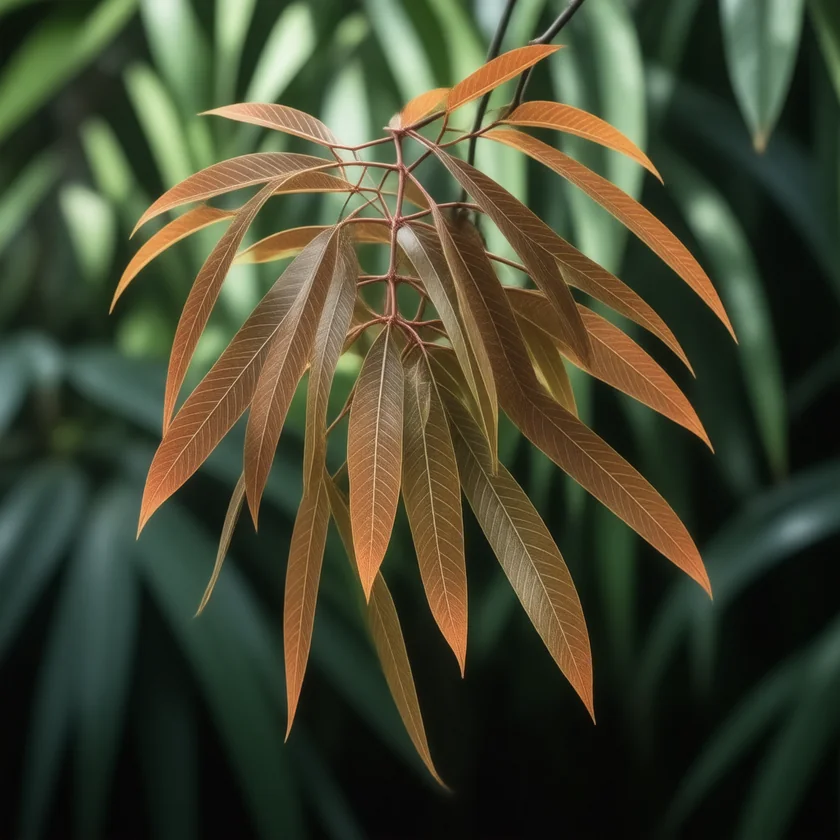
Mangiferin is the compound mango is famous for in the laboratory, and it is also the compound most misrepresented on the internet. It is a genuinely unusual molecule — a xanthone with a sugar welded on by a carbon-carbon bond rather than the usual oxygen link, which makes it stubbornly resistant to being cleaved apart in the gut. It has a real and growing research literature. And here is the part the supplement copy leaves out: mangiferin is concentrated in the leaf, the bark, the peel and the kernel, not in the sweet flesh you eat. Ripe mango pulp is a modest source at best. Almost every headline study of "mango's mangiferin" used a leaf or peel extract, not fruit. This page separates what the fruit gives you from what the extract gives you, and says plainly where the human evidence stops.
Table of Contents
- What Mangiferin Is
- Where It Actually Lives in the Plant
- What the Fruit Itself Gives You: Gallotannins
- Absorption: The Awkward Truth About Xanthones
- Mechanisms Studied in the Laboratory
- Human Trials of Mango Leaf Extract
- Human Trials of the Fruit
- The Diabetes and Cancer Claims, Examined
- Peel, Kernel, and the Waste Question
- What the Evidence Adds Up To
- Key Research Papers
- Connections
- Featured Videos
What Mangiferin Is
Chemically, mangiferin is a C-glucosyl xanthone. Break that down:
- A xanthone is a three-ring aromatic scaffold — two benzene rings bridged by a central ring carrying an oxygen and a ketone. Xanthones are relatively rare in the plant kingdom compared with the flavonoids that dominate most fruit; you meet them mainly in the Gentianaceae, the Clusiaceae (mangosteen) and here, in Mangifera.
- C-glucosyl means the attached glucose is bonded through a carbon-carbon link, not the carbon-oxygen link found in ordinary glycosides such as quercetin-3-glucoside. This is not a chemical footnote. Human digestive enzymes and most gut bacterial glycosidases hydrolyse C-O bonds readily; a C-C bond is far harder to break. That single structural feature drives most of what follows about absorption.
Mangiferin is also not exclusive to mango. It occurs in Anemarrhena asphodeloides, in Salacia species, in honeybush tea (Cyclopia), in some gentians, and it is the reason several unrelated traditional medicines share overlapping pharmacology. A paper about "mangiferin" may have used any of these source plants, so it does not necessarily say anything about mango fruit.
Honeybush, a South African herbal tea, is a good example. A 2009 review lists the xanthones mangiferin and isomangiferin and the flavanones eriocitrin, narirutin and hesperidin as the compounds honeybush contributes to the diet. The review notes that all of these compounds are either C-glucosides or O-rhamnoglucosides, “which are poorly absorbed,” and that phase II metabolism (the body’s own chemical processing of absorbed compounds) and breakdown by intestinal bacteria are important factors in their absorption.
Where It Actually Lives in the Plant
This is the section to remember. Mangiferin distribution across the mango tree is strongly uneven, and the parts richest in it are the parts nobody eats:
- Leaves — by a wide margin the richest source, which is why every standardised commercial mangiferin extract on the market is made from leaves rather than fruit. Mango leaf decoctions are a long-standing folk remedy across South and Southeast Asia for exactly this reason, whether or not the traditional users knew the compound's name.
- Bark and roots — also rich, and used traditionally.
- Peel — substantially richer than the flesh. Chemical surveys of mango agro-industrial waste consistently report the peel as the highest-value fraction of the fruit for phenolic recovery.
- Kernel (the seed inside the stone) — another concentrated fraction, and the target of a whole valorisation literature.
- Flesh — the lowest, and it falls further as the fruit ripens. Unripe mango pulp carries more than ripe.
The mango genome paper published in 2020 adds a related finding about the peel. Sequencing the mango genome revealed an extended chalcone synthase (CHS) gene family, and particular genes in this family show universally higher expression in peel than in flesh. The authors link them to the biosynthesis of urushiols and related phenols — the family-specific chemistry, able to cause contact dermatitis, that runs through the Anacardiaceae — not to mangiferin. In other words, the peel is where this irritant phenolic chemistry is made, not the sweet flesh. That is the same fact from two directions: mango peel is chemically interesting and chemically irritating (see Urushiol, Allergy, and Safety).
What the Fruit Itself Gives You: Gallotannins
If mangiferin is not the fruit's main polyphenol, what is? The answer is gallotannins — gallic acid esterified onto a glucose core, often several gallic acid units per molecule — along with free gallic acid, methyl and ethyl gallate, quercetin glycosides, kaempferol glycosides, and mangiferin in smaller quantity.
The gallotannin fraction is where most of the human pharmacokinetic work on mango fruit has been done. Two findings stand out:
- After people ate mango pulp — both acutely and after short-term daily consumption — researchers characterised the (poly)phenolic metabolites appearing in plasma and urine. What circulates is not the parent gallotannin. It is a family of smaller metabolites produced by hydrolysis and by gut bacterial processing, principally gallic acid derivatives and pyrogallol-type compounds.
- Recovering these compounds from plasma turned out to be technically difficult — galloyl metabolites bind to plasma proteins, and a dedicated method development paper was needed before the measurements were reliable. That is a useful reminder that early negative or erratic findings in this field sometimes reflect the assay, not the biology.
So the honest picture of eating a mango is: you absorb metabolites of mango polyphenols, produced substantially by your own gut bacteria, at concentrations far below what a cell-culture experiment uses. The interesting biology may well happen in the colon, where the unabsorbed fraction meets the microbiome — which is covered in Fiber, Blood Sugar, and the Gut.
Absorption: The Awkward Truth About Xanthones
Mangiferin has poor oral bioavailability. This is not a controversial point in the literature; it is the central practical problem of the field, and it is why a substantial fraction of published mangiferin research is devoted to delivery systems — nanomicelles, phospholipid complexes, salt forms — rather than to the compound's effects.
A 2025 human pharmacokinetic study profiled mangiferin and its monosodium derivative from Mangifera indica extracts using ultra-high-performance liquid chromatography with tandem mass spectrometry (UHPLC-MS/MS), comparing how the two forms behave after oral dosing in people. Twelve participants (six women) took two mango leaf extracts, each standardised to 60% mangiferin, in a crossover design with a 7-day washout: one in the plain form, practically insoluble in water, and one in the water-soluble monosodium salt form. The salt form gave significantly higher blood levels, with a 2.44-fold increase in AUC0-24h (the total amount in the blood over 24 hours) compared with the plain form. The existence of that study shows what the problem is: reformulating the molecule as a salt is an attempt to get more of it into circulation, because the plain compound does not do so readily.
Three consequences follow, and they apply to almost every polyphenol on this site:
- A concentration used in a petri dish is usually unreachable in a person. When a study reports that mangiferin inhibited some enzyme at 50 micromolar, the relevant question is what plasma concentration a human actually reaches, and it is typically orders of magnitude lower.
- The gut lumen is the exception. Compounds that are poorly absorbed are, by definition, present at high concentration in the intestine, where they can act on the gut lining and on bacteria directly. This is a real mechanism, not a consolation prize.
- Metabolites may be the actives. Gut bacteria transform xanthones and gallotannins into smaller phenolics, and some of those are better absorbed than the parent. What ends up in your blood after mango is not what was in the mango.
Mechanisms Studied in the Laboratory
The preclinical mangiferin literature is large. Recent reviews cover its sources and anti-inflammatory mechanisms, its actions across a range of human disease models, and its effects on liver, respiratory and neurological endpoints. The recurring mechanistic themes are:
- Nuclear factor erythroid 2-related factor 2 (Nrf2) activation. Nrf2 is the transcription factor that switches on your own antioxidant defences — glutathione synthesis, superoxide dismutase, catalase, haem oxygenase-1. Many polyphenols nudge this pathway, and mangiferin is among them. Notably, one human mango trial found a non-significant twofold increase in Nrf2 expression, so the pathway is at least plausible in people (see below).
- Nuclear factor kappa B (NF-kappaB) suppression. The master switch for inflammatory gene transcription. Mangiferin dampens it in multiple cell and animal models, which is the mechanistic basis for most of the anti-inflammatory claims.
- Enzyme inhibition relevant to carbohydrate handling — alpha-glucosidase and alpha-amylase inhibition, and effects on glucose transporters, in cell and animal work.
- Catechol-O-methyltransferase (COMT) inhibition — in laboratory tests against 106 central nervous system targets, isolated mangiferin was a selective inhibitor of the enzyme catechol-O-methyltransferase, with no activity on the central nervous system targets of caffeine. The authors concluded that mangiferin is the major central-nervous-system-active compound in mango leaf extract.
- Antiplatelet activity — mango and mango by-product extracts show antiplatelet effects in laboratory assays, a finding that raises a concern for people taking anticoagulants (blood thinners) who use concentrated extracts.
All of this is real science and none of it is a clinical claim. A mechanism demonstrated in a cell line is a hypothesis about people, not a finding about them.
Human Trials of Mango Leaf Extract
Here the evidence gets more concrete, because standardised mango leaf extracts have been through several randomised, double-blind, placebo-controlled trials in humans — mostly on cognition and exercise. The most-studied preparation is a commercial extract standardised to a high mangiferin content.
- A double-blind, placebo-controlled crossover study in 70 healthy young adults (18 to 45 years) found acute effects on cognitive function after a single 300 mg dose of the polyphenol-rich leaf extract, standardised to contain more than 60% mangiferin: accuracy improved across the test battery, including an ‘Accuracy of Attention’ factor and an ‘Episodic Memory’ factor, with no interpretable effects on mood.
- A larger randomised, double-blind, placebo-controlled crossover study gave 300 mg of mango leaf extract (standardised to contain at least 60% mangiferin) to 114 healthy men and women (18-43 years). It found no improvement in cognitive performance or mood up to 300 minutes after the dose, and a significant increase in serial 3s and serial 7s subtraction errors; the authors described these effects as very limited and seen among many analyses.
- A trial of a soluble version of the extract in 119 university students, at 100 mg or 150 mg against placebo in a randomised, double-blind crossover design, reported improvements in processing speed, cognitive flexibility and mood scores (less tension, depression and confusion), with no significant differences in short- and long-term verbal memory.
- In exercise, supplementation with the leaf extract combined with quercetin attenuated muscle damage and pain and accelerated recovery after strenuous exercise. In that trial, 57 runners (24 women and 33 men) took placebo or 140 mg of the leaf extract with 140 mg of quercetin one hour before a 10 km race followed by 100 drop jumps, and every 8 hours for 24 hours. Race times were similar, but the supplement attenuated the muscle pain felt after the competition (6.8 ± 1.5 and 5.7 ± 2.2 arbitrary units, p = 0.035) and the loss of jumping performance 24 hours later.
- Underlying pharmacology work characterised the central nervous system activities of Mangifera indica extract, giving a mechanistic frame for the behavioural findings.
Three honest caveats, all of which matter:
- These are acute or short-term studies in healthy volunteers with cognitive and performance outcomes, not long-term disease endpoints.
- The doses are extract doses. You cannot reach them by eating fruit. Mango leaf tea is a different matter, but it is also not the same as a standardised extract of known content.
- None of this tells you anything about long-term safety of concentrated extracts, which has not been studied to the same standard.
Human Trials of the Fruit
Trials of mango fruit are smaller and fewer, but they exist and they are the ones relevant to a shopping list:
- Insulin sensitivity. A randomised, controlled, two-arm parallel trial gave 48 adults with overweight or obesity and chronic low-grade inflammation one cup of mango twice a day, or a control product, for four weeks. Inflammatory markers (interleukin-6 (IL-6), tumor necrosis factor-alpha, high-sensitivity C-reactive protein (hs-CRP)) were not different at the end. Fasting glucose was unchanged. But insulin was significantly lower with mango than with the control (8.2 ± 1.2 vs. 15.3 ± 1.2 µIU/mL, p = 0.05), and both homeostatic model assessment of insulin resistance (HOMA-IR) — 2.28 ± 1.19 vs. 4.67 ± 1.21, p = 0.03 — and the disposition index were significantly better. The 48 adults had a mean body mass index of 30.5 kg/m2. Nrf2 expression rose about twofold, though not significantly. The authors' reading — that mango intake increased insulin sensitivity, possibly via Nrf2 — is a fair one, with the caveat that it is a four-week study in 48 people.
- Cardiometabolic risk factors. In a 12-week crossover trial, 27 adults with overweight or obesity ate 100 kcal/day of fresh mango or an isocaloric control snack. Blood glucose, C-reactive protein and aspartate transaminase activity fell, and total antioxidant capacity rose, with mango. Body weight, body fat, blood pressure, insulin and lipids did not change. The control snack, meanwhile, increased body weight, insulin, C-reactive protein (CRP) and triglycerides — a reminder that the comparison in every food trial is against something.
- Inflammatory bowel disease. A ten-participant pilot gave 200-400 g of mango pulp daily for eight weeks alongside conventional treatment in mild-to-moderate inflammatory bowel disease (IBD). The Simple Clinical Colitis Activity Index improved, and plasma interleukin-8 (IL-8), growth-regulated oncogene (GRO) and granulocyte macrophage colony-stimulating factor (GM-CSF) — all neutrophil-related — fell by 16.2%, 25.0% and 28.6% respectively. Ten people, no control group, so this is hypothesis-generating and nothing more.
Put together: fruit-level intake produces modest, measurable changes in a few metabolic and inflammatory markers over weeks. It does not produce dramatic effects, and any page that tells you otherwise is selling something.
The Diabetes and Cancer Claims, Examined
Two claims circulate widely enough to deserve a direct answer.
"Mango leaf cures diabetes." What is true: mangiferin has antidiabetic activity in cell and animal models, mango leaf decoction is a traditional remedy in several cultures, and there are in-silico and in-vivo studies of mangiferin's antidiabetic potential. What is not true: there is no adequate randomised controlled trial showing that mango leaf preparations treat, control or cure type 2 diabetes in humans. The human leaf-extract trials that exist looked at cognition and exercise recovery, not glycaemic control over months. A person with diabetes who replaces prescribed treatment with mango leaf tea on the strength of a video is taking a real risk with no evidence behind it. Mango leaf tea drunk alongside prescribed treatment is a different question, with one known caution: concentrated extracts of any glucose-active plant can interact with medication.
"Mango cures cancer." What is true: mango polyphenol extracts, mangiferin and mango gallotannins reduce proliferation and induce apoptosis in cancer cell lines, and there is animal work in colon carcinogenesis models. What is not true: none of this establishes any effect on cancer in people. Cell-line cytotoxicity is the very first step of a pipeline that most compounds fail. The gap between "kills cells in a dish at 100 micromolar" and "treats a tumour in a person" is enormous, and for a compound with mangiferin's absorption profile, the concentrations used in those experiments are not achievable in human blood by any amount of fruit.
The reasonable version of both claims is much duller and probably true: a diet with plenty of polyphenol-rich whole fruit is associated with better metabolic health and lower chronic disease risk, and mango is a perfectly good member of that category. That is the realistic benefit; it is not a cure for anything.
Peel, Kernel, and the Waste Question
Roughly a third to a half of a mango's mass never reaches a plate. Peel and stone are discarded by the megatonne in processing countries, and they are the richest phenolic fraction of the fruit — which has produced an entire research literature on valorisation.
Characterisation studies of mango agro-industrial waste and of by-product extracts consistently find high phenolic content and measurable bioactivity, including antiplatelet effects. Work on the bound polyphenols in mango peel dietary fibre shows that a meaningful fraction is not free at all but attached to the fibre matrix, released only during colonic fermentation — which lines up neatly with the microbiome findings discussed on the gut page.
Three facts weigh against eating the peel, in order of importance:
- The peel is where the fruit concentrates its alkylresorcinols — the urushiol-related irritants. People sensitised to poison ivy can react to it. This is covered properly on the safety page.
- Mango peel is also where residues of any post-harvest treatment sit.
- It is fibrous, bitter and astringent, which is the plant telling you what it is for.
Extracts are a different matter — a well-made peel extract is a legitimate ingredient, and that is what the valorisation research is aimed at. But the popular idea that "the peel is the healthy part" leaves out the irritant chemistry that this botanical family carries in its peel.
What the Evidence Adds Up To
- The fruit's value lies in its own polyphenols, not in mangiferin. The pulp's polyphenols are real; they are gallotannins and gallic acid derivatives more than xanthones.
- Slightly less ripe fruit carries more polyphenol; riper fruit carries more carotenoid. Green mango salad and a fully ripe mango supply different compounds.
- Meaningful amounts of mangiferin come from an extract or a leaf preparation — and the human evidence for those is short-term and mostly about cognition and exercise recovery.
- Concentrated extracts behave more like drugs than like food. Antiplatelet activity in laboratory tests, glucose-lowering activity in animal models and unstudied long-term safety raise a concern for people who take anticoagulants or diabetes medication.
- The peel carries the irritants. People who react to poison ivy, cashew shell or pistachio can react to mango peel.
Key Research Papers
- Shang Y, Tian J, Zhang Z, et al. Mangiferin: sources, anti-inflammatory activities, and molecular mechanisms. Journal of Agricultural and Food Chemistry. 2025;73(43):27145-27160. — doi:10.1021/acs.jafc.5c06234
- Dai Y, Huang Q, Tan M, et al. Mangiferin in human disease: multifaceted mechanisms and applications (Review). International Journal of Molecular Medicine. 2026;57(3):1-19. — doi:10.3892/ijmm.2026.5736
- Fuentes-Rios D, Sanchez-Rodriguez A, Lopez-Rios L, et al. Human pharmacokinetic profiling and comparative analysis of mangiferin and its monosodium derivative from Mangifera indica extracts using UHPLC-MS/MS. Molecules. 2025;30(3):461. — doi:10.3390/molecules30030461
- Wang P, Luo Y, Huang J, et al. The genome evolution and domestication of tropical fruit mango. Genome Biology. 2020;21(1):60. — doi:10.1186/s13059-020-01959-8
- Fan J, Xiao D, Zhang L, et al. Pharmacokinetic characterization of (poly)phenolic metabolites in human plasma and urine after acute and short-term daily consumption of mango pulp. Molecules. 2020;25(23):5522. — doi:10.3390/molecules25235522
- Barnes RC, Kim H, Mertens-Talcott SU, et al. Improved recovery of galloyl metabolites from mango (Mangifera indica L.) in human plasma using protein precipitation with sodium dodecyl sulfate and methanol. Food Research International. 2020;129:108812. — doi:10.1016/j.foodres.2019.108812
- Wightman EL, Jackson PA, Forster J, et al. Acute effects of a polyphenol-rich leaf extract of Mangifera indica L. (Zynamite) on cognitive function in healthy adults: a double-blind, placebo-controlled crossover study. Nutrients. 2020;12(8):2194. — doi:10.3390/nu12082194
- Dodd FL, Kennedy DO, Johnson J, et al. Acute effects of mango leaf extract on cognitive function in healthy adults: a randomised, double-blind, placebo-controlled crossover study. Frontiers in Nutrition. 2024;11:1298807. — doi:10.3389/fnut.2024.1298807
- Castellote-Caballero Y, Beltrán-Arranz A, Aibar-Almazán A, et al. Acute supplementation of soluble mango leaf extract (Zynamite S) improves mental performance and mood: a randomized, double-blind, placebo-controlled trial. Pharmaceuticals. 2025;18(4):571. — doi:10.3390/ph18040571
- Martin-Rincon M, Gelabert-Rebato M, Galvan-Alvarez V, et al. Supplementation with a mango leaf extract (Zynamite) in combination with quercetin attenuates muscle damage and pain and accelerates recovery after strenuous exercise. Nutrients. 2020;12(3):614. — doi:10.3390/nu12030614
- López-Ríos L, Wiebe JC, Vega-Morales T, et al. Central nervous system activities of extract Mangifera indica L. Journal of Ethnopharmacology. 2020;260:112996. — doi:10.1016/j.jep.2020.112996
- Pett KD, Alex PG, Weisfuss C, et al. Mango consumption is associated with increased insulin sensitivity in participants with overweight/obesity and chronic low-grade inflammation. Nutrients. 2025;17(3):490. — doi:10.3390/nu17030490
- Rosas M Jr, Pinneo S, O'Mealy C, Tsang M, Liu C, Kern M, et al. Effects of fresh mango consumption on cardiometabolic risk factors in overweight and obese adults. Nutrition, Metabolism, and Cardiovascular Diseases. 2022;32(2):494-503. — doi:10.1016/j.numecd.2021.11.001 (PubMed PMID: 34953634)
- Kim H, Venancio VP, Fang C, et al. Mango (Mangifera indica L.) polyphenols reduce IL-8, GRO, and GM-CSF plasma levels and increase Lactobacillus species in a pilot study in patients with inflammatory bowel disease. Nutrition Research. 2020;75:85-94. — doi:10.1016/j.nutres.2020.01.002
- García-Mahecha M, Soto-Valdez H, Carvajal-Millán E, et al. Bioactive compounds in extracts from the agro-industrial waste of mango. Molecules. 2023;28(1):458. — doi:10.3390/molecules28010458
- Alañón ME, Palomo I, Rodríguez L, et al. Antiplatelet activity of natural bioactive extracts from mango (Mangifera indica L.) and its by-products. Antioxidants. 2019;8(11):517. — doi:10.3390/antiox8110517
- Ruales J, Baenas N, Moreno DA, et al. Biological active Ecuadorian mango ‘Tommy Atkins’ ingredients — an opportunity to reduce agrowaste. Nutrients. 2018;10(9):1138. — doi:10.3390/nu10091138
- Joubert E, Gelderblom WC, De Beer D. Phenolic contribution of South African herbal teas to a healthy diet. Natural Product Communications. 2009;4(5):701-718. — PubMed PMID: 19445319
PubMed Topic Searches
Connections
- Mango — the main topic page.
- Mango Benefits Deep Dive — the hub for this section.
- Mango: History and Origins — including how the Anacardiaceae chemistry got there.
- Antioxidants — the wider family of plant compounds.
- Quercetin — present in mango and paired with leaf extract in the exercise trial.
- Ellagic Acid — the other major hydrolysable-tannin metabolite story.
- Catechin — the same absorption problem in a better-known compound.
- Curcumin — the textbook case of poor bioavailability outrunning the headlines.
- Sulforaphane — another Nrf2 activator from food.
- Glutathione — what Nrf2 activation is ultimately for.
- Pomegranate — hydrolysable tannins and gut-generated metabolites.
- Green Tea — polyphenols with the same metabolite problem.
- Insulin Resistance — the endpoint the fruit trials measured.
- Inflammatory Bowel Disease — the setting of the ten-person pilot.
- The Microbiome — where unabsorbed polyphenols actually act.
- Urushiol, Allergy, and Safety — the other side of the peel's chemistry.