Grapefruit — Benefits Deep Dive
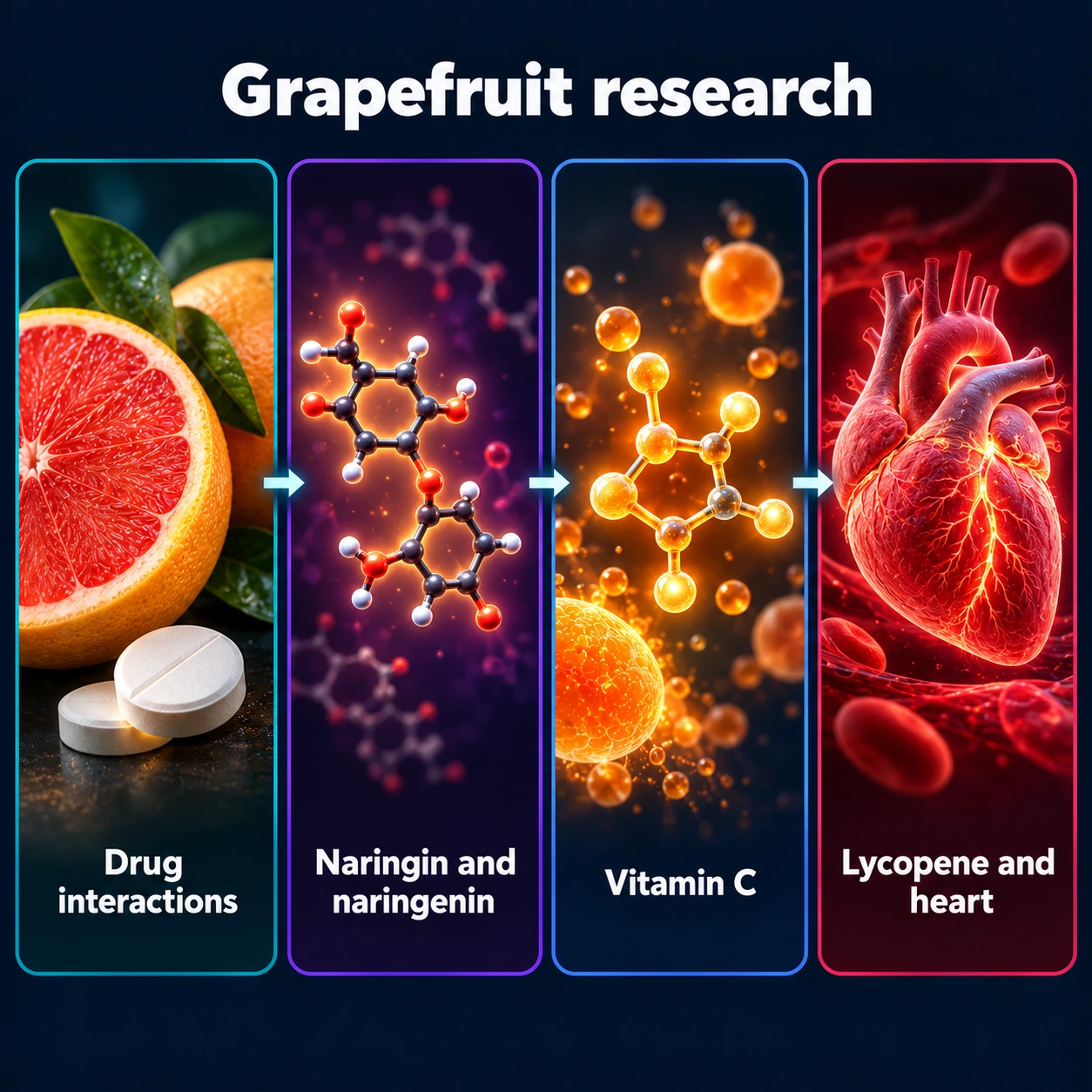
Grapefruit is a fruit with an unusually split reputation: a wholesome, low-calorie, vitamin-C-rich breakfast staple on one hand, and the only common food with a warning printed on prescription labels on the other. Both are true at once, and understanding why is more useful than picking a side. The four deep-dive pages below cover the drug interaction in the detail it deserves — the enzyme it disables, exactly which drug classes are affected, how long the effect lasts, and, importantly, which medicines are not affected; the naringin and naringenin flavonoids that give grapefruit its bitterness and account for most of its metabolic research, read honestly against what has actually been shown in people rather than mice; the vitamin C that makes half a grapefruit cover roughly half a day's requirement, and what that vitamin genuinely does inside an immune cell; and the lycopene, pectin and potassium in red varieties that carry most of grapefruit's cardiovascular story. Where the evidence is strong, these pages say so. Where it is thin — the weight-loss literature especially — they say that instead.
Deep-Dive Articles
Grapefruit and Drug Interactions
The single most important fact about grapefruit, explained properly. Furanocoumarins — bergamottin and 6',7'-dihydroxybergamottin — irreversibly destroy the cytochrome P450 3A4 (CYP3A4) enzyme in your intestinal wall, so far more of certain drugs reaches the blood than the dose intended. Why spacing your pill away from breakfast does not work; why one glass is enough; which classes are affected (simvastatin and lovastatin, some calcium-channel blockers, transplant immunosuppressants, certain antiarrhythmics and sedatives); which are not; and the reassuring half nobody prints — if you take none of them, grapefruit is just a fruit.
Read the deep dive →Naringin and Naringenin
The bitter flavanones that define grapefruit's taste and carry most of its metabolic research. Why naringin has to be converted by your gut bacteria before it does anything, why that keeps blood levels far below what laboratory studies use, what the mouse work on blood lipids and blood sugar really shows, and where the human evidence actually stands — including the six-month arterial-stiffness trial that is grapefruit's best result, and the weight-loss trials that found grapefruit no better than plain water.
Read the deep dive →Vitamin C and Immune Function
Half a grapefruit covers roughly half an adult's daily vitamin C. What that vitamin does inside a neutrophil — which concentrates it to many times the level in your blood and spends it during infection — plus the collagen and barrier work that is at least as important. The Cochrane evidence on colds, stated honestly: no fewer colds for most people, modestly shorter ones, and a large effect only under extreme physical stress. Why absorption saturates, and how to keep the vitamin C in the fruit.
Read the deep dive →Lycopene and Heart Health
Why red beats white, and what else in the fruit matters. Lycopene in Star Ruby and Rio Red, and how much fat you need in the meal to absorb it; the trial that compared red against blond grapefruit in heart patients and found lower triglycerides; the pectin study that lowered cholesterol with nothing else changed — the part juicing throws away; potassium and arterial stiffness; and an honest reading of what lycopene supplement trials have and have not shown.
Read the deep dive →Table of Contents
- Deep-Dive Articles
- What Is Actually in a Grapefruit
- Grapefruit and Body Weight in the Trials
- Research Papers: The Drug Interaction
- Research Papers: Flavanones and Metabolic Health
- Research Papers: Vitamin C and Immunity
- Research Papers: Lycopene, Pectin and the Heart
- Research Papers: Weight and the Grapefruit Diet
- External Authoritative Resources
- Connections
- Featured Videos
What Is Actually in a Grapefruit
Half a medium grapefruit is around fifty calories and close to ninety percent water: U.S. Department of Agriculture (USDA) FoodData Central lists 88.06 g of water per 100 g of raw pink and red grapefruit. That combination — large, filling, cheap, low in calories, eaten raw with a spoon — is most of why it earned its place at breakfast. But the interesting content is what comes along with the water, and it falls into five groups that the deep-dive pages take one at a time.
- Furanocoumarins — bergamottin and 6',7'-dihydroxybergamottin. These are the compounds behind the drug interaction, and they are the reason grapefruit is different from every other fruit in the shop. They are chemical defences the plant makes against fungi and insects, and their effect on human drug metabolism is entirely incidental. Sweet oranges, lemons and mandarins do not carry meaningful amounts; pomelo, Seville orange and tangelo do. Limes are a partial exception: one study measured bergamottin at 100 micromol/L in lime juice against 25 micromol/L in grapefruit juice, and one quarter-strength lime juice did not change mean felodipine levels but “more than doubled felodipine AUC and plasma peak drug concentration in 2 subjects.” The effect also outlasts the juice. In a crossover study of 10 healthy volunteers, simvastatin taken with “high-dose” grapefruit juice (200 mL of double-strength juice three times a day for 3 days) reached a blood level (area under the curve, AUC) 13.5-fold higher than with water; taken 24 hours after the last juice it was still 2.1-fold higher, and at 7 days there was no difference. The authors write that the interaction “dissipates within 3 to 7 days after ingestion of the last dose of grapefruit juice.” Newer work keeps adding drugs to the list: a 2026 randomised crossover study in 11 kidney-transplant recipients on extended-release tacrolimus found tacrolimus AUC 28% higher and peak level 73% higher with grapefruit juice than with water, which the authors describe as a “clinically meaningful interaction”, though smaller than the effects reported with immediate-release tacrolimus. The juice can also push drug levels down through gut transporters: a 2025 meta-analysis of 51 studies found grapefruit juice “decreased the AUC and Cmax of aliskiren and celiprolol by approximately 80-90 %.”
- Flavanones — principally naringin, which gives grapefruit its bitterness, and naringenin, the smaller molecule your gut bacteria convert it into. Naringin is concentrated in the pith and segment membranes rather than the juice, which is why the same fruit tastes so different depending on how you eat it. These compounds carry the largest share of grapefruit's metabolic research literature.
- Vitamin C — roughly 35 to 45 milligrams in half a medium fruit, which is about half a day's requirement for an adult woman and a little under half for a man. Grapefruit is not the richest source available, but it is one of the most practical: raw, in season all winter, and eaten in a large enough serving to matter.
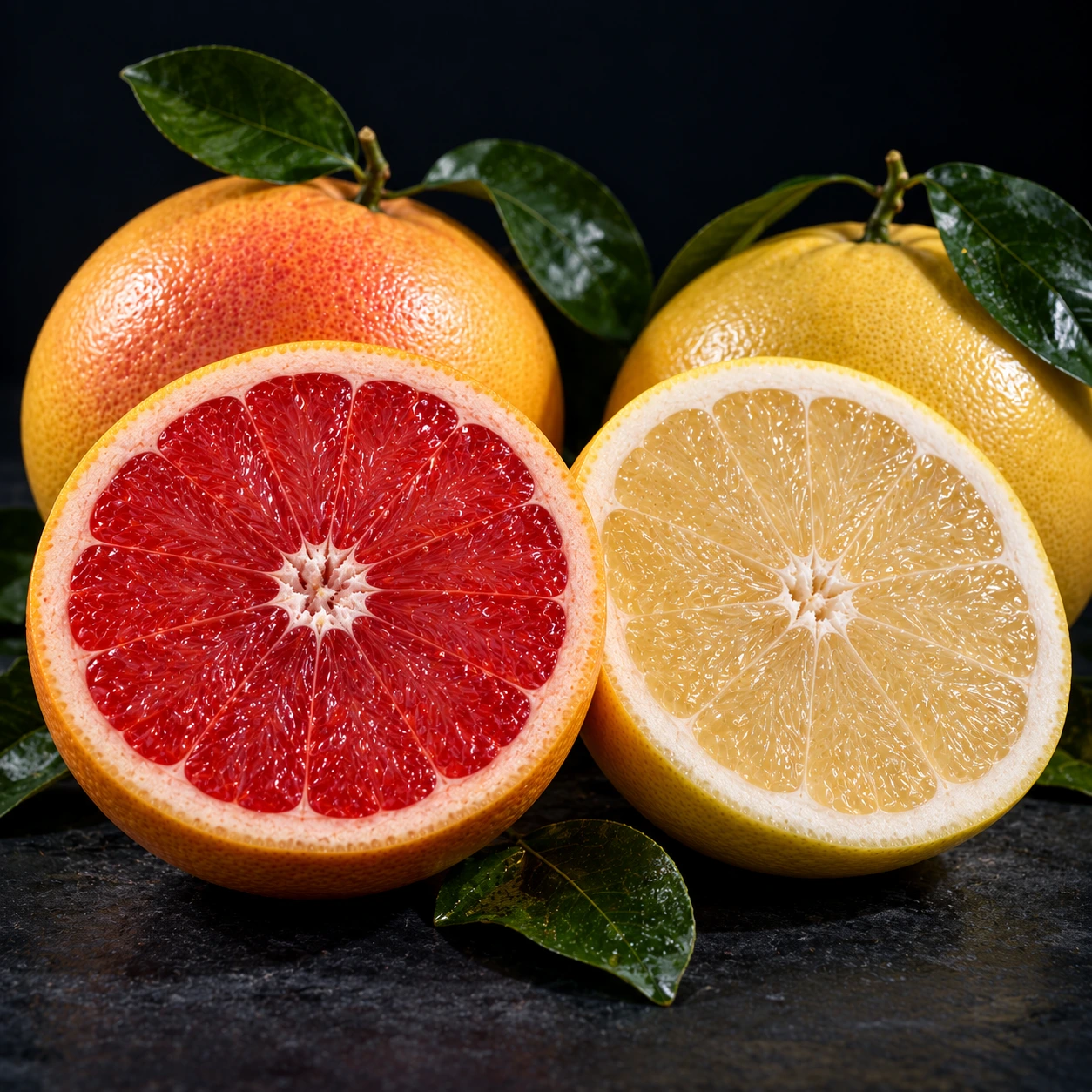
- Carotenoids — lycopene and beta-carotene, present only in the pink and red varieties and essentially absent from the whites. The colour is a reliable guide: the deeper the red, the more lycopene. Both are fat-soluble, which means what you eat alongside the fruit changes how much you absorb.
- Pectin and potassium — the least glamorous entries and arguably the best evidenced. Pectin is the soluble fibre that traps bile acids and lowers cholesterol, and it lives in the flesh and membranes, which means juicing discards it. Potassium supports blood-pressure control through a well-established mechanism. Two trials carry the heart numbers. In a 16-week double-blind crossover of 27 volunteers at medium to high risk of coronary heart disease from high cholesterol, grapefruit pectin lowered plasma cholesterol 7.6% and low-density lipoprotein (LDL) cholesterol 10.8% with no change to diet or lifestyle. In a 6-month crossover of 48 healthy postmenopausal women, 340 mL of grapefruit juice a day gave lower central aortic stiffness than a matched drink without flavanones (pulse wave velocity 7.36 versus 7.70 m/s, P = 0.019), while blood pressure and endothelial function were not affected.
One theme runs through all five and is worth stating once here rather than five times: the whole fruit is a better proposition than any component of it. Juice keeps the vitamin C and the lycopene but loses the pectin and much of the flavanone. A flavonoid capsule has none of the fibre, water or bulk. A lycopene supplement has none of the trial evidence the food has. The form the research favours is the whole fruit with some fat in the same meal: in one absorption study, adding 150 g of avocado to salsa gave 4.4 times the lycopene absorption of avocado-free salsa.
Grapefruit and Body Weight in the Trials
The “grapefruit diet” idea has been tested in randomised trials, and the results point in different directions.
- A small loss against placebo. In a 12-week trial, 91 obese patients took placebo capsules with apple juice, grapefruit capsules with apple juice, grapefruit juice with a placebo capsule, or half a fresh grapefruit with a placebo capsule, three times a day before each meal. The fresh grapefruit group lost 1.6 kg, the grapefruit juice group 1.5 kg, the grapefruit capsule group 1.1 kg and the placebo group 0.3 kg; only the fresh grapefruit group lost significantly more than placebo (P < .05).
- No difference against a control diet. In a 6-week trial, 74 overweight adults ate either a control diet or half a fresh Rio-Red grapefruit with each meal, three times a day. The authors report: “No differences between group in weight, blood pressure, or lipids were demonstrated.” The grapefruit group's waist circumference (−2.45 cm), systolic blood pressure (−3.21 mm Hg) and LDL cholesterol (−18.7 mg/dL) fell compared with their own baseline values, not compared with the control group.
Research Papers: The Drug Interaction
- Bailey DG, Spence JD, Munoz C, Arnold JMO. Interaction of citrus juices with felodipine and nifedipine. The Lancet. 1991;337(8736):268–269. — the accidental discovery. — doi:10.1016/0140-6736(91)90872-M
- Bailey DG, Dresser G, Arnold JMO. Grapefruit–medication interactions: forbidden fruit or avoidable consequences? Canadian Medical Association Journal. 2013;185(4):309–316. — the standard reference for clinicians and patients alike. — doi:10.1503/cmaj.120951
- Paine MF, Widmer WW, Hart HL, Pusek SN, et al. A furanocoumarin-free grapefruit juice establishes furanocoumarins as the mediators of the grapefruit juice–felodipine interaction. The American Journal of Clinical Nutrition. 2006;83(5):1097–1105. — the experiment that identified the responsible compounds by removing them. — doi:10.1093/ajcn/83.5.1097
- Lown KS, Bailey DG, Fontana RJ, Janardan SK, et al. Grapefruit juice increases felodipine oral availability in humans by decreasing intestinal CYP3A protein expression. Journal of Clinical Investigation. 1997;99(10):2545–2553. — intestinal biopsies showing the enzyme itself disappears. — doi:10.1172/JCI119439
- He K, Iyer KR, Hayes RN, Sinz MW, Woolf TF, Hollenberg PF. Inactivation of cytochrome P450 3A4 by bergamottin, a component of grapefruit juice. Chemical Research in Toxicology. 1998;11(4):252–259. — why the effect is irreversible rather than temporary. — doi:10.1021/tx970192k
- Lilja JJ, Kivistö KT, Neuvonen PJ. Duration of effect of grapefruit juice on the pharmacokinetics of the CYP3A4 substrate simvastatin. Clinical Pharmacology & Therapeutics. 2000;68(4):384–390. — the study behind "timing does not help". — doi:10.1067/mcp.2000.110216
- Fukazawa I, Uchida N, Uchida E, Yasuhara H. Effects of grapefruit juice on pharmacokinetics of atorvastatin and pravastatin in Japanese. British Journal of Clinical Pharmacology. 2004;57(4):448–455. — why the choice of statin matters. — doi:10.1046/j.1365-2125.2003.02030.x
- Seden K, Dickinson L, Khoo S, Back D. Grapefruit–drug interactions. Drugs. 2010;70(18):2373–2407. — doi:10.2165/11585250-000000000-00000
- Dresser GK, Bailey DG, Leake BF, Schwarz UI, et al. Fruit juices inhibit organic anion transporting polypeptide-mediated drug uptake to decrease the oral availability of fexofenadine. Clinical Pharmacology & Therapeutics. 2002;71(1):11–20. — the interaction that runs the other way. — doi:10.1067/mcp.2002.121152
- Pirmohamed M. Drug–grapefruit juice interactions. BMJ. 2013;346:f1. — a short editorial on how much to worry. — doi:10.1136/bmj.f1
- Bailey DG, Dresser GK, Bend JR. Bergamottin, lime juice, and red wine as inhibitors of cytochrome P450 3A4 activity: comparison with grapefruit juice. Clinical Pharmacology & Therapeutics. 2003;73(6):529–537. — lime juice carries more bergamottin than grapefruit juice. — doi:10.1016/S0009-9236(03)00051-1
- Alabi A, Kerr JS, Shah M, Khan A, et al. Assessment of the intestinal CYP3A contribution to drug interactions with extended-release tacrolimus (LCPT) using grapefruit juice. Clinical Pharmacology in Drug Development. 2026;15(1):e70016. — doi:10.1002/cpdd.70016
- Methaneethorn J, Dilokthornsakul P, Siritientong T, Jiao Z, et al. Pharmacokinetic interactions of fruit juices with antihypertensive drugs in humans: a systematic review and meta-analysis. Complementary Therapies in Medicine. 2025;90:103165. — doi:10.1016/j.ctim.2025.103165
Research Papers: Flavanones and Metabolic Health
- Alam MA, Subhan N, Rahman MM, Uddin SJ, et al. Effect of citrus flavonoids, naringin and naringenin, on metabolic syndrome and their mechanisms of action. Advances in Nutrition. 2014;5(4):404–417. — doi:10.3945/an.113.005603
- Bharti S, Rani N, Krishnamurthy B, Arya DS. Preclinical evidence for the pharmacological actions of naringin: a review. Planta Medica. 2014;80(6):437–451. — note "preclinical" in the title; the label is accurate. — doi:10.1055/s-0034-1368351
- Mulvihill EE, Assini JM, Sutherland BG, DiMattia AS, et al. Naringenin decreases progression of atherosclerosis by improving dyslipidemia in high-fat-fed low-density lipoprotein receptor-null mice. Arteriosclerosis, Thrombosis, and Vascular Biology. 2010;30(4):742–748. — doi:10.1161/ATVBAHA.109.201095
- Jung UJ, Lee MK, Jeong KS, Choi MS. The hypoglycemic effects of hesperidin and naringin are partly mediated by hepatic glucose-regulating enzymes in C57BL/KsJ-db/db mice. The Journal of Nutrition. 2004;134(10):2499–2503. — doi:10.1093/jn/134.10.2499
- Rebello CJ, Greenway FL, Lau FH, Lin Y, et al. Naringenin promotes thermogenic gene expression in human white adipose tissue. Obesity. 2019;27(1):103–111. — human tissue, studied outside the body. — doi:10.1002/oby.22352
- Rebello CJ, Beyl RA, Lertora JJL, Greenway FL, et al. Safety and pharmacokinetics of naringenin: a randomized, controlled, single-ascending-dose clinical trial. Diabetes, Obesity and Metabolism. 2020;22(1):91–98. — a safety and dose study, not an efficacy trial. — doi:10.1111/dom.13868
- Salehi B, Fokou PVT, Sharifi-Rad M, Zucca P, et al. The therapeutic potential of naringenin: a review of clinical trials. Pharmaceuticals. 2019;12(1):11. — doi:10.3390/ph12010011
- Bailey DG, Dresser GK, Leake BF, Kim RB. Naringin is a major and selective clinical inhibitor of organic anion-transporting polypeptide 1A2 (OATP1A2) in grapefruit juice. Clinical Pharmacology & Therapeutics. 2007;81(4):495–502. — doi:10.1038/sj.clpt.6100104
- Vanamala J, Reddivari L, Yoo KS, Pike LM, Patil BS. Variation in the content of bioactive flavonoids in different brands of orange and grapefruit juices. Journal of Food Composition and Analysis. 2006;19(2–3):157–166. — doi:10.1016/j.jfca.2005.06.002
- Chaudhary P, Bang H, Jayaprakasha GK, Patil BS. Variation in key flavonoid biosynthetic enzymes and phytochemicals in 'Rio Red' grapefruit. Journal of Agricultural and Food Chemistry. 2016;64(47):9022–9032. — doi:10.1021/acs.jafc.6b02975
- Vinson JA, Su X, Zubik L, Bose P. Phenol antioxidant quantity and quality in foods: fruits. Journal of Agricultural and Food Chemistry. 2001;49(11):5315–5321. — doi:10.1021/jf0009293
- Floegel A, Kim DO, Chung SJ, Koo SI, Chun OK. Comparison of ABTS/DPPH assays to measure antioxidant capacity in popular antioxidant-rich US foods. Journal of Food Composition and Analysis. 2011;24(7):1043–1048. — doi:10.1016/j.jfca.2011.01.008
- Dorado C, Cameron RG, Manthey JA. Analysis and potential value of compounds extracted from Star Ruby, Rio Red and Ruby Red grapefruit. Frontiers in Nutrition. 2021;8:691663. — doi:10.3389/fnut.2021.691663
Research Papers: Vitamin C and Immunity
- Carr AC, Maggini S. Vitamin C and immune function. Nutrients. 2017;9(11):1211. — the standard modern review. — doi:10.3390/nu9111211
- Hemilä H, Chalker E. Vitamin C for preventing and treating the common cold. Cochrane Database of Systematic Reviews. 2013;(1):CD000980. — the honest answer to the question everyone asks. — doi:10.1002/14651858.CD000980.pub4
- Levine M, Conry-Cantilena C, Wang Y, Welch RW, et al. Vitamin C pharmacokinetics in healthy volunteers: evidence for a recommended dietary allowance. Proceedings of the National Academy of Sciences. 1996;93(8):3704–3709. — doi:10.1073/pnas.93.8.3704
- Lykkesfeldt J, Tveden-Nyborg P. The pharmacokinetics of vitamin C. Nutrients. 2019;11(10):2412. — why very large doses do not produce proportionally large effects. — doi:10.3390/nu11102412
- Padayatty SJ, Levine M. Vitamin C: the known and the unknown and Goldilocks. Oral Diseases. 2016;22(6):463–493. — doi:10.1111/odi.12446
- Carr AC, Rowe S. Factors affecting vitamin C status and prevalence of deficiency: a global health perspective. Nutrients. 2020;12(7):1963. — low vitamin C is commoner than expected. — doi:10.3390/nu12071963
- Pullar JM, Carr AC, Vissers MCM. The roles of vitamin C in skin health. Nutrients. 2017;9(8):866. — doi:10.3390/nu9080866
- Frei B, England L, Ames BN. Ascorbate is an outstanding antioxidant in human blood plasma. Proceedings of the National Academy of Sciences. 1989;86(16):6377–6381. — doi:10.1073/pnas.86.16.6377
- Cook JD, Reddy MB. Effect of ascorbic acid intake on nonheme-iron absorption from a complete diet. The American Journal of Clinical Nutrition. 2001;73(1):93–98. — the honest correction to the single-meal iron studies. — doi:10.1093/ajcn/73.1.93
- Hemilä H. Vitamin C and infections. Nutrients. 2017;9(4):339. — doi:10.3390/nu9040339
Research Papers: Lycopene, Pectin and the Heart
- Habauzit V, Verny MA, Milenkovic D, Barber-Chamoux N, et al. Flavanones protect from arterial stiffness in postmenopausal women consuming grapefruit juice for 6 mo: a randomized, controlled, crossover trial. The American Journal of Clinical Nutrition. 2015;102(1):66–74. — the strongest human grapefruit trial to date. — doi:10.3945/ajcn.114.104646
- Cerda JJ, Robbins FL, Burgin CW, Baumgartner TG, et al. The effects of grapefruit pectin on patients at risk for coronary heart disease without altering diet or lifestyle. Clinical Cardiology. 1988;11(9):589–594. — the fibre component, tested on its own. — doi:10.1002/clc.4960110902
- Gorinstein S, Caspi A, Libman I, Lerner HT, et al. Red grapefruit positively influences serum triglyceride level in patients suffering from coronary atherosclerosis. Journal of Agricultural and Food Chemistry. 2006;54(5):1887–1892. — red versus blond, head to head. — doi:10.1021/jf058171g
- Cheng HM, Koutsidis G, Lodge JK, Ashor A, Siervo M, Lara J. Tomato and lycopene supplementation and cardiovascular risk factors: a systematic review and meta-analysis. Atherosclerosis. 2017;257:100–108. — doi:10.1016/j.atherosclerosis.2017.01.009
- Costa-Rodrigues J, Pinho O, Monteiro PRR. Can lycopene be considered an effective protection against cardiovascular disease? Food Chemistry. 2018;245:1148–1153. — doi:10.1016/j.foodchem.2017.11.055
- Sesso HD, Buring JE, Norkus EP, Gaziano JM. Plasma lycopene, other carotenoids, and retinol and the risk of cardiovascular disease in women. The American Journal of Clinical Nutrition. 2004;79(1):47–53. — observational, not causal. — doi:10.1093/ajcn/79.1.47
- Story EN, Kopec RE, Schwartz SJ, Harris GK. An update on the health effects of tomato lycopene. Annual Review of Food Science and Technology. 2010;1:189–210. — doi:10.1146/annurev.food.102308.124120
- Unlu NZ, Bohn T, Clinton SK, Schwartz SJ. Carotenoid absorption from salad and salsa by humans is enhanced by the addition of avocado or avocado oil. The Journal of Nutrition. 2005;135(3):431–436. — eat it with fat. — doi:10.1093/jn/135.3.431
- Ilic D, Forbes KM, Hassed C. Lycopene for the prevention of prostate cancer. Cochrane Database of Systematic Reviews. 2011;(11):CD008007. — the randomised evidence was found insufficient. — doi:10.1002/14651858.CD008007.pub2
- Cruse RR, Lime BJ, Hensz RA. Pigmentation and color comparison of Ruby Red and Star Ruby grapefruit juice. Journal of Agricultural and Food Chemistry. 1979;27(3):641–642. — doi:10.1021/jf60223a029
- Habauzit V, Morand C. Evidence for a protective effect of polyphenols-containing foods on cardiovascular health: an update for clinicians. Therapeutic Advances in Chronic Disease. 2012;3(2):87–106. — doi:10.1177/2040622311430006
Research Papers: Weight and the Grapefruit Diet
- Fujioka K, Greenway F, Sheard J, Ying Y. The effects of grapefruit on weight and insulin resistance: relationship to the metabolic syndrome. Journal of Medicinal Food. 2006;9(1):49–54. — the trial most often cited; the effect is real and small. — doi:10.1089/jmf.2006.9.49
- Silver HJ, Dietrich MS, Niswender KD. Effects of grapefruit, grapefruit juice and water preloads on energy balance, weight loss, body composition, and cardiometabolic risk in free-living obese adults. Nutrition & Metabolism. 2011;8(1):8. — grapefruit compared against plain water, and no better than it. — doi:10.1186/1743-7075-8-8
- Dow CA, Going SB, Chow HH, Patil BS, et al. The effects of daily consumption of grapefruit on body weight, lipids, and blood pressure in healthy, overweight adults. Metabolism. 2012;61(7):1026–1035. — no difference from the control diet in weight, lipids or blood pressure; the improvements were measured against baseline only. — doi:10.1016/j.metabol.2011.12.004
- Murphy MM, Barraj LM, Rampersaud GC. Consumption of grapefruit is associated with higher nutrient intakes and diet quality among adults, and more favorable anthropometrics in women, NHANES 2003–2008. Food & Nutrition Research. 2014;58:22179. — a survey association, not a trial. — doi:10.3402/fnr.v58.22179
External Authoritative Resources
- U.S. Department of Agriculture (USDA) FoodData Central — the primary source for grapefruit's nutrient composition, searchable by variety and by raw or juiced form.
- Bailey DG et al. 2013 — Grapefruit–medication interactions (CMAJ) — open-access and readable; the single best thing to hand someone worried about their prescriptions.
- US Food and Drug Administration — Grapefruit Juice and Some Drugs Don't Mix — the regulator's plain-language consumer page.
- PubMed — grapefruit, drug interactions and cytochrome P450 3A4
- PubMed — naringin and naringenin in metabolic research
- FAOSTAT — world grapefruit and pomelo production
Connections
- All Food
- Grapefruit (Main Page)
- Grapefruit: History and Origins
- Grapefruit and Drug Interactions
- Naringin and Naringenin
- Vitamin C and Immune Function
- Lycopene and Heart Health
- Oranges
- Tomatoes
- Watermelon
- Avocado
- Vitamin C
- Vitamin C Benefits
- Lycopene
- Hesperidin
- Antioxidants
- Potassium
- Cardiology & Heart Health
- Cholesterol Management
- Metabolic Syndrome
- Lipid Panel
- Immune Boosting