Grapefruit Lycopene and Heart Health
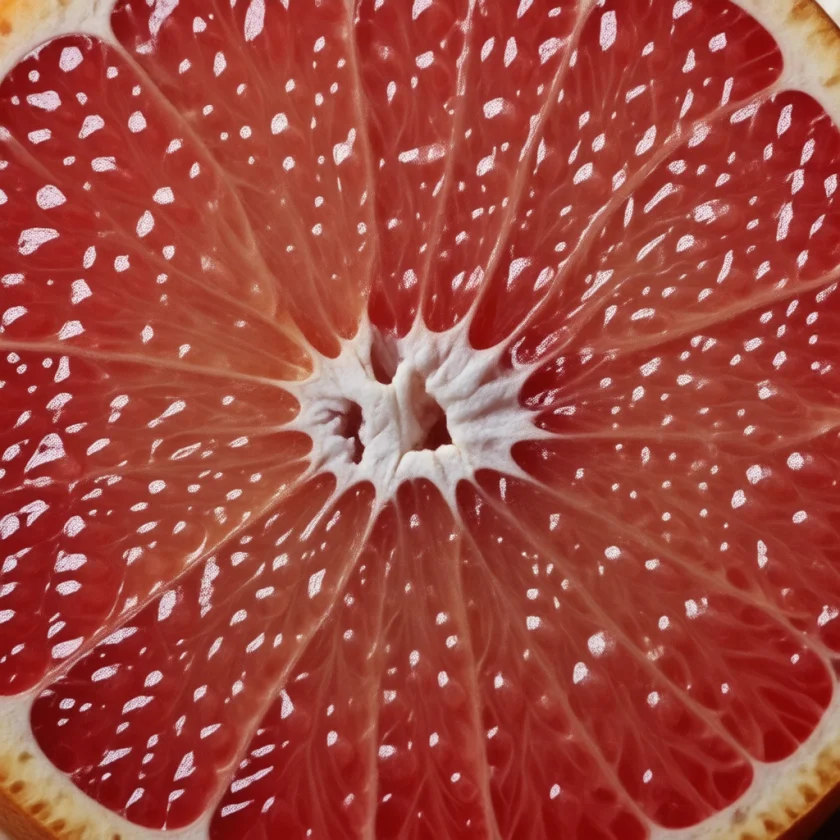
The deep red inside a Ruby or Star Ruby grapefruit is lycopene, the same pigment that makes tomatoes and watermelon red, and grapefruit is one of only a handful of fruits that supplies a meaningful amount of it. That is the main nutritional difference between red and white grapefruit. But lycopene is only one of four things in grapefruit that plausibly matter for the heart — the others are pectin, potassium and the citrus flavanones — and the human evidence for each of them is different in quality. This page goes through all four honestly, including where the evidence is thinner than the marketing suggests.
Table of Contents
- What the Colour Actually Means
- What Lycopene Is and How It Works
- How Much Is in a Red Grapefruit
- Getting It Absorbed: Fat, Heat and Pairing
- The Red Grapefruit Triglyceride Trial
- Pectin: The Fibre That Lowers Cholesterol
- Potassium, Blood Pressure and Arterial Stiffness
- What the Lycopene Trials Really Show
- The Prostate Question
- Why the Whole Fruit Beats the Supplement
- Choosing, Storing and Eating
- Key Research Papers
- Connections
- Featured Videos
What the Colour Actually Means
Grapefruit comes in three colour grades and they are genuinely different foods nutritionally, not just cosmetically.
- White or blond — Duncan, Marsh. Pale yellow flesh, the sharpest and most bitter, essentially no lycopene, the highest naringin.
- Pink — Thompson, Pink Marsh. Light rosy flesh, milder, a modest amount of lycopene and beta-carotene.
- Red and ruby — Ruby Red, Star Ruby, Rio Red. Deep red flesh, the sweetest and least bitter, by far the highest lycopene, and the most beta-carotene.
The redness is caused by lycopene accumulating in the juice vesicles. A 1979 comparison of Ruby Red and Star Ruby juice pigmentation documented how much deeper the newer selection ran, and later compositional work across Star Ruby, Rio Red and Ruby Red has continued to map the differences. The practical shortcut is reliable: the redder the flesh, the more lycopene, with essentially none in the white varieties.
There is a trade-off, and it is worth stating rather than pretending everything improves at once. The same breeding that raised lycopene lowered naringin, so red grapefruit gives you more carotenoid and less of the bitter flavanone. Neither is the "better" fruit; each colour supplies something the other lacks.
What Lycopene Is and How It Works
Lycopene is a carotenoid — a long, fat-soluble pigment molecule built from a chain of alternating double bonds. That chain is what absorbs light in the blue-green range and reflects red, and it is also what makes the molecule chemically reactive in a useful way: those double bonds readily absorb energy from singlet oxygen and other reactive species, defusing them. Among common dietary carotenoids, lycopene is one of the most effective at quenching singlet oxygen specifically.
Unlike beta-carotene, lycopene is not converted into vitamin A. It has no vitamin activity at all. Whatever it does, it does as lycopene.
The mechanisms proposed for a cardiovascular benefit are reasonable and partially demonstrated:
- Protecting low-density lipoprotein (LDL) from oxidation. Lycopene is carried in the bloodstream inside lipoprotein particles — it travels in low-density lipoprotein itself. Oxidised low-density lipoprotein is a central step in plaque formation, and an antioxidant riding inside the particle is well placed to slow that.
- Supporting the vessel lining. Several trials have measured flow-mediated dilation — how well an artery widens when blood flow increases — and reported improvement with lycopene-rich intake.
- Damping inflammation. Reductions in inflammatory markers have been reported, though inconsistently.
An honest caveat belongs here. "Antioxidant in a test tube" has a long history of failing to become "prevents disease in people" — the beta-carotene supplement trials of the 1990s are the cautionary tale, having found harm rather than benefit in smokers. Plausible mechanism is a reason to test, not a reason to believe.
How Much Is in a Red Grapefruit
A useful amount, and less than a tomato dish. Cooked and concentrated tomato products — paste, sauce, tinned tomatoes, ketchup — are by a wide margin the dominant source of lycopene in most diets, because processing both concentrates the pigment and makes it more absorbable. Red grapefruit and watermelon are the main raw sources, and grapefruit is the main one available all winter.
The content varies with variety, growing region, season and ripeness, in the same way the flavonoid content does, so precise per-fruit figures are approximations rather than fixed values. What holds reliably:
- Star Ruby and Rio Red are the deepest, Ruby Red next, pink varieties well below them, white essentially zero.
- Grapefruit juice keeps the lycopene, since the pigment is inside the juice vesicles rather than the membranes — but juicing loses the pectin, which is one of the fruit's other genuine cardiovascular contributions.
- Riper and later-season fruit tends to be redder, and redder means more lycopene.
- Colour is a real guide. Unusually among nutrients, you can see this one before you buy.
Getting It Absorbed: Fat, Heat and Pairing
Lycopene is fat-soluble, and this is not a technicality — it is the single biggest lever you have over how much of it you actually get.
Fat in the same meal transforms absorption. A study of salad and salsa found that adding avocado or avocado oil substantially increased the amount of carotenoid absorbed from the same food. An earlier study found that tomato products eaten with olive oil raised plasma antioxidant activity while the same products with sunflower oil did not, suggesting the type of fat may matter too, not only its presence. These studies suggest that carotenoids such as lycopene are absorbed better when the food is eaten with some fat — for example a few walnuts, some avocado, or a drizzle of olive oil over a citrus salad. Fruit eaten alone in the morning is the low-absorption case.
Heat helps in tomatoes and matters less here. Cooking tomatoes breaks down cell walls and shifts lycopene into a more absorbable molecular shape, which is why tomato paste outperforms raw tomato. Grapefruit is essentially always eaten raw, so it does not benefit from this. Broiling a grapefruit half is a pleasure rather than a nutritional strategy — and it costs vitamin C, which does not survive heat.
Nothing about lycopene is urgent. It accumulates in tissue over weeks. There is no need to engineer any single meal; a habit of red fruit and vegetables with some fat is the entire intervention.
The Red Grapefruit Triglyceride Trial
The most directly relevant human study on grapefruit and blood lipids was published in 2006 in the Journal of Agricultural and Food Chemistry. Patients with coronary atherosclerosis and raised blood lipids — a group already at high risk, all of whom had undergone coronary bypass surgery (57 patients aged 39–72, randomly divided into three groups of 19) — were assigned to eat red grapefruit daily, blond grapefruit daily, or no grapefruit, for a month, on an otherwise unchanged diet.
Both grapefruit groups improved on lipid measures compared with the control group, and the red grapefruit group did better than the blond, with the clearest effect on serum triglycerides. Compared with the control group after the trial, total cholesterol was 15.5% lower in the red group and 7.6% lower in the blond group, low-density lipoprotein cholesterol 20.3% and 10.7% lower, and triglycerides 17.2% and 5.6% lower; no changes in blood lipids were found in the control group. That comparison is what makes the study interesting: it is not "fruit versus no fruit", which would be unsurprising, but red versus blond, which isolates the pigment-rich varieties as the difference.
It is best read with its limitations visible. It was a single-centre study, it ran for thirty days, the group sizes were small, and it has not been replicated at scale. It is a promising result rather than a settled one. The honest summary: choosing red grapefruit over white is well supported as a preference, and is not established as a treatment for high triglycerides.
Pectin: The Fibre That Lowers Cholesterol
Grapefruit's least glamorous component may have the best evidence behind it. Pectin is the soluble fibre in the fruit's flesh and membranes, and it works by a purely mechanical route: it forms a gel in the small intestine that traps bile acids — which your body manufactures from cholesterol — and carries them out in the stool instead of letting them be reabsorbed. The liver then has to pull cholesterol out of the blood to make replacements. Total and low-density lipoprotein cholesterol fall as a result.
A 1988 study in Clinical Cardiology tested this directly. Twenty-seven volunteers at medium to high risk of coronary heart disease because of high cholesterol took grapefruit pectin or a placebo in a 16-week double-blind crossover trial, with no change to their usual diet or lifestyle — a deliberately clean design, because so many fibre studies are confounded by the healthier eating that usually accompanies them. Grapefruit pectin lowered plasma cholesterol by 7.6%, low-density lipoprotein cholesterol by 10.8% and the low-density to high-density lipoprotein cholesterol ratio by 9.8%; the other blood-fat measures studied showed no significant differences.
The practical consequence is direct: this is the part of grapefruit that juicing throws away. The pectin is in the flesh and membranes, and it ends up in the pulp bin. If you drink grapefruit juice instead of eating the fruit, you keep the lycopene and the vitamin C and lose the fibre — and the fibre has arguably the strongest cardiovascular evidence of anything in the fruit. Eating the fruit with a spoon keeps it.
Potassium, Blood Pressure and Arterial Stiffness
Grapefruit is a reasonable source of potassium, the mineral most Western diets are short of and most under-appreciated for blood pressure. Potassium works partly by helping the kidney excrete sodium and partly by relaxing the smooth muscle in blood-vessel walls. Raising potassium intake through food is, for most people, at least as useful as cutting sodium, and considerably easier to sustain.
The other blood-vessel finding is the strongest human trial grapefruit has. A six-month randomised crossover study in postmenopausal women, published in The American Journal of Clinical Nutrition in 2015, measured arterial stiffness by pulse-wave velocity — the speed at which a pressure wave travels down the aorta, which increases as arteries lose elasticity and is an established marker of cardiovascular risk. The 48 women drank 340 mL of grapefruit juice a day or a matched control drink without flavanones, for six months each. Carotid-femoral pulse-wave velocity was lower after the grapefruit-juice period (7.36 m/s) than after the control drink (7.70 m/s; P = 0.019). The trial’s primary measure, however, was endothelial function in the brachial artery (flow-mediated dilation), and that was not affected; nor were blood pressure, body measurements, glucose metabolism, or markers of inflammation and oxidative stress. Only the artery stiffness differed.
Three things make that trial unusually credible: six months is long for a food study, the crossover design meant every participant served as her own control, and the outcome was a physical measurement rather than a self-report. The authors attributed the effect to the citrus flavanones rather than to lycopene — another reminder that the fruit is a package, and the red pigment is not the only thing in it that matters.
What the Lycopene Trials Really Show
Lycopene has a large literature and a mixed one, and it is worth being straight about the shape of it.
Observational studies are consistently favourable. A 2004 analysis of plasma lycopene in women reported an inverse association with cardiovascular disease — people with more lycopene in their blood had less disease. In that study, drawn from the Women’s Health Study, 483 women who developed cardiovascular disease were compared with 483 matched controls; women in the upper half of plasma lycopene had a relative risk of 0.66 (95% CI 0.47–0.95) compared with the lower half. Similar associations appear across many cohorts. But plasma lycopene is also an excellent marker of eating vegetables, and people who eat vegetables differ from those who do not in dozens of ways. Observational data of this kind cannot separate the pigment from the diet, or from the person.
Intervention trials are more modest. A 2017 systematic review and meta-analysis in Atherosclerosis pooled 21 trials of tomato and lycopene supplementation against cardiovascular risk factors, with substantial variation between studies. Tomato products lowered low-density lipoprotein cholesterol by 0.22 mmol/L, lowered the inflammatory marker interleukin-6 (IL-6) and improved flow-mediated dilation by 2.53%, while lycopene supplements lowered systolic blood pressure by 5.66 mmHg; no other outcome was significantly affected. A 2018 review in Food Chemistry asked directly whether lycopene can be considered an effective protection against cardiovascular disease, which is the right question and a sign that it is not yet settled.
Two later analyses add detail. A 2021 network meta-analysis of 11 randomised trials found that a standardised tomato extract lowered systolic blood pressure compared with placebo, by 5.89 mmHg overall and by 8.09 mmHg in people with high blood pressure; other doses of the extract, a tomato-containing diet, a lycopene-free preparation and synthetic lycopene “did not show consistent and significant effects”. A 2026 meta-analysis of 13 studies of blood lycopene and the thickness of the carotid artery wall (intima-media thickness; 9,131 people, 8 studies pooled) found high blood lycopene associated with a thinner artery wall (pooled odds ratio 0.70, 95% CI 0.59–0.84), more strongly in men (0.62) than in women (0.74). That is an association measured at one point in time, not a trial.
Which is exactly what you would expect if the truthful answer is "lycopene is one of several beneficial things in a lycopene-rich diet, and isolating it captures only part of the effect." That is the same conclusion the wider carotenoid literature keeps arriving at.
The research points away from chasing lycopene on its own: red and orange plant foods eaten regularly, with some fat, bring lycopene along with fibre, potassium, folate, vitamin C and the rest — and the evidence for the package is far stronger than the evidence for any component of it.
The Prostate Question
Lycopene's other famous association is with prostate health, and it deserves an honest paragraph because grapefruit is often sold on it.
The interest came from observational studies in the 1990s reporting that men who ate more tomato products had lower rates of prostate cancer. That generated a great deal of research and a great many supplements. A 2011 Cochrane review of lycopene for the prevention of prostate cancer found only three randomised trials, with 154 men in total; two of the three were judged at high risk of bias, and none reported prostate cancer deaths. Its conclusion was that there is “insufficient evidence to either support, or refute” the use of lycopene for preventing prostate cancer.
In short, tomatoes and red grapefruit bring many other well-established nutrients as part of a plant-rich diet, while trial evidence does not establish that a lycopene supplement prevents prostate cancer. That is relevant to anyone buying a supplement for prostate health.
Why the Whole Fruit Beats the Supplement
Count what half a red grapefruit delivers at once: lycopene and beta-carotene from the pigment, vitamin C, potassium, folate, pectin, naringin and other flavanones, water and bulk — for around fifty calories. No capsule contains that combination, and the trial record suggests the combination is where the benefit lives.
The beta-carotene story is the standing warning here. Observational data showed that people with more beta-carotene in their blood had less cancer and heart disease. Two large trials then gave smokers beta-carotene supplements and found more lung cancer, not less. The lesson was not that carotenoids are harmful in food — it was that a pigment isolated from its food, at a dose no food provides, does not reliably behave the way the food does.
Lycopene supplements have not shown harm of that kind. But the underlying logic is unchanged, and the evidence for isolated lycopene remains weaker than the evidence for lycopene-rich food. On the current evidence, the case for red grapefruit as a food is stronger than the case for a lycopene capsule.
Choosing, Storing and Eating
- Weight tells more than looks. A good grapefruit is heavy for its size, which means it is full of juice. Skin blemishes, russeting and a green tinge do not affect the inside.
- The reddest varieties carry the most lycopene — Star Ruby, Rio Red or Ruby Red. A blush on the skin is a hint, though flesh colour does not always show from outside.
- Whole fruit keeps for weeks in the fridge. Cold blunts both aroma and sweetness, so the flavour is fuller once the fruit has warmed up.
- Eating it with a spoon, out of the half, keeps the pectin, which juicing discards. A curved grapefruit spoon or a short serrated knife around each segment makes it easy.
- Fat in the meal helps the carotenoids — nuts, avocado, olive oil, a handful of seeds.
- Cutting it just before eating keeps more vitamin C. The vitamin C degrades on a cut surface; the lycopene is more robust.
- Citrus acid softens tooth enamel temporarily, so rinsing the mouth with water afterwards and waiting about half an hour before brushing spares the softened enamel.
- Grapefruit interacts with a number of prescription drugs. For people whose medicines rule grapefruit out, tomatoes, watermelon and red peppers cover the same lycopene ground. The drug interactions page covers the interactions.
Key Research Papers
- Gorinstein S, Caspi A, Libman I, Lerner HT, et al. Red grapefruit positively influences serum triglyceride level in patients suffering from coronary atherosclerosis. Journal of Agricultural and Food Chemistry. 2006;54(5):1887–1892. — red versus blond grapefruit in high-risk patients. — doi:10.1021/jf058171g
- Cerda JJ, Robbins FL, Burgin CW, Baumgartner TG, et al. The effects of grapefruit pectin on patients at risk for coronary heart disease without altering diet or lifestyle. Clinical Cardiology. 1988;11(9):589–594. — pectin alone, with nothing else changed. — doi:10.1002/clc.4960110902
- Habauzit V, Verny MA, Milenkovic D, Barber-Chamoux N, et al. Flavanones protect from arterial stiffness in postmenopausal women consuming grapefruit juice for 6 mo: a randomized, controlled, crossover trial. The American Journal of Clinical Nutrition. 2015;102(1):66–74. — six months, crossover, a hard physiological endpoint. — doi:10.3945/ajcn.114.104646
- Cheng HM, Koutsidis G, Lodge JK, Ashor A, Siervo M, Lara J. Tomato and lycopene supplementation and cardiovascular risk factors: a systematic review and meta-analysis. Atherosclerosis. 2017;257:100–108. — the pooled trial evidence, modest and heterogeneous. — doi:10.1016/j.atherosclerosis.2017.01.009
- Rattanavipanon W, Nithiphongwarakul C, Sirisuwansith P, Chaiyasothi T, Thakkinstian A, Nathisuwan S, Pathomwichaiwat T. Effect of tomato, lycopene and related products on blood pressure: a systematic review and network meta-analysis. Phytomedicine. 2021;88:153512. — only a standardised tomato extract lowered systolic pressure. — doi:10.1016/j.phymed.2021.153512
- Cavero-Redondo I, Saz-Lara A, Saz-Lara AD, Martínez-Cifuentes Ó, Otero-Luis I, González-Collado A, Rey-López JP. Circulating lycopene and β-carotene levels are inversely associated with carotid intima-media thickness: a systematic review and meta-analysis. Nutrients. 2026;18(7):1043. — an association, not a trial. — doi:10.3390/nu18071043
- Costa-Rodrigues J, Pinho O, Monteiro PRR. Can lycopene be considered an effective protection against cardiovascular disease? Food Chemistry. 2018;245:1148–1153. — asks the question directly and does not overclaim the answer. — doi:10.1016/j.foodchem.2017.11.055
- Sesso HD, Buring JE, Norkus EP, Gaziano JM. Plasma lycopene, other carotenoids, and retinol and the risk of cardiovascular disease in women. The American Journal of Clinical Nutrition. 2004;79(1):47–53. — an observational association, not a trial. — doi:10.1093/ajcn/79.1.47
- Story EN, Kopec RE, Schwartz SJ, Harris GK. An update on the health effects of tomato lycopene. Annual Review of Food Science and Technology. 2010;1:189–210. — doi:10.1146/annurev.food.102308.124120
- Rao AV, Agarwal S. Role of lycopene as antioxidant carotenoid in the prevention of chronic diseases: a review. Nutrition Research. 1999;19(2):305–323. — doi:10.1016/S0271-5317(98)00193-6
- Ilic D, Forbes KM, Hassed C. Lycopene for the prevention of prostate cancer. Cochrane Database of Systematic Reviews. 2011;(11):CD008007. — found the randomised evidence insufficient. — doi:10.1002/14651858.CD008007.pub2
- Unlu NZ, Bohn T, Clinton SK, Schwartz SJ. Carotenoid absorption from salad and salsa by humans is enhanced by the addition of avocado or avocado oil. The Journal of Nutrition. 2005;135(3):431–436. — why fat in the meal matters so much. — doi:10.1093/jn/135.3.431
- Lee A, Thurnham DI, Chopra M. Consumption of tomato products with olive oil but not sunflower oil increases the antioxidant activity of plasma. Free Radical Biology and Medicine. 2000;29(10):1051–1055. — the type of fat may matter, not only its presence. — doi:10.1016/S0891-5849(00)00440-8
- Cruse RR, Lime BJ, Hensz RA. Pigmentation and color comparison of Ruby Red and Star Ruby grapefruit juice. Journal of Agricultural and Food Chemistry. 1979;27(3):641–642. — measured by the breeder who developed Star Ruby. — doi:10.1021/jf60223a029
- Dorado C, Cameron RG, Manthey JA. Analysis and potential value of compounds extracted from Star Ruby, Rio Red and Ruby Red grapefruit. Frontiers in Nutrition. 2021;8:691663. — a modern variety-by-variety comparison. — doi:10.3389/fnut.2021.691663
- Dow CA, Going SB, Chow HS, Patil BS, et al. The effects of daily consumption of grapefruit on body weight, lipids, and blood pressure in healthy, overweight adults. Metabolism. 2012;61(7):1026–1035. — no weight change, favourable lipid and blood-pressure movement. — doi:10.1016/j.metabol.2011.12.004
- Habauzit V, Morand C. Evidence for a protective effect of polyphenols-containing foods on cardiovascular health: an update for clinicians. Therapeutic Advances in Chronic Disease. 2012;3(2):87–106. — doi:10.1177/2040622311430006
- Alam MA, Subhan N, Rahman MM, Uddin SJ, et al. Effect of citrus flavonoids, naringin and naringenin, on metabolic syndrome and their mechanisms of action. Advances in Nutrition. 2014;5(4):404–417. — doi:10.3945/an.113.005603
- Vinson JA, Su X, Zubik L, Bose P. Phenol antioxidant quantity and quality in foods: fruits. Journal of Agricultural and Food Chemistry. 2001;49(11):5315–5321. — doi:10.1021/jf0009293
- Floegel A, Kim DO, Chung SJ, Koo SI, Chun OK. Comparison of ABTS/DPPH assays to measure antioxidant capacity in popular antioxidant-rich US foods. Journal of Food Composition and Analysis. 2011;24(7):1043–1048. — doi:10.1016/j.jfca.2011.01.008
Connections
- All Food
- Grapefruit (Main Page)
- Grapefruit Benefits Hub
- Grapefruit: History and Origins
- Naringin and Naringenin
- Grapefruit and Drug Interactions
- Lycopene
- Lycopene: Heart and Cardiovascular
- Beta-Carotene
- Tomatoes
- Watermelon
- Avocado
- Olive Oil
- Potassium
- Atherosclerosis
- Cholesterol Management
- Hypertension
- Cardiology & Heart Health
- Lipid Panel