Fake Food
Explore This Section
Each page follows the same shape: the legal grade first, then the fraud mechanism, then the detection methods and their blind spots, then what a shopper can actually do.
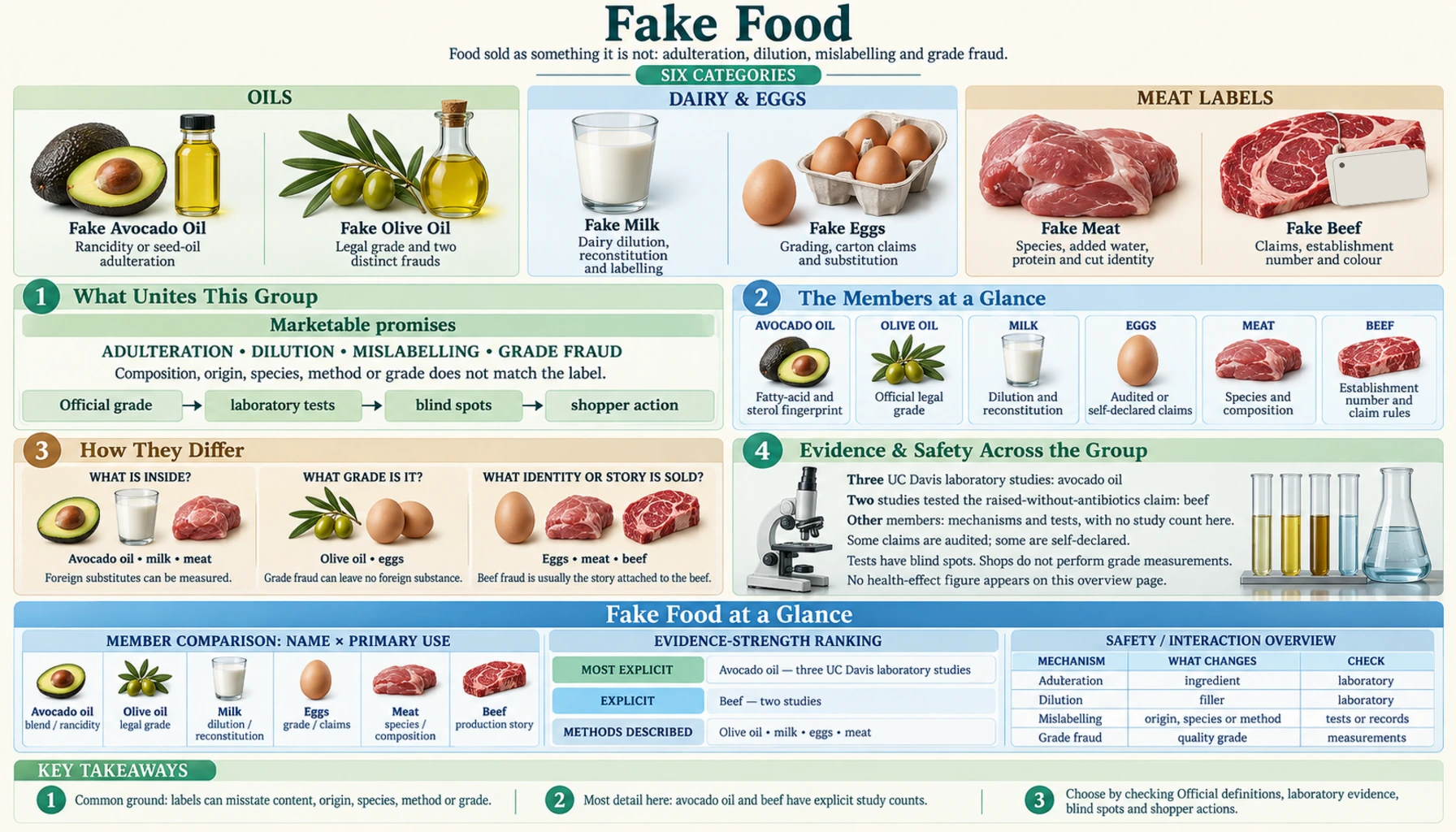
Food sold as something it is not. This section covers adulteration (a cheap ingredient standing in for an expensive one), dilution (a genuine product cut with a cheaper filler), mislabelling (a true origin, species, or production method replaced by a more marketable one), and grade fraud — the quiet one, where the product really is what the label says it is, just several quality grades below the one printed on the front.
Grade fraud is the reason this section exists as its own wing rather than a footnote on each food's page. It is the hardest kind to detect, because there is no foreign substance to find: the oil really is olive oil, the honey really is honey, the fish really is fish. What has been substituted is the grade — and grade is defined by measurements most shoppers have never heard of and no shop performs. Every page here explains what the official grade actually requires, which laboratory tests can tell the difference, what those tests miss, and what a person standing in a shop with no laboratory can genuinely do about it.
Two ground rules for this section. We name categories and mechanisms, never companies — the point is to make you able to judge any bottle rather than to hand you a shopping list that is out of date by next season. And we separate what the regulations actually say from what campaigners on both sides claim they say, because the real regulatory picture is usually more interesting, and more useful, than the slogan.
Connections
- Food — The complete food library, one page per food
- Olive Oil — The nutrition and health page for the genuine article
- Extra Virgin Quality — What quality means for the oil you actually cook with
- Honey — Another of the most adulterated foods in world trade
- Saffron — The most expensive spice, and one of the most faked
- Food Additives — What is deliberately added, and why
- Ultra-Processed Foods — When processing itself is the problem
- Processed Oils — What refining, bleaching and deodorising actually do to a fat
- Seed Oils — The oils most often used to cut a costlier one
- Toxins — The full library of food and environmental exposures
- Hydroxytyrosol — The olive phenol that refining removes
- Mediterranean Diet — The dietary pattern the health claims come from