Carpal Tunnel Syndrome: History and Discovery
Carpal tunnel syndrome (CTS) is the compression of the median nerve as it passes through the narrow carpal tunnel at the wrist, producing the familiar numbness, tingling, and weakness of the thumb, index, and middle fingers. Its history stretches across nearly two centuries: from the English surgeon Sir James Paget, who in 1854 reported the earliest known cases of median-nerve compression at the wrist after injury, through late-nineteenth-century neurologists who described the same symptoms as “acroparesthesia,” to the mid-twentieth-century surgeons who named the condition, proved it was caused by nerve compression, and learned to relieve it. The modern, fully recognizable understanding of the disorder is credited above all to George S. Phalen of the Cleveland Clinic, whose large surgical series in the 1950s and 1960s — and the bedside test that bears his name — turned a poorly understood curiosity into one of the most commonly diagnosed and treatable nerve conditions in medicine.
Table of Contents
- The Carpal Tunnel and Its Name
- Sir James Paget and the First Cases (1854)
- Acroparesthesia: The Nineteenth-Century Puzzle
- Linking the Ligament to the Nerve (1913–1914)
- Naming the Syndrome and Proving the Cause (1938–1947)
- The Rise of Surgical Decompression
- George S. Phalen and the Modern Synthesis
- Objective Diagnosis: Nerve Conduction and EMG
- The Occupational-Use Debate
- Key Research Papers
- Connections
- Featured Videos
The Carpal Tunnel and Its Name
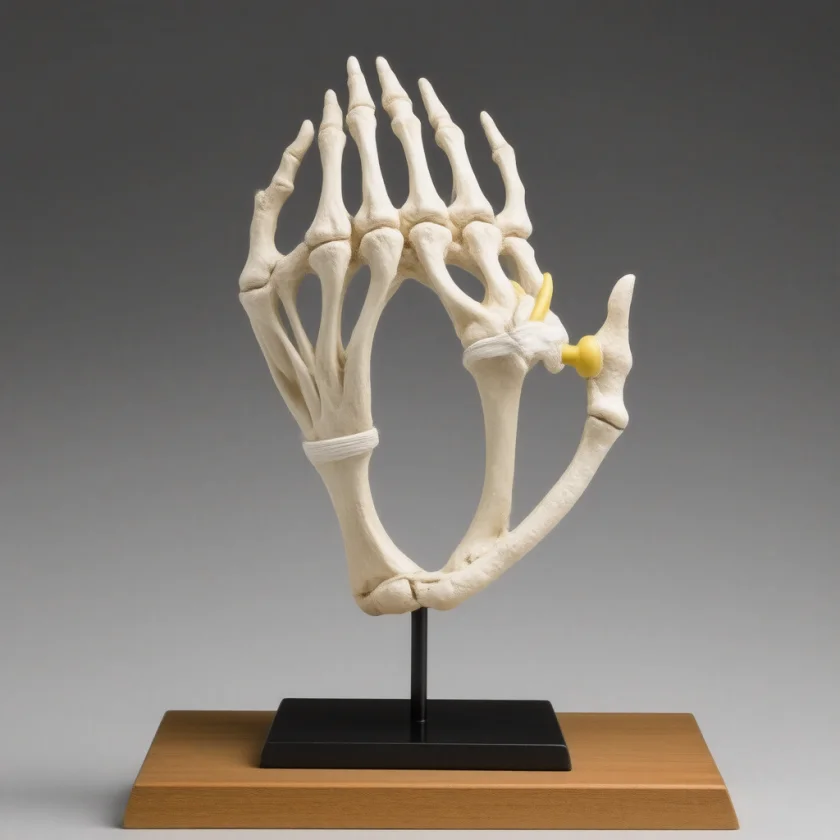
The carpal tunnel is a structure that existed long before it had a clinical reputation. On the palm side of the wrist, the small carpal bones form a shallow arch, and a tough fibrous band — the transverse carpal ligament, also called the flexor retinaculum — bridges that arch like the roof of a tunnel. Through this confined space pass nine flexor tendons and, crucially, the median nerve. Because the tunnel is bounded by bone and unyielding ligament, anything that crowds it — swelling, inflammation, a fracture fragment, fluid retention, or thickened tissue — presses on the softest occupant, the nerve. The anatomy, in other words, contains the whole story of the disease, and anatomists had described these wrist structures centuries before anyone connected them to a recognizable cluster of symptoms.
The phrase “carpal tunnel” derives from carpus, the Latin and Greek-rooted anatomical term for the wrist. For most of medical history the symptoms now attributed to this region were scattered under other labels — vasomotor disturbances, neuritis, partial thenar atrophy, and acroparesthesia among them — because physicians could see the hand failing but had not yet localized the trouble to the nerve’s passage beneath the ligament. The unifying name “carpal tunnel syndrome” is a twentieth-century invention, and its adoption marked the moment the medical community agreed on both the anatomical site and the mechanism. That naming is taken up in a later section; the earlier sections trace how clinicians slowly converged on the right wrist, the right ligament, and the right nerve.
Understanding this anatomical foundation matters for reading the history fairly. The early observers were not foolish for missing the diagnosis; they lacked the conceptual tools — a clear model of focal nerve compression and, later, the electrical tests to confirm it — that make the condition obvious today. The history of carpal tunnel syndrome is a model of how a disease is “discovered”: not in a single flash of insight, but through a century of observations gradually assembled into a coherent picture of cause, site, and cure.
Sir James Paget and the First Cases (1854)
The earliest known clinical description of median-nerve compression at the wrist is credited to Sir James Paget (1814–1899), one of the most influential British surgeons of the nineteenth century and a founder of modern pathology. In his Lectures on Surgical Pathology, delivered at the Royal College of Surgeons and published in 1853–1854, Paget reported cases in which injury at the wrist was followed by lasting disturbance of the hand supplied by the median nerve. The commonly cited date for this first report is 1854. Two cases in particular are repeatedly singled out by later historians: one in which a cord or rope had been wound tightly around a man’s wrist, and another following a fracture at the lower (distal) end of the radius near the wrist joint.
What makes Paget’s account historically pivotal is that he connected a wrist injury to a specific pattern of nerve dysfunction in the hand — the seed of the idea that the median nerve could be damaged precisely where it crosses the wrist. He did not, however, describe the common, spontaneous form of the condition that most patients have today, nor did he identify the transverse carpal ligament as the compressing structure or propose surgical release. His contribution was observational and post-traumatic: he documented that something happening at the wrist could disable the median nerve’s territory in the hand. That single linkage is why nearly every modern review of carpal tunnel syndrome opens with Paget’s name.
It is worth stressing how long Paget’s insight lay relatively dormant. From his 1854 report it would take almost a century before the medical mainstream fully accepted that ordinary, non-traumatic hand numbness was most often caused by compression of the median nerve at the wrist. Paget supplied the first clue; the chain of reasoning that turned that clue into a named, treatable disease was completed only in the 1940s and 1950s by the figures described in the sections that follow.
Acroparesthesia: The Nineteenth-Century Puzzle
Through the late nineteenth century, the symptoms we now recognize as carpal tunnel syndrome — tingling, numbness, and burning in the hands, often worst at night — were most commonly gathered under the term acroparesthesia, literally “abnormal sensation in the extremities.” Patients, frequently middle-aged women, complained of hands that fell asleep, woke them in the small hours, and had to be shaken or hung over the side of the bed for relief. Because the cause was unknown, physicians of the era reached for the explanatory frameworks they had, and most favored a vasomotor theory: the idea that the trouble arose from disordered regulation of blood flow to the hands rather than from a mechanical problem with a single nerve.
Among the notable early descriptions in this tradition is that of the American neurologist James Jackson Putnam of Boston, who around 1880 reported a substantial series of patients with this nocturnal hand paresthesia. Putnam carefully catalogued the clinical picture and, in keeping with his time, leaned toward a vasomotor (circulatory) explanation. His work is significant precisely because it documented the syndrome’s characteristic symptom pattern in detail decades before the compression mechanism was understood; for this reason the historical literature sometimes pairs his name with Paget’s as a key early observer. The association of the symptom with the wrist nerve, however, remained unmade.
The acroparesthesia era illustrates a recurring theme in medical history: a real, well-documented set of symptoms can persist for generations under a name that reflects the prevailing but mistaken theory of its cause. The vasomotor interpretation pointed clinicians away from the wrist and the median nerve. Reframing acroparesthesia as a focal nerve-compression problem required new anatomical correlations and, ultimately, new diagnostic technology, both of which arrived in the twentieth century.
Linking the Ligament to the Nerve (1913–1914)
The decisive shift from a vascular to a mechanical understanding began when clinicians and pathologists started to correlate the symptoms with what they actually found at the wrist. The French neurologists Pierre Marie and Charles Foix are widely credited with an important step in 1913: in a postmortem study of a patient with thenar (thumb-base) muscle wasting, they observed a relationship between thickening of the transverse carpal ligament and compression of the median nerve beneath it. Crucially, they reasoned that dividing the ligament during life might have relieved the problem — an early articulation of the surgical principle that would later define treatment.
Around the same period, observers noted the link between the syndrome and thenar muscle atrophy: the visible wasting of the muscle bulk at the base of the thumb, which the median nerve supplies. A commonly cited date for explicit attention to the thenar-atrophy association is 1914. This was a meaningful clue because it tied a specific, examinable physical sign to the nerve’s motor function, anchoring the abstract idea of “nerve trouble” to something a clinician could see and measure at the bedside. The hand was not merely numb; the muscle the nerve controlled was demonstrably shrinking.
These early-twentieth-century correlations did not immediately overturn the older vasomotor view, and for decades the literature remained fragmented — cases scattered under terms such as median neuritis, tardy median palsy, partial thenar atrophy, and acroparesthesia. But Marie and Foix’s ligament-and-nerve observation, together with the thenar-atrophy link, supplied the mechanistic foundation. The remaining work was to give the assembled picture a single name, prove the mechanism in living patients, and demonstrate a reliable cure — the achievements of the 1940s.
Naming the Syndrome and Proving the Cause (1938–1947)
The term “carpal tunnel syndrome” entered the medical vocabulary in the late 1930s. The coining of the phrase is generally attributed to the American physician Moersch, with a commonly cited date of 1938, who applied it to the cluster of median-nerve symptoms localized to the wrist. Giving the condition a single, anatomically explicit name was itself a conceptual advance: it asserted that the diverse presentations described over the preceding eighty years shared one site and one mechanism — the median nerve, compressed within the carpal tunnel. (Some sources render the date as 1939; readers should treat the precise year as approximate, while the late-1930s coinage and the attribution to Moersch are well established.)
The mechanism was put on firm footing in the mid-1940s by two influential lines of work. At the Mayo Clinic, Cannon and Love reported in 1946 a compilation of cases — commonly cited as nine — in which compression of the median nerve within the carpal tunnel was relieved by surgically sectioning the transverse carpal ligament. This was powerful evidence that the trouble was mechanical and, importantly, curable by decompression. The following year, in 1947, the British neurologist W. Russell Brain, together with A. D. Wright and M. Wilkinson, published an influential paper on spontaneous compression of both median nerves in the carpal tunnel, concluding that the sensory and motor symptoms arose from compression of the median nerve and advocating surgical division of the ligament. Brain’s stature as a neurologist helped move the compression model from a surgical curiosity toward mainstream acceptance.
By the close of the 1940s, then, three things were in place that had been missing for nearly a century: a name that fixed the site, a body of surgical cases proving that releasing the ligament relieved the symptoms, and the endorsement of leading neurologists. What the field still needed was a single clinician to weld this knowledge into a coherent clinical entity — with a reliable bedside test, clear indications for surgery, and a large enough body of cases to convince the profession. That role fell to George Phalen.
The Rise of Surgical Decompression
The surgical treatment of median-nerve compression at the wrist — dividing the transverse carpal ligament to open the tunnel and relieve the nerve — predates its full theoretical justification. Historical accounts credit the Canadian surgeon Herbert Galloway with performing such a decompression as early as 1924, an operation sometimes described as among the first of its kind. Whether or not the very first case can be pinned to a single name, it is clear that operative division of the ligament was being attempted in the first half of the twentieth century, even before the condition had a settled name or an agreed mechanism.
A frequently cited landmark is the work of the British surgeon James Learmonth, who in 1933 outlined a method for decompressing the median nerve at the wrist. Learmonth’s description of the surgical approach gave subsequent surgeons a reproducible technique, and his contribution is regularly noted in historical reviews as an important step toward standardized treatment. Together with the Mayo Clinic series of Cannon and Love in 1946, these surgical reports established that opening the carpal tunnel could reliably restore sensation and function — the strongest possible argument that the disease was one of mechanical compression.
The logic of decompression remains the foundation of treatment to this day. The modern operation, carpal tunnel release, still does exactly what these early surgeons did: it divides the transverse carpal ligament to enlarge the tunnel and take pressure off the median nerve. Later refinements — including endoscopic techniques described from the late 1980s onward — changed the size of the incision and the recovery time, but not the underlying principle. The continuity from Galloway and Learmonth to the present-day hand surgeon is direct and unbroken.
George S. Phalen and the Modern Synthesis
George S. Phalen (1911–1998), a hand surgeon at the Cleveland Clinic, is the figure most responsible for the modern recognition of carpal tunnel syndrome as a common, well-defined, and treatable clinical entity. After service in the Second World War, Phalen established a hand-surgery practice at the Cleveland Clinic and taught at what was then Western Reserve University. Across the 1950s and 1960s he accumulated and analyzed an exceptionally large series of patients — eventually reporting his experience with hundreds of affected hands — and used that volume of cases to characterize the syndrome’s symptoms, natural history, diagnosis, and surgical management with a clarity that earlier, scattered reports had lacked.
Phalen’s name endures most visibly in the bedside test he popularized, the Phalen maneuver: holding the wrists in sustained flexion (classically by pressing the backs of the hands together) to provoke the tingling and numbness of median-nerve compression within about a minute, a simple and still widely used screening sign. Historical accounts note that he presented his diagnostic sign to hand surgeons in the late 1940s and described the syndrome around 1950, well before the full publication of his largest series. His landmark paper reporting a seventeen-year experience with several hundred hands at the Cleveland Clinic, published in 1966, became the pivotal reference that framed carpal tunnel syndrome as the most common compression neuropathy of a peripheral nerve and as a highly treatable orthopedic condition.
Phalen’s achievement was synthesis rather than a single discovery. Paget had seen the post-traumatic cases; Putnam had described the symptom pattern; Marie and Foix had linked the ligament to the nerve; Moersch had named it; Learmonth, Galloway, Cannon, Love, and Brain had shown that decompression worked. Phalen drew these threads together into a clear, practical, clinically usable picture — a recognizable diagnosis, a quick office test, and a definite operation — and backed it with a body of cases so large that the profession could no longer regard the condition as rare or obscure. It is for this reason that the modern recognition of carpal tunnel syndrome is credited largely to him.
Objective Diagnosis: Nerve Conduction and EMG
For most of its history, carpal tunnel syndrome could be suspected only from the patient’s story and physical examination — the distribution of numbness, the night-time pattern, thenar wasting, and provocative signs such as the Phalen maneuver and Tinel’s sign (tapping over the nerve to elicit tingling). These bedside tools are valuable but imperfect, and they cannot directly measure how well the nerve is conducting. The transformation of carpal tunnel syndrome into an objectively confirmable diagnosis came with the development of nerve conduction studies and electromyography (EMG) in the mid-twentieth century.
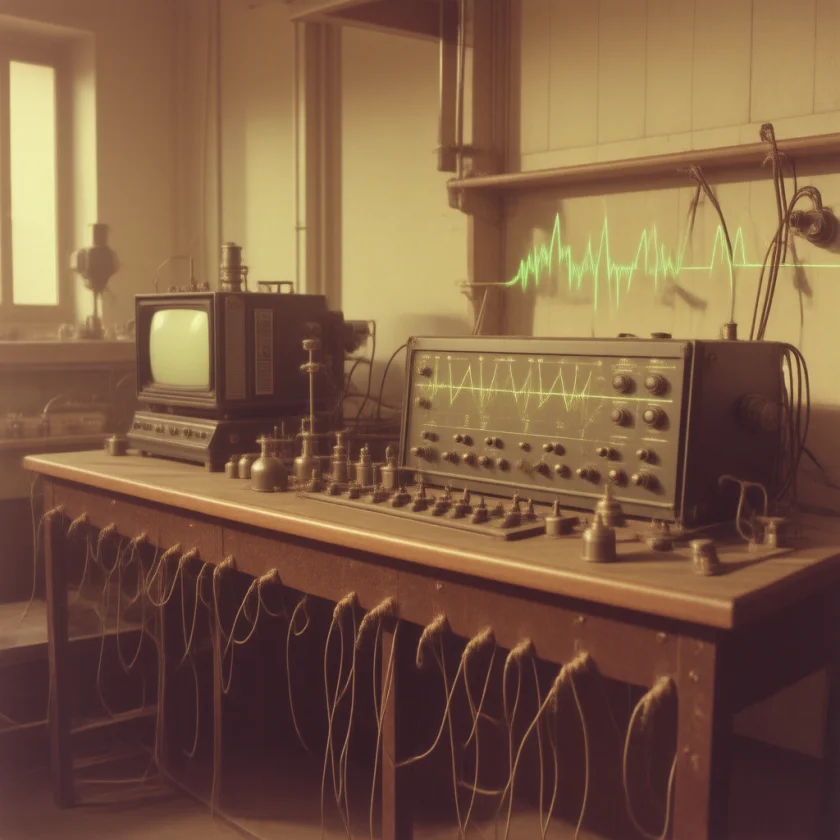
Nerve conduction studies work by stimulating the median nerve electrically and recording how quickly and strongly the signal travels across the wrist. In carpal tunnel syndrome, compression slows conduction at exactly that segment, producing a measurable delay (prolonged distal latency) that pinpoints the lesion to the carpal tunnel. As clinical electrodiagnosis matured through the 1950s and afterward, these techniques became the standard way to confirm the diagnosis, gauge its severity, and distinguish median-nerve compression at the wrist from other causes of hand numbness, such as nerve-root problems in the neck or more diffuse peripheral neuropathy. This capacity to localize the problem electrically was something no nineteenth-century clinician could have achieved.
The arrival of electrodiagnostic testing closed the long loop that began with Paget’s clinical observation. Where earlier physicians had to infer the site and mechanism from symptoms alone — and often inferred wrongly, as in the vasomotor theory of acroparesthesia — the electrical study made the median nerve’s behavior at the wrist directly visible. Combined with Phalen’s clinical framework and the established decompression operation, objective testing completed the modern diagnostic picture: a condition that could be suspected at the bedside, confirmed in the laboratory, and corrected in the operating room.
The Occupational-Use Debate
No part of the carpal tunnel story is more contested than its relationship to repetitive hand use. From at least the mid-twentieth century, observers noticed that some patients whose work involved forceful, repetitive, or vibrating hand tasks seemed prone to the condition, and over the following decades carpal tunnel syndrome became closely associated in the public mind with assembly-line work, keyboard and computer use, and similar activities. This association drove a large body of occupational-health research, workplace-ergonomics programs, and, in many jurisdictions, workers’-compensation claims treating the syndrome as a work-related injury.
The scientific picture, however, is genuinely debated and more nuanced than the popular image suggests. Strong, established risk factors for carpal tunnel syndrome include conditions that reduce the space in the tunnel or predispose the nerve to injury — obesity, pregnancy and fluid retention, diabetes, hypothyroidism, rheumatoid and other inflammatory arthritis, prior wrist fracture, and simple anatomical narrowness, with the condition also being substantially more common in women. The degree to which ordinary occupational hand use — particularly routine computer keyboard work — independently causes the syndrome has been questioned by a number of studies, and remains an area of legitimate scientific disagreement rather than settled fact. Highly forceful and vibratory industrial tasks have firmer support as contributors than light keyboard use does.
This page presents the occupational connection honestly as a real but disputed association, not as a proven universal cause. The historical importance of the debate is twofold: it vastly raised public awareness of the condition, helping make “carpal tunnel” a household phrase, and it shaped decades of policy and litigation. For the individual reader, the practical takeaway is that carpal tunnel syndrome usually arises from a combination of factors — many of them medical and anatomical rather than purely occupational — and that diagnosis and treatment decisions should rest on clinical evaluation and, where appropriate, nerve conduction testing rather than on assumptions about a single cause.
Key Research Papers
The references below combine peer-reviewed historical reviews of carpal tunnel syndrome with curated PubMed topic-search links covering the key figures and milestones discussed above — Paget’s 1854 cases, the acroparesthesia tradition, the ligament–nerve correlation, the naming of the syndrome, the development of surgical decompression, Phalen’s contribution, and electrodiagnostic testing. Where a specific historical paper is named in the text (for example, the original works of Paget, Cannon and Love, or Brain, Wright and Wilkinson), it is identified by author and date as a historical primary source. Each link opens at the cited journal or at PubMed (U.S. National Library of Medicine) in a new tab.
- Amadio PC. The Mayo Clinic and carpal tunnel syndrome. Mayo Clinic Proceedings. 1992;67(1):42-48. — doi:10.1016/S0025-6196(12)60278-X
- Pearce JMS. Acroparaesthesiae: Putnam’s and Schultze’s syndromes and the carpal tunnel syndrome. Journal of Neurology, Neurosurgery & Psychiatry / historical note. — PubMed: acroparaesthesia, Putnam, and carpal tunnel history
- Amadio PC. The first carpal tunnel release? Journal of Hand Surgery (British & European Volume) / historical review. — PubMed PMID: 7759932
- Phalen GS. The carpal-tunnel syndrome. Seventeen years’ experience in diagnosis and treatment of six hundred fifty-four hands. Journal of Bone & Joint Surgery (American). 1966;48(2):211-228. — PubMed PMID: 5934271
- Phalen GS. The diagnosis of carpal tunnel syndrome. Cleveland Clinic Quarterly. 1968;35(1):1-6. — PubMed: Phalen, diagnosis of carpal tunnel syndrome
- Brain WR, Wright AD, Wilkinson M. Spontaneous compression of both median nerves in the carpal tunnel. The Lancet. 1947;1:277-282 (historical primary source). — PubMed PMID: 20287146
- Cannon BW, Love JG. Tardy median palsy; median neuritis amenable to surgery. Surgery. 1946 (historical primary source). — PubMed PMID: 20994804
- Historical review of carpal tunnel syndrome — from Paget to the present. Musculoskeletal Surgery — doi:10.1007/s12306-008-0033-8
- Carpal tunnel syndrome: a historical perspective. Hand Clinics. — PubMed: carpal tunnel syndrome historical perspective
- James Paget’s median nerve compression and the origins of carpal tunnel syndrome. — PubMed: James Paget, median nerve compression
- Marie P, Foix C — carpal ligament and median nerve atrophy (1913); historical accounts of thenar atrophy and median compression. — PubMed: Marie & Foix, carpal ligament and median nerve (history)Search PubMed
- Nerve conduction studies and electrodiagnosis in carpal tunnel syndrome — historical development and current standards. — PubMed: nerve conduction studies in carpal tunnel syndrome
- Occupational and ergonomic risk factors for carpal tunnel syndrome — evidence and controversy. — PubMed: occupational risk factors for carpal tunnel syndrome
- George S. Phalen and the history of hand surgery — biographical and eponym sources. — PubMed: George Phalen and the history of carpal tunnel syndrome. — Search PubMed
External Authoritative Resources
- NINDS (NIH) — Carpal Tunnel Syndrome
- MedlinePlus — Carpal Tunnel Syndrome
- PubMed — All research on the history of carpal tunnel syndrome. — Search PubMed
Connections
- Orthopedics
- Carpal Tunnel Syndrome
- All Conditions
- Peripheral Neuropathy
- Tendinitis
- Sciatica
- Herniated Disc
- Hashimoto’s Thyroiditis (Hypothyroidism)