Seborrheic Dermatitis
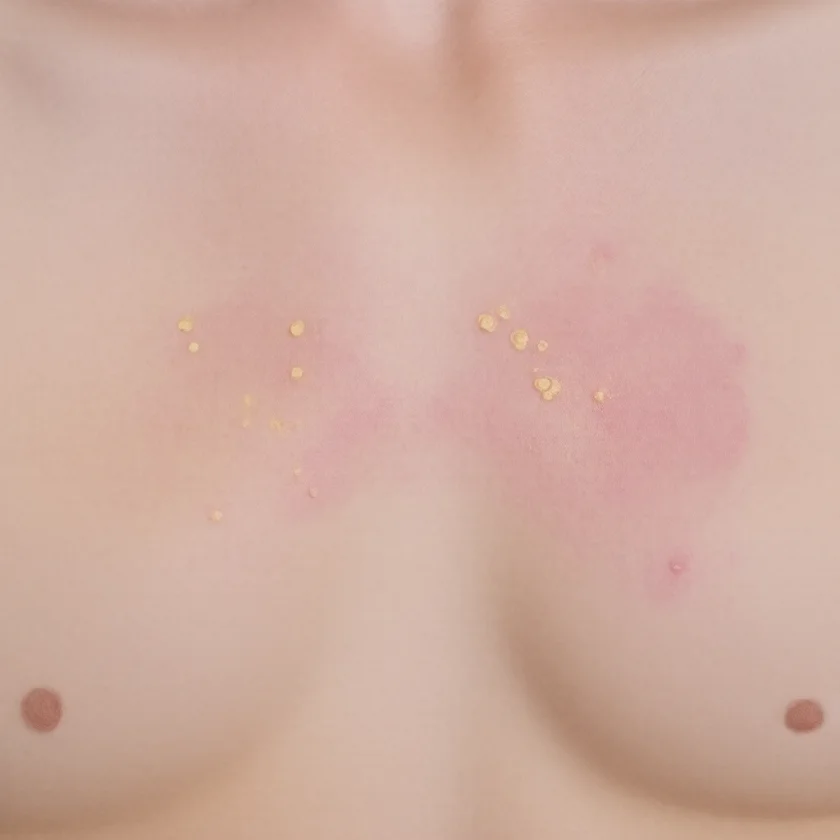
Table of Contents
How Seborrheic Dermatitis Works
Seborrheic dermatitis is a chronic, relapsing inflammatory skin condition that affects areas rich in sebaceous (oil-producing) glands. The word "seborrheic" means related to sebum, and "dermatitis" means skin inflammation. It is one of the most common skin conditions in adults. A 2024 worldwide pooled analysis of 121 studies (about 1.26 million people) put it at 4.38% of people overall: 5.64% of adults, 3.70% of children and 0.23% of newborns, with wide differences between countries.
The condition is closely linked to Malassezia yeast — particularly the species M. globosa and M. restricta — which live naturally on everyone's skin but cause inflammation in people with seborrheic dermatitis through an immune dysregulation. Malassezia breaks down sebum into free fatty acids that irritate the skin and trigger an exaggerated inflammatory response in susceptible individuals.
It typically follows a wax-and-wane pattern: flares during stress, cold weather, or illness, followed by periods of remission. It is not contagious and is not caused by poor hygiene. The scalp form — dandruff — is the mildest and most common presentation. The condition most commonly affects adults in their 30s to 60s and infants in the first months of life.
Where It Appears
Seborrheic dermatitis specifically targets areas with the highest concentration of sebaceous glands:
- Scalp: The most common site. Ranges from mild dandruff (fine white flakes) to thick, greasy yellow crusting with underlying redness. Hair loss does not occur from seborrheic dermatitis itself, but severe scratching can cause temporary shedding.
- Face — T-zone: Nasolabial folds (creases beside the nose), eyebrows, glabella (between the eyebrows), and forehead. Appears as redness with greasy, yellowish flakes.
- Ears: Behind the ears and in the ear canal. Can cause itching, scaling, and weeping.
- Eyelids (Blepharitis): Greasy scaling at the base of eyelashes. Can cause redness, irritation, and crusting. Often associated with a particular form called seborrheic blepharitis.
- Central chest and upper back: Follicular-based erythematous patches, less common than facial/scalp involvement.
- Skin folds (intertriginous areas): Armpits, groin, under the breasts, and umbilicus — especially in overweight individuals.
Infant Cradle Cap
Cradle cap (infantile seborrheic dermatitis) is extremely common in babies during the first weeks to months of life. It appears as thick, yellow or white greasy scales on the scalp, and occasionally involves the eyebrows, ears, and face. Unlike the adult form, cradle cap is not itchy and does not bother the baby.
The cause is thought to be lingering maternal hormones that stimulate the infant's sebaceous glands, combined with the normal Malassezia colonization that occurs shortly after birth.
Home care commonly described:
- A small amount of natural oil (coconut, olive, or mineral oil) left on the scalp for 15–30 minutes to soften scales
- Loosened scales gently lifted off with a soft-bristled brush or fine-toothed comb
- Washing with a gentle baby shampoo
- For persistent or widespread cases, a mild ketoconazole shampoo or low-potency hydrocortisone cream is sometimes prescribed
Cradle cap almost always resolves spontaneously by 6–12 months of age. It does not predict adult seborrheic dermatitis.
Triggers and Worsening Factors
Unlike many skin conditions, seborrheic dermatitis is strongly influenced by internal health factors, not just external irritants:
- Stress and fatigue: The most commonly reported trigger. Emotional and physical stress disrupts immune regulation and may alter sebum production. Many patients notice flares during exams, job changes, or illness.
- Cold, dry weather: Winter is peak season for seborrheic dermatitis. Dry air worsens scaling, and reduced ultraviolet (UV) exposure (which has mild antifungal and anti-inflammatory effects) allows Malassezia to proliferate.
- Neurological conditions: Parkinson's disease is strongly linked: a 2021 review states that seborrheic dermatitis develops in more than half of people with Parkinson's disease, and that in them it can be severe and often hard to treat with ordinary creams and lotions. The mechanism involves altered sebum composition and reduced facial movement limiting normal skin self-cleaning. Other neurological conditions (stroke, facial nerve palsy, spinal cord injuries) also increase risk.
- Human immunodeficiency virus (HIV) and immunosuppression: Seborrheic dermatitis affects approximately 36% of human immunodeficiency virus-positive individuals, and it is often more severe and widespread. It may be one of the first clinical signs of human immunodeficiency virus infection. Organ transplant recipients on immunosuppressive drugs are also at higher risk.
- Certain medications: Psoralen, lithium, interferon, and some antiretrovirals have been associated with seborrheic dermatitis exacerbation.
Distinguishing from Psoriasis
Seborrheic dermatitis and psoriasis can look similar on the scalp and face, and some patients have both — a condition called "sebopsoriasis." Key differences:
- Scale quality: Seborrheic dermatitis scales are greasy, yellowish, and loosely adherent. Psoriasis scales are thick, dry, silvery-white, and firmly attached (scraping them off reveals pinpoint bleeding — the Auspitz sign).
- Location: Seborrheic dermatitis favors oily, flexible areas (nasolabial folds, behind ears, central chest). Psoriasis favors extensor surfaces (elbows, knees, lower back) and scalp margins.
- Nail involvement: Psoriasis commonly causes nail pitting, onycholysis, and oil-drop discoloration. Seborrheic dermatitis does not affect nails.
- Joint involvement: Psoriatic arthritis affects ~30% of psoriasis patients. Seborrheic dermatitis has no joint associations.
- Scalp border: Psoriasis plaques often extend beyond the hairline with a well-demarcated border. Seborrheic dermatitis tends to respect the hairline more closely.
Antifungal Treatments
Since Malassezia yeast plays a central role, antifungal treatments are the cornerstone of seborrheic dermatitis therapy:
- Ketoconazole 2% shampoo or cream: The most extensively studied antifungal for seborrheic dermatitis. Applied to affected areas, left for 3–5 minutes, then rinsed. For active flares: daily to three times per week. Multiple randomized controlled trials show 70–80% clinical response rates.
- Selenium sulfide 2.5%: Available as a shampoo. Reduces Malassezia load through a different mechanism. Effective for scalp disease. Note: leave-on use on the face is generally not recommended due to skin irritation.
- Zinc pyrithione shampoos: Sold over the counter. Antibacterial and antifungal properties. Gentler than ketoconazole — commonly used for mild dandruff or maintenance.
- Ciclopirox olamine: A broad-spectrum antifungal with anti-inflammatory properties, available as a shampoo and cream. Effective for both scalp and facial disease.
Anti-Inflammatory Treatments
For reducing redness and itch during flares — used alongside antifungals:
- Topical corticosteroids: Very effective at rapidly reducing inflammation. Low-potency formulations are the kind used on the face (hydrocortisone 1% cream), because stronger steroids there cause side effects (skin thinning, perioral dermatitis). Medium-potency steroids are used on the scalp for short periods. High-potency steroids are not used on the face long term for the same reason.
- Calcineurin inhibitors (tacrolimus/pimecrolimus): Non-steroidal anti-inflammatory agents that block T-cell activation without the skin-thinning side effects of steroids. Commonly used on the face, especially for long-term use in people prone to steroid side effects. Pimecrolimus 1% cream is particularly well-studied for facial seborrheic dermatitis. They can cause mild burning on application initially.
- Sodium sulfacetamide: An antibiotic (also antifungal) with anti-inflammatory properties, available in lotion and wash formulations. Effective for facial disease, particularly around the nose.
- Roflumilast 0.3% foam: A newer non-steroid option, a phosphodiesterase-4 blocker used once a day. In a 2024 phase 3 trial in teenagers and adults (2 people on roflumilast for every 1 on an inactive foam, 8 weeks), 79.5% of people using roflumilast were clear or almost clear (with at least a 2-point improvement) vs 58.0% on the inactive foam; the difference already showed at week 2 (43.0% vs 25.7%). Side effects were few. The trial lasted only 8 weeks, and the authors called for longer trials of how well and how safely it works over time.
- Combination products: Ketoconazole 2% + desonide (low-potency steroid) combination provides both antifungal and anti-inflammatory action simultaneously.
Maintenance and Long-Term Management
Seborrheic dermatitis cannot be permanently cured, but it can be effectively controlled with consistent maintenance therapy:
- Regular antifungal shampoo use: Once symptoms are controlled with active treatment, antifungal shampoo is commonly continued once or twice weekly as maintenance. Many people use ketoconazole or zinc pyrithione shampoo indefinitely.
- Stress management: Since stress is the most commonly reported trigger, people describe regular exercise, adequate sleep, and mindfulness as helping them stay in remission.
- Gentle skincare: Fragrance-free, non-comedogenic moisturizers are commonly used. Harsh soaps, scrubs, or over-washing strip the skin and can worsen inflammation.
- Sun exposure: Modest natural sunlight (not tanning) has mild benefit — ultraviolet light suppresses Malassezia growth and has anti-inflammatory effects. Many patients note improvement in summer.
- Diet: Evidence is limited, but some patients report improvement by reducing refined sugars (which Malassezia ferments) and alcohol. Some people also describe a Mediterranean-style whole-food diet with oily fish (rich in omega-3 fatty acids) as helping with inflammation.
- Systemic triggers: Seborrheic dermatitis that suddenly worsens or becomes extensive and treatment-resistant can be a sign of human immunodeficiency virus, Parkinson's disease, or another underlying systemic condition.
Key Research Papers
Key peer-reviewed studies on seborrheic dermatitis pathophysiology and treatment. Each PMID link opens the study on PubMed.
- Schwartz RA, Janusz CA, Janniger CK. Seborrheic dermatitis: an overview. Am Fam Physician. 2006;74(1):125-130. — PubMed PMID: 16848386
- Naldi L, Rebora A. Clinical practice. Seborrheic dermatitis. N Engl J Med. 2009;360(4):387-396. — PubMed PMID: 19164189
- Borda LJ, Wikramanayake TC. Seborrheic dermatitis and dandruff: a comprehensive review. J Clin Investig Dermatol. 2015;3(2):10. — PubMed PMID: 27148560
- Gupta AK, Bluhm R. Seborrheic dermatitis. J Eur Acad Dermatol Venereol. 2004;18(1):13-26. — PubMed PMID: 14678527
- Faergemann J. Pityrosporum infections. J Am Acad Dermatol. 1994;31(3 Pt 2):S18-20. — PubMed PMID: 8077501
- Del Rosso JQ. Adult seborrheic dermatitis: a status report on practical topical management. J Clin Aesthet Dermatol. 2011;4(5):32-38. — PubMed PMID: 21607192
- Dessinioti C, Katsambas A. Seborrheic dermatitis: etiology, risk factors, and treatments: facts and controversies. Clin Dermatol. 2013;31(4):343-351. — PubMed PMID: 23806151
- Rietcheck HR, Maghfour J, Rundle CW, Husayn SS, Presley CL, Sillau SH, Liu Y, Leehey MA, Dunnick CA, Dellavalle RP. A Review of the Current Evidence Connecting Seborrheic Dermatitis and Parkinson's Disease and the Potential Role of Oral Cannabinoids. Dermatology. 2021;237(6):872-877. — PubMed PMID: 33333525
- Gupta AK, Madzia SE, Batra R. Etiology and management of seborrheic dermatitis. Dermatology. 2004;208(2):89-93. — PubMed PMID: 15056994
- Polaskey MT, Chang CH, Daftary K, Fakhraie S, Miller CH, Chovatiya R. The Global Prevalence of Seborrheic Dermatitis: A Systematic Review and Meta-Analysis. JAMA Dermatol. 2024;160(8):846-855. — PubMed PMID: 38958996
- Blauvelt A, Draelos ZD, Stein Gold L, et al. Roflumilast foam 0.3% for adolescent and adult patients with seborrheic dermatitis: A randomized, double-blinded, vehicle-controlled, phase 3 trial. J Am Acad Dermatol. 2024;90(5):986-993. — PubMed PMID: 38253129
Curated PubMed topic searches:
Connections
- Dermatology
- Psoriasis
- Eczema
- Rosacea
- Acne
- Alopecia
- Contact Dermatitis
- Melanoma
- Parkinson's Disease
- Tea Tree Oil
- Zinc
- Vitamin D3
- Herbs covered on this site that discuss this condition: Makrut Lime (Citrus hystrix) · Bhringraj / False Daisy (Eclipta prostrata) · Ringworm Bush (Senna alata)