Berberine for Blood Sugar
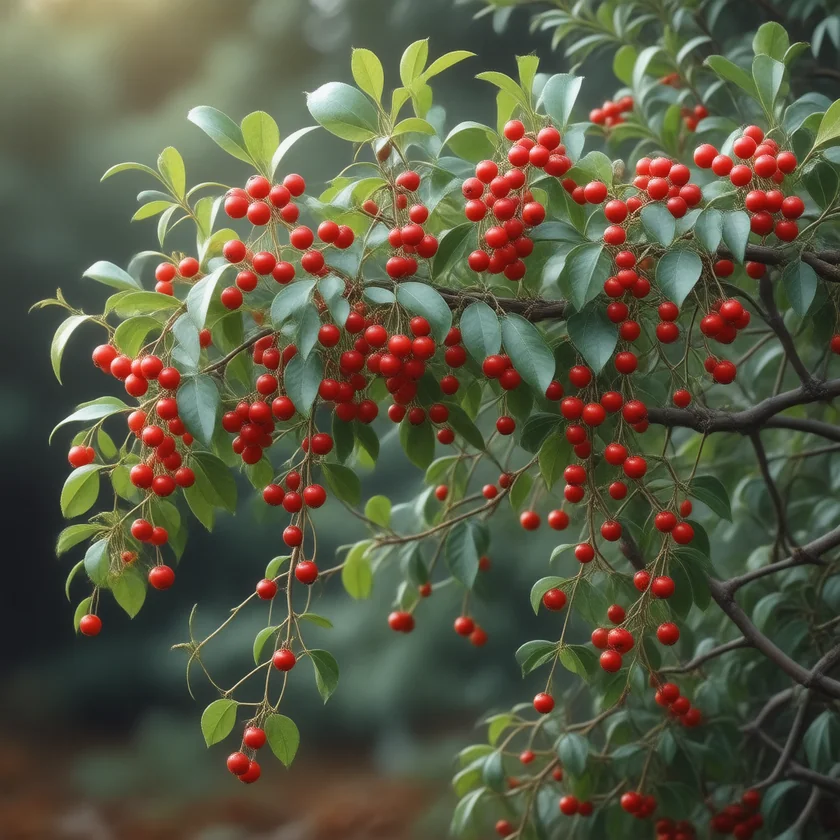
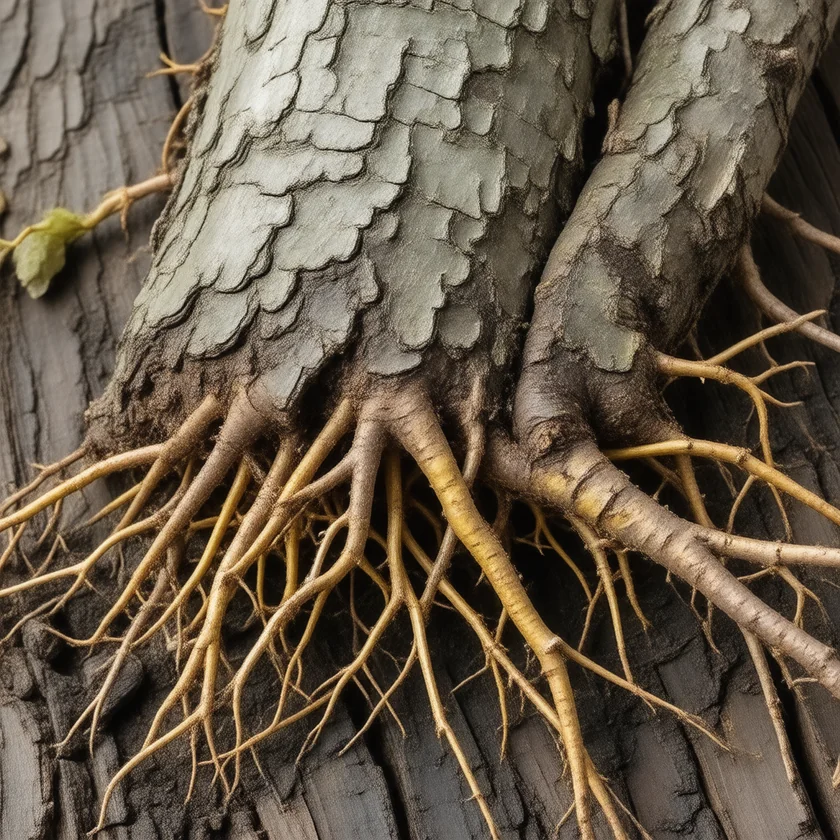
Among blood-sugar supplements, berberine is one of the few with head-to-head data against a first-line prescription drug. It is an isoquinoline alkaloid, bright yellow, extracted from barberry, goldenseal, Oregon grape and Coptis chinensis, and it activates AMP-activated protein kinase — the same final cellular switch metformin acts on.
Evidence base: replicated human trial evidence with glucose and hemoglobin A1c (HbA1c) endpoints, confirmed by independent meta-analysis.
Table of Contents
The Metformin Comparison
In 2008 Yin, Xing and Ye randomised 36 newly diagnosed type 2 diabetics to berberine 500 mg three times daily or metformin 500 mg three times daily for three months — head to head, no other antidiabetic medication. The falls in fasting glucose and hemoglobin A1c were statistically indistinguishable between the two arms. In the berberine arm, HbA1c fell from 9.5% to 7.5% and fasting glucose from 10.6 to 6.9 mmol/L. That single small trial is what moved berberine out of the general supplement conversation, because almost nothing else on a shelf has been measured directly against a drug that works.
The same 2008 paper reported a second study, without a comparison group: 48 adults whose type 2 diabetes was poorly controlled added berberine for three months. HbA1c fell from 8.1% to 7.3%, fasting insulin fell 28.1% and the insulin-resistance index (HOMA-IR) fell 44.7%. Across the trial, 20 patients (34.5%) had passing stomach or bowel side effects, and no liver or kidney damage was seen in any patient.
Thirty-six patients is a small trial and one result is not a literature. The confirmation matters more than the headline. Wang and colleagues' 2024 systematic review in Frontiers in Pharmacology pooled 50 studies and 4,150 participants and found berberine alone significantly reduced fasting plasma glucose (−0.59 mmol/L), two-hour postprandial glucose (−1.57 mmol/L) and low-density lipoprotein (LDL) cholesterol (−0.30 mmol/L). Its HbA1c result (−0.69 percentage points) was for berberine added to glucose-lowering drugs; the abstract gives no HbA1c figure for berberine alone.
An earlier 2022 meta-analysis in the same journal (Xie and colleagues) pooled 37 trials with 3,048 patients, counting berberine alone or added to diabetes tablets. Fasting glucose fell by 0.82 mmol/L, HbA1c by 0.63 percentage points and two-hour glucose by 1.16 mmol/L. Low blood sugar (hypoglycemia) was not significantly more common (relative risk 0.48, p = 0.08), and the size of the glucose-lowering effect was related to patients' starting fasting glucose and HbA1c levels.
One honest caveat about that body of work: a large share of berberine trials are small, conducted in China, and of mixed methodological quality. The effect is consistent enough to be believed; the precise size of it is less settled than the number of studies suggests.
AMP-Activated Protein Kinase, and Why That Matters
AMP-activated protein kinase is the cell's low-energy sensor. When it activates it switches the cell from storing fuel to burning it: glucose uptake rises, hepatic gluconeogenesis falls, fatty acid oxidation increases. Metformin's principal action is on this pathway, and berberine reaches it too.
That shared mechanism is the reason berberine is often described as a "natural metformin." It is a fair description of the pathway and a poor description of the regulatory reality: metformin has decades of outcome data, dose standardisation and pharmacovigilance behind it, and berberine has none of those. Same switch, very different evidence base.
Dosing
The trial dose is 500 mg three times daily, taken with meals, for a total of 1,500 mg a day. The thrice-daily schedule is not arbitrary: berberine has poor oral bioavailability and a short duration of action, so a single large dose is both less effective and harder on the gut than three smaller ones.
Gastrointestinal upset — cramping, diarrhoea, constipation — is the common reason people stop. Starting at one dose a day and building over a week or two is the usual way around it.
Cautions
- It lowers blood glucose, and so does your medication. The effects add. With insulin or a sulfonylurea this is a hypoglycemia risk — see hypoglycemia awareness and prevention.
- Berberine slows the drug-processing enzymes cytochrome P450 2D6, 2C9 and 3A4 (CYP2D6, CYP2C9, CYP3A4) in people. This is a drug-interaction mechanism, not a nutrition one: it raises blood levels of a long list of unrelated medications, including statins, ciclosporin and some anticoagulants. In a 2012 study, healthy men took berberine 300 mg three times a day for two weeks. CYP2D6 activity dropped sharply (the dextromethorphan/dextrorphan ratio in urine rose ninefold), CYP2C9 activity fell (the losartan/E-3174 ratio doubled), and CYP3A4 was inhibited more modestly: blood exposure to the test drug midazolam rose 40%, its peak level rose 38% and its oral clearance fell 27%. In a 2006 healthy-volunteer study, berberine raised ciclosporin blood exposure by 19.2% in one group and made no significant change in another. This is the most important safety fact on this page and the one most often left out.
- Pregnancy and newborns. Berberine displaces bilirubin from albumin, the blood protein that carries it. In a 1993 laboratory study it did so about ten times more strongly than phenylbutazone, a known strong displacer, and in adult rats a week of daily berberine injections raised unbound and total bilirubin. The Chinese herb huanglian (Coptis chinensis), whose main ingredient is berberine, has been reported to pose some risk of kernicterus (bilirubin brain damage) in jaundiced newborns, and the study's author concluded that berberine-rich herbs are best avoided in jaundiced newborns and pregnant women.
- Measuring shows an interaction early. Without measuring blood glucose, an interaction with a new supplement shows up as a symptom rather than as a number.
Key Research Papers
Every DOI below was checked against Crossref and the abstract read for support before it was listed.
- Yin J, Xing H, Ye J. Efficacy of berberine in patients with type 2 diabetes mellitus. Metabolism, 2008;57(5):712–717 — doi:10.1016/j.metabol.2008.01.013 — The berberine-versus-metformin head-to-head trial.
- Wang J, et al. Effects of administering berberine alone or in combination on type 2 diabetes mellitus: a systematic review and meta-analysis. Frontiers in Pharmacology, 2024;15:1455534 — doi:10.3389/fphar.2024.1455534 — Fifty studies, 4,150 participants.
- Xie W, et al. Glucose-lowering effect of berberine on type 2 diabetes: a systematic review and meta-analysis. Frontiers in Pharmacology, 2022;13:1015045. — doi:10.3389/fphar.2022.1015045
- Guo Y, Chen Y, Tan ZR, Klaassen CD, Zhou HH. Repeated administration of berberine inhibits cytochromes P450 in humans. European Journal of Clinical Pharmacology, 2012;68(2):213–217 — PubMed PMID: 21870106
- Xin HW, Wu XC, Li Q, Yu AR, Zhong MY, Liu YY. The effects of berberine on the pharmacokinetics of cyclosporin A in healthy volunteers. Methods and Findings in Experimental and Clinical Pharmacology, 2006;28(1):25–29 — PubMed PMID: 16541194
- Chan E. Displacement of bilirubin from albumin by berberine. Biology of the Neonate, 1993;63(4):201–208 — PubMed PMID: 8513024