Hypoglycemia Awareness and Prevention
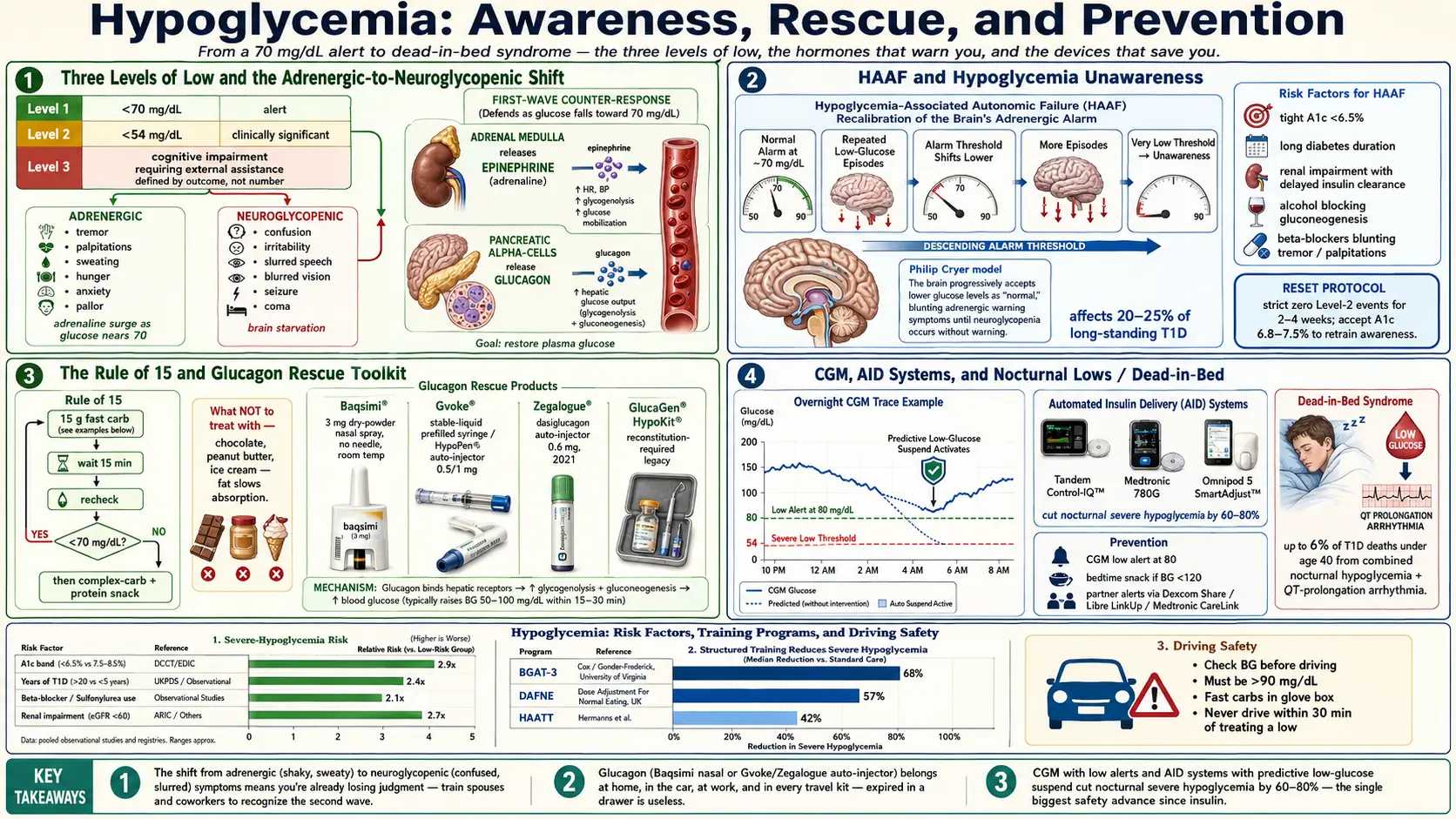
Table of Contents
- Definitions — Three Levels of Low
- Symptoms — Early vs. Late
- Hypoglycemia Unawareness and HAAF
- Risk Factors
- The Rule of 15
- Glucagon Rescue for Severe Hypoglycemia
- Continuous Glucose Monitors and Automated Insulin Delivery
- Restoring Awareness
- Nocturnal Hypoglycemia and Dead-in-Bed
- Alcohol, Exercise, and Sick Days
- Special Populations
- Driving Safety
- Spouse and Partner Impact
- Rare Differentials — Insulinoma and Post-Bariatric
- Cell Therapy for Severe Hypoglycemia
- Key Research Papers
- Connections
- Featured Videos
Definitions — Three Levels of Low
A joint position statement of the American Diabetes Association and the European Association for the Study of Diabetes, written by the International Hypoglycaemia Study Group and published in Diabetes Care in 2017 (online November 2016), set out the levels that trials, guidelines and continuous glucose monitor (CGM) readouts now use. The level shows how fast a low needs treating and how serious it is.
- Level 1 — Glucose alert value. Blood glucose <70 mg/dL (3.9 mmol/L) but ≥54. This is the "get some sugar now" threshold. You may or may not feel symptoms. It is not yet dangerous but it is the warning light on the dashboard.
- Level 2 — Clinically significant hypoglycemia. Blood glucose <54 mg/dL (3.0 mmol/L). At this level the brain is measurably impaired and the counterregulatory hormone response is fully activated. Research trials count Level 2 events as meaningful adverse outcomes.
- Level 3 — Severe hypoglycemia. Any low glucose event that causes cognitive impairment severe enough to require external assistance — another person feeding you juice, injecting glucagon, or calling 911. Level 3 is defined by the outcome, not a specific number. A reading of 45 mg/dL you treated yourself is Level 2; a reading of 58 that left you confused and needing help is Level 3.
The jump from Level 1 to Level 3 can take minutes in an insulin-using patient, which is why the 70 mg/dL alert matters so much. A person at Level 1, and often at Level 2, can still treat a low alone with a juice box. Level 3 by definition needs another person.
Symptoms — Early vs. Late
Low blood sugar produces two distinct waves of symptoms, and they tell you different things about what is happening in your body.
Adrenergic symptoms (early). As glucose falls toward 70, the adrenal glands dump epinephrine and the pancreas dumps glucagon. You feel the adrenaline:
- Tremor — shaky hands
- Palpitations — fast or pounding heart
- Sweating — cold, clammy, often on the forehead and chest
- Hunger — sudden, urgent
- Anxiety — a wash of dread that feels out of proportion
- Pallor and goosebumps
These are the "treat it now" symptoms, the body's early warning system.
Neuroglycopenic symptoms (late). If glucose keeps falling, the brain itself starts to fail because it cannot make its own glucose. The symptoms shift from adrenaline-driven to brain-starvation:
- Confusion, difficulty concentrating
- Irritability, unreasonable behavior, crying or anger that feels out of character
- Slurred speech
- Blurred or double vision
- Incoordination — bumping into walls, dropping things
- Seizure
- Coma
By the time neuroglycopenic symptoms appear, judgment is already impaired. You may not realize you are low. You may refuse juice that a spouse is offering you. This is why it matters that the people around a person with diabetes know the signs and where the glucagon is: willpower does not help at this stage.
Hypoglycemia Unawareness and HAAF
After repeated low glucose events, the body's alarm system gets quieter. This is called hypoglycemia-associated autonomic failure (HAAF), first described in detail by Philip Cryer. Every low teaches the brain to expect lows, and the adrenergic release that used to fire at 70 now fires at 55, or 50, or not at all. The first warning you get is no longer shakiness — it is confusion.
Roughly 20–25% of people with long-standing type 1 diabetes develop some degree of hypoglycemia unawareness. The rate is lower but still meaningful in insulin-treated type 2. It is the single strongest predictor of severe hypoglycemia, car accidents, and hypoglycemia-related hospitalization.
The cruel part of HAAF is that it is caused by the thing you are trying to avoid. Every Level 2 low raises the bar for the next one. A tight hemoglobin A1c target achieved through frequent lows is a setup for eventual unawareness. Restoring awareness (covered below) rests on avoiding lows for weeks to months so the symptom alarm can return.
Risk Factors
Hypoglycemia does not strike randomly. The risk factors are well mapped, and knowing yours is the first step in prevention:
- Tight hemoglobin A1c targets. A hemoglobin A1c below 6.5% in an insulin user usually means frequent lows. The benefit of an ultra-low hemoglobin A1c has to be balanced against the cost of hypoglycemia — especially in older adults.
- Long diabetes duration. Counterregulatory responses weaken over years. A 40-year type 1 has a very different risk profile than a five-year type 1.
- Renal impairment. The kidneys clear insulin. As estimated glomerular filtration rate (eGFR) drops, insulin lingers, and doses that used to work now overshoot.
- Alcohol. Ethanol blocks the liver from producing glucose (gluconeogenesis) for 8–12 hours. This is why overnight lows after evening drinks are so dangerous.
- Missed or delayed meals. Bolus insulin already injected + no carbs arriving = a predictable crash.
- Exercise without adjustment. Muscles pull glucose without needing insulin during and after exercise. Lows can appear up to 24 hours later.
- Insulin dosing errors. Mixing up basal and bolus pens is one of the most common causes of severe hypoglycemia seen in emergency rooms.
- Sulfonylureas in the elderly. Glyburide and glipizide cause prolonged lows that can last 24–72 hours in older patients with renal decline. The American Diabetes Association's 2025 Standards of Care say sulfonylureas in older adults "should be used with caution": if used, shorter-acting ones such as glipizide are preferred, and glyburide "should be avoided in older adults."
- Beta-blockers. These blunt the tremor and palpitations of adrenergic warning, leaving only sweating. A continuous glucose monitor alarm does not depend on those body signals.
- Sleep deprivation and irregular schedules. Poor sleep impairs counterregulation and raises variability.
The Rule of 15
The standard protocol for treating a low, as set out by the National Institute of Diabetes and Digestive and Kidney Diseases (15 to 20 grams at a reading under 70 mg/dL), is simple enough to remember at 3 a.m.:
- 15 grams of fast-acting carbohydrate. Pure glucose is best because it raises blood sugar within 10–15 minutes without fat or fiber to slow it down.
- Wait 15 minutes.
- Recheck. If still <70, repeat. If >70 and the next meal is more than an hour away, follow with a complex carb + protein snack (crackers with peanut butter, half a turkey sandwich, a glass of milk) to hold the level. A small study shows why: in people with type 1 diabetes, 10 g of oral glucose raised plasma glucose from 3.0–3.3 mmol/L to 5.4 mmol/L within 30 minutes and 20 g raised it to 6.8 mmol/L within 45 minutes, "but the responses were transient" (Wiethop and Cryer, 1993).
What counts as 15 grams of fast-acting carb:
- 4 ounces (120 mL) of juice or regular soda. Orange juice has a lot of potassium, which the National Institute lists as a concern with kidney disease; it names apple, grape or cranberry juice instead
- 4 glucose tablets (most tablets are 4–5 g each)
- 1 tablespoon of honey or table sugar
- 1 tube of glucose gel
- 8–10 hard candies or jelly beans (the package label gives the carbohydrate per piece)
What does not count as a fast correction at 3 a.m.:
- Chocolate. The fat slows glucose absorption by 30–60 minutes. People over-treat while waiting for a response.
- Nut butter, ice cream, cookies. Same reason — fat is the enemy of fast correction.
- Bread or crackers alone. Too slow as a rescue, though fine as the follow-up snack.
Over-treatment. The most common hypoglycemia mistake is panic-eating the entire pantry. A properly dosed 15 g will raise blood glucose by about 40–50 mg/dL. Inhaling 60 g of carbs at 3 a.m. can mean a reading of 250 by breakfast and a correction bolus that causes the next low. The counting, the 15-minute wait and the recheck exist to prevent this.
Glucagon Rescue for Severe Hypoglycemia
When a person with diabetes cannot swallow, is seizing, or is unconscious, oral sugar can go into the lungs. The rescue is glucagon, the counter-hormone to insulin, which tells the liver to dump stored glucose into the bloodstream. Because severe hypoglycemia needs another person to treat it, the nasal glucagon label directs patients to tell those around them about the device and how it is used.
The choice of glucagon matters because the old kit is intimidating in an actual emergency. Four products are available in 2026:
- Nasal glucagon. A single-use nasal device containing 3 mg of dry-powder glucagon. No needle, no reconstitution. The FDA label says to store it at up to 86°F (30°C) in its shrink-wrapped tube, and that if the tube has been opened the device "may have been exposed to moisture and may not work as expected." The helper inserts the tip into one nostril and presses the plunger. The dose does not need to be inhaled. Approved 2019; the adult trial is Rickels et al. (2016).
- Glucagon injection (prefilled syringe or auto-injector). Stable liquid glucagon in 0.5 mg (pediatric) or 1 mg (adult) doses. The auto-injector works like an epinephrine auto-injector — uncap, press against the thigh, hold for 5 seconds. The prefilled syringe is cheaper but requires exposing a needle. The label says to store it at 68–77°F (20–25°C), with short excursions allowed between 59 and 86°F, and not to refrigerate or freeze it. Approved 2019. In the phase 3 studies of 161 adults (Christiansen et al., 2021), blood sugar recovered on average 13.8 minutes after the dose, against 10.0 minutes for the old kit, while preparing and giving the dose took 27.3 seconds against 97.2 seconds.
- Dasiglucagon auto-injector. A stable-liquid glucagon analog, 0.6 mg auto-injector. Rapid onset, comparable to glucagon injection. The label says to store it in a refrigerator; it can be kept at room temperature (68–77°F) for up to 12 months, must not go back in the refrigerator, and is then discarded. Approved 2021.
- Glucagon emergency kit. The old reconstitution kit — a vial of powder, a syringe of diluent, mix and inject. Still on the market and sometimes cheaper, but studies consistently show bystanders fumble it under stress.
The people nearby. Glucagon is useless in a drawer if a spouse, roommate, adult child, or coworker doesn't know it exists. Families describe showing them the device, practicing with a trainer, and leaving a note on the fridge such as: "Nasal glucagon in the nightstand — nasal tip in either nostril — then call 911."
Multiple locations. People who keep more than one device describe placing them in the car, at work, in the gym bag, and in travel kits, because severe lows can happen anywhere. The storage limits above apply: none of the labels allows storage above 86°F, and a parked car in warm weather can go above that.
Expiration. Each device carries its own expiration date, and dasiglucagon has the earlier limit of 12 months once it is out of the refrigerator. Pharmacies do not automatically send a reminder, and an expired glucagon in an emergency is a disaster.
Cost and coverage. Retail cash prices in 2024–2026 run $300–$400 per device. Discount cards and manufacturer coupons typically bring that to $100–$250. Commercial insurance and Medicare Part D generally cover glucagon with prior authorization — after a denial, a prescriber can submit a medical-necessity letter citing the insulin regimen and any prior severe hypoglycemia. Most plans approve on appeal.
Continuous Glucose Monitors and Automated Insulin Delivery
The single biggest change in hypoglycemia safety in the past decade is not a new drug — it is the continuous glucose monitor paired with an insulin pump that can turn itself off.
Predictive low-glucose suspend is a feature in all three major automated insulin delivery systems:
- A tubed pump with a continuous glucose monitor — the pump predicts glucose 30 minutes ahead and reduces or stops basal insulin when a low is projected.
- A tubed pump with its maker's sensor — the pump suspends basal when glucose trends low and auto-corrects when trending high.
- A tubeless pod — the pod pairs with a continuous glucose monitor and adjusts every five minutes.
The measured results are mixed. In a 6-month randomized trial of 168 people with type 1 diabetes, time under 70 mg/dL fell by 0.88 percentage points against a sensor-augmented pump, and no serious hypoglycemic events occurred in either group (Brown et al., 2019). In a 2025 crossover trial of 82 adults aged 65 to 86 with type 1 diabetes, time under 70 mg/dL was 2.57% on a sensor-augmented pump, 1.58% on a hybrid closed loop and 1.67% on predictive low-glucose suspend (Kudva et al., 2025). In an observational study of 13,922 young people aged 2 to 20, automated delivery showed no significant difference in severe hypoglycemia against open-loop pumps (5.59 vs 6.63 per 100 patient-years), a lower rate of hypoglycemic coma (0.62 vs 0.91) and a higher rate of diabetic ketoacidosis (1.74 vs 0.96) (Karges et al., 2025). See the continuous glucose monitor and automated delivery article for the full comparison.
Restoring Awareness
Hypoglycemia unawareness is not always permanent. The warning symptoms can come back, but it takes a deliberate, uncomfortable choice: strict avoidance of lows for weeks to months. Clinicians describe this as accepting a higher hemoglobin A1c (6.8–7.5% instead of 6.2%) and running glucose targets of 80–180 instead of 70–140 during the reset. In one 1994 study, symptoms were entirely normal after 3–4 weeks and at 3 months of avoidance, but "none of the neuroendocrine responses increased" (Dagogo-Jack et al., 1994). In another, 12 patients recovered both hormone and symptom responses after about 4 months of avoidance, and hemoglobin A1c did not worsen significantly (Cranston et al., 1994). So symptoms returned in both studies; hormone recovery differed between them.
Patient-facing structured programs take this further:
- Blood Glucose Awareness Training (BGAT) — published versions include BGAT-2 and BGAT III (Schächinger et al., 2005); developed by Daniel Cox and Linda Gonder-Frederick at the University of Virginia. A seven-session course teaching patients to detect early adrenergic cues, predict glucose from context (meals, insulin, exercise), and prevent the cascade to Level 3. A long-term study of BGAT-2 in 73 adults, a repeated-baseline design and not randomized, reported fewer severe lows, ketoacidosis episodes and driving violations at follow-up (Cox et al., 2001). In a 2022 randomized trial, severe lows in both BGAT and a newer program fell from a median of 5 a year at baseline to 1 at 12 months and 0 at 24 months, with no superiority of either (Amiel et al., 2022).
- DAFNE (Dose Adjustment For Normal Eating) — a five-day structured program widespread in the UK and increasingly available internationally. Teaches carb counting, insulin-to-carb ratios, correction factors, and hypoglycemia management. Attending DAFNE reduces severe hypoglycemia rates and improves quality of life.
- Hypoglycemia Anticipation, Awareness and Treatment Training (HAATT) — another structured option, often available through endocrinology practices. A randomized trial in 60 Bulgarian adults with repeated severe lows found fewer moderate and severe episodes at long-term follow-up than with self-monitoring alone (Cox et al., 2004).
These programs are reached through endocrinology practices. Online BGAT materials and DAFNE Online also exist.
Nocturnal Hypoglycemia and Dead-in-Bed
Nighttime is the most dangerous window. You are asleep, you cannot feel adrenergic symptoms, and if a low is severe enough to cause seizure or arrhythmia, no one may find you in time. Dead-in-bed syndrome — a rare but real event in young type 1 patients who go to sleep apparently well and are found dead with no structural cause at autopsy — is thought to involve a combination of severe nocturnal hypoglycemia and a heart-rhythm disturbance driven by a lengthened QT interval on the electrocardiogram. The newest systematic review, of 26 records, puts this pattern at 2 to 5% of deaths in children, adolescents and young adults with type 1 diabetes, with a slight decrease since 1991. It found no studies published after 2018, says the effect of technology on overnight deaths is "not fully understood," and names living alone, alcohol and illicit substances as recurring risk factors (Jones et al., 2022). The low-glucose account is not the whole picture: in one registry, a review committee classed 4 of 7 dead-in-bed cases as diabetic coma, 1 as heart muscle disease and 2 as unknown (Secrest et al., 2011).
Approaches used against nocturnal lows:
- A continuous glucose monitor with low alerts. Some users set the alert at 80 mg/dL to get more warning.
- A bedtime snack when blood glucose is under 120. A small complex-carb + protein snack (Greek yogurt, cheese and crackers, half a peanut-butter sandwich) blunts the overnight drift.
- Timing of insulin doses. Heavy doses within 2–3 hours of bed are a known cause: late corrections stack with basal and cause the classic 2 a.m. low.
- Automated insulin delivery with low-glucose suspend. The pump cuts insulin when a low is predicted (see the measured results above).
- Partner alerts. Manufacturers' sharing apps can push continuous glucose monitor alerts to a spouse's or parent's phone — sometimes literally waking the person who then wakes the sleeper.
Alcohol, Exercise, and Sick Days
Alcohol. Ethanol suppresses hepatic gluconeogenesis for 8–12 hours. The result is a predictable late-night or early-morning low, often at 3–5 a.m., after evening drinking. Practices diabetes educators describe:
- Drinking with food: the National Institute of Diabetes and Digestive and Kidney Diseases says it is safer to eat some food at the same time.
- A blood glucose check before bed, and a snack if it is under 120.
- Extra insulin to "correct" a slightly high pre-bed glucose after drinking adds to the risk: the alcohol amplifies the overnight drop.
- Companions knowing about the diabetes. Alcohol intoxication and severe hypoglycemia look identical to bystanders, and delayed glucagon is a common cause of hospitalization.
Exercise. Muscles pull glucose during and after activity, and the effect lasts up to 24 hours post-workout. "Delayed hypoglycemia" the night after a long run is extremely common. Mitigations people describe: a lower basal insulin rate after strenuous exercise, worked out with the prescriber, a mixed snack before bed, and a higher continuous glucose monitor low alert than usual.
Sick days. Illness is a paradox. Infection raises insulin needs, but nausea and poor intake cut carb load. Patients often bolus for food they plan to eat, then can't keep it down, and crash. The approach diabetes educators describe is mealtime insulin for carbohydrates actually eaten, sips of sugar-containing fluids if glucose is trending low, and ketone checks in parallel — hypoglycemia and diabetic ketoacidosis can coexist and confuse the picture.
Special Populations
Pregnancy with type 1 diabetes. Guidelines push glucose targets tighter (fasting <95, post-meal <140) precisely when insulin sensitivity shifts week to week. Hypoglycemia rates in the first trimester are often 3–5x baseline. Automated insulin delivery systems with pregnancy-specific algorithms are in use in the UK, and adjusted off-label use in the US. On glucagon in pregnancy, the labels report that case reports and small observational studies over decades "have not identified a drug associated risk," and that there are no available data for dasiglucagon in pregnant women. The dasiglucagon label adds that untreated hypoglycemia in pregnancy "can cause complications and may be fatal."
Elderly with cognitive impairment. The American Diabetes Association's 2025 Standards of Care set a hemoglobin A1c goal of under 8.0% for older adults with complex or intermediate health, such as mild to moderate cognitive impairment, and say to "avoid reliance on A1C" in very complex or poor health, including moderate to severe cognitive impairment, where the aim is to avoid hypoglycemia and symptomatic high blood sugar. They state "no benefits of tight glycemic goals" in that group. For people at high risk of lows, the Standards describe cutting back hypoglycemia-causing drugs (insulin, sulfonylureas, meglitinides) or switching to a class with low hypoglycemia risk; the noninsulin examples they list include metformin, dipeptidyl peptidase-4 inhibitors, sodium-glucose cotransporter-2 inhibitors and glucagon-like peptide-1 receptor agonists. See glucagon-like peptide-1 (GLP-1) and sodium-glucose cotransporter-2 (SGLT2) medications.
Children and teens. Schools in the US are required under Section 504 to accommodate diabetes management. A Diabetes Medical Management Plan (DMMP) and a 504 plan typically specify who checks glucose, who administers insulin, where glucagon is stored, and which staff are trained to use it. Nasal glucagon has transformed school emergency response because any adult can give it without needle training.
Driving Safety
A check before driving is common practice. Some people with diabetes and their educators treat a reading under 100 mg/dL before starting the car. A low at 55 mph has killed patients and bystanders. The 2024 American Diabetes Association statement says a diagnosis of diabetes on its own is not sufficient to judge a person's driving ability or safety, and it sets out U.S. licensing rules and general guidelines for assessing fitness to drive (Cox et al., 2024).
Common practices, the first and third of them required for insulin-treated Group 1 drivers in the UK (at the start of the first journey and at least every 2 hours during it):
- A glucose check shortly before driving; some people use a 30-minute window.
- Fast-acting carbs (glucose tablets, juice box) within arm's reach — not in the trunk.
- A recheck every two hours on long drives.
- When a driver feels low: pulling over at once, treating, waiting 15 minutes and rechecking before driving again.
Reporting requirements. In the UK, the Driver and Vehicle Licensing Agency requires drivers with insulin-treated diabetes to notify it. A Group 1 (car and motorcycle) driver must not have had 2 or more episodes of severe hypoglycemia while awake in the preceding 12 months, with the most recent more than 3 months ago. A Group 2 (bus and lorry) driver must have had no episode of severe hypoglycemia in the preceding 12 months. In the US, state Department of Motor Vehicles rules vary. California Health and Safety Code section 103900, for example, requires physicians to report every patient aged 14 or older diagnosed with a disorder characterized by lapses of consciousness; whether a given case falls inside that term depends on the state health department's definition, and a physician may also report a case outside it. A first emergency-room visit for severe hypoglycemia can therefore bring licensing paperwork.
Spouse and Partner Impact
The person sleeping next to someone with diabetes carries an invisible load. Partner surveys consistently show elevated rates of sleep disruption, anxiety, hypervigilance, and depression in spouses of type 1 patients with severe hypoglycemia history. They wake to check their partner is breathing. They learn to interpret monitor alarms in their sleep. They give glucagon at 4 a.m. and then go to work.
Ways couples describe sharing the load:
- Continuous glucose monitor share features, so the partner gets the alerts too.
- Practicing with the glucagon device together, yearly.
- Talking about it directly — partners rarely bring it up.
- Couples support groups run by diabetes charities.
- For automated insulin delivery users, any reduction in nocturnal lows is as much a gift to the partner as to the patient.
Rare Differentials — Insulinoma and Post-Bariatric
Not every hypoglycemia is diabetes-related. Two important differentials:
Insulinoma. A rare insulin-secreting pancreatic tumor. Presents with fasting hypoglycemia in a non-diabetic patient, often with neuroglycopenic symptoms that improve dramatically after eating. Diagnosed with a supervised 72-hour fast showing inappropriately high insulin and C-peptide at the time of documented low glucose. Curable by surgical resection in most cases.
Reactive (postprandial) hypoglycemia after bariatric surgery. After Roux-en-Y gastric bypass, a subset of patients develop "late dumping" — rapid glucose absorption, exaggerated insulin release, and a crash 1–3 hours after meals. Managed with low-glycemic-index diet, acarbose, sometimes diazoxide. Worth flagging if a post-bariatric patient describes shakiness an hour or two after eating.
Insulin pump failure + diabetic ketoacidosis masking hypoglycemia. A stuck insulin pump that over-delivers can cause both hypoglycemia (from excess insulin) and, if mechanical failure then cuts delivery, rapid swing into diabetic ketoacidosis. Unusual, but worth knowing.
The classic severe hypoglycemia combination. Emergency-department data identify one scenario repeatedly: alcohol + sulfonylurea + nighttime in an elderly type 2 patient. The alcohol suppresses hepatic glucose output, the sulfonylurea stimulates insulin release for 24–72 hours, and nighttime removes the meal-based carbohydrate floor. The American Diabetes Association's 2025 Standards say glyburide "should be avoided in older adults," prefer shorter-acting glipizide if a sulfonylurea is used, and warn that antibiotics, most commonly fluoroquinolones and sulfamethoxazole-trimethoprim, increase the effective sulfonylurea dose and may bring on a low.
Cell Therapy for Severe Hypoglycemia
An early-stage study of stem cell-derived islets (zimislecel), infused into the liver's portal vein, reported that all 12 full-dose participants were free of severe hypoglycemia, with hemoglobin A1c under 7%, at about a year, while on immune-suppressing drugs. Two of the 14 participants died (one of cryptococcal meningitis, one of dementia progression), and neutropenia, a low white-cell count, was the most common serious adverse event, in 3 people. The analyses were interim, and the authors call it a small, short-term study (Reichman et al., 2025).
Key Research Papers
Foundational peer-reviewed work on hypoglycemia classification, hypoglycemia-associated autonomic failure (HAAF), and the rescue therapies that protect against severe events. Each citation links to the paper by DOI or PubMed record.
- International Hypoglycaemia Study Group. Glucose Concentrations of Less Than 3.0 mmol/L (54 mg/dL) Should Be Reported in Clinical Trials: A Joint Position Statement of the American Diabetes Association and the European Association for the Study of Diabetes. Diabetes Care. 2017;40(1):155–157. — doi:10.2337/dc16-2215
- Cryer PE. Mechanisms of Hypoglycemia-Associated Autonomic Failure in Diabetes. New England Journal of Medicine. 2013;369(4):362–372. — doi:10.1056/NEJMra1215228
- Seaquist ER, Anderson J, Childs B, et al. Hypoglycemia and Diabetes: A Report of a Workgroup of the American Diabetes Association and The Endocrine Society. Diabetes Care. 2013;36(5):1384–1395. — doi:10.2337/dc12-2480
- Christiansen MP, Cummins M, Prestrelski S, et al. Comparison of a ready-to-use liquid glucagon injection administered by autoinjector to glucagon emergency kit for the symptomatic relief of severe hypoglycemia: two randomized crossover non-inferiority studies. BMJ Open Diabetes Research & Care. 2021;9(1):e002137. — PubMed PMID: 34620618
- Rickels MR, Ruedy KJ, Foster NC, et al. Intranasal Glucagon for Treatment of Insulin-Induced Hypoglycemia in Adults with Type 1 Diabetes. Diabetes Care. 2016;39(2):264–270. — doi:10.2337/dc15-1498
- The DCCT Research Group. Epidemiology of Severe Hypoglycemia in the Diabetes Control and Complications Trial. American Journal of Medicine. 1991;90(4):450–459. — doi:10.1016/0002-9343(91)80085-Z
- Choudhary P, Rickels MR, Senior PA, et al. Evidence-Informed Clinical Practice Recommendations for Treatment of Type 1 Diabetes Complicated by Problematic Hypoglycemia. Diabetes Care. 2015;38(6):1016–1029. — doi:10.2337/dc15-0090
- The Diabetes Control and Complications Trial Research Group. The Effect of Intensive Treatment of Diabetes on the Development and Progression of Long-Term Complications in Insulin-Dependent Diabetes Mellitus (DCCT). New England Journal of Medicine. 1993;329(14):977–986. — doi:10.1056/NEJM199309303291401
- UK Prospective Diabetes Study (UKPDS) Group. Intensive Blood-Glucose Control with Sulphonylureas or Insulin Compared with Conventional Treatment and Risk of Complications in Patients with Type 2 Diabetes (UKPDS 33). Lancet. 1998;352(9131):837–853. — doi:10.1016/S0140-6736(98)07019-6
- American Diabetes Association Professional Practice Committee. 13. Older Adults: Standards of Care in Diabetes—2024. Diabetes Care. 2024;47(Suppl 1):S244–S257. — doi:10.2337/dc24-S013
- American Diabetes Association Professional Practice Committee. 13. Older Adults: Standards of Care in Diabetes—2025. Diabetes Care. 2025;48(1 Suppl 1):S266–S282. — PubMed PMID: 39651977
- Brown SA, Kovatchev BP, Raghinaru D, et al. Six-Month Randomized, Multicenter Trial of Closed-Loop Control in Type 1 Diabetes (iDCL). New England Journal of Medicine. 2019;381(18):1707–1717. — doi:10.1056/NEJMoa1907863
- Kudva YC, Henderson RJ, Kanapka LG, et al. Automated Insulin Delivery in Older Adults with Type 1 Diabetes. NEJM Evidence. 2025;4(1):EVIDoa2400200. — PubMed PMID: 39714936
- Karges B, Rosenbauer J, Stahl-Pehe A, et al. Hybrid closed-loop insulin therapy and risk of severe hypoglycaemia and diabetic ketoacidosis in young people (aged 2-20 years) with type 1 diabetes: a population-based study. Lancet Diabetes & Endocrinology. 2025;13(2):88–96. — PubMed PMID: 39701114
- Dagogo-Jack S, Rattarasarn C, Cryer PE. Reversal of hypoglycemia unawareness, but not defective glucose counterregulation, in IDDM. Diabetes. 1994;43(12):1426–1434. — PubMed PMID: 7958494
- Cranston I, Lomas J, Maran A, et al. Restoration of hypoglycaemia awareness in patients with long-duration insulin-dependent diabetes. Lancet. 1994;344(8918):283–287. — PubMed PMID: 7914259
- Cox DJ, Gonder-Frederick L, Polonsky W, et al. Blood glucose awareness training (BGAT-2): long-term benefits. Diabetes Care. 2001;24(4):637–642. — PubMed PMID: 11315822
- Cox DJ, Kovatchev B, Koev D, et al. Hypoglycemia anticipation, awareness and treatment training (HAATT) reduces occurrence of severe hypoglycemia among adults with type 1 diabetes mellitus. International Journal of Behavioral Medicine. 2004;11(4):212–218. — PubMed PMID: 15657021
- Schächinger H, Hegar K, Hermanns N, et al. Randomized controlled clinical trial of Blood Glucose Awareness Training (BGAT III) in Switzerland and Germany. Journal of Behavioral Medicine. 2005;28:587–594. — PubMed PMID: 16222412
- Amiel SA, Potts L, Goldsmith K, et al. A parallel randomised controlled trial of the Hypoglycaemia Awareness Restoration Programme for adults with type 1 diabetes and problematic hypoglycaemia despite optimised self-care (HARPdoc). Nature Communications. 2022;13(1):2229. — PubMed PMID: 35484106
- Jones J, James S, Brown F, et al. Dead in bed - A systematic review of overnight deaths in type 1 diabetes. Diabetes Research and Clinical Practice. 2022;191:110042. — PubMed PMID: 36007797
- Secrest AM, Becker DJ, Kelsey SF, et al. Characterizing sudden death and dead-in-bed syndrome in Type 1 diabetes: analysis from two childhood-onset Type 1 diabetes registries. Diabetic Medicine. 2011;28(3):293–300. — PubMed PMID: 21309837
- Wiethop BV, Cryer PE. Alanine and terbutaline in treatment of hypoglycemia in IDDM. Diabetes Care. 1993;16(8):1131–1136. — PubMed PMID: 8375243
- Cox DJ, Frier BM, Bruggeman B, et al. Diabetes and Driving: A Statement of the American Diabetes Association. Diabetes Care. 2024;47(11):1889–1896. — PubMed PMID: 39432771
- Reichman TW, Markmann JF, Odorico J, et al. Stem Cell-Derived, Fully Differentiated Islets for Type 1 Diabetes. New England Journal of Medicine. 2025;393(9):858–868. — PubMed PMID: 40544428
PubMed Topic Searches
Each link opens a live PubMed query so results stay current as new papers are indexed.
- PubMed: Hypoglycemia unawareness and HAAF
- PubMed: Nasal glucagon for severe hypoglycemia
- PubMed: Dasiglucagon clinical trials
- PubMed: Automated insulin delivery and nocturnal hypoglycemia
- PubMed: Blood Glucose Awareness Training (BGAT)
- PubMed: Dead-in-bed syndrome in type 1 diabetes
- PubMed: Sulfonylurea-induced hypoglycemia in the elderly
- PubMed: Post-bariatric reactive hypoglycemia
- PubMed: Insulinoma diagnosis and fasting test
- PubMed: Hypoglycemia and driving safety
Connections
- Endocrinology
- Blood Sugar & Insulin — interactive animation
- Diabetes Overview
- Cardio-Renal Protection: Sodium-Glucose Cotransporter-2 and Glucagon-Like Peptide-1
- Continuous Glucose Monitors and Time-in-Range
- Insulin Types and Dosing Strategies
- Remission and Reversal Strategies
- Hemoglobin A1c, Fructosamine, and Glycation Markers
- Complications: Retinopathy, Nephropathy, Neuropathy
- Type 1 vs Type 2 vs LADA and MODY
- Diabetic Foot Care and Ulcer Prevention
- Insulin Resistance
- Hashimoto's Thyroiditis
- Continuous Glucose Monitor
- Blood Sugar
- Anxiety
- Kidney Disease
- Fasting