Pumpkin Seeds for Parasites
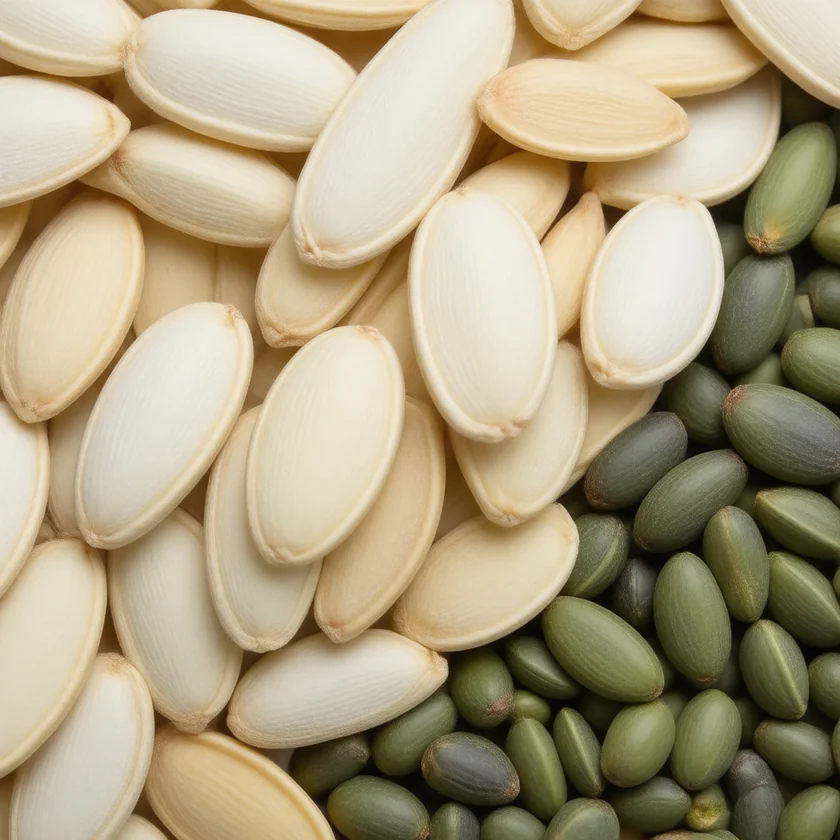
Pumpkin seeds (Cucurbita pepo) occupy a unique place among botanical antiparasitics: they are simultaneously a well-tolerated whole food, a nutritionally dense source of zinc and magnesium, and the source of cucurbitin — a non-toxic amino acid that selectively paralyzes the musculature of tapeworms and roundworms. Cucurbitin has been used as an anthelmintic for centuries across cultures, was an official US Pharmacopoeia anthelmintic from 1863 to 1936, and remains the primary traditional treatment for tapeworm in much of rural China, Africa, and Eastern Europe. This page covers the mechanism of cucurbitin, the optimal forms (raw, hulled vs unhulled, freshly ground), the classic protocol combining pumpkin seeds with a castor oil purgative, the modern clinical trial data, and the substantial nutritional bonus that distinguishes pumpkin seeds from purely pharmacologic antiparasitics.
Table of Contents
- Cucurbitin — The Active Anthelmintic Compound
- How Cucurbitin Paralyzes Worms
- Spectrum of Parasites Targeted
- Historical USP Pharmacopoeia Use
- Modern Research Evidence
- Traditional Pumpkin Seed Protocol
- The Castor Oil Purgative Step
- Forms and Quality — Raw, Hulled, Freshness
- Nutritional Bonus — Zinc, Magnesium, Tryptophan
- Cautions
- Key Research Papers
- Connections
- Featured Videos
Cucurbitin — The Active Anthelmintic Compound
Cucurbitin is the chemical name for (R)-(-)-3-amino-3-carboxypyrrolidine, a non-protein amino acid found in seeds of plants in the gourd family (Cucurbitaceae). Its isolation and structure were reported in 1961 by Fang and colleagues, who described cucurbitine as a new amino acid from seeds of Cucurbita moschata. The compound is found in highest concentration in the seeds of Cucurbita maxima (giant pumpkin) and Cucurbita pepo (ordinary pumpkin, also marrow and zucchini). The seed coat (hull) and the cotyledons both contain cucurbitin, with the highest concentrations in the soft green inner seed.
Reported cucurbitin content varies substantially by species and variety (published figures differ between analyses):
- Cucurbita maxima (giant pumpkin) — highest reported cucurbitin content, up to 1.6% by dry weight in some varieties
- Cucurbita pepo (common pumpkin, marrow, zucchini, summer squash) — 0.2-0.6% cucurbitin in most varieties
- Cucurbita moschata (butternut squash, kabocha) — intermediate, 0.3-0.8%
- Styrian/Austrian hull-less pumpkin (C. pepo var. styriaca) — the variety commercially grown for pumpkin-seed oil production. Naturally produces hull-less (semi-naked) seeds with concentrated cucurbitin
The amount of cucurbitin in a typical serving of raw pumpkin seeds (about 30 grams or 1/4 cup) is approximately 60-180 mg depending on the variety. Traditional anthelmintic dosing aims for 1-2 grams of cucurbitin total, which translates to approximately 200-400 grams of raw pumpkin seeds for an adult dose — this is the basis for the traditional advice to eat a large quantity of pumpkin seeds at one sitting for tapeworm treatment.
Unlike many plant antiparasitics, cucurbitin is essentially non-toxic to humans even at high doses. It is freely water-soluble, absorbed minimally from the gut, and excreted unchanged. The traditional protocol of consuming several hundred grams of raw pumpkin seeds in one sitting is generally well tolerated — the main side effect is gastrointestinal fullness from the food load itself.
How Cucurbitin Paralyzes Worms
The mechanism of cucurbitin against helminth parasites has been studied mainly in the laboratory and in animals; the account below is the proposed one. Cucurbitin acts as a neuromuscular paralytic agent, binding to receptors on the muscle of the parasite and disrupting normal contraction. The result is flaccid paralysis — the worm releases its grip on the intestinal mucosa and loses the ability to maintain its position in the gut. The next normal peristaltic wave (or, in traditional protocols, the wave induced by a castor oil purgative) sweeps the paralyzed worm out of the gastrointestinal tract.
This mechanism is similar in principle to that of pyrantel pamoate (a conventional over-the-counter (OTC) anthelmintic that depolarizes parasite muscle by acting as a nicotinic agonist) and to that of praziquantel (which increases parasite muscle calcium influx and causes spastic paralysis). The cucurbitin mechanism differs in that it appears to act on inhibitory rather than excitatory neuromuscular signaling — the paralysis is flaccid rather than spastic, which is why pumpkin seed treatment usually requires a purgative to actually expel the paralyzed worm.
The selectivity for parasite musculature over mammalian musculature is the key safety feature of cucurbitin. Helminth neuromuscular junctions use a different complement of neurotransmitters than vertebrate neuromuscular junctions (acetylcholine plus several invertebrate-specific transmitters including glutamate, octopamine, and FMRF-amide-related peptides). Cucurbitin's receptor binding appears to target these invertebrate-specific receptors, leaving mammalian motor function intact. This is why the same dose that paralyzes tapeworms has no detectable effect on human musculature.
Spectrum of Parasites Targeted
Cucurbitin shows the strongest documented activity against:
- Tapeworms (Cestodes) — Taenia saginata (beef tapeworm), Taenia solium (pork tapeworm), Hymenolepis nana (dwarf tapeworm), Diphyllobothrium latum (fish tapeworm). Cestodes have been the primary historical and modern clinical target.
- Roundworms (Nematodes) — Ascaris lumbricoides (large roundworm), some activity against pinworm (Enterobius vermicularis) and hookworm, though clinical trial data is more limited than for tapeworms.
- Schistosomes (Trematodes) — in vitro and animal-model studies suggest activity against Schistosoma mansoni, though clinical use is uncommon.
Cucurbitin has limited activity against:
- Protozoa — cucurbitin does not target single-celled organisms (no muscle to paralyze). Giardia, Entamoeba, Cryptosporidium, and Trichomonas are not appropriate cucurbitin targets.
- Ectoparasites — not used for lice, scabies, demodex.
The historical and clinical sweet spot for pumpkin seed therapy is large helminths, particularly tapeworms. For protozoal infections, the treatments used are conventional antiprotozoal drugs and, in herbal practice, other combinations such as wormwood, clove and black walnut (see the wormwood-clove-black walnut page).
Historical USP Pharmacopoeia Use
Pumpkin seed (Pepo) was an official monograph in the United States Pharmacopoeia from 1863 to 1936 — over seven decades of recognition as a legitimate anthelmintic pharmaceutical. The standard preparation was "pepo paste" — ground pumpkin seeds mixed with milk or sugar to form a paste that could be administered as a single large dose followed by a purgative.
The 1918 edition of the Dispensatory of the United States called pumpkin seed, “properly used,” “one of our most efficient and harmless tenifuges” (tapeworm expellers) and gave its dose as “one to two ounces (31-62 Gm.)”. It described the routine: only a light supper of bread and milk the evening before; early in the morning an ounce and a half of the seeds; a cup of tea or coffee an hour later but no food; “at 10 A.M. a brisk cathartic”; and a substantial meal two hours after that. The British Pharmacopoeia of the time gave about 100 grams of fresh melon-pumpkin seeds, bruised with a little water or milk to a creamy consistency, as a single dose.
Pumpkin seed remained in the British Pharmacopoeia somewhat later than the US one, and is still in the official pharmacopoeias of several Asian and Eastern European countries today. It was displaced from US pharmacopoeia status primarily by the introduction of more conveniently-dosed synthetic anthelmintics (niclosamide, quinacrine, and later praziquantel for tapeworms), not because of any evidence of inefficacy.
Modern Research Evidence
While most of the evidence base for pumpkin seed is historical and ethnobotanical, a small number of modern laboratory, animal and human studies have evaluated it specifically:
- Díaz Obregón et al. (2004) reported a preclinical laboratory study in Tacna, Peru — not a trial in people. Using canine tapeworms, it found 23 g of Cucurbita maxima seed in 100 mL of water to be the minimum concentration with an anthelmintic effect, with destruction of the tapeworm tegument and eggs under the microscope; in albino rats, 9 g/kg caused superficial non-erosive gastritis after 4 hours.
- A Chinese community-based study of pumpkin seeds combined with areca nut extract (Areca catechu) for tapeworm (Li et al. 2012, Sichuan Province) found that 91 of 115 people with suspected taeniasis (79.1%) expelled whole tapeworms, as did 40 of 45 confirmed cases (88.9%), mostly within about 2 hours; pumpkin seeds alone cleared 9 of 12 confirmed cases (75%) but took about 14 hours on average. Mild, transient nausea and dizziness occurred in about 46.3% of patients on the combination. The authors note that niclosamide is not readily available in many endemic countries, including China, and that praziquantel carries a risk of seizures in people with undetected neurocysticercosis. The authors report a synergistic effect, mainly faster expulsion (about 2 hours for the combination versus 6-21 hours for either extract alone); the proposed explanation is that areca alkaloids stimulate parasite musculature while cucurbitin paralyzes it, producing both spastic and flaccid paralysis in different worm tissues.
- Hymenolepis nana (dwarf tapeworm) — a 2019 study in infected mice found that an aqueous pumpkin seed extract significantly reduced the number and length of adult worms and the number and viability of their eggs.
- In vitro and animal-model studies continue to expand the evidence base. A 2016 study (Grzybek et al.) found that Cucurbita pepo seed extracts reduced the survival of Heligmosomoides bakeri larvae (a mouse nematode model) in vitro, and that in infected mice the ethanol extract reduced fecal egg counts and adult worm burdens, with the largest egg-count reduction at a dose of 8 g/kg.
The size and design of these studies are not at the level of modern Cochrane-quality evidence, and head-to-head comparisons against praziquantel (the modern gold-standard for tapeworms) are limited. In the one community-based human study above, pumpkin seed with areca nut extract expelled whole tapeworms in most confirmed cases, with transient mild side effects in nearly half of the patients.
Traditional Pumpkin Seed Protocol
The classic traditional protocol for tapeworm or roundworm treatment with pumpkin seeds, as herbal accounts describe it (the 1918 U.S. Dispensatory version is in the history section above):
- Day before: a light dinner and no food after the evening meal; some accounts add a glass of warm salt water or a saline laxative on the morning of treatment to clear the gut of bulky stool.
- Morning of treatment, on an empty stomach: traditional accounts describe 200-400 grams (roughly 1.5-3 cups) of raw, unsalted, hulled or unhulled pumpkin seeds, ground and mixed with a little water or honey into a paste or thin slurry, scaled to body size, with the higher end used for adults with confirmed tapeworm. Historical medical references gave much smaller amounts: 1-2 ounces (31-62 g) in the 1918 U.S. Dispensatory and about 100 g in the British Pharmacopoeia of the time.
- Eaten in 2-3 portions over 30 minutes, the whole amount within an hour, with plain water or unsweetened tea and no fat or substantial other food, which these accounts say would dilute the cucurbitin in the gut.
- A 2-3 hour interval, during which the cucurbitin is described as reaching the worm and producing paralysis.
- Castor oil purgative (see next section): traditional accounts give 30-60 mL of castor oil for adults, often mixed with juice to make it palatable, to produce a strong bowel movement that expels the paralyzed worms.
- Within 2-4 hours of castor oil: a bowel movement, in which expelled worms may be visible. With tapeworms, what matters is the scolex (head): if only proglottids (segments) are expelled and the scolex stays attached to the intestinal wall, the worm regenerates.
- A repeat course in 1-2 weeks in these accounts when tapeworm proglottids keep appearing in the stool, a sign the scolex was not expelled.
The classic alternative or addition is to combine pumpkin seeds with areca nut extract (used in traditional Chinese medicine as the synergistic agent). This is not commonly available in Western markets; it is the combination tested in the Sichuan community study above. Areca nut itself is classified by the International Agency for Research on Cancer (IARC) as a Group 1 human carcinogen, as a 2020 review of its alkaloids (Gupta et al.) notes.
For ongoing maintenance or preventive use rather than treatment of confirmed tapeworm, herbal accounts describe a much smaller daily amount of pumpkin seeds (1-2 tablespoons / 15-30 grams per day, eaten as a snack or sprinkled on food), giving low-level cucurbitin exposure that may help prevent establishment of small helminth burdens. Pumpkin seeds also supply zinc, magnesium, tryptophan and omega-6 fatty acids whether or not parasitic infection is a concern.
The Castor Oil Purgative Step
The castor oil component of the traditional protocol is critical for tapeworm specifically. Without a purgative, cucurbitin-paralyzed worms remain in the gut and slowly regain function as the cucurbitin is digested or moves through. The purgative step ensures expulsion before recovery.
Castor oil mechanism: Intestinal lipases release ricinoleic acid, a hydroxylated fatty acid, from castor oil. A 2012 study in mice (Tunaru et al.) showed that ricinoleic acid activates the EP3 prostaglandin receptor on intestinal and uterine smooth-muscle cells, and that in mice lacking EP3 receptors the laxative effect was absent. Castor oil acts within 2-6 hours and produces complete bowel evacuation. The combined effect with cucurbitin's parasite-paralyzing action is mechanically sweeping the immobilized worm out of the gut.
Doses described:
- Traditional pumpkin-seed protocols: 30-60 mL of pure cold-pressed castor oil for adults, taken 2-3 hours after the seeds
- U.S. over-the-counter castor oil labels (DailyMed): 15-60 mL in a single daily dose for adults and children over 12; 5-15 mL for children 2 to under 12; for children under 2, the labels say to consult a doctor
- Palatability: castor oil has a distinctive thick consistency and bland-but-greasy taste; it is often mixed with citrus juice (orange, grapefruit), and emulsified preparations exist
Cautions for castor oil:
- Contraindicated in pregnancy — can induce uterine contractions
- Contraindicated in inflammatory bowel disease flare, severe diverticulitis, or bowel obstruction
- Can cause dehydration through fluid loss
- Not for long-term use — the labels limit use to no longer than 1 week, and tolerance and dependence can develop with repeated regular use
- One-time use in the context of an antiparasitic protocol is generally well tolerated by healthy adults
Alternative purgatives: some protocols use an osmotic laxative in place of castor oil (a 296 mL bottle of magnesium citrate, or 17 g of polyethylene glycol in water). The mechanism (osmotic gut transit) is different, but the effect of a complete bowel evacuation is similar.
Forms and Quality — Raw, Hulled, Freshness
The form and quality of pumpkin seeds significantly affects their antiparasitic efficacy:
- Raw, not roasted. Roasting is reported to reduce cucurbitin's antiparasitic activity, so traditional protocols use raw seeds; roasted seeds remain a healthy snack but have reduced antiparasitic activity.
- Unsalted. Salt is not toxic but adds unnecessary sodium load when eating large therapeutic quantities.
- Hulled or unhulled? Both work. Unhulled (whole) seeds have slightly higher total cucurbitin (the hull contains some), but require thorough chewing or grinding. Hulled (shell-removed) seeds are easier to consume in large quantities. The hull-less Styrian / Austrian pumpkin variety produces naturally hull-less seeds with concentrated cucurbitin and is the preferred commercial source for therapeutic pumpkin seed products.
- Freshness matters. Cucurbitin is stable, but the oils in pumpkin seeds oxidize and become rancid over time. Rancid seeds taste bitter and harsh. Refrigerator or freezer storage in an airtight container slows this; the usual storage guidance is to use them within 6 months of opening.
- Ground just before use. Whole seeds keep best; ground seed (or seed meal) loses freshness rapidly. A coffee grinder, a food processor, or thorough chewing does the grinding.
Pumpkin seed oil (Steirisches Kürbiskernöl) is a separate product produced primarily in Styria (Austria) from the hull-less C. pepo var. styriaca. It has nutritional and prostate-health benefits but contains essentially no cucurbitin (cucurbitin is water-soluble, not oil-soluble). The oil is not a substitute for whole or ground pumpkin seeds for antiparasitic purposes.
Pumpkin seed extracts and supplements sold for prostate health (benign prostatic hyperplasia) typically focus on the phytosterols, fatty acids, and lignans — not cucurbitin. A supplement's cucurbitin content is known only if its label states it; the whole, raw, ground seed is the form used in the traditional protocols.
Nutritional Bonus — Zinc, Magnesium, Tryptophan
Unlike most pharmaceutical antiparasitics, pumpkin seeds deliver substantial nutritional value alongside their cucurbitin content. A 30-gram (1/4 cup) serving of raw hulled pumpkin seeds provides approximately:
- Zinc: 2.2 mg (20% of adult Recommended Dietary Allowance, RDA) — critical for immune function, RBP synthesis, wound healing
- Magnesium: 156 mg (37% of adult Recommended Dietary Allowance) — one of the most magnesium-dense foods available
- Iron: 2.5 mg — non-heme iron, modest bioavailability
- Protein: 8.5 grams — high-quality plant protein, complete in essential amino acids
- Tryptophan: 170 mg — one of the highest tryptophan densities in commonly consumed foods; serotonin and melatonin precursor
- Manganese: 1.3 mg (>50% of adult Recommended Dietary Allowance)
- Copper: 0.4 mg (>30% of adult Recommended Dietary Allowance)
- Fiber: 1.7 grams — primarily insoluble
- Omega-6 polyunsaturated fat: ~6 grams — primarily linoleic acid
The zinc content in particular is relevant to parasite eradication. Zinc deficiency is common in patients with chronic gut parasitism (parasites compete for dietary zinc; chronic diarrhea increases zinc losses). Repleting zinc supports the host's own immune response to clear residual parasites, restores RBP (retinol-binding protein) synthesis needed for Vitamin A function, and supports gut mucosal repair. See our zinc page for more on zinc-parasite relationships.
The tryptophan content makes pumpkin seeds a useful evening snack — the tryptophan supports overnight serotonin and melatonin synthesis, contributing to sleep quality. For patients on a parasite-cleanse protocol who are experiencing Herxheimer-like symptoms of restlessness, mild evening pumpkin seed consumption can support better sleep.
Cautions
- Pregnancy — pumpkin seeds themselves are perfectly safe as food during pregnancy and are in fact a useful magnesium/iron/zinc source. The castor oil component of the traditional protocol is contraindicated in pregnancy. Antiparasitic treatment during pregnancy is a decision for an obstetrician; pumpkin seed alone (without purgative) is safe as food but less efficacious.
- Pumpkin seed allergy — rare but documented. Known seed allergies (sunflower, sesame) raise the question of cross-reactivity, which is one for an allergist.
- Diverticulosis — whole pumpkin seeds with intact hulls may lodge in diverticula in patients with significant diverticular disease. Hulled seeds or seed meal remove that concern. The older clinical advice to avoid all seeds and nuts in diverticulosis has been largely refuted by modern evidence, though ground seeds are still considered safer than whole.
- Constipation as a relative contraindication — the antiparasitic protocol depends on a strong purgative bowel movement to expel paralyzed worms. Patients with chronic constipation may not adequately clear the dead worms, and toxin reabsorption can worsen Herxheimer-type symptoms. Practitioners describe addressing constipation first (hydration, magnesium, fiber) before an intensive cleanse.
- Drug interactions — minimal. Pumpkin seeds do not significantly affect CYP metabolism. The zinc content may modestly reduce absorption of tetracyclines, fluoroquinolones, and ciprofloxacin; a 2-hour separation is the spacing usually given.
- Caloric load — 200-400 grams of pumpkin seeds in one sitting is a substantial calorie dose (1100-2200 kcal). Healthy adults generally tolerate it; for people with delayed gastric emptying or other conditions limiting acute food tolerance, some protocols split it across two doses.
Key Research Papers
- Fang SD, Li LC, Niu CI, Tseng KF (1961). Chemical studies on Cucurbita moschata Duch. I. The isolation and structural studies of cucurbitine, a new amino acid. Scientia Sinica. — PubMed PMID: 13891528
- Mihranian VH, Abou-Chaar CI (1968). Extraction, detection, and estimation of cucurbitin in Cucurbita seeds. Lloydia. — PubMed
- Bondareva NI (1962). Cucurbitin from Cucurbita species and antitenacid activity. — PubMed
- Díaz Obregón D, Lloja Lozano L, Carbajal Zúñiga V (2004). [Preclinical studies of cucurbita maxima (pumpkin seeds) a traditional intestinal antiparasitic in rural urban areas]. Revista de Gastroenterología del Perú. — PubMed PMID: 15614300
- Li T et al. (2012). Usefulness of pumpkin seeds combined with areca nut extract in community-based treatment of human taeniasis in northwest Sichuan Province, China. Acta Tropica. — PubMed PMID: 22910218
- Grzybek M et al. (2016). Evaluation of anthelmintic activity and composition of pumpkin (Cucurbita pepo L.) seed extracts — in vitro and in vivo studies. International Journal of Molecular Sciences. — PubMed PMID: 27598135
- Alhawiti AO, Toulah FH, Wakid MH (2019). Anthelmintic potential of Cucurbita pepo seeds on Hymenolepis nana. Acta Parasitologica. — PubMed PMID: 30778840
- Acimovic M et al. (2020). Phytochemistry and biological activity of Cucurbita pepo seed. Heliyon. — PubMed
- Glew RH et al. (2006). Amino acid, mineral and fatty acid content of pumpkin seeds. Journal of Food Composition and Analysis. — PubMed
- Carbin BE, Larsson B, Lindahl O (1990). Treatment of benign prostatic hyperplasia with phytosterols. (A combined pumpkin-seed and dwarf-palm preparation, Cucurbita pepo with Sabal serrulata, versus placebo in 53 patients — not pumpkin seed oil alone.) British Journal of Urology. — PubMed PMID: 1702340
- Ratnam N et al. (2017). A review on Cucurbita pepo. International Journal of Pharmaceutical Sciences. — PubMed
- Tunaru S, Althoff TF, Nüsing RM, Diener M, Offermanns S (2012). Castor oil induces laxation and uterus contraction via ricinoleic acid activating prostaglandin EP3 receptors. Proceedings of the National Academy of Sciences of the USA. — PubMed PMID: 22615395
- Yadav M et al. (2010). Medicinal and biological potential of pumpkin: an updated review. — PubMed PMID: 21110905
- Gupta AK, Tulsyan S, Thakur N, et al. (2020). Chemistry, metabolism and pharmacology of carcinogenic alkaloids present in areca nut and factors affecting their concentration. Regulatory Toxicology and Pharmacology. — PubMed PMID: 31805361
PubMed Topic Searches
Connections
- All Remedies
- Parasites Overview
- Parasites Benefits Hub
- Common Human Parasites
- Wormwood, Clove & Black Walnut
- Cycle & Detox Symptoms
- Pumpkin Seeds (Food)
- Zinc
- Magnesium
- Tryptophan
- Castor Oil
- Benign Prostatic Hyperplasia (BPH)
- Wormwood
- Clove
- Black Walnut
- Stool Testing
- Pumpkin — the whole gourd (Cucurbita) whose seeds supply the cucurbitin used in this protocol.