Fiber and Weight Loss
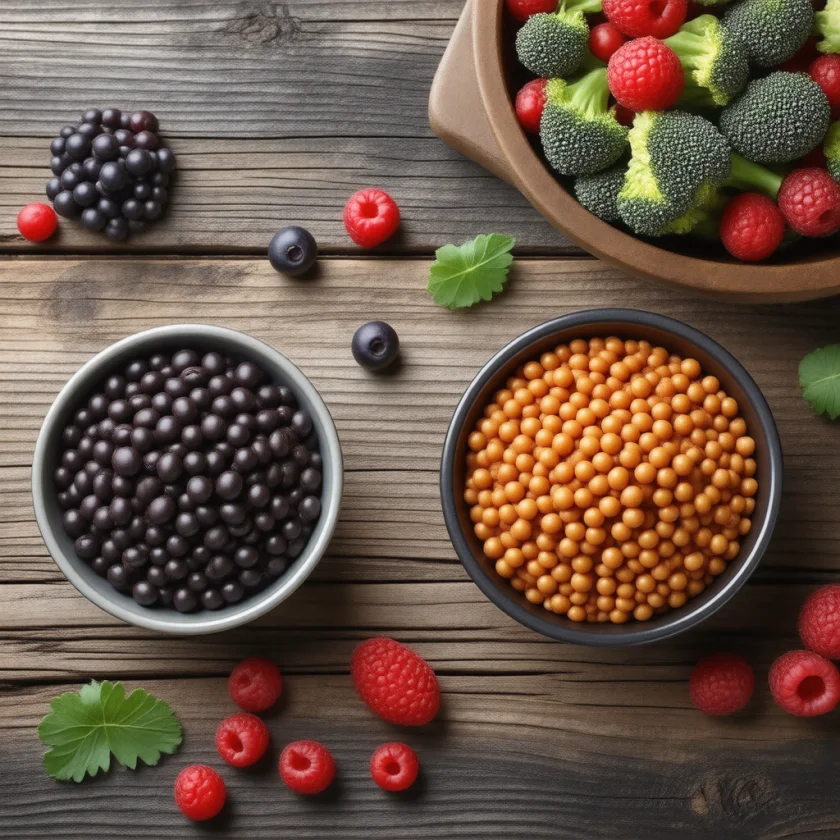
Fiber is probably the most underrated ally in weight management — quiet, cheap, low-risk, and easy to overlook precisely because it does not come in a pill bottle with a bold promise on the label. This page makes the honest case for it. The short version, stated plainly up front: fiber will not melt fat, "flush toxins," or override the calories you eat. What fiber genuinely does is help you feel full and satisfied on fewer calories, steady your blood sugar so hunger comes back more slowly, and feed the friendly bacteria in your gut. Those are modest, real, well-studied effects — a helpful nudge, not a miracle. And here is the part most people miss: the average adult eats only about half the fiber that is recommended, so for most people the gap is closed not by some exotic supplement but simply by eating more of the plants already known to be good for us. This page explains what fiber actually is, how it helps with weight, what the evidence really shows, where to get it, and how to add more without the bloating.
Table of Contents
- What Dietary Fiber Actually Is
- Soluble, Insoluble, Viscous, Fermentable — in Plain Terms
- How Fiber Helps You Eat Less
- The Fiber Gap: Most of Us Fall Short
- What the Evidence Actually Shows
- The Best Food Sources of Fiber
- Fiber Supplements, Honestly
- How to Add Fiber Without the Gas and Bloating
- Honest Limits: What Fiber Cannot Do
- The Real Takeaway
- Key Research Papers
- Connections
- Featured Videos
What Dietary Fiber Actually Is
Dietary fiber is the part of plant foods that your body cannot break down and absorb in the small intestine. When you eat a slice of white bread, the starch is quickly digested into glucose and absorbed. Fiber is different: it passes through the small intestine largely intact, then arrives in the large intestine either to be fermented by your gut bacteria or to add bulk and move things along. In other words, fiber is a carbohydrate (plus a woody component called lignin) that mostly does its work on the way through rather than by being absorbed as fuel.
Two practical facts follow from this. First, fiber is found only in plant foods — beans and lentils, whole grains, vegetables, fruit, nuts, and seeds. There is essentially no fiber in meat, fish, eggs, dairy, or oil, which is why a diet heavy in animal products and refined foods tends to be low in fiber. Second, "fiber" is not one single substance but a whole family of compounds that behave very differently in the body. Some form a thick gel; some pass through almost unchanged; some are eagerly eaten by gut bacteria; some are barely touched. Understanding those differences is the key to understanding how fiber helps with weight, so that is where we go next.
Soluble, Insoluble, Viscous, Fermentable — in Plain Terms
The label you have probably seen is soluble versus insoluble, and it is a fine place to start:
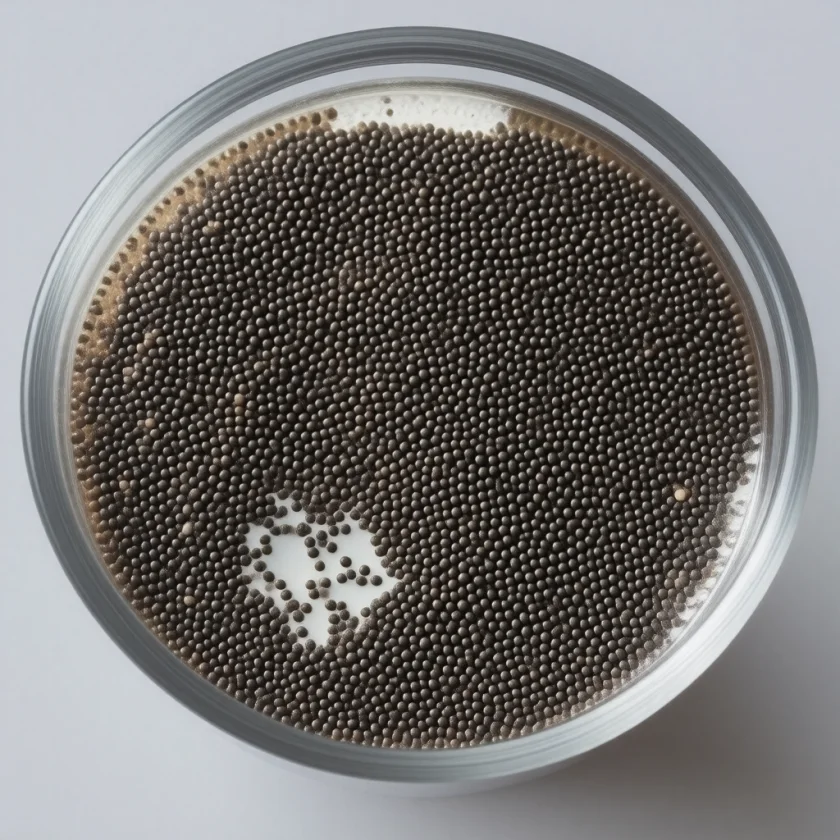
- Soluble fiber dissolves in water and often turns into a soft gel. Think of the way oats or chia seeds thicken in liquid. Good sources include oats and barley (which contain a fiber called beta-glucan), beans, apples and citrus (pectin), and psyllium husk.
- Insoluble fiber does not dissolve. It is the "roughage" that adds bulk and helps move waste through the gut. Good sources include wheat bran, whole grains, the skins of vegetables and fruit, and nuts.
That split is useful, but nutrition scientists have learned that two other properties predict how a fiber actually behaves — and especially how it affects appetite:
- Viscosity — how thick and gel-like a fiber gets when it mixes with water. Highly viscous fibers (beta-glucan from oats and barley, psyllium, pectin, and glucomannan) form a gel that slows digestion down. As you will see, viscosity is the single property most consistently linked to feeling full.
- Fermentability — how readily your gut bacteria can ferment the fiber once it reaches the colon. Highly fermentable fibers (such as inulin, pectin, and resistant starch) are food for your microbiome, and their fermentation produces beneficial compounds called short-chain fatty acids.
These properties do not line up neatly with the soluble/insoluble labels, which is why the older split can mislead. Psyllium, for example, is very viscous but only lightly fermented. Wheat bran is insoluble, barely fermented, and works mostly by adding bulk. Inulin is soluble and highly fermentable but not viscous at all. A real diet contains a mix of all of these, and the mix is exactly what you want — different fibers do different helpful jobs.
How Fiber Helps You Eat Less
Fiber does not have one dramatic effect; it has several small ones that add up. Here are the honest mechanisms, in plain language.
1. It adds food volume with almost no calories
Fiber-rich whole foods are bulky and low in energy density — they carry a lot of water and roughage and relatively few calories for their size. A big bowl of vegetable-and-bean soup fills your stomach far more than a small handful of crackers with the same calories. Because your stomach responds partly to volume, high-fiber foods let you eat a satisfying amount of food while taking in fewer calories. This is the most straightforward way fiber helps, and it is the same principle that makes a plain potato so filling.
2. Viscous fiber slows things down and steadies blood sugar
When viscous soluble fiber forms a gel in your stomach and small intestine, it slows how quickly the stomach empties and how quickly sugars are absorbed. Two useful things follow. You feel full for longer after a meal because food lingers. And your blood sugar rises more gently instead of spiking and then crashing — and it is often that post-meal crash that drives the next wave of hunger and snacking. Steadier blood sugar tends to mean steadier appetite. This is why oats, beans, and psyllium have a reputation for "holding you over."
3. Fermentable fiber feeds your gut, which may signal fullness
When fermentable fiber reaches your large intestine, your gut bacteria feast on it and produce short-chain fatty acids such as butyrate, acetate, and propionate. Beyond nourishing the cells lining your colon, these compounds have been linked to the release of gut hormones (such as glucagon-like peptide-1 (GLP-1) and PYY) that tell your brain you are satisfied. This appetite-signaling pathway is an active and genuinely exciting area of research, so it is fair to call it promising rather than fully settled — but it is a real, mechanism-level reason a fiber-fed gut may support a healthier appetite.
There is also a simpler, fourth effect worth naming: fiber-rich whole foods usually take more chewing and more time to eat than soft, refined foods, and slower eating gives your body's fullness signals a chance to catch up before you overeat.
The Fiber Gap: Most of Us Fall Short
Here is the fact that makes fiber such a practical target. Health authorities recommend roughly 25 grams of fiber a day for women and about 38 grams for men (or, as a simple rule, about 14 grams for every 1,000 calories eaten). Yet surveys of eating habits find that the average adult manages only around 15 grams a day — well under half of the recommendation. Most people are not slightly short on fiber; they are dramatically short.
That gap is actually good news, because it means there is a large, easy lever most people have never pulled. No clever new diet is needed. Simply closing the gap — moving from 15 grams toward 25 or 30 — delivers most of the fullness, blood-sugar, and gut benefits described above. It is one of the few changes in nutrition that is cheap, low-risk, backed by decades of research, and almost universally under-done. For a lot of people, "eat more fiber" is not one health goal among many; it is close to the whole game.
What the Evidence Actually Shows
It is fair to ask whether all of this holds up in real studies, or whether it is just a nice story. The honest answer: the evidence for fiber-rich eating patterns is strong and consistent, while results for isolated fiber supplements are more mixed — with viscous fibers doing best.
Higher fiber tracks with lower weight
A widely cited review by Howarth and colleagues (2001) pulled together dozens of studies and found that higher fiber intake was consistently associated with lower body weight and lower body fat, and that adding fiber tended to reduce how many calories people ate. Two decades later, a large series of systematic reviews and meta-analyses in The Lancet by Reynolds and colleagues (2019) reached a similar conclusion from the other direction: people who eat more fiber tend to weigh less and have lower rates of several chronic diseases. These are observational and pooled findings, so they show a reliable association rather than proof of cause — but the signal is remarkably steady across studies.
The "just eat 30 grams of fiber" trial
The most encouraging single study is a randomized controlled trial by Ma and colleagues (2015), published in the Annals of Internal Medicine. Adults with metabolic syndrome were split into two groups. One followed the full, complicated American Heart Association diet with its many targets. The other was given a single, almost comically simple instruction: eat 30 grams of fiber a day. That was essentially it. After twelve months, the fiber-only group (240 adults took part in all) had lost an average of 2.1 kg, against 2.7 kg on the American Heart Association diet — a difference of 0.6 kg, with one easy-to-remember goal instead of a dozen. The authors wrote that the fuller diet may produce up to 1.7 kg more weight loss and that the study was not designed to prove the two diets equal. Eight people developed diabetes during the trial, 7 in the fiber group and 1 in the American Heart Association group (a difference that was not statistically significant). The authors concluded that a simple goal of eating more fiber may be a reasonable alternative for people who find complicated diets hard to follow.
Not all fibers are equal — viscosity wins
A systematic review by Wanders and colleagues (2011) looked specifically at whether fiber curbs appetite, energy intake, and weight. The clearest finding was that viscous, gel-forming fibers (the review names pectins, beta-glucans and guar gum) reduced appetite more often than less viscous fibers (in 59% versus 14% of comparisons) and reduced the amount eaten soon afterwards more often (69% versus 30%), while some other fibers had little effect. Overall, though, the effects on energy intake and body weight were relatively small. A follow-up experiment by the same group confirmed that bulky and especially gel-forming fibers produced the strongest sense of fullness. A separate review by Clark and Slavin (2013) was more cautious: of 107 short-term fiber treatments from 44 publications, 61% did not improve feelings of fullness and 78% did not reduce how much people ate, and only beta-glucan, lupin kernel fiber, rye bran, whole-grain rye and a mixed high-fiber diet were supported in more than one publication — a useful reminder that whole, fiber-rich foods tend to outperform a scoop of fiber powder. And in the large POUNDS Lost weight-loss trial, Miketinas and colleagues (2019) found that the more fiber people ate, the more weight they lost and the better they stuck to their diet — regardless of which specific diet they had been assigned. Fiber, in other words, seems to help people both eat less and keep going.
A 2021 meta-analysis by Jovanovski and colleagues pooled 15 randomized trials (1,347 people) in which viscous fiber was added to a calorie-restricted diet for at least 4 weeks. Compared with the comparison diets, body weight fell by a further 0.81 kg, body mass index by 0.25 kg/m², and body fat by 1.39%, with no effect on waist size; the certainty of the evidence for weight, body mass index and body fat was graded moderate.
The Best Food Sources of Fiber
The usual starting point in nutrition guidance is food first. Whole, fiber-rich foods deliver fiber plus water, vitamins, minerals, and the natural bulk that makes them filling — a whole package that no isolated supplement matches. Here is where the fiber actually lives, roughly from richest to lightest:
- Beans and legumes — the champions. Lentils, black beans, chickpeas, kidney beans, and split peas deliver roughly 6 to 8 grams of fiber per half-cup cooked, along with plant protein. Beans are the richest everyday source.
- Whole grains. Oats and barley (rich in viscous beta-glucan), whole wheat, brown rice, quinoa, and air-popped popcorn. "Whole" is the key word — refining strips most of the fiber out.
- Vegetables. Broccoli, artichokes, Brussels sprouts, carrots, peas, sweet potatoes with the skin, and leafy greens. Eating skins where you can keeps the fiber in.
- Fruit. Raspberries and blackberries are standouts; pears and apples (with the skin), oranges, and bananas all count. Whole fruit beats juice, which loses most of the fiber.
- Nuts and seeds. Chia and flax seeds are exceptionally high in fiber; almonds, pistachios, and sunflower seeds add a useful amount too.
A practical pattern: meals built around plants — whole grains in place of refined ones, a scoop of beans or lentils in soups and salads, skins left on, and whole fruit and a handful of nuts in place of processed snacks. Eaten consistently, that pattern closes most of the fiber gap without counting a gram.
Fiber Supplements, Honestly
Fiber supplements have a place, but it is a smaller place than is often claimed. Here is the honest picture.
Psyllium (the fiber in psyllium husk products) is the best-studied and generally the most useful. It is highly viscous, and controlled trials show it can modestly help appetite, blood sugar, and cholesterol, and it reliably improves regularity. In the 12-week trial by Pal and colleagues in overweight and obese adults, a psyllium supplement added to a normal diet lowered weight, body mass index, body-fat percentage and LDL cholesterol compared with placebo; psyllium plus a healthy diet (about 59 g of fiber a day in total, against 20 g in the control group) gave the largest improvements in metabolic-syndrome risk factors. Other supplements — methylcellulose, glucomannan, inulin, wheat dextrin — vary in how viscous or fermentable they are, and therefore in what they do.
The key honest points are these. A supplement is one way to close the fiber gap or add a viscous fiber when a diet falls short, and psyllium in particular has real evidence behind it. But a supplement is not required, and it is not as good as eating fiber-rich food, because a scoop of powder gives you fiber without the vitamins, minerals, water, and satisfying volume that come with beans or vegetables. The "added fiber" now stirred into processed bars, cookies, and shakes — isolated fibers such as chicory-root inulin or soluble corn fiber let a product boast a big fiber number on the label without behaving like a bowl of lentils. A high-fiber cookie is still a cookie. A supplement adds to real food; it does not replace what whole foods supply.
How to Add Fiber Without the Gas and Bloating
The most common reason people give up on fiber is that they add a lot of it all at once and spend the next few days uncomfortably bloated. That is avoidable. Your gut bacteria need time to adjust to a bigger fiber load, so a gradual increase is the usual answer.
- A slow increase. The usual approach is adding just a few grams of fiber every few days over a couple of weeks rather than doubling intake overnight. A gradual ramp gives your microbiome time to adapt, and the early gas usually settles as it does.
- Enough water. Fiber — especially the viscous, gel-forming kind — needs fluid to do its job and to keep things moving. Increasing fiber without drinking enough water can cause constipation.
- Spreading it across the day. A little fiber at each meal is gentler and more filling than one enormous high-fiber meal.
- Whole foods rather than a sudden megadose. A big scoop of a fiber supplement on day one is far more likely to cause bloating than gradually eating more beans, vegetables, and whole grains.
Some gas early on is normal and is actually a sign your gut bacteria are being fed. For nearly everyone it eases within a week or two as your body adjusts to its new, healthier normal.
Honest Limits: What Fiber Cannot Do
This section matters as much as the benefits, because being honest about the limits is what separates guidance from hype.
- Fiber does not override calories. This is the big one. Fiber tilts the odds toward eating less by helping you feel full — but you can still overeat high-fiber foods, and you can still gain weight eating fiber alongside plenty of calories. Fiber makes a calorie-appropriate diet easier to stick to; it does not suspend the laws of energy balance.
- The effects are real but modest. In careful trials, fiber's impact on weight is a helpful nudge measured in a few pounds over months, not a dramatic transformation. It is one reliable habit among several, not a stand-alone cure.
- "Added fiber" is not the same as whole foods. Isolated functional fibers engineered into processed products count on the label but do not reliably reproduce the fullness, nutrients, and health effects of fiber eaten in its natural package.
- Supplement results are mixed. As the research shows, a scoop of isolated fiber does not always move appetite the way fiber-rich meals do. Viscous fibers like psyllium do best; many others do little for weight.
- Individual responses vary. Because so much of fiber's benefit runs through your unique gut microbiome, two people can respond differently to the same fiber; what helps one person feel full and comfortable may not help another.
The Real Takeaway
The core point: fiber is a genuinely useful, low-cost, low-risk ally — and most people are running on far too little of it. It will not perform magic, but it does three honest, well-studied things: it helps you feel full on fewer calories, it steadies blood sugar so hunger returns more slowly, and it feeds a healthier gut. Because the average person eats only about half the recommended amount, simply eating more plants — beans and lentils, whole grains, vegetables, fruit, nuts, and seeds — is one of the most forgiving and reliable changes you can make.
No special product or rigid plan is needed. The pattern the research describes is beans in meals, skins left on vegetables and fruit, whole grains in place of refined ones, nuts and whole fruit as snacks, a gradual increase, and enough water. A psyllium supplement is one way to close the gap; it does not replace real food. And a closing word, meant kindly: lasting weight management is genuinely hard, shaped by biology, stress, sleep, medications, and a food environment built to be overeaten — not by willpower alone, and never by shame. Fiber will not fix all of that. But it is one of the steadiest, gentlest, best-evidenced nudges in the right direction that you can give yourself, starting with your very next meal.
Key Research Papers
- Howarth NC, Saltzman E, Roberts SB. Dietary fiber and weight regulation. Nutrition Reviews. 2001;59(5):129-139. — landmark review linking higher fiber intake to lower body weight, lower body fat, and reduced calorie intake. — doi:10.1111/j.1753-4887.2001.tb07001.x
- Ma Y, Olendzki BC, Wang J, et al. Single-component versus multicomponent dietary goals for the metabolic syndrome: a randomized trial. Annals of Internal Medicine. 2015;162(4):248-257. — the "just eat 30 g of fiber a day" RCT that nearly rivaled a far more complex diet over 12 months. — doi:10.7326/M14-0611
- Wanders AJ, van den Borne JJGC, de Graaf C, et al. Effects of dietary fibre on subjective appetite, energy intake and body weight: a systematic review of randomized controlled trials. Obesity Reviews. 2011;12(9):724-739. — found viscous, gel-forming fibers most consistently reduce appetite and intake. — doi:10.1111/j.1467-789X.2011.00895.x
- Wanders AJ, Jonathan MC, van den Borne JJGC, et al. The effects of bulking, viscous and gel-forming dietary fibres on satiation. British Journal of Nutrition. 2013;109(7):1330-1337. — controlled test showing gel-forming fibers produce the strongest fullness. — doi:10.1017/S0007114512003145
- Clark MJ, Slavin JL. The effect of fiber on satiety and food intake: a systematic review. Journal of the American College of Nutrition. 2013;32(3):200-211. — a more cautious review: isolated fiber doses do not always move satiety, so whole foods matter. — doi:10.1080/07315724.2013.791194
- Miketinas DC, Bray GA, Beyl RA, Ryan DH, Sacks FM, Champagne CM. Fiber intake predicts weight loss and dietary adherence in adults consuming calorie-restricted diets: the POUNDS Lost study. The Journal of Nutrition. 2019;149(10):1742-1748. — more fiber predicted both greater weight loss and better diet adherence, regardless of diet type. — doi:10.1093/jn/nxz117
- Slavin JL. Dietary fiber and body weight. Nutrition. 2005;21(3):411-418. — review of the mechanisms by which fiber influences satiety and body weight. — doi:10.1016/j.nut.2004.08.018
- Slavin JL. Position of the American Dietetic Association: health implications of dietary fiber. Journal of the American Dietetic Association. 2008;108(10):1716-1731. — source of the recommended-intake figures (about 14 g per 1,000 kcal; ~25 g women / ~38 g men). — doi:10.1016/j.jada.2008.08.007
- Rebello CJ, O'Neil CE, Greenway FL. Dietary fiber and satiety: the effects of oats on satiety. Nutrition Reviews. 2016;74(2):131-147. — on how the viscous beta-glucan fiber in oats slows digestion and promotes fullness. — doi:10.1093/nutrit/nuv063
- Pal S, Khossousi A, Binns C, Dhaliwal S, Ellis V. The effect of a fibre supplement compared to a healthy diet on body composition, lipids, glucose, insulin and other metabolic syndrome risk factors in overweight and obese individuals. British Journal of Nutrition. 2011;105(1):90-100. — a psyllium-supplement trial showing modest metabolic benefits. — doi:10.1017/S0007114510003132
- Anderson JW, Baird P, Davis RH Jr, et al. Health benefits of dietary fiber. Nutrition Reviews. 2009;67(4):188-205. — broad review of fiber's effects on weight, blood sugar, cholesterol, and gut health. — doi:10.1111/j.1753-4887.2009.00189.x
- Reynolds A, Mann J, Cummings J, Winter N, Mete E, Te Morenga L. Carbohydrate quality and human health: a series of systematic reviews and meta-analyses. The Lancet. 2019;393(10170):434-445. — higher fiber intake associated with lower body weight and lower rates of several chronic diseases. — doi:10.1016/S0140-6736(18)31809-9
- Jovanovski E, Mazhar N, Komishon A, et al. Effect of viscous fiber supplementation on obesity indicators in individuals consuming calorie-restricted diets: a systematic review and meta-analysis of randomized controlled trials. European Journal of Nutrition. 2021;60(1):101-112. — 15 trials: viscous fiber added to a calorie-restricted diet lowered weight by a further 0.81 kg. — doi:10.1007/s00394-020-02224-1