Ultra-Processed Foods and Weight Gain
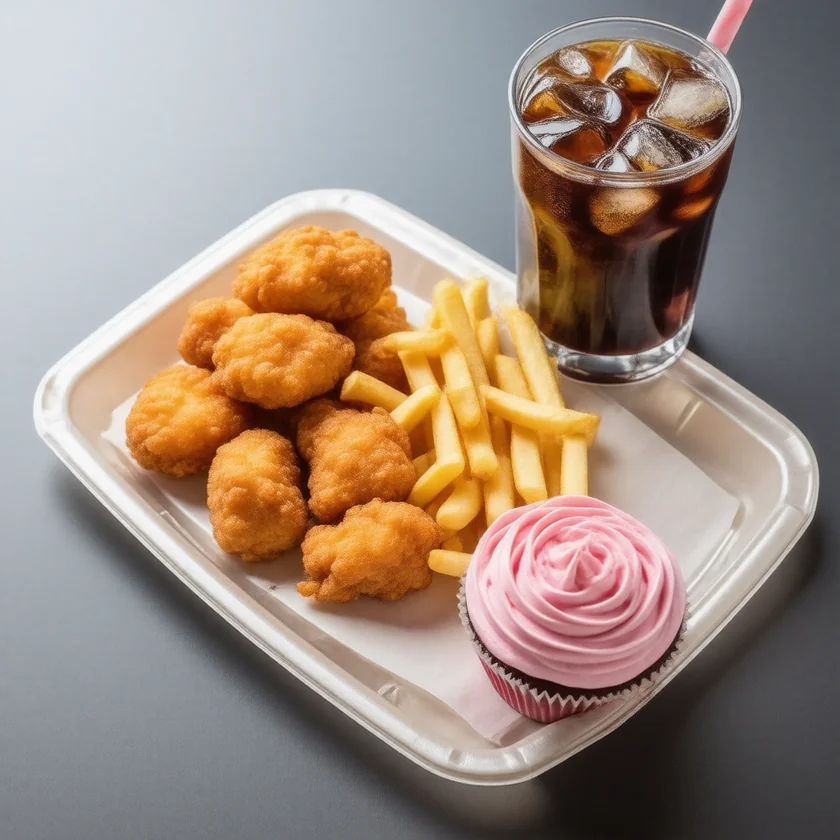
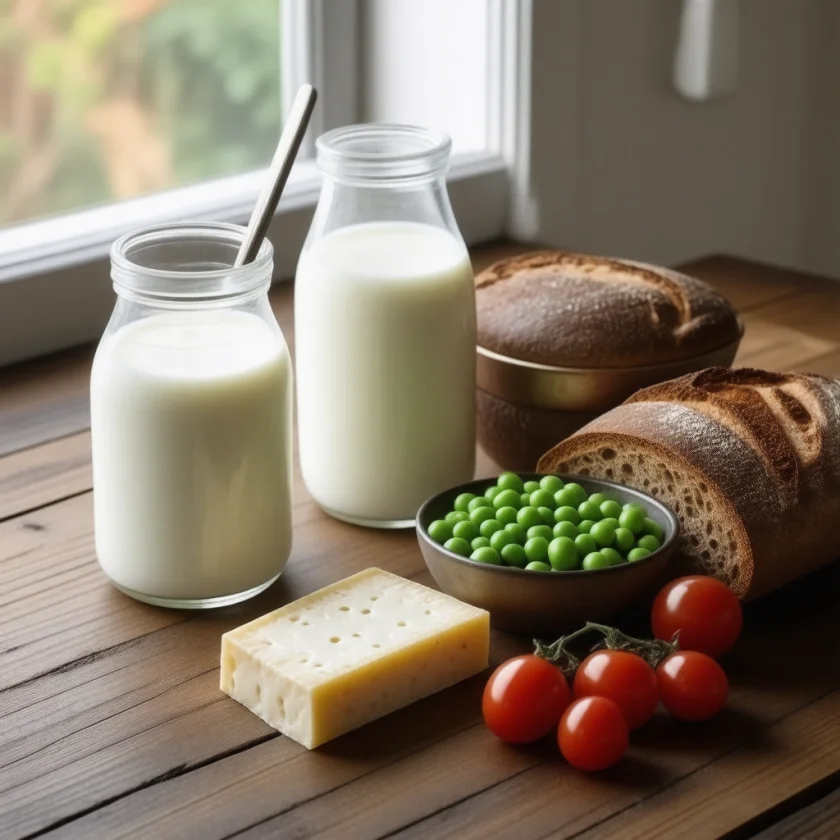
You have probably heard that "ultra-processed foods" are bad for your waistline. It is one of the biggest ideas in nutrition right now, and for once the headline is close to the truth — but the reasons behind it are more interesting, and more useful, than the scary version you usually get. This page lays out what "ultra-processed" actually means, walks through the single most important experiment on the subject, and explains, in plain language, why these foods make it so easy to eat more than your body needs. We will be honest throughout: this is about a whole category and eating pattern, not one hidden "toxic" ingredient, and plenty of processed foods — canned beans, frozen vegetables, plain yogurt, whole-grain bread — are genuinely good for you. The goal here is not fear. It is to give you a clear, calm picture of the evidence, and practical ways to eat mostly whole foods on a real budget and a real schedule, without guilt and without chasing perfection.
Table of Contents
- What "Ultra-Processed" Means: the NOVA Classification
- NOVA Is Useful, but Imperfect
- The Key Experiment: Hall's 2019 Inpatient Trial
- Why These Foods Override Your Fullness Signals
- Hyper-Palatability and the Engineered "Bliss Point"
- The Population Evidence: What Cohort Studies Show
- The Honest Nuance: a Pattern, Not One "Toxic" Ingredient
- The Processed Foods That Are Perfectly Healthy
- Everyday Swaps People Commonly Use
- Eating Mostly Whole Foods on a Real Budget and Schedule
- The Bottom Line
- Key Research Papers
- Connections
- Featured Videos
What "Ultra-Processed" Means: the NOVA Classification
The phrase "ultra-processed food" comes from a system called NOVA, developed by a Brazilian research team led by Carlos Monteiro. Instead of sorting foods by their nutrients (calories, fat, sugar), NOVA sorts them by how much and what kind of processing they have been through. It puts every food into one of four groups. Once you see the four groups, the idea clicks into place.
- Group 1 — Unprocessed or minimally processed foods. Whole foods, either untouched or changed only in simple ways that do not add anything — drying, crushing, chilling, freezing, pasteurizing. Think fresh or frozen fruit and vegetables, plain oats and brown rice, dried beans and lentils, eggs, plain milk and plain yogurt, nuts, fresh meat and fish.
- Group 2 — Processed culinary ingredients. Substances pressed or refined out of Group 1 foods or from nature, used in the kitchen to season and cook: olive oil and butter, sugar, honey, salt. You rarely eat these on their own; they turn Group 1 foods into meals.
- Group 3 — Processed foods. Made by adding Group 2 ingredients (salt, oil, sugar) to Group 1 foods. The result still looks like the whole food it came from and has just a few recognizable ingredients: canned vegetables or beans, canned fish, cheese, freshly baked bread, salted nuts, fruit canned in juice.
- Group 4 — Ultra-processed foods (UPFs). Industrial formulations built mostly from cheap refined ingredients (starches, sugars, oils, protein isolates) plus additives you would not keep in a home kitchen — flavorings, colorings, emulsifiers, sweeteners, thickeners. Everyday examples: soft drinks and energy drinks, packaged snack cakes and cookies, most flavored crisps and chips, instant noodles, many breakfast cereals, reconstituted chicken nuggets and hot dogs, and a lot of mass-produced packaged breads and "diet" snack bars.
A simple way to feel the difference: an apple is Group 1; olive oil and salt are Group 2; a tin of beans in tomato sauce or a bakery loaf is Group 3; a bottle of cola or a shrink-wrapped snack cake is Group 4. The rough test many people use is to read the label — if it contains several ingredients you would never cook with at home, or a long list of additives, it is probably ultra-processed. The concern of this page is Group 4, because that is the group tied to eating more than we mean to.
NOVA Is Useful, but Imperfect
It is only fair to say up front that NOVA is a helpful lens, not a perfect rulebook, and honest researchers debate its edges. A few real limitations:
- The boundaries can be fuzzy. Where exactly does a supermarket whole-grain loaf sit — Group 3 or Group 4? Reasonable experts sometimes classify the same product differently, which makes the system harder to apply consistently in research.
- It judges processing, not nutrition. NOVA deliberately ignores nutrients, so it can lump a sugary soda together with a fortified whole-grain bread or a plain, unsweetened plant milk. By calories and nutrients, those are worlds apart.
- "Processed" is not automatically "bad." Freezing, canning, and fermenting are ancient, useful technologies that make nutritious food cheaper, safer, and last longer. The problem is not processing itself; it is what a large slice of Group 4 tends to do to how much we eat.
NOVA works as a smart, imperfect shorthand. The useful signal it captures is real — but it works best as a guide to your overall pattern, not as a strict verdict on any single item.
The Key Experiment: Hall's 2019 Inpatient Trial
Almost everything you read about ultra-processed foods and weight is based on observational studies — researchers watching what people eat and noting who gains weight. Those are valuable, but they cannot prove cause and effect. One study stands out because it was the first to test the question directly, under tightly controlled conditions; it remains the best known of a small number of such trials.
In 2019, Kevin Hall and colleagues at the U.S. National Institutes of Health ran a small but rigorous inpatient trial. Twenty weight-stable adults lived in a research ward for four weeks so that scientists could measure exactly what they ate. Each person spent two weeks eating an ultra-processed diet and two weeks eating an unprocessed diet, in random order. Crucially, the two diets were carefully matched on the plate for total calories offered, energy density, and for sugar, fat, sodium, fiber, and overall macronutrients. Participants were told simply to eat as much or as little as they wanted at each meal.
The result was striking. On the ultra-processed diet, people spontaneously ate about 500 calories more per day than on the unprocessed diet — even though, on paper, the meals looked nutritionally similar. Over just two weeks they gained about 0.9 kg (roughly 2 pounds), and over the unprocessed fortnight they lost about the same amount. Researchers also noticed people ate faster on the ultra-processed food, and their appetite hormones shifted in a telling way: the fullness hormone PYY was higher and the hunger hormone ghrelin was lower on the unprocessed diet.
Why this matters: because the two diets were matched for the usual suspects, the extra eating could not be blamed simply on more sugar or more fat being offered. Something about the ultra-processed foods themselves — how they are built and how we eat them — drove people to consume more. It was the first controlled evidence that ultra-processed foods can nudge us into overeating. It is one short trial in twenty people, so it is a starting point rather than the last word, but it is a very good starting point.
Since 2019 a small number of further trials have tested the same question. In Japan, a 2024 crossover study of nine men with overweight or obesity found that during one week of ultra-processed food they gained 1.1 kg more and ate 813.5 calories more per day than during one week of less processed food, with the meals designed to match for calories and macronutrients. In England, a 2025 trial gave 55 adults two 8-week diets in random order, both following the UK’s national healthy-eating guide (the Eatwell Guide): one built from minimally processed food and one from ultra-processed food. Both diets led to weight loss, but more on the minimally processed diet (2.06% of body weight, against 1.05% on the ultra-processed diet).
A 2026 meta-analysis pooled 10 randomised trials. Ultra-processed diets led to more weight gain and faster eating. The authors also note that the diets compared in these trials were not matched for nutrients, that the extra eating may be explained by the higher energy density (calories per bite) of the ultra-processed foods used, and they rated the certainty of the evidence as low.
Why These Foods Override Your Fullness Signals
So what is that "something"? It is not one trick but several ordinary features that stack up. None of them is sinister — they are simply the predictable result of designing food to be cheap, shelf-stable, convenient, and delicious.
They pack more calories into every bite
Ultra-processed foods tend to be high in energy density — a lot of calories in a small weight of food, because water and fiber are low while refined starch, sugar, and fat are high. Our fullness signals respond partly to the volume and weight of food, not just its calories, so you can finish a very calorie-dense snack before your gut has a chance to say "enough." This is one of the best-established ideas in appetite research.
They are soft, so we eat them fast
Much ultra-processed food is soft, smooth, and easy to chew and swallow. That raises the eating rate — how many calories you take in per minute. Fullness signals take time to build, so the faster you eat, the more you can pack away before the "stop" message arrives. Work by Forde and colleagues suggests that energy density and eating rate together explain a large part of why processed foods are so easy to overeat — and people in the Hall trial noticeably ate faster on the ultra-processed menu.
A later trial by Forde and colleagues in the Netherlands tested eating speed on its own. Forty-one adults ate two ultra-processed diets for 2 weeks each, matched for how much they liked the food, portion size, calories served and energy density, but built from foods whose textures led to slower or faster eating. On the slower-to-eat diet they ate 369 fewer calories a day. Body weight did not differ between the two diets over the 2 weeks, while body fat fell by 0.43 kg on the slower diet.
They are low in protein and fiber for the calories
Protein and fiber are the two most filling parts of food. Many ultra-processed products are relatively low in both while being high in refined carbohydrate and fat, so you get fewer of the components that tell your body it has eaten enough. Fardet's analysis of nearly a hundred ready-to-eat foods found that minimally processed options tended to be more satiating, calorie for calorie, than ultra-processed ones. Less fullness per calorie is a quiet invitation to eat more.
Put those three together — dense, fast, and low in the filling stuff — and you have a food that slips past your body's natural brakes. Not because it is poisonous, but because it is engineered in ways that happen to work against your appetite's timing.
Hyper-Palatability and the Engineered "Bliss Point"
There is one more piece, and it is the one the food industry understands best: flavor engineering. Ultra-processed foods are often built around combinations of fat, sugar, and salt (or fat and salt, or fat and sugar) that almost never occur together in whole, natural foods. A potato has starch; a nut has fat; but few natural foods are simultaneously rich in fat and sugar and salt in the way a snack cake or a bag of flavored chips is.
Food scientists sometimes tune a product to its "bliss point" — the exact level of sweetness (or the exact fat-salt balance) that makes it most rewarding, the point where you want more rather than less. Researchers have even started to define these "hyper-palatable" foods formally: Fazzino and colleagues built a quantitative definition and applied it to a US government database of foods Americans eat: 62% of the foods (4,795 of 7,757) met it, including some labelled reduced-fat or low-fat. The result is food that is genuinely delicious and easy to keep eating past the point of hunger — not because anyone is weak-willed, but because the food was, understandably, designed to be moreish and to sell.
It is worth saying plainly: enjoying these foods is normal, and there is nothing wrong with liking them. Understanding why they are so easy to overeat simply takes the mystery — and the self-blame — out of it.
The Population Evidence: What Cohort Studies Show
The Hall trial tells us ultra-processed foods can drive overeating in a controlled ward. The next question is whether this plays out in ordinary life, across large numbers of people. Here the evidence is broad and consistent — but, importantly, it is mostly observational, so we should read it carefully.
- U.S. adults. Using national survey data on 15,977 adults aged 20 to 64, Juul and colleagues found that people who got a larger share of their calories from ultra-processed foods tended to have higher body weight, a larger waist, and higher odds of obesity. Those getting 74.2% or more of their calories from ultra-processed foods had a body mass index 1.61 units higher, a waist 4.07 cm larger and 53% higher odds of obesity than those getting 36.5% or less. The authors note that ultra-processed foods supply 58% of the calories in the American diet.
- The UK Biobank. Rauber and colleagues followed a large group of UK adults over time and found that higher ultra-processed food intake was associated with a greater risk of becoming obese.
- Pooling many studies. A meta-analysis by Askari and colleagues combined observational studies from around the world and found that higher ultra-processed intake was linked to greater odds of overweight and obesity. A separate broad review by Pagliai and colleagues tied high intake to a range of worse health outcomes.
- An umbrella review of the pooled studies. A 2024 review in the BMJ gathered 45 pooled analyses covering about 9.9 million people. Higher ultra-processed food intake was linked to obesity (odds ratio 1.55, meaning 55% higher odds), type 2 diabetes, deaths from heart disease, and common mental disorders such as anxiety and depression. Most of this evidence was graded low or very low quality, because the studies were observational.
- The classic weight-gain study. Long before the term "ultra-processed" was common, Mozaffarian and colleagues tracked tens of thousands of adults for two decades. The foods most linked to gradual weight gain were potato chips, sugary drinks, and processed meats; the foods linked to less gain were vegetables, whole grains, fruit, nuts, and yogurt. It is a preview of the same pattern.
Now the honest caveat. Observational studies cannot fully prove that the food is the cause. People who eat more ultra-processed food may also differ in income, physical activity, sleep, smoking, or overall diet — and researchers can only adjust for the factors they measure. So a single cohort study, on its own, is suggestive rather than conclusive. What makes the overall picture persuasive is the combination: many studies in different countries point the same way, and the tightly controlled Hall trial supplies a believable mechanism for why. Consistency across many lines of evidence is how nutrition science builds a solid conclusion, and on this question the lines line up well.
The Honest Nuance: a Pattern, Not One "Toxic" Ingredient
Here is where a lot of online coverage goes wrong, and where being measured really matters. It is tempting to hunt for the single villain — "it's the seed oils," "it's the emulsifiers," "it's the chemicals." But the evidence does not point to one toxic molecule. It points to a category and an eating pattern: foods built to be calorie-dense, soft, quick, low in protein and fiber, and irresistibly tasty, eaten often and in large amounts.
That distinction changes everything about what to do. If the problem were one ingredient, you could simply avoid it. Because the problem is the overall pattern, the fix is also about the pattern — shifting most of what you eat toward whole and minimally processed foods, rather than banning a specific additive or panicking over a single label. It also means you do not have to be perfect or fear the occasional cookie. One ultra-processed snack is not going to harm you; a daily diet built almost entirely from Group 4 is the thing worth gently changing.
And NOVA's bluntness cuts both ways. Because it sorts by processing rather than nutrition, some technically "ultra-processed" items — a fortified whole-grain packaged bread, an unsweetened soy milk, some plain yogurts — can still fit comfortably into a healthy diet. The category is a useful signal, not a moral scoreboard.
The Processed Foods That Are Perfectly Healthy
Because "processed" has become a dirty word, it is worth saying clearly: many processed foods are nutritious, affordable, and convenient. Most of these are Group 1 to Group 3 — whole foods that have simply been preserved or lightly prepared. Some genuinely helpful examples:
- Canned beans, lentils, and chickpeas — cheap, shelf-stable protein and fiber; rinsing them lowers their sodium.
- Canned fish such as sardines, salmon, and tuna — inexpensive protein and omega-3 fats, ready to eat.
- Frozen fruit and vegetables — frozen at their peak, they are just as nutritious as fresh, cost less, and cut waste.
- Plain yogurt and milk — protein and calcium; the unsweetened versions carry no added sugar.
- Whole-grain bread, oats, and brown rice — fiber-rich staples that anchor easy meals.
- Canned tomatoes, plain nuts, tofu, olive oil, and eggs — kitchen workhorses that turn a few Group 1 items into real food.
If most of your shopping basket looks like this list, you are eating well — even though a good deal of it came out of a can, a bag, or the freezer. The point of the ultra-processed conversation was never to make you distrust a tin of beans. It was to notice how much of a typical modern diet is Group 4, and to gently rebalance.
Everyday Swaps People Commonly Use
Changes in eating are often described as small, repeatable swaps rather than an overnight overhaul. Swaps people commonly use, framed as gentle upgrades rather than rules:
- Adding before subtracting. Rather than starting with a list of bans, some people start by adding filling whole foods — a piece of fruit, a handful of nuts, a side of vegetables, a scoop of beans. Eating more of the filling foods can crowd out some of the rest, with far less sense of deprivation.
- Soda → sparkling water with a squeeze of fruit, or simply smaller amounts less often. Sugary drinks add calories without adding fullness, which is why many people start with them.
- Chips or snack cakes → nuts, popcorn, olives, cheese, or yogurt with fruit. The snack stays; the swap is to one with more protein, fiber, or substance.
- Sugary cereal → oats with fruit, or plain yogurt with berries and a few nuts. Cheap, fast, and much more filling.
- Frozen ready-meal → a quick bowl of pre-cooked grains, canned beans, and frozen vegetables with olive oil and spices — barely more effort, and it keeps you full for longer.
Many people describe the goal as "most of the time," not "always" — roughly 80/20: if most of your meals are built from whole and minimally processed foods, the occasional ultra-processed treat is a normal part of a healthy life, not a failure. Guilt is not a nutrient.
Eating Mostly Whole Foods on a Real Budget and Schedule
Any honest page has to acknowledge the obvious: ultra-processed foods are popular for good reasons. They are usually cheap, last a long time, need little or no cooking, require no skill, and are marketed everywhere. Telling people to "just cook from scratch" while ignoring money, time, and exhaustion is not helpful. So here are realistic ways to eat more whole foods without a big budget or a free afternoon.
Cheap whole-food staples
Some of the most nutritious foods are among the cheapest: dried or canned beans and lentils, eggs, oats, brown rice, potatoes, frozen vegetables and fruit, canned fish, peanut butter, and whatever produce is in season or on offer. A pot of lentils and brown rice costs little and feeds several people.
Save time without giving up on whole foods
- Cooking once covers several meals. A big pot of chili, soup, or a grain-bowl base cooked on a day off can be reheated through the week.
- The freezer saves time. Frozen vegetables are pre-washed, pre-chopped, and never go off — a genuine convenience food that happens to be Group 1.
- "Assembly" meals need no cooking. Not everything needs cooking: canned fish on whole-grain toast, yogurt with fruit and nuts, or beans stirred into a jar of tomato sauce are meals in minutes.
- Appliances do much of the work. A slow cooker or a single sheet pan turns cheap ingredients into a hands-off meal.
And a note on fairness: if your food environment is dominated by cheap, heavily advertised ultra-processed options — as many are — eating this way is genuinely harder, and that is not a personal failing. What counts is what is possible with the money, time, and energy a person actually has. Shifting even a few meals a week toward whole foods is real, worthwhile progress. Progress beats perfection every time.
The Bottom Line
Ultra-processed foods, as a category, make it unusually easy to eat more calories than your body needs. The best experiment we have — Hall's tightly controlled 2019 trial — showed people ate about 500 extra calories a day and gained weight on an ultra-processed diet compared with a matched unprocessed one. A large body of population research points the same way. The reasons are ordinary and understandable: these foods are calorie-dense, soft and quick to eat, relatively low in protein and fiber, and engineered to taste irresistible — a combination that slips past your body's natural fullness signals.
But keep the nuance. This is about a pattern, not a single "toxic" ingredient, and many processed foods — beans, frozen vegetables, canned fish, plain yogurt, whole-grain bread — are healthy and convenient. The practical goal is simply to make most of what you eat whole or minimally processed, keep the good processed staples, and be kind to yourself about the rest. You do not need to be perfect, fearful, or wealthy to eat well. You need a pattern you can actually sustain — and a little self-compassion while you build it.
Key Research Papers
- Hall KD, Ayuketah A, Brychta R, et al. Ultra-Processed Diets Cause Excess Calorie Intake and Weight Gain: An Inpatient Randomized Controlled Trial of Ad Libitum Food Intake. Cell Metabolism. 2019;30(1):67-77.e3. — the landmark controlled trial: people ate ~500 more calories a day and gained weight on an ultra-processed diet vs. a matched unprocessed one. — doi:10.1016/j.cmet.2019.05.008
- Monteiro CA, Cannon G, Levy RB, et al. Ultra-processed foods: what they are and how to identify them. Public Health Nutrition. 2019;22(5):936-941. — the plain-language definition of the NOVA Group 4 (ultra-processed) category. — doi:10.1017/S1368980018003762
- Monteiro CA, Cannon G, Moubarac JC, et al. The UN Decade of Nutrition, the NOVA food classification and the trouble with ultra-processing. Public Health Nutrition. 2018;21(1):5-17. — the fuller rationale for the four NOVA groups and why processing (not just nutrients) matters. — doi:10.1017/S1368980017000234
- Elizabeth L, Machado P, Zinöcker M, et al. Ultra-Processed Foods and Health Outcomes: A Narrative Review. Nutrients. 2020;12(7):1955. — a balanced overview of the evidence linking ultra-processed foods to weight and health outcomes. — doi:10.3390/nu12071955
- Juul F, Martinez-Steele E, Parekh N, et al. Ultra-processed food consumption and excess weight among US adults. British Journal of Nutrition. 2018;120(1):90-100. — higher ultra-processed intake was associated with higher body weight and obesity in a national sample of US adults. — doi:10.1017/S0007114518001046
- Rauber F, Chang K, Vamos EP, et al. Ultra-processed food consumption and risk of obesity: a prospective cohort study of UK Biobank. European Journal of Nutrition. 2021;60(4):2169-2180. — over follow-up, higher ultra-processed intake was linked to greater risk of becoming obese. — doi:10.1007/s00394-020-02367-1
- Askari M, Heshmati J, Shahinfar H, et al. Ultra-processed food and the risk of overweight and obesity: a systematic review and meta-analysis of observational studies. International Journal of Obesity. 2020;44(10):2080-2091. — pooling many studies, higher ultra-processed intake was associated with greater odds of overweight and obesity. — doi:10.1038/s41366-020-00650-z
- Pagliai G, Dinu M, Madarena MP, et al. Consumption of ultra-processed foods and health status: a systematic review and meta-analysis. British Journal of Nutrition. 2021;125(3):308-318. — broad review tying high ultra-processed intake to a range of worse health outcomes. — doi:10.1017/S0007114520002688
- Fardet A. Minimally processed foods are more satiating and less hyperglycemic than ultra-processed foods: a preliminary study with 98 ready-to-eat foods. Food & Function. 2016;7(5):2338-2346. — minimally processed foods tended to be more filling, calorie for calorie, than ultra-processed ones. — doi:10.1039/c6fo00107f
- Forde CG, Mars M, de Graaf K. Ultra-Processing or Oral Processing? A Role for Energy Density and Eating Rate in Moderating Energy Intake from Processed Foods. Current Developments in Nutrition. 2020;4(3):nzaa019. — argues energy density and how fast we eat help explain why processed foods are easy to overeat. — doi:10.1093/cdn/nzaa019
- Fazzino TL, Rohde K, Sullivan DK. Hyper-Palatable Foods: Development of a Quantitative Definition and Application to the US Food System Database. Obesity. 2019;27(11):1761-1768. — a formal definition of "hyper-palatable" fat/sugar/salt foods, showing how common they are in the food supply. — doi:10.1002/oby.22639
- Hamano S, Sawada M, Aihara M, et al. Ultra-processed foods cause weight gain and increased energy intake associated with reduced chewing frequency: A randomized, open-label, crossover study. Diabetes, Obesity and Metabolism. 2024;26(11):5431-5443. — nine Japanese men gained 1.1 kg more and ate 813.5 calories more per day during a week of ultra-processed food. — doi:10.1111/dom.15922
- Dicken SJ, Jassil FC, Brown A, et al. Ultraprocessed or minimally processed diets following healthy dietary guidelines on weight and cardiometabolic health: a randomized, crossover trial. Nature Medicine. 2025;31(10):3297-3308. — 55 adults in England lost more weight on a minimally processed than on an ultra-processed diet, both following the Eatwell Guide. — doi:10.1038/s41591-025-03842-0
- Robinson E, Jones A, Evans R, et al. A systematic review and meta-analysis of randomized controlled trials examining the effect of ultra-processed food on energy intake and weight gain. Critical Reviews in Food Science and Nutrition. 2026;66(34):7898-7913. — 10 trials: more weight gain and faster eating on ultra-processed diets, with low certainty of evidence. — doi:10.1080/10408398.2026.2731838
- Forde CG, Heuven LA, van Bruinessen M, et al. Eating rate has sustained effects on energy intake from ultraprocessed diets: a 2-week ad libitum dietary randomized controlled crossover trial. American Journal of Clinical Nutrition. 2026;123(4):101122. — a slower-to-eat ultra-processed diet led to 369 fewer calories a day. — doi:10.1016/j.ajcnut.2025.11.012
- Lane MM, Gamage E, Du S, et al. Ultra-processed food exposure and adverse health outcomes: umbrella review of epidemiological meta-analyses. BMJ. 2024;384:e077310. — 45 pooled analyses (about 9.9 million people) linking higher intake to obesity, type 2 diabetes, heart-disease deaths and common mental disorders, mostly low-quality evidence. — doi:10.1136/bmj-2023-077310
- Mozaffarian D, Hao T, Rimm EB, et al. Changes in Diet and Lifestyle and Long-Term Weight Gain in Women and Men. New England Journal of Medicine. 2011;364(25):2392-2404. — over two decades, chips, sugary drinks, and processed meats tracked with weight gain, while vegetables, whole grains, fruit, nuts, and yogurt tracked with less. — doi:10.1056/NEJMoa1014296